Tag: NIGERIAN DEMOCRACY

  • FCT Council Polls: Between Political Triumph and Democratic Questions

    FCT Council Polls: Between Political Triumph and Democratic Questions

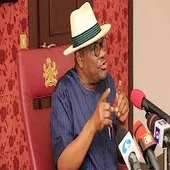
     The reaction of the Minister of the Federal Capital Territory (FCT), Nyesom Wike, to Saturday’s area council elections has sparked debate about whether the results represent genuine democratic consolidation or the growing dominance of the ruling party under President Bola Tinubu.

    Speaking in Abuja on Sunday, Wike described the outcome—where the All Progressives Congress (APC) won five of the six chairmanship seats—as a clear endorsement of Tinubu’s “visionary leadership” and the Renewed Hope Agenda. However, critics argue that such framing risks conflating electoral success with unquestioned public approval.

    According to the News Agency of Nigeria (NAN), the APC swept victories in Abuja Municipal, Bwari, Kuje, Abaji and Kwali, while the Peoples Democratic Party (PDP) secured Gwagwalada. While Wike portrayed this distribution as proof of a healthy democratic contest, analysts note that the overwhelming win by the ruling party raises concerns about the shrinking political space for opposition voices in the nation’s capital.

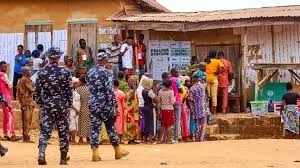
    Wike’s assertion that the elections demonstrated a “renewed and credible democratic process” has also drawn scrutiny. Although the polls were largely peaceful, critics argue that peace alone does not fully address deeper questions about voter confidence, electoral fairness, and the influence of incumbency power in local elections within the Federal Capital Territory.

    The minister’s praise for President Tinubu’s role in strengthening democracy, including support for amendments to the Electoral Act, has been welcomed in principle. Yet observers point out that legislative reforms must translate into consistently transparent practices on the ground to earn lasting public trust.

    Wike also commended the Independent National Electoral Commission (INEC) and security agencies for conducting what he described as a free and credible poll. While there were no widespread reports of violence, civil society groups maintain that credibility should be measured not only by orderly voting but also by equal access, reduced state influence, and genuine competition.

    Perhaps most controversially, Wike’s remarks distinguishing between what he called the “real opposition party” and “emergency democrats” have been interpreted by critics as dismissive of dissenting political voices. Such rhetoric, they argue, risks deepening political polarization rather than fostering the inclusive democratic culture the administration claims to champion.

    As the newly elected council chairmen prepare to assume office, the elections leave behind mixed signals: a ruling party celebrating dominance and continuity, and a democracy still grappling with how to balance stability, opposition strength, and genuine grassroots participation.

    Ultimately, whether the FCT council polls mark a true renewal of democratic confidence or simply reinforce existing power structures will depend less on victory speeches and more on governance outcomes in the months ahead.

  • All Eyes on Abuja as Area Council Polls Test New Electoral Law

    All Eyes on Abuja as Area Council Polls Test New Electoral Law

    Residents of Abuja are expected to file out to polling units as the nation’s capital prepares for Area Council elections that will mark the first major test of Nigeria’s newly enacted Electoral Act.

    The elections, scheduled to take place across the six Area Councils of the Federal Capital Territory, will see voters elect chairmen and councillors in a process closely watched by political stakeholders and civil society groups nationwide.

    The polls come days after President Bola Tinubu signed the revised Electoral Act into law, a development that has sparked widespread debate.

    While supporters of the legislation argue that it is designed to strengthen transparency and credibility in elections, critics contend that some provisions remain controversial and could pose implementation challenges.

    Electoral officials say the Abuja polls are expected to provide an early opportunity to assess how the new law performs in practice, particularly in areas such as voter accreditation, result management, and legal compliance.

    Security agencies are expected to be deployed across the capital to ensure a peaceful voting environment, while election observers are anticipated to monitor the exercise for compliance with the new legal framework.

    Political analysts note that the conduct of the Area Council elections could shape public confidence in electoral reforms ahead of future nationwide polls.

    A smooth process may reinforce trust in the new Act, while any operational or legal disputes could intensify calls for further amendments.

    The elections are expected to take place amid heightened public interest, with attention focused not only on local governance outcomes but also on the broader implications for Nigeria’s evolving democratic process.

  • Why Nigeria is not working

    Why Nigeria is not working

    By

    UGO ONUOHA

    THE safe thing to do is to say that Nigeria is not working at its optimal best. But that will amount to playing the ostrich. Because the reality is that our country is not working, not at all, not even for the ruling political and economic elites who currently think that they are having a swell time. If only they knew how much more they would be better if the right things were to be done to make this country work for the majority of its citizens. Sadly, the understanding of our elites (and this is a wrong label for them) is limited, warped, myopic, and parochial.

    It has to be acknowledged that the roles of elites, whether political, economic, or intellectual, in nation-building anywhere can be a mixed bag of the good, the bad, and the ugly. The sad reality in our case is that the impacts of Nigeria’s elites on the country over time have gravitated between the bad and the ugly. Any semblance of the elites doing good to the society started and ended in the first republic, 1960-1966. In varying degrees the political elites in that republic represented by the numero uno, Dr. Nnamdi Azikiwe, Chief Obafemi Awolowo, and Sir Abubakar Tafawa Balewa, among others, were the elites who significantly positively impacted the country. Their impact was not just in wresting independence from Britain, but in growing the regions through healthy rivalry and dedication to serving the public good. In this category of service we had Dr. Michael Okpara (Premier of the Eastern region), Chief Dennis Osadebay (Premier of the Mid-Western region), Chief Awolowo (Premier, Western region), and Sir Ahmadu Bello (Premier, Northern region). They have not come any better since then.

    The first republic had its own drawbacks and a plethora of crises one of which led to the military coup and counter coup of 1966, and then to a bloody civil war. But in many respects that period could be described as Nigeria’s golden era. The respective political elites took governance seriously and drove the development of their regions. For instance, the Western region under Awolowo was renowned for the introduction of universal free education at the primary and secondary school levels, a policy which still resonates up till today and which transformed the lives of many, especially the indigent. It was also during that period that the Eastern region with Okpara at the helm was acknowledged as the fastest growing economy of any subregion anywhere in the world. Each region had something that was going for it. Many of the enduring institutions in the country currently can be traced back to that era including universities and teaching hospitals, stadiums, industrial layouts, housing estates, and many more. Of course, human capital formation through access to quality and affordable education at home and abroad remained unrivalled.

    We need to accept that the coups of 1966, and the long stretch of military dictatorships over about 33 years with civilian rule interregnums, took a heavy toll on the building of civil political culture. The lack of trust by the politicians in the military rulers compounded the problem. For instance, in the late 1990s when the last military dictator, Gen. Abdusalami Abubakar, promised to hand over power to civilians, not many people in the political class believed him. The nightmare of the shifting or fluid hand over dates of the military president, Ibrahim Badamasi Babangida, and the attempted transmutation of Gen. Sani Abacha from a military dictator to a civilian president made the political class doubt the sincerity of the juntas. In the wake of the unbelief of traditional politicians in the military’s transition programme ahead of the 1999 elections, some charlatans moved in and seized Nigeria’s political space. Motorpark touts, advance fee fraudsters [419ners], loafers, jetsams and floatsams, persons of dubious and questionable characters, and sundry elements moved in and filled the void. Has it not been proven that nature abhors vacuum.

    These characters got themselves elected into offices wherever the superintending military rulers of the transition, such as the presidency, had no preferred candidates. Early in this republic, a retired ranking police officer who was also a lawmaker said that many of his erstwhile colleagues in the national assembly [NASS] were fraudsters. He claimed that he had participated in probing and arraigning some of them in court. It was also during that period that some Nigerians fled from the United States and other places to Nigeria as fugitives. They contested and won elections mostly into governorship and legislative offices. Once inside government, they started looting the commonwealth, amassing wealth, and consolidating power. Overtime, more of the criminal types joined the early birds in their vice grip on politics, power, and government. Twenty – six years after the start of this dispensation, there are still criminals, especially advance fee fraudsters and fugitives from the law from the US embedded in Nigeria’s Three Arm Zone which houses the National Assembly, Presidency, and the Judiciary. The same applies in some governors mansions in many of our geopolitical zones and state legislatures. This is one other reason why Nigeria is not working.

    Yusuf Musa is the CEO of the Kaduna – based Centre for Contemporary Studies [CCS]. He wrote recently that “nations do not collapse merely because a global power intervenes” as American president, Donald Trump, has been threatening to do to Nigeria. He said that they collapse “because their internal foundations had weakened so badly that intervention (becomes) possible, profitable (and) convenient”. Musa submitted that vulnerable nations were usually first “hollowed out by their own internal contradictions and domestic mismanagement”. If Nigeria is at the precipice, and all indications are that it is, then the problem has to be down to lingering internal contradictions and gross mismanagement of its diversity by the successive ruling political elites. For instance, more than half a century after, the wounds of the Nigeria – Biafra civil war are still festering. Reconciliation has been difficult to attain simply because there has been no commitment to it by the victors. The same applies to rehabilitation of the defeated Biafrans. Of course, lip service had been paid to the reconstruction of the areas devastated by bombs and other munitions during the war.

    Every major component of the country bears one unresolved grudge or the other against the other components. The northern region still will not let go of the killing of their political and military leaders in 1966; untill recently the western region grumbled about being left out of political power in the centre for years; the Midwestern region is suspicious of everybody; and, the many minority nations of the country are perpetually under the fear of being dominated by their bigger neighbours. So Nigeria is essentially made up of centrifugal forces pulling in different directions. Nobody trusts anybody. A nation cannot be forged from a collection of peoples who do not trust one another, a people with almost irreconcilable world views, a people with diverse and contradictory cultural and religious backgrounds, and a people with self-serving and predatory political and governing elites. Primitive accumulation appears to be the only common thread binding the elites.

    How do we expect this country to grow when there’s no Nigerian in the true sense of the word. We are first of all Igbo, Yoruba, Hausa, Efik, Ijaw, tiv, Idoma, Ika etc. before becoming Nigerians. Our rulers do not help the matter. If an Hausa man is born and raised in the heart of Igbo land, say Owerri in Imo state, goes to school there, work in a paid employment or founds a business, marries an Igbo woman, raise a family, pay his taxes there, he remains an Hausa person. He will never be from Imo state. Indeed, the government constantly reminds us of who we are and where we come from. To illustrate, if you have a need to fill a form for any public or private institutions, one of the requirements is likely to be a question on your state of origin. The same applies when filling out a questionnaire for national census or headcount. You may have been born and resident in Maiduguri, Borno state all your life, but you are compelled to write and identify with a state you may not have been to simply because your parents were originally from that state. If as a Yoruba man you’re married to an Igbo woman, and your wife desires to contest for elective position, she will by law including the 1999 Constitution (as amended) be required to go back to her so-called state of origin and seek out the appropriate constituency to consummate her political aspiration. A similar thing also obtains in appointive offices. How do we forge a nation from this incongruities?

    But the more damning evidence that Nigeria is not working is the prevalent attitude of Nigerians to Nigeria. This attitude is worse among the younger generation. To an extent it also applies to the middle aged and the older folks. Nigeria as a country counts for little or nothing in the hearts and minds of many so-called Nigerians. There’s no sense of belonging. There’s no sense of ownership. There’s no stakeholder mentality. To many, Nigeria is a strange place, and there’s a growing feeling of being trapped in a space that’s increasingly becoming unfamiliar and troubling. And our rulers, by commission or omission, do not help the citizen to make a sense of the situation. The prevalent feeling is that this country might just be on a journey to nowhere. In Igbo it appears to be “ebe oku nyuru awusa owa”, or wherever the candle light flickers out, we drop the stick and move on.

  • Ndigbo in the Crosshairs of ‘Days of Rage’ (2)

    By Ugo Onuoha

    THE ‘Ides of March’ are now set for August. And that month is two days hence. Typical of Nigerians the ides of March have been re-branded and rechristened and restructured. Our own, if they actually happen, will not be for one momentous occasion. They are programmed to last for days, all of 10 consecutive days, from August 1. What a time to be alive.

    Nigeria, with its history of bloodletting and the highhandedness of its security agents, is on edge. The regime of this president, Alhaji Bola Ahmed Tinubu, is worried. Look beyond the tough guy posturing. Strategy meetings of its henchmen and security goons have become almost a daily affair recently. The truth is that no administration covets any demonstration or protest, not even the so-called peaceful variety. In every such situation, the line between peace and violence is thin, indeed blurred. And it is worse in Nigeria.

    In the case of the widely advertised ‘Days of Rage’ planned to begin in two days, the elements that could spark violence, destructions and deaths are embedded in the demands of the organisers and the inevitable highhanded and deadly reaction of a regime that has been struggling with legitimacy from the get go. The precarious position and hypersensitivity of the regime is not made any better by its struggles in many areas.

    As we know the two most important duties of any government are securing lives and property of citizens, and ministering to the welfare of the people. It will be a stretch even for the choristers of this regime to remotely claim that the administration is meeting the minimal expectations of people in the two cardinal areas of governance. It does not appear that the regime has made a dent in securing the country. Insecurity is actually becoming endemic. Its scorecard on the economic front is woeful. Worse still is that the prognosis is not looking good.

    Last week, the central bank of Nigeria raised its benchmark interest rate for the umpteenth time. Many more Nigerians are projected to slip below the poverty line. That should be concerning for a country that is officially designated as the poverty capital of the world. The monetary czars appear fixated with using only monetary tools to cure the ills of an economy that is afflicted in many sectors. There are no indications that there’s a consciousness to align monetary and fiscal policies.

    The confusion and desperation in the government circle is palpable. The evidence was writ large last Wednesday night when the national secretary of the ruling All Progressives Congress political party, Senator Ajibola Bashiru appeared for a programme on national television. He strained to deny the evidence of economic devastation before our very eyes even to the extent of disclaiming the inflation data published by their own government agency – the National Bureau of Statistics (NBS).

    It’s the in-your-face lies and denials of APC apparatchiks such as their national secretary that infuriate many Nigerians and that make the imminent ‘Days of Rage’ almost unavoidable. But danger looms. A regime marked by serial bungling is a danger to everyone. It is worse when that regime is populated by opportunists and pseudo democrats. And headed by a man incapable of hiding his dictatorial tendencies. ‘Days of Rage’ could be bloody and may end up achieving little or no results worth the potential losses. The inevitable is that when the cloud lifts, the Igbo people and the Igbo nation will bear the brunt. That has been the story of Ndigbo in Nigeria since the 1940s, and even earlier.

    Igbo -hating is a pastime for some Nigerians. In fact, sometimes the hating comes from inside of the Igbo themselves. For instance, long before the furious debates on the impending protests hugged the national media headlines, Joe Igbokwe, from Nnewi in the heart of Igbo land had affixed Ndigbo in the bull’s-eye of the protests. Two weeks ago, Igbokwe wrote a gratuitous letter to the Igbo in Lagos, warning that the authorities in the state will deal decisively with them if they participate in the August protests.

    “I am the leader of Ndigbo in APC Lagos… I know what I went through and what I experienced during the #Endsars protest in October 2020 which opened a can of worms that shook the long existing cordial relationship and understanding between (the) Igbo and the owners Lagos”.

    The summary of Igbokwe’s warning are that the Igbo were culpable in the #Endsars protests of 2020 and the destruction of public property in Lagos; that there are indications that Ndigbo are in the thick of the planned August protests; that relations between the ‘owners of Lagos’ and the Igbo are irretrievably bad; that the owners of Lagos had learned valuable lessons from the events of 2020 and will finish off the Igbo in Lagos if they dared to join the protests; and, that the Igbo who are unwilling to lay down and be trampled upon and rolled over had better leave Lagos.

    Joe Igbokwe may not be a fool, but he at times says patently foolish things.

    The leadership of the conveners and protagonists of the ‘Days of Rage’ are well advertised. It’s scanty on Igbo. How Igbokwe, therefore, conjures and dumped Ndigbo in the heart of the agitation can only be befuddling. The other day I happened on the same Joe Igbokwe arguing at the top of his voice in Igbo language that the Igbo do not like the APC. That encounter with his kith and kin appeared to have happened on twitter (now X) space and then exported to WhatsApp. His opponents, who were mostly female, were equally insistent that they would not approve of APC for as long as the party approximated maladministration beginning with the regime of Muhammadu Buhari, Nigeria’s affliction. By his stance in the encounter, Igbokwe may have said that the Igbo political elite in APC, including himself, are charlatans who are not representing the yearnings and aspirations of Ndigbo. Could this be true?

    We have heard isolated but strident voices in the weeks leading up to the ‘Days of Rage’, many of them suggesting, without any shred of evidence, that the Igbo are orchestrating the August protests. There was a video about one unidentified Islamic teacher in the north who asked northern youths not to participate in the protests because Ndigbo were the people stoking the fire, and that they were using other means to attain Biafra by fueling the disintegration of Nigeria. He said that any protest is ‘haram’. Other sheikhs promptly shot him down.

    One fellow, Very Revd. Edward Obumneme Joseph who identified himself as president of the PFN youth wing offered different reasons why the protests should be shunned. He said that the protests were being promoted by sponsors of terrorism and the Igbo were the ultimate target of the fallouts.

    By last weekend all the security agencies have busied themselves with running political commentaries on the protests, the organisers, sources of their funding, the modus operandi, why the protests should be aborted, how deadly force will be used, and the resolve of the regime to protect life and property of Nigerians.

    The most comical of the running political commentaries came from the federal secret police otherwise called the Directorate of State Services (DSS). By last Thursday the Agency said it had identified the promoters of the protests, ignoring the fact that the names of the promoters had been in the public domain for weeks. It claimed it had identified the sponsors but provided neither evidence nor clues. It said it had unmasked how third parties were plotting to hijack the protests for regime change. It said that the protests were political and not economic. And that the claim about hardship was a ruse.

    It may not be entirely correct to say that the Nigerian secret police are the dumbest in the world, but they may be close to the bottom of the scale. Except in dictatorships the secret police in other jurisdictions are not known to be loquacious. They are usually taciturn. That code of not talking much was on display last week when the US director of the secret service, Kimberly Cheatle, appeared before lawmakers investigating the attempted assassination of former President Donald Trump. It did not matter that it cost her job.

    If the DSS had iron-cast evidence that the protests were political with sinister motives, the expectation is that it will move fast, arrest the insurrectionists and let them have their day in court. Of course, the DSS was lying. It had no evidence that could stand up in court about its claims. Is this not the same DSS that was scheming to arrest the former governor of the central bank, Godwin Emefiele, last year on allegations of sponsoring terrorists? The same Emefiele has been in detention and restricted movement since June 10, 2023, yet the secret police have failed to charge him with terrorism.

    Even before the protests commence enough grounds have been prepared to make Ndigbo the fall guys. Whether they participate in the protests or not will count for nothing. For more than 70 years they’ve borne the burden of striving to be Nigerians by losing their lives, limbs and livelihoods.

    The truth is that the Igbo really do not have any stake or interest in the looming ‘Days of Rage’. The majority of them did not believe that Bola Ahmed Tinubu would make a good president for a country that was, and still is, in dire straits. And they rejected him at the ballot box in 2023. They also did not believe in 2015 that Nigeria’s affliction, Buhari would be a good president. They were vindicated after eight years of disaster.

    The Igbo are masters in diverse fields but their expertise in commerce is unequalled. Commerce thrives in a conducive environment, not in uncertainty, chaos and war. Protests, no matter their ultimate outcome, enthrone chaos and so bad for business. It is bad for Ndigbo. It is especially so for people who have been deliberately excluded from Nigeria’s governing structure at the centre since 2015. They are punished for voting their conscience.

    The danger for the Igbo during the ‘Days of Rage’ is that the government will, as usual, bus thugs to infiltrate and disrupt the protesters and cause violence. The situation will degenerate to arson and destruction. The regime will then order its security agencies including the army to move in, to shoot and to kill the unarmed marchers. In America the Conservatives say that when the looting starts, the shooting starts. But here at home it’s usually when the shooting starts, the looting starts. And the Igbo will be left to count their losses. Whether they participate or not, Ndigbo will lose from the ‘Days of Rage’. That’s the default button of Nigeria’s crisis for decades. No reason to believe it will be different this time.