Tag: Nigerian farmers

  • NiMet Rejects N5 Trillion Loss Claims, Says Reports Are Baseless and Misleading

    NiMet Rejects N5 Trillion Loss Claims, Says Reports Are Baseless and Misleading

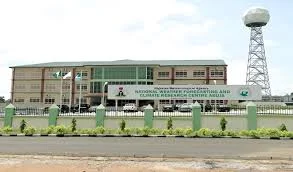
    The Nigerian Meteorological Agency (NiMet) has strongly dismissed reports alleging that Nigerian farmers lost about N5 trillion as a result of inaccurate weather forecasts, describing the claims as false, misleading and unsupported by credible evidence.

    In a statement issued on Tuesday in Abuja, NiMet faulted publications by The Nation on February 2, 2026, and Daily Trust on February 3, 2026, which attributed the claim to the Foundation for Peace Professionals. The agency said the reports amounted to a deliberate attempt to misinform the public.

    The statement, signed by Rabiatu Lawal Ado, Acting Head of NiMet’s Public Relations Unit, said the alleged N5 trillion loss was not supported by any verifiable data, transparent methodology or independent assessment.

    “The alarmist claim that Nigerian farmers lost nearly N5 trillion in productive capital as a result of NiMet’s weather forecasts is entirely unfounded and economically irresponsible,” the agency stated.

    NiMet stressed that it has provided reliable weather and climate services in Nigeria for more than 140 years, supporting planning and decision-making across critical sectors of the economy, particularly agriculture.

    According to the agency, independent evaluations by development partners, the World Meteorological Organization, sector stakeholders and farmers nationwide indicate that NiMet’s forecast accuracy has improved significantly over time. The agency said its accuracy now exceeds the 60 per cent benchmark and has reached over 90 per cent in recent years.

    NiMet explained that its Seasonal Climate Predictions, early warning alerts and location-specific agro-advisories are designed to help farmers make informed decisions on planting dates, crop selection, irrigation planning and risk management.

    “These products are disseminated through state governments, agricultural extension services, traditional media platforms and digital channels to ensure wide reach and accessibility,” the agency noted.

    The meteorological agency also referenced the executive summary of the 2025 Wet Season Agricultural Performance Survey in Nigeria, conducted in collaboration with key institutions across the agricultural value chain. According to NiMet, the survey recorded increased crop yields and livestock production across the country.

    The findings showed improved output in major crops such as rice, maize, cowpea, yam, cassava and groundnut compared to 2024. The survey also indicated a reduction in food prices across all geopolitical zones, reflecting improved supply conditions and the impact of effective policy interventions.

    Reaffirming its commitment to national food security, climate resilience and sustainable agricultural development, NiMet said it would not be distracted by what it described as sensational narratives.

    The agency called on stakeholders, civil society organisations and the media to engage responsibly and ensure that public discourse is guided by facts, credible evidence and verified data.

  • FAO trains Nigerian farmers, others on drip irrigation

    As part of efforts to boost food production, towards addressing the increasing demand to feed the ever-growing population in Nigeria, Food and Agriculture Organization of the United Nations (FAO) has trained farmers, extension workers, researchers, and irrigation technicians in drip irrigation.

    A statement by FAO Communication Specialist, David Tsokar, recently, the training was held in Kano under the aegis of the FAO initiative to promote drip irrigation scheme in selected sites in the country, with the theme “Innovations in Irrigation Development and Practices for increased Water and Land Productivity for Beneficiary Farmer Leaders, Agriculture Extension Officers, Irrigation Technicians and Irrigation Engineers.”

    Declaring the training open, the Director of the Irrigation and Drainage department at the Federal Ministry of Water Resources, Engineer Esther Oluniyi said the initiative is part of government’s efforts to promote food security and sustainable water management for irrigated agriculture with the expectation to produce more crops per drop of water on the land.

    He noted that the briefing and coaching sessions would broaden the understanding of participants on efficient “farm management practices to produce even more crops on the same land using less amount of water, implementation and management procedures of drip irrigation kits for sustainability.”.

    FAO Representative, Fred Kafeero noted that though designed as a lesson learnt from operation, maintenance, and the rehabilitation of challenged irrigation schemes in Nigeria by the department, the initiative was developed as a pilot initiative in collaboration with the Water Resources Ministry.

    He stated that it is viewed to compare “low energy drip based irrigated system side by side gravity canal, flood based irrigated system, with the view to come up with a study on some irrigation parameters such as volume of water use, the number of crops produced, cost of power, labour cost among others”.

    The training was attended by representatives of the Federal Ministry of Water Resources, leaders of farmer groups, Hadejia-Jamare River Basin Development Authority, the Agriculture Development Programme from Kano state, and academia from the Bayero University Kano (BUK) among many others.

    The objective of the training is to enhance understanding of the technical processes of the different stages of drip irrigation practices with a view to cascade the training to the individual/ farmer groups in the irrigation scheme. This is against the background that drip irrigation reduces the impact of drought and climate change on food production; contamination of groundwater and rivers caused by fertilizer leaching is averted; it is advantageous to rural communities in poverty reduction due to increase in outputs and reduces rural urban drift.

  • Subsidy: Rice millers commend Tinubu’s plans for farmers

    The Abakaliki Rice Millers Association in Ebonyi has hailed the Federal Government’s plans to boost farm produce in an effort to cushion the effect of the removal of fuel subsidy.

    President Bola Tinubu, on Monday in a nationwide broadcast, assured Nigerians of adequate food sufficiency and security.

    According to Tinubu, the government will ensure staple foods are available and affordable.

    “To this end, I have ordered the release of 200,000 metric tonnes of grains from strategic reserves to households across the 36 states and FCT to moderate prices.

    “We are also providing 225,000 metric tonnes of fertiliser, seedlings and other inputs to farmers who are committed to our food security agenda,” Tinubu added.

    Reacting to the development on Tuesday, Mr Linus Nkwuda, Chairman of the millers association said that President Tinubu’s plans to boost agriculture was a welcome development.

    Nkwuda, however, decried the way inputs and seedlings meant for farmers had been diverted in the past.

    He appealed to the federal government to distribute such items directly to the farmers.

    “The items; fertilizer and seedlings as listed by the President during the broadcast, are very important to all farmers. We are happy.

    “We need those items to succeed. Loans are also important. We commend the President and urge him not to involve political farmers during implementation,” he said.

    Mr Kenneth Chigozie, Secretary of Rice Farmers Association of Nigeria (RIFAN), Abakaliki branch, also urged the president to work directly with the farmers at the hinterland in the efforts to ensure food security.

    Chigozie noted that working directly  with farmers would ensure transparency in the distribution of farm inputs meant for its members.

    Chigozie, however, expressed worry about how the farmers had suffered since the removal of fuel subsidy, adding that members were faced with challenges associated with the high cost of production.

    He described the cost of inputs, such as seedlings, herbicides, pesticides and fertiliser as well as hiring of labourers, as worrisome.

    “We are happy, President Tinubu is remembering us, the farmers. His promises to us during the nationwide broadcast are a welcome development.

    “Our prayer is that, let those items and monies attached come to us directly,” Chigozie added.