Tag: Nigerian Ports Authority

  • NPA: Arrival of 33 Ships at Lagos Ports Expected to Ease Fuel, Food Supply Pressures

    NPA: Arrival of 33 Ships at Lagos Ports Expected to Ease Fuel, Food Supply Pressures

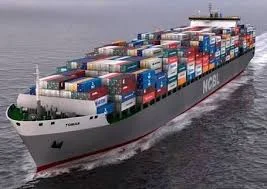
    The Nigerian Ports Authority (NPA) has announced the expected arrival of 33 vessels carrying petroleum products, food items and other cargoes at major Lagos ports, a development analysts say could help ease supply shortages and moderate inflationary pressures in the country.

    According to the Authority’s Daily Shipping Position released on Monday, the vessels are scheduled to arrive between February 22 and February 27 at the Apapa Port, Tin Can Island Port, and the Lekki Deep Sea Port.

    The NPA disclosed that 17 of the incoming ships are container vessels transporting assorted goods, while the remaining 16 ships will berth with bulk gas, diplomatic cargo, bulk urea, empty containers, crude oil, bulk clinker and blended stock.

    The mix of cargoes highlights the role of Lagos ports as a critical gateway for consumer goods, industrial inputs and energy products.

    The Authority also revealed that seven ships and tanker vessels have already arrived at the ports and are currently waiting to berth with aviation fuel, petrol, containerised goods and general cargo, while 17 vessels are actively discharging bulk wheat, soya beans oil, general cargo, bulk sugar, bulk urea, trucks, fresh fish and containers of various goods.

    Economic and Inflation Implications

    Economists say the steady inflow of vessels laden with petroleum products could help stabilise domestic fuel supply, particularly for aviation fuel and petrol, at a time when energy costs remain a major driver of inflation in Nigeria. Improved fuel availability is expected to reduce logistics and transportation costs, which often cascade into higher prices for goods and services.

    Similarly, the discharge of food-related cargoes such as wheat, sugar, soya beans oil and fresh fish is seen as critical to easing pressure on food prices, which account for a significant portion of Nigeria’s inflation basket. Adequate supply of these commodities supports food processors, bakeries and retailers, potentially slowing the pace of price increases if distribution bottlenecks are minimised.

    The arrival of bulk urea and clinker is also expected to support the agricultural and construction sectors. Urea availability is vital for fertiliser production and farm output, while clinker imports are essential for cement manufacturing. Improved access to these inputs could help contain production costs in both sectors, with positive spillover effects on food prices and housing costs.

    Industry analysts note that while vessel arrivals alone do not automatically translate into lower prices, efficient port operations, timely cargo evacuation and improved inland transportation are key factors that will determine the overall economic impact. Delays, congestion or high logistics costs could offset the potential benefits of increased cargo inflow.

    The NPA reiterated its commitment to improving operational efficiency across Nigeria’s ports, stating that faster vessel turnaround and enhanced cargo handling remain central to efforts aimed at supporting trade, economic stability and inflation management.

  • NPA, Dangote to deepen maritime sector, expand export operations

    NPA, Dangote to deepen maritime sector, expand export operations

    Nigerian Ports Authority (NPA) and Dangote Industries Ltd. (DIL) have collaborated on developing the Marine and Blue Economy sector, with a focus on expanding the nation’s export operations.

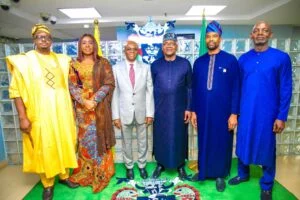
    General Manager, Communication and Strategy, NPA, Okechukwu Onyemekara, disclose this after a courtesy visit by DIL President, Alhaji Aliko Dangote, to NPA Headquarters, in Lagos on Monday.

    Mr. Onyemakara said in a statement that Dangote elaborated on efforts to expand export products outside Nigeria.

    He said that the company would soon expand its export operations, adding that its cement factory at Itori had already started cement exportation.

    Dangote said that the Itori cement factory had six million tons of cement designated for export.

    “In the next couple of weeks, we will start exporting coal out of Nigeria. Our fertilizer export will almost be like eight cargos.

    “The refinery operations will not export less than 25 million tons of various products.

    “We will also be exporting almost about 600,000 to 700,000 metric tons of polypropylene. So when you are talking about export, we are going to be very big.

    “In the next two years, we will be exporting about 16,000 tons of fertilizer. 16,000 tons of fertilizer, it’s actually about $6.5 million to $7 million revenue that will be coming into the country on a daily basis,” Dangote said.

    He said that as part of its export program, DIL will be the major supplier of foreign exchange earnings in Nigeria, and that the operations of Nigerian ports would double in the next two years.

    Dangote promised to frequently highlight the port situation to enable the Federal Government to consider NPA for necessary support.

    He commended NPA for encouraging export at the various ports across the country.

    “The interaction between NPA and DIL is very important for the growth of the industry and to deepen the Marine and Blue Economy, and we have agreed to collaborate for the benefit of Nigeria.

    “The size of our own operation at Lekki alone is going to be almost 240 ships of crude, with each ship carrying one million crude each. And then we’ll have products that will amount to over 600 ships in a year.

    “Then we also have our fertilizer operation, which will be loading almost eight ships. This is an operation that has never, ever been seen in the country,” Dangote said.

    He explained operational challenges with export, adding that he hoped they would be resolved and that they would be able to deliver with the present leadership of NPA.

    Dangote said that their operation could falter if the company was not given the necessary requirements needed for their operations.

    He acknowledged the need for the Federal Government to support NPA with more equipment such as tugboats, among others.

    In his remark, the Managing Director of NPA, Dr Abubakar Dantsoho, thanked Dangote for commending the authority for the benefits of the Naira for Crude sale policy of the Federal Government.

    Dantsoho also praised Dangote for appreciating the establishment of the One Stop Shop policy on the Naira for Crude deal, being coordinated by the Nigerian Port Authority.

    “Dangote appreciated the fact that the government initiative has contributed immensely to achieving more efficiency in the area of transactions and operations among Nigerian government agencies.

    “This is something that started on the 1st of October 2024, and so far, we have treated or operated over 57 vessels every month.

    The projected volume that Dangote is looking at per annum is 600 vessels.

    “If you do 56, 57 vessels into 12 months, you will see that we are already doing bigger than the projection. We will continue to do our best with support from government,” Dantsoho said.

    “The last time government built a new port in Nigeria was 1977, which was Tin-Can Island Port. There is already an approval for the port modernisation of both Tin-Can and Apapa ports.

    “We are looking at maybe the third quarter of this year to commence construction, which is on the brownfield development.

    “On the greenfield part, we have deep seaport development projects that have already been approved by the Federal Executive Council. We have Ibom Port, Bakasi Port, Olokola, Ondo Port, and Badagry in Lagos.

    “These are new ports that the government is concerned about. Very soon, we’ll begin to see that these ports will become reality,” Dantsoho said.

    NPA boss said that 95 per cent of cargoes approved through the National Single Window established by the government were ready for the Port Community System.

    He urged other government agencies to collaborate to enhance port efficiency, adding that other sectors of the economy would witness progress as well.