Tag: Nigerian Senate

  • Timing Dispute Sparks Protest as Akpoti-Uduaghan Misses NCDC Budget Session

    Timing Dispute Sparks Protest as Akpoti-Uduaghan Misses NCDC Budget Session

    A dispute over scheduling on Monday sparked fresh controversy in the Senate as Natasha Akpoti-Uduaghan protested what she described as her exclusion from a budget defence session of the North-Central Development Commission (NCDC).

    The budget defence, held at the National Assembly of Nigeria, was scheduled to begin at 10:00 a.m. and concluded shortly after 11:00 a.m. According to sources familiar with the proceedings, the Kogi Central lawmaker arrived at the venue around noon, only to discover that deliberations had already ended.

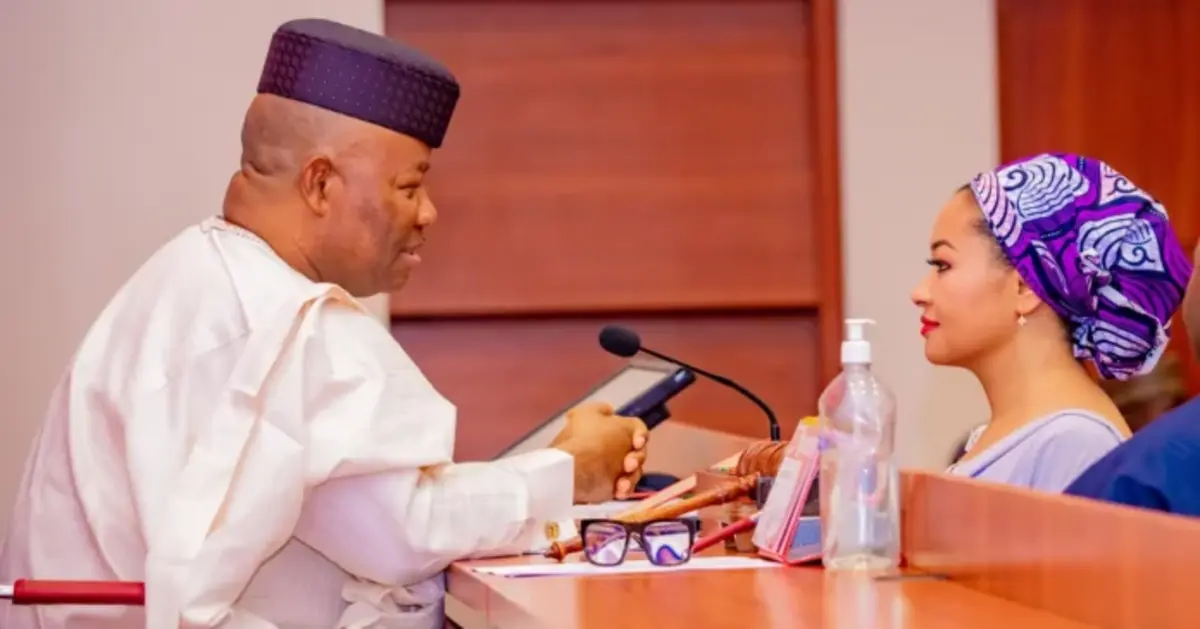
    Senators Akpoti-Uduaghan, Titus Zam and aids during the rowdy session.

    Akpoti-Uduaghan reportedly expressed dissatisfaction with the timing of the session, arguing that it effectively prevented her from taking part. Sources said her protest was not aimed at the substance of the proposed ₦140 billion 2026 NCDC budget, but rather at what she perceived as being shut out of the process entirely.

    Earlier, the chairman of the Senate Committee on NCDC, Titus Zam, told journalists that committee members had examined the commission’s estimates and found them aligned with the development priorities of the North-Central region. He said the panel advised the commission to place strong emphasis on agriculture and security during implementation.

    Monday’s incident comes just days after Akpoti-Uduaghan staged a walkout during a separate oversight session of the Senate Committee on Steel Development. During that meeting, she clashed with committee chairman Patrick Ndubueze after he moved to conclude questioning of the Minister of Steel Development, Shuaibu Audu, despite her request to continue speaking.

    The senator insisted she still had critical issues to raise and accused the committee leadership of curtailing her participation before walking out of the session.

    Taken together, the two episodes have intensified scrutiny of procedural practices within Senate committees, particularly around meeting schedules, members’ participation, and the management of speaking opportunities during budgetary and oversight engagements.

  • NAHCON in Turmoil as Usman Resigns, Stakeholders Demand Total Overhaul

    NAHCON in Turmoil as Usman Resigns, Stakeholders Demand Total Overhaul

    Nigeria’s Hajj industry is once again under intense scrutiny following the resignation of Prof. Abdullahi Usman as Chairman and Chief Executive Officer of the National Hajj Commission of Nigeria (NAHCON), with stakeholders calling for a comprehensive overhaul of the commission.

    Usman’s resignation, which takes effect Monday, was announced on Wednesday in Abuja. He cited personal reasons for stepping down after about 14 months in office.

    However, industry experts argue that his exit reflects deeper structural and political tensions that have continued to destabilize the commission.

    Recurring Leadership Changes Raise Concern

    Within the last two years, NAHCON has witnessed three leadership changes, a trend stakeholders describe as troubling for the stability of Hajj operations.

    Alhaji Zikrullah Hassan served as NAHCON Chairman from December 2019 to October 2023 following his appointment by former President Muhammadu Buhari.

    During his tenure, the commission navigated the challenges of COVID-19 restrictions, introduced the Hajj Savings Scheme, and established the Hajj Institute of Nigeria.

    Hassan was replaced by Alhaji Jalal Ahmad Arabi, appointed by President Bola Tinubu on Oct. 17, 2023, for a four-year term. Arabi was later removed amid an investigation into alleged misappropriation of funds released for the 2024 Hajj exercise.

    Following those allegations, Tinubu appointed Usman in October 2024. His tenure, however, was marked by internal disputes and allegations concerning financial management during the 2025 Hajj, generating public scrutiny and tension within the commission.

    “Campaign of Calumny” — Experts React

    Abubakar Jiddah Usman, a Hajj industry expert, said the frequent leadership changes highlight entrenched discord within and outside the sector.

    “Yes, Prof. Abdullahi Usman has resigned. Whether voluntary or forced is immaterial,” he said.

    “What remains indisputable is that anyone overseeing the Hajj industry in Nigeria faces a campaign of calumny from within and outside the sector. Within two years, NAHCON has changed leadership three times. Shall we continue this way?”

    He dismissed claims that Usman lacked administrative competence, arguing that fluency in Arabic or clerical background had never been a defining criterion for success in managing Hajj operations.

    “To argue that modern Hajj operations require less Arabic fluency is baseless. Were previous chairmen deficient in administrative skills?” he queried.

    He added that past chairmen also faced allegations ranging from abuse of office to political interference, suggesting systemic issues rather than individual shortcomings.

    Call for Sole Administrator

    Another expert, Abdullahi Mohammad, advocated for a radical administrative intervention.

    According to him, NAHCON requires a “no-nonsense” reform strategy, potentially through the appointment of a sole administrator with full authority to restructure the commission.

    “The administrator must insulate the Hajj process from material interests and political interference. Only a radical administrative reset can restore diligence, transparency and service to pilgrims,” he said.

    Concerns Over 2026 Hajj Operations

    Muhammed Ibrahim, Coordinator of Independent Hajj Reporters, described Usman’s exit as unfortunate but not unexpected, noting that most pre-Hajj activities, including registration and airline contracts, had already been completed.

    “Given the discord, it may be best to allow the chairman step down to avoid conflicts affecting pilgrims,” he said.

    He recommended that an experienced insider oversee ongoing operations to ensure continuity until after the Hajj, when a substantive appointment can be made.

    Operators Lament Slot Allocation Issues

    Alhaji Abdullateef Yusuf, President of the Association for Hajj and Umrah Operators of Nigeria, pointed to challenges surrounding the allocation of additional Hajj slots.

    “Many members paid millions for hotels and tickets in Saudi Arabia, amounting to billions of naira. Slots promised were later withdrawn, and there is still no clarity. Our operators are in serious limbo,” he said.

    He urged the government to appoint a calm, reputable and experienced individual with integrity, warning against politically motivated appointments.

    Tinubu Nominates New Chairman

    In response to the resignation, President Tinubu has nominated Ambassador Ismail Yusuf as the new Chairman and Chief Executive Officer of NAHCON.

    The nomination, subject to confirmation by the Nigerian Senate under Section 3(2) of the NAHCON Act 2006, was conveyed in a statement by presidential spokesman Bayo Onanuga.

    The President confirmed that he had written to Senate President Godswill Akpabio seeking expeditious confirmation of the nominee.

    Ambassador Yusuf is a career diplomat who served as Nigeria’s Ambassador to Türkiye from 2021 to 2024.

    As stakeholders await Senate action, many insist that beyond leadership changes, what NAHCON urgently needs is structural reform to restore credibility, transparency and stability to Nigeria’s Hajj operations.

  • Tinubu’s Silent Domination: A Threat to Nigeria’s Democracy

    Tinubu’s Silent Domination: A Threat to Nigeria’s Democracy

    By

    Editor

    President Tinubu does not need to threaten a “do-or-die” election. By capturing institutions, absorbing opposition structures, and weakening electoral safeguards, he is shaping the outcome long before voting begins. When referees are loyal and rules are rewritten, elections become ritual, not choice.

    The events of last Wednesday at the Nigerian Senate left a bitter and lingering taste in the mouths of many Nigerians. For a public already exhausted by broken promises and eroded trust, the handling of the 2026 Electoral Act Amendment Bill felt less like a disappointment and more like a confirmation of long-held fears. For weeks, citizens waited with restrained hope, believing, perhaps naively, that the Senate might finally take a step toward restoring confidence in governance and the electoral process. Instead, what unfolded appeared to be the final straw, a moment that exposed, in stark terms, where power truly lies and whose interests are being served.

    When Olusegun Obasanjo infamously described the 2003 election as a “do-or-die affair,” he revealed his mindset with startling clarity. It was the language of conquest, not consent; of domination, not democracy. The backlash was immediate, but the damage was irreversible. That election has since become a grim reference point, a reminder of what happens when incumbents abandon restraint and treat democratic competition as a personal survival exercise. Yet for all his brazenness, Obasanjo made one critical error: he spoke too plainly. He announced his intentions. He warned the public. And in politics, forewarning invites resistance.

    President Bola Tinubu has learned that lesson well. He has not threatened Nigerians with “do or die.” He has adopted a far more effective strategy: silent domination. There is no bluster, no dramatic declarations, no rhetorical excess. Instead, there is method, cold, patient, and systematic. Tinubu is not engaging in speculation or theatrics; he is locking down the very mechanisms that decide electoral outcomes. This is not opposition paranoia or conspiracy theory. It is observable, sequential, and intentional. Tinubu is not preparing to contest the 2027 election; he is preparing to control it.

    The foundation of this control is institutional obedience. Elections in Nigeria are no longer stolen primarily by ballot-box snatching; they are shaped long before voting begins, inside institutions that determine how votes are counted, challenged, secured, and enforced. Tinubu has therefore ensured that the most critical offices—the judiciary, electoral management bodies, the police, intelligence services, and military command, are headed by individuals whose loyalty is dependable and whose independence is, at best, compromised. This has nothing to do with merit or federal character. It has everything to do with predictability. When disputes arise, when injunctions are sought, when security decisions must tilt one way or another, the president does not want doubt. He wants alignment. In such a system, instructions need not be given. The expectations are already understood.

    Yet institutions alone do not guarantee victory; geography still matters. That is why the ruling party has pursued a ruthless campaign of political absorption across the country. Governors are defecting not out of conviction, but out of calculation. Nigerian politics is unforgiving to dissent and generous to surrender. Federal power is wielded as a weapon, through control of funds, security pressure, and administrative chokeholds. Faced with these realities, many governors have chosen capitulation over confrontation. The result is a weakened opposition and a ruling party that now controls the very state machinery responsible for administering elections. In Nigeria, whoever controls the states controls logistics, security coordination, and the practical implementation of electoral rules. This is not competitive democracy; it is political enclosure.

    Then came the most decisive move: rewriting the rules themselves. Nigerians had placed what little faith remained in technology as a shield against fraud. Electronic transmission of results was imperfect, but it disrupted decades of rigging culture by limiting human discretion at collation centres, the traditional graveyard of the popular will. That disruption made it dangerous. And so it had to be neutralized. The Senate’s decision to weaken electronic transmission and preserve manual handling of results was not the product of confusion or incompetence. It was deliberate. Lawmakers understood precisely what they were doing. They chose the system that allows figures to “change,” results to “adjust,” and outcomes to “emerge.” They acted openly, confidently, and without fear, because they know the system shields them from accountability.

    Calling the Senate a rubber stamp is no longer rhetorical excess; it is an accurate description. In that moment, the chamber made clear that it represents power, not voters. It did not fail Nigerians by accident, it betrayed them by choice. By dismantling electronic safeguards, it restored the most dangerous phase of Nigeria’s electoral process: the opaque journey between polling units and final collation, where votes lose meaning and manipulation thrives.

    Government defenders will insist, as always, that everything done was legal. They are correct, and that is precisely the danger. Authoritarianism in the modern age does not announce itself with tanks and decrees. It advances quietly, through laws, appointments, and procedural camouflage. It smiles, quotes the constitution, and pretends neutrality while suffocating competition. Tinubu’s approach may be legal, but it is fundamentally illegitimate. It drains democracy of substance while preserving its outward form.

    The real danger is not that Tinubu may win re-election. Incumbents often do. The danger is that Nigeria is sliding toward a system where elections exist without real choice, opposition exists without real power, and voters exist without real consequence. When outcomes are engineered in advance, participation becomes ritual. Citizens vote, but nothing changes. Tinubu does not need to rig ballots if he controls the referees. He does not need to intimidate voters if he controls collation. He does not need to threaten rivals if he absorbs or neutralizes them. This is domination without spectacle, power without noise, and manipulation without fingerprints, cleaner than Obasanjo’s blunt-force tactics, and far more corrosive.

    History is unforgiving to such arrangements. Before they collapse, they extract a heavy toll: public cynicism, voter apathy, institutional decay, and the slow suffocation of accountability. Nigeria has seen this story before, and it never ends well. The warning signs are glaring. The tragedy is not that they are subtle, but that those in power are pretending they do not exist.

  • Senate Approves Electoral Act Bill, Denies Scrapping E-Transmission

    Senate Approves Electoral Act Bill, Denies Scrapping E-Transmission

    The Nigerian Senate has approved the Electoral Act (Amendment) Bill, 2026, dismissing reports that lawmakers voted to scrap the electronic transmission of election results.

    The bill was passed on Wednesday after more than four hours of heated debate, particularly over the proposed amendment to Clause 60(3), which sparked widespread speculation on social media that the Senate had rejected real-time electronic transmission of results from polling units to the Independent National Electoral Commission’s Result Viewing Portal (IREV).

    Reacting to the controversy, Senate President Godswill Akpabio described the reports as inaccurate and misleading, insisting that the Senate did not vote against electronic transmission.

    “The Senate has not rejected electronic transmission of results,” Akpabio said shortly after the bill’s passage. “What we did was to retain the provision already in the Act, which permits electronic transmission and was applied in the 2022 elections. This Senate cannot afford to go backwards.”

    Debate on the contentious clause began around 2:00 p.m. and concluded at approximately 6:26 p.m., following concerns that a proposed amendment mandating presiding officers to transmit signed and stamped result sheets electronically to IREV in real time could introduce legal complications.

    Instead, lawmakers opted to retain the existing wording of the Electoral Act, which allows election results to be transmitted “in a manner as prescribed by the Commission.”

    Akpabio stressed that the decision does not eliminate electronic transmission from Nigeria’s electoral framework, adding that the provision remains valid and will continue to guide future elections.

    Similarly, Senate spokesperson Yemi Adaramodu said the Senate did not discard the committee’s recommendation on electronic transmission but avoided provisions that could create legal technicalities during election disputes.

    Adaramodu also disclosed that the amendment removed the power to declare a runner-up as winner in cases where a candidate earlier declared elected by the Independent National Electoral Commission (INEC) is later found to be unqualified to contest.

    Electronic transmission of election results has remained one of the most contentious elements of Nigeria’s electoral reform discussions since the 2023 general elections, with civil society groups and opposition parties advocating clearer legal safeguards to enhance transparency and public trust.

    Following the bill’s passage, the Senate announced the composition of a conference committee to harmonise its version with that of the House of Representatives. The committee will be chaired by Adeniyi Adegbonmire, with Tahir Monguno, Simon Lalong, Adamu Aliero, Orji Uzor Kalu, Abba Moro, Asuquo Ekpeyong, Aminu Abbas, and Tokunbo Abiru serving as members.

    Meanwhile, the Senate adjourned plenary until February 24, 2026, to allow lawmakers focus on the defence of the 2026 budget by ministries, departments and agencies (MDAs).

  • Senate Seeks Mandatory Anti-Venoms in Hospitals After Singer’s Death

    Senate Seeks Mandatory Anti-Venoms in Hospitals After Singer’s Death

    The Nigerian Senate has urged the Federal Government to mandate the availability of snake anti-venoms and other critical antidotes in hospitals across the country following the death of Abuja-based singer, Ifunanya Nwangene, popularly known as Nanyah.

    Nwangene reportedly died after she was bitten by a snake at her residence, a development lawmakers described as a reflection of serious gaps in emergency healthcare delivery.

    During plenary on Tuesday, the Senate called on the Federal Ministry of Health to formulate and enforce national guidelines stipulating minimum stock levels of anti-venoms, antidotes, and emergency medicines in both public and private hospitals.

    The upper chamber also resolved that private hospitals that fail to maintain these essential medicines should not be granted operating licences, stressing that emergency care must meet minimum safety standards nationwide.

    In addition, lawmakers urged the Federal Government to ensure adequate funding and sustained supply of anti-venoms in public health facilities to prevent avoidable deaths arising from snake bites, poisonings, scorpion stings, and drug overdoses.

    The resolutions followed a motion sponsored by Senator Idiat Oluranti Adebule (APC, Lagos West), who noted that Nigeria continues to record increasing cases of envenomation and poisoning requiring urgent medical attention.

    She warned that the absence of life-saving antidotes in hospitals often results in deaths that could otherwise be prevented with timely intervention.

    Contributing to the debate, senators observed that Nwangene’s death highlighted deficiencies in emergency preparedness, adding that prompt access to anti-venoms might have altered the outcome.

    The Senate further directed the National Agency for Food and Drug Administration and Control to work with the Ministry of Health to oversee the procurement, quality control, storage, and nationwide distribution of safe and affordable anti-venoms, with priority given to high-risk areas.

    State governments were also urged to conduct immediate audits of hospitals within their jurisdictions to ensure compliance with approved standards for antidote stocking and emergency response.

    The Senate observed a minute of silence in honour of Nwangene, who died at the age of 26.

  • Olofu Engages Benue South Stakeholders in Lagos Over Senate Agenda

    Olofu Engages Benue South Stakeholders in Lagos Over Senate Agenda

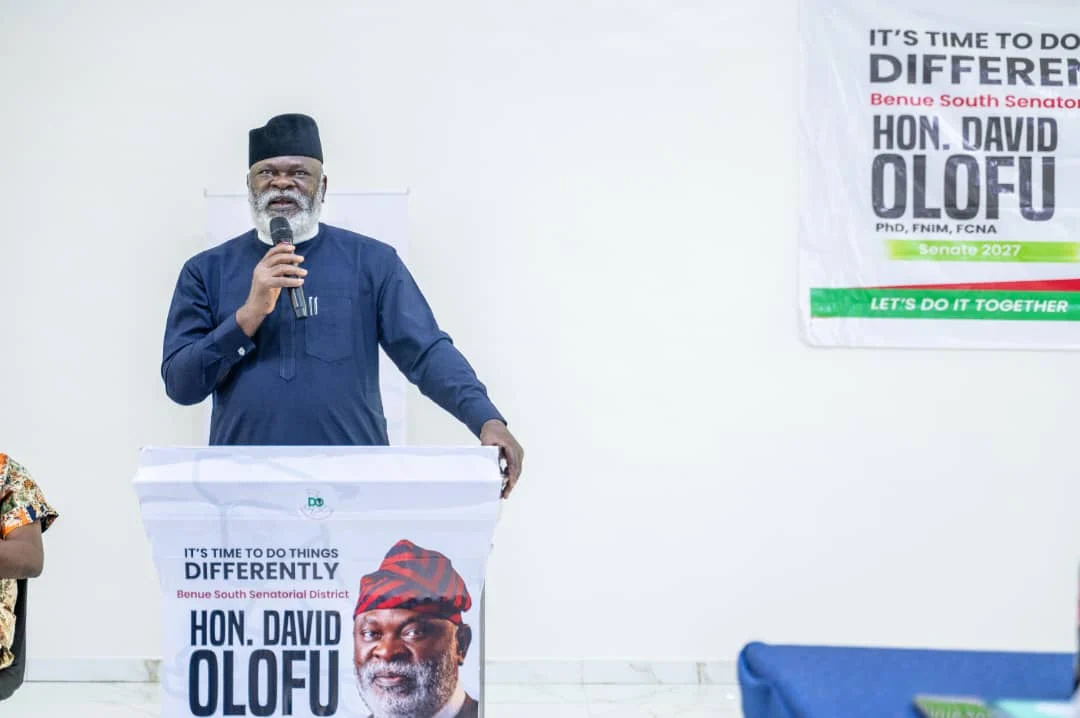
    Breaking from conventional campaign outreach, Dr. David Olofu at the weekend used a Lagos engagement to deepen consultations for his Senate race, convening diaspora stakeholders alongside leaders from the home front in the Benue South Senatorial District.

    The meeting brought together representatives from the district’s nine local government areas, including community leaders, professionals, retired public officers, party stakeholders, and members of the Benue South diaspora, to examine development priorities and the future of representation.

    Addressing the gathering, Olofu said his decision to seek elective office followed extensive consultations and growing dissatisfaction with the state of representation in the district. He described Lagos as a strategic venue, noting its position as Nigeria’s commercial nerve centre and home to a significant population of Benue South indigenes.

    According to him, consultations with traditional rulers, professionals, and grassroots leaders informed a legislative agenda anchored on four pillars, People, Power, Prosperity, and Progress, aimed at converting the district’s agricultural, human, and economic potential into sustainable development.

    He stressed that effective representation must translate into equitable policies, balanced development, and fair resource allocation across all communities.

    Olofu also announced plans to establish the Benue South Peoples Assembly (BSPA) and the Benue South Peoples Council (BSPC), which he said would institutionalise inclusive, bottom-up policymaking and sustained citizen participation.

    He outlined twelve priority areas for legislative intervention, including agriculture and food security, education, health, entrepreneurship and youth empowerment, ICT and innovation, infrastructure and road networks, local government reforms, security and peacebuilding, law and justice, industry and energy partnerships, diaspora engagement, and women and sports development.

    The event featured goodwill messages from several leaders. Chief Abu Abdul opened the session with prayers, while Rt. Hon. John Ngbede, who led the delegation, said the engagement was notable for its inclusiveness, with representatives from various Idoma dialect groups and communities present.

    Former Secretary to the State Government, Prof. David Salihu, and governorship aspirant Dr. Peter Adejo commended the consultative approach and stressed the need for leadership grounded in broad stakeholder input.

    Dr. Olofu Addressing the Stakeholders at Ikeja, Lagos

    Other speakers included Chief Patrick Ogbu; former Okpokwu Local Government Chairman Barr. Jacob Ogwuche; former Oju Local Government Chairman Hon. Edwin Okpe; retired Assistant Comptroller-General of Customs Odaudu Salihu; retired Assistant Inspector-General of Police Tony Olofu; Dr. Michael Adah, Chairman of Opiatoha K’Idoma Lagos; retired Rear Admiral Andy Onoja Odeh; Dr. Mike Adah, General Secretary of Opiatoha Club Lagos; and Godwin Onyeke, President of Okpotuche Club Lagos.

    An elder statesman and party stalwart, Alhaji Usman Lungu, urged loyalists to mobilise effectively for the aspirant’s success, pledging to work across party lines toward that objective.

    Also speaking, Chief Luke Akubo, the Och’Idoma in Lagos, offered prayers and blessings for Olofu, praising his philanthropy, governance experience, and commitment to the emancipation of the Idoma nation.

    Popular activist Chris Adaba Aba, also known as Mad Lion, described the engagement as a call for Idoma unity, while a prominent woman leader and community organiser, Madam Cynthia Egwa, said the consultations were unprecedented, citing years of neglect of the senatorial district.

    Some speakers likened the consultations to a “know-your-customer” governance model, arguing that understanding community needs should precede policy formulation.

    The Lagos engagement concluded with prayers and goodwill messages and forms part of Olofu’s wider consultation tour across Benue State as he seeks the Senate seat on the platform of the African Democratic Congress.

  • Persisting insecurity: Senate to stage Security Summit

    The Nigerian Senate on Tuesday set up an ad hoc committee to organise a three-day National Security Summit.

    The upper chamber’s resolution was sequel to a motion sponsored by Sen. Jimoh Ibrahim (APC-Ondo) and co sponsored by four other senators during plenary.

    The motion was titled “Urgent Need for a National Security Summit”.

    Moving the motion, Ibrahim raised concerns over the high level of global insecurity which was rising due to the events in Russia and Ukraine.

    He said that recent events in the country had led to feelings of discomfort and insecurity which has placed the past accomplishments of our security forces at risk.

    Ibrahim added that insecurity across Nigeria has become pervasive, impacting on both urban and rural areas.

    “Where banditry, ransom kidnappings and terrorism were pressing issues across the country as well as other violent crimes”.

    He said that President Bola Tinubu was serious about the peace of Nigeria, as such, there is the need for some fact-finding intelligence support for the President’s efforts.

    “No country will allow its citizens to understand security by living with insecurity.

    “Therefore, the ideology of peace for all, as outlined in the executive policies of the Renewed Hope Agenda should be upheld and promoted,” he said.

    Contributing, the Senate Minority Leader, Sen. Abba Moro said “What is before us now is whether we should convoke a national security summit.

    “These security challenges are happening in every area and in different dimensions. In proffering solutions to the security challenges, there is ‘no one side fits all’ approach.

    “We’ve provided solutions in the past and they have not worked does not stop us from proffering solutions.

    “Now that we are confronted with hydra-headed insecurity, there is nothing that stops us from exploring all means of bringing insecurity to a halt,” he said.

    In his remarks, the President of the Senate, Godswill Akpabio noted that the summit will compose delegates from states, communities affected, traditional rulers and students unions.

    This, he said was so we have a holistic debate because security is everybody’s business.

    The summit will include delegates from all levels of government, as well as traditional institutions.

    The Red Chamber also urged the federal government to review and rejig the country’s security policies based on outcomes from the summit.

  • Sen Natasha Akpoti-Uduaghan orchestrated recall: a new low in misogyny and abuse of power.

    Sen Natasha Akpoti-Uduaghan orchestrated recall: a new low in misogyny and abuse of power.

    By Wale Alonge

    The prevalence of misogyny, acquiescence to egregious abuse of power, and the flagrant disregard for procedures on display in the defense of a man accused of sexually harassing a senator is alarming and disheartening. The orchestrated effort to maliciously discredit the alleged victim, supported by numerous individuals on social media, including the COYN platform, is equally disturbing.

    It is widely acknowledged that sexual harassment and exploitation of women are pervasive issues in our society. Yet, many men have chosen to support and justify one of the most egregious abuses of power in the Nigerian senate, citing senate rules as a justification.

    I pose the following questions to some of the male folk who are attempting to persuade us to disregard common sense and the evidence before us by advocating for the “sequence of events theory”: That their posers about the breach of senate rule by Senator Natasha preceded chronologically her allegation of sexual harassment against Senate President Akoabio. Hence her accusation had nothing to do with her allegation. If you genuinely believe that the accusation of breaching senate rules against Senator Natasha Akpoti Uduaghan was unrelated to her allegation of sexual harassment against senate president Akpabio, then please answer the following questions:

    If you cannot answer affirmatively to any of these questions, how can anyone objectively defend the blatant abuse of power exhibited by the Nigerian senate in its treatment of Senator Natasha Akpoti Uduaghan? This defense defies logic, fairness, objectivity, respect for justice, and adherence to rule-based politics.

    In conclusion, the Nigerian senate has established a new low in misogyny and abuse of power in its handling of the Natasha-Akpabio scandal. It is essential to note that no one is disputing the guilt or innocence of the two individuals involved in the scandal. The truth of the events is known only to the two parties. What is being contested is the unmistakable effort by the Nigerian senate to tip the scales of justice in favor of the alleged perpetrator and to excoriate and punish the alleged victim in the most severe and appalling manner. In a reasonable system, the victim would have been given the benefit of the doubt, especially considering our society’s alarming statistics on sexual harassment and exploitation of women. This is an undeniable fact supported by extensive research data and our collective lived experience.

    The impact about the blight of the Natasha-Akpabio scandal will reverberate for decades to come. Its victims might by our daunted or granddaughters who are now witnessing the re-victimization, brutal excoriation and the crude and severe punishment being meted out to powerful Senator Natasha Akpoti Uduaghan would get the chilling message that in Nigeria, victims of sexual harassment had better kept their mouth shut and take their abuse and dehumanization in silence. That society will punish them severely if they spoke out. This is indeed a sad watershed episode in our nation’s history and the treatment of victims of sexual harassment and exploitation.

    Adewale Alonge, PhD, is Founder & President, Africa Diaspora Partnership for Empowerment and Development. www.adped.org

  • Amid Natasha controversy, Senate reaffirms confidence in Akpabio

    Amid Natasha controversy, Senate reaffirms confidence in Akpabio

    Senate on Thursday passed a vote of confidence in Senate President Godswill Akpabio, reaffirming its support for his leadership.

    This vote is coming on the heels of the controversy surrounding the suspension of Senator Natasha Akpoti-Uduaghan over allegations of misconduct.

    During Thursday’s plenary, the Senate Leader, Senator Opeyemi Bamidele, moved the motion, which was seconded by the Deputy Senate Minority Leader, Senator Olalere Oyewumi.

    The lawmakers overwhelmingly backed Akpabio, emphasizing their commitment to upholding parliamentary rules and procedures.

    Bamidele clarified that the Senate had not received any formal allegations of sexual harassment against Akpabio between August 2023 and the present.

    He stated that the issue referred to the Senate Committee on Ethics was unrelated to such claims.

    According to him, the Senate’s actions are guided strictly by constitutional provisions and not personal grievances.

    “The Nigerian Constitution, under Section 60, grants Parliament the authority to regulate its own procedures. The Senate operates within these legal frameworks, ensuring due process and order,” Bamidele stated.

    He further acknowledged the public’s right to scrutinize government actions but emphasized that governance must adhere to established protocols for effective service delivery.

    Deputy Senate President, Senator Barau Jibrin, who presided over the session, put the confidence motion to a vote, with the majority of senators endorsing it.

    The vote comes amid ongoing public debate over Senator Akpoti-Uduaghan’s suspension following her allegations against Akpabio. However, the Senate leadership insists its decisions are based on parliamentary ethics and constitutional guidelines.

    Similarly, the complaint filed by Senator Natasha Akpoti-Uduaghan at the United Nations Inter-Parliamentary Conference in New York, has continued to raise dust as the Nigerian Senate has defended its decision to suspend the lawmaker representing Kogi Central.

    The Senate insisted that it was due to “gross misconduct” and not her sexual harassment allegation against Senate President Godswill Akpabio that led to her suspension.

    Recall that while addressing the United Nations Inter-Parliamentary Conference, Natasha alleged injustice and harassment from the powers that be in the Senate.

    Moreover, following her presentation, the IPU assured her that it would take necessary steps to address her grievances but stressed the need to also hear the other side before making any official pronouncement.

    However, the Nigerian Senate has responded to Senator Natasha’s complaint to the IPU through a letter written by the Senate Leader, Senator Opeyemi Bamidele.

    The letter was read by the Chairperson of the House of Representatives committee on Women Affairs and Social Development, Honorable Kafilat Ogbara, who is attending the event in an official capacity representing Nigeria.

    The Senate letter reads, “Senator Natasha-Akpoti-Uduaghan was suspended for gross misconduct and unruly behaviour and not as a result of allegation of sexual harassment or assault.

    “The authority of the Senate of the Federal Republic of Nigeria firmly refutes the deliberate misinformation and false narrative being circulated by certain media organisations regarding the sixth months suspension of Senator Natsaha-Akpoti-Uduaghan.

    “Let it be unequivocally stated that Uduaghan was suspended solely for her persistent act of misconduct and disregard for the Senate Standing Orders.”

    Honourable Ogbara called for a holistic investigation into the allegation by Senator Natasha against the Senator President, Godswill Akpabio.

    She maintained that procedures and necessary actions under the Senate rules were observed before Senator Natasha’s suspension.

    Last week, the Senate suspended the lawmaker in a move that has continued to generate debates across the country.

    She had initially submitted a petition to the Senate accusing Akpabio of sexual harassment. But the lawmakers threw it out before suspending her even after submitting another petition.

    Senator Natasha vowed to continue the fight against “injustice”. But in the wake of the suspension, Akpabio denied the accusations and maintained he has never assaulted women.

    Recall that the Natasha face-off with the Senate president started on February 20, 2025, after her seat was changed during plenary

  • Natasha, senate and enforcers of the cult’s code of silence

    Natasha, senate and enforcers of the cult’s code of silence

    THE Nigerian Senate is far more than the upper legislative chamber in our bi-camera parliament. In more respects than one, the senate is also a cult which thrives in occultic practices especially on matters pertaining to the conducts and utterances of senators. Other run-of-the-mill cults operate in secret and subscribe to strange codes known only to their members. The members of the senate also operate through codes that are not entirely secret. Their own codes are printed in what senators call Standing Orders. Practicing senators are expected to inscribe the contents of their Standing Orders in their hearts. For some senators the Standing Orders trumps the 1999 Constitution of Nigeria as amended. The Standing Orders is their own holy grail or writ the contents of which must never be breached no matter how anachronistic they may be. Some senators especially their presiding and principal officers are wont to believe that their Standing Orders ranks above every other document in the land. Every senator is mandated to come to work especially plenary clutching the Standing Orders pamphlet. It’s not the same requirement for the Constitution of the Republic.

    So, as a senator, when you take the oath of office and allegiance to the Constitution, you would also invariably be subscribing to senate’s peculiar code. The difference is that you may breach the Constitution and go scot-free or get away with a slap in the wrist. But if you break their code, the hammer of the cult leaders would fall on you heavily, swiftly, and fast. The hammer can be devastating and ruinous. Except perhaps for former senator Shehu Sani, no senator aligns with the offending senator. Last weekend, senator Sani said he was saved from what appeared to be an inevitable suspension from the senate for nothing less than six months but for the intervention of presiding officers, senators Olusola Saraki and Ike Ekweremadu, respectively senate president and deputy senate president at the time. What was senator Sani’s offence: he publicly disclosed the salaries and allowances of senators during his time. In Nigeria salaries and allowances of senators, members of the House of Representatives, and some other public officers could be likened to the Constitution of Malawi under their former president, the late Hastings Kamuzu Banda. Legend has it that when Banda had his vice grips on Malawi, it was a criminal offence for any other person except the president to quote or reference any provisions in the Constitution. It was also forbidden that any Malawian should speculate on the age of the president. So senator Sani was set to be sacked from the senate by those who did not elect him.

    Nigerian senate was part of making a law to encourage whistle-blowing and protect whistle blowers, but it loathes whistle blowers from amongst its fold, and especially if the whistle blowing has to do with its activities, actions and operations. The most important operating code for our senators is that “nga – aha eri anaghi eri onwe ha” or dogs don’t eat dogs. Except for the aspect of accusation of sexual harassment against the current president of the senate, Obong Godswill Akpabio, by  senator Natasha Akpoti-Uduaghan, nothing that has happened in the past two weeks was strange. At the minimum no less than six senators had been suspended from the senate since the advent of civil rule about 26 years ago. To be candid less than 10 suspensions could not by any imagination be said to be too much. So on this score kudos to the senate. However, a closer examination of some of the reasons for the suspensions of senators should be concerning. Some of them speaks to the lawlessness of the presiding officers of the senate, and the inclination to enforce a culture of silence in the senate. The same applies to the House. One senator Abdul Ningi was suspended from the senate last year for three months for blowing the whistle on the padding of the national budget by some lawmakers in the national assembly to the tune of N3trillion. He further alleged that two distinct budgets were being operated – one approved by the national assembly and the other procured by the Executive arm of government for itself. He was humiliated and hounded out in the guise of suspension. As it later turned out senator Ningi spoke the truth. The budget in question was mindlessly padded and two budget documents were being executed. But there were no consequences. Not from the Executive, not from the Legislature. The culprits went scot-free. The majority of senators and representatives respected the cult’s code of silence. The only code in the presidency is the president who obviously cannot go to equity. So the evil doers walked away with their financial heists. And the country muddled along in the journey to nowhere.

    Ovie Omo-Agege was once a senator. In 2018 he was accused of opposing a bill for election reordering. His name was also mentioned when some thugs stormed the senate chamber and stole the mace, the legislative house’s symbol of authority. That burglary was captured on live television. The action of badging into the senate to disrupt proceedings and seize the mace was said to have been ignited by sundry leadership disputes. Omo-Agege was suspended from the senate, and denied the privileges and appurtenances of office. He went to court and the court struck down his suspension. The presiding judge ruled that the action of the senate was illegal. A similar fate befell senator Ali Ndume. He was the majority leader of the current senate (the 10th senate). Last year he spoke out about the grinding poverty in the land occasioned by the economic policies of the ruling All Progressives Congress (APC) political party of which he is a ranking member. He spoke to other issues as well. He was swiftly suspended and stripped of his principal officer’s role. The office of the majority leader was quickly handed over to another party man, foreclosing any possibility of it being restored to him at the end of his suspension. He was coerced to apologise before his sacking was lifted. The same Ndume was suspended in 2017 when he demanded the probe of senators Saraki and Dino Melaye over allegations that Saraki who was senate president had a bulletproof car seized by the Nigerian Customs Service, and that Melaye had forged his academic certificates. Saraki appeared before the ethics panel and later stepped aside for his deputy to preside over the committee of the whole house where the ethics committee report was considered. He was cleared of the charge. On his part Melaye obtained a certified true copy of his university diploma and was also cleared. Ndume is a veteran lawmaker having been in the national assembly since the return to civil rule, moving from the House to the senate. He shoots from the hips, and routinely talks himself into trouble.

    Other senators who have talked themselves into trouble were Arthur Nzeribe who in 2022 was suspended indefinitely during the senate presidency of Pius Anyim Pius over allegations of a N22 million fraud, and senator Joseph Waku who was suspended in 2000 after suggesting that a military coup would be preferable to allowing the then president Olusegun Obasanjo to continue in office. Senator Femi Okurounmu suffered a similar fate in 1999 after he alleged that some senators were plotting to impeach Obasanjo.

    Though suspension of senators is as old as this fourth republic but none has generated so much controversy as the recent sacking of the Kogi central senator Natasha Akpoti-Uduaghan. It started with the removal of Natasha from her sitting position in the senate chambers. She refused to move in spite of pleas from her colleagues. On this score she failed because the allocation and reallocation of seats is the exclusive preserve of the senate president. It does not matter that she was not pre-informed as courtesy would demand. However, the failure to inform her of the change did not violate any rules. She eventually yielded and then claimed she was being victimised because she rejected the sexual advances of Akpabio. She listed times and occasions when Akpabio made sexual overtures to her, including telephone calls. Natasha followed up with a petition to the relevant committee of the senate. The petition was initially rejected for procedural errors. One thing led to the other and Natasha was swiftly suspended for allegedly breaching senate rules including refusing to stand up whenever Akpabio was ushered into the chamber. She just managed to submit her reworked petition before she was walked out of the senate to begin her draconian and illegal six months suspension.

    Since Natasha’s suspension the senate has been in overdrive to justify her sacking ostensibly because of the backlash it has generated. Senate leader Opeyemi Bamidele said at the weekend that Natasha was suspended for violating senate rules and for ‘unparliamentary behaviour’. He said that ‘Rather than submitting to the authority of the senate, Akpoti-Uduaghan had been misinforming the unsuspecting public that she was suspended because she accused the senate president of sexual harassment’. Obviously the senate leader takes Nigerians for fools. But he’s not alone in his hubris. Akpabio himself weighed in on the matter in which he is the prime accused. He said while receiving a group from his south south region that Nigerians are ignorant of the processes and procedures of the senate, and so lacked the capacity to make reasonable judgement on the matter. The interesting thing is that the real morons among Nigerians are in government – the Executive, Legislature, and Judiciary. Often the selection of the key officers in our governments at all levels are not based on merit or capacity. The tragedy is that when they get there, by hook or crook, they think themselves as the best and the brightest. If they are what they think that they are, our country will not be the mess it is today, and butt of jokes in the commity of nations.

    If the current senate is not a cult there’s no other universe where Akpabio would be presiding over anything concerning Natasha who accused him of sexual harassment. The ethical thing to do would be for him to recuse himself from the sentencing without fair hearing of Natasha even if her kangaroo trial was for the alleged breach of senate rules, and ‘unparliamentary behaviour’. Akpabio had no scruples of being a judge in a case which involves him by association. Furthermore, senate by suspending Natasha has demonstrated that it is a lawmaking body that takes delight in breaking the law. Or how do we explain the fact that there’s a subsisting judgment from a court of competent jurisdiction that suspending a lawmaker for six months was illegal.

    UGO ONUOHA was the Managing Director/Editor-in-Chief, Champion Newspapers Limited