Tag: Nnamdi Kanu

  • Between a monstrous Kanu, hideous state, and rogue judiciary

    Between a monstrous Kanu, hideous state, and rogue judiciary

    By

    UGO ONUOHA

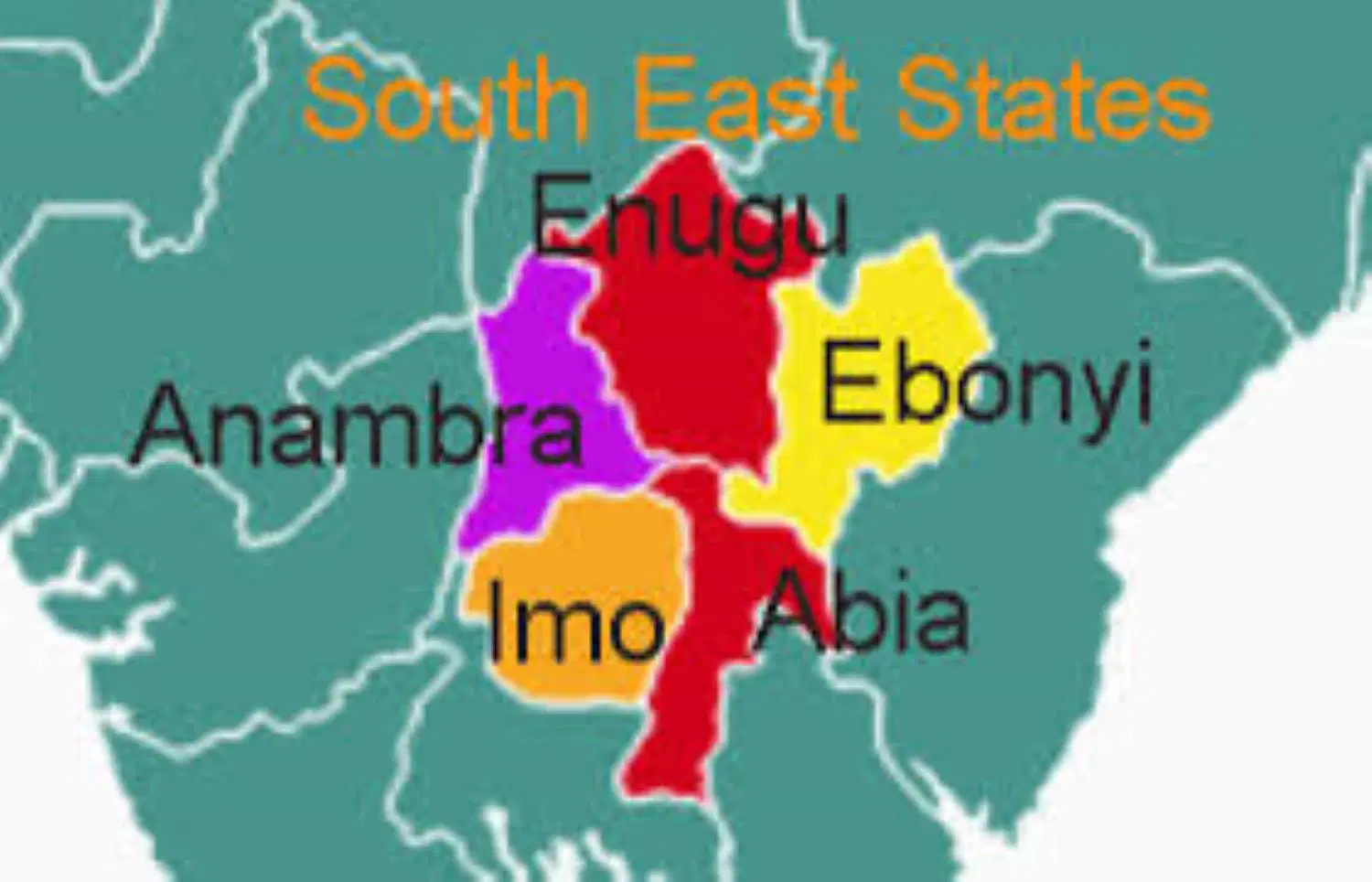
    To many Nigerians including some Igbo, Mazi Nnamdi Kanu is the devil’s incarnate. He probably is. But not so fast. To some other Nigerians, he is the major problem of this country. Currently. To the Igbo who are outside the cult of Kanu, the putative  leader of the Indigenous People of Biafra [IPOB], he is the sole reason for the loss of their loved ones, the ruination of their businesses in the south east, the pervasive insecurity in the Igbo nation, and the despoliation of a once peaceful and thriving region. Kanu, and Kanu alone is the reason why the Igbo, arguably the most populous indigenous nation in Nigeria, have been cut adrift from the mainstream of Nigeria’s national politics since after the cameo appearance of the former Nigerian vice president [1979-1983], the late Dr. Alex Ifeanyichukwu Ekwueme, an architect and a lawyer.

    Everything evil afflicting Ala Igbo, and to some extent Nigeria, since the emergence of Kanu on the scene as an agitator and the inspiration of a separatist or self determination movement for the Igbo under the umbrella of Biafra have been laid at his feet. And this is perhaps rightly so. However, not many of us will readily admit that before the advent of the menace of Kanu, there was a disconnect in Igbo land between leaders and followers. There was a palpable leadership vacuum. And as they say, nature abhors vacuum. There was a misalignment between the interests of the Igbo leadership and the aspirations of the younger generation. Nnamdi Kanu who in reality was not the founder of IPOB moved in to fill the vacuum. He seized the organisation and then deployed Radio Biafra to push his megalomaniac agenda of attempting to become the Supreme Leader of the Igbo, a people who are otherwise urbane, sophisticated, discerning and republican. He deployed his oratorical prowess and prescience of mind to sway the gullible and the simple-minded. Some uninformed people believed that his worshippers were only young people. No. They cut across a wide spectrum of the Igbo – young, old, literate, semi-literate, university teachers, students, artisans, and diasporans. Just name it.

    The majority of Kanu’s apostles verily believed that the declaration of the new republic of Biafra was imminent. Dim Chukwuemeka Odumegwu Ojukwu had declared a Republic of Biafra in 1967 which became defunct in 1970. Kanu’s grossly uninformed followers kept boasting about the countries and world powers that had already recognised the emergent phantom nation, including the prospective issuance of a proclamation by the United Nations [UN] birthing Biafra sooner than the skeptics could imagine. In a real, though misguided sense, there was a revolution of rising expectations amongst his supporters, and freedom for Biafrans from the suffocating Nigeria which was derogatively referred to as a zoo. So whatever Kanu said to the maddening crowd was the gospel truth. It was not unusual then to see charlatans and some otherwise respectable and knowledgeable persons fawning and prostrating flat on the ground to greet Kanu in public places. And he reveled in the obsequious idiocy. A full blown cult was formed. Many Igbo dared not criticise or even advise the Supreme Leader. He had a short fuse for those who held contrary views about the charade called a liberation struggle. Even speaking in whispers against the Leader was a dangerous pastime and venture because Kanu had eyes and ears in many communities in the south east. Every dissenter became circumspect while speaking even in small gatherings in Igbo land. The reach of Kanu and his henchmen was frighteningly pervasive. And the fear of speaking against the man was the beginning of wisdom. You could be killed or maimed at the minimum. You could lose family members and livelihoods. In short, there was no safe place.

    From that point the so-called agitation to found the new Biafra could only go one way- down the hill and down a slippery slope. Kanu created or better still promoted an inchoate organisation he was incapable of managing because, ab initio, he was incapable of managing himself. He mistook delusion for success. He strutted around with swagger and an unrivalled air of self-importance. He became disdainful of everybody. He thought himself above reproach. He became the legendary or the proverbial “eze onye agwalam” of Ala Igbo. He was abusive to everybody, with justification in some cases. He travelled in and out of Nigeria believing that his dual nationality [he was also British] will provide a sufficient cover or immunity for him. Apparently, Kanu was convinced that Britain, the West and the world would be in his corner and on the side of Biafra if anything untoward happened to him or his struggle. He may be a smart youngster but he was a novice on realpolitik. Every country’s involvement or intervention in external situations are primarily driven by national interests not emotions. For many countries, a bird in hand [Nigeria] is worth more than a thousand birds [Biafra] in the sky.

    So by Kanu or through Kanu the Igbo nation over time has become a wasteland of sorts. The violent enforcement of sit-at-home orders by the IPOB since 2017 has devastated every sector of the south east – businesses, investments, education, governance, among others. Bloodletting which used to be an abomination among Ndigbo has become commonplace. There had even been stories of cannibalism among the Igbo “efulefu” or renegades. “Aru mere”. At the peak of the insecurity and up till now, some Igbo rituals including traditional marriages were consummated in strange lands. That was the extent of the damage to the psyche of a proud people. If the truth must be told many of the Igbo people residing outside the homeland have been IDPs [internally displaced persons], though they are not captured in the official government statistics. Some have not visited home in the past five years or more. Others from the diaspora make Lagos, Port Harcourt, Asaba or some other places their bases. And from those places they make sorties to their villages. They dash in and dash out before news would filter out that they were around. That had been part of the tragedy of the Igbo for almost one decade.

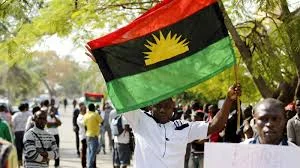
    However, it is convenient though dubious to make Kanu the scape goat. But if the truth must be told it will be wrong to heap all the blame or the woes of the south east on Kanu. In the beginning IPOB was not a violent self determination movement. Apart from the leadership cadre IPOB was composed of youngsters in the south east who organised rallies and peaceful protests in that region armed with the flag and insignias of the defunct Republic of Biafra. They operated for many years that way until the advent of Nigeria’s affliction, the late Muhammadu Buhari, to the presidency in 2015. He had an abiding disdain which bordered on hatred for the Igbo. He spoke derogatively of the Igbo nation throughout his eight wasted years of ‘non-governance’. Indeed, he set Nigeria back by 30 years at the minimum. And it was he, Buhari, who incited and stoked violence in the south east. His unleashing of the military on unarmed protesting youths in Igbo land, and the atrocities they committed through their so-called Operations Python Dance and Crocodile Smile were well documented by local and global human rights organisations, including Amnesty International. There were videos of soldiers shooting fleeing pro-Biafra youths in the back and killing them all over the east. There were footages of security agents indiscriminately arresting Igbo youths and subjecting them to humiliation and unimaginable torture, often resulting in gruesome deaths.

    Sadly, Kanu and his ragtag and brainless group allowed themselves to be goaded into the cycle of violence and bloodletting. He established the Eastern Security Network [ESN] to, according to their idiotic tale, ward off the invasion of Igbo land by the marauding and gun totting Fulani herdsmen. Videos of their armed but rag-tag ‘soldiers’ were caused to go viral on social media. Ideally, no sovereign tolerates a challenge to its jurisdiction. So the full weight of the armed forces and mercenaries from a private military company owned by Dokubo Asari was visited on the east. The mercenaries infiltrated remote communities in the Igbo heartland, recruited and armed locals who left sorrow and blood in their trail. Dokubo confirmed this much in one of his recent media interviews. It has to be stated for clarity that the impression given about the Nigerian sovereign not tolerating any challenge to its powers only obtains in the south, and particularly in the south east. The sovereignty of Nigeria has been severally challenged in parts of the north without consequences. Terrorists, bandits and kidnappers are still occupying Nigerian territories in parts of the north, setting up administrative structures, and levying taxes on indigenes and residents. Ironically governments are negotiating with the terrorists under the guise of a non-kinetic approach to fighting insurgency. Terrorists come to these negotiations with governments armed with military grade weapons. And they pose for pictures with the government negotiators who cut the image of zombies. As we write this such a negotiation might be ongoing somewhere in Katsina or Zamfara. What a weird spectacle?

    The foregoing notwithstanding, Nnamdi Kanu deserves to be made to pay for the turmoil in Ala Igbo. He is directly or vicariously responsible, no matter how his sympathisers would want to spin it. However, the current court process against him in Abuja is a trial by ordeal. Persecution not prosecution. Kanu’s abduction in a foreign land said to be Kenya, and his extraordinary rendition to Nigeria offended all known municipal laws and international treaties. A fact finding team of rapporteurs of the United Nations has since declared that Kanu’s abduction and trial was illegal. It said that Kanu was a prisoner of conscience, and so should be released. ECOWAS court was reported to have made a similar finding. Even the Abuja division of Nigeria’s Court of Appeal ruled in 2022 that the manner of the abduction and return of Kanu to Nigeria had stripped all the law courts in the land of jurisdiction. But the Supreme Court has a contrary view that appears to be untethered to any laws or precedence. Kanu’s prosecution or persecution was expected to begin to fully unravel by yesterday (Monday, Oct. 27). He has disengaged his attorneys and elected to defend himself. He has listed high profile serving and former government officials, and some foreigners as his witnesses. Some see his move as foolish. A no-brainer. Probably, they are right. But one thing is sure: Kanu will not play on the turf and by the rules of the prosecution and the courts. He won’t allow himself to be drawn into legal niceties or allow himself to be constrained by lawyering. Kanu may have reckoned that the Nigerian state with its compromised judiciary is determined to get him, to break him, and to possibly kill him. So he will fight as dirty as he can muster and use every tool at his disposal to expose the ugly underbelly of the hideous Nigerian state and its rogue judiciary. Nigeria instead of Kanu could be on the dock. This trial promises to be a spectacle. But it could also end in an anti-climax. Nothing is impossible In Nigeria, the self-styled but delusional, giant of Africa.

    Ugo Onuoha, Veteran Journalist, was the Managing Director/Editor-in-Chief, Champion Newspapers Limited.

  • Kanu, Besigye and contours of Kenya’s rogue-state

    Kanu, Besigye and contours of Kenya’s rogue-state

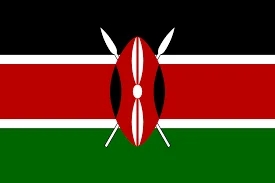
    KENYA, the East African country noted for its leisure and tourism, including the globally acknowledged safari, is fast carving a niche for itself. That niche is likely to earn the country a notoriety that could prove deleterious to all other aspects of its national life. If the noticeable conduct of the Kenyan state has been limited to one administration and one political party, it could have just passed as the bad act of one regime or one political party. But within three short years two different presidents of the country had acted in ways that should be of concern to the rest of Africa, the African Union, and indeed the world. Kenya, in fact its capital Nairobi, is becoming a deadly place for visiting opposition figures from other countries in Africa. It’s fast becoming a ground for the capture, abduction, kidnapping, imprisonment, drugging, and facilitating the extraordinary rendition of vocal opponents of authoritarian regimes elsewhere on the continent.

    The first in such unsavoury conduct in recent memory was in 2021. Uhuru Kenyatta, the son of that country’s independence president Jomo Kenyatta, was the president in 2021. In 2014  he had escaped trial at the International Criminal Court (ICC) in The Hague, Netherlands on charges of inciting bloody riots over election disputes. Uhuru was the fourth president of the country from 2013 to 2022. Ahead of the 2022 election, he worked against the eventual winner William Ruto who belonged to the same political party as him, and who was in fact the deputy president. Uhuru had been everything anybody could be in the politics and governance of his country including being minister of finance, and deputy prime minister. But apart from allegations of inciting bloody election riots during which scores of Kenyans died, and the humiliating charges before an international tribunal, was his regime’s facilitation of the abduction and extraordinary rendition of Mazi Nnamdi Kanu to Nigeria in 2021. Kanu is the leader of the Indigenous People of Biafra (IPOB), a group campaigning for the self-determination and independence of the Igbo in the south east of Nigeria. At the time of his abduction in Kenya, Kanu was an unrelenting and unsparing critic of the regime of Nigeria’s immediate past president, Maj.- Gen. Muhammadu Buhari. Buhari turned out to be an unmitigated disaster and an affliction on the country during the eight years of his presidency.

    Because of the criminal conduct of Uhuru Kenyatta’s rogue regime, Nnamdi Kanu has remained in prison in Abuja, Nigeria’s capital territory since 2021. An attempt to set Kanu up on February 10, for what he (Kanu) and some other literate commentators described as a kangaroo trial failed. In open court Kanu insisted that the judge had recused herself from the case and so no longer had jurisdiction to hear the case. He also alleged that the prosecutors were motivated by the humongous monetary inducements from the state rather than by the need for justice. Obviously frustrated by the ding dong Justice Binta Nyako adjourned the case sine die and returned Kanu to prison. By the way, Kanu has been in and out of prison for the better part of the last one decade. He had earlier been arrested at the Lagos airport on his return from London, dumped in prison for about two years, arraigned before Nyako and granted bail. He was adjudged to have jumped bail when he escaped a murderous and bloody attack on his father’s home in Umuahia in Abia state by a combined team of state security agents. He fled abroad for his dear life.

    A similar scenario played out again in the same Nairobi, Kenya in November last year. This time it happened under a different president, Mr. William Ruto, who took over the presidency after a hotly contested election. Dr. Kizza Besigye is the main opposition leader in Uganda, Kenya’s neighbours. For years he has been a thorn in the flesh of a one time freedom fighter and now an eternal ruler of Uganda, Yoweri Museveni. Effectively, Museveni has been the ruler of Uganda since 1986 with the sacking of the regimes of Milton Obote and Field Marshal Idi Amin Dada. He consolidated power during the 2000s and 2010s with the removal of constitutional term limits in 2005 which allowed him to run for president indefinitely. Three years ago Museveni won his sixth term as president in an election marred by the usual massive rigging and the intimidation of prominent opposition figures, and social media shutdowns. His regime is notorious for alleged human rights abuses, torture, arbitrary arrests, extra judicial killings, corruption and nepotism. It is interesting and instructive that this same Kizza Besigye who has become the punching bag of Museveni was his (Museveni’s) personal physician from 1980 to 1982 while Museveni was a rebel leader. About 45 years ago Besigye worked his utmost to keep Museveni in good health. And alive. Today, and for the past 20 years or so, Museveni appears determined to kill Dr. Besigye for consistently contesting for the presidency against him.

    As we wrote earlier Besigye has become the symbol of opposition to the life presidency of Museveni. And what a price he has been paying for opposing the ‘saviour’ of Uganda. Like Kanu, Besigye, himself a serial presidential candidate, was arrested in November 2024 in Kenya and forcibly returned to Uganda, and held in a military prison. He was said to be in Kenya for a book launch. Then he was charged with firearms and security offences in a military tribunal. The charges carry the death penalty. However, because the trial has been highly controversial and closely watched by audiences beyond Uganda and Kenya from where he was plucked, the case was later transferred to a civilian court, where he is currently facing charges of treason. As with Kanu’s case in Nigeria, Besigye’s trial keeps being adjourned. On February 11, he reportedly embarked on a hunger strike. His health is presently said to be in a poor state. His situation was so bad that by the middle of February there were claims on social media that he had died. The rumour was subsequently squashed. It has been reported that following pressure, the opposition leader was brought before a civilian court in Kampala on February 19, looking weak and frail. And in a wheelchair. The next day a court ordered that the trial be suspended for 60 days to allow him to recover. Meanwhile, the international community, including the United Nations human rights chief, has expressed concern over Besigye’s treatment and the fairness of his trial. In the case of Kanu in Nigeria, rapporteurs of a UN agency declared about two years ago that his detention and trial were not legal on account of his extraordinary rendition from Kenya to Nigeria in 2021.

    It should be a matter of concern to Africa and the world that Kenya is gradually turning itself into a rogue state which facilitates the abduction of visiting opposition figures and the extraordinary rendition or repatriation of such persons to dictatorial regimes in their home countries. We acknowledge that Kenya is a player in the international community, and so has a duty in line with relevant treaties it subscribed to, to help arrest fugitives from the law. But there are laws and processes and procedures for effecting such arrests and extradition. This certainly was not the case with Nnamdi Kanu. And there are indications that Besigye’s recent forcible arrest and repatriation to Uganda may not have met the prescribed minimum standards for repatriation. Furthermore, Dr. Besigye was not a fugitive. He has stubbornly refused to flee Uganda in spite of his persecutions. And his insistence on staying in his country annoys Museveni and Museveni’s enablers to no end. The worry is that if Africa closes its eyes to the rogue tendencies of the Kenyan state ostensibly because of the preponderance of dictatorial regimes on the continent whether civilian or military, democracies elsewhere cannot afford to do the same. Kenya should be closely watched and monitored so as to curb this dangerous trend. If Kenya fails to follow the path of rectitude and adherence to international treaties of which it is a signatory, it should be treated as a pariah state and punished through coordinated international sanctions. There’s a possibility that other countries may copy the proclivity of Kenya to arrest opposition personages and illegally repatriate them to authoritarian regimes in their home countries where uncertain fates including extrajudicial deaths await them. And the continent would gradually become a cauldron for the opposition.

    Ironically, Kenya was born out of strident and fierce opposition to the British by relentless freedom fighters. I recall a stage play of the Kenyan struggles at the University of Nigeria Nsukka in 1982 or so. The actor who played the role of Field Marshal Dedan Kimathi, a key Mau Mau leader, was outstanding. He was bloodied by the British but remained unbowed till the end. The audience was moved in a way that I have not witnessed since then. The Mau Mau struggle was central to the liberation of Kenya, and its independence from British colonial rule. They fought against land expropriation by the British, forced labour, and racial segregation from 1952. The Mau Mau fighters in the 1950s who fought the British were primarily of the Kikuyu nation just like Uhuru Kenyatta, latter day betrayer and persecutor of freedom fighters. Jomo Kenyatta was the first president of independent Kenya and one of the key leaders of Mau Mau. Uhuru, the fourth president of Kenya is his son and Mau Mau by extension. It may be arguable but without the struggles of the Mau Mau Kenya would not have gained independence when it did. In 2013, the British government which tormented and killed scores of the leaders of Mau Mau officially recognised the roles of the warriors in Kenya’s independence and agreed to pay compensation to surviving veterans. In the eyes of Uhuru, his father Jomo Kenyatta, might as well have been a terrorist when he fought alongside his Mau Mau comrades to free Kenya from the clutches of colonial Britain. Current president William Ruto could be excused for his excesses because, unlike Uhuru, his family was not known for being part of the bloody liberation struggles in Kenya. He has no martyrs to temper his condemnable conduct.

  • Nnamdi Kanu and the trial of Justice Binta Nyako & others

    Nnamdi Kanu and the trial of Justice Binta Nyako & others

    Mazi Nnamdi Kanu who has been in prison for the better part of the last 10 years is the face of the Indigenous People of Biafra (IPOB). He was not the founder. He was at the head of the internal rebellion and the subsequent insurgency that ousted the promoters of IPOB and its handmaiden, the once ubiquitous new Radio Biafra. This radio station stirs deep love, and equally deep hatred and loathing from various sections of a deeply divided Nigeria. Among Igbo youngsters, and they constitute the majority of that nation’s population, as in other population segments in Africa, Radio Biafra was a must listen to. It enjoyed a global reach and so a global followership. At the height of its prowling prowess it was not unusual to hear the majority of passengers inside inter-state commercial buses from the East insisting on the vehicle driver tuning into Radio Biafra for the duration of the trip. I am a witness on occasions when I had a need to travel by that means. On the flip side, haters of Radio Biafra were legion and equally filled with unspeakable bile. The contents of its programming were venomous, hate-filled, irreverent, trenchant and pugilistic. Kanu was a propagandist, and he knew it. Whenever he was on duty and behind the console, the world stopped among youngsters of the Igbo nation wherever they may be in the universe. Nigeria’s former president and affliction, Maj-Gen Muhammadu Buhari, and his co-travelers in that ancient regime could have feigned to be unfazed by the name-calling and two-fisted and relentless attacks on them by Kanu and Radio Biafra, but the truth was that they were unsettled and irritated. At one point, Buhari’s attorney general filed a suit in court against Kanu which key charge was insulting the president. Some lawyers contended then that there was no such crime in our books.

    So in a span of one decade Kanu has managed to be the leader of a separatist group, a serial defendant in court cases, eternal accused person, head of a terrorist organisation, sponsor of a violent militia, a detainee, a prisoner, an escapee from a violent and bloody invasion of his father’s compound near Umuahia in Abia state, a man determined by a superior court of having no case to answer, a fugitive from the law, among other labels. The current status of Nnamdi Kanu is that of a man serving prison term for an indeterminate period or sine die without being formally convicted by a court of law for any known crime. Early this month a federal high court in Abuja had ordered that he should be hauled before the court on Monday, February 10. If there was a reason for the sudden arraignment, it was not in the public domain. If it was stated then yours sincerely missed it. The curious thing was that the judge before whom Kanu would appear was his ‘customer’. In local parlance a customer is someone you see often and conduct business with. The name of this federal high court judge is Binta Fatimat Remawa Nyako. She is the wife of a retired Navy General, Rear Admiral Murtala Nyako. In a sense Justice Nyako, and the accused/defendant Kanu are customers after Kanu had gotten a prior trial judge recused from his lingering and obviously interminable ‘trial’. Properly speaking, Nnamdi Kanu is not facing prosecution; he’s being persecuted. He is a prisoner of conscience. Even his persecutors know this as an unvarnished truth.

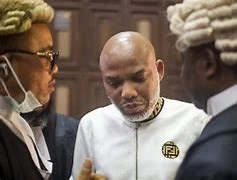
    As it turned out February 10 was for the resumption of the trial of Kanu on terrorism and other related trumped up charges against him by the federal government. But it wasn’t to be. Justice Nyako was supposed to be seated on her throne. In reality she sat on the throne. The government lawyer, Adegboyega Awomolo was supposed to sit in the front row because of his status as a senior advocate of Nigeria. And he was there. Kanu, the accused/defendant, was as expected in the dock. Ideally, the contestations over fine legal points should be between the prosecuting and defence teams. The judge moderates and holds court, pun intended. It was not to be. It turned out to be a circus and a spectacle soon after the so-called trial got underway. For anyone not used to the Nigerian court system it would have been easy to conclude that the judge and the prosecutor were the persons on trial, the persons in the dock. Kanu did not fight shy in taking over his own defence from his lawyers. He vociferously made accusations, insinuations and inferences that were in no way complimentary to the judge and the lead prosecutor. He alluded to bias, ethical misconduct, abuse of law, corruption, and outright monetary inducements in hundreds of millions of Naira.

    There were viral videos on the altercations in court on that fateful, really disgraceful day. A national newspaper later captured what transpired after first reporting that the suit had been adjourned indefinitely: Earlier in January Kanu (had) filed a petition against Justice Nyako before the national judicial council wherein he accused her of judicial misconduct over his trial. And days later, the IPOB leader called for his case to be transferred to the south east if no judge at the federal high court in Abuja was willing to preside over it apart from Justice Nyako. At what was supposed to be the commencement of proceedings, prosecutor Awomolo had stated that he had filed and served all necessary documents and so was ready. But defence attorney, Aloy Ejimakor, said that the issue before the court was not about proceeding with the trial. At that point Justice Nyako intervened to explain that though she had earlier recused herself from the case, the chief judge of the federal high court had turned down her decision to withdraw from the case. Subsequently she directed that the defendant should file a formal motion with the chief judge requesting the reassignment of the case to another judge. That was a curious demand by Nyako.

    While the opposing lawyers were haggling about the propriety of a motion for reassignment, Kanu obtained leave of the court to speak for himself on the matter. “Yes, I want to take over”, Kanu responded to a question from Nyako. Kanu then said that he agreed to attend court out of respect for the judiciary. He insisted that Justice Nyako no longer had jurisdiction over his trial, as she had previously recused herself in September of 2024. He turned to the lead prosecutor and said, “a grown up man like you who should be in the village and, who should be making sure that things are done properly, is here subverting the law”. Turning his gaze to the judge, Kanu said he no longer recognised the authority of her court. “Everything you (the judge) said here is meaningless to me. Why is it that when it comes to my case, everything is turned upside-down?” The defendant argued that the memo sent by the chief judge, returning the case file to Justice Nyako, could not override the enrolled order made on September 24, when she initially recused herself”. When Justice Nyako informed Kanu that he was at liberty to appeal the chief judge’s decision, the defendant shot back saying that” if the chief judge disagrees, he should appeal the (recusal) decision” to a superior court. It soon became a monologue with Kanu saying: ”You (Nyako) cannot preside over this case, not now, not today, not ever. You stand recused and you must leave my case. I don’t need you in my case. You are biased. Tell the chief judge that Nnamdi Kanu said so. This is not a court of law. This is a shrine to injustice, and I will not subject myself to it “. Kanu also shot down an attempt by the prosecutor to get Justice Nyako to fix a trial date. “Because of money they are paying you from the AGF’s (attorney general of the federation’s) office, a grown up man like you is here supporting evil. The rule of law says you should go on appeal. The same chief judge, writing this stupid memo, I have recused him before. He sat on an appeal, I took him to NJC, and recused him. Why is he insisting on this one? He wants to embarrass your lordship by asking her to sit on this case“. Apparently flustered, Justice Nyako said: “The only decision I can make right now is that in the light of what is happening now in court, I am going to adjourn this case sine die. But Kanu told the judge that she had no jurisdiction to adjourn anything. “None whatsoever. You cannot make an order without jurisdiction. The memo from the chief judge cannot confer jurisdiction upon you”.

    It’s very clear from the so-called trial of Kanu that his persecutors are determined to use politics to blunt and trump law. The federal government has no case against Mazi Nnamdi Kanu except attempting to suppress free speech which is a constitutional right. Assuming, but without conceding, that any charges could be sustained against him, those charges were vitiated by the singular terrorist act of the Buhari regime in abducting Kanu from Kenya and his extraordinary rendition to Nigeria. The Abuja division of the Nigerian Court of Appeal said as much in October 2023. The second highest court in the land had voided all the charges preferred against him. The three-man panel of justices was unanimous in ruling that the government breached local and international treaties to unlawfully arrest and detain Kanu. In discharging and acquitting Kanu when the case was taken off Nyako, one of the panelists, Justice Oludotun Adefope-Okojie, said that the authorities failed to publicly disclose where they arrested Kanu and therefore could not proceed with his trial. “No government is permitted to abduct anybody without following due process of extradition. Nigeria is not an exception”. However, the federal government got the Supreme Court to overrule the Appeal Court decision and return the case file to Nyako’s court for trial. Curiously, the Supreme Court had no publicly stated opinion on the abduction and extraordinary rendition of the victim of the state-sponsored terrorism. Even then it took weeks before the apex court released the formal judgement. Because Kanu was involved the court breached the regulation that stipulated a maximum of seven days. Elsewhere rapporteurs of a United Nations agency that probed Kanu’s abduction and  trial had also come to the same conclusion that the government behaved like a rogue state. The demanded that Kanu should be freed and compensated for the trauma he might have suffered on account of his abduction, an extraordinary rendition to Nigeria, and illegal imprisonment.

    Just like Buhari before him, the regime of Alhaji Bola Ahmed Tinubu, is using Mazi Nnamdi Kanu as a pawn in their political chessboard. The intention is to use him for quid pro quo ahead of the 2027 election. Tinubu obviously does not understand the make up of a typical Igbo person. Using Kanu as a bargaining chip will not win him any significant support in the Igbo nation when the time comes. He may have a better chance of making inroads in the hearts and minds of the Igbo if he immediately directed his attorney general and minister of justice to file a nolle prosequi as it concerns the torture and trial of Kanu. The sentiment even amongst those who are not sold to Kanu’s methods is that Tinubu has inherited and perpetuated the humiliation and trial of the Igbo nation for their lack of support for, and indeed outright rejection of him during the presidential election of 2023, just like his predecessor Buhari. There’s an idiomatic expression about the law being an ass. This is often interpreted to mean that the law can be unreasonable, stupid, inflexible, unjust, illogical or harsh. The expression could also imply that the law may not always align with common sense or moral principles. But the law is really not all these. The greater problem is within the range of persons who manipulate the law for ends other than good. In this category you will find corrupt government officials, litigants, witnesses, lawyers, judges and sundry participants in the judicial process. So let Tinubu, like Buhari, continue to treat the law as an ass because it suits his mean and duplicitous fancies and proclivities.

    UGO ONUOHA, veteran journalist, was the Editor-in-Chief of Champion Newspapers Limited

  • Kanu Requests New Judge, Opposes Resumption of Trial

    Kanu Requests New Judge, Opposes Resumption of Trial

    Nnamdi Kanu, leader of the Indigenous People of Biafra, remains firm in his objection to the resumption of his trial, citing a lack of trust in Justice Binta Nyako. 

    He insisted that the judge should step aside, despite the Federal Government’s push for proceedings to continue under her oversight.

    The case has faced multiple twists since Kanu’s re-arrest and extradition from Kenya in 2021. Initially handled by Justice Nyako since 2015, the trial saw her step down in September 2024 after Kanu challenged her impartiality.

     However, the Chief Judge of the Federal High Court reassigned the case back to her, stating her long-standing familiarity with it. 

    Kanu’s legal team contends that Justice Nyako’s decision to recuse herself still stands, making the Federal Government’s push for trial resumption improper. 

    Meanwhile, government lawyers argue that her recusal was not formalized by the required legal process and demand a trial date.  

    The prolonged legal battle, involving allegations of treason and terrorism, has kept Kanu in custody under the Department of State Services, with repeated bail applications denied.

     The dispute over the judge’s role further delays proceedings, leaving the case in a state of uncertainty.

  • IPOB Counsel says Controversial December Declaration a Hoax

    IPOB Counsel says Controversial December Declaration a Hoax

    IPOB Counsel, Ifeanyi Ejiofor calls for peace and unity in the Southeast, urging the region to ignore or consider controversial December Biafra Republic declaration as a hoax.

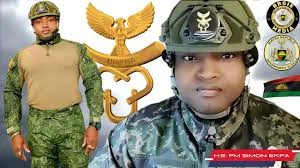
    Ejiofor’s statement comes on the heels of the arrest of Simon Ekpa, a figurehead of the Biafra Republic Government in Exile, who has been vocal about the secessionist agenda.

    Addressing the growing unrest in the region, Ejiofor asserted that the claims surrounding the December declaration would ultimately prove baseless and ineffective. 

    He emphasized that time would reveal the truth about these so-called plans for Biafra’s independence, predicting that December would pass without any significant incident.

    Ejiofor, who has long criticized those behind the Biafra movement’s radical claims, pointed to previous instances where exaggerated reports about military support, including fighter jets and warships, were used to rally support for the cause. 

    He warned that such tactics are nothing but attempts at self-promotion by individuals driven by deceit and fraud.

    ALSO READ: NIGERIA’S ECONOMY SEE ROBUST GROWTH IN Q3, 2024

    The IPOB lawyer also reflected on the wider political landscape, acknowledging the marginalization of the Igbo people within Nigeria’s political framework.

     However, he strongly denounced the use of violence, fraud, and criminal actions as means to secure freedom, emphasizing that true liberation can only be achieved through nonviolent, legitimate efforts.

    In his statement, Ejiofor urged the people of the Southeast to focus on restoring peace in the region, suggesting that it was time for reflection and reconciliation. 

    He also stressed the importance of preserving Igbo heritage while acknowledging past wrongs and seeking to address them in a way that honors the community’s values.

    Ejiofor concluded by calling for a collective effort to restore calm and focus on sustainable progress rather than being swayed by individuals pushing divisive and unrealistic ideals.

  • FG Monitors Ekpa’s Trial in Finland

    FG Monitors Ekpa’s Trial in Finland

    The Nigerian government is closely watching the legal proceedings against Simon Ekpa, the Nigerian-Finnish leader of the proscribed Indigenous People of Biafra (IPOB), following his arrest in Finland. 

    Ekpa was taken into custody on November 21, 2024, after Finnish authorities charged him with inciting terrorism and promoting violence through social media.

    The Finnish District Court of Päijät-Häme ordered his detention based on the severity of the charges, which allege that Ekpa’s online activities have fueled violence in Nigeria’s South-East region. 

    In a statement, the Nigerian Ministry of Foreign Affairs confirmed the arrest and reiterated its commitment to tracking the case as it unfolds, noting the importance of addressing the actions of transnational groups like IPOB that pose a threat to Nigeria’s security.

    Previously, the Nigerian government had urged Finland to take action against Ekpa’s activities. 

    As the legal proceedings continue, officials have pledged to monitor the situation and ensure that the matter is dealt with in accordance with Finnish law.

  • Appeal Court Postpones IPOB Hearing to October 31

    Appeal Court Postpones IPOB Hearing to October 31

    The Court of Appeal in Abuja has moved the hearing for the Indigenous People of Biafra (IPOB) appeal to October 31.

    This appeal challenges the group’s proscription as a terrorist organization by the Federal Government.

    The three-judge panel postponed the session to allow both sides time to submit and exchange all necessary documents.

    IPOB’s leader, Nnamdi Kanu, who is currently detained, has applied to join the appeal as an interested party.

    The appeal targets the 2017 ruling by the late Justice Abdul Abdu-Kafarati of the Federal High Court, which banned IPOB’s activities across Nigeria.

    The proscription followed an ex-parte motion filed by the Attorney General of the Federation (AGF) and Minister of Justice, Abubakar Malami, on behalf of the Federal Government.

    In its appeal, IPOB argued that the court’s ruling was unjust and based on incorrect information.

    The group insisted that it operates within the law and that its actions are in line with its constitutional rights to self-determination.

    It claims that its protests have been peaceful, involving non-violent demonstrations such as marches with placards.

    IPOB also highlighted the lack of evidence showing it has engaged in any form of violence.

    The group further criticized the original ruling, alleging that the AGF failed to provide accurate information during the 2017 court session, which led to a biased judgment.

    IPOB’s appeal called for the appellate court to dismiss the proscription order, arguing that the high court misinterpreted its activities and failed to acknowledge its peaceful nature.

    The court instructed all parties involved to ensure that all legal processes are filed and exchanged before the scheduled hearing date.

  • IPOB Ban Independence Day Celebration Activities In South-East States

    IPOB Ban Independence Day Celebration Activities In South-East States

    The Indigenous People of Biafra (IPOB) has banned any form of Independence Day celebration activities in the entire South-East region of Nigeria on Tuesday, October 1, 2024.
    In a statement issued on Monday by its Media and Publicity Secretary, Emma Powerful, IPOB asked people of the South-East at home and in the diaspora to avoid any Nigeria’s Independence celebration globally.
    Powerful said “IPOB calls on Biafrans (Southeasterners) globally to go about their normal business because we are not part of Nigeria and have nothing to do with their British flag independence of 1960.
    “We are aware that some prominent Igbo men and women played pivotal roles in securing the flag of independence that Nigeria celebrates annually on every October 1st, however, such independence has taken more blood of Ndigbo to maintain than any other ethnic group in Nigeria.
    “Biafrans have decided to reject the bloody flag of independence of Nigeria and work for the restoration of a true united and prosperous Independent State of Biafra.
    “Therefore, every Biafran should reject this Nigerian forced unity as we look forward to celebrating the Biafra independence soon.
    “Ndigbo must adhere to this clarion call to stop every activity concerning Nigeria’s independence tomorrow. There shall be no flying of Nigerian flags in Biafra territory. There shall be no independence activity for students in Biafraland.
    “Everyone should go about their businesses or use that Day for family quality time and rest at home for those who may choose not to go for their work and business.”
    He warned, “IPOB is not joking with the restoration of Biafra freedom and sovereignty. Do not make yourself an enemy of the struggle by participating in Nigeria flag independence celebrations tomorrow.
    “Parents and guardians must not allow their children to go for any Nigerian independence activities tomorrow. We are monitoring everywhere in Biafraland. As an Igbo Parent, do not allow your children to be sacrificed for a country that considers them less of a human.”
  • Fifth year in DSS detention won’t kill me – Nnamdi Kanu

    The Leader of the Indigenous People of Biafra, IPOB, Nnamdi Kanu says an additional year in detention by the Nigerian Government will not kill him.
    The pro-Biafra agitator disclosed this on Tuesday while speaking to journalists upon the resumption of his trial in the Federal High Court in Abuja.
    He expressed dismay that the Court has refused to abide by the determination of the Supreme Court on his request for bail.
    He accused the court of cherry picking what was contained in the Supreme Court Judgement.
    The IPOB leader insisted that there cannot be any trial when key sections of the Nigerian Constitution have been allegedly violated by the Court.
    “I am surprised that a high court refused to abide by the determination of the Supreme judgment. The cherrying picking of what was contained in the judgment is what I am against. It should be implemented holistically. I am not against any trial after all I am innocent. They have nothing against me, but there can not be any trial when the key section of the Constitution and a key section of the Supreme Court judgment have been violated by a court of law.
    “This is my Fourth year in solemn confinement in detention. The fifth year won’t kill me” he said.
    Recall that since June 2021, Kanu has been arrested by the Nigerian Government and has been under the custody of the Department of State Security Service despite the wide range of calls for his release.
  • Terrorism Charges: Nnamdi Kanu Knows Fate Dec 15

    The Supreme Court of Nigeria has officially set December 15, 2023, as the date for delivering its judgment in the highly anticipated case involving the federal government of Nigeria and the detained leader of the Indigenous People of Biafra (IPOB), Nnamdi Kanu.

    This announcement was made by the apex court on Thursday, following the completion of final submissions by the legal teams representing both the federal government and Nnamdi Kanu. 

    Recall that the Court of Appeal in Abuja, on October 13, 2022, ordered the release of Kanu from detention, while also dismissing a 15-count terrorism charge brought against him by the FG.

    The three-member panel unanimously reached this decision, stating that the Nigerian government had violated established laws by forcibly bringing Kanu from Kenya for trial, thus stripping the trial court of jurisdiction. 

    Following this verdict, the FG, dissatisfied with the ruling, appealed to the Supreme Court and obtained a suspension of the judgement’s execution pending the appeal’s determination.