Tag: NNPCL

  • Fuel price hike: Ebonyi Govt seals 3 petrol stations

    Fuel price hike: Ebonyi Govt seals 3 petrol stations

    Ebonyi State Government has sealed three filling stations within the Abakaliki metropolis in the State.
    The petrol stations were sealed following their alleged involvement in sharp practices, and meter adjustments among other related offences.
    The Special Assistant to Governor Francis Nwifuru on Petroleum, Mr Nwafor Nnaemeka who stated this while speaking with newsmen in Abakaliki, threatened to seal more Petrol stations, to bring sanity to the Petroleum sector in the State.
    According to him, the State Government will continue to seal any fuel stations that fail to live up to its mandate of meeting up with the demands of the masses.
    He further warned petroleum dealers and Marketers in the 13 Local Government Areas of the State to shun all forms of fraud, regarding fuel supply and distribution in the State.
    According to him: “Fuel pump price hike is a global menace, so far this country is concerned. The sudden increase of the pump price both from the depot to fuel station owners, due to unavailability of products and as it stands now, Ebonyi state is not an exception. It’s almost everywhere in the country and all states are experiencing it.
    “We have been working tirelessly to make sure that fuel stations are not under dispensing. We got information that due to the unavailability of the product, people are using the opportunity to defraud the masses.
    “That’s why we deployed a task force to go to all the fuel stations in the state to make sure that they monitor the activities of fuel stations closely. So far, we have sealed three fuel stations; Edde Mass, R&C and Dozi oil & gas fuel stations due to under-dispensing.
    “We are not leaving any stone unturned and the procession continues and after the urban areas, we will relocate to the rural areas and make sure that the masses get value of what they paid for.
    He further debunked the allegations making the round in the state that fake task force agents have flooded fuel stations and are busy extorting money from dealers.
    “Anybody who is saying that government is not checkmating the activities of the fuel station owners is not saying the truth, that’s what resulted in the sealing of the 3 fuel stations, and they will not go scotfree, and probably we are going to use them as an example, because it is not good to defraud the masses. They are going to face the full wrath of the law.
    “Also, it is not true that fake task force agents are flooding fuel stations in the state. I have task force agents that were approved by Governor Francis Nwifuru, to work under my department to checkmate the sharp practices that are going on in most of the fuel stations in the state, ranging from adulteration, meter adjustments and other unholy activities, thereby making the masses not to get the value of what they paid for.
    “For now, there is nothing like fake taskforce agents in the state as far as petroleum is concerned, the taskforce agents we have now are legally approved by the Governor and they are making moves of detecting those faults from the fuel stations” he stated.
  • Public Outcry: Lawmakers demand immediate reversal to old petrol pump price

    Public Outcry: Lawmakers demand immediate reversal to old petrol pump price

    The House of Representatives Committee on Petroleum Resources (Upstream) has called on the Federal Government and the Nigerian National Petroleum Company Ltd. (NNPCL) to reverse the recent hike in petrol prices.
    The committee’s chairman, Rep. Alhassan Ado-Doguwa, described the increase as “unacceptable” and urged immediate action to alleviate the burden on Nigerians.
    “We urge the Federal Government and, of course, the NNPCL to consider the plight of Nigerians and suspend this recent increase in pump price,” Doguwa said in a statement.
    The committee highlighted the difficulties faced by citizens and criticised private companies for exploiting system gaps to generate profits at the expense of the populace.
    Doguwa stressed the need for a return to the old petrol price and encouraged broader stakeholder engagement to address the issue.
    Doguwa, who also chairs the Special Committee on Crude Oil Theft and Vandalisation, outlined plans to collaborate with security agencies to curb oil theft, which threatens the nation’s fuel supply.
    “A return to the old pump price will calm frayed nerves, enabling Nigerians to go about their daily activities with ease,” he added.
    He advised Nigerians to support President Bola Tinubu’s administration as it seeks to revitalise the oil and gas sector, including the ongoing efforts to rehabilitate the Warri and Port Harcourt refineries.
  • NBA condemns recent increase in pump price of fuel

    NBA condemns recent increase in pump price of fuel

    The President of the Nigerian Bar Association (NBA) Afam Osigwe, SAN, has condemned the recent increase in the pump price of fuel by the Nigerian National Petroleum Company (NNPC).

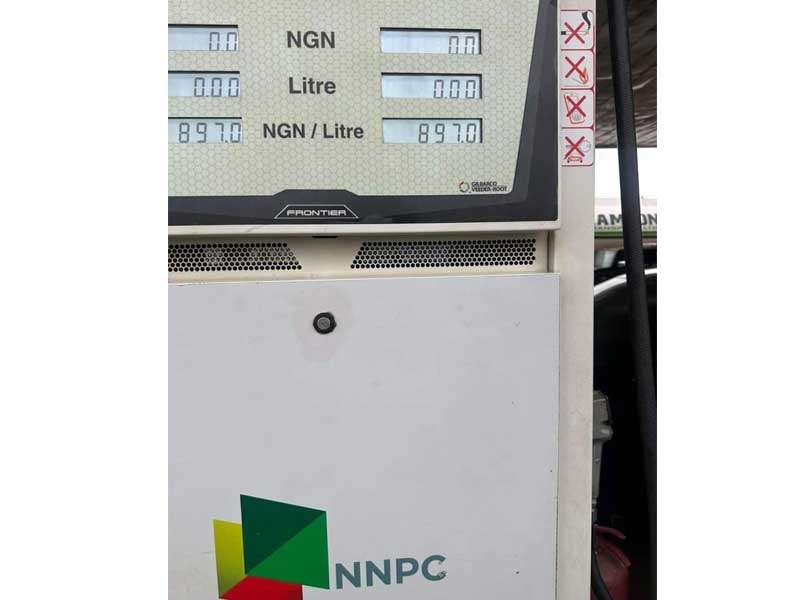
    The Association said that significant and abrupt hike from 617 Naira to about 900 Naira has imposed an unbearable burden on the already overstretched finances of ordinary Nigerians and further aggravate the economic challenges faced by

    In a press statement issued by the president of the association, Afam Osigwe, the NBA acknowledges the necessity of economic reforms and recognizes the government’s responsibility to make difficult decisions, these decisions must be made with the utmost consideration for their impact on the welfare of the citizens.

    The Association which says the sudden price hike as not only harsh but also unjustified at this time calls on the Federal Government to immediately halt the implementation of this policy and engage in meaningful dialogue with all relevant keyholders, including civil society organizations, labor unions, and economic experts, to explore more sustainable and less punitive alternatives.

    He also urge the government to prioritize the welfare of its citizens, particularly the most vulnerable, and to pursue policies that alleviate rather than exacerbate the hardships faced by the Nigerian people.

    The president however assured Nigerians that the NBA will engage constructively with the government to find a more equitable solution that ensures economic stability while safeguarding the interests of all Nigerians.

  • Oil is Indeed the Devil’s excrement: It’s Stench Is Choking Up Nigeria

    As Nigeria Turns 63: No Quick Road To Nirvana

    Juan Pablo Pérez Alfonzo, the prominent Venezuelan politician and one of the founders of OPEC, in the early 70s called petroleum “the devil’s excrement” that always brings trouble—waste, corruption, consumption: our public services falling apart and debt. How I wish he could wake up from his grave to see the devastation of his native land, Venezuela my homeland, Nigeria, he would shake his head in shock how apt and in fact understated his prediction was.

    The stench of oil, specifically, the high price of one of its refined products, petrol, is literally threatening to choke the life out of my ancestral homeland, Nigeria. It has set the country’s social media on fire and threatening to do same to the regime of the newly elected President Tinubu, who removed the corruption-infected oil subsidy scam.

    The data below which is making the round on social media compares the selling price for PMS (petrol) across different countries apparently to justify the price hike. Assuming that one can even verify the reliability of this data (there are different grades of PMS in the U.S. for instance, and prices vary from state to state and in fact from one station to another on the same street. Due to local regulation and standards, in Carlifonia petrol can cost twice as what obtains in Texas. The data shows that PMS price in the US is about twice what we pay in Nigeria.

    However while the proposed minimum wage in Nigeria is equivalent to $43.75 a month at the current exchange rate of Naira 1600 to a dollar, the minimum wage in the U.S. which also varies from state to state is $7.25 per hour for federal minimum wage for covered nonexempt employees. In Carlifonia the minimum hourly wage hovers around $16. The bottom line is, comparing PMS prices across nations is a meaningless venture.

    In many of these countries unlike Nigeria, the public transport infrastructure is so advanced that many people don’t even drive.

    With our poor public transport network, the ridiculously low wage in our economy, and our over-dependence on fossil fuel dependent road transportation to move commodities across the nation, the price of PMS is unsustainably high. It is a drag on our economy and a major driver of our high inflation.

    Our challenge is that we can’t work our way out of the high price of PMS with the corruption-ridden oil subsidy scam. We have got to increase our refinery capacity. While Dangote coming on stream is a great first step, we cannot depend on another monopoly for the supply of arguably the most critical factor in our economy, petrol and diesel.

    By the way as Dangote himself has proclaimed publicly, the refinery wouldn’t have happened without the visionary leadership of Tinubu, himself an oil man having worked in the industry before. We need to give the man Tinubu some credit.

    Solving our petrol problem would not be easy nor quick, but we must have some faith in and give this 15 months old presidency time to work through it.

    Although, the uninformed has been howling about NNPC acquisition of a major petrol distribution company two years ago, with NNPC poised to be the main distributor for Dangote petrol, this all is making some sense now. The petrol marketers are a powerful cartel which is adept at price manipulation and price gouging. Have you noticed the almost coordinated rolling sale of PMS by different petrol stations in your neighbourhood? Most of them close shop when PMS is available in NNPC stations. With NNPC acquiring more petrol stations and with its exclusive right to Dangote petrol, there is a distinct possibility to finally break the back of the oil marketer cartel. However, more refineries need to come on-stream to address the supply-demand-price equilibrium conundrum in the Nigeria petrol supply chain.

    This coupled with massive investment in public transport infrastructure especially rail line and solution to our energy infrastructure, our power generation and distribution infrastructure, the prospect for economic revitalization of our country should improve substantially. However, all of these prospect goes down the tube if we throw the baby out with the bath water out of frustration. If we allow those vested and entrenched interest who have fed fat on our dysfunction andwho wish our country no good to decapitate the Tinubu presidency and our hard earned albeit imperfect and frankly frustrating democracy. Ww cannot allow people to fly the Russian flag again as a form of protest in our country.

    We must understand that there can be no gain without pain. We didn’t get to this economic Armageddon in one day and it will take time, pain and sacrifice to dig our way out. We the grown-up who enjoyed the bounties of petrol-dollars in the 70s and who contributed in one way or another to our country’s perilous condition, should complain and whine less and make one last sacrifice to bequeath to our children, grand children and future generation, a country they can at least have an opportunity to salvage. We have made a mess of our country. We have put our parochial tribal interest above the mission of building a strong virile nation. We have complained about corruption until it is our countryman who is caught or it is our turn to dip our hands in the treasury and we end up doing worse than the people we once condemned.

    We can heap the blame for global warming and every other problem that confronts our country on Tinubu’s 15-month regime all we want. It won’t solve our problem. Neither him nor anyone possess the magic wand to solve all the problems that have been built up through decades of misgovernance and corruption.

    He is not to blame for all the governors mismanaging the huge revenue allocations they are now getting. He is not responsible for the price gouging by the market women and the corruption that has become endemic in the Nigerian moral fabric.

    Our problems are multidimensional, multigenerational, of both poor leadership and incorrigible followership.

    Our poor leadership is a reflection of us the people. We cannot ask of our leaders that which we the followers neither possess nor can give.

    Leadership is a two-way street. Yes, the leaders can set the tone and lead by example but the system sets the limit of what is doable. We have set up a dysfunctional corrupt system, powered by a plagiarized constitution imposed on us by the military, in a multi-ethnic, multi-religious country that is constantly engaging self-destructive war of ethno-hegemonic advantage rather than what is best for the country.

    Until that system is totally demolished, and Nigerians sit at a round table to decide if they wanted to live together in a harmonious country where common national interest trumps narrow parochial tribal hegemonic supremacist objective, there is little hope for our country.

    Those of us who think they can perform miracle within the dysfunctional corrupt, nepotistic system we have created should quit their armchair pontificating business and throw their hat in the ring. Talk is cheap, governing a nation as complicated and dysfunctional as Nigeria is tough. Managing any group of Nigerians is tough as nail. Look at our socio-cultural associations and large families all bedeviled by conflict, power-tripping and divisions. Many Nigerian churches and cultural groups in the U.S. and Europe end up splitting into factors over leadership tussle, many ending up in courts for resolution. So extrapolate that to managing a country like Nigeria where each other ethnic group sees the other as enemy.

    Dr. Adewale Alonge is the President and Founder, Africa-Diaspora Partnership for Empowerment & Development (ADPED) Inc. Miami, Florida. www.adped.org

  • Dangote Refinery: End of fuel queues

    Dangote Refinery: End of fuel queues

    For the first time in 28 years, Dangote Refining and Petrochemical Company commences the production of fuel in Nigeria.

    “This marks the end of fuel scarcity and fuel queues in Nigeria” Alhaji Aliko Dangote, the President of Dangote Refining and Petrochemical Company said.

    “No more foreign exchange woes to import fuel,” he said.

    Seeing, it is claimed in Nigeria, is believing and Alhaji Aliko Dangote has demonstrated that axiom as he lifted a sample of petrol produced in his factory today, at Ibeju Lekky, Lagos.

    “I hope the attainment of this milestone by the refinery will change the dynamics not only in Nigeria but the entire sub-saharan Africa” an elated Dangote said.

    He drew attention to the unique crystal clear colour of the product and said that it represents “the highest quality which is friendly with car engines and meets the best international standards.”

    He appreciated President Tinubu for the support of his government which has enabled the commencement of the refining activities in the factory.

    With this major breakthrough the Dangote Refinery has broken the jinx about petrol refining in Nigeria which happened for the last time 28 years ago.

    Dangote also posited that with the commencement of this operation, the refinery had assisted Nigeria to kill several birds with one stone.

    Linking it to the leadership of the country, he said the refinery now has an opportunity to produce energy for growth and productivity.

    Hopes that the move will stabilise the Naira, reduce inflation and improve the quality of life.

    He asserted also that there will be no more import of polypropylene.

    Also appreciated the government for the opportunity to purchase crude in Naira.


  • Nigerians want moribund refineries sold

    Nigerians want moribund refineries sold

    Notorious for flip flops in policy enunciation, implementation and monitoring, the Nigerian National Petroleum Company Limited (NNPCL) has come up with a new plan to hand over its two moribund refineries in Warri and Kaduna to private maintenance operators.

    The NNPCL made the announcement via a post on its official X handle on Friday.

    This decision is not sitting well with some Nigerians and industry watchers who wonder why this is happening after the national oil company had pumped huge sums in billions of dollar during numerous rounds of Turn Around Maintenance (TAM).

    An analyst on Arise TV, Godwin Ibe advised for an outright sale of the refineries, insisting if the government still wanted to participate in its management it should retain some minimum amount of shares.

    Whereas  the Kaduna refinery with a 50,000 B/D capacity was put into service in 1980 to deliver petroleum products to Northern Nigeria. By constructing a second 50,000 B/D crude train in 1983 specifically for the production of lubricating oils (lubes), the capacity was increased to 100,000 B/D. The initial crude train’s capacity was increased to 60,000 B/D in 1986. The refinery’s current nameplate capacity is 110,000 B/D thanks to the additions.

    In 1978, the Delta State refinery at Warri came into production. The refinery is a sophisticated conversion unit with a nameplate distillation capacity of 12,55,000 bpd or 6,250,000 MTA. One of the petrochemical plants in the refinery complex was put into operation in 1988 and has the capacity to produce 18,000 MTA of carbon black and 13,000 MTA of polypropylene. The refinery is intended to supply markets in most of Southern Nigeria.

  • Tinubu’s contemptuous of Nigerians


    “Tinubu was a two-term governor of Lagos state from 1999-2007. At that time, he was ruthless and manipulative. The only person that mattered to him then, and now, was himself. His manipulative nature and self -centredness can be attested to by a faction of Afenifere, the umbrella Yoruba sociocultural-cum political organisation.”

    IN their heart of hearts even the most ardent supporters of Nigeria’s president know that Alhaji Bola Ahmed Tinubu is contemptuous of Nigerians. But in fairness to him, his contempt for the people did not just manifest after he was controversially and surreptitiously awarded the presidential election by the corrupt and inept ‘Independent’ National Electoral Commission (INEC) in the dead of the night on March 1, 2023.


    Tinubu was a two-term governor of Lagos state from 1999-2007. At that time, he was ruthless and manipulative. The only person that mattered to him then, and now, was himself. His manipulative nature and self -centredness can be attested to by a faction of Afenifere, the umbrella Yoruba sociocultural-cum political organisation. For his ruthlessness, those who have had to cross his path in his decades – long pursuit of his political and economic ambitions (which by the way cannot be separated), including survivors of the families of his rivals, have a tonne of tales to tell. They are not palatable stories. If Afenifere is today fractionalised it is down to the ruthlessness and selfishness of one man.


    A Legacy of Heist

    In the preceding paragraph we said that Tinubu ruled Lagos state for eight years. No. We were wrong. Until he was created as Nigeria’s president last year, Tinubu remained the de facto governor of Lagos. He still is. He is like the animal called ikiri among Ndigbo. Once this animal has its hands on a prey or its mouth in a cookie jar, it will never let go. Tinubu does not let go. Former Vice President, Alhaji Atiku Abubakar, alluded to this avaricious nature of Tinubu in his press statement last week. Atiku named two companies which have long been associated with the president – Alpha Beta and Primero – which he alleged constituted direct financial pipelines from the coffers of Lagos state government to an individual’s bank account.


    Atiku had alleged in a press release that “Nigeria is rapidly transforming into a government of Tinubu, by Tinubu, and for Tinubu”, and that the “future of Nigerians has been effectively mortgaged to President Bola Tinubu, his family, and associates “, so much so that even when Tinubu leaves office, it will be nearly impossible to break the shackles. He alleged that: “Just as Alpha Beta, Primero, and others act as Tinubu’s proxies in Lagos, managing critical sectors and generating revenues for him, and his family, he has begun to replicate this at the federal level”.


    The former vice president spoke in the wake of the shenanigans between the state oil corporation, NNPCL, its retail arm and a private firm, OVH. Wale Tinubu’s Oando is alleged to own 49% of OVH. Wale Tinubu is reportedly a cousin to Bola Tinubu who, in addition to being Nigeria’s president, is also the country’s petroleum resources minister. NNPCL has refuted the linkage.


    Whether the mounting allegations of governance malpractices against Tinubu are true or not, it has to be noted that the tell-tale signs of the proclivity of the man have been in the public domain for at least 25 years. The fear of a section of the population that the president will be tempted or disposed to making Nigeria a bigger specimen of Lagos was not diminished by the boasting of Mrs. Oluremi Tinubu, the president’s wife in 2023, to the effect that her family had been so blessed materially and financially that they would have no need to live off the paltry resources of Nigeria. Within 14 months her boasting which she reportedly made on the altar of God, a merciful Father and a consuming fire, has turned out not to be true. Oluremi Tinubu is said to be a pastor of the Redeemed Christian Church of God.


    Lies About Subsidy

    Tinubu’s contempt for Nigerians started the very day he took his oath of office and oath of allegiance. Before that day actually. Right on the podium at the Eagle Square in Abuja on May 29, 2023, the president decreed the immediate scrapping of petrol subsidy. By the time he made this weighty declaration, his regime as personified by a Cabinet was not in place. There was no evidence that he consulted anybody including stakeholders in that sector of the economy. His rationalisation was that the petrol subsidy would bankrupt the country, and that his rivals to the presidency had promised to do the same during the campaigns. Both were lies because the regime is currently paying more for petrol subsidy, and the presidential candidates may have promised to remove petrol subsidy but there was no unanimity on how to do it. Tinubu took that action not because he did not know the implications and dire consequences of the move. He knew but he proceeded to do it anyway because he holds Nigerians in disdain. He probably enjoys seeing faces contorted in pain. What a pervert! This same man had in January 2012, eleven years prior, warned President Goodluck Jonathan, in an open letter, of the inevitable deleterious effects of subsidy removal. He was then the leader of the opposition party. The very things he predicted would happen in 2012 if Jonathan scrapped petrol subsidy happened in 2023 when he went against his own counsel- prices spiked, the economy nose-dived, inflation rose, poverty heightened and despondency spread.


     The Devaluation Woes and Petrol Scarcity

    His statement of ‘subsidy is gone’ was made in May of 2023. The very next month, in June, he devalued the Naira, and left the value of the national currency to the so-called free market forces. Again, his rationalisation was that the federal government could no longer afford to defend the Naira. Did this sound similar to his excuse for petrol subsidy removal? Tinubu yet displayed a disdain for Nigerians, lack of empathy, unconcern for the privations citizens were grappling with on account of petrol subsidy removal, and little knowledge of basic economics. Nigeria virtually exports nothing of value except crude oil over which it has no control of the price in the international market. Tinubu prides himself as an accountant with global clout but failed to realise that the massive devaluation of the national currency would only be more beneficial if the country was a net exporter of goods and services. Naira devaluation succeeded only in creating employment abroad, driving remnants of manufacturers away, forcing domestic producers to close shop, and exacerbating the import of inflation. The tragedy is that Nigeria is trapped.


    And to imagine that in spite of the dizzyingly devaluation of the Naira, the central bank is still defending the currency. The Tinubu regime has continued with the Muhammadu Buhari style of using the foreign reserves and hot money (foreign portfolio investments) to prop up the value of the Naira. Nigerians now scoff whenever the government boasts about the accression to the reserves because they know that at any point in time a significant portion of the reserves is encumbered.


    In barely one year the exchange rate of the Naira to the dollar has plummeted from about N700/$1 to over N1,600/$1. And we have not seen the end of it. The situation is worse in the petrol subsidy sector. Before Tinubu, about N3 trillion Naira was claimed as subsidy in one year. In 2024 which will be the one full year under Tinubu after discounting May – December 2023, the central bank is projecting that about N5 trillion would be expended on the same subsidy that was scrapped last year.


    But the projected expenditures on the so-called subsidy on petrol is the least of the problems facing Nigerians. The greater concern is that while the erstwhile subsidy regime was riddled with brazen corruption, the extant government has further made its administration opaque. For a start, there was no provision for subsidy in the 2024 national budget. However, subsidies have been incurred since January, indeed since the second half of 2023. Presently, petrol is scarce in many parts of the country. This was supposed to be one of the ills that the regime said that the removal of subsidy will cure. But in the fifteen months since petrol subsidy was supposedly yanked off, the country has suffered at least four bouts of scarcity.


    One litre of petrol currently sells for anything between N700 and N1,200 in parts of the country. In some locations, one litre of petrol costs as much as N2000. But the official price ranges from between N620-N750 per litre. However, as at the last count the landing cost of the product was put at about N1,150. So going by the official selling price and the reported landing price, there’s a price difference of about 50%. In other words, the proclamation last year that subsidy was gone was a lie. The NNPCL which is a cesspit of corruption has said it is absorbing the difference and that it was not paying any marketer any kobo for subsidy. What this means is that NNPCL is the sole importer of petrol; it determines the quantity it imports; it is responsible for determining the number of litres we consume in the country; and, it calculates the amount of subsidy per litre. On this issue NNPCL is a monopoly. But who will query an agency which reports to President Tinubu who doubles as the petroleum resources minister. Some other Nigerian presidents appointed oil ministers but not Buhari, and so far, not Tinubu. If this arrangement under the successive regimes of the All Progressives Congress (APC) does not mirror corruption, then it will be hard to find what does.

    *Next week we’ll continue this interrogation with a different headline highlighting political malpractices and governance malfeasance.


    Ugo Onuoha
    Former Managing Director/Editor-in-Chief
    Champion Newspapers Ltd


  • Tinubu ‘Recreating’ Nigeria in the Image of Lagos – Atiku

    Tinubu ‘Recreating’ Nigeria in the Image of Lagos – Atiku

    Former Vice President Atiku Abubakar has launched a scathing attack on President Bola Tinubu, accusing him of creating a government that prioritizes his personal interests and those of his family and associates over the welfare of Nigerians.
     Atiku, who ran as the Presidential candidate for the Peoples Democratic Party (PDP) in the last election, revealed this in a statesmen signed by his spokesperson, Paul Ibe.
    He revealed that Tinubu’s influence is deeply embedded in both Lagos and federal public enterprises.
    Atiku drew parallels between Tinubu’s influence in Lagos through firms like Alpha Beta and Primero and his increasing federal influence.
     “Just as these firms manage critical sectors in Lagos, Tinubu is extending this control to the federal level,” Atiku claimed.
    He expressed concern over recent developments with the Nigerian National Petroleum Corporation (NNPC), particularly the controversial acquisition of OVH, a company partly owned by Wale Tinubu’s Oando.
    “NNPC Retail’s acquisition of OVH, under opaque terms, is indicative of the ongoing misuse of public resources for personal gain,” Atiku said.
    The former Vice President criticized the handling of NNPCL’s management, including the retention of Mele Kyari as GMD and the appointment of Pius Akinyelure as Chairman, both of whom are closely tied to Tinubu.
    He described the situation as an example of “illogical business transactions and abuse of office.”
    Atiku also cast doubt on the impartiality of legislative investigations into the NNPCL’s dealings, pointing to the potential conflict of interest involving Senator Opeyemi Bamidele, who heads the panel and has close ties to Tinubu.
    Additionally, Atiku highlighted concerns over the Lagos-Calabar Coastal Highway project, which is now under litigation.
     The Organized Crime and Corruption Reporting Project (OCCRP) has reported on the close ties between Tinubu’s son, Seyi, and Gilbert Chagoury, who was awarded the contract without competitive bidding.
    Atiku described this as a conflict of interest that underscores a troubling pattern of favoritism and corruption.
    “This situation exemplifies how Tinubu’s influence permeates key national projects, raising serious questions about transparency and fairness in government dealings,” Atiku concluded.
  • Dangote, others: Crude sales begin Oct 1

    The Federal Government has disclosed that sales of crude oil to Dangote Refinery and other local refineries will commence October 1, 2024.


    The Minister of Finance and Coordinating Minister of the Economy, Wale Edun, made the announcement during a meeting with the Implementation Committee on Monday in Abuja.


    According to a post on the official X (formerly Twitter) page of the finance ministry, the meeting was to review progress on key initiatives.


    At the meeting, key roles were outlined for stakeholders, including the Nigerian Midstream and Downstream Petroleum Regulatory Authority, Central Bank of Nigeria, Nigerian Upstream Petroleum Regulatory Commission and the African Export-Import Bank to ensure smooth implementation.


    The post read, “The Minister of Finance and Coordinating Minister of the Economy, Mr. Wale Edun, today led the Implementation Committee meeting on the transition to crude oil sales in naira.


    “The meeting reviewed progress on key initiatives, including the upcoming commencement of naira payments for crude oil sales to the Dangote Refinery starting October 1, 2024.”


    Also, the Executive Chairman of the Federal Inland Revenue Service, Dr Zacch Adedeji, and the Chairman of the Technical Sub-Committee reported that “The first PMS delivery from Dangote is expected next month under existing agreements.”


    It also stated that updates were provided on the Port Harcourt and Dangote Refineries were also provided, with significant production increases expected from November 2024.


    The minister emphasised the need for transparency and directed the Technical Sub-Committee to finalize details and prepare a report for the President, confirming that his directives are on track for implementation from September.


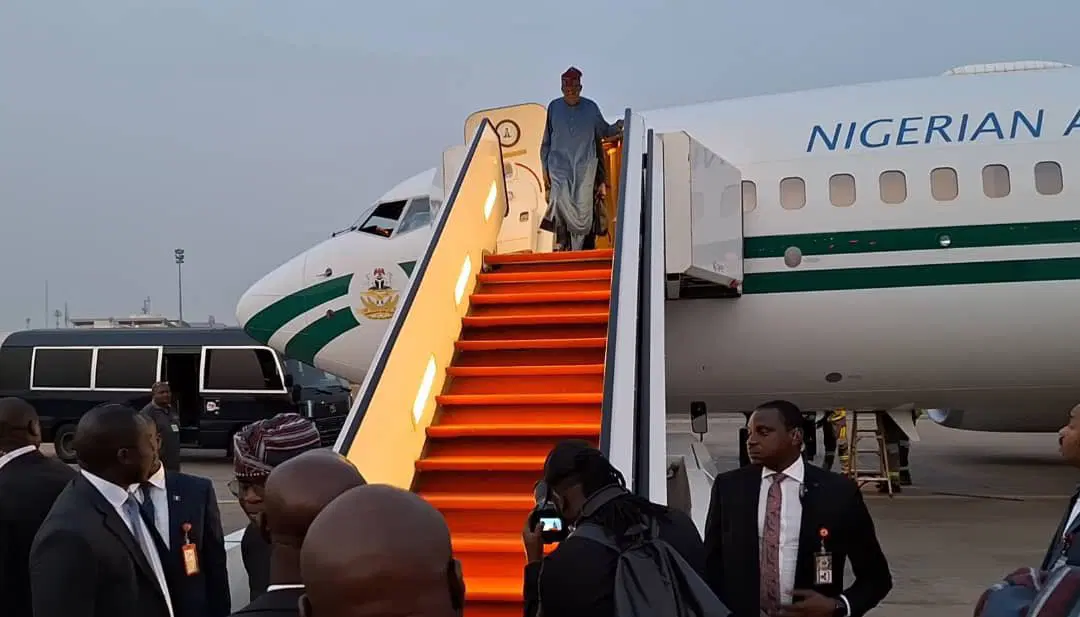
  • President Tinubu returns from another foreign trip

    President Tinubu returns from another foreign trip

    President Bola Tinubu returned from his three-day official trip to Equatorial Guinea yesterday. This makes it his 22nd foreign trip barely 15 months after assuming office, May 29th, last year.

    Like his predecessors since 1999, the President is reported to be embarking on these trips in hot chase of Foreign Direct Investment (FDI) into various sectors of the resource rich Nigerian ecosystem.

    During this last trip, Tinubu and his Equatorial Guinean counterpart, Teodoro Mbasogo, were reported to have signed an agreement on the Gulf of Guinea Pipeline Project.
    The agreement covers legislative and regulatory measures for the gas pipeline, establishment and operation, transit of natural gas, ownership of the gas pipeline, and general principles.

    In previous engagements, two Nigerian companies were reported to have signed Memoranda of Understanding with German counterparts in November 21, 2023 for gas supplies.

    In one of such agreements, it was stated that a certain Nigerian company named Riverside LNG would collaborate with the German company Johannes Schuetze Energy Import AG to provide 850,000 tons of liquefied natural gas to Germany annually. The president’s office stated that gas exports would rise in the coming years, with the first delivery of gas anticipated in 2026.

    Presidential Spokesperson, Ajuri Ngelale, in an earlier interview on Channel TV talked about how President Tinubu:

    “… is personally conducting an open-door policy to investors from around the world, … to ensure that they have direct access to all of the regulators and government officials that will further enhance the environment in which foreign direct investments will be coming into the country,”

    The President and his team are also seeking investments in other sectors such as electricity, rail transportation, agriculture and others.

    Before President jets out to another oversea destination for what some term as an elusive chase for FDI, experts advise for greater introspection and more strategic outreach, seeing as such forays by previous administrations had remained a wild goose chase.

    As one analyst put it, “investment money is a very discerning guest that goes only to where it is welcome.”