Tag: Northern Governors Forum

  •  Northern ruling elite brainstorm on insecurity, other challenges

     Northern ruling elite brainstorm on insecurity, other challenges

    Northern Governors and traditional rulers have renewed their commitment to tackling insecurity, boosting infrastructure, and empowering the youths.

    The resolutions were arrived at their joint meeting of the Northern States Governors’ Forum (NSGF) and the Northern Traditional Rulers Council held on Saturday in Kaduna.

    Gov. Inuwa Yahaya of Gombe State, who is also the Chairman of the NSGF, described the gathering as timely, given the escalating security challenges and socio-economic pressures facing the region.

    In his keynote address, Yahaya expressed condolences to the families and governments of Plateau, Bauchi, Benue, Borno, and Yobe over the recent wave of killings.

    He called the attacks, “mindless acts of violence” that underscored the need for a comprehensive review of security strategies.

    Yahaya stressed that the resurgence of Boko Haram activities in parts of the North-East and ongoing violence in the North-Central must be confronted with renewed synergy between federal, state, and local security structures.

    On economic and infrastructural development, the NSGF Chairman called for the speedy completion of key projects.

    They include the Port Harcourt-Maiduguri rail line, the Kano-Maiduguri expressway, and the Akwanga-Jos-Bauchi-Gombe-Biu expressway, among others.

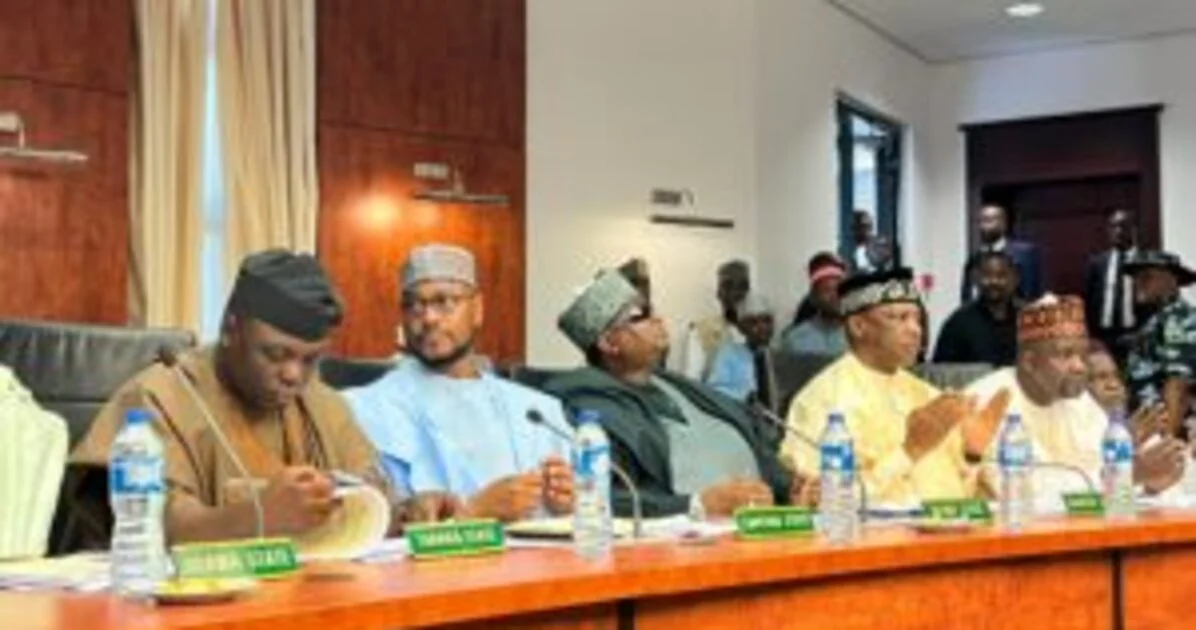
    NSG at the meeting in Kaduna

     He lamented the exclusion of the North-East from the Federal Government’s superhighway project and advocated innovative funding solutions like public-private partnerships and infrastructure bonds.

    The Governor said, “The state of infrastructure in Northern Nigeria remains a cause for major concern.

    “Without.an urgent intervention, our goals for agricultural expansion and industrialization will remain a mirage.”

    He also emphasized the need to restructure and reposition the New Nigeria Development Company (NNDC) as a hub for regional economic revival

    Yahaya called for decisive action to end the almajiri system and provide the Northern youths with education and job skills.

    “Our children must be taken off the streets and given opportunities for quality education and skills acquisition,” he appealed.

    Yahaya further called for proactive steps to prevent herder-herder clashes during the rainy season.

    The governor urged partnerships with agencies like NEMA and NIMET to develop early warning systems and support mechanisms against climate-related challenges.

    He praised the traditional institutions for their role in peace building and advocated for their recognition through constitutional means to make them more effective in governance and conflict resolution.

    “The wisdom and guidance of our traditional rulers remain indispensable as we navigate these complex times,” Yahaya said.

    Earlier, Gov. Uba Sani of Kaduna State, in his welcome address, lauded the efforts of the NSGF and the traditional rulers council in promoting unity and consensus in the North.

    He said, “In spite of our diversity, the two bodies have found a way of forging consensus on critical issues.

    “We have made progress, but challenges remain. We must hasten the development and implementation of a regional roadmap for peace, security, and development.”

    Sani commended President Bola Tinubu for his commitment to Northern development, particularly for reviving the long-abandoned Abuja ,Kaduna,Zaria-Kano dual carriageway, describing it as a “lifeline for Northern Nigeria.”

    Both leaders emphasised the urgency of translating resolutions into tangible actions, with Yahaya concluding that history would judge Northern leaders not by the meetings they hold, but by the lives they impact.

    He said: “The people of Northern Nigeria are looking up to us. We must rise above individual interests and deliver results.”

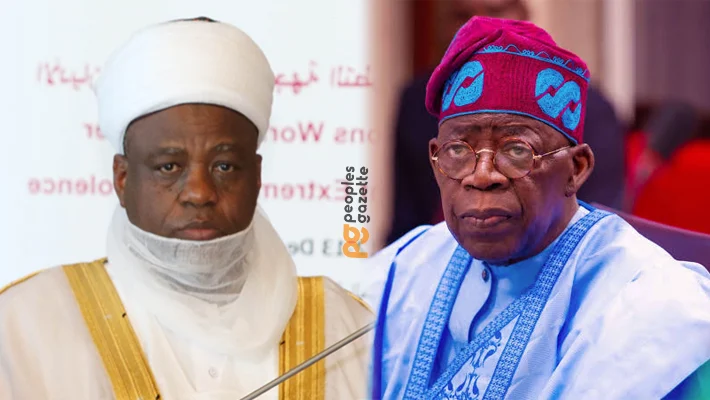
    In his remarks,the Sultan of Sokoto and Chairman of the Northern Traditional Rulers Council, Alhaji Sa’ad Abubakar,  has reaffirmed the commitment of the traditional rulers to supporting efforts aimed at tackling insecurity across the country.

    Cross section of traditional rulers at the meeting 

     The sultan commended the governors for their dedication and collective resolve to restore peace, stability, and development in the region.

    He stated that the persistent killings across various parts of the North have made it imperative for leaders to unite and take decisive action.

     “Every life matters,” he declared, stressing the need for a holistic approach to restore peace and enable citizens to live freely and in harmony.

    The sultan strongly condemned the criminalisation of ethnic or religious groups, warning that such narratives only fuel division.

    He urged, “We must leave here with the understanding that a criminal anywhere is a threat to all of us,” he said.

    The traditional ruler, who also acknowledged the efforts already made to address the crisis,  emphasised that more needed to be done.

    Abubakar declared, “Much has been done, but clearly not enough.

    “As long as people continue to be killed, the perception will remain that nothing is being done.”

    He concluded  that the challenges facing the North were national in nature, and praised Tinubu’s commitment to finding lasting solutions.

    He, however, urged intensified action to end the bloodshed and to reassure the citizens that their safety remain a top priority.

    The governors present at the joint meeting included those of Nasarawa, Gombe, Niger, Kaduna, Kebbi, Katsina, Kogi, Yobe, Plateau, Taraba, Adamawa, Sokoto, and Jigawa.

    Also in attendance were nineteen esteemed traditional rulers from across the Northern region under the umbrella of the Northern Traditional Rulers Council.

  • Nigeria’s children of the dump sites

    Nigeria’s children of the dump sites

    Our children are now chasing out the adults from the business. But in their own case they are mainly foraging for foods that are often not there. On Monday, January 20, a national newspaper published a news feature on the dire situation of some Nigerian children. Its finding was that not many children were currently privileged to have tea and bread for food at home. It said many of them now live off refuse dumps; they carry sacks filled with used cartons, empty drink cans, and discarded plastic bottles and bowls.

    WHAT’S unfolding presently will form part of the foundations for the future of our country. And the picture is not good. That the majority of the privileged and the ruling elite live in denial will not change it. What is looming and getting clearer as daylight is that this will be a future and a disaster that was foretold. Successive regimes, and especially those of the All Progressives Congress (APC) political party since 2015, had been leading Nigeria down a slippery slope. The 15 years or so of the former ruling People’s Democratic Party (PDP) are now being celebrated as the ‘golden years’ of Nigeria, to borrow from President Donald Trump’s so-called American golden age. But as disasters go the PDP as a ruling party was just a shade above this ruinous APC. PDP lived on borrowed robes. It started fairly well under President Olusegun Obasanjo (1999-2007) but quickly relapsed into bad ways, profligacy and the expressed feelings of invincibility. The party suffered from low crude oil prices at the beginning, as low as $15 per barrel at the start of this democratic dispensation, but later under President Goodluck Jonathan enjoyed a boom with prices surging beyond $120/barrel. It failed miserably in managing the bumper returns. And so got itself sacked ostensibly by voters in 2015.

    The APC, a hastily cobbled special purpose vehicle that passed as a political party, took power at the centre and in most of the sub nationals subsequently. This party over-promised in its quest for power during the campaigns in 2014. It promised everything under the sun except creating human beings. It even promised to recreate Nigeria and Nigerians. But under Muhammadu Buhari it started very poorly by first denying virtually all it promised, and disclaiming its own manifesto. Its candidate – turned – president Buhari was strident in distancing himself from the promises of the party, the so-called Contract with Nigerians. In terms of ineptitude the APC under Buhari turned out worse than the PDP. In corruption the party and its principal operatives were worse than eye-sores. It piled up debts from every source – offshore, domestic markets, and through Ways and Means which simply means minting Naira banknotes backed by nothing. Yes, nothing. Buhari fumbled and wobbled for eight years, and took the country back by 30 years. He was an affliction of unimaginable proportions.

    Buhari’s successor, Alhaji Bola Ahmed Tinubu, now going to 20 months on the saddle, appears to be no better in spite of claims to courage and to reforming the economy and the country. He came with a baggage of personal failings, certificates and names controversies, and a questionable electoral victory. So he was dogged by palpable legitimacy issues. Indeed, there was a recent report, which is yet to be refuted (unlike what is in the regime’s DNA), that a foreign lobbying firm was retained with millions of dollars to help burnish his image and to make him appear less a pariah among his supposed peers on the international stage. By some calculations, Tinubu jets out of the country after every 17 days of what now appears to be a visit to the country he is supposed to be governing to, according to his officials woo foreign investors. He cuts a forlorn and isolated figure in many of his trips abroad, especially when he is in the midst of other significant world leaders. Not a good comparison, anyway, but the US President Donald Trump who took office one week ago, yesterday, and without travelling out of his country, has attracted pledges of investments reported to be close to $3 trillion from around the world.

    Nobody needs to dig deep to find out how shallow this regime is and how desperately it looks for a win. Recently, the henchmen of the administration and their choristers started celebrating that the Naira, Nigeria’s national currency, has stabilised at N1,500 to $1USD. Are they for real? At the beginning of the so-called economic reforms and currency convergence, the consensus and the projection was that the rate would settle at N800/$. Rulers with a modicum of shame will not roll out the drums for the current exchange rate.

    The economic policies and programmes of the Tinubu regime are whimsical and his claimed political reforms are inchoate and haphazard. The jury is still out on his quest to make federating units out of the country’s 774 local councils by making them ‘autonomous’ and funding them directly from the federation account. He claims his actions were informed by Constitutional provisions. But that’s self – serving because this same man, in his earlier incarnation as Lagos state governor (1999-2007) fought tooth and nail for councils to be under the suzerainty of state governments. But not anymore today. The only thing that has changed is that Bola Tinubu is now the president. His actions are political and driven by 2027. He wants his fingers in every pie, and foot soldiers to ‘grab, snatch and run’ away with results of the 2027 election, that is, if there will be any elections in the true sense of the word. The same uncertainty is playing out in the economy. Tinubu says repeatedly that he is already seeing light at the end of the tunnel. He might be seeing a mirage. The World Bank has said it would take a minimum of 15 years of sustaining his punishing economic regimen for any impact to be noticed. The hallmarks of the Tinubu economic kalo kalo are that his policies and programmes are not measurable, they have no benchmarks, they have no timelines, and they have no publicly available templates for reviews should the need arise. They are more like the rural Nigerian children’s game of tumbom tumbom.

    Nobody needs to dig deep to find out how shallow this regime is and how desperately it looks for a win. Recently, the henchmen of the administration and their choristers started celebrating that the Naira, Nigeria’s national currency, has stabilised at N1,500 to $1USD. Are they for real? At the beginning of the so-called economic reforms and currency convergence, the consensus and the projection was that the rate would settle at N800/$. Rulers with a modicum of shame will not roll out the drums for the current exchange rate. But APC has no shame. The party’s serial misrule is on display. Poverty is becoming entrenched in our country. The other day the deputy speaker of the House of Representatives Benjamin Kalu celebrated the rise in diaspora remittances from $25 billion in 2023 to $28 in 2024, as a sign of confidence in Nigeria’s economy. No, it was not. It showed that Nigerians at home were in dire straits, and that the situation had increased the pressure on diasporans to up their remittances. How could it be otherwise with inflation running in the high 30s, the worst level in about one generation?

    The increased diaspora remittances could be the reasons why Nigerians are not yet widely dropping dead on the streets as Europeans predicted and wished would happen in Africa during the COVID pandemic; why some families are still managing to pay children’s school fees at all levels in spite of students’ loan scheme; why some families can still spare a little money for hospital bills; why there’s no widespread starvation; why erstwhile middle class citizens can afford transportation fares to their offices or business premises, or to repair and fuel their cars. If Tinubu’s friend whom he claimed had abandoned his four Rolls Royce limousines had been a destiny – helper, he probably wouldn’t have suffered humiliation brought upon him by friend, the president. A little dollar here and a little pounds sterling and euro there would have kept him going. He would not have been reduced to using a car whose front wheel is susceptible to breaking off in motion without notice on Nigerian roads. In spite of diaspora remittances and other mercies, the Tinubu and APC economic wizardry is taking a huge toll presently on a vulnerable segment of the population. And it presents a foreboding future for our country.

    WASTE to wealth is a fairly popular phrase. Ordinarily, it means a situation where some citizens out of choice visit dump sites to pick out supposed waste and recycle the same to create value and possibly wealth. And this used to be the exclusive preserve of adults. It is no longer the case. Our children are now chasing out the adults from the business. But in their own case they are mainly foraging for foods that are often not there. On Monday, January 20, a national newspaper published a news feature on the dire situation of some Nigerian children. Its finding was that not many children were currently privileged to have tea and bread for food at home. It said many of them now live off refuse dumps; they carry sacks filled with used cartons, empty drink cans, and discarded plastic bottles and bowls. The newspaper illustrated with the story of one Jacob Olorunfemi who claimed that the economy had crippled his parents, forcing him to drop out of school. “I don’t go to lesson(s) anymore because my parents said there is no money… I usually attend lessons like school, where I pay N500 per week. My mother usually sweeps and wash(es) clothes for customers . My father works at a bus park. I have a friend called Sule. He is twelve years old. He used to pick used plastics and condemned items and sell them. His mother beg(s) for alms for a living. He advised me to join him in this scavenging routine and I have been able to save N2,000 since I started”. Jacob is 10 years old.

    Yet there’s another child, Yekini Salam, 11 years old. His late father reportedly left him with a step mother who also had three other children of her own to care for. “I have not been in school for years”, he started. “I dropped out when I lost my father. I don’t know who my mother is but I have a stepmother and three step brothers. I usually hawk wares for my stepmother. But last year she asked me to stop. Sometimes I help people to run errands and they give me tokens in the form of food or cash (in) appreciation. Recently I had to join my friends who are a little above my age in the scavenging routine. I move around places sourcing for plastics, cans and bottles. There are people who I sell to. The materials are scaled (weighed) and I am paid. I want to save enough money to learn aluminium window and door frame construction skills”. The plights of Jacob and Yekini are not just urban phenomena. Children engaging in menial jobs and dropping out of school for various reasons are widespread. The figures for Nigeria’s out of school children range from between 18-20 million. The future is sadly not also bright for some of our children who are fortunate to be in school. The findings are depressing in schools in one of the country’s most populated states. Last Friday, the United Nations Children’s Fund (UNICEF) disclosed that only 9.6% of primary school pupils in Kano showed reading proficiency whilst only 11.2% had basic numeracy skills. The agency’s chief field officer for Kano, Rahama Mohammed further indicated that almost one million children (989,234) of primary school age (about 32% of the population), were “currently not enrolled in formal education in the state”.

    The depressing statistics in Kano could be the same across many states in the north of this country. And it will be myopic to blame the situation solely on the emphasis placed on Islamic or religious education in that part of Nigeria. Even if that were to be the case, a more sensitive ruling elite should know that in the fullness of time what’s happening in Kano and some other states would have a cataclysmic national impact, and would have taken steps to arrest the looming disaster. But how can the situation be redressed with no discernable and sustainable national policy on education with widespread buy-in, and with a miserable and miserly allocation to education in the 2025 national and sub nationals budgets. Even before the advent of the APC in governance at the federal level, infrastructure in public schools were dilapidated. They have only become worse. Not many teachers are in the profession out of choice. The teachers in public schools are badly trained or not trained at all, poorly remunerated, ill-equipped, and generally demotivated. Some of them are petty traders hawking their wares right inside school premises. The future of this country is not looking good. But do our rulers care?

    UGO ONUOHA, a veteran journalist, was the Editor-in-Chief of Champion Newspaper

  • Communique: Forum of Northern Governors, Traditional Rulers snub President Tinubu?

    Communique: Forum of Northern Governors, Traditional Rulers snub President Tinubu?

    Further sign of a soured relationship between President Tinubu and northern leaders emerged yesterday as his Presidency was denied mention in a five point communique issued at the meeting of Northern Governors and Traditional rulers held in Kaduna.

    The meeting which was held at the Arewa House in Kaduna was attended by members of the Northern State Governors’ Forum, and Chairmen of Northern states Council of Emirs and Chiefs.

    Also in attendance at meeting where issues challenging the north and other parts of Nigeria were discussed was the Chief of Defence Staff (CDS), General Christopher Musa.

    It was admitted in the communique that “the meeting deliberated extensively on matters of common interest” and the CDS was invited to address the meeting on the security situation in the north.

    The Forum sympathised with the People of Jigawa state over the recent incident of petrol tanker explosion that killed many people and the flooding in Maiduguri that followed the collapse of … dam.

    The Forum commended the Chief of Defence Staff for battling various acts of banditry in the north and other parts of Nigeria.

    “Particularly we commend the untiring commitment of the Chief of Defence Staff General C. J Musa whose professionalism and innovative approach has made difference in security architecture of the Country at large,” it was stated.

    The communique dwelt extensively on the role of traditional institution in combating crimes and the need for the government to partner with traditional rulers to arrest the festering violent crimes, they said.

    Even the recent #EndBadGovernance protest and the current power outage in most parts of the north that engaged the attention of the northern leaders at the meeting were mention in the communique.

    This is why some observers of political happenings in the North wonder why no credit was given to President Bola Tinubu in a communique, not to mention that a single word was said about the president.

    A veteran journalist and former Managing Director of Champion Newspapers Ltd, Mr. Ugo Onuoha, commenting on the issue, remarks, “That no credit was given to [President] Tinubu in any area of improvement including security was loud.

    For security, the CDS was lauded. But it’s likely the communique published here was abridged. That was a telling statement of how this group or the region they purport to be speaking for feel about this regime.”