Tag: Palliatives

  • Nigeria suspends import duties on selected food items

    Nigeria suspends import duties on selected food items

    The Nigeria Customs Service Board has reiterated that the temporary implementation of a zero-duty levy on selected food imports is designed to alleviate the current food shortage and reduce soaring food prices across the country.


    This was disclosed in a post is the Federal Ministry of Finance official X handle on Wednesday, September 11.


    The post reads: “The Nigeria Customs Service Board addressed the press on a key decision concerning the temporary implementation of a zero-duty levy on selected food imports.


    “The measure is designed to alleviate the current food shortage and reduce soaring food prices, which have been a major contributor to inflation across the country.


    “‘We discussed how to collaborate effectively to make food more affordable and accessible in the short term’, the Minister explained. He emphasised that while this initiative offers immediate relief, President Tinubu remains focused on long-term solutions, particularly boosting domestic food production. HM Edun highlighted ongoing efforts to increase the availability of essential farming inputs, such as fertilizer and seeds, particularly for small-scale farmers, which is expected to enhance local food production and ensure food security in the long run.


    “In addition to the zero-duty measure, the Minister commended the Nigeria Customs Service Board for its regular meetings to review the Service’s financial performance and operational activities. He praised the Comptroller General and the leadership of the Service for upholding the core values of Transparency, Integrity, and Merit, noting these values are essential for effective governance and the efficient operation of the Service.


    “The Minister concluded by reaffirming the President Tinubu-led administration’s commitment to tackling both short-term and long-term food security challenges, while continuing to work closely with the Nigeria Customs Service and other stakeholders to ensure smooth implementation of key policies.”


  • Governor Bago Declares 3-Day Public Holiday To Distribute FG Palliatives 

    Governor Bago Declares 3-Day Public Holiday To Distribute FG Palliatives 

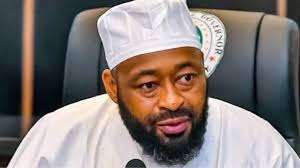
    Niger State Governor, Mohammed Bago has declared Wednesday, Thursday and Friday next week as public holidays to allow for the effective distribution of palliatives to residents across all the 25 Local Government Areas of the State.
    Speaking at a press conference at Government House, Minna, the governor announced that the state had supplemented the N5 billion palliative fund from the federal government with an additional N250 million.
    Below are the highlights of the modalities adopted for distribution:
    All the Wards in Suleja, Chanchaga, Bida and Kontagora Local Governments are to have N20 million per ward.
    All the Wards in the remaining 21 Local Government Areas of the State will get 10 million Naira each.
    Traditional Institutions to get N80 million.
    Internally Displaced Persons to get N75 million.
    Logistics and Organized Labour, to gulp N110 million
    Political parties to get N150 million.
    All the money is to hit the Local Government council Account by Monday next week.
    The cash will be injected into the local markets in the state.
    Five trucks of Rice will be distributed to each Ward of the 25 Local Government Areas.
    40,000 bags of Maize is still anticipated from the Federal government and the state government will add 10,000 bags to make it 50,000 bags for distribution to all the polling units across the state.
    The governor said the state and local governments will repay 58 per cent of the N5 billion in 20 months, while the federal government covers the remaining 42 per cent. Local committees, including former and current public office holders, will oversee the distribution process.
    Local Government and Ward Committees are to decide what food items to buy depending on the needs of their people.
    Standing Committees comprising Former and serving public office holders are to ensure effective and efficient distribution of the palliatives in their respective Constituencies.
    Also to cushion the effect of fuel subsidy removal, Governor Umaru Bago disclosed some steps taken by the state government to ease movement of goods and services .
    200 CNG Luxurious Buses will be made available to provide free public transportation to all students and pupils in public schools.
    Civil Servants will also benefit at a discounted rate .
    100 of the Buses are to ply the Suleja to Abuja axis.
    50 Buses to ply Minna and 50 to other Local Government Areas.
    Directives have been given to the Ministries of Lands and Agriculture to provide 10,000 hectares of arable land in every Local Government.
    By December 2023, 250,000 arable lands should be cleared to boost national policy on food security.
    Farm Machinery to be provided
    500,000 youths are to be employed in the pilot scheme in Agricultural activities.
    400,000 women are to be employed as pickers of Shea nuts.
    On Education;
    Payment of bursary to students is to be revived.
    Governor Umaru Bago used the medium to appeal to Nigerlites to be patient as his administration remains committed to serving them better.
    He however warned that anyone who is found wanting in the distribution of the palliatives will be jailed to serve as a deterrent to others.
  • NEDC Distributes Palliatives To People With Disabilities In Borno

    The North East Development Commission (NEDC) has commenced distribution of palliatives to people living with disability in Borno.

    During the exercise on Saturday in Maiduguri Metropolitan Council, the Managing Director of the commission, Mr Mohammed Alkali, said the gesture was in line with the commission’s mandate.

    Alkali, who was represented by the NEDC Coordinator for Borno, Mr Mohammed Umaru, said the exercise started with the people with disability in Maiduguri metropolitant and would be extended to their members in the 26 LGAs of the state.

    “What we are doing here today will also be done in remaining 26 LGAs of Borno.

    “It has also commenced or has been done in other north east states as part of measures to ensure that everyone is given a sense of belonging in line with the NEDC mandate.”

    Responding, the Chairman of people living with disability in Borno, Mallam Mohammed Abubakar, thanked the commission for the gesture and assured of the leadership’s commitment to ensure fairness in sharing the 50 bags of rice and 50 cartons of spaghetti to its members in the metropolis.

    Abubakar urged other organisations to emulate the gesture by the commission in reaching out to vulnerable groups in their support to victims of insurgency at this critical period.

  • Subsidy Removal: Extend palliatives to all industries, NACCIMA appeals to FG

    The Nigerian Association of Chambers of Commerce Industry, Mines and Agriculture (NACCIMA) has appealed to the Federal Government to extend palliatives to all productive industries to cushion the effects of the removal of fuel subsidy.

    Its National President, Otunba Dele Oye, made the appeal at the 3rd Quarterly Council meeting of the association in Abuja.

    The Federal Government had announced N5 billion palliative for each state of the federation, including the Federal Capital Territory to ameliorate the rise cost of living arising from the removal of the petrol subsidy.

    Oye said that the removal of petrol subsidy was not only affecting consumers but also the productive industries.

    According to him, the removal of the petrol subsidy and the floating of the Naira currency have in one way or the other affected industries.

    “These affected both consumers and industries because every new policy has its own casualties.

    “So, in the long term, it is good for the country, but in the short term, you have to consider people who are wrongly affected so that the prices do not cause unusual inflation.

    “It is important that the government ensures that the palliatives also go to the industries,’’ Oye said.

    He added that it would take time for businesses to adjust to the new policy of Naira floating.

    “The short term is always a bit difficult for a lot of people, because it takes time to adjust for businesses to get to know the new policy and also to work with it.”

    NACCIMA boss said that providing loans at a single digit rate could provide certain cushioning effects to industries affected in the short term.

    “This is because it is from us we generate the money from the tax to sustain the economy.

    “So, government must focus and find a way to make sure that the palliative goes to every sector,’’ he said.

    In his remarks, Dr Al-Mujtaba Abubakar, President, Abuja Chamber of Commerce and Industry (ACCI) said that the business community also needed incentives to cushion the effects of the fuel subsidy removal and the depreciation of the Naira.

    Abubakar, who was represented by the Director-General of ACCI, Victoria Akai, also emphasised the need for stable power supply and harmonisation of tax to enable businesses thrive.

    According to him, the business community is in dire need of incentives that will cushion the effect of the fuel subsidy removal and the depreciation of the Naira.

    He urged NACCIMA president to liaise with relevant government agencies to press home the association’s demands such as stable power supply and harmonisation of tax among others.

    “I will like to commend the determination of the NACCIMA President to further deepen the relationship of NACCIMA and policymakers which I believe will go a long way to bring the much-needed relief to the business community,’’ Abubakar said.

  • Angry protesters pull down NASS Complex gate

    *We’ll address your demands within 7 days- Senate

    The members of the organised Labour Unions protesting the removal of fuel subsidy on Wednesday pulled down the gates of the National Assembly in Abuja.

    The protesters numbering over 5,000, first converged at the Unity Fountain, Abuja, from where they matched to the Federal Ministry of Justice before proceeding to the National Assembly.

    However, following the failure of the security officials to adhere and open the gate to them, the angry protesters pulled down the gates and thronged into the assembly complex to vent their anger.

    The organised labour comprising the Nigeria Labour Congress (NLC) and Trade Union Congress (TUC) are currently protesting in the Federal Capital Territory, Abuja.

    Meanwhile, the National Assembly (NASS) has pledged to review and address the organised Labour demands within the next one week.

    The Senate President, Godswill Akpabio said this when organised labour took its mass protest to the National Assembly Complex where it submitted a list of its demands on Wednesday in Abuja.

    The mass protest was organised by the Nigeria Labour Congress (NLC) and the Trade Union Congress (TUC) over anti-poor and workers policies of the Federal Government.

    The protesters carried placards with inscriptions such as; “We condemn increase in school fees, “Stop importation of Petrol, Revive the Refineries,” and” Increase in price of fuel responsible for inflation, poverty among others.

    Akpabio, who was represented by Senate Chief Whip, Ali Ndume, assured the protesting workers that NASS was in support of their struggle.

    “We have keenly followed what is going on when we realized that there was a breakdown in the discussions between the Presidency and the NLC. I want to assure you that we will find a permanent solution to this.

    “Please give us one week and we will make progress and if you are not satisfied with the progress we are making, then you can take further action,” he said.

    He also said that a committee had been set up to look at the demands of organized labour.

    He added that by the close of the day or tomorrow, they will call the first meeting with labour to start the discussions and the engagements would continue.

    “We will do our best as your representatives to come out with solutions acceptable to you and realistic enough,” he said.

    Ndume also assured that the letter which contained their demands and terms of reference would be handed over to the leadership of the senate.

    Earlier, NLC President, Mr Joe Ajaero said the nationwide mass protest was to express workers’ frustrations and grievances about the anti-poor policies that had brought hardship to Nigerians.

    He added, ”For almost two months now, we have been engaged in discussions without fruitful motion. We got frustrated.”

    He, however, said that the demands of the labour include the immediate implementation of the resolutions jointly signed with organised Labour and government.

    Ajaero also called for the immediate reversal of all anti-poor policies of government including the recent hike in PMS price, school fees and VAT.

    He also urged the Federal Government to fix the country’s local refineries in Port Harcourt, Warri and Kaduna.

    According to him, release the eight months withheld salaries of the university lectures and workers.

    “Accord appropriate recognition and support to the Presidential Steering Committee and the work of its Subcommittees.

    “Also put a stop to in human actions and policies of government,” he added.

    Also speaking, Mr Festus Osifo, TUC President called for the reduction in the cost of governance.

    Osifo said that the governments was “insensitive to the plight of the masses.”

    “The Nigerian masses have been battered. They have gone through excruciating pains but in all of this, we have not heard what the President has to say about the cost of governance.

    “We want you in the National Assembly to show sacrifice. We want you to cut down your budget.

    “We want you to buy Nigerian made cars and not imported vehicles because you are creating jobs over there and importing poverty here.

    “We want you to show leadership because we elected you to work for us,” he said.

  • Subsidy: NLC in dilemma over planned strike amid CSOs’ pullout

    Subsidy: NLC in dilemma over planned strike amid CSOs’ pullout

    The Nigeria Labour Congress (NLC) and Trade Union Congress (TUC) are facing a tough decision on whether to proceed with their planned nationwide protest or cancel it.

    The Federal Government is making efforts to thwart the protest, with the Chief of Staff to the President, Bola Tinubu’s representative, Femi Gbajabiamila, urging the labour unions to call off the proposed strike. He cited palliative measures announced by the President the previous night as reasons to shelve the protest.

    He said, “We have laid out the plans, the interventions of Mr. President, as you all heard in his broadcast yesterday, we made it clear that this was just Mr. President’s initial rollout and interventions and that conversations will be ongoing as we go along.

    “And we appealed to Labour, we did appeal to labour to call off the protests for tomorrow. We found listening ears here and they did agree that they all accepted that Mr. President’s broadcast was a welcome development and that they will go back home to talk to the other leaders that are not present today. So we’re hopeful that they will do the right thing and call off the strike tomorrow.”

    Adding to the complexity, a Coalition of Civil Society Organisations/Labour Centre has cautioned the NLC and TUC against proceeding with the strike.

    They expressed concerns about the potential consequences on the nation, fearing that the protest could be hijacked by disgruntled Nigerians benefiting from fuel subsidies, leading to loss of lives and property.

    This cautionary message was conveyed in a communique issued after a meeting at Lagos Airport Hotel, Ikeja, attended by representatives of various civil society groups.

    It was attended by Razak Olokoba of Campaign for Dignity in Governance (CDG), Nelson Ekujumi (Centre for Social and Economic Rights), Titi Akosa (Centre for 21st Century Issues), Linus Okoroji (Humanity Services Project), Raji Rasheed Oyewunmi (Yoruba Citizen Action for Change), Gbenga Soloki (Campaign Against Impunity and Domestic Violence), Razaq Oladosu (Grassroots Democratic Initiatives), Ramat Abdulrazak (Women Grassroot Network), among others.

    Furthermore, 16 Northern-based civil society groups under the Coalition of Arewa Civil Society Organisations have also pulled out from supporting the strike, afraid that it could harm the already fragile economy and inflict further hardship on ordinary citizens.

    The Federal government, on its part, has pleaded with Organised Labour to suspend the strike, assuring them that they are taking measures to address the hardship caused by the removal of petrol subsidies.

    However, the NLC remains adamant and insists on proceeding with the national protest, asserting that the palliatives presented by the President are inadequate to alleviate the suffering in the country.

    In a press briefing at the end of the Presidential Steering Committee on Palliatives, the Chief of Staff to the President, Rt. Hon. Femi Gbajabiamila, expressed hope that the labour unions would reconsider their decision and call off the planned strike after discussions with absent leaders.

    Meanwhile, the NLC, led by its Deputy President, Comrade Titus Amba, maintained that the President’s palliative measures were insufficient to address the issues at hand.

  • NLC’s planned shutdown of the country illegal, FG insists

    The Federal Government has told the Nigeria Labour Congress, NLC, that its plan to shut down the country on Wednesday, August 2, under the guise of industrial action is illegal. 

    The NLC had threatened to embark on nationwide protest from August 2 following the failure to reach an agreement with the government on the recent increase in the pump price of petrol. 

    The Federal Government had instituted a case at the National Industrial Court, Abuja, seeking to stop the NLC from embarking on the strike action. 

    The court had also made an order stopping the NLC from going ahead with the strike pending the hearing and determination of the suit. 

    But despite the court order, labour unions have insisted on the mass protest. 

    The Solicitor-General of the Federation and Permanent Secretary in the Ministry of Justice, Mrs Beatrice Jedy-Agba, in a letter to the NLC, through their lawyer, Mr Femi Falana, SAN, said parties before the court are supposed to maintain the status quo, to respect the pendency of the matter. 

    In the letter with reference number MJ/CIV/ABJ/316/23 and dated July 31, 2023, the solicitor-general said, “Parties are expected to maintain the status quo even in the absence of a restraining order. However, there was no threat of contempt of court in the clarification provided by this Ministry. Undoubtedly, drawing the attention of NLC and the public to the pendency of the order cannot be equated with threats. 

    “The issue of peaceful protests and police permit are also not in contention, however, you may wish to be guided by the contents of the Communique issued by the National Executive Council of NLC at the end of its meeting of 27th July 2023. The decision or projected cause of action by NLC is directed principally in furtherance of issues connected with a hike in fuel price and consequential matters of palliatives and workers’ welfare. We assert that it is grossly inappropriate to lead the public protest in respect of issues relating to or connected with the fuel price increases, which are currently before the court! 

    “From the Communique, it is apparent that the current move by NLC goes beyond peaceful protest by issuing a seven-day ultimatum for government to meet the demands and also embark on a nationwide action to compel the government to reverse alleged anti-worker policies. 

    “Furthermore, uncontroverted media reports have established that NLC is not planning a peaceful protest but intends to ground the government by endangering public peace, instilling fear in the masses, and precipitating a further crisis. To buttress the above, the Assistant General Secretary of NLC, stated thus: ‘Nigerians should be prepared. That’s what we are saying. Being prepared means you have to stock food in your house and be economical with your movement at this particular point in time so as to avoid being stranded…’ “

    “In the same vein, the Nigeria Union of Petroleum & Natural Gas Workers and National Union of Electricity Employees confirmed that they were working towards grounding the supply of fuel and the national electricity grid. The Ag. General Secretary of NUEE stated thus: ‘The NUEE is an affiliate of the NLC and I’ve told you that we will join the strike action. The issue is that if there’s a deadlock between labour and the government; that means that the mass protest is still going on, and definitely electricity workers, as an affiliate of the NLC, will partake in the mass protest. So, all workers in the power sector will join the mass protest on Wednesday, August 2, 2023. It is binding on every staff member to join the strike action. So, if it results in a blackout, the only option is for the government to listen to us if it wants power to return.” 

    “We reiterate that the interim order clearly restrained NLC from embarking on industrial action of any nature. It is common knowledge that a strike is only a form of industrial action. NLC has expressed the intention to embark on a nationwide action to force the government (employer) to agree to its demands. Furthermore, the participation of workers in the protest will result in restriction, or imitation on, or a delay in the performance of work. The foregoing, inclusive of the purported peaceful protest (in view of its intended aims or purposes), undoubtedly amounts to industrial action. 

    “It is incumbent on your law firm to sensitize the labour unions that peaceful protests are no justification for disrupting or shutting down essential services, which is tantamount to a strike action.”

  • Bear the temporary pains, have faith in us, Tinubu tells Nigerians

    Bear the temporary pains, have faith in us, Tinubu tells Nigerians

    *Promises to review civil servants salaries

    *Says he’ll acquire 3000 CNG-fuelled buses for mass transit

    *To fund 75 manufacturers companies with N75bn

    President Bola Tinubu has acknowledged the challenges that Nigerians are facing due to the economic policies implemented by his government.

    However, he called upon them to have faith in the government’s ability to turn things around.

    Speaking via a nationwide broadcast on Monday night, Tinubu assured the citizens that he has devised palliative measures to alleviate the impact of removing fuel subsidies.

    He said that while he recognizes the immediate difficulties caused by the subsidy removal, Nigerians must focus on the bigger picture and the positive plans that are currently in progress.

    Tinubu admitted that there was a gap between the removal of subsidies and the implementation of these plans but assures the public that the government is actively working to close this gap.

    According to him, his genuine concern for the well-being of the people is evident in his appeal for their trust in the government’s capacity to deliver.

    Among the initiatives, Tinubu pledged to acquire 3000 Compressed Natural Gas (CNG)-fuelled buses for mass transit across the states and local governments.

    This move aims to make public transportation more accessible and affordable.

    To fund this project, the government has allocated N100 billion, earmarked for investment between now and March 2024. The CNG buses will be shared with major transportation companies, and these companies will have access to credit at 9% per annum with a 60-month repayment period.

    In addition to public transport improvements, Tinubu said he is actively collaborating with Labour unions to introduce a new national minimum wage for workers.

    He assured workers that their salary review is on the horizon, and once an agreement is reached, budget provisions will be made for immediate implementation.

    The President further commended private employers in the Organised Private Sector who have already taken the step to implement salary reviews for their employees.

    Furthermore, Tinubu said he aims to boost the manufacturing sector by allocating N75 billion between July 2023 and March 2024.

    The funds will support a minimum of 75 enterprises with great potential to stimulate sustainable economic growth, structural transformation, and improved productivity. Each of these manufacturing enterprises will have access to N1 billion credits at a maximum of nine per cent per annum for long-term loans and 12 months for working capital.

    The President emphasized that these actions align with the executive orders he signed earlier in the month, which aimed to address friendly fiscal policies and multiple taxes that have been stifling the business environment. By suspending and deferring certain taxes, the government aims to create a conducive environment for businesses to flourish and expand.

    In conclusion, President Bola Tinubu’s message to Nigerians is one of hope and perseverance.

    Despite the temporary pains caused by economic adjustments, he implored the nation to look ahead and trust in the government’s commitment to improving the overall welfare of its citizens. The plans to improve public transport, review civil servants’ salaries, and support the manufacturing sector demonstrate the government’s determination to create a brighter future for Nigeria.

    Full text of President Tinubu’s address to Nigerians

    My fellow citizens,

    I want to talk to you about our economy. It is important that you understand the reasons for the policy measures I have taken to combat the serious economic challenges this nation has long faced.

    I am not going to talk in difficult terms by dwelling on economic jargon and concepts. I will speak in plain, clear language so that you know where I stand. More importantly, so that you see and hopefully will share my vision regarding the journey to a better, more productive economy for our beloved country.

    For several years, I have consistently maintained the position that the fuel subsidy had to go. This once beneficial measure had outlived its usefulness. The subsidy cost us trillions of Naira yearly. Such a vast sum of money would have been better spent on public transportation, healthcare, schools, housing and even national security. Instead, it was being funnelled into the deep pockets and lavish bank accounts of a select group of individuals.

    This group had amassed so much wealth and power that they became a serious threat to the fairness of our economy and the integrity of our democratic governance. 

    To be blunt, Nigeria could never become the society it was intended to be as long as such small, powerful yet unelected groups hold enormous influence over our political economy and the institutions that govern it.

    The whims of the few should never hold dominant sway over the hopes and aspirations of the many. If we are to be a democracy, the people and not the power of money must be sovereign.

    The preceding administration saw this looming danger as well. Indeed, it made no provision in the 2023 Appropriations for subsidy after June this year. Removal of this once helpful device that had transformed into a millstone around the country’s neck had become inevitable.

    Also, the multiple exchange rate system that had been established became nothing but a highway of currency speculation. It diverted money that should have been used to create jobs, build factories and businesses for millions of people. Our national wealth was doled on favourable terms to a handful of people who have been made filthy rich simply by moving money from one hand to another. This too was extremely unfair.

    It also compounded the threat that the illicit and mass accumulation of money posed to the future of our democratic system and its economy.

    I had promised to reform the economy for the long-term good by fighting the major imbalances that had plagued our economy. Ending the subsidy and the preferential exchange rate system were key to this fight. This fight is to define the fate and future of our nation. Much is in the balance.

    Thus, the defects in our economy immensely profited a tiny elite, the elite of the elite you might call them. As we moved to fight the flaws in the economy, the people who grow rich from them, predictably, will fight back through every means necessary.

    Our economy is going through a tough patch and you are being hurt by it. The cost of fuel has gone up. Food and other prices have followed it. Households and businesses struggle. Things seem anxious and uncertain. I understand the hardship you face. I wish there were other ways. But there is not. If there were, I would have taken that route as I came here to help not hurt the people and nation that I love.

    What I can offer in the immediate is to reduce the burden our current economic situation has imposed on all of us, most especially on businesses, the working class and the most vulnerable among us.

    Already, the Federal Government is working closely with states and local governments to implement interventions that will cushion the pains of our people across socio-economic brackets.

    Earlier this month, I signed four (4) Executive Orders in keeping with my electoral promise to address unfriendly fiscal policies and multiple taxes that are stifling the business environment. 

    These Executive Orders on suspension and deferred commencement of some taxes will provide the necessary buffers and headroom to businesses in manufacturing sector to continue to thrive and expand.

    To strengthen the manufacturing sector, increase its capacity to expand and create good paying jobs, we are going to spend N75 billion between July 2023 and March 2024. Our objective is to fund 75 enterprises with great potential to kick-start a sustainable economic growth, accelerate structural transformation and improve productivity. 

    Each of the 75 manufacturing enterprises will be able to access N1billion credit at 9% per annum with maximum of 60 months repayment for long term loans and 12 months for working capital.

    Our administration recognises the importance of micro, small and medium-sized enterprises and the informal sector as drivers of growth. We are going to energise this very important sector with N125 billion.

    Out of the sum, we will spend N50 billion on Conditional Grant to 1 million nano businesses between now and March 2024. 

    Our target is to give N50,000 each to 1,300 nano business owners in each of the 774 local governments across the country.

    Ultimately, this programme will further drive financial inclusion by onboarding beneficiaries into the formal banking system. In like manner, we will fund 100,000 MSMEs and start-ups with N75 billion. 

    Under this scheme, each enterprise promoter will be able to get between N500,000 to N1million at 9% interest per annum and a repayment period of 36 months.

    To further ensure that prices of food items remain affordable, we have had a multi-stakeholder engagement with various farmers’ associations and operators within the agricultural value chain.

    In the short and immediate terms, we will ensure staple foods are available and affordable. To this end, I have ordered release of 200,000 Metric Tonnes of grains from strategic reserves to households across the 36 states and FCT to moderate prices. 

    We are also providing 225,000 metric tonnes of fertilizer, seedlings and other inputs to farmers who are committed to our food security agenda.

    Our plan to support cultivation of 500,000 hectares of farmland and all-year-round farming practice remains on course. 

    To be specific, N200 billion out of the N500 billion approved by the National Assembly will be disbursed as follows:

    -Our administration will invest N50 billion each to cultivate 150,000 hectares of rice and maize.

    -N50 billion each will also be earmarked to cultivate 100,000 hectares of wheat and cassava.

    This expansive agricultural programme will be implemented targeting small-holder farmers and leveraging large-scale private sector players in the agric business with strong performance record.

    In this regard, the expertise of Development Finance Institutions, commercial banks and microfinance banks will be tapped into to develop a viable and an appropriate transaction structure for all stakeholders.

    Fellow Nigerians, I made a solemn pledge to work for you. How to improve your welfare and living condition is of paramount importance to me and it’s the only thing that keeps me up day and night.

    It is in the light of this that I approved Infrastructure Support Fund for the States.

     This new Infrastructure Fund will enable States to intervene and invest in critical areas and bring relief to many of the pain points as well as revamp our decaying healthcare and educational Infrastructure.

    The fund will also bring improvements to rural access roads to ease evacuation of farm produce to markets. With the fund, our states will become more competitive and on a stronger financial footing to deliver economic prosperity to Nigerians.

    Part of our programme is to roll out buses across the states and local governments for mass transit at a much more affordable rate. We have made provision to invest N100 billion between now and March 2024 to acquire 3000 units of 20-seater CNG-fuelled buses.

    These buses will be shared to major transportation companies in the states, using the intensity of travel per capital. Participating transport companies will be able to access credit under this facility at 9% per annum with 60 months repayment period.

    In the same vein, we are also working in collaboration with the Labour unions to introduce a new national minimum wage for workers. I want to tell our workers this: your salary review is coming.

    Once we agree on the new minimum wage and general upward review, we will make budget provision for it for immediate implementation.

    I want to use this opportunity to salute many private employers in the Organised Private Sector who have already implemented general salary review for employees.

    Fellow Nigerians, this period may be hard on us and there is no doubt about it that it is tough on us. But I urge you all to look beyond the present temporary pains and aim at the larger picture. All of our good and helpful plans are in the works. More importantly, I know that they will work.

    Sadly, there was an unavoidable lag between subsidy removal and these plans coming fully on line.

    However, we are swiftly closing the time gap. I plead with you to please have faith in our ability to deliver and in our concern for your well-being.

    We will get out of this turbulence. And, due to the measures we have taken, Nigeria will be better equipped and able to take advantage of the future that awaits her.

    In a little over two months, we have saved over a trillion Naira that would have been squandered on the unproductive fuel subsidy which only benefitted smugglers and fraudsters. That money will now be used more directly and more beneficially for you and your families.

    For example, we shall fulfill our promise to make education more affordable to all and provide loans to higher education students who may need them. No Nigerian student will have to abandon his or her education because of lack of money.

    Our commitment is to promote the greatest good for the greatest number of our people. On this principle, we shall never falter.

    We are also monitoring the effects of the exchange rate and inflation on gasoline prices. If and when necessary, we will intervene.

    I assure you my fellow countrymen and women that we are exiting the darkness to enter a new and glorious dawn.

    Now, I must get back to work in order to make this vision come true.

    Thank you all for listening and May God bless the Federal Republic of Nigeria.

    *Being the text of an address on Nigeria’s economy by President Bola Ahmed Tinubu to Nigerians on July 31, 2023.

  • Labour walks out of meeting with FG over subsidy removal palliatives

    In a significant turn of events, representatives of organized labour on Friday walked out of a crucial meeting with the Federal Government’s team on palliatives. The meeting was convened to address the issue of providing relief measures to offset the impact of fuel subsidy removal in the country.
    The labour team, led by the President of the Nigeria Labour Congress (NLC), Joe Ajaero, left the meeting without addressing the press as they exited the venue.
    The discussions were meant to continue the deliberations on the palliative measures that could alleviate the burden of the subsidy removal on the general populace.
    Earlier, the representatives from both the government and labour had met on Wednesday, and the initial reports indicated a positive outcome from those discussions. The expectation was that the government would provide feedback on the demands put forth by the labor representatives when they resumed the meeting on Friday.
    However, to the disappointment of those present, the meeting could not proceed as planned because the government’s representatives were reportedly absent. This no-show led the labour officials to take the decision to walk out in protest.
    Adding to the frustrations, members of the labour teams faced delays at the entrance gate of the State House as they awaited clearance before being allowed into the meeting venue.
    These circumstances only furthered the tensions and impeded progress during the scheduled discussions.
    The issue of fuel subsidy removal has been a contentious one, with labour advocating for measures to mitigate its impact on the citizens. As the situation stands, the unresolved negotiations between the government and labour have led to a standstill in finding viable palliative solutions.
    The hope now lies in the willingness of both parties to reconvene and engage in meaningful dialogue, finding common ground to address the concerns of the populace and ensure the smooth implementation of any subsidy removal palliatives in the future.
    In the meantime, it is presumed that the proposed nationwide strike for August 2 next could still go on.