Tag: political crisis

  • Rivers Assembly Begins Impeachment Process Against Gov Fubara

    Rivers Assembly Begins Impeachment Process Against Gov Fubara

    Contrary to public expectations of renewed presidential intervention, the Rivers State House of Assembly has voted overwhelmingly to commence an investigation into allegations leveled against Governor Siminalayi Fubara.

    Twenty-five of the state assembly’s 32 lawmakers voted in favor of initiating the impeachment process. The decision came after efforts to resolve the political impasse through behind-the-scenes negotiations proved futile.

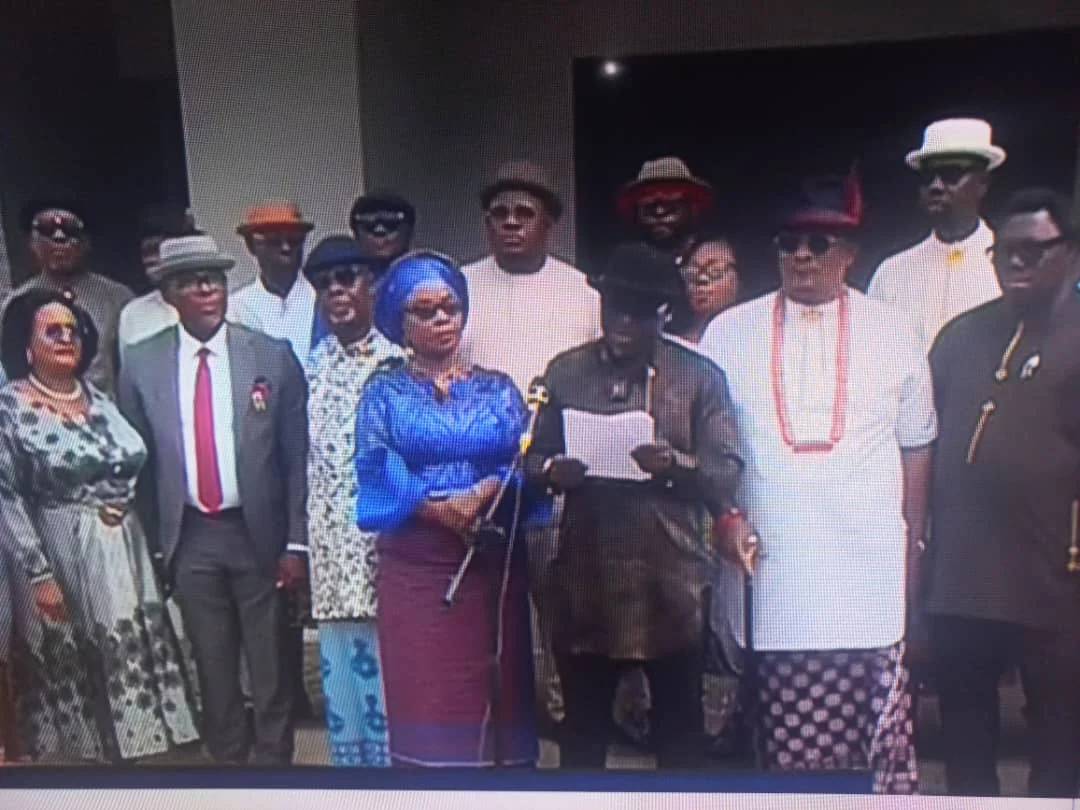
    Lawmakers announced the decision on Friday at the temporary Assembly complex, addressing the press on why the impeachment process had reached what they described as a point of no return. During the briefing, a member read a written statement outlining the Assembly’s position.

    The House said the decision followed the presentation of formal allegations against the governor and the subsequent resolution to proceed with an investigation.

    Some lawmakers who had previously distanced themselves from the impeachment threat have now reversed their positions. Hon. Emelia Amadi, speaking at the Assembly premises, said she had decided to close ranks with her colleagues, citing what she described as Governor Fubara’s continued unconstitutional actions.

    Other members reiterated their resolve to continue with the process, emphasizing that their actions were guided by constitutional responsibility and the need to uphold the rule of law.


    The impeachment of a state governor in Nigeria is governed by Section 188 of the 1999 Constitution (as amended).

    Under the Constitution, impeachment may be initiated on grounds of gross misconduct, defined as grave violations of the Constitution or serious misconduct in the performance of official duties.

    The process begins with a notice of allegation signed by at least one-third of the members of the State House of Assembly and served on the governor. Within 14 days, the Assembly must decide whether to investigate the allegations. Such a decision must be supported by not less than two-thirds of all members.

    If approved, the Speaker requests the Chief Judge of the State to constitute a seven-member investigative panel of persons of unquestionable integrity. The panel is required to investigate the allegations and allow the governor to respond.

    The panel must submit its report within three months. If the allegations are not proven, the matter ends. If they are proven, the House may proceed to adopt the report.

    A governor is removed from office only if the panel’s report is adopted by a resolution supported by not less than two-thirds of the Assembly members, after which the removal takes immediate effect.

    While the Constitution limits court interference in impeachment proceedings, the process must strictly comply with constitutional provisions to be valid.

  • Niger Coup: No harm will come to ousted Bazoum, PM Zein assures

    *Says Niger will not collaborate with Russia or the Kremlin-backed Wagner group

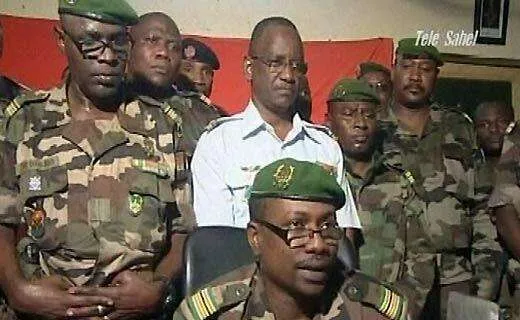
    Ali Mahaman Lamine Zeine, the newly appointed Prime Minister of Niger, has conveyed that the generals responsible for the recent coup, which led to the ousting of President Mohamed Bazoum on July 26, are committed to ensuring his safety.

    In an interview with The New York Times, Zeine, the most prominent civilian figure appointed by the military, emphasized that Niger does not have a history of resorting to violence.

    “Nothing will happen to him, because we don’t have a tradition of violence in Niger,” Zeine, the most senior civilian appointed by the military leaders, told the newspaper in an interview from Dakar on the fate of overthrown President Mohamed Bazoum.

    Speaking from Dakar, Zeine assured that there are no plans for harm to befall President Bazoum, who has been confined to his residence since the coup.

    Zeine also explicitly stated that there is no intention to collaborate with Russia or the Kremlin-backed Wagner group, addressing concerns about external partnerships.

    Reports from The New York Times indicate that the ousted President’s house had its water and electricity supply disrupted by the coup leaders, who also issued threats regarding his safety if other African countries proceed with a military intervention to restore him to power.

    In response to the situation, President Bola Tinubu warned of “grave consequences” should Bazoum’s health deteriorate while under house arrest, as conveyed by a European Union official. Meanwhile, questions about Bazoum’s well-being and his status were raised by reporters at the United Nations headquarters in New York.

    A spokesperson for UN Secretary-General Antonio Guterres confirmed that they have received information from a reliable source indicating that Bazoum is alive. Stephane Dujarric, the spokesperson, stated, “As far as we know, he’s alive.”

    Prime Minister Zeine, a trained economist who had previously served as the finance minister, addressed the presence of foreign military forces in Niger. He commented on the presence of 1,100 American soldiers and 1,500 French soldiers involved in anti-terrorist operations alongside the local army. Zeine suggested that a review of such military partnerships might be necessary and acknowledged the diplomatic approach of the White House in resolving the crisis.

    As Niger navigates this complex situation, the commitment to peaceful resolution and the assurance of the safety of ousted leaders remain crucial aspects of the ongoing discourse.

  • Niger Coup: ECOWAS calls for immediate release, reinstatement of President Bazoum

    Niger Coup: ECOWAS calls for immediate release, reinstatement of President Bazoum

    Heads of State and Government of ECOWAS on Sunday in Abuja called for the immediate release and reinstatement of President Mohamed Bazoum as the legitimate Head of State and Government of the Republic of Niger.

    This is contained in a communique at the end of the Extraordinary Summit on Socio-Political Situation in the Republic of Niger read by the President, ECOWAS Commission, Dr Omar Touray.

    The leaders also rejected any form of purported resignation by Bazoum and declared him as the only recognised and elected President by ECOWAS, the African Union and the international community.

    ‘‘In this regard, only official acts of President Bazoum or his duly-mandated officials will be recognized by ECOWAS,’’ they said.

    The leaders expressed strong condemnation of the attempted overthrow of constitutional order in Niger, and the illegal detention of President Bazoum, as well as members of his family and government.

    They demanded full restoration of constitutional order in the Republic of Niger and considered the illegal detention of Bazoum as a hostage situation, holding the coupists solely responsible for his safety and that of his family and government.

    In the event the ECOWAS’ demands are not met within one week, the leaders said they would take all measures necessary to restore constitutional order in the Republic of Niger.

    “Such measures may include the use of force for this effect, the Chiefs of Defence staff of ECOWAS is to meet immediately,’’ the leaders said.

    ECOWAS leaders also condemned the pronouncement of support by foreign governments and foreign private military contractors, while expressing appreciation to various governments and partners for their stance and solidarity.

    The Summit hosted by President Bola Tinubu, in his capacity as the Chairperson of the ECOWAS Authority of Heads of State and Government, also agreed to appoint and dispatch a Special Representative to deliver the demands of the authority.

    In response to the coup attempt, the Summit announced immediate sanctions on Niger including the closure of land and air borders between ECOWAS countries and Niger.

    They also agree on establishing a no-fly zone on all commercial flights to and from Niger, and suspending all commercial and financial transactions between ECOWAS Member States and Niger.

    Furthermore, assets of the Republic of Niger in ECOWAS Central Bank, Niger state enterprises, and parastatals in commercial banks will be frozen.

    Niger will also be suspended from all financial assistance and transactions with financial institutions within ECOWAS.

    Additionally, travel bans and assets freezes were imposed on the military officials  involved in the coup attempt, as well as their family members and civilians who accept to participate in any institution or government established by these military officials.

    In his closing remark, Tinubu thanked fellow leaders, Moussa Faki Mahamat, the African Union Commission (AUC) Chairperson, the Special Representative of the Secretary -General and Head of the United Nations Office in West Africa and the Sahel, Leonardo Simaõ, for their active engagement and invaluable contributions to the discussions.

    ‘‘As we come close to this Extraordinary Summit on the socio- political situation in the Republic of Niger, I send my heartfelt gratitude to each and every one of you for your active engagement in our open and closed door meeting.

    ‘‘Your invaluable contributions to our discussions have got us this far and hopefully, we will achieve our objective.

    ‘‘The essence of African unity and solidarity is hereby reaffirmed. Our unwavering commitment to democracy, peace and prosperity is hereby resolved.

    ‘‘Throughout our deliberations, we have recognized that the challenges faced by Niger are inter connected with broader issues affecting our region.

    ‘‘As African leaders, it is our shared responsibility to foster stability and progress, placing the wellbeing of our people at the forefront of our endeavours, and working together towards their prosperity and happiness must always consistently be our goals.

    ‘‘We will stand with our people in freedom and our commitment to the rule of law and not the barrel of gun. Africa has come of age. We reject coup and interruption to constitutional order,’’ he said.

    Before the Summit, the President also held bilateral meetings with President Umaro Embalo of Guinea Bissau, President Mahmat Itno of Chad, and Michael Health, the US Deputy Assistant Secretary of African Affairs.

    Presidents Patrice Talon of Benin Republic,  Alassane Ouattara of Cote d’Ivoire, Adama Barrow of The Gambia, Nana Akufo-Addo of Ghana, Embalo of Guinea Bissau, Macky Sall of Senegal, Faure Gnassingbé of Togo attended the Summit while the Presidents of Cape Verde, Liberia, Niger and  Sierra Leone were represented.