Abuja — The House of Representatives Joint Committee on Petroleum Resources has invited the Dangote Petroleum Refinery and the Nigerian Midstream and Downstream Petroleum Regulatory Authority (NMDPRA) to an emergency meeting following a dispute that threatens stability in Nigeria’s downstream petroleum sector.
Chairman of the committee, Ikenga Ugochinyere, disclosed this after an emergency meeting held in Abuja on Monday, warning that escalating tensions between key industry players could undermine recent gains achieved in fuel supply, pricing, and regulation.
Ugochinyere said the committee’s intervention had become necessary as Nigeria continues efforts to stabilise the petroleum market in the post-fuel subsidy era.
“We are guarding the hard-won stability in the downstream sector. Sustainable solutions require that we identify and address the critical issues, which is why we have invited the leadership of Dangote Refinery and the NMDPRA,” he said.
The lawmaker explained that the renewed tension followed concerns and allegations raised by Africa’s richest man, Alhaji Aliko Dangote, against the petroleum regulator. He noted that several petitions submitted to the committee relate to the issuance of import licences and questions surrounding the capacity of domestic refineries to meet Nigeria’s daily petroleum consumption.
According to Ugochinyere, the committee will comprehensively examine all outstanding matters when both the refinery and regulatory authorities appear before lawmakers.
He stressed that resolving the disagreement is critical to maintaining investor confidence and ensuring uninterrupted fuel supply amid ongoing reforms in Nigeria’s oil and gas sector.
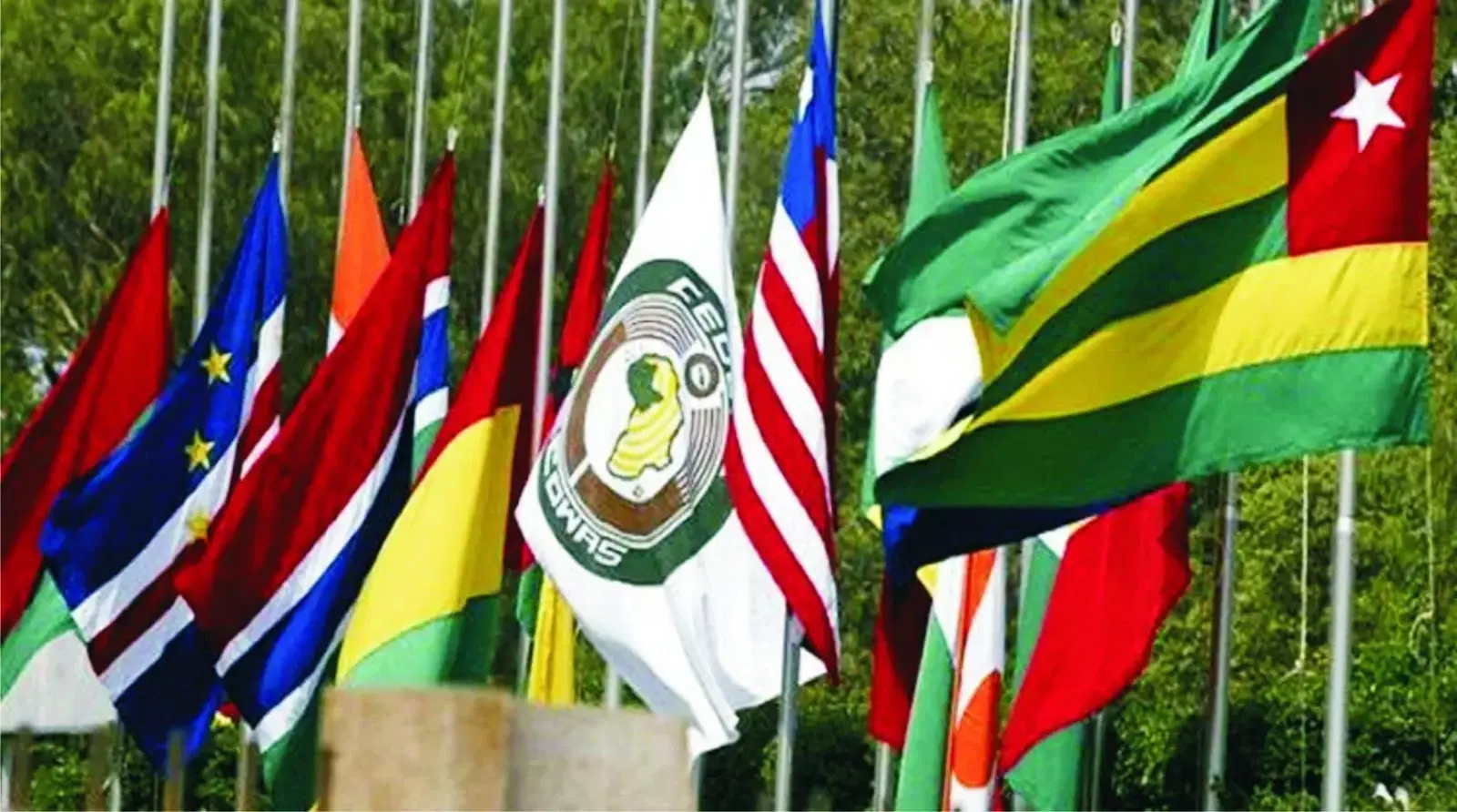
Abuja, Nigeria — West African leaders on Sunday renewed calls for a coordinated, multilateral approach to tackling terrorism and insecurity in the sub-region, warning that instability in one country poses a threat to all.
Speaking at the opening of the 68th Ordinary Session of the ECOWAS Authority of Heads of State and Government in Abuja, Chairman of the Authority and Sierra Leone President, Julius Maada Bio, urged member states to strengthen collective security efforts through integrated intelligence sharing, coordinated border operations and the operationalisation of an ECOWAS standby counter-terrorism force.
Bio described the session as a defining moment for the region, noting that ECOWAS, now 50 years old, must confront escalating security challenges that threaten the future of more than 400 million people in West Africa.
“West Africa faces some of the most complex and evolving threats in its history,” he said, citing terrorism, violent extremism, organised crime and communal conflicts, particularly in the Sahel. “Instability in one nation is instability for all. No border can insulate us from violence.”
He commended regional ministers of finance and defence for developing modalities to ensure sustainable financing and raise a 1,650-personnel counter-terrorism brigade by the end of 2026, stressing that security measures must be matched with governance reforms, education, job creation and community resilience to effectively dismantle extremism.
The ECOWAS chairman also expressed concern over political instability in Guinea-Bissau and the attempted coup in Benin Republic, reaffirming the bloc’s zero tolerance for unconstitutional changes of government.
“ECOWAS does not, and will not, compromise on democratic governance,” Bio said, adding that the organisation remains committed to supporting credible and time-bound transitions back to constitutional rule where necessary.
Nigeria’s President Bola Tinubu, represented by Vice-President Kashim Shettima, echoed the call for deeper regional cooperation, saying no single country can address terrorism, violent extremism, transnational crime and other cross-border threats alone.
“Our security, prosperity and resilience are indivisible,” Tinubu said. “We must sit at the same table, speak with one voice and act with shared resolve.”
President of the ECOWAS Commission, Dr Omar Touray, said recent global and regional developments — including rising insecurity in the Sahel and shifting geopolitical dynamics — pose significant challenges to achieving the bloc’s Vision 2050 objectives. He noted that ECOWAS is reinvigorating its economic integration agenda through the operationalisation of the ECOWAS Business Council to mobilise regional capital and strengthen member states’ comparative advantages.
On economic integration, leaders reaffirmed commitments to the ECOWAS Trade Liberalisation Scheme and the planned single currency, while announcing measures to ease regional travel. From January 1, 2026, member states will abolish air transport taxes and reduce passenger and security charges by 25 per cent to lower the cost of air travel across West Africa.
The meeting underscored ECOWAS’ resolve to strengthen security cooperation, defend democratic governance and deepen economic integration as the region navigates growing security and political challenges.
“What happened between the Minister of the Federal Capital Territory (FCT), Nyesom Wike, and Navy Lieutenant A.M. Yerima is unfortunate. When Wike arrived at the site of the disputed land in Abuja, the officer explained that he was simply obeying lawful orders. Wike should not have exchanged words with the officer; he ought to have addressed his concerns through the officer’s superiors. He is our colleague, and he could have reached out to us to resolve whatever issue there was.
“The officer’s action was lawful—he was trained to be disciplined, loyal, and obedient to orders. Therefore, the young officer merely carried out his duty, which is worthy of commendation. He did not commit any offence under military regulations. If you observe carefully, he spoke respectfully and conducted himself properly.
FCT Minister, Nyesom Wike in near fisticuff with an officer of the Nigerian Navy
“There is, therefore, no offence under military law for which he should be charged. Wike should not have engaged him in an altercation, especially out of respect for the uniform he was wearing. Anyone who disrespects a soldier indirectly disrespects the President, who is the Commander-in-Chief of the Armed Forces. There is, therefore, no basis for any punishment against the officer. This is not about supporting the military to act disrespectfully towards civilians. The Minister should understand that every officer has superiors.
“I gathered that he called the Chief of Defence Staff, who advised him to wait for an investigation. However, he did not wait and instead went straight to the site. As a leader, he ought to have exercised patience and waited for the outcome of the investigation. Wike also contacted the Chief of Naval Staff, who assured him that an inquiry would be conducted. Yet again, he did not wait. It was supposed to be a one-day inquiry, but he chose to go there and confront them. Now that the Chief of Naval Staff has visited the area—since it involves a land dispute—the matter will be investigated to determine who owns the lawful documents. If the land has been revoked, there are established procedures to follow diplomatically.
“We [the Ministry of Defence] have not received any formal complaint from Wike, but I called him after the video went viral and advised that he should have spoken with me before going there, rather than confronting the officers directly.”
A Matter Effectively Closed
I have chosen to reproduce the words of Alhaji Bello Matawalle, the Minister of State for Defence, because of what they represent. Although he mentioned the need for further investigation, the tone and tenor of his statement suggest that the matter is effectively closed—and the naval officer has nothing to worry about. Lt. Yerima, by every indication, acquitted himself well. He was professional and measured in his conduct during that very public confrontation with a “super minister” known for his loquacity.
To reinforce the sense that the matter is closed, one only needs to recall the words of the Minister of Defence, Alhaji Mohammed Badaru, who stated that his ministry and the armed forces “will always protect our officers on lawful duty.” Badaru added: “We will not allow anything to happen to him so far as he is doing his job, and he is doing his job greatly well.” The defence minister made this statement during a ministerial briefing for the 2026 Armed Forces Remembrance Day in Abuja. Let that sink in.
You may call it esprit de corps, but several retired generals from both the North and the South—including former Chiefs of Defence Staff and Army Staff, Generals Lucky Irabor and Tukur Buratai—have spoken in Yerima’s defence. They even called for a public apology from Wike to both Yerima and the Commander-in-Chief, President Bola Tinubu, for dishonouring a military officer commissioned by the President himself.
Lawyers, Silence, and Political Optics
Notable voices have weighed in on the Wike–Yerima confrontation over the disputed plot of land in Abuja last Tuesday. Some are lawyers—senior and junior—while others are political commentators and public intellectuals. A few have argued in favour of Wike, citing the 1999 Constitution (as amended), but the majority have faulted him, emphasizing due process, the rule of law, and the impropriety of resorting to self-help, as appeared to be the case here.
As usual, the legal community has been divided—lawyers seldom agree on anything, even when the law seems straightforward to the “unlearned.” For most of the past week, they have been doing what they do best: lawyering. Their disputations may be intellectually stimulating, but one must not take them too seriously. Often, their arguments are shaped by convenient partisanship masquerading as constitutional fidelity.
By the way, has anyone noticed the deafening silence from Wike’s colleagues in the Federal Executive Council? Nearly fifty cabinet members, yet not one has publicly spoken in his defence. Does this silence reflect how they truly regard the Minister? As for President Tinubu, who appointed Wike “on our behalf,” the Minister may well be beyond reproach or removal—for obvious political reasons.
The Politics of 2023 and the Future of 2027
Wike appears untouchable—because of the past (2023) and the future (2027). President Tinubu, ever the political strategist, prioritizes electoral victory by any means necessary—the Machiavellian creed that the end justifies the means. And Wike fits perfectly into that school of thought.
Tinubu “discovered” Wike in 2023, when the latter was nearing the end of his governorship of oil-rich Rivers State. Having fallen out with his own party, the PDP, Wike was eager to prove his relevance. Tinubu needed a foothold in the Niger Delta and, by extension, the national electoral map. In that year’s presidential election, Wike reportedly “delivered” Rivers State to Tinubu—an opposition candidate—in defiance of his own party’s standard-bearer, Atiku Abubakar.
An APC governor from the North, astonished by Wike’s performance, allegedly remarked that his party merely begged for 25 percent of the votes but received an overwhelming—and inexplicable—victory. Unsurprisingly, the PDP still won the subsequent governorship election by a landslide, demonstrating the complex web of political transactions that define Nigerian elections.
In essence, Wike paid with the votes of Rivers people for his current position in a supposedly opposition-led federal government. That, in part, explains his “untouchable” aura. He remains a crucial asset for the 2027 elections—and the President knows it.
The Rivers Factor and a Trail of Conflict
Wike has long been a person of concern throughout his political career—from his days as Chairman of Obio/Akpor Local Government Area, to Minister, to Governor, and now to FCT Minister. Since assuming office in August 2023, controversies have dogged both his official and personal conduct.
He installed Siminalayi Fubara as his successor in Rivers State but soon fell out with him. Earlier this year, he was linked to political violence that led to a temporary declaration of emergency in the state, suspension of all elected officials—including the governor and lawmakers—by President Tinubu. The crux of the matter was political control. Wike openly claimed he nominated all elected officials, purchased their nomination forms, and installed them in office. The implication: Rivers State belongs to him.
A chastened Fubara has since been reinstated under conditions widely reported to include a promise not to defect to the APC as its leader and to forgo a second-term bid.
Throughout his political journey, Wike has sparred with nearly everyone who once aided his rise—from former President Goodluck Jonathan and his wife, Patience, to his predecessor, Rotimi Amaechi. His rift with Atiku Abubakar and the PDP leadership over the 2023 presidential ticket further cemented his image as a combative political loner.
On Saturday, he and his loyalists were reportedly expelled from the PDP—a move he predictably dismissed with scorn. Wike is, as the Igbo say, an ikiri—a tenacious creature that never lets go once it bites. But the real casualty may be the PDP itself, now adrift and internally fractured.
A court ruling against holding the party’s Ibadan convention underscores how the PDP’s legal and political machinery remains compromised. In Abuja, many judges are whispered to be “Wike’s judges,” highlighting his alleged influence over the judiciary.
Money, Power, and the Capital Territory
Wike’s public persona is equally polarizing. His frequent, combative media chats—lavishly funded from the FCT’s coffers—have become theatrical displays of arrogance. Barely two months after his appointment, he reportedly secured presidential approval to exempt the FCT from the Treasury Single Account (TSA) policy, giving him free rein over the territory’s internally generated revenue—beyond public scrutiny.
Allegations have since swirled around him: the revocation and reallocation of prime land to cronies and family members, misuse of public resources (including taking his children on official foreign trips), and failure to fully declare assets, notably properties in the United States allegedly registered in his wife’s and children’s names. He has also been accused of using public venues for partisan political events, including hosting a factional PDP meeting at the FCDA conference hall. Wike, for his part, has strenuously denied all allegations of wrongdoing.
A Dangerous Moment for Civil–Military Relations
The Wike–Yerima spat, however, carries deeper implications—especially against the backdrop of an alleged coup plot reportedly involving northern military officers. Although the government insists the arrests were disciplinary, many Nigerians remain skeptical.
The vehement defence of Lt. Yerima by northern political figures, including the Defence Ministers, raises its own concerns. And then came the cryptic post from the Nigerian Defence Headquarters’ X (formerly Twitter) account, in bold uppercase letters:
“IT IS AN HONOUR TO SERVE IN THE NIGERIAN MILITARY. UNSHAKEN. UNBENT. UNBROKEN.”
Make of that what you will.
Meanwhile, the National Assembly is reportedly considering legislation to make the military answerable not only to the President but to all tiers of civilian authority.
In a manner of speaking, may Wike not become Nigeria’s Achilles’ heel in this fragile and fractious democracy of twenty-six years.
About the Author
Ugo Onuoha is a veteran journalist, former Managing Director/Editor-in-Chief, Champion Newspapers Ltd, columnist, and public affairs analyst. His works often explore governance, power dynamics, and civic accountability in Nigeria’s evolving democracy. He writes from Lagos.
The presidential candidate of the Peoples Democratic Party (PDP) in the 2023 election, Atiku Abubakar, is scheduled to address the press on Monday, October 30, 2023.
This announcement comes in the wake of the Supreme Court’s recent dismissal of Atiku’s appeal and the affirmation of President Bola Tinubu’s victory in the February presidential election.
A statement from the PDP Publicity Office released on Saturday outlined the purpose of Atiku’s press conference.
According to the statement, Atiku Abubakar will focus on addressing crucial national issues of serious importance.
The press conference is set to take place at the PDP National Secretariat, Wadata Plaza, Abuja, with the event commencing at 11 am. The significance of this address and its potential implications for the nation are eagerly anticipated by the public.
President Bola Ahmed Tinubu achieved his lifelong aspiration of becoming Nigeria’s president when he was declared the president-elect of the February 25, 2023, presidential election.
On May 29, 2023, during his inauguration as the President and Commander-in-Chief of the Armed Forces, he wasted no time in expressing his commitment to hit the ground running.
In his address, he humbly requested not to be pitied, emphasizing that he had actively pursued the presidency. President Tinubu’s first 100 days in office were marked on September 5, 2023.
However, an in-depth assessment of his administration within this relatively short timeframe may not fully reflect the promises he made to the Nigerian people.
It is essential to consider the challenges inherited from the previous administration under Muhammadu Buhari, which endured eight years of economic difficulties. President Tinubu had pledged to alleviate the burdens faced by the poor, and this commitment generated enthusiasm and high expectations among the populace.
One notable policy shift was the sudden removal of the controversial oil subsidy without accompanying palliative measures mentioned during his inauguration speech.
Following this move, Nigerian oil marketers and fuel racketeers swiftly increased the pump price of Premium Motor Spirit (PMS) from N186/ltr to N575/ltr and later to N617/ltr.
Their rationale was that the price adjustment was a response to global oil prices and associated costs. Additionally, changes in the exchange rate led to a depreciation of the Naira against other currencies. Subsequently, Nigerians experienced increased living costs, including rising food prices, transportation expenses; rent hikes by landlords, and higher school fees, among other challenges.
Before he assumed office Nigerians had eagerly awaited the 2023 general elections as an opportunity for change.
Youth and political sentiment were strongly geared toward effecting a transformation in various aspects of the country’s political landscape.
Some politicians capitalized on the public’s anger and youth mobilization, switching parties they viewed as more conducive to their political ambitions.
It is widely acknowledged that the previous administration, led by former President Buhari, faced significant criticism for its handling of the economy.
While promising change, the administration was perceived to have delivered misery and despair, corruption, which the government pledged to combat, appeared to flourish.
While it is essential to address economic challenges and leadership issues in Nigeria, this article primarily focuses on the treatment of individuals who have served the nation diligently and those, who upon identifying institutional weaknesses or leadership shortcomings, have sought to enrich themselves.
Recent developments in the political arena bring into question the treatment of individuals like Mr. Godwin Emefiele, the suspended CBN Governor, and Abdulrasheed Bawa, the suspended Chairman of the Economic and Financial Crimes Commission (EFCC).
Both face various charges, possibly related to their actions while in office during the previous administration.
It is important to recognize the valuable contributions of these individuals during their tenure. For instance, Godwin Emefiele, as the CBN Governor, played a pivotal role in propping up the economy during times of fiscal uncertainty.
His interventions and policies were instrumental in averting economic crises, particularly during the COVID-19 pandemic.
Similarly, Abdulrasheed Bawa demonstrated zeal and effectiveness in his role as the anti-corruption czar.
However, they may have inadvertently crossed ethical boundaries while executing their duties as directed by the Commander-in-Chief (C-in-C) in alignment with political agenda.
For example, Godwin Emefiele’s foray into politics and a controversial Naira redesign policy attracted political criticism, while Abdulrasheed Bawa’s aggressive pursuit of corruption cases earned him powerful enemies.
While this discussion does not intend to justify their actions or inactions in office, it however raises questions about the treatment they currently face. Is this treatment an incentive or disincentive for individuals to serve their nation?
President Tinubu’s administration has already made bold policy moves, although they have resulted in unexpected hardships for Nigerians.
With the appointment of his cabinet after nearly 80 days in office, Nigerians anticipate selfless dedication from him and his team.
Concerns have arisen regarding the inclusion of certain politicians, including former governors with underwhelming performance records, in the cabinet.
Nigerians hope to avoid a repeat of past experiences, where ministers seemed ill-prepared, leaving the Central Bank of Nigeria to take on responsibilities beyond its mandate to prevent economic collapse.
Given the current economic challenges, Nigerians expect President Tinubu to uphold his commitment to hold non-performing ministers accountable.
This approach should ensure that the Central Bank of Nigeria can fulfil its constitutional responsibilities as outlined in BOFIA 2007 without unnecessary political interference. Preserving the CBN’s independence is essential for effective monetary policy and economic stability.
In conclusion, while it is crucial to address economic woes and leadership issues, it is equally important to safeguard institutions like the Central Bank of Nigeria from unwarranted political interference.
Nigeria’s economy depends on CBN’s stability and effective functioning, and it is essential to protect this national heritage.
The Benue Rebirth Movement (BRM), a non-partisan political pressure group, has advocated for political inclusion in Benue state.
Led by Air Vice-Marshal Monday Morgan (rtd), the National Coordinator, BRM joined concerned elders from Benue South Senatorial District (Zone C) to voice discontent over the exclusion of non-Tiv-speaking ethnic groups from the state’s democratic gains.
Since the state’s creation in 1976, ethnic groups like Idoma, Igede, Jukun, Etulo, and Nyinfo have been denied the opportunity to hold the position of Governor, while political leadership roles have been carefully zoned and rotated among Tiv-speaking areas.
Currently, about 90 percent of key positions at federal and state levels are occupied by the Tiv, exacerbating the marginalization of Benue South.
According to a statement signed by BRM PMC, non-Tivs have faced opposition from major political parties in the state, with accusations of being sponsored against them.
“Despite the recent change in government, the issue of marginalization persists, prompting BRM to call for fairness and representation.
“The movement seeks justice for Zone C, comprising the Idoma and Igede communities, representing one-third of the state’s local government areas and population. BRM, supported by various senatorial zones, emphasizes the need for inclusive politics and governance.
“Air Vice-Marshal Morgan, a retired Air Force Fighter Pilot, and former Chief of Defence Intelligence, has been at the forefront of this agitation. He has engaged with prominent leaders and sub-unit leaderships across the state to campaign for inclusive representation,” the statement said.
While BRM remains resolute in its pursuit of justice, it called on the state Governor, Rev. Fr. Hyacinth Alia, and the Secretary to the Government of the Federation, Senator George Akume, to address the existing imbalance in appointments and promote fair representation as BRM envisions a future where political emancipation is achieved for all the people of Benue state, regardless of their ethnic origins.