Tag: Poverty in Nigeria

  • Forgeries, taxations and the reign of Rehoboam

    Forgeries, taxations and the reign of Rehoboam

    By UGO ONUOHA

    “A profligate regime should not expect Nigerians to willingly submit to a new tax regime that looks like an exercise in extortion. The administration gets its priorities wrong. At a time that virtually all federal highways have collapsed and become deathtraps, this government prioritises the construction of a N15 trillion coastal highway from Lagos to Calabar.”

    A little over three months into the presidency of Alhaji Bola Ahmed Tinubu, on September 5, 2023, I wrote an opinion piece titled “100 days of Rehoboam” in this space and elsewhere. Rehoboam was a king of the divided kingdom of ancient Israel. He was the son of King Solomon and the grandson of King David, both of whom were also past rulers of a united Israel. Rehoboam caused Israel to be divided through policies that inflicted pains on his people. He was reckless. He was proud. He was unfeeling. He took counsel from his scatter head fellow young men. He told the Israelites that the privations they suffered under his father should be regarded as a child’s play. And that while his predecessors chastised them with a whip, he would chastise them with a scorpion. And he verily proceeded to do so. Rehoboam and Tinubu share similarities and dissimilarities. Rehoboam was a monarch. Tinubu is not a king in spite of his pretending to be one. Rehoboam was born into royalty. Tinubu was not. Indeed Tinubu’s birth and early years are still subjects of conjectures and controversies. Rehoboam was a young man when he ascended the throne of his fathers, and so could be excused on account of youthful exuberance. Tinubu was an old man when he was installed as president of Nigeria though his true age is only known to himself and himself alone. There’s no verifiable evidence of when he was born and where. Unlike Rehoboam, Tinubu takes no counsel from anyone. He said this much himself when, without consultations and without a Cabinet, he unilaterally removed the so-called petrol subsidy.

    On September 5, 2023, I wrote this about Tinubu and Rehoboam. “[Tinubu at 100 days in office] has been like that proverbial bird that perched on a tree branch – the tree branch has remained unsettled and the bird can’t stop dancing to unheard sounds. Since his inauguration [as president] on May 29 [2023], exacerbated hopelessness has been the lot of Nigerians and Tinubu himself can only pretend to have had peace of mind. If he has had the presence and prescience of mind, he would not have been enmeshed in serial fumbling from one policy somersault to another from the removal of the so-called petrol subsidy, [devaluation of the Naira], student loan and [the] proposed payment of N8,000 per month for six months to a specified number of poor Nigerian families, and planning to lead the Economic Community of West African States [ECOWAS] to war on Niger Republic [when the military in that country seized political power]”… In Igbo Tinubu is a classical case of ‘akwu rere ere n’ikwo puru epu’ which transliteration in English language will roughly read: rotten palm fruits being pounded inside a decayed mortar. The finished product is better left to the imagination…”

    When Rehoboam became the king, the older advisers in the palace pleaded with him “to heed the cry of the people and lighten the heavy load of labour and taxes that Solomon had laid on them, but the younger elements who had grown up with the new king counselled otherwise. He took the counsel of his mates. The consequences of the actions of the new and rash King Rehoboam are well documented in the chronicles of the kings of Israel in the Holy Bible book of 1Kings. In Tinubu’s rash and irrational decisions [on] the first day and [subsequent] weeks of his reign, he appears to have borrowed a leaf from the wicked and unthinking  King Rehoboam”. One of the undoings of Rehoboam was that he insensitively raised taxes on his people and so lost more than half of his kingdom. The northern part of Israel split away, taking its own path separate from the southern kingdom of Judah. But Nigeria is not a monarchy and bears no resemblance to the old kingdom of Israel. Does that mean that Nigeria splitting is unthinkable?

    With the new tax laws set to come into effect in a matter of days, Tinubu who rules like a monarch may yet be treading the path of King Rehoboam. Rehoboam raised taxes on his people at a time they were already complaining of privations and pains, Tinubu is poised to also raise taxes on Nigerians at a time the people are groaning under the weight of a multiplicity of harsh economic policies of the regime. And he appears not to be bothered. He is irritated by wise counsel that he steps on the brakes and allows Nigerians to breathe. Instead, he empowers the relevant agency of government to execute a secret contract with a so-called tax consultant in France which may lead to handing over Nigeria’s tax data to a foreign company. Tax data is a national security issue that should not be traded as a favour to a friend. Tinubu and the president of France, Emmanuel Macron, are known to be buddies. The frequent ‘working visits’ of our president since he assumed office a little over two years ago had been to Paris, France, unlike his predecessor, Muhammadu Buhari, who made London his tourism and medical destination, and the former archbishop of Canterbury his bosom friend. And a go-to man.

    A profligate regime should not expect Nigerians to willingly submit to a new tax regime that looks like an exercise in extortion. The administration gets its priorities wrong. At a time that virtually all federal highways have collapsed and become deathtraps, this government prioritises the construction of a N15 trillion coastal highway from Lagos to Calabar. To add insult to injury, the contract for the road was not subjected to an open and transparent bidding, no public tendering, no definite and finite route, and no environmental impact assessment report. To cap it up, the highway contract was awarded to a known long time friend and business associate of Tinubu. The president’s son, Seyi, is alleged to be a significant shareholder in some of the companies in the Chargouri Group which owns Hitech construction company which was awarded the opaque Lagos – Calabar highway contract. This is a classic and glaring case of abuse of office. The argument by the regime that much of the money for the execution of the road contract would be borrowed does not make the smell of the contract less pungent and offensive. Even the money to be borrowed will still have to be paid by Nigerians. By you. Or by me. Or by our children and grandchildren.

    As the government preps to extract more taxes from us, it is telling us that we should be the people to fund their ostentatious, obscene and provocative lifestyles including, committing billions of Naira to build or to refurbish mansions for the president and vice president, buy hundreds of foreign manufactured sport utility vehicles [SUVs] for ministers, a coterie of advisers, lawmakers, local government chairmen, and even for the wife of the president whose well appointed office of the first lady is not known to any law in the land. Members of the boards of MDAs [ministries, departments, and agencies] are usually not left out of the largesse. Ours is probably the only country in the world where government computers, vehicles, websites, and the like, are replaced every year. The debauchery includes procuring a fleet of armour – plaited presidential limousines every four years with the advent of a new president and a presidential jet in tow. Of course, the issue of looting the public treasury has been normalised. It’s so brazen that public servants routinely send their children to schools abroad where the fees are charged in millions of the United States dollars. If you want to be reminded of how decadent the system is, do not look further than the annual budget provisions for the feeding of our president and his family. It runs into multiple billions of Naira. We give the president a rent-free accommodation, we afford him and his family pro bono top rate round-the-clock security, gift him a fleet of high-end luxury vehicles, fuelled and maintained at our expense, top it up with a presidential jet, and then turn around to pay him millions of Naira every month as salary. Not even the United States of America, the biggest economy in the world, does that.

    In spite of the foregoing proclivity of this regime to extort citizens, it still cannot be satisfied and appeased. It is a leopard that cannot change its spot. The information last week was that the administration had allegedly fiddled and rigged the tax reform laws passed by the national assembly [NASS]. Last week Rep. Abdulsamad Dasuki  [PDP, Sokoto] raised the alarm, alleging discrepancies between the tax laws passed by NASS and the versions subsequently gazetted and made available to the public. He said the rigging of the laws should be concerning because some provisions were deleted and strange and terrifying provisions illegally inserted. Hon. Dasuki had said during plenary on the floor of the House that his legislative privilege had been breached by the fact that the content of the tax laws as gazetted by the executive arm of government did not reflect what lawmakers debated, voted on, and passed on the floor of the House. “I was here, I gave my vote and it was counted, and I am seeing something completely different”. He said that he obtained copies of the gazetted laws from the ministry of information and found them to be inconsistent with what was approved by both the House and the Senate. Dasuki said that there had been ”a serious breach”, and warned that allowing laws different from those duly passed by the national assembly to be presented to Nigerians would undermine the integrity of the legislature and violate the Constitution.

    “Mr. Speaker, I will be pleading that all the documents should be brought before the Committee of the Whole [House]. Thank you. The whole members should see what is in the gazetted copy and see what they passed on the floor so that we can make the relevant amendment. Mr. Speaker, this is a breach of the Constitution”. Consequent upon the alarm, the House raised a committee of seven persons to probe the allegations. However, Nigerians are not fooled. The current administration across board, from the executive to the legislature and the Judiciary, is populated by people who are adept at rigging and forgery. The NASS and the executive, working separately or in collusion, routinely rigged our national budgets. The 2025 fiscal document is the latest of fiddling with budgets. It was reported and never denied that about 6,000 illegal projects were inserted into the budget with accompanying billions of Naira allocations. We complained and grumbled and then moved on as usual. In effect, the NASS is the least morally competent to cry foul on the issue of rigging and forgery of documents. The same can be said of the judiciary where court judgements, especially of political hues, are routinely awarded to the highest bidder or to the most powerful and connected. So our system thrives on rigging or “mago mago” or “wuru wuru” to use the local lingo.

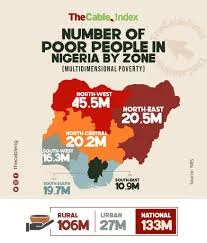
    But whether rigged or not the implementation of the new tax laws should be suspended, if it cannot be scrapped. It’s inhuman and inhumane to tax poverty. The majority of Nigerians are dirt poor. The other day, a top federal government official said that about 80 million citizens do not know where their next meal would come from. And a little over two years ago, the national bureau of statistics [NBS] determined after its study that over 130 million Nigerians were dimensionally poor. Certainly, the figure should be higher today given what Nigerians have been subjected to since May 29, 2023. And by the way, there has been no concrete evidence that any country has engendered or engineered economic recovery by taxing the poor. Instead putting more money in the pockets of citizens could help to reflate the economy as long as it is done in a manner that will not trigger inflation.

    UGO ONUOHA, a Veteran Journalist, was the Managing Director/Editor-in-Chief, Champion Newspapers Limited

  • UNICEF says Katsina, Sokoto, Zamfara need $15m to give quality life

    UNICEF says Katsina, Sokoto, Zamfara need $15m to give quality life

    UNICEF says Katsina, Sokoto and Zamfara States will need $15 million to upscale the quality of  life of their citizenry.

    The UNICEF Representative in Nigeria, Ms Christian Munduate, said this at a news briefing in Gusau on Wednesday shortly after holding an interactive session with stakeholders from Gidanwada Model Primary School in Bungudu Local Government Area.

    Munduate said that the governors of the three states needed to provide the matching grants to address the socio-economic challenges and provide quality life for their citizens.

    She regretted the prevalence of malnourished children and nursing mothers in the three states.

    She identified open defecation as a major cause of diseases capable of reversing polio epidemic to the states.

    According to her, children, mothers and other Nigerians deserve quality education, healthcare and nutrition, among other critical needs.

    Munduate urged the three states to collaborate with partners and stakeholders  to tackle the challenges and improve the living condition of their people.

    She further solicited for a strong partnership with all the stakeholders to address the needs of children, mothers and the entire people of the three states and other Nigerians.

    She said that available record shows that there were at least 5.5million severe and acute malnourished children in Northern Nigeria.

    She further disclosed that no fewer than 40 million Nigerians practice open defecation that constituted major causes of diseases outbreaks.

    UNICEF, she said, had supported 50 Primary Healthcare Centers, in collaboration with the Federal and  Zamfara Government.

    “All the PHCs are functional. We believe that they can maintain them to serve the people’s needs

    ”We will be around to provide technical support to ensure sustainability,” Munduate said.

  • Akwa Ibom fights hunger, malnutrition

    Akwa Ibom fights hunger, malnutrition

    The Akwa Ibom House Committee on Nutrition and Food Security has taken the campaigns on combating malnutrition to the 31 Local Government Areas of the State.

    Media reports indicate that the committee will work in collaboration with stakeholders and development partners to ensure good nutrition especially for children and adolescents.

    The Chairman, House Committee on Nutrition and Food Security in the Assembly, Mr Moses Essien, on Tuesday urged the 31 LGAs legislative arms to domesticate nutrition and food security committees in the third tier of government.

    Essien, who is also the member, representing Ibiono Ibom state constituency in the House of Assembly, said there was need for all stakeholders across the state to get involved and eradicate malnutrition from the state.

    He said since the inauguration of the committee by the National Assembly and the State House of Assembly, there was need to have the same committee at the local government legislative council.

    The committee chairman noted that the National Demographic Health Survey 2023/2024 statistics showed that 24.1 per cent of children in Akwa Ibom are stunted and 22.6 per cent are underweight.

    Essien, who is also the Chairman, House Committee on Health, said that there was need for collaboration among key stakeholders and development partners to combat malnutrition and food insecurity in the state and country.

    “According to the National Demographic Health Survey carried out in 2023/2024, 24.1 per cent of children in Akwa Ibom State are stunted, 11.8 per cent are wasted while 22.6 per cent are underweight.

    “These indicators show the level of malnutrition in the state that calls for serious concern among critical stakeholders.

    “This is because malnutrition has severe consequences on the child’s health leading to infant mortality.

    “It was the resolution by the National Assembly that combating malnutrition and food insecurity cannot be left in the hands of executive alone.

    “Hence, the establishment of the National Legislative Network on Nutrition and Food Security.

    “It is our belief that each legislative council in the 31 Local Government Areas of Akwa Ibom State must also domesticate nutrition and food security committees at the third tier of government.

    “Leaders of local government legislative councils should appoint chairmen and members of nutrition and food security committees and ensure their inauguration,” Essien said.

    Essien disclosed that a workshop will soon be organised in collaboration with some development partners to enhance capacity building for members of the committee.

    In her remarks, Dr Idongesit Umo, Akwa Ibom Nutritionist Officer, urged the house committee to ensure that the budgeted funds for nutrition and food security were released on time for implementation of activities to combat malnutrition.

    Umoh added that combating malnutrition in the state and country should be everybody’s business and not left for the executive alone.

    “When we talk of nutrition we look at the most vulnerable, we look at children under five years and pregnant women and the adolescents.

    “We urge the House Committee on Nutrition and Food Security to ensure that the budgeted funds for nutrition and food security are released promptly to enhance proper implementation of activities to combat malnutrition.

    I’m sure if we do this, the next time the demographic survey will be released, the issue of Akwa Ibom having 24.1 per cent stunted and 22.6 per cent in terms of children who are under weight will change for better,” Umoh said.

    Speaking on behalf of the Council Chairmen, Mr Utibe Nwoko, Chairman, Ika Local  Government Area, assured that all the chairmen of councils would partner the committee in combating malnutrition in the state.

    Nwoko urged everyone to return to farm, stressing that the genesis of malnutrition and the consequences are mostly as a result of lack of farming. 

  • Canada Pledges $18m For Poverty, Humanitarian Responses In Nigeria

    The Canadian Government will support humanitarian and poverty alleviation in Nigeria with 18 million dollars.

    The Canadian High Commissioner to Nigeria, Mr Jamie Christoff, made this known when he visited the Minister of Humanitarian Affairs and Poverty Alleviation, Dr Betta Edu in her office in Abuja.

    Christoff said Canada has already committed to spend a total of one hundred and fifty-two million dollars to support various programmes in Nigeria.

    According to him, part of the money is the eighteen million dollars earmarked for Humanitarian response.

    “The main portion of the funds will be spent in programmes focusing on the vulnerable women and young girls across the country.

    The Canadian envoy lauded the establishment of the Humanitarian and Poverty Alleviation Trust Fund.

    “I am here with my team to register our support to the mandate of the President in his efforts to alleviate poverty and reduce humanitarian crises in Nigeria through your ministry” he said.

    In her response, Edu, commended the Canadian High Commissioner visiting her, as well as supporting the ministry’s efforts in humanitarian response.

    Edu expressed delight that the Canadian government has confidence in President Bola Tinubu Administration to drive Nigeria’s poverty alleviation and humanitarian response.

    She assured the ambassador of the federal government’s desire to deepens mutual working relationship with the Canadian government.

    According to her, the Tinubu Administration is determined to tackle Nigeria’s multi-dimensional poverty and humanitarian crises in line with the Sustainable Development Goals (SDGs).

    She assured the Canadian Envoy that the Humanitarian and Poverty Alleviation Trust Fund will be used to address humanitarian emergencies.

    She said, there will be transparency in the application of the fund.

    Edu therefore urged all stakeholders to re-evaluate their contributions to Nigeria and work towards providing durable solutions to ‘our country’ need.

    She advocated for a change in approach of partners to enable the people who need help the most truly get it with less duplication and wastage.