Tag: Rivers State

  • Amachree Petitions Tinubu, Warns of Rivers Instability

    Amachree Petitions Tinubu, Warns of Rivers Instability

    Abuja — A serious political confrontation is unfolding over Rivers State following a blistering petition submitted to President Bola Ahmed Tinubu by political scientist and international executive Kio Amachree, who has accused the Federal Government of reckless interference, selective justice, and actions capable of destabilising the Niger Delta.

    The petition, dated 8 February 2026, was formally addressed to the President through his Chief of Staff and copied to Nigeria’s top security chiefs, the Attorney-General of the Federation, and the leadership of the country’s anti-corruption agencies. In it, Amachree warned that the federal posture in Rivers State is “dangerous, provocative, and unnecessary,” and risks igniting a crisis in one of Nigeria’s most economically vital regions.

    Amachree rejected any suggestion that Rivers State constitutes a security emergency, arguing that the state is being treated as though it were an insurgency zone despite facing none of the terrorism or banditry challenges afflicting other parts of the country. Rivers State, he said, is neither Boko Haram territory nor a bandit stronghold, yet is experiencing what he described as disproportionate federal pressure and political manipulation.

    He warned that the Niger Delta, which remains the backbone of Nigeria’s oil-dependent economy, cannot be governed through intimidation or manufactured political crises without severe national consequences. According to the petition, Abuja’s current approach risks undoing years of fragile stability in the oil-producing region.

    At the centre of the petition is a direct demand for the immediate removal of Minister Nyesom Wike from federal office pending investigation. Amachree described Wike’s continued presence in federal power as a destabilising factor in Rivers State and a matter of national concern.

    The petition calls for full-scale investigations by the Economic and Financial Crimes Commission and the Independent Corrupt Practices and Other Related Offences Commission into allegations of corruption, abuse of office, diversion of public funds, and unexplained wealth. It further demands a comprehensive asset and lifestyle audit, including scrutiny of luxury vehicles, overseas properties, and alleged proxy holdings.

    Amachree argued that the absence of visible accountability in high office fuels public cynicism and erodes confidence in the rule of law. “Selective justice destroys nations,” the petition stated.

    The document also raises questions over a widely circulated audio recording shared across social media platforms, allegedly capturing Wike making threats of violence against a political opponent. Amachree questioned why, despite the recording’s widespread circulation, no public arrest, interrogation, or formal investigation has been announced by security agencies.

    He warned that the apparent reluctance to act in such a high-profile case sends a damaging signal that power, rather than law, determines accountability in Nigeria.

    Beyond current politics, Amachree framed his intervention within the longer history of Rivers State and the Niger Delta. He identified himself as the son of Chief Godfrey Kio Jaja Amachree, a former Solicitor-General of the Federation, Acting Attorney-General of Nigeria, and senior United Nations official who played a central role in the creation and early administration of Rivers State.

    Amachree stressed that his petition was not driven by party politics or personal ambition, stating that he does not belong to any political party and holds no political office. He described his action as a civic intervention motivated by concern for constitutional order, justice, and regional stability.

    The petition also demands renewed action on the killing of Amachree’s cousin, Miss Ibyami Amachree, allegedly by a soldier. He called for the identification of the soldier involved, disclosure of the unit and chain of command, and prosecution where evidence supports it. According to the petition, unresolved killings involving security personnel deepen public anger and lay the groundwork for future unrest.

    As of the time of this report, the Presidency and the federal agencies copied on the petition have not issued an official response, and no indication has been given as to whether the allegations raised will be investigated. Attempts to obtain comments from representatives of the minister named in the petition were unsuccessful.

    Political analysts say the petition now places the matter squarely at the feet of the President. According to them, the silence or response of the Presidency will be read as a signal — either that allegations of corruption and intimidation at the highest levels will be confronted, or that political expediency will prevail over accountability.

    They warn that failure to act decisively could deepen mistrust in federal authority across the Niger Delta and reinforce perceptions that power shields allies from scrutiny. In a region historically sensitive to marginalisation and coercion, analysts say, such a signal carries consequences far beyond Rivers State.

    For President Tinubu, the petition represents an early and defining test of leadership in the Niger Delta. Whether he orders investigations, distances the presidency from the allegations, or allows the matter to fade into silence may determine not only the immediate political temperature in Rivers State, but Nigeria’s credibility in claiming commitment to justice, federal balance, and the rule of law.

  • Rivers Assembly Begins Impeachment Process Against Gov Fubara

    Rivers Assembly Begins Impeachment Process Against Gov Fubara

    Contrary to public expectations of renewed presidential intervention, the Rivers State House of Assembly has voted overwhelmingly to commence an investigation into allegations leveled against Governor Siminalayi Fubara.

    Twenty-five of the state assembly’s 32 lawmakers voted in favor of initiating the impeachment process. The decision came after efforts to resolve the political impasse through behind-the-scenes negotiations proved futile.

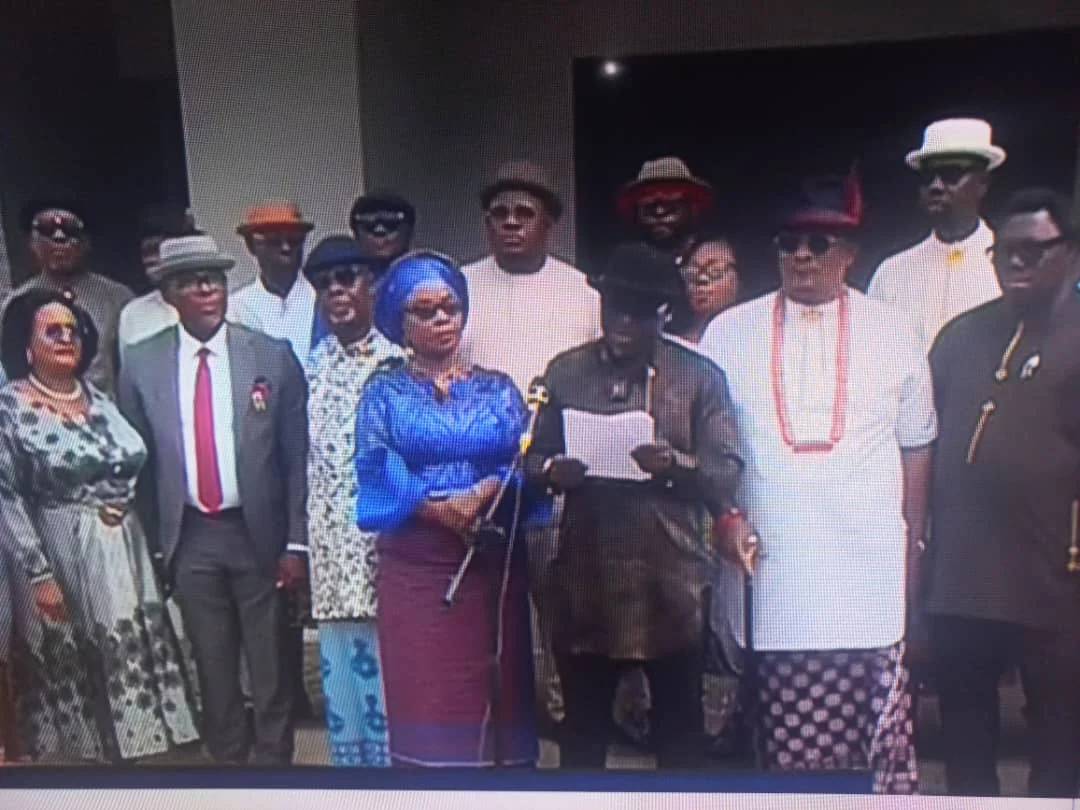
    Lawmakers announced the decision on Friday at the temporary Assembly complex, addressing the press on why the impeachment process had reached what they described as a point of no return. During the briefing, a member read a written statement outlining the Assembly’s position.

    The House said the decision followed the presentation of formal allegations against the governor and the subsequent resolution to proceed with an investigation.

    Some lawmakers who had previously distanced themselves from the impeachment threat have now reversed their positions. Hon. Emelia Amadi, speaking at the Assembly premises, said she had decided to close ranks with her colleagues, citing what she described as Governor Fubara’s continued unconstitutional actions.

    Other members reiterated their resolve to continue with the process, emphasizing that their actions were guided by constitutional responsibility and the need to uphold the rule of law.


    The impeachment of a state governor in Nigeria is governed by Section 188 of the 1999 Constitution (as amended).

    Under the Constitution, impeachment may be initiated on grounds of gross misconduct, defined as grave violations of the Constitution or serious misconduct in the performance of official duties.

    The process begins with a notice of allegation signed by at least one-third of the members of the State House of Assembly and served on the governor. Within 14 days, the Assembly must decide whether to investigate the allegations. Such a decision must be supported by not less than two-thirds of all members.

    If approved, the Speaker requests the Chief Judge of the State to constitute a seven-member investigative panel of persons of unquestionable integrity. The panel is required to investigate the allegations and allow the governor to respond.

    The panel must submit its report within three months. If the allegations are not proven, the matter ends. If they are proven, the House may proceed to adopt the report.

    A governor is removed from office only if the panel’s report is adopted by a resolution supported by not less than two-thirds of the Assembly members, after which the removal takes immediate effect.

    While the Constitution limits court interference in impeachment proceedings, the process must strictly comply with constitutional provisions to be valid.

  • Rivers secretariat inferno: No casualty says head of service 

    Rivers secretariat inferno: No casualty says head of service 

    The Rivers Head of Service, Dr Inyingi Brown, has confirmed that there were no casualties during a fire incident at the state secretariat complex.

    Brown disclosed this to newsmen at the scene of the fire incident on Monday in Port Harcourt.

    She said that the state fire service and other relevant agencies responded promptly to contain the inferno.

    Brown commended the timely response of the state fire service, Renaissance, federal fire service, and the military, who all sent their fire trucks to the scene.

    “We thank God Almighty, and also commend Gov. Siminalayi Fubara, for being proactive in rehabilitating the fire service before this time.

    ‘’If not for his investment in the fire service, this situation would have been worse,” she stressed.

    She disclosed that no life was lost, explaining that the state medical service was on ground to curtail any emergency.

    Brown explained that preliminary reports suggested that the fire might have been as a result of electrical faults and urged the civil servants to always switch off all electrical appliances at the close of work.

    “We urge all civil servants to take responsibility for safety; put off our sockets and our lights.

    Not just putting off the sockets, but unplug them to ensure there is no residual charge because these buildings are heritage buildings and we don’t want anything to happen to them,” she said.

    Brown further assured that Fubara was working on measures to refurbish the secretariat buildings, which would be made known soon.

  • 58th anniversary: Rivers Administrator calls for unity, progress

    58th anniversary: Rivers Administrator calls for unity, progress

    The Rivers Sole Administrator, Vice Admiral Ibok-Ete Ibas (Rtd), has stated that the strength of the state lies in its diversity, unity, shared identity, and common purpose.

    Ibas made the remark during a Special Inter-denominational Thanksgiving Service at the Ecumenical Centre organised by the state government to mark the Rivers’ 58th anniversary in Port Harcourt, on Sunday.

    He urged the citizens of the state to reflect on the past achievements and collaborate to build a more prosperous future.

    He urged political, traditional, religious and community leaders to prioritise the collective good of the state, stressing that development must be inclusive and fair to every community.

    Ibas highlighted the need for improved infrastructure, quality education, and accessible skills acquisition programmes for youths in the state.

    He also emphasized the importance of transparency, accountability, and responsive public institutions.

    He, however, described the thanksgiving service as a sacred moment for reflection, forgiveness, and reconciliation.

    ’’ Let us not only celebrate our past but also commit to shaping a future where our children are confident in their identity, faithful to their heritage, innovative in enterprise and God-fearing in characters.

    “As Rivers State celebrates its 58 years, we reaffirm commitment to fostering unity, equitable growth, and sustainable development for all citizens in the state and Nigeria,’’ he said.

    Ibas expressed confidence that the state would emerge stronger and more determined than ever before despite its challenges.

    The Chaplain of the Chapel of Everlasting Grace, Barasin Ogan, described ‘’the power of thanksgiving as a divine command that unlocks blessings and acknowledges God as the source of all prosperity.’’

    Ogan based his sermon on a Bible text from Psalm 100, verses 1-5, which was read by Prof. Ibibia Worika, the Secretary to the Rivers State Government.

    He urged Rivers citizens to embrace peace and unity for the growth of the state.

    Rivers was created in 1967 by a military leader, Yakubu Gowon and Alfred Diete-Spiff served as its first military governor from 1967 to 1975.

  • Senate suspends democratic governance in Rivers State

    Senate suspends democratic governance in Rivers State

    Approves President Tinubu’s request for declaration of a state of emergency and 6-month suspension of the elected governor, deputy, state assembly

    The Nigerian Senate has approved President Bola Tinubu’s declaration of a state of emergency in Rivers State.

    Earlier this Thursday, the House of Representatives granted approval to the declaration of a state of emergency in Rivers State by the president.

    This move also includes the suspension of Governor Siminalayi Fubara and his deputy from office.

    With this approval, President Tinubu is now empowered to enforce emergency measures in the state, with provisions for a periodic review of the situation, not exceeding six months.

    The announcement came after a closed-door session of the Senate on Thursday, which lasted over an hour.

    Senate President Godswill Akpabio confirmed the decision, emphasizing that the approval grants the President the necessary authority to restore stability in Rivers State.

    Akpabio stated that the Senate relied on its Orders 133, 134, 135, and 136 to pass the resolution.

    Earlier, Akpabio disclosed that Tinubu had written the Senate a letter of proclamation on the six-month suspension he slammed on Fubara.

    The letter read aloud at plenary by Akpabio said, “In compliance with the provisions of Section 305, Subsection 2 of the Constitution of the Federal Republic of Nigeria, 1999, as amended, I hereby forward, for the Constitution of the Senate, copies of the official Gazette of the State of Emergency Proclamation 2025.

    “The main features of the proclamation are as follows.

    • A declaration of a State of Emergency in one State of the Federation, namely, River State.
    • The suspension from office of the Governor, his Deputy, and all members of the State House of Assembly.
    • An appointment of Vice-Admiral Ibok-Ete Ibas, as the Administrator to administer the State something to any instruction or regulation as made from time to time be issued by me.

    “While I look forward to the expeditious Constitution of the Senate, please accept, Distinguished Senate President, the assurances of my highest consideration.”

    Akpabio, after reading the letter, added, “This letter is committed to the Committee of the entire Senate for Immediate passage.”

    Meanwhile, immediately after the letter, Senator Seriake Dickson, PDP, Bayelsa West raised a point of Order 133 that has to do with having a closed-door session.

    Meanwhile, political watchers and legal experts have called out the president for declaring a state of emergency in a situation where the preconditions stipulated in the 1999 Constitution of the FRN do not hold sway.

    Most lawyers who spoke on the matter berated President Bola Tinubu who exercising a power he was never conferred with by the Constitution for suspending and elected governor of a state and the house of Assembly.

  • State of emergency, Fubara’s suspension undemocratic- Obi

    State of emergency, Fubara’s suspension undemocratic- Obi

    The 2023 Presidential candidate of the Labour Party, Peter Obi, has described the declaration of state of emergency in Rivers as undemocratic.

    In a reaction on his X handle on Wednesday, Obi said that the action was against the rule of law, and capable of  undermining Nigeria’s democracy.

    Obi said that it was grossly unconstitutional to remove a serving governor of a state through a unilateral declaration of state of emergency.

    He said that the situation was capable of  undoing the progress the country had made in the past 26 years of its democratic journey.

    “The situation in Rivers does not justify such an extreme measure, it is also a biased interpretation of Section 305(1) of the 1999 constitution.

    “A state of emergency does not mean that an elected governor can be removed unilaterally.

    “The decision does not align with democratic norms and good governance. It appears to be a predetermined action serving specific interests rather than the collective good of Rivers people and Nigeria.

    “This action constitutes an unconstitutional overreach, setting a dangerous precedent that threatens democracy, the rule of law, and the separation of powers,” he said.

    Obi urged the National Assembly and all stakeholders not to allow the decision to stand in the interest of democracy and the wellbeing of Rivers people.

  • Suspension of elected officials, a slap on the constitution-Dagogo

    Suspension of elected officials, a slap on the constitution-Dagogo

    Dr Fara Dagogo, has described  the declaration of a State of Emergency in Rivers State by President Bola Tinubu as a slap on the Constitution.

    Dr. Dagogo was a member of the House of Representatives member, (Degema, Bonny, Federal Constituency).

    The former legislator made the remark on Tuesday in a statement issued to newsmen in Port Harcourt while reacting to the emergence rule declared on Rivers.

    He said that the declaration was questionable under the 1999 Constitution of the Federal Republic of Nigeria (as amended).

    Dr. Fara added that Section 305 of the 1999 Constitution of the Federal Republic of Nigeria, 1999 (as amended) outlined the conditions under which the President might declare a state of emergency.

    According to Dagogo, specifically, Section 305(1), the President may, by instrument published in the Official Gazette, issue a proclamation of a state of emergency in the federation or any part thereof.

    ‘’Section 305(3) states that the President may only declare a state of emergency in a state if the Governor of the state, with a resolution supported by two-thirds majority of the House of Assembly, requests the President to do so;

    “If there is actual breakdown of public order and public safety requiring extraordinary measures;

     “Or If there is a clear and present danger of an actual breakdown of public order and public safety in the  federation or any part thereof;

    “If there is an occurrence or imminent danger of invasion, war, or insurrection; or if there is a natural disaster or public health emergency;

     “Or if there is any other danger threatening the existence of the federation,”Dagogo explained.

    Dagogo said that President Tinubu admitted that the Governor and Deputy Governor did not request the proclamation (as required under Section 305(5).

    He said that the legal basis for the declaration rested on whether or not the public order and public safety had truly broken down, justifying the invocation of emergency powers.

    Speaking on legality of the Suspension of the Governor, Deputy Governor, and State House of Assembly, Dagogo said that the controversial aspect of the declaration was their suspension under the 1999 Constitution.

    According to him, the only legal way to remove a Governor or Deputy Governor is through impeachment by the State House of Assembly under Section 188.

    He stated that the Constitution does not grant the President the power to suspend or remove a Governor or Deputy Governor outside the impeachment process or a valid resignation.

    Dagogo said that section 11(4) and (5) stated that only the National Assembly could take over legislative functions of a state House of Assembly in cases where it could not function.

    It does not allow for the suspension of elected lawmakers.

    Dagogo explained that given the constitutional provisions, President Tinubu’s suspension of elected officials was unconstitutional, as there was no provision in the 1999 constitution granting such powers.

    “Even during a state of emergency, the Governor and Deputy Governor remain in office, unless removed in accordance with constitutional procedures,” he said.

    He said that the appointment of Vice Admiral Ibok Ette Ibas (Rtd) as the Administrator to govern Rivers State raised another constitutional issue.

    Vice Admiral Ibok Ette Ibas (Rtd)

    “The 1999 Constitution does not recognize the office of an “Administrator” in place of an elected Governor

    ‘’The constitution only provides for a Governor elected by the people (Section 176(1)), a Deputy Governor elected alongside the Governor (Section 186),” he said.

    Dagogo mentioned that the only situation where an unelected official could assume control of a state is under military rule, which was not applicable under a democratic system governed by the 1999 constitution.

    He noted the role of the National Assembly in approving the State of Emergency, saying that under section 305(2) and (6), the President must transmit the emergency proclamation to the National Assembly for approval within two days.

    “If the National Assembly does not approve it within 10 days, the proclamation ceases to have effect.

    Dagogo while giving the constitutional breaches in the proclamation of Judicial interpretation and possible legal challenges, said that there were strong grounds for legal challenges in court.

    “The Supreme Court’s pronouncement in A.G. Federation v. A.G. Lagos State (2013) LPELR-20974(SC) reaffirms the principle that the President must act within constitutional limits, even in extraordinary situations,” he noted.

    Dagogo stated that ‘’any action outside the scope of the 1999 constitution is illegal’’ and could be overturned by the courts.

  • Rivers Assembly issues impeachment notice to Gov, Deputy

    Rivers Assembly issues impeachment notice to Gov, Deputy


    The political crisis in Rivers State deepened this Monday as members of the State House of Assembly accused Governor Siminalayi Fubara of gross misconduct.

    In a notice to be published in three national dailies, the 27 state assembly members, accused the governor of violating the Nigerian Constitution and his oath of office.

    In a statement signed by multiple lawmakers, the assembly criticized the governor’s alleged disregard for constitutional provisions, citing a recent Supreme Court judgment in Suit No.: SC/CV/1174/2024, which condemned his actions.

    In the judgement under reference, the apex court ruled that “the 8th respondent’s fear of impeachment by the House of Assembly is no justification for his attacks on the House, the Constitution, the Government of Rivers State, and the rule of law.”

    The ruling further stated that political disagreements should not justify unconstitutional actions by a sitting governor.

    The statement was endorsed by several lawmakers, including: Rt. Hon. Dumle Mao (Gokana Constituency), Hon. Major Jack (Akuku-Toru Constituency), Hon. Linda Somiari Stewart (Okrika Constituency), Hon. Franklin Uchenna Nwabochiie (Ogba/Egbema/Ndoni Constituency), Hon. Christopher Ofiks Kagbang (Andoni Constituency) and Hon. Azeru Opara.

    The lawmakers declared that Governor Fubara’s actions have weakened governance in the state and called for accountability.

    Deputy Governor Served Notice of Allegations of Gross Misconduct

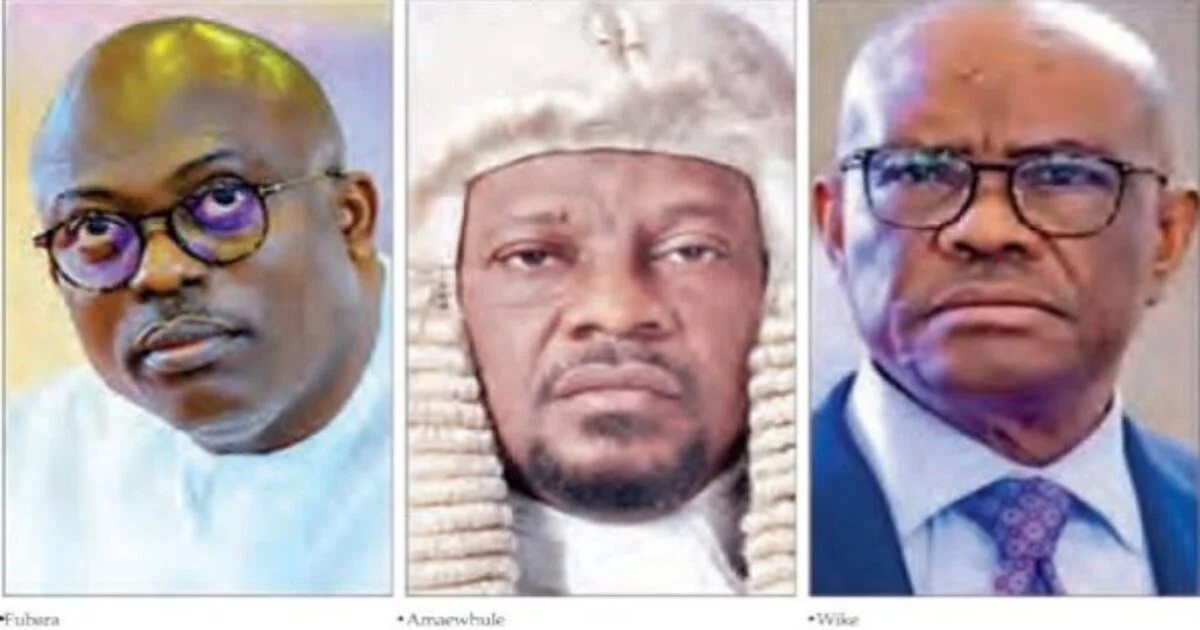
    Meanwhile, the Speaker of the Rivers State House of Assembly, Rt. Hon. Martin Chike Amaewhule, officially forwarded a notice of allegations of gross misconduct to the Deputy Governor, Prof. Ngozi Nma Odu.

    The notice, dated March 14, 2025, was signed by 26 lawmakers, meeting the constitutional requirement of, at least one-third of the Assembly’s membership, to initiate impeachment proceedings.

    In his letter to the Deputy Governor, Speaker Amaewhule referenced Section 188 (1) and (2) of the 1999 Constitution (as amended), stating that the allegations must be responded to within 14 days.

    The letter further reminded the Deputy Governor of Section 188(3), which requires the House to decide by motion whether the allegations should be investigated, regardless of whether a defense is submitted.

    The latest development signals an escalating power struggle within the Rivers State government, with implications for governance and political stability in the state.

    Demolished Rivers State Assembly Complex
  • Present budget in 48 hours – Rivers assembly orders Gov Fubara

    Present budget in 48 hours – Rivers assembly orders Gov Fubara

    The controversial Rivers State House of Assembly has given Governor Sim Fubara 48 hours to present the 2025 budget before the legislators.

    Another version of the state assembly, comprising about four members had deliberated and earlier passed the 2025 Appropriation Bill.

    But upon convening this Monday in Port Harcourt, the Martin Amaewhule-led version of the assembly ordered Governor Siminlaye Fubara to lay the 2025 budget before them within 48 hours.

    Governor Fubara had on January 2nd, signed a ₦1.1 trillion 2025 Budget into law after presenting it to the Victor Oko-Jumbo-led lawmakers. 

    But months after, specifically last week, the Supreme Court ordered Martin Amaewhule and the group of lawmakers he is leading to resume sitting as legitimate members of the Rivers State House of Assembly. 

    That move ended months of tussle over the leadership of the Rivers State House of Assembly with two sets of lawmakers laying claim to the legislative body. 

  • Rivers LG: S/Court reserves ruling on suit seeking sack of Chairmen 

    Rivers LG: S/Court reserves ruling on suit seeking sack of Chairmen 

    The Supreme Court has postponed its decision on an appeal challenging the validity of the local government elections in Rivers State, held on October 5, 2024.

     The All Progressives Congress (APC) is seeking to overturn the results of the polls.  

    A five-member panel, led by Justice Uwani Abba-Aji, concluded the hearing after all parties presented their final arguments. 

    The APC’s lawyer, J.B. Daudu, asked the court to nullify the election, while Governor Siminalaye Fubara’s lawyer, Yusuf Ali, and Rivers State Independent Electoral Commission’s (RSIEC) counsel, Chris Uche, defended the poll’s legitimacy.  

    Earlier, the Court of Appeal had overturned a ruling by the Federal High Court in Abuja, which had halted the elections.

     The appellate court stated that the lower court had no jurisdiction over the matter, as state elections are not covered under Section 28 of the Electoral Act.  

    The initial ruling by Justice Peter Lifu of the Federal High Court had barred the Independent National Electoral Commission (INEC) from providing a voter register for the election, citing non-compliance with legal requirements. 

    The court also criticized RSIEC for failing to issue the mandatory 90-day election notice.  

    With the Supreme Court set to decide, the fate of the Rivers LG election remains uncertain.