Tag: Rule of Law

  • Altered After Parliament: Nigeria’s Tax Laws and the Crisis of Executive Power

    Altered After Parliament: Nigeria’s Tax Laws and the Crisis of Executive Power

    By

    Dahiru Ali

    Nigeria’s recent tax reform laws, widely seen as a landmark step toward modernizing the country’s revenue system, have become the focus of growing scrutiny following allegations that the laws were altered after parliamentary approval. The House of Representatives Minority caucus has accused relevant actors of introducing unauthorized changes, raising questions not only about procedural integrity but also about the broader balance of power between the executive and legislative branches in Nigeria.

    The controversy came into the public eye in mid-December 2025 when Abdussamad Dasuki, a member of the House, claimed that key provisions of the newly enacted tax laws had been altered in the versions gazetted for public release. The allegations immediately sparked public debate, with some Nigerians calling for a suspension of implementation pending clarification. The concern, critics argue, is that changes made outside the legislative process could have significant legal, economic, and political consequences.

    A day before Dasuki’s public allegations, the leadership of both chambers of the National Assembly had instructed Kamoru Ogunlana, clerk of the Assembly, to coordinate with executive agencies to re-gazette the laws. Some analysts interpreted this directive as a tacit acknowledgment that the original gazetted versions contained errors or deviations from the versions approved by lawmakers.

    The laws in question include the Nigeria Tax Act, 2025, the Nigeria Tax Administration Act, 2025, the Joint Revenue Board of Nigeria (Establishment) Act, 2025, and the Nigeria Revenue Service (Establishment) Act, 2025. Each of these laws represents a key component of the government’s broader fiscal reform agenda, aimed at streamlining tax administration, broadening the tax base, and improving revenue mobilization.

    Yet preliminary findings from a seven-member committee appointed by Minority Leader Kingsley Chinda suggest that substantive alterations may have been introduced in some of the laws after passage. The committee, chaired by Afam Ogene, includes representatives from all six geopolitical zones: Aliyu Garu (Bauchi), Stanley Adedeji (Oyo), Ibe Osonwa (Abia), Marie Ebikake (Bayelsa), Shehu Fagge (Kano), and Gaza Jonathan (Nasarawa). Their mandate is to investigate discrepancies between the National Assembly-certified copies of the laws and the gazetted versions.

    Key Alleged Discrepancies

    According to Ogene, the Nigeria Tax Administration Act, 2025, shows the greatest variation among the four laws. The committee identified multiple areas of concern:

    • Tax compliance thresholds: Section 29(1) of the House-certified version set the tax compliance reporting threshold at ₦50 million for individuals and ₦100 million for companies. In the gazetted version, the threshold for individuals was reportedly reduced to ₦25 million, with company thresholds altered as well. Critics argue that such a change could significantly expand the number of taxpayers subject to reporting requirements.
    • Appeal conditions: Sections 41(8) and 41(9) were allegedly added in the gazetted copy, requiring taxpayers to deposit 20 percent of disputed tax amounts before appealing to the High Court. These provisions were reportedly not part of the version passed by the National Assembly.
    • Expanded enforcement powers: The gazetted law allegedly empowers tax authorities to arrest suspected offenders and sell seized assets without a court order, a provision absent from the original legislative version.
    • Altered definition of federal taxes: Section 3(1)(b) of the House-certified version defined federal taxes to include income tax, petroleum income tax, stamp duties, and value-added tax (VAT). The gazetted copy reportedly removed petroleum income tax and VAT from federal administration, potentially impacting revenue streams and intergovernmental fiscal relations.
    • Dollar-denominated petroleum tax computation: Section 39(3) of the gazetted version mandates that petroleum tax calculations be conducted in US dollars rather than in the currency of the transaction, diverging from the version passed by parliament.
    • Oversight provisions weakened: The National Revenue Service (Establishment) Act, 2025, allegedly had clauses removed that allowed lawmakers to summon officials, demand reports, and ensure accountability. Sections 30(1)(d) and 30(3), which provided for quarterly and annual reports to parliament, were reportedly deleted, raising concerns about the weakening of legislative oversight.

    Implications for Governance and the Rule of Law

    Experts argue that if these discrepancies are confirmed, they could have far-reaching consequences for governance in Nigeria. “The National Assembly is constitutionally empowered to make laws, and any unilateral alterations outside the legislative process undermine both the rule of law and democratic accountability,” said a constitutional law scholar who spoke on condition of anonymity.

    The controversy highlights the perennial tension in Nigeria’s governance system between the executive and legislative branches. While the executive is charged with implementation, the legislature retains the mandate to make and oversee laws. Any interference with this process, intentional or accidental, threatens the checks and balances that underpin democratic governance.

    The controversy has also reignited debate over the role of the presidency in legislative affairs. Analysts suggest that any unilateral alterations to passed laws, whether directly authorized or passively tolerated, signal a worrying disregard for democratic norms and the checks and balances that are meant to safeguard the country’s governance. Such actions, critics argue, risk eroding public confidence not only in the presidency but in the broader institutional framework that underpins Nigeria’s democracy.

    The issue also underscores broader concerns about transparency and procedural rigor in the publication of laws. Legal experts note that discrepancies between parliamentary-certified copies and gazetted versions could lead to confusion among taxpayers, enforcement agencies, and courts, creating uncertainty that may hinder the effective application of the tax reforms.

    Historical Context

    Nigeria has experienced similar controversies in the past, where differences between legislative texts and official publications have sparked public debate and legal challenges. Historically, such incidents have often fueled debates about executive overreach, the reliability of government documentation, and the integrity of legislative processes. Observers note that while these controversies sometimes resolve through clarifications or re-gazetting, the reputational impact on institutions can be long-lasting.

    The current allegations gain additional weight in the context of Nigeria’s ambitious economic reform agenda. Tax reforms are central to the government’s strategy to reduce dependence on oil revenue, expand the tax base, and modernize public finance management. Any procedural irregularities in the laws themselves risk undermining public confidence and investor trust, which are essential for successful implementation.

    Next Steps

    The House Minority committee has requested an extension of time to complete its review. Ogene emphasized that the committee’s work is aimed at ensuring accountability and safeguarding the constitutional role of the legislature. “Given the anomalies, illegalities, and potential procedural lapses, a thorough examination is warranted before the laws are fully implemented,” he said.

    Meanwhile, lawmakers, taxpayers, and policy analysts are closely watching the situation. Questions remain about who authorized the alleged changes, how they were made, and whether corrective action—including possible re-gazetting—will be sufficient to restore confidence in the legislative process.

    The controversy also serves as a reminder of the importance of transparency, meticulous record-keeping, and public oversight in the lawmaking process. As Nigeria continues to pursue economic and fiscal reforms, the integrity of legislative procedures will remain a critical factor in ensuring that reforms are both effective and legitimate.

    Broader Lessons

    At its core, this issue is not just about tax thresholds or procedural discrepancies; it is a reflection of the broader governance challenges that Nigeria faces. The balance of power between the executive and legislature, the clarity of legal texts, and the robustness of oversight mechanisms are all tested when allegations of post-passage alterations emerge.

    As the investigation unfolds, it provides an opportunity for Nigerian institutions to reinforce accountability, clarify procedural standards, and ensure that reforms—especially those with wide-reaching economic and social impact—are implemented with both transparency and legitimacy. For citizens, policymakers, and investors, the outcome of this scrutiny will offer insights into the resilience of Nigeria’s democratic and institutional processes.

    For now, the country watches as the investigation continues, aware that the resolution of this controversy will have implications not only for the implementation of the tax reforms but also for the credibility of Nigeria’s legislative and governance institutions.

  • Rivers Assembly Begins Impeachment Process Against Gov Fubara

    Rivers Assembly Begins Impeachment Process Against Gov Fubara

    Contrary to public expectations of renewed presidential intervention, the Rivers State House of Assembly has voted overwhelmingly to commence an investigation into allegations leveled against Governor Siminalayi Fubara.

    Twenty-five of the state assembly’s 32 lawmakers voted in favor of initiating the impeachment process. The decision came after efforts to resolve the political impasse through behind-the-scenes negotiations proved futile.

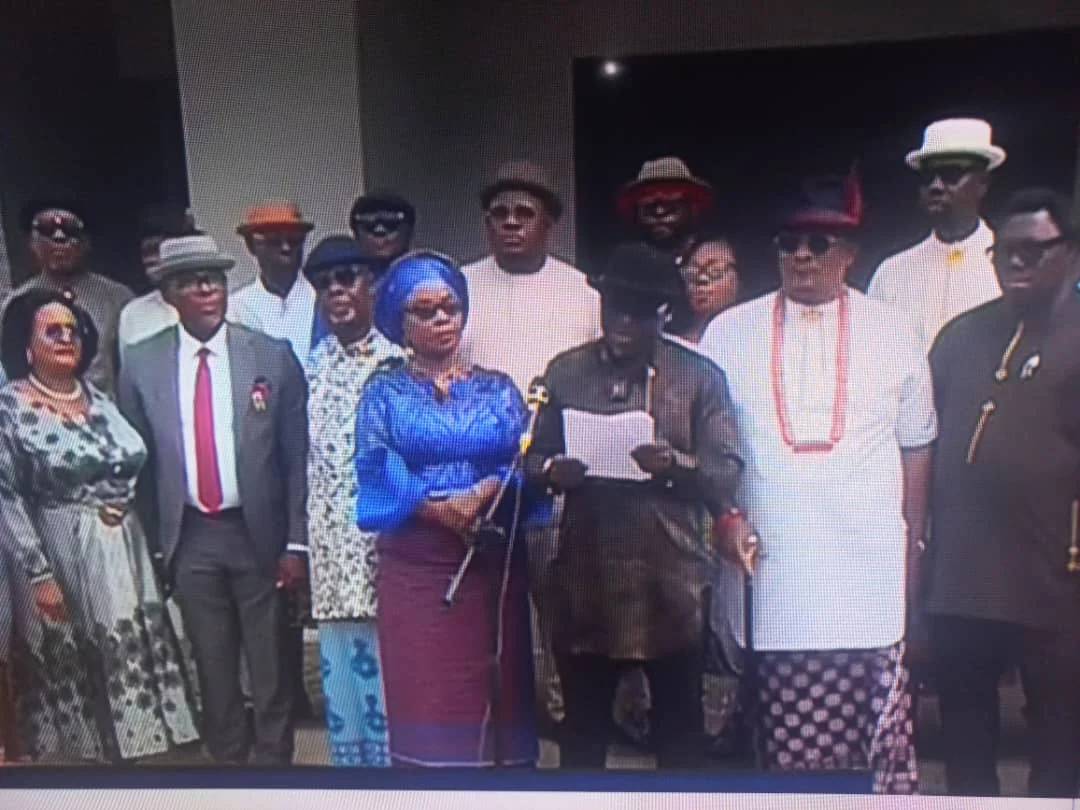
    Lawmakers announced the decision on Friday at the temporary Assembly complex, addressing the press on why the impeachment process had reached what they described as a point of no return. During the briefing, a member read a written statement outlining the Assembly’s position.

    The House said the decision followed the presentation of formal allegations against the governor and the subsequent resolution to proceed with an investigation.

    Some lawmakers who had previously distanced themselves from the impeachment threat have now reversed their positions. Hon. Emelia Amadi, speaking at the Assembly premises, said she had decided to close ranks with her colleagues, citing what she described as Governor Fubara’s continued unconstitutional actions.

    Other members reiterated their resolve to continue with the process, emphasizing that their actions were guided by constitutional responsibility and the need to uphold the rule of law.


    The impeachment of a state governor in Nigeria is governed by Section 188 of the 1999 Constitution (as amended).

    Under the Constitution, impeachment may be initiated on grounds of gross misconduct, defined as grave violations of the Constitution or serious misconduct in the performance of official duties.

    The process begins with a notice of allegation signed by at least one-third of the members of the State House of Assembly and served on the governor. Within 14 days, the Assembly must decide whether to investigate the allegations. Such a decision must be supported by not less than two-thirds of all members.

    If approved, the Speaker requests the Chief Judge of the State to constitute a seven-member investigative panel of persons of unquestionable integrity. The panel is required to investigate the allegations and allow the governor to respond.

    The panel must submit its report within three months. If the allegations are not proven, the matter ends. If they are proven, the House may proceed to adopt the report.

    A governor is removed from office only if the panel’s report is adopted by a resolution supported by not less than two-thirds of the Assembly members, after which the removal takes immediate effect.

    While the Constitution limits court interference in impeachment proceedings, the process must strictly comply with constitutional provisions to be valid.

  • Nigeria’s War Within: Why Force Alone Can’t Defeat Insecurity

    Nigeria’s War Within: Why Force Alone Can’t Defeat Insecurity

    November 2025

    As Nigeria prepares to inaugurate a new Minister of Defence, General Christopher Musa, recently pulled from his position as Chief of Defence Staff, the appointment highlights a familiar pattern: leadership reshuffles and reconfigurations of the security architecture that have so far failed to address the nation’s deepening insecurity.

    Despite record defence budgets and years of military operations, Nigeria’s war against insurgency, terrorism, and violent crime remains far from won. Behind the official rhetoric of “decisive action” and “renewed hope,” the figures tell a sobering story: the country is spending more on security than ever before, yet becoming less safe.

    An Internally Displaced Persons’ (IDPs) camp in Benue State

    Between May 2023 and April 2024, at least 614,937 Nigerians were reported killed in violence linked to insecurity, according to data from the National Bureau of Statistics and independent research groups. Amnesty International estimates that more than 10,000 people were killed in the northern states alone during that period. Villages have been razed, farmers displaced, and highways turned into hunting grounds for kidnappers.

    For 2025, the Federal Government earmarked ₦6.57 trillion for defence and security, nearly equivalent to the combined budgets of education, health, and agriculture. Yet insecurity persists. From Boko Haram’s remnants in the northeast to bandits in the northwest and separatist militias in the southeast, violence has become a permanent feature of daily life.

    Nigeria’s insecurity cannot be solved by military might alone. “Nigeria’s security crisis is systemic, not merely operational,” a recent Counter-Insurgency and Anti-Terrorism Plan notes. “You can suppress conflict with soldiers, but you cannot kill an idea, or desperation, with bullets.” The country’s challenges go beyond insurgents and bandits; they are rooted in economic inequality, governance failures, and social exclusion, problems that no army, no matter how well-funded, can solve.

    The Price of Peace Without Justice

    Decades of economic inequality, corruption, and exclusion lie at the heart of the crisis. Wealth and resources are concentrated in the hands of a few, leaving large portions of the population marginalized. Communities excluded from decision-making or denied access to the country’s resources often turn to violence as a form of protest.

    Other forces exacerbate the problem: mass illiteracy, youth unemployment, religious manipulation, and climate-induced displacement. Across northern Nigeria, desertification has swallowed farmland, forcing herders southward and triggering deadly clashes with farmers. In the mineral-rich central states, illegal mining networks, sometimes backed by foreign interests, have transformed into armed militias.

    The insecurity is not merely a question of security operations; it reflects a broader governance failure, where political neglect, corruption, and impunity have created fertile ground for violence to thrive. Without addressing these structural issues, any attempt to suppress insurgency with force alone will remain temporary.

    Spending More, Achieving Less

    Nigeria’s defence spending has ballooned over the past four years: ₦966 billion in 2021, ₦1.2 trillion in 2022, ₦1.38 trillion in 2023, and now ₦6.57 trillion in 2025. Yet insecurity has worsened. World Bank data shows that the country’s military expenditure has risen faster than that of many African peers, without a corresponding reduction in violence.

    Bigger budgets have meant more equipment, more contracts, and more commissions, but not necessarily more safety. Observers note that the country continues to fight the same war with the same tactics, expecting different results. High-profile military campaigns have occasionally neutralized specific threats, but the absence of complementary development and governance reforms has allowed insecurity to regenerate.

    A New Strategy for a Broken Nation

    Recognizing that force alone cannot deliver security, the counter-insurgency plan advocates a multi-dimensional approach that blends immediate security measures with long-term social, economic, and governance reforms. It is founded on the principle that lasting peace requires both containment of violence and addressing the root causes of unrest.

    A central feature of the plan is the proposed Geopolitical Security and Development Summit. This high-level forum would bring together the Presidency, service chiefs, and state governors to coordinate priorities, share intelligence, and integrate human capital development into security planning. By aligning national and sub-national efforts, the summit aims to create a cooperative framework in which security operations respond to local realities rather than operating in isolation.

    Education, rural empowerment, and healthcare are reimagined as tools of national defence rather than afterthoughts. By addressing poverty, unemployment, and social exclusion, the plan seeks to reduce the vulnerabilities that violent actors exploit. Economic opportunities, skill development, and access to services strengthen communities, making them less susceptible to recruitment by insurgents, bandits, or criminal networks.

    Complementing this is a Stakeholders’ Summit involving religious leaders, traditional rulers, youth organizations, and civic groups. The forum is intended to promote interfaith dialogue, encourage conflict resolution at the community level, and empower citizens to take part in building peace. By fostering trust between communities and the state, the summit aims to prevent minor disputes from escalating into large-scale violence.

    The plan emphasizes a shift in mindset: security is not just the absence of attacks but the presence of justice, opportunity, and inclusion. “Peace cannot be sustained through force alone,” it stresses. “It must be built on trust, understanding, and shared values.” Military interventions may suppress violence temporarily, but without addressing structural weaknesses, the gains remain fragile.

    Reforming the Fault Lines

    Several structural reforms are prioritized in the plan. Modernizing animal husbandry is one key step, including regulated ranching and strict enforcement of anti-open-grazing laws, paired with economic support for pastoralists to prevent marginalization.

    Illegal mining, now a major source of funding for armed networks, is another critical target. The plan calls for a nationwide crackdown, formalizing artisanal mining into regulated cooperatives while reclaiming illegal mining corridors with security support.

    Central to all reforms is restoring the rule of law. Impunity has become a pervasive issue in Nigeria, where political influence often shields offenders. The failure to prosecute crime erodes public trust and perpetuates violence. “A nation that does not punish crime inevitably rewards impunity,” the plan notes, emphasizing accountability as a cornerstone of sustainable security.

    From Force to Fairness

    At its core, the strategy envisions a paradigm shift in how Nigeria approaches security. True national security is not measured solely by military victories or the neutralization of threats; it is reflected in the ability of citizens to live without fear, access opportunity, and trust their government.

    Political instability compounds insecurity. A culture of “do-or-die” elections fuels tension, undermines institutions, and perpetuates violence. Ensuring credible, peaceful elections is essential for creating a foundation on which sustainable security can be built.

    The fight against terror and insurgency, the plan argues, will not be won solely in forests or creeks but in classrooms, farms, and courtrooms, where education, justice, and economic opportunity can finally triumph over despair.

    “The time has come for Nigeria to prove that it can not only defend its territory but also heal its society,” the plan concludes.

    Dahiru Ali: Journalist, academic, writes on governance, national security, and development policy. He is passionate about evidence-based reform and inclusive approaches to peacebuilding in Nigeria.

  • Nigerian Navy Boosts Legal Capacity to Tackle Maritime Crime

    Nigerian Navy Boosts Legal Capacity to Tackle Maritime Crime

    The Nigerian Navy has launched a renewed drive to strengthen its legal capacity in response to rising concerns over failed maritime prosecutions, procedural lapses, and the growing complexity of enforcing the law across Nigeria’s waters.

    Rear Admiral Jonathan Mamman, Chief of Administration of the Navy, announced the initiative at the opening of the Navy’s inaugural Legal Training Seminar in Abuja on Tuesday.

    Mamman described legal weaknesses as a critical national security gap, allowing maritime offenders to exploit loopholes and evade justice. He said the three-day seminar, themed “Strategic Enforcement of Maritime and Labour Law for Enhanced Naval Operations and Justice Delivery in Nigeria,” is aimed at addressing systemic shortcomings in handling maritime crimes, including piracy, illegal oil bunkering, smuggling, and unlawful vessel operations.

    “The challenges in prosecuting maritime-related offences are no longer abstract—they affect operations, morale, and national security. Too many cases collapse due to technicalities and avoidable errors. This must stop,” Mamman said.

    He identified four major problem areas: weak prosecution due to poor documentation, mishandled evidence, and gaps in inter-agency coordination; procedural inconsistencies in Standing Courts Martial; labour and personnel-related disputes; and issues in civil–military relations and rules of engagement, which intersect with human rights and international law.

    Mamman emphasized that the seminar will equip naval legal officers with enhanced skills in maritime law enforcement, vessel detention procedures, prosecution of maritime and military offences, and compliance with national and international legal frameworks. He noted that hosting the seminar at a Nigerian Army facility underscores the growing tri-service approach to operational justice.

    He also commended the Chief of Naval Staff, Vice Admiral Idi Abbas, for championing legal reforms and supporting initiatives to strengthen legal professionalism.

    Representing the Minister of State for Defence, Bello Matawalle, Director Legal of the Ministry of Defence, Mr. Usman Muhammed, praised the Navy for its commitment to upholding the rule of law. He described the seminar as a testament to the Navy’s dedication to professionalism and its resolve to operate within legal frameworks.

    “The Nigerian Navy plays a vital role in safeguarding our nation’s interests. It is imperative that operations are guided by a thorough understanding of laws governing both land and sea,” Muhammed said, urging participants to leverage the seminar to enhance their expertise and share knowledge with colleagues.

    The event also featured paper presentations by prominent legal professionals from the military, judiciary, and academia, providing a platform to tackle legal challenges and reinforce the Navy’s operational effectiveness.

  • Misapplication Of Discretion In Judicial Proceedings In Nigeria

    By Douglas Ogbankwa Esq.

    Justices, Judges, Magistrates and Presidents of Area and District Customary Courts in Nigeria are very powerful.

    What they say and write is the Law, which you must obey. The latitude and discretion however given to My Lords, Their Worships and Their Honours are however too wide and sometimes unfettered. This could give room for abuse and perversion of Justice. It was Lord Atkins that said ‘Power corrupts and absolute power corrupts absolutely!’.

    The following are some practices and procedures in the Justice Delivery System in Nigeria, which require guidelines to ensure a uniformity of the Application of the Law and Discretion in the Nigeria Legal System. Same is currently now being abused and misapplied by some.

    1.Ex Parte Orders or Interim Injunctions: Ex Parte Orders or Interim Injunctions are orders that are made for the time being, usually to provide succour for a person in an urgent situation, in a way that if you do not do so, the res-subject matter will be destroyed.

    This Procedure is being abused by some Nigerian Judges, Magistrates and Court Presidents, who some times determine the main issues in a matter at the Ex Parte Stage. There are no guidelines for the issuance or refusal of Ex Parte Orders. Judicial Officers usually hide under the hazy and nondescript concept of the word “Discretion”, to do what ever they wish, even if some times such is not allowed by Law.

    My Noble Lord, The Chief Justice of Nigeria (CJN), must as a matter of urgency provide a Practice Direction to establish the compass of how to and how not to grant Ex Parte Injunctions. This should be like the one that was given that stopped conflicting Judgments of Courts. This is very important to delimit the ambit of the Law on this subject and make the granting and refusal of Interim Injunctions ascertainable.

    It will also stop the current practice of some parties going about looking for Interim Injunctions. There should be pointers to the grant or refusal of same, pointing to the names of the parties, whether they are juristic persons, the jurisdiction of the Court to hear and determine the main matter before the determination of an Interim Injunction, whether there is real urgency, which must be established and not by mere deposition in an affidavit of urgency.

    For example, the Judge will ask the question, “What will go wrong in the event that the order party is put on Notice?”

    Will the heavens fall? The current practice of any thing goes in the grant or refusal of Interim Injunction is  one of the reasons for the perceived  disdain with which the Legal Profession is viewed in Nigeria today.

    The Narrative among the public is not palatable. While I concede that Judges do not give their Verdicts based on Public Perceptions, the Judiciary should however realise that the general public are the customers of our Judicial System and like a good Customer Care Service , it is important we get the feedbacks from the public, to know how we can improve our services .We must not operate among people that live on earth and act as if we live in planet Mars. There must be a symetry of purpose between the Law and the Society.

    2.The need for sentencing guidelines:

    The Concept of Sentencing is a creation of Statute and Case Law. If the Body of Laws says you can give an option of fine, why should a Judicial or Presiding Officer Order otherwise? The needless imprisonment of Citizens is one of the reasons our Prisons are congested.

    There should be a uniform Sentencing Guideline issued to all Judicial and Presiding Officers, which My Lords, Their Worships and Their Honours should subscribe to and apply to the Letter. A Matter with the same facts and circumstances should not be determined in a different manner. This will obviate the abuse of Sentencing Powers of Judicial and Presiding Officers to preclude them to be too excessive or too mild in exercising their sentencing powers.

    3.Granting of bail

    The Granting of Bail by Judicial and Presiding Officers even require more streamlining as it the most abused of the discretionary powers of Judicial and Presiding Officers. Bail is no longer entirely at the discretion of Court.

    The Administration of Criminal Justice Law Act and Laws of different States have indicated Matters in which a Judicial and Presiding Officer must grant bail. So ,it is no longer a privilege to the Defendant for such Matters indicated in the Administrative of Criminal Justice Act (ACJA) and  the Administration of Criminal Justice Law (ACJLs), but a right, for which they could even seek redress ,if denied Bail.

    To this end, to ensure that the Law is followed in symmetry l, Guidelines should be issued stating all the Offences and conditions therein for Bail, which should follow the Statute creating the Offence and should not be too excessive or too mild. This is to avoid allegations of bias, malice and ensure Judicial Powers are exercised, with out affection or ill will.

    4.Election petitions

    Election Petition Cases though sui generis, appear mysterious and esoteric in the way and Manner that two Election Petition Cases for example, in the same State, in two Constituencies, will be determined differently by the same Panel, with the facts and applicable authorities being the identical, evaluated differently to reach a different conclusion.

    This is completely unacceptable!

    Election Petition Cases are even more grave, because they deal with the destiny of the Local Governments, States and Country.

    To this end, I recommend that only retired Justices and Judges of the applicable Courts are used for Election Petition Matters and Appeals.

    This will also ensure that cases in the Courts do not suffer owing to the absence of Justices and Judges that conduct Election Tribunal Cases and Election Appeal cases respectively.

    There should also be penalties for Members of a Tribunals and Appeal Panels who fail, neglect and/ or refuse to follow Judicial Precedents set by higher Courts of Records and their own Court, when the facts and circumstances of the Matters decided are on all fours, with the referenced Judicial Precedents .The scenario above should also be applicable to the Court of Appeal and Supreme Court that reverses themselves intermittently with out any new facts or Law arising .In those days, the Supreme Court hardly reversed itself ,the proliferation of reversal of decisions of the Supreme Court is quite worrisome and leaves much to be desired .

    Justices of the Supreme Court and the Court of Appeal should no longer be Members of the National Judicial Council hereafter called the NJC. We can get a retired Chief Justice of Nigeria hereafter called the CJN or retired President of the Court of Appeal, hereafter called the PCA to be the Chairman and Vice Chairman respectively of the NJC and retired Justices of good standing as Members, by way of Constitutional Amendment.

    If you Complained against the CJN, a Justice of the Supreme Court hereafter called JSC or a PCA who investigates it at the NJC and how do we guarantee the transparency of the Process, knowing that the Judicial Officers indicated above are Members of National Judicial Council (NJC ). Even when they say they will recuse themselves there appear to be a conflict of interest in the Structure of the  National Judicial Council (NJC), which requires an urgent review.

    5. Tendering of Documents: Documents to be tendered in Court have minimum Standard of meeting the admissibility test as indicated by Statute and Case Law. These Legal Standards should be followed to the Letter. Admission of Documents in a Trial is not discretionary ,it is mandatory ,when it has met the relevance and admissibility test .There should be a uniform system in place by way of Guidelines to ensure uniform standard in the admission or rejection of a document at trial , that has met the relevance and admissibility test or otherwise.

    The Applicability of these Principles above will ensure a certainty of process and more fairness in the Administration of Justice in Nigeria. Our Judicial System as it is currently, could be manipulated as it is open to abuse. We should use the matter of the recently conducted United States Elections as a Case Study .All the Cases filed by Donald Trump and his team never saw the light of day ,due to established precedents spanning centuries . Perhaps, if same scenario played out in Nigeria, the out come would be different.

    Justice Chukwudifu Oputa aptly captures the dilemma Nigerians face as it concerns the Supreme Court, when he, a former Justice of the Supreme Court stated thus:

    *We are not final because we are infallible, we are infallible because we are final*.

    *About the Author: Douglas Ogbankwa Esq. Is a Lawyer, Writer and Policy Analyst. He is the Convener of the Vanguard for the Independence of the Judiciary (V4IJ). *douglasogbankwa@gmail.com

  • 151 Days After Unlawful Detention, Court Grants Emefiele Bail 

    151 Days After Unlawful Detention, Court Grants Emefiele Bail 

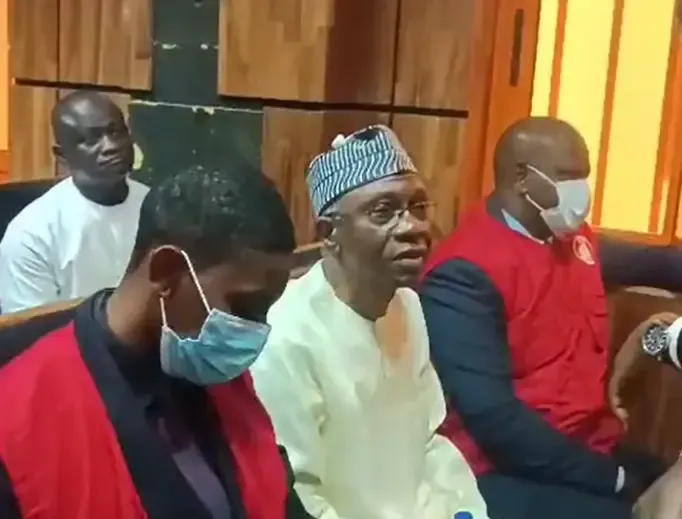
    The High Court of the Federal Capital Territory, Maitama, on Wednesday admitted the former Governor of the Central Bank of Nigeria (CBN), Godwin Emefiele to conditional bail after 151 days in detention.

    Justice Olukayode Adegbola Adeniyi held that Emefiele had stayed in government security custody beyond the time stipulated by law.

    The Judge also predicated his decision on the fact that the Federal Government had completed investigation into the allegations against the former CBN Chief and had even prepared the charged against him as far as August this year.

    On the bail conditions, the court held that Emefiele must be released to his Senior lawyer Matthew Burkaa SAN who must produce him any day the Federal Government chooses to arraign him.

    Emefilele is also to deposit his travelling passport with the Registrar of the Court pending his formal arraignment.

    In a ruling on the application for bail argued by Mathew Burkaa, SAN, Justice Adeniyi held that it is in the best interest of justice and fair play especially the provision of section 35 of Nigeria’s Constitution to follow the rule of law.

    The Judge specifically said that there must be an end to detention without trial by the federal holiday.

    Both the FG, and AGF re-presented by Oyin Koleoso had strongly objected to Emefiele’ s request for bail on the ground that he would interfere with the November 15 arraignment but did not tell the court how the interference would be done.

    EFCC on its part through its counsel, Farouk Abudalla insisted that Emefiele had not spent three months in its own custody and urged the Court to refuse the bail request.

    Counsel to the applicant however punctured the opposition of the Federal Government adding that the claim of likelihood of interference in arraignment was speculative because his client was not declared a flight risk.

    He told Justice Ademiyi to disregard the claim of EFCC that Emefiele was brought to its custody only October 26.

    The Senior lawyer informed the Court that the former CBN boss was investigated by a team of inter Ministerial Investigators from EFCC, Police and Department of the State Security Service DSSS which jointly constituted government agency.

  • Supreme Court’s Verdict Sparks Exchange Between Peter Obi, Presidency

    *This is not the end, Obi tells his supporters

    The recent Supreme Court judgment affirming Bola Tinubu‘s election as Nigeria’s president has ignited a fiery dispute between Peter Obi, the 2023 presidential candidate for the Labour Party, and the Presidency.

    Obi expressed his apprehensions regarding the verdict, alleging that it undermined the citizens’ trust in the judiciary. Despite the dismissal of Obi and Atiku Abubakar’s appeals by the apex court, he steadfastly stood by his commitment to a vision of a “New Nigeria” characterized by transparency, accountability, and the equitable distribution of resources.

    Obi made his position clear during a world press conference held at the LP National Headquarters in Abuja, stating, “This Supreme Court ruling may represent the state of the law in 2023 but not the present demand for substantive justice.”

    “Without equivocation, this judgment amounts to a total breach of the confidence the Nigerian people have in our judiciary. To that extent, it is a show of unreasonable force against the very Nigerian people from whom the power of the Constitution derives,” Obi said during a world press conference at the LP National Headquarters in Abuja on Monday.

    “This Supreme Court ruling may represent the state of the law in 2023 but not the present demand for substantive justice.

    “The judgment mixed principles and precepts. Indeed, the rationale and premise of the Supreme Court judgment, have become clearer in the light of the deep revealing and troubling valedictory remarks by Hon. Justice Musa Dattijo Muhammad, (JSC) on Friday 27th October 2023.”

    Obi further told his supporters that the quest for a new Nigeria has not ended.

    “Where the value and import of the recent Supreme Court ruling ends is where our commitment to a New Nigeria begins. Our mission and mandate remain unchanged. From the very onset, our mission has been more about enthroning a new Nigeria,” the LP presidential candidate added.

    Meanwhile, in a swift response to Obi’s critique, the Presidency issued a rebuttal, highlighting the apparent inconsistency in his stance. The Special Adviser to the President on Information and Strategy, Bayo Onanuga, reminded Obi that he had previously benefited from judicial decisions when he successfully reclaimed his governorship mandate in 2007. Onanuga emphasized the paramount importance of judicial pronouncements being grounded in evidence, legal precedents, and the rule of law.

    Onanuga continued by urging Obi and the Labour Party to embrace their role as the opposition and begin preparations for future elections.

    He expressed the hope that in the upcoming electoral contests, Obi and his party would concentrate on addressing pertinent issues rather than resorting to divisive tactics based on religious and ethnic sentiments.

    “We are at a loss as to how the copy-cat Obi and his faction of Labour Party convinced themselves they won an election in which they came a distant third,” Onanuga said.

    “At the press conference where he tried, in vain, to gaslight Nigerians with false claims and innuendos, Mr. Obi contradicted himself. Here was a beneficiary of judicial pronouncements in the past now castigating the same court because its judgment did not go his way.”

    Onanuga said Obi and his party should know that the Supreme Court or any other court does not give judgment based on public opinion and mob sentiments. “Judicial pronouncements are based on evidence, precedents and the rule of law,” he said.

    The presidential aide said the ex-governor of Anambra should quit criticisms and congratulate Tinubu.

    “Having admitted that the Supreme Court ruling brought an end to litigation and any challenge to the bona-fide of President Bola Ahmed Tinubu as the validly elected leader of Nigeria and Commander-in-Chief of the Armed Forces, Obi should have congratulated President Tinubu for his victory and pledge his support, in the spirit of statesmanship.”

  • Retired Justice Mojeed Owoade Advocates Single Adjudication For Election Petitions

    A retired Justice of the Court of Appeal, Professor Mojeed Owoade, has proposed the adoption of a one-time final adjudication system for election petitions in Nigeria.

    Professor Owoade emphasized the need for structural and procedural reforms to the Constitution and Electoral Laws, which would not only reduce the burden on the courts but also save costs and enhance the quality of resolving election disputes.

    He called for the termination of election petitions at the Tribunal level once they are adjudicated, with serving Justices of the Supreme Court, Court of Appeal, and Judges of High Courts having sole responsibility for handling election petition matters.

    During the National Convergence on Citizens’ Led Engagement on Judicial Accountability in Post Election Justice Delivery, organized by the civil society organization ActionAid, Professor Owoade presented his recommendations:

    “For Presidential Election Petitions, a 7-member panel consisting of three serving Justices of the Supreme Court, two Justices of the Court of Appeal, and two High Court Judges.

    “Governorship Election Petitions should be resolved by a 5-member panel of judicial officers, including two Supreme Court Justices, two Court of Appeal Justices, and a High Court Judge.

    “Senate petitions should be handled by a panel comprising three Justices of the Court of Appeal and two High Court Judges.

    “House of Representatives election petitions should be adjudicated by a panel of two Court of Appeal Justices and three High Court Judges.”

    Professor Owoade’s recommendations include the elimination of all systems of appeals in the adjudication of pre-election and election matters.

    He also added that the Chief Justice of Nigeria (CJN) and the President of the Court of Appeal, in consultation with three to four serving Chief Judges, should appoint members of Election Petition Tribunals.

    He highlighted the importance of retaining serving judicial officers rather than retired ones to ensure continued oversight by the National Judicial Council and maintain fairness and efficiency in election adjudication.

    Professor Owoade stressed that the principle of free and fair elections is closely tied to a non-partisan and truly independent judiciary with individuals of integrity and expertise to uphold the rule of law.

  • Tinubu, CBN, and Nigeria’s economy

    The resurgence of the Gestapo era last witnessed during General Sani Abacha’s jackboot regime is gradually staging a comeback in our democratic dispensation.

    Nigeria witnessed the abrasive invasion of the National Assembly by the Nigerian secret police, the Department of State Security Service (DSS), under former President Muhammadu Buhari.

    The President though was not in the saddle at the time, was away on medical treatment abroad. His Vice President, who acted as the President, Professor Yemi Osinbajo held sway.

    The Vice President didn’t blink an eyelid sacking the Director General of the agency, Lawal Daura, for the assault, and desecration of the symbol of democracy. The vice president considered the incident a misnomer that should not be allowed to fester.

    The northern political elite never forgave Osinbajo for that singular action.

    Their oligarchical chauvinism made sure Osinbajo never acted in presidential capacity till the regime timed out. Power was no longer transmitted to him even when the president was on official or medical trips.

    July 25, 2023, reenacted the ugly DNA of the DSS.

    The agency had arraigned Godwin Emefiele, the suspended governor of the Central Bank of Nigeria, in a high court in Lagos, accused of illegal possession of firearms and ammunition by the Federal Government.

    Recall that the DSS in November/December 2022 had declared Godwin Emefiele wanted for terrorism sponsorship.

    The hide and seek game came to a temporary halt after the DSS withdrew their operatives from the security details of the governor, making him vulnerable, but the former Chief of Defence Staff, General Lucky Irabor, provided him a succour, replacing his security details with military personnel. We all know it was just a temporary reprieve as those who wanted their pound of flesh of Emefiele were waiting.

    About a week ago, a court of competent jurisdiction ruled and ordered the DSS to either arraign Emefiele or release him from their detention. Emefiele until his arraignment has been incarcerated for 36 days. The agency, a few hours after the court order, announced that Godwin Emefiele has been charged to court.

    However, on the day of arraignment, the DSS threw decency to the winds, engaging a sister agency in supremacy. It was not only deplorable, but condemnable. The judge had ruled and committed Godwin Emefiele to bail of N20m and one surety with landed property within the jurisdiction of the court.

    The judge also ordered that Emefiele be kept in the custody of the Correctional Service pending when the accused will perfect his bail. The DSS opposed that, claiming to have been directed by ‘orders from the above’ to take Emefiele back into custody.

    Correctional Service personnel were disallowed from carrying out the court order, as the squadron leader of the Correctional operatives was forcefully rough-handled.

    It took the directive of the Comptroller General of the Service who ordered his operatives to stand down and leave the court premises to bring a semblance of sanity after securing Emefiele. 

    The charges against Emefiele are purely civil which does not warrant the show of force and shame exhibited by the DSS. Many non-state actors have been seen brazenly brandishing sophisticated weapons, but none has been seen treated as Emefiele.

    This is not defending Godwin Emefiele for whatever allegation brought against him, but the treatment meted out to a public officer of his stature, who has meritoriously served his country is unbefitting.

    Is Godwin Emefiele’s sins more than a pistol and 123 rounds of ammunition found in his house? Are these exhibits enough to make him a terrorist or a sponsor of terrorism? Godwin Emefiele may have erred while doing his tenure at the CBN, but the treatment being meted out to him does not justify the weight of the allegation.

    It is also obvious that some politicians have sworn not to forgive Emefiele and are bent on destroying him. From the bestial behavior of the DSS operatives, it was obvious that Emefiele had been marked for destruction for daring to redesign the Naira at the onset of the 2022/23 political campaigns.

    President Bola Tinubu while campaigning had cried foul, accusing the suspended CBN governor of targeting him for failure with the redesign. He never hid his disdain for Emefiele’s actions.

    Peradventure Godwin Emefiele had not dabbled into politics, would President Tinubu have felt that way? But the President on every occasion labeled the CBN as a mess under the suspended governor. He alleged Emefiele had perpetrated arbitrage and rent-seeking. It was therefore obvious; he would not work with Emefiele.

    Godwin Emefiele too may have probably resigned, knowing that the political class, particularly President Tinubu, viewed his Naira redesign policy as a vendetta against his frustrated political ambition, thus it is now their time to take their pound of flesh.

    He should have resigned immediately when President Tinubu won the election. Whether his resignation would have been honoured or not is another debate altogether.

    The political class should have exercised restraint considering the economic implication of what Emefiele symbolises, the CBN. How would the international investing community see us – disobedient to court rules?

    A CBN governor humiliated because of petty political miscalculation or skirmish? Yet, we are a nation hungrily looking for investors.

    The economy is on its knees, the Naira is battered, and insecurity is devouring us. Emefiele’s intransigence is inconsequential to the barrage of challenges facing the nation.

    President Tinubu who is acclaimed to possess a large political heart of forgiveness should thread softly about Godwin Emefiele. He promised renewed hope, and to rule Nigeria with the rule of law. The Incident at the Lagos High court was barbaric, anti-rule of law, and despotic.

    President Tinubu’s golden silence while the drama lasted is suspect, belying his promise. His silence affirms the saying going around now: ‘Baba so pe’, meaning Baba said so.

    The economy is troubled, citizens are agonised by his economic reforms. Assuaging and giving Nigerians comfort should be his paramount desire, not missteps of an individual.

    The show of shame by the DSS operatives, witnessed globally, cast a big question mark on what President Tinubu promised and what he is doing. Are we back to the era of vendetta – Col. Sambo Dasuki, a former National Security Adviser? Squaring political squabbles?

    Nigerians went through hell on earth during the 8 years of President Buhari who whipped us with horse whip, Tinubu should not whip us with scorpion. He should distance himself from political detractors and hyenas who do not mean well for him.

    Emefiele as a human being did his best but may have faltered on the job to the detriment of our socio-economic wellbeing. Throwing the baby away with the bathwater would be antithetical to the so-called political large heartedness of President Tinubu.

    There is also the case of the suspended Economic and Financial Crimes Commission chairman, Abdulrasheed Bawa. He also has been in the confines of the DSS without prosecution for over a month.

    President Tinubu’s loud silence is discomforting. Or is Godwin Emefiele receiving the same treatment as Col. Sambo Dasuki? If Godwin Emefiele is to pay for his sins, the federal government should make it decent and comforting for him, not this cruelty. It casts a bad image of us as a nation.

    I ask, will the government punish those hooded DSS operatives for desecrating the temple of justice and brutalizing a sister agency? Or is this the demonstration of synergy between security agencies promised by the President?

    If this trend is not urgently arrested, I bet, it is a good pill for anarchy. A stitch in time, they say, saves nine.

    *Chisom Adindu writes from Lagos