Tag: Supreme Court of Nigeria

  • APC hails Supreme Court over Rivers State judgement

    APC hails Supreme Court over Rivers State judgement

    The All Progressives Congress (APC) in Rivers has welcomed the Supreme Court’s judgement nullifying the local government council elections held on Oct. 5 and ordering the re-presentation of the 2024 budget.

    In a ruling delivered by Justice Jamilu Tukur, the Supreme Court declared the election invalid due to gross violations of the Electoral Act.

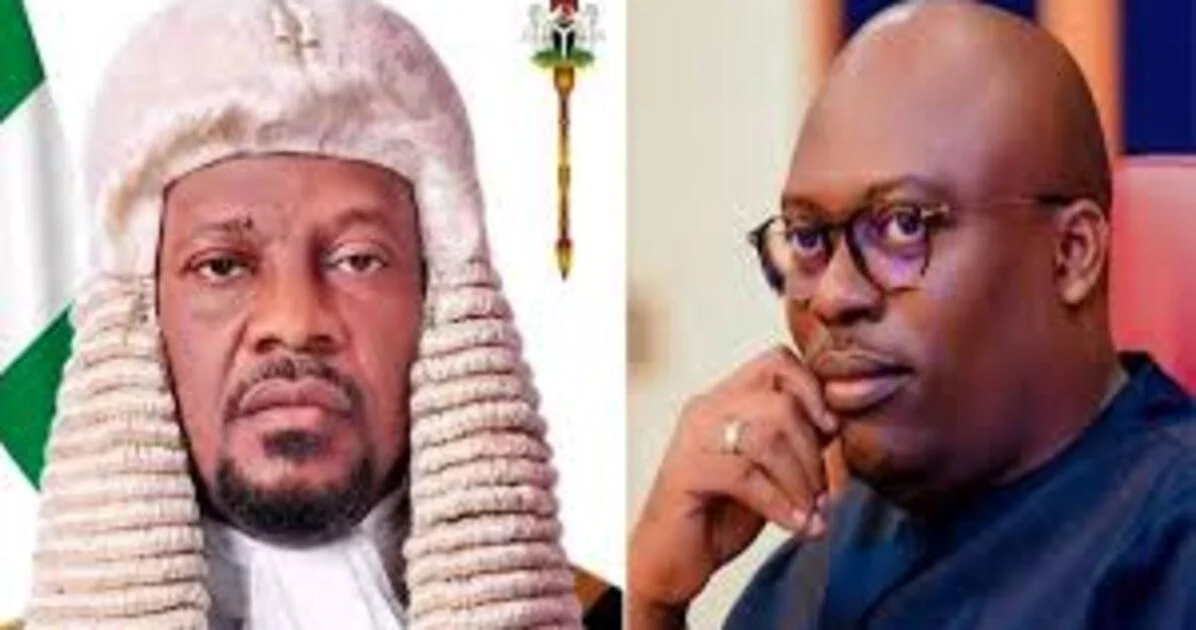
    In a separate judgement on Friday, Justice Emmanuel Akomaye dismissed the cross-appeal filed by Gov. Siminalayi Fubara challenging the legitimacy of the House of Assembly led by Martin Amaewhule as speaker.

    The apex court directed Amaewhule to resume sitting immediately with other elected members of the Rivers State House of Assembly.

    It mandated Fubara to re-present the 2024 appropriation bill to the Amaewhule-led Assembly.

    Reacting to the rulings, APC Publicity Secretary in Rivers, Mr Chibike Ikenga, hailed the Supreme Court’s decision in a statement issued in Port Harcourt on Friday.

    According to Ikenga, the judgements represent a victory for the people and a step towards the entrenchment of democracy in the state.

    He urged Fubara to comply with the ruling without delay to restore peace and foster development in Rivers.

    “We call on all democrats and people of goodwill to prevail on Gov. Fubara to quickly retrace his steps and take the necessary actions for the progress of our dear state.

    “We commend the Supreme Court for its decision to bring an end to the political crises that has plagued the Executive and House of Assembly in the state,” Ikenga stated.

    He assured that as the main opposition party in Rivers, the APC would continue to serve as a watchdog, advocating for good governance and ensuring effective service delivery to the citizens. 

  • Rivers LG: S/Court reserves ruling on suit seeking sack of Chairmen 

    Rivers LG: S/Court reserves ruling on suit seeking sack of Chairmen 

    The Supreme Court has postponed its decision on an appeal challenging the validity of the local government elections in Rivers State, held on October 5, 2024.

     The All Progressives Congress (APC) is seeking to overturn the results of the polls.  

    A five-member panel, led by Justice Uwani Abba-Aji, concluded the hearing after all parties presented their final arguments. 

    The APC’s lawyer, J.B. Daudu, asked the court to nullify the election, while Governor Siminalaye Fubara’s lawyer, Yusuf Ali, and Rivers State Independent Electoral Commission’s (RSIEC) counsel, Chris Uche, defended the poll’s legitimacy.  

    Earlier, the Court of Appeal had overturned a ruling by the Federal High Court in Abuja, which had halted the elections.

     The appellate court stated that the lower court had no jurisdiction over the matter, as state elections are not covered under Section 28 of the Electoral Act.  

    The initial ruling by Justice Peter Lifu of the Federal High Court had barred the Independent National Electoral Commission (INEC) from providing a voter register for the election, citing non-compliance with legal requirements. 

    The court also criticized RSIEC for failing to issue the mandatory 90-day election notice.  

    With the Supreme Court set to decide, the fate of the Rivers LG election remains uncertain.

  • Supreme Court Dismisses Suit Seeking To Scrap EFCC 

    Supreme Court Dismisses Suit Seeking To Scrap EFCC 

    In what some analysts have likened to the ignoble scenario of corruption fighting against the effort of the government to rein in on corrupt agents of the state, the gambit by 16 state Attorneys General was curtailed by Supreme Court, which on Friday in Abuja, threw out their suit seeking to have the EFCC scrapped.

    The suit, which was initially instituted by attorneys general of 16 states, sought the scrapping of the anti-graft agency.

     While some states withdrew from the suit, some others asked to be joined as co-plaintiffs.

    The state governments, in their suit, had argued that the Supreme Court, in Dr. Joseph Nwobike Vs Federal Republic of Nigeria, held that it was a United Nations Convention against corruption that was reduced into the EFCC Establishment Act and that in enacting the law in 2004, the provision of Section 12 of the 1999 Constitution, as amended, was not followed.

    They argued that in bringing a convention into Nigerian law, the provision of Section 12 must be complied with.

  • LG Autonomy: Gov Soludo upsets the applecart

    LG Autonomy: Gov Soludo upsets the applecart

    Governor Charles Soludo’s recent proposal for legislation may pose a threat to local government autonomy in Anambra State, raising concerns among representatives and citizens. 

    The proposed bill mandates that local government areas (LGAs) transfer a portion of their federal allocations into a unified account controlled by the state, sparking fears of reduced financial independence for local councils.

    Hon. Henry Mbachu, a member of the Labour Party representing Awka South I, has expressed strong objections to the bill, urging the governor to withdraw it from consideration by the Anambra State House of Assembly. 

    Mbachu argued that the legislation undermines the Supreme Court’s reaffirmation of local government autonomy, enabling the state government to access funds meant for LGAs.

    Despite these concerns, Governor Soludo maintained that the bill is consistent with the Supreme Court’s ruling, suggesting that any opposing parties should seek legal recourse if they disagree. 

    The Anambra State House of Assembly has already approved the bill, which establishes a “State Joint Local Government Account.” This requires all federal allocations for LGAs to be deposited into this account.

    Under the proposed law, local governments are compelled to remit a set percentage of their allocations to the consolidated account within two business days of receipt, even if the funds originate directly from the Federation Account. 

    Additionally, the state would withhold a percentage of these allocations before disbursing the remaining funds to the LGAs.

    Mbachu had raised alarms about the detrimental effects this legislation could have on local government operations, emphasizing that the mandated deductions might severely limit their ability to manage federally allocated resources effectively. 

    He had called on President Bola Ahmed Tinubu to monitor state governors to prevent interference in local government elections and ensure that elected officials can operate without undue pressure from the state.

  • Tinubu Asks Senate To Confirm Kekere-Ekun As Substantive CJN

    Tinubu Asks Senate To Confirm Kekere-Ekun As Substantive CJN

    President Bola Tinubu has formally requested the Nigerian Senate to confirm Justice Kudirat Kekere-Ekun as the substantive Chief Justice of Nigeria (CJN).
    This request was communicated through a letter, which was read aloud by Senate President, Godswill Akpabio during a session on Tuesday.
    Justice Kekere-Ekun has been serving as the Acting Chief Justice since August, following the retirement of her predecessor, Justice Olukayode Ariwoola. President Tinubu had earlier sworn her into the acting role.
    In his letter, the President referenced Section 231(1) of the Nigerian Constitution.
    Tinubu stated, “Pursuant to 231(1) of the constitution of the federal republic of Nigeria of 1999 as amended which gives the power to the president powers to appoint the chief justice of Nigeria (CJN) on the recommendation of the National Judicial Commission (NJC) and subject to confirmation of the Nigerian senate,” the number one citizen said.
    “I have the honour to forward the nomination of Honourable Justice Kudirat Kekere-Ekun CON for confirmation as CJN.
    “While it is my hope that this request will receive the expeditious consideration and confirmation of the senate, please, accept distinguished senate president the assurances of my highest consideration and personal regards.”
    Following the presentation, Senate President Akpabio referred the matter to the Committee of the Whole for further consideration, with deliberations set to take place on Wednesday.
  • Imo Guber: S/Court affirms Gov, Hope Uzodinma election 

    Imo Guber: S/Court affirms Gov, Hope Uzodinma election 

    In furtherance of what the critical public now calls “Judiocracy” the Supreme Court of Nigeria pronounced three major judgements today, Friday, August 23, 2024 all, affirming the electoral victory of state Governors.

    The beneficiaries of these judgements were Bayelsa, Kogi and Imo state governors.

    In the case of Governor Hope Uzodimma of the All Progressive Congress APC, just as the other two cases, the Supreme Court affirmed his election.


    The court had in a judgement declared by Justice Mohammed Baba Idris, dismissed the two separate appeals brought to it by the Labour Party LP and the People’s Democratic Party PDP against the declaration of Hope Uzodinma.


    The supreme court held that the appeals of the LP governorship candidate, Athan Achonu and that of PDP Samuel Anyawu were was lacking in merit.


    According to the judgement, the LP and PDP gubernatorial candidates were said to have failed to establish allegations of over voting and other malpractices against the November 11,2023 poll.

  • CJN: NJC recommends Kekere-Ekun

    CJN: NJC recommends Kekere-Ekun

    By Vivian Michael, Abuja
    “…recommends the appointment of 27 others as Judges of various courts.
    The National Judicial Council (NJC), has recommended Justice Kudirat Kekere-Ekun as the next Chief Justice of Nigeria (CJN).
    This is imperative as Hon. Justice Olukayode Ariwoola, GCON, will formally bow out of office as the Chief Justice of Nigeria next week Thursday, August 22.
    This was part of the outcome of the meeting of the NJC, which also recommended the appointment of 27 others as Judges of various courts.
    The decision was confirmed by the spokesman of the NJC, Soji Oye, in a statement on Thursday.
    The emergence of Kekere will be subject to confirmation by President Bola Tinubu and screening by the Senate.
    The recommend twenty-seven (27) candidates for appointment as Judges of States Courts and a candidate for appointment as Kadi of the Sharia Court of the FCT, Abuja to their various State Governors and Mr. President as follows.
    Six judges for high court of Kwara state are; Olawoyin, Ibijoke, Abdulrazaq, Fatimah Funsho, Folorunsho, Oba Muritala, Dikko, Yusuf Adebayo, Adeniyi, Oluwatosin Adenike, Osuolale-Ajayi and Temitope Olalekan.
    One judge for high court of Lagos state; Zubairu, Murtala Ja’afaru.
    Four judges for high court of Benue state includes, Kor, Vincent Tersoo; Ikwulono, Maigida Maimuna; Adagba, Nguhemen Julie; Tor, Damian Tersugh.
    Two judges for customary court of Appeal, Benue state are Onche, Ogah Inalegwu, and Igba, Theophilus Terhile.
    Others are eight judges for high court of River State which includes, Onyiri, Frank Ugoji, Victor Chinedum, Obomanu, Godswill Vidal, Oguguo, Rita Chituru, Fubara, Alatuwo Elkanah, Kokpan, Bariyima Sylvester Obu, Ibietela Innocent Madighi and Wifa-Adedipe, Lesi.
    The recommended Six judges for high court of Ondo state are Daomi, Williams Adebisi, Fabuluje, Adewumi William, Ogunwumiju, Mobayonle, Idowu, Demehin-Ogunbayo, Inumidun Happiness, Kpemi, Ojufisintei Justinah, Adegoroye, Olufunke Adeola.
    Concluding, it recommend one Kadi for Sharia court of Appeal, FCT in the person of Muhammad, Lawal Munir.
    All recommended candidates are expected to be sworn-in after the approval of the NJC recommendations to the President and their respective State Governors.
  • LG Allocation: S/Court judgement Nationally Applicable – Ozekhome

    LG Allocation: S/Court judgement Nationally Applicable – Ozekhome

    ... no ambiguity in the judgement to warrant delay in implementation


    Constitutional lawyer, Professor Mike Ozekhome has again insisted that the judgment of the Supreme Court which ordered allocations of funds directly to the 774 local governments in Nigeria is enforceable in all parts of the country.


    Ozekhome, a Senior Advocate of Nigeria (SAN) and human rights activist said that there was no ambiguity in the judgment to warrant any delay in its implementation.


    In a fresh statement issued on Thursday in Abuja, the senior lawyer maintained that section 162 of the 1999 Constitution upon which the judgment was predicated, was rightly interpreted by the 7-man panel of Justices of the apex court.


    Ozekhome asserts “Many Nigerians and non-Nigerians alike have repeatedly asked me if the Supreme Court was not wrong in its interpretation of section 162(3), (4), (5) and (6) of the 1999 Constitution and what happens to the allegedly wrong judgement.


    “They want to know if the judgment is superior to the said “clear” provisions of the Constitution and if it is enforceable or capable of being enforced.


    “They also want to know how, in the event that I say it is enforceable. My simple answers to both questions are yes, yes and yes.


    “Let’s take them one after the other, the judgment of the Supreme Court is superior to the provisions of the Constitution.

    .

    “A law is only what the courts interpret it to be, not what it says on bare paper. That was why Oliver Wendell Holmes Jnr, a very influential civil rights Jurist, Brevet Colonel during the American Civil War and longest serving Justice of the US Supreme Court (1902-1932), who retired from the US Supreme Court at 90, once famously declared;


    “The prophesies of what the courts will do in fact, and nothing more pretentious, are what I mean by the law”. In other words, the law, whether constitutional, substantive, statutory, or adjectival, remains what it is-inanimate and dead on paper-until the life and the oxygen of interpretation are breathed into it by a court of law.


    “Consequently, it is thus the interpretation which was given by the Supreme Court to the entire section 162 of the Constitution on the sharing procedure between the Federal government, states and the LGs, and not the bare provisions of the Constitution that prevails.


    “On the enforceable of the judgment, the answer is also in the affirmative. Section 287 (1) of the 1999 Constitution comes to our rescue by providing that “the decisions of the Supreme Court shall be enforced by in any part of the Federation by all authorities and persons and by courts of subordinate jurisdiction to that of the Supreme Court”.


    “Even if the Supreme Court was wrong in its interpretation of section 162 dealing with the State Joint Local Government Account, the judgement remains binding on all and for all times.


    “It is only an amendment of the Constitution under section 9 thereof that can override the decision. No person or authority can decide, whimsically and arbitrarily to disobey the judgement or pick and choose what portions of the judgment to obey or which to discard.


    “In Rt Hon Michael Balonwu & Ors V Governor of Anambra State& Ors (2007) 5 NWLR ( Pt 1028) 488, the intermediate court held that “an order of court whether valid or not must be obeyed until it is set aside.


    “An order of court must be obeyed as long as it is subsisting by all no matter how lowly or lightly placed in the society. This is what the rule of law is all about, hence the courts have always stressed the need for obedience to court orders”.


    “It therefore does not matter that the judgment is downright stupid, illogical or not well researched; or that parties affected do not like it.


    “Right or wrong therefore, court judgements must be obeyed until set aside by a higher court, or a challenged section is amended by the Legislature.


    “Since no court is higher than the Supreme Court of Nigeria, only an amendment to the Constitution by the NASS under section 9 can override the judgment.


    “That was why the same Supreme Court, acutely aware that it is susceptible to mistakes and errors being constituted by mere mortals and not almighty God or angels, once famously declared through late venerable Socrates of the Nigerian Bench, Honourable Justice Chukwudifu Oputa, in the causa celebre of Adegoke Motors Ltd v Adesanya (1989) NWLR ( Pt 109) 250, that “the Supreme Court is final not because it is infallible, it is infallible because it is final”.


    “On how the Supreme Court judgment is implementable, yhe answer is equally simple. The FG, states and LGs should now meet (and I am told they have been meeting) at FAAC and decide on modalities and procedures of opening up accounts for LGs so that their allocation under section 162 is paid directly to them and not to the joint state LG account that is oftentimes waylaid by state Governors and fleeced without the helpless and hamstrung LGs being able to raise a finger.


    “This is not rocket science.That refusal by state governors to remit to the LGs was the ugly mischief the Apex Court judgment sought to cure; and it did so perfectly, loud and clear, in my own humble opinion.


    “Inter alia, the Apex Court had declared emphatically that, “by virtue of section 162(3) and (5) of the Constitution of Nigeria, 1999, the amount standing to the credit of LGs in the Federation Account shall be distributed to them and be paid directly to them”; that “a state, either by itself or Governor or other agencies, has no power to keep, control, manage, or disburse in any manner, allocations from the Federation Account to LGs”.


    “The Apex Court also granted injunctive orders restraining “Governors and their agents, officials or privies from tampering with funds meant for the LGs in the Federation Account” ; and further ordered “immediate compliance by the states, through their appointed officials and public officers with the terms of the judgment and orders”.


    “The apex court further ordered the “Federation or Federal Government of Nigeria through its relevant officials, to forthwith commence the direct payment to each LG of the amount standing to the credit of each of them in the Federation Account”.


    “The content, terms and directives contained in this judgement, are in my humble opinion, very straight forward, unambiguous and are as clear and clean as a whistle.


    “All parties concerned, – FG, states and LGs- must therefore obey and enforce this judgement immediately. There is no option.I had earlier made public this same opinion of mine.


    “I had written and stated on several fora that in my humble understanding of the principles of interpretation, the Supreme Court was right in the interpretation it gave to section 162 of the Constitution, so as to prevent continuation of years of wanton abuse of the provisions of section 162 by state governors.


    .”I still stand very firmly by this my earlier opinion.God bless Nigeria as we collectively seek true fiscal federalism and not the present unitary system of government that we are currently operating under the thin guise of federalism”, Ozekhome said.

  • 87 Lawyers elevated to Senior Advocates

    87 Lawyers elevated to Senior Advocates

    The Legal Practitioners’ Privileges Committee, (LPPC) has elevated 87 lawyers to the prestigious rank of Senior Advocate of Nigeria, (SAN) .
    The rank of SAN is awarded as a mark of excellence to members of the legal profession who have distinguished themselves as advocates and academics.
    The 87 lawyers were conferred with the rank at the 164th Plenary Session of the Committee under the Chairmanship of the Chief Justice of Nigeria (CJN) , Justice Olukayode Ariwoola.
    A statement by the Secretary of the LPPC, Hajia Hajo Sarki Bello in Abuja indicated that the 87 lawyers were picked for the award from the 98 lawyers shortlisted last month.
    The statement also revealed that 11 applicants were dropped from the race for undisclosed reasons.
    Similarly, the meeting was said to have considered five different petitions written against some of the applicants and were dismissed for lacking in merit.
     Meanwhile, the new senior lawyers would be inaugurated into the inner bar on September 30 this year.
    The newly elevated lawyers for year 2024 are:
    Lateef Olaseinde Karim, Godwin Tagbo Ike, Johnson Odionu, Nnodim Marcrllinus Duru,
    Innocent Adamd Ovbagbedia, Soronnnadi Anthony Njoku, Adamu Abubakar, Charles Oyaole Musa,Udochi Nunny Iheanacho, David Dare Onietan and Elele Chinatu Casmir.
    Others are Josiah Rapuluchuks Nduka, Godwin Ikechukwu Obeta, Habeeb Orisavbia Ilavbare, Moses Kolade Obafemi, Mathew Echezona Esonanjor, Bsba Fika Dalah, Babatunde Ademoye Sodipo, MustaphaIkhegbe Abubakar, Emmanuel Ibhagbemien Esene, Henry Adedayo Bello,  Boniface Chinedu Moore, Clement Amechi Ezika, 0mokayode Adebayo Dada, Edwin Anikwem and Roy Ogbonnaya Umahi Nwaeze.
    Also on the list are Olumide Oniyire Olugbenga, Monday Onyekachi Unani, Ayoola Olufemi Ajayi, Paul Chukwuma Obi, Olasupo Dominic Ati-John, Cole Segun Ololade, Charles Ayodeji Adeogun-Phillips, 0kechukwu Kingsley Abundance, Ikechukwu Kings, Jacob Ocheogbu Ifere, Emmanuel Aderemi Adekile, Christopher Ehumadu Okeke and Oluronke Adeyemi.
    The list also comprises Oluwole Olawale Afolabi, Toboukebide Kekemeke, Akinbamigbe Adesomoju, Victor Owarienomare Odjemu, Josiah Ojochide Daniel-Ebune, Olukunle Ogheneovo Edun, Abdulaziz Enebi Ibrahim, Stanley Chidozie Imo, Charles Oladipo Titiloye, Abdulkarim Kana Abubakar, Kingsley Chuku and Adeyinka Oluwaseun Aderemi.
    Others include Olaolu Akintunde Owolabi, Adedeji Sharafaderen Abdulkadir,
    1dowu Omotunde Benson, Kolawole James Olowookere, Chinasa Thelma Unaegbunam,
    Ademola Oluwawolemi Esan, Omosanya Atilola Popoola, Taiye Ayotunde Oniyide
    Emonye Oga Adekwu, Aderemi Oguntoye, Kashopefoluwa Olawale Balogun, Abdul Adamu and Theodore Okechukwu.
    Also picked are RILWAN Birnin-Kebbi Umar, Chinenye Ifeanyichukwu Okafor,
    Kaka Sheila Lawan, Abba Muhammed, Wendy Nwenenda Kuku, Ekele Enyinnaya Iheanacho, 0kechukwu George Ekele,  Akinyemi Oliwole Olujinmi and Gyang Yaya Zi and 1dris Abubakar and George Ibrahim.
    The rest are Boonyameen Babajide Lawal, Terkaa Jeremiah Aondo, Tochukwu Peter Tochukwu, Uchenna Uzo Njoku, Paul Babatunde Daudu, Chukwudi Kachukwu Enebeli, Yusuf Olatunji Ogunrinde, Tobechukwu Kenechukeu Nweke, Ademola Kamardeen Abimbola, Yunus Abdulsalam, Mofesomo Ayodej Tayo-Oyetibo and Chukwuemeka Agamadodaigwe Nnawuvhi. The only successful academic applicant is Profesdor Gamu Oke Adeyemi.
  • Supreme Court Justice, Chima Centus Nweze dies @64

    Supreme Court Justice, Chima Centus Nweze dies @64

    Supreme Court Justice Chima Centus Nweze has passed on. He died on Sunday at the age of 64.

    Festus Akande, the Director of Information at the Supreme Court, confirmed the news to NIGERIAN ANCHOR, whilst adding that and an official press statement will be released soon.

    Justice Nweze gained prominence for his dissenting judgment in 2020, which declared Emeka Ihedioha of the Peoples Democratic Party (PDP) as the rightful winner of the 2019 Governorship election in Imo State.

    This decision triggered extensive debates and divided opinions among legal experts and the public.

    In another significant moment of his judicial career, Justice Nweze, in a three-against-two split decision, declared Ahmad Lawan, then Senate President, as the authentic candidate of the All Progressives Congress (APC) for Yobe North Senatorial District during the 25 February general election.

    These rulings underscored the profound impact of his decisions on the political landscape.

    Born on September 25, 1958, in Obollo, Udenu Local Government Area of Enugu State, Justice Chima Centus Nweze had a long and distinguished career within the Nigerian legal system.

    In 2014, former President Goodluck Jonathan’s administration approved his appointment to the Supreme Court upon the recommendation of the National Judicial Council (NJC).

    Justice Nweze’s demise leaves a significant void in the legal community.

    He was renowned for his thoughtful and meticulous approach to cases, earning respect among peers and legal scholars alike.

    As the nation mourns the loss of this accomplished jurist, his legacy of upholding justice and the rule of law will undoubtedly endure in Nigeria’s legal history.