Tag: Supreme Court

  • LG Autonomy: FG explains delayed implementation

    LG Autonomy: FG explains delayed implementation

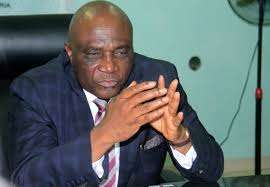
    The Attorney General of the Federation and Minister of Justice, Lateef Fagbemi, SAN, has declared that the federal government did not give state governments a moratorium in the implementation of the Supreme Court judgement on full financial autonomy of the local government areas.

    The AGF explained that there is a delay in the full implementation of the apex court verdict due to the measures being put in place by the federal government towards achieving a successful implementation.

    Fagbemi spoke on Monday while addressing newsmen after he was honoured with an honorary degree during the 12th convocation ceremony and 15th Founder’s Day Event of the Afe Babalola University Ado-Ekiti (ABUAD).

    According to him, there is no going back in the implementation of the judgement for the 774 local government areas to be given financial autonomy in order to ensure development at the grassroots level.

    He warned states not to commit contempt of court by disobeying the verdict of the Supreme Court, adding that the administration of President Bola Tinubu was determined to ensure all duly constituted and elected local government administrators received their allocations directly from the federation account.

    Fagbemi said, “Unfortunately, I know it has been in the media that they gave them (the governors) a three-month moratorium, which is not the position. The position is that yes, the judgement was delivered, but we felt that there is a need to put some things in place before the full implementation. That it is going to be implemented is sacrosanct; nobody can run away from it.

    ReplyForwardAdd reaction
  • Supreme Court Judgement: Nasarawa State Moves to Reform LG Structure

    Supreme Court Judgement: Nasarawa State Moves to Reform LG Structure

    The Nasarawa State Government has introduced a bill to the State House of Assembly aimed at revising the local government system in line with the Supreme Court’s recent decision on local government autonomy.

    The proposed legislation, titled “A Bill for a Law to Repeal and Re-enact the Establishment, Structure, Composition, Finance and Function of Local Government System in Nasarawa State, 2024,” seeks to update the current framework to reflect the new mandate.

    During a recent session, the Speaker of the House, Rt. Hon. Danladi Jatau, noted that the bill represents a move to reshape the local government structure to align with the Supreme Court’s ruling on financial independence for local councils.

     The House Leader, Hon. Suleiman Azara, presented the bill for the first reading, with the Minority Leader, Hon. Luka Zhekaba, providing support.

    The state government’s plan, as outlined by the Chairman of the House Committee on Information, Hon. Jonah Dizaho, includes the removal of the joint account system and the elimination of the Ministry for Local Government and Chieftaincy Affairs. 

    The second reading of the bill is scheduled for October 16, 2024.

  • Kogi Women Protest Alleged EFCC Harassment o Yahaya Bello, Call for Presidential Intervention

    In what some observers have termed as a drama sketch being acted at the pleasure of the powers that be, a large crowd of women took to the streets on Saturday to protest what they called the harassment of former Governor Yahaya Bello of Kogi State by the Economic and Financial Crimes Commission, EFCC.
    The protesters appealed to President Bola Ahmed Tinubu to intervene, urging him to rein in the EFCC. They maintained that Bello had accomplished more for the state than any other governor since its inception.
    Led by various community leaders and political supporters, the women gathered in Lokoja, the state capital, denouncing what they called a politically motivated “witch-hunt” by the EFCC.
    The group urged the President to act swiftly by ensuring the EFCC allows the judiciary to handle the matter. They claimed that the agency’s actions earlier in the week were part of a targeted attempt to damage Bello’s reputation, warning that they would not stand idly by and watch his safety be jeopardized.
    “We stand with our leader, Yahaya Bello in this trying time. We believe he has been targeted unfairly and we demand justice. We won’t watch him lose his life,” one of the protesters, identified as Hajiya Halima Abass, said.
    “The EFCC should focus on genuine cases of corruption, not political vendetta,” another protester, who simply identified herself as Mrs. Boluwaji, added.
    The various women group leaders, who spoke in their local dialects – Igala, Ebira, Yoruba and others – urged the EFCC to be professional in its “handling of the case against the state leader, Alhaji Yahaya Bello.”
    They chanted songs, saying that Kogi people were fearless people and reiterated that they would not stand by and continue watching what they called a show of shame, especially after the former governor had made himself available to EFCC.
    They wondered why the EFCC refused to interrogate or detain him while he was in their office but rather went shooting at night at the Kogi Government Lodge to arrest a man who had voluntarily walked up to them earlier in the day.
    “We Kogi people of Ebira descent cherish what our son, Yahaya Bello, did for us as governor. That is why we’re out on the streets to ask EFCC to leave him alone.
    “We are not giving him out to anyone to crucify. He will come back to us hale and hearty,” one of the women leaders from Ebiraland, who simply identified herself as Hajiya Fatima, said.
    “We, the Igala people from Kogi East, we are here because of our leader, Alhaji Yahaya Bello. He has never done anything bad to us. To those people that are looking to take him, please leave him alone. We have never seen the kind of his government before. He did well for the state,” another women leader who identified herself as Deborah said.
  • Bayelsa Guber: Supreme court authenticates Gov Diri’s election

    The Supreme Court, Friday, declared that Duoye Diri, remains the authentic governor of Bayelsa State.

    The Apex court affirmed the re-election of Diri after dismissing the appeal of the candidate of All Progressive Congress(APC) Timipre Sylva, in the November 11 off-cycle election.

    The five-man panel of the supreme court lead by Justice Lawal Garba, affirmed the Court of Appeal decision of 15 July, that declared Sylva’s appeal an abuse of court process for filing two notices of appeal.

    Citing a part of section 246(1) of the 1999 Constitution, the Apex Court panel held that the APC Governorship candidate has only one right to appeal the judgment of the Tribunal and not multiple.

    Consequently, it faulted the APC appellant who filed two notices of appeal to the Appellate Court.

    In a unanimous judgment, the appeal was therefore dismissed by the Supreme Court for lacking merit.

    The Electoral body, INEC had declared that governor Diri of the PDP garnered a total of 175,196 votes to defeat his closest rival, Sylva of the APC who polled 110,108 votes.

    The unanimous decision of the apex court upheld the earlier decision of the Court of Appeal and the Election Petition Tribunal.

    The Court of Appeal in Abuja had on July 18 in a unanimous judgment affirmed the decision of the Bayelsa Governorship Election Petition Tribunal, which upheld the November 11, 2023, re-election of Governor Douye Diri of Bayelsa State.

    A 3-man panel of the appellate court had dismissed an appeal brought before the Court by Timipre Sylva and APC seeking to set aside the decision of the Tribunal.

    The Justice Adekunle Adeleye-led three-member tribunal had on May 27, dismissed the petition filed against Governor Diri’s re-election by the APC and its candidate for lacking in merit.

    The tribunal had held that both Sylva and APC failed to adduce any credible evidence to substantiate any of the allegations they raised against the outcome of the governorship poll.

  • Olukayode Ariwoola retires as CJN

    Olukayode Ariwoola retires as CJN

    Justice Olukayode Ariwoola, the 22nd Chief Justice of Nigeria (CJN), has officially retired from service upon reaching the mandatory retirement age of 70.

    Born on August 22, 1954, Justice Ariwoola’s retirement marks the end of a distinguished judicial career.

    Justice Ariwoola was appointed to the Supreme Court bench on November 22, 2011, and later became the substantive CJN on June 27, 2022, following the resignation of his predecessor, Justice Tanko Muhammad.

    His appointment as CJN was formally confirmed by the Nigerian Senate on September 21, 2022.

    As events marking his retirement unfold at the Supreme Court, there are strong indications that Justice Kudirat Kekere-Ekun may be named as his successor, making her the new Chief Justice of Nigeria.

  • Ex-CJN Onnoghen, appeals CCT judgment

    Ex-CJN Onnoghen, appeals CCT judgment

    The former Chief Justice of Nigeria (CJN), Justice Walter Onnoghen, has appealed the judgment of the Code of Conduct Tribunal, CCT, that ordered his removal from office in 2019.


    The legal battle which commences, Tuesday, 20th August 2024, in Abuja was filed at the Court of Appeal since April 2019.


    Onnoghen is specifically praying the Court of Appeal to void and set aside the CCT judgment delivered against him on April 18, 2019, on various grounds.


    In his appeal marked CA/ABJ/375 & 376 & 377/2019, Justice Onnoghen through his lead counsel, Adegboyega Awomolo, SAN, is asking the appellate court to quash his conviction primarily on ground of want of jurisdiction, bias and and absence of fair hearing.


    With Onnoghen as the appellant, the Federal Republic of Nigeria is the sole respondent.


    A notice for hearing of the appeal just sighted by our correspondent is entitled, “CA/ABJ/375 & 376 & 377/2019 BTW: Justice Onnoghen and FRN”.


    It read, “Please take notice that the above matter is listed for hearing on Tuesday the 20th day of August, 2024 at 9 o clock in Court Appeal, Abuja Division.


    “Please take note that this serves as a hearing notice”.


    The Code of Conduct Tribunal had in 2019 convicted Onnoghen in all the 6-count charges of breach of Code of Conduct for Public Officers brought against him by the federal government while in office as head of the country’s judiciary.


    In the lead judgment delivered by Chairman of the CCT, Danladi Yakubu Umar, he had ordered the immediate removal of Onnoghen from office as the CJN.


    The Tribunal had also stripped him of all offices earlier occupied among which were the Chairman of the National Judicial Council, NJC, and also the chairmanship of the Federal Judicial Service Commission.


    The tribunal also ordered the forfeiture of his five bank accounts and the money in the accounts which Onnoghen did not declare in his asset declaration form submitted to the Code of Conduct Bureau, CCB, an agency of the Federal Government.


    Although Onnoghen had been on suspension since January 25, 2019 and had resigned on April 4, the tribunal nonetheless ordered his removal from office as the Chief Justice of Nigeria and also as the chairman of both the National Judicial Council and the Federal Judicial Service Commission.


    However, dissatisfied with the CCT decision, Onnoghen in 2019 approached the Court of Appeal in Abuja with 16 grounds on why his conviction by the Tribunal should be quashed.


    Among others, he maintained that the Danladi Umar-led CCT panel erred in law and occasioned a miscarriage of justice against him, when it failed to decline jurisdiction to entertain the six-count against him.


    He contended that the CCT Chairman ought to have recused himself from presiding over his trial.


    In his seven-point reliefs, Onnoghen, applied for an order setting aside his conviction as well as quashing the order for forfeiture of his assets and to discharge and acquit him of all the charges levelled against him.


    Listing some of the particulars of error in the CCT’s verdict, Onnoghen argued that he was s judicial officer at the time the charges were filed against him on January 11, 2019 and as such cannot be subjected to the jurisdiction of the lower tribunal.


    “0n the authority of Nganiiwa v. FRN (2018) 4 NWLR (Pt. 1609) 30: at 340. 341 only the National Judicial Council (NJC) has the power to discipline the Appellant for misconduct and not the lower tribunal.


    “The lower tribunal had in the case of FRN V. Sylvester Nwali Nguta in charge No: CCT/ABJ/01/2017 delivered on 9th January, 2018, affirmed the position of the Court in FRN Nganjiwa v. FRN and dismissed the charges and acquitted and discharged Justice Ngwuta being a Judicial Officer subject only to the discipline of the National Judicial C0uncil.


    “The lower tribunal has no iurisdittion over servng judicial officers such as the appellant, save the National Judicial Council.


    “The Motion on Notice dated 14th January, 2019, challenging iurisdiction ought to be granted in all material particular as it purports to save the lower tribunal of needless futile exercise.


    “The lower tribunal erred In law when it dismissed the Appellant’s Application seeking the chairman to recuse himself from further proceedings on the ground of real likelihood of bias and thus occasioned a miscarriage of justice.


    “The Appellant has alleged that the chairman of the lower tribunal is biased towards him as a result of open remarks in the tribunal as well as the manner in which the proceedings was being conducted.”


    Contrary to the CCT finding, Onnoghen, said he did not admit the fact of non-declaration of Assets from 2005 as the Justice of the Supreme Court, adding that he only stated that he did not declare in 2009 as required because he forgot.


    Onnoghen challenged the order for the confiscation of his assets on the grounds that the assets were legitimately acquired, as against the provisions of paragraph three of the section 23 of the CCB Act which only permits the seizure of such assets “if they were acquired by fraud.”


    He faulted the failure of the prosecution to present the petitioner, Denis Aghanya, before the tribunal whose petition led to the charges against him.


    Onnoghen maintained that all the allegations brought against him “constitute no offence and should therefore not have formed the basis for his conviction”.


    The former CJN asked the Court of Appeal to issue some orders against the CCT judgment among which are that the tribunal lacks the jurisdiction to entertain the case and that its Chairman ought to have recused itself from the proceedings.


    Consequently, he wants an order setting aside his conviction and another one setting aside the order for forfeiture of his assets made by the Tribunal.


    He also wants the appallete court to discharge and acquit him from the charges.

  • Bayelsa Guber: Diri, PDP want Supreme court to dismiss Sylva, APC appeal

    Bayelsa State Governor, Douye Diri has asked the Supreme Court to dismiss the appeal contesting his election by Timipriye Sylva and All progressives Congress, APC, in the Bayelsa gubernatorial poll.
    The respondents, represented by Chris Uche SAN, maintained that the appeal was devoid of merit and should be dismissed in its entirety as no witness or documents supported his request being made at the court.
    In the same vain, counsel to the People’s Democratic Party PDP, Tayo Oyetibo SAN and counsel to the Independent National Electoral Commission INEC represented by Charles Edoshomwan, also asked the Apex court to dismissal the appeal.
    In his response, counsel to the petitioner, Onyechi Ikpeazu SAN, asked the court to set aside the judgments of the Bayelsa State Governorship Election Petition and the Court of Appeal which had earlier dismissed his petition.
    Specifically, the former governor wants the court to invalidate the declaration of Diri by INEC as winner of the gubernatorial poll and declare him as the lawful winner of the election.
    The five-man panel of justices led by Justice Garba Lawal, after taking submissions of the parties, reserved judgment to a later date.
    On July 28, the Court of Appeal, affirmed the re-election of Governor Douye Diri of Bayelsa State.
    The judgement described the appeal brought before it by the All Progressives Congress(APC) and its candidate, Chief Timipre Sylva as incompetent and abuse of court process.
    The appellate court, had in a unanimous decision by a three-man panel of Justices lead by Justice James Abunduga said it found no reason to dislodge the earlier judgement of the Bayelsa State Governorship Election Petition Tribunal.
    It held that the court below was right when it declined to nullify the outcome of the gubernatorial poll that held in the state on November 11, 2023.
    The Bayelsa Governorship petition tribunal, had on May 27, lead by Justice Adekunle Adeleye, dismissed as lacking in merit, the petition that was filed against governor Diri’s re-election by the APC and its candidate.
  • Presidency Reacts To Supreme Court Ruling On Local Government Autonomy

    Presidency Reacts To Supreme Court Ruling On Local Government Autonomy

    The presidency has reacted to Thursday’s victory against 36 state governors at the Supreme Court on local government autonomy.

    The Supreme Court ruled that all federal allocations for local government councils should be paid directly into their accounts.

    In Nigeria, most states operate a joint account with local governments, Justice Emmanuel Agim, who led a seven-member panel of justices, said local government allocation should be paid directly to a separate account belonging to each local government.

    The federal government through the Attorney-General and Minister of Justice, Lateef Fagbemi (SAN) approached the Supreme Court, in a suit, marked SC/CV/343/2024, and sought that 36 governors of the federation grant full autonomy to the 774 local governments.

    Giving details of federal government’s prayer in the suit, Special Adviser to President Tinubu on Information and Strategy, Bayo Onanuga, on his X handle on Thursday, wrote, “The details of the Supreme Court ruling giving 774 local councils financial autonomy

    “The Supreme Court ruled on Thursday that all federal funds for local government councils should be paid directly into their accounts.

    “Justice Emmanuel Agim, who led a seven-member panel of justices, delivered the judgment in a suit filed by the federal government against the 36 state governors.

    “According to the judgment, henceforth, no more payments of local government area allocations will be made to state government accounts. The court also prohibited the governors from receiving, tampering with, or withholding funds meant for local governments.

    “Furthermore, the court barred the governors from dissolving democratically elected officials for local governments and deemed such actions a breach of the 1999 Constitution.

    “The federal government had approached the Supreme Court with a suit seeking to compel the governors of the 36 federating states to grant full autonomy to local governments in their domains. The suit, marked SC/CV/343/2024, was filed by the Attorney-General of the Federation and Minister of Justice, Lateef Fagbemi (SAN), on behalf of the Federal Government.

    “The Federal Government accused the state governors of gross misconduct and abuse of power in its suit, which was based on 27 grounds. In the originating summons, the FG prayed the Supreme Court to make an order stating that funds standing to the credit of local governments from the Federation Account should be paid directly to the local governments rather than through the state governments.

    “The justice minister also requested an order restraining governors, their agents, and privies from receiving, spending, or tampering with funds released from the Federation Account for the benefit of local governments when no democratically elected local government system is in place in the states.

    “Finally, the Federal Government sought an order stopping governors from constituting caretaker committees to run the affairs of local governments, contrary to the constitutionally recognized and guaranteed democratic system.”

  • BREAKING: It’s Unconstitutional For Govs To Hold LG Funds, Supreme Court Declares

    BREAKING: It’s Unconstitutional For Govs To Hold LG Funds, Supreme Court Declares

    The Supreme Court, on Thursday, declared that it is unconstitutional for state governors to hold onto funds meant for Local Government (LG) administrations.

    He said local governments has since stopped receiving the money meant for them from the state governors who act in their stead.

    Justice Agim noted that the 774 local government councils in the country should manage their funds themselves.

    He dismissed the preliminary objections of the defendants (state governors).

    The suit filed by the Attorney-General of the Federation (AGF), Lateef Fagbemi, the Federal Government sought an order preventing the governors from arbitrarily dissolving democratically elected councils.

    Justice Agim said the AGF has the right to institute the suit and protect the constitution.

    The apex court consequently directed that Local Government allocation from the Federation Account should be paid directly to them henceforth.

    More to follow

  • LG autonomy: S/Court gives Govs 7 days to respond Suit

    LG autonomy: S/Court gives Govs 7 days to respond Suit

    The Supreme Court, Thursday, gave the 36 State Governors seven days to file their defence in reponse to the Federal Government suit seeking autonomy for 774 local governments in the country.

    The Apex court also ordered the AGF to, upon receipt of the governors defence, file his reply within two days.

    The seven-man panel led by
    Justice Garba Lawal issued the order while ruling on an application for an abridgment of time argued by the Attorney General of Federation ( AGF) Lateef Fagebemi SAN.

    The apex court said that the decision of the court was predicated on the national urgency of the suit and the non objection from the attorneys general of the states of the federation.

    It insisted that filing of all processes and exchanging of same must be completed within the time.

    Justice Lawal ordered that the 8 states that were not in attendance at Thursdays proceedings must be served with fresh hearing notice.

    The 8 states are Borno, Kano, Kogi, Niger, Ogun, Osun, Oyo, and Sokoto, whose attorneys general were absent in court despite being served with hearing notice.

    In the meantime, the matter is adjourned to June 13 for hearing of the suit.

    The FG, through the AGF, Prince Lateef Fagbemi SAN, dragged the 36 state governors to the supreme court over alleged misconduct in the local government administration.

    Specifically, the AGF is seeking full autonomy for LG as third tiers of government in the country.

    The Governors were sued through their respective State Attorneys General.

    In the suit marked SC/CV/343/2024, the AGF is praying the Apex Court for an order prohibiting State Governors from unilateral, arbitrary and unlawful dissolution of democratically elected local government leaders for local governments..

    In the originating summons, AGF is also praying the Apex Court for an order permitting the funds standing in the credits of local governments to be directly channelled to them from the Federation Account in line with the provisions of the Constitution as against the alleged unlawful joint accounts created by governors.

    The summon, personally signed by AGF, seeks an order of the Apex Court stopping governors from constituting Caretaker Committees to run the affairs of local governments as against the Constitutionally recognized and guaranteed democratically system.

    It also applied for an order of injunction restraining the governors, their agents and privies from receiving, spending or tampering with funds released from the Federation Account for the benefits of local governments when no democratically elected local government system is put in place in the states.