Tag: Terrorism in Nigeria

  • Nigeria, US Renew Security Partnership as Violence and Displacement Soar

    Nigeria, US Renew Security Partnership as Violence and Displacement Soar

    — But Results Remain Elusive

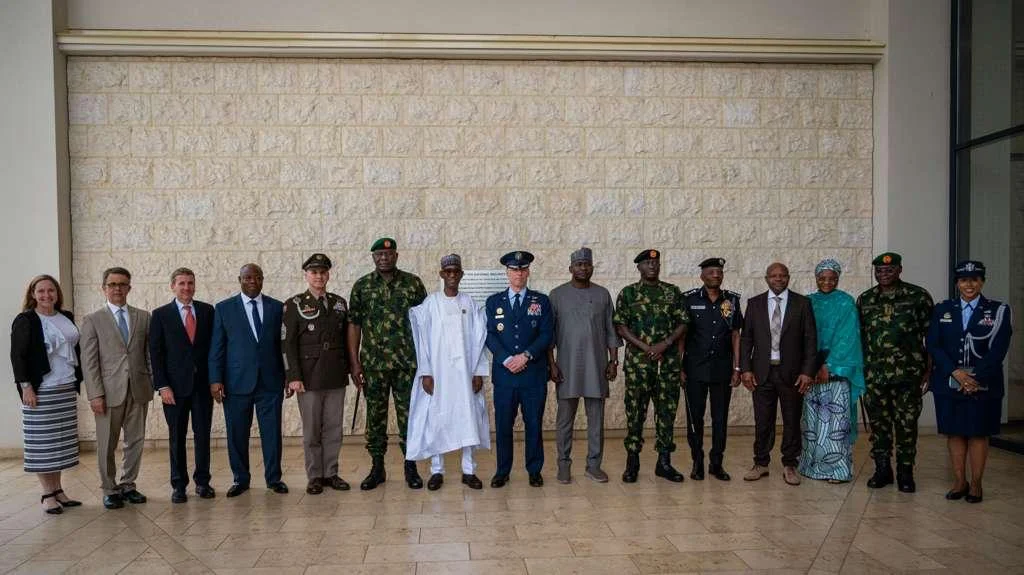
    Nigeria’s Defence Headquarters (DHQ) says a recent visit by the Commander of the United States Africa Command (AFRICOM), Dagvin Anderson, has reaffirmed security cooperation between Abuja and Washington. But with violence continuing to claim lives, displace communities, and deepen humanitarian strain, analysts and rights groups say both governments owe the public clearer evidence of what the partnership has actually achieved.

    In a statement attributed to the DHQ’s Director of Defence Information, Samaila Uba, officials said the visit was meant to “deepen collaboration” against terrorist groups threatening Nigeria and the wider region. Gen. Anderson met with Bola Tinubu, the National Security Adviser, Nuhu Ribadu, the Minister of Defence, Christopher Musa, and the Chief of Defence Staff, Olufemi Oluyede, and visited a joint US–Nigeria intelligence fusion cell.

    But concrete outcomes remain vague. Officials did not detail new commitments, metrics for success, or timelines for measuring progress — a pattern critics say has characterised past security dialogues.

    Violence Continues Despite Longstanding Cooperation

    Despite years of military training, intelligence sharing, and international support (including US-approved arms deals), Nigeria’s insecurity shows little sign of abating:

    • Deadly attacks have surged. In early February 2026, at least 162–200 people were killed in coordinated extremist assaults on the villages of Woro and Nuku in Kwara State — among the deadliest attacks in recent months.
    • Statewide and national figures point to a broader crisis. Amnesty International reported that between May 2023 and May 2025, armed attacks across multiple states killed at least 10,217 people and forced the displacement of hundreds of towns and villages.
    • Longer-term conflict toll. Insurgent violence in northern Nigeria — particularly linked to Boko Haram and splinter groups — has been associated with the deaths of tens of thousands of civilians and the displacement of over 2 million people since the conflict began.

    These figures reflect not just battlefield deaths but the chronic security failures that have driven families from their homes, disrupted local economies, and crippled access to basic services.

    Intelligence and Cooperation — Impact or Optics?

    The DHQ highlighted the role of a joint US–Nigeria intelligence fusion cell in enhancing surveillance and operational response. Yet, there are persistent reports of militants reaching remote communities, executing mass killings, and kidnapping civilians with impunity, suggesting that improved information flow has not always translated into timely or effective protection for vulnerable populations.

    Moreover, public statements from both governments rarely clarify how shared intelligence leads to changes in on-the-ground outcomes — such as preventing massacres like the one in Kwara or reducing daily attacks in the northeast and northwest.

    Opaque Budgets and Unclear Outcomes

    Budget details on US assistance — including equipment transfers, training, and advisory support — are often disclosed in generic terms without comprehensive reporting on results relative to expenditure. For example, in 2025, the United States approved a potential $346 million weapons sale to Nigeria aimed at strengthening military capacity, but there is limited publicly available data on how such resources have measurably reduced violence or improved civilian safety.

    Without transparent benchmarks or regular independent assessments, experts warn that security cooperation risks becoming a diplomatic talking point rather than a force for measurable change.

    Looking Ahead: What Nigerians Want to See

    Analysts and civil society groups increasingly call for:

    • Clear public metrics tracking trends in violence, arrests, and successful interventions attributable to joint efforts.
    • Independent evaluation of intelligence-sharing mechanisms and their operational impact.
    • Human security indicators, such as reductions in displacement and civilian casualties, rather than purely military success markers.

    For many Nigerians living amid recurring attacks and displacement, the question is no longer whether Nigeria has partners, but whether those partnerships can be held accountable to the people they are supposed to protect.

  • The Misuse of “Genocide” in Nigeria’s Public Discourse

    The Misuse of “Genocide” in Nigeria’s Public Discourse

    Contextualizing The Horrific Killings in Nigeria Within The International Convention Against Genocide

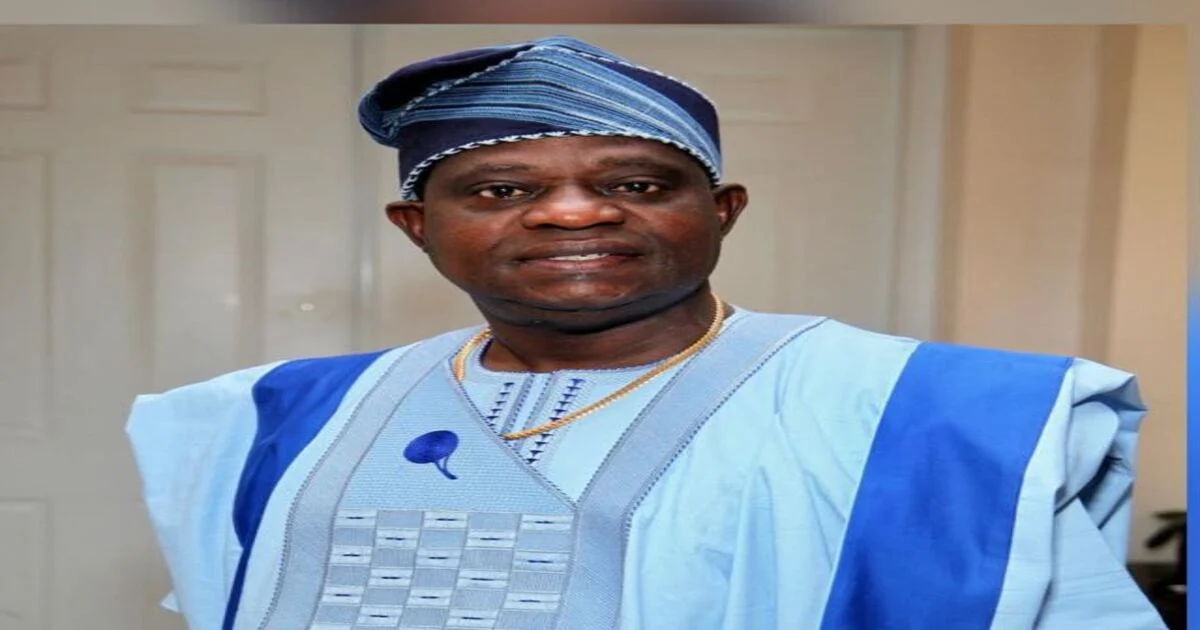
    By Wale Alonge

    Since President Donald Trump’s 2020 threat to “invade Nigeria” to stop what he called “the targeted genocide of Nigerian Christians by Muslims,” the term genocide has gained sudden, viral currency across Nigerian social media. It is now used casually, cavalierly, and often without any understanding of its historical roots or the international legal framework that defines it.

    When such a morally charged word is used loosely, it dilutes its moral and legal force — and makes enforcement far more difficult in genuine cases of genocide. That is why it is critical to define and apply it precisely, something sorely lacking in Nigeria’s public conversations.

    It is deeply ironic that the same President Trump who refuses to describe the state-sponsored mass killing, starvation, and displacement of Palestinians in Gaza as genocide was so quick to use the word for Nigeria’s communal violence.

    I am a Christian, so this is not a case of a non-Christian downplaying the killings of Christians. There is no doubt that many Nigerian Christians have been victims of murderous attacks by Islamist jihadist groups — often targeted specifically in their houses of worship. Only yesterday, reports emerged from Kwara State of Christians being slaughtered and kidnapped in church.

    But so have Muslims — indeed, in larger numbers according to widely available data — including many attacked in mosques. These killings are largely random, carried out by non-state insurgents and criminal militias using hit-and-run, opportunistic tactics, often also targeting government forces. There is no demonstrated element of state-sponsored intent to destroy a protected group, which is central to any credible genocide claim.

    What “Genocide” Actually Means

    The word itself derives from the Greek genos (“tribe” or “race”) and the Latin caedere (“to kill”). Polish lawyer Raphael Lemkin coined it during World War II, and in 1946 the United Nations General Assembly first recognized genocide as an international crime. It was later codified in the 1948 Convention on the Prevention and Punishment of the Crime of Genocide.

    Article II of the Convention defines genocide as any of the following acts committed with intent to destroy, in whole or in part, a national, ethnic, racial, or religious group:

    • Killing members of the group
    • Causing serious bodily or mental harm
    • Deliberately inflicting conditions of life aimed at destroying the group
    • Imposing measures intended to prevent births
    • Forcibly transferring children to another group

    The most difficult and crucial element is intent. Genocide requires a proven intention to physically destroy a protected group — not merely to displace it, weaken it, or target individuals for other reasons. This “special intent” (dolus specialis) distinguishes genocide from other international crimes.

    Nigeria’s Reality

    Every innocent life unjustly taken is one life too many. Nothing in this analysis minimizes the suffering of Nigerian Christians killed or displaced by jihadists or murderous Fulani militias that have devastated farming communities — particularly in the Middle Belt — through cycles of violence stretching back decades.

    But as horrific as these crimes are, to call them genocide is to misapply the term. The Genocide Convention arose from the ashes of the Holocaust — the targeted, systematic, state-orchestrated extermination of millions of Jews by Nazi Germany. That context matters.

    Nigeria’s insecurity is a grave humanitarian crisis, but not one that fits the legal or moral definition of genocide. The danger in misusing the word lies not just in linguistic carelessness, but in the erosion of its power to mobilize international justice where it is most needed — in places where governments, not bandits, plot the destruction of entire peoples.

    If we are to confront Nigeria’s violence meaningfully, we must name it for what it is: terrorism, mass atrocity, and state failure — not genocide. To do otherwise cheapens both the suffering of the victims and the gravity of one of humanity’s most serious crimes.


    Adewale Alonge, PhD, Founder & President, Africa Diaspora Partnership for Empowerment and Development. www.adped.org, writes in from Dadeland, Miami, Florida, USA.