Tag: TETFUND

  • NDDC cautions unsuspecting applicants against fake scholarships

    NDDC cautions unsuspecting applicants against fake scholarships

    The Niger Delta Development Commission (NDDC) has warned the public regarding the activities of fraudsters offering non-existent postgraduate scholarships to unsuspecting victims.

    Mrs Seledi Thompson-Wakama, Director of Corporate Affairs at the NDDC, issued the warning in a statement released in Port Harcourt on Sunday.

    She disclosed that the scammers had been soliciting money from members of the public under the pretext of securing scholarship placements.

    “The attention of the NDDC has been drawn to fraudulent emails and messages sent to applicants of the commission’s Postgraduate Foreign Scholarship Programme,” she said.

    Thompson-Wakama revealed that the fraudulent emails, purportedly sent from nddcregistry@gmail.com and claiming to be from the NDDC’s ‘Board Registry,’ invite recipients to a fictitious document verification and authentication exercise.

    According to her, the purported exercise is scheduled to take place from May 19 to May 21 at Bishop Oluwole Street, Victoria Island, Lagos.

    “Members of the public are hereby advised that the NDDC has no affiliation with this fraudulent selection process,” she stressed.

    She further clarified that all official communication concerning the commission’s scholarship programme are conducted exclusively through the official NDDC portal: www.scholarship.nddc.gov.ng.

    “Applicants are strongly advised to disregard any unsolicited messages requesting money, invitation, sensitive information, or offering scholarship placements outside of the official NDDC procedures,” she added.

    Thompson-Wakama urged anyone who receives such fraudulent emails to report them immediately to the appropriate law enforcement authorities for prompt investigation and action.

    She encouraged Nigerians interested in the NDDC’s programmes to utilise only the official NDDC communication channels.

    “We also advise former beneficiaries of the commission’s programmes and prospective applicants to verify all information through the NDDC’s official website official: www.nddc.gov.ng,” she concluded. 

  • 2025 UTME Registration, Exam Dates Released

    2025 UTME Registration, Exam Dates Released

    The Joint Admissions and Matriculation Board (JAMB) has shared the schedule for the 2025 Unified Tertiary Matriculation Examination (UTME). 

    A statement from the examination board yesterday in Abuja, indicates that Registration will start on January 31, 2025, and close on March 5, 2025. Direct Entry candidates can purchase application forms and e-PINs from March 10 to April 7, 2025.

     it was also stated that the Mock-UTME is set for April 5, while the main UTME will take place between April 25 and May 5, 2025.

    JAMB explained that candidates opting for the mock exam will pay ₦8,200, while those skipping it will pay ₦7,200. 

    The fees include charges for application forms, reading materials, CBT center services, and bank fees.

    Additionally, a mock UTME for candidates under 16 has been introduced to help them prepare, though it will not count for admission. However, candidates must be at least 16 years old by September 30, 2025, to qualify for admission into tertiary institutions. 

    Exceptions may be made for candidates under 15 who score 280 or higher in the UTME and excel in other required exams.

  • NUC Upgrades Medical Programmes in Nigerian Universities

    NUC Upgrades Medical Programmes in Nigerian Universities

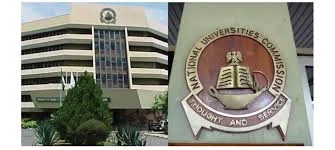
    The National Universities Commission (NUC) has announced that certain medical-related courses in Nigerian universities have been upgraded from bachelor’s degrees to doctoral programmes. 

    This change affects degrees in Pharmacy, Physiotherapy, and Optometry, now offering Doctor of Pharmacy (Pharm D), Doctor of Physiotherapy (DPT), and Doctor of Optometry.

    The decision aims to improve the clinical experience of students by adding more practical sessions and foundational courses.

     This will allow students to gain better clinical skills and cover all specialty areas comprehensively. 

    The programmes have also been extended from five years to six to accommodate the new curriculum.

    NUC emphasized that this move aligns with international standards for medical training, ensuring Nigerian degrees are competitive globally in terms of employability and further studies.

     However, the Doctor of Medical Laboratory Science (DMLS) programme has not been approved for upgrading and remains unavailable in Nigerian universities.

  • Reps demand 2024 budget breakdown, audited accounts of TETFund

    Reps demand 2024 budget breakdown, audited accounts of TETFund

    The House of Representatives has directed the Tertiary Education Trust Fund (TETFund) to provide a detailed breakdown of its 2024 allocations.

    The House also instructed TETFund to refrain from disbursing or authorising any funds until the detailed breakdown of its proposed 2025 budget has been scrutinised and approved by the House.

    It also urged TETFund to present the 2025 budget estimates to beneficiary institutions before further implementation.

    Furthermore, the House mandated the FIRS to submit a list of Education Tax payers and the total yearly amounts collected from 2011 to date.

    This resolution followed the adoption of a motion by Rep. Sulaiman Gumi (PDP-Zamfara) on the floor of the House in Abuja on Tuesday.

    Presenting the motion, he noted that Section 1 of the TETFund Act, 2011, authorises the assessment and collection of the Education Tax from the assessable profits of all companies registered in Nigeria.

    He further stated that the tax is to be assessed and collected by the Federal Inland Revenue Service (FIRS) for remittance to TETFund.

    He added that TETFund, among other statutory responsibilities, is tasked with administering and disbursing the tax funds to eligible public tertiary institutions for the advancement of education, knowledge, and skills.

    The lawmaker expressed concern over reported cases of discrepancies in tax collections, accruals, remittances, transfers, and issues surrounding the judicious utilisation and equitable disbursement of the Education Tax Fund.

    He added that TETFund’s 2024 budget lacked the necessary breakdowns and details of its expenditures and approved guidelines required for legislative scrutiny, as stipulated by law.

    Adopting the motion, the House directed TETFund to submit reports of audited accounts of the fund, along with the receipts of beneficiary institutions, from 2018 to date.

    The Committee on TETFund and other relevant committees were tasked with implementing the resolutions and reporting back to the House within four weeks.

  • NELFUND Approves N20bn Loan for Over 192,000 Students

    NELFUND Approves N20bn Loan for Over 192,000 Students

    The Nigerian Education Loan Fund (NELFUND) has approved a loan of N20.1bn for 192,906 students across public universities in Nigeria. 

    This disbursement, which was finalized as of January 1, 2025, aims to support students in their educational pursuits.

    Bayero University in Kano will receive the highest share, with N1.3bn allocated for 11,683 students. 

    The University of Maiduguri follows closely, as 12,198 students will benefit from N1.27bn. 

    Other universities like the University of Jos, Federal University Dutsin-Ma, and the University of Ibadan also received substantial amounts to support their students.

    Some institutions received smaller amounts, with Gombe State Polytechnic and Abia State Polytechnic receiving funds for only a few students.

     These smaller loans include amounts such as N122,000 for four students at Gombe State Polytechnic and N106,300 for two students at Abia State Polytechnic.

    Previously, NELFUND had disbursed N110bn to students across Nigeria, according to an update from the fund’s Managing Director, Akintunde Sawyerr.

  • Tinubu Makes key Appointments in Education, Devp’t Agencies

    Tinubu Makes key Appointments in Education, Devp’t Agencies

    President Bola Tinubu has announced leadership changes in three key educational and development agencies likely to placate sectional interests.

    He has named new heads for the National Universities Commission (NUC), Nigerian Educational Research and Development Council (NERDC), and New Partnership for Africa Development (NEPAD).

     Additionally, Fatima Umaru Shinkafi’s role as Executive Secretary of the Solid Minerals Development Fund (SMDF) has been renewed.

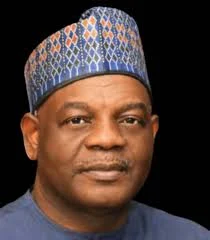
    Prof. Abdullahi Yusuf Ribadu, an expert in veterinary reproduction, will now lead the NUC.

    Ribadu previously held leadership positions as vice-chancellor at two Nigerian universities. 

    Meanwhile, Prof. Salisu Shehu, known for his work in educational psychology, has been appointed to oversee the NERDC.

     His background includes founding the School of Continuing Education at Bayero University, Kano, and serving as vice-chancellor at Al-Istiqamah University.

    NEPAD’s new National Coordinator is Jabiru Salisu Abdullahi Tsauri, a specialist in international diplomacy and public administration.

     His extensive experience in governance and legislative matters is expected to enhance the agency’s performance.

    In the mining sector, Shinkafi’s reappointment to the SMDF solidifies her role in advancing initiatives like the Presidential Artisanal Gold Mining Initiative.

    A previous announcement of Yazid Shehu Umar Danfulani’s appointment to SMDF was withdrawn, citing no vacancy in the role.

    These appointments are seen as part of Tinubu’s efforts to position experienced professionals in key roles to drive the nation’s development.

  • NELFUND speaks on exclusion of private varsities from scheme

    NELFUND speaks on exclusion of private varsities from scheme

    The Nigeria Education Loan Fund (NELFund) has explained that the government’s student loan scheme is currently limited to public tertiary institutions to ensure that limited resources are used to support as many students as possible.

    Speaking during an interview on Arise TV, the Managing Director of NELFund, Akintunde Sawyerr, revealed that the decision to exclude private institutions was driven by the need to target the most vulnerable students, many of whom attend public institutions where tuition fees are relatively low.

    “We’re working with public funds, and the resources are limited. Most of the students who need this support are in public schools, where fees are affordable. It’s about prioritising and helping more people with the available funds,” Mr Sawyerr explained.

    Possible inclusion of private institutions?

    While the scheme is currently exclusive to public schools, Mr Sawyerr hinted at the possibility of expanding to private institutions in the future.

    He said: “When I spoke with the President (President Bola Tinubu), he expressed his desire that the fund should be available to all Nigerians. But you have to manage funds and start somewhere. I do not doubt that at some point in the future, it will be expanded.”

    He acknowledged that fees in private institutions are significantly higher, sometimes running into millions, “which makes it challenging for the current funding structure to accommodate them.”

    “We’re focused on trying to help as many as possible, rather than a few. We have to manage funds,” he added.

    According to Mr Sawyerr, the Fund has already disbursed N10 billion to about 90,970 students, with plans to disburse an additional N92 billion for the next academic session.

    The scheme, initially signed into law by President Bola Tinubu in June 2023, provides interest-free loans to cover institutional fees and a monthly allowance of N20,000 for upkeep.

    Mr Sawyerr highlighted that the application process began in May 2024 with a pilot phase targeting federal institutions.

    The loan covers tuition fees, paid directly to the schools, and beneficiaries are expected to begin repaying two years after completing their National Youth Service Corps (NYSC) programme, provided they are employed.

    The repayment process involves employers deducting 10 per cent of a beneficiary’s salary until the loan is fully repaid.

    Geographical disparities in applications

    On the issue of loan applications, Mr Sawyerr noted a regional disparity, with more applications coming from northern Nigeria.

    He attributed this to a higher concentration of public institutions in the north, as well as cultural differences in attitudes toward loans.

    “We noticed that a good number of the people from the south study in the north and have applied. There’s a sort of geographical disparity but not by state of origin. There seems to be a lesser level of enthusiasm in the southeast, south-west, and south-south,” he said

    He also addressed concerns about the loan application process, emphasising that NELFund has adopted an electronic, data-driven system to minimize human interference and reduce the risk of corruption.

    He added that applicants are required to provide unique identifiers, including their JAMB number, National Identification Number (NIN), Bank Verification Number (BVN), and matriculation number, which he said are verified against institutional records.

    “We match it with what the institution has provided us and know that we are dealing with an individual. It’s an IT-based system. They’re bound to have challenges but it’s a generally simple portal to engage with,” he said

    While there have been some challenges with the online application process, Mr Sawyerr reassured that the Fund’s support staff are available to resolve any issue.

    He said: “We recognise that anywhere you have systems like this, you can have people attacking the site, wanting to insert ghost students, and doing identity hijacking. We are very careful to put in place processes that ensure we don’t pay people who sneak into our database.”

  • BREAKING: FG, ASUU begin meeting over strike

    BREAKING: FG, ASUU begin meeting over strike

    The Federal Government has commenced a pivotal meeting with the Academic Staff Union of Universities (ASUU) in Abuja.
    This meeting follows a recent warning by ASUU to embark on a strike due to the government’s alleged failure to address the union’s demands.
    Last Friday, during a briefing marking his one year in office, the Minister of Education, Prof. Tahir Mamman, announced plans for the government to engage with ASUU representatives the following Monday.
    However, that meeting did not occur as scheduled, with no explanation provided for the delay.
    The ongoing discussions aim to prevent a potential nationwide strike in public universities, which could disrupt academic activities across the country.
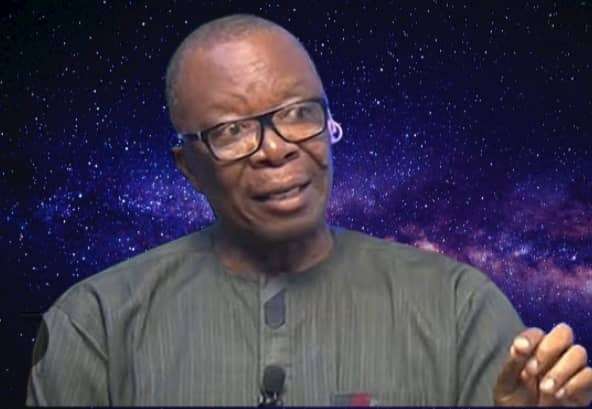
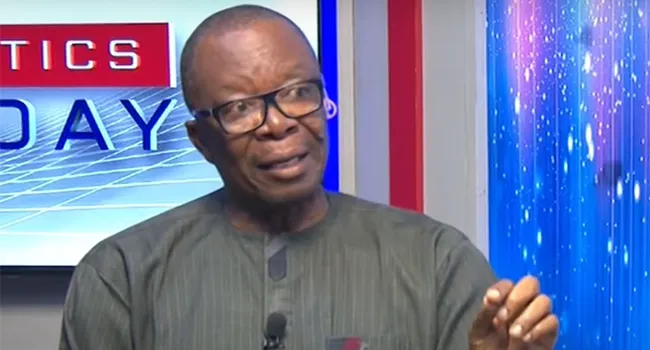
    ASUU’s delegation, headed by its president, Prof. Emmanuel Osodeke, is currently attending the meeting at the Conference Hall of the Federal Ministry of Education. Also present are the Minister of Education and senior officials from the ministry.
    In addition to Prof. Osodeke, the ASUU team includes former presidents of the union, led by the immediate past president, Prof. Biodun Ogunyemi.
    Details coming…
  • Controversy Brews as VC  Appoints Self Director of University Institute

    Controversy Brews as VC Appoints Self Director of University Institute

    … move  sparks controversy, with many questioning the ethical implications of a sitting Vice-Chancellor appointing himself to a directorial position within the same institution.

    In an unprecedented move, the Vice-Chancellor of the Federal University of Health Sciences, Otukpo (FUHSO), Professor Innocent A.O. Ujah, has appointed himself as the Director of the Institute of Maternal & Reproductive Health of the same institution he currently heads.

    Prof Ujah has barely three months to the end of his five year appoint as pioneer Vice Chancellor of the University. This appointment is therefore viewed by many as a desperate act that is fueled by greed.

    Moreover, this decision has raised eyebrows and sparked discussions within the university community about the apparent desperation behind such an appointment.

    The official communication from the Registrar, Mal. Aminu Abba, as sighted by Nigerian Anchor, confirms the approval of Professor Ujah’s appointment for a period of one year, effective from May 19, 2024.

    As Director, Professor Ujah is expected to oversee the daily administration of the Institute, reporting directly to the Vice-Chancellor—an office he currently occupies.

    The letter, issued from the Office of the Registrar, states:

    “I write to convey the approval of your appointment as the Director, Institute of Maternal & Reproductive Health in the University. The appointment is for a period of one (1) year in the first instance with effect from 19th May, 2024.

    As Director, you are responsible to the Vice-Chancellor for the day-to-day administration of the Institute in accordance with the provisions of the extant regulations of the University.”


    Read also: https://punchng.com/benue-community-youths-protest-alleged-neglect-by-varsity-management/

    This move has sparked controversy, with many questioning the ethical implications of a sitting Vice-Chancellor appointing himself to a directorial position within the same institution.

    Critics argue that this could be seen as a conflict of interest and a potential misuse of power, especially given the proximity to his retirement.

    The university community and stakeholders await further developments as the situation unfolds.

  • Again, ASUU Rejects New University Governing Councils

    Again, ASUU Rejects New University Governing Councils

    The ding-dong between the Federal Government and the Academic Staff Union of Universities (ASUU) over the appointment of Governing Councils continues as the latter voiced disappointment regarding the composition of the new membership of the governing councils for federal universities.

    ASUU’s national president, Prof Emmanuel Osodeke, expressed these concerns in a recent interview with the Nigerian Tribune, highlighting a worrying trend in the appointment process.

    According to Prof Osodeke, the new list of council members is dominated by retired politicians rather than experts in academia or relevant fields.

    “Most of them are retired politicians. They are honourable this and honourable that,” Osodeke remarked, questioning the suitability of such appointments for the strategic development of higher education institutions in the country.

    Prof Osodeke further criticized the new list as being worse than its predecessor, indicating a regression rather than progress in the appointment policies.

    “Go and look at the list again, you will see that most of them are retired politicians. That is how terrible the thing has become,” he lamented.

    ASUU also raised issues beyond the qualifications of the appointed individuals. The union pointed out that the formation of new councils was procedurally flawed and possibly illegal.

    The Federal Government had dissolved the previous councils over ten months ago before their tenures had expired, contrary to the stipulations of the University Act.

    ASUU argued that these members should have been allowed to complete their terms instead of assembling a new council, which seems to overlook legal frameworks.

    The union emphasized that university education should not be subject to partisan politics if Nigeria aspires to achieve real educational quality that can lead to economic prosperity.

    “We can’t run our universities like this if we truly want genuine development to take place,” Prof Osodeke stated, urging a reevaluation of how university councils are constituted.