Tag: TINUBU TAX REFORM BILLS

  • Tax Reform Bills: Group Urges Wider Consultation

    Tax Reform Bills: Group Urges Wider Consultation

    A group, the Coalition of Northern Groups (CNG), has urged for a wider consultation with Nigerians on the Tax reform bill, before the National Assembly.

    Mr Jamilu Chiranchi, National Coordinator of CNG, made the call in his presentation at a forum in Damaturu, Yobe, with the theme: “Tax Reform Bill, a Catalyst for Economic Growth or a Burden on People?”

    He urged members of the national assembly to ensure adequate consultation as was done in passing the Petroleum Industry Bill to allay fears.

    Chiranchi, who identified several areas of concern in the bill, including the derivation formula in Section 77, said the formula required clarity on whether derivation should be based on the company’s headquarters or consumption level.

    He also expressed concern about Section 59, which proposed to stop funding development levies for agencies such as the National Information Technology Development Agency (NITDA), Tertiary Education Trust Fund (TETFund), and the National Agency for Science and Engineering Infrastructure (NASENI) by 2027.

    Chiranchi argued that these agencies have contributed significantly to Nigeria’s economic, infrastructural, educational, and technological development, and that stopping their funding would undermine their activities.

    Mr Hassan Adamu, National Coordinator of the Students Wing of CNG, also raised concern that the proposed stoppage of funding for TETFund would greatly affect Nigerian tertiary institutions.

    Miss Fatima Abubakar, North-East Coordinator of the National Female Association of Nigeria, also said that areas of the bill that affects funding of tertiary education, would worsen the already poor state of women’s education and participation in economic activities, especially in the northern region. 

  • Bauchi Gov Challenges Tinubu To Rethink Tax Reform Bills

    Bauchi Gov Challenges Tinubu To Rethink Tax Reform Bills

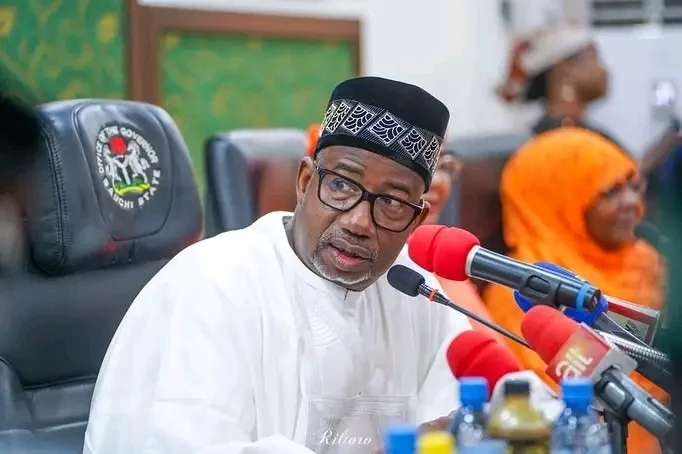
    Governor Bala Mohammed of Bauchi State has raised concerns over the Federal Government’s proposed tax reforms, warning that they could worsen economic challenges, particularly in Northern Nigeria. 

    Speaking during a meeting with the Christian community in Bauchi, the governor criticized the approach taken by President Bola Tinubu’s administration, calling for policies that align with the needs of the people.  

    He argued that the reforms risk creating financial strain in the region, making it difficult to fund essential projects and pay salaries.

     He urged leaders to be more responsive to public feedback and cautioned against policies perceived as imposing hardship.  

    “We are calling on the presidency and the Federal Government to change their style. Whenever a policy is not popular, they should listen to the people. They should not be arrogant and think that whatever they bring must be. This is not an oligarchy; this is not a military rule; they must listen to the people, and that is what makes a good leader.

    “And we pledge to be loyal to them, but anything they are doing contrary to that, they are calling for anarchy; they are calling for intransigence, and it is unacceptable. There is a lot of wahala; we must work together across party lines and across the tiers of government to provide succour and solace to the Nigerian people,” he said.

    Governor Mohammed also acknowledged the support of the Christian community in Bauchi for his administration, emphasizing the need for unity and fairness in governance across religious and political divides. 

    He pledged continued efforts to address the needs of all residents, irrespective of their backgrounds.

  • TAX REFORM BILLS: THE NORTH MUST MODERNISE ANYHOW 

    TAX REFORM BILLS: THE NORTH MUST MODERNISE ANYHOW 


    The tax reform bills recently sent to the National Assembly by President Bola Ahmed Tinubu, GCFR, have generated controversies over the past weeks. Many commentators have expressed their views in support of the bills or against some of their provisions. The Northern Region has expressed vehement objection to the bills. They are against the bills because, in their views, the bills are entirely or partly anti-north. Given most of the observations and the pros and cons of the arguments advanced by the various commentators, it is pertinent to say that whatever views are advanced by the Northern stakeholders, the truth that must be told is that Northern Nigeria must yield itself to the full extent of modernisation, anyhow and soonest. The tax bills will invariably switch a region like the North out of its encrusted traditional and provincial life patterns.

    There is no need to regurgitate the controversial issues around the tax reform bills as they are already in the public domain, and much has been said about them thus far. However, three keywords about the VAT derivation model proposed in the tax bills should form the cornerstone of deliberations and whatever decisions may be taken afterwards by the Northern stakeholders. These signature words are production, consumption, and competition. 

    The Value Added Tax (VAT) is described as a consumption tax. However, before consumption occurs, there must be production, whether in goods or services. Therefore, production is a key factor in any consideration or discussion of the Value Added Tax. Our rudimentary economic class tells us that factors of production are land, capital, labour, and entrepreneurship, which are the building blocks of any economy. Any society that desires economic progress will not take these factors of production for granted. Without mincing words, these production factors are abundant in Northern Nigeria, almost to the point of waste. One would expect that the North will have no issue with production, which invariably gives rise to consumption. 

    As an output of the production process, consumption depends on the purchasing parity of a people and their cultural tastes. Nonetheless, consumption can happen away from the point where goods and services are produced. It is expected, however, that both production and consumption can occur at the same place, thereby enriching the economy of that particular place. This is because trading and commerce will enhance people’s purchasing parity. Without mincing words, Northern Nigeria is essentially a consumption society but with the potential to be a producing economy. It must embrace progressive ideas and modernisation to harness its full economic potential. 

    This is where competition comes in. There is competition in every aspect of our lives, from the products and services being churned out daily to how societies employ strategies to grow their economies. This makes every society think progressively and forecast the future. No society lays back or indulges in wastefulness or a careless lifestyle and expects to be at par with other societies that have moved on the fast pedestal of development. 

    The pertinent question to ask at this juncture is why Lagos has suddenly become the envy of the entire nineteen northern states. What does Lagos state have that all northern states do not have or cannot have? The answer to the second question is that Lagos state has painstakingly embraced the full extent of modernisation through its deliberate policy planning and execution, it has embraced technology, industrialisation, financial inclusiveness and wealth creation strategies. Northerners are among those who made Lagos State what it is today with their massive investment there. 

    The Northern political establishment must develop a mindset that comprehends the reality that governance is about service to the people, building capacities, developing human resources, bettering the living conditions of a people, and challenging the environment to yield its potential for the growth of the society. Indeed, governance should not be approached as a private fiefdom, a personal estate for a willful distribution of privileges and patronage. For too long, the Northern political establishment has held down its people in poverty to authenticate its affluence and influence, thereby closing the space for more engaging and productive ideas and wealth creation. That’s why the political class would instead purchase bicycles, coffins, grains, wheelbarrows, and other mundane items purportedly as empowerment when politicians from different regions build their people on ICT and technology pedestals and build food security hubs and other progressive ideas.

    On automation, it’s essential that state governments in the North also recognise the role of technology in business transactions. Globally, technology is being used to drive revenue collection. Today, the record-breaking revenue collected by the FIRS is made possible because of the massive investment in technology allied with administrative finesse. Therefore, automation of tax payment processes is the norm everywhere. Automation can be done right from the point of business registration, where the data of a business owner can be collected and included in the financial or fiscal process. 

    Most importantly, this automation option becomes more compelling with the proposed derivation method of sharing VAT. In terms of consumption, it’s unarguable that soft drinks like 7UP, Fanta, Coca-Cola, Mirinda, Sprite, etc, are widely consumed in the remotest part of the North.   In the North, soft drinks equate to the liquor in the South. To be able to appropriate VAT from these drinks and other goods like indomine, pasta, sugar, cement, etc, an automation process needs to be implemented to track how VAT is charged at the wholesale distribution point. This is what is referred to as the output VAT.

    Regarding the input VAT, deliberate policy can be made to create a value chain in producing and processing products like rice, yams, vegetables, and fruits. In other words, instead of selling the products in their raw forms, state governments should encourage investors to set up factories to create value chains necessary for generating the required revenue. Given its large population, the North can gain more from the consumption-based VAT method if a deliberate strategy is implemented to optimise the process of output VAT. 

    There is nowhere in the proposed VAT law explicitly stating that the 60% proposed is entirely and exclusively for Lagos state. The presumption that the VAT proposal will favour only Lagos state is just a figment of the imagination of those peddling the sentiment, which stems from a feeling of inadequacy. The clause says, ‘wherever the consumption of goods and services takes place’ will be given the percentage of the VAT it generates from the earmarked 60% of the overall monthly VAT volume generated. So, the onus on every state and region is to put its act together to track and authenticate the VAT it generates. Instead of lamenting or expressing the sentiment about Lagos getting the large share of the VAT, it behoves the North to look inward to harness its potential and organise its economic activities. Northern states must wake up to the challenge and stop the lamentations. The North has a population; it has all the factors of production, and it is equally endowed with natural resources to be ahead of other regions. So, why the panic? 

    For instance, what stops the North from negotiating a tax credit scheme to revamp the moribund textile industries in the North? Why did the North allow the Bank of the North to be taken over? Why didn’t the Northern political establishment say anything about the stoppage of the dredging of the River Niger and the abandonment of the Baro Port? What happened to its cotton potential and the ginnery enterprises? What is it doing with the vast water bodies and arable land? So many questions, indeed. 

    The VAT debacle has provided the North an opportunity for negotiation and introspection. The present atmosphere of regional competition makes the matter even more enjoyable. Therefore, the North must muster every skill to get a better deal out of this debacle and seize this moment to modernise its social and economic institutions for more financial inclusiveness and overall economic growth. This is a time to change the old habits and embrace progressive ideas. It is instructive how the North raised its voice in unison to object to the Tax Reform Bills. It is equally expedient for the North to rise in unison against the spate of insecurity bedevilling the entire region. Let the Governors,  the Emirs, the Ulamas, and the whole people equally give marching orders to their legislators in the National Assembly, as they did on the tax reform bills, to end the insecurity in the region.

    Let the North rise against the misplacement of governance priorities and begin to chart the course of modernisation. As recently suggested by the immediate past Executive Chairman of FIRS, Muhammad Nami, the North must take the issue of financial inclusiveness seriously to be able to move on the same pedestal with the other regions of the country. There are probably billions of naira circulating in the North outside the banking system because the handlers detest bank interest. Indeed, the North has no other option but to start modernising now.

    For instance, what stops the Northern stakeholders from using diplomatic instruments to get Middle Eastern banks like Al Rajhi to set up branches in key Northern states’ capitals to attract those outside the banking system to bank their money? It must be stressed that transactions through the banking system and the embrace of the BVN and NIN, which ensure that everybody is captured in the National Database and the overall fiscal construct of the country, are no longer optional; it should be considered obligatory on everybody, whether young or old, educated or not. Therefore, the North must shift away from the traditional way of doing business and tax collection to a more financially inclusive way to benefit from the VAT windfall.

    Abdullahi Ismaila Ahmad, Ph.D. is the Director, Communications & Liaison Department, Federal Inland Revenue Service

  • Tax Reform Bills: S/East Senators Demand Wider Consultations

    Tax Reform Bills: S/East Senators Demand Wider Consultations

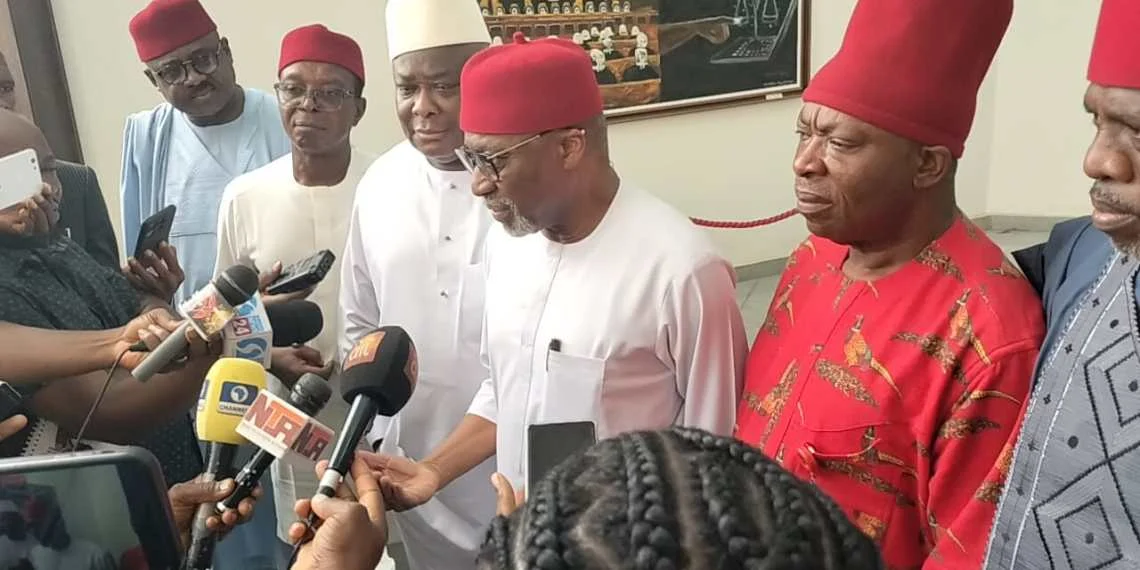
    The South East Caucus of the Nigerian Senate has called for extensive consultations on the Tax Reform Bills currently under consideration in the National Assembly.

    The caucus, comprising Senators from the five states in the South East region, reached this consensus during a closed-door meeting held in Abuja on Monday.

    Speaking on behalf of the caucus, Senator Enyinnaya Abaribe (APGA, Abia South) stated that while the Senators are not opposed to the proposed reforms, the lack of stakeholder engagement in drafting the bills raises concerns about inclusivity and fairness.

    “We are not against the Tax Reform Bills before both chambers of the National Assembly. However, we believe wider consultations should be carried out to ensure they are equitable and reflective of the interests of all Nigerians,” Senator Abaribe said.

    The proposed legislations, including the Nigeria Tax Bill 2024, Nigeria Tax Administration Bill 2024, Joint Revenue Board of Nigeria (Establishment) Bill 2024, and Nigeria Revenue Service (Establishment) Bill 2024, were submitted by President Bola Tinubu on October 3, 2024.

    The reform sought in the bills aim to overhaul the country’s tax structure to improve revenue generation.

    The South East Senators plan to consult constituents, state governments, and other stakeholders in the region’s 15 senatorial districts to gather input.

    “We have reviewed the bills and want to share our findings with stakeholders in the South East Zone. This engagement will help us advocate for a more balanced approach to the proposed tax reforms,” Senator Abaribe added.

    This position aligns with the calls from other groups, such as the Nigerian Governors’ Forum, Northern Senators Forum, and the Arewa Consultative Forum, all of whom have expressed reservations about passing the bills without comprehensive input from the public.

    In contrast, the Presidency and the South-South Caucus in the Senate have urged for the bills’ swift passage, arguing that they are crucial for addressing Nigeria’s fiscal challenges.

    The South East Caucus emphasized that incorporating diverse perspectives is essential for achieving equitable tax reforms that will be acceptable to all Nigerians.

    Legislative deliberations on the bills are ongoing in both chambers of the National Assembly.

  • Tax Reforms Will Simplify System, Maintain Key Agencies – Presidency 

    Tax Reforms Will Simplify System, Maintain Key Agencies – Presidency 

    Further to ongoing debate on proposed tax reform bills, the Presidency said yesterday, that opposition to the legislation were sparked misinformation, with critics misinterpreting key aspects of the legislation. 

    Contrary to claims, the presidency has revealed that the bills do not propose dismantling agencies like NASENI, TETFUND, or NITDA. Instead, they aim to streamline the nation’s complex tax system, easing the burden on businesses while ensuring sustainable funding for these organizations.  

    The reforms focus on consolidating multiple taxes into a single levy, simplifying compliance for businesses and improving the overall economic environment. 

    This shift will allow government agencies to access funds through budgetary allocations and other sources, ensuring their continued operation.  

    The current tax structure, criticized for overburdening businesses and discouraging investment, has driven some companies to relocate. 

    The new approach seeks to address these challenges, fostering economic growth and ensuring equitable development across all regions.  

    President Tinubu has encouraged stakeholders to engage constructively through the National Assembly’s planned public hearings, emphasizing the importance of informed contributions to the reform process.

  • The Metaphor of the Bleached Whale and Resistance to the Proposed Tinubu Tax Bill

    The Metaphor of the Bleached Whale and Resistance to the Proposed Tinubu Tax Bill

    The proposed tax bill being debated by the Nigerian Senate whose stated goal is to overhaul the country’s tax system, simplify the tax landscape, reduce the burden on small businesses, and streamline how taxes are collected has pitted national interest against parochial tribal and regional agenda. Although objective analysis seems to suggest that on balance, the proposed tax reform is great for the overall interest of the nation as it eliminates multiple taxation across the country, deploy taxation as a tool to encourage private sector investments in critical industries and boost individual disposal incomes through targeted tax exemptions, the passage of the bill hangs in the balance.

    All through our history as a nation, national interest has always taken the back seat to parochial tribal and regional hegemonic interest. Even our struggle for independence from the British was almost derailed by those who perceived that their region will be disadvantaged by the more advanced and educated regions of the country.

    If we were to draw an analogy to Nigerian state from the animal world, the most appropriate would probably be the image of a bleached whale in an impoverished sea-shore community whose inhabitants see a stranded bleached whale as manna from heaven and each has brought out in an orgy of gluttony, any cutting device they could lay their hands on to carve out for themselves as much of the free meat as they could grab.

    There is actually a concept in political science, known as political particularism, which describes the propensity of policymakers and politicians to further their careers by catering to narrow interests rather than to broader national platforms. So, it is not a unique problem to our country for politician to think national but act locally, to take into cognizance how national policies will affect their local community. After all the essence of politics is the process by which choices are made regarding how resources will be allocated and which economic and social policies government will pursue. Put more simply, politics is the process of who gets what and how.

    In the U.S. Congress, there is actually a term for this phenomenon of political particularism. Pork barrel projects, refer to appropriations for constituents’ sweetheart projects by senators and members of Congress that are inserted into and hidden in big omnibus legislative documents as part of the legislative negotiation process.

    So, it is not a uniquely Nigerian problem, it is just that ours is the extreme form of political particularism in which our politicians take as their default mode of operation to subvert critical national interests in pursuit of parochial selfish agenda.

    Just like pigging out on the meat of bleached whale often come with the risk of botulism Type E outbreaks, and high metal toxicity, our country has paid a huge price from our tendency to treat it as a bleached whale where everyone takes as much as they could at the expense of everyone else and at the expense of our national interest. Our extreme form of political particularism, of putting tribal parochial interest above national is the root cause of our leadership failure, the stagnation of our economy, the failure of our institutions, and the endemic corruption that has stymied our national development and pauperized our citizens. It explains why a particular region or country has cornered for itself a disproportionate number of nation’s oil well licenses and why our presidential elections have become a do or die contest for tribal hegemonic domination.

    It is the reason that our country after 64 years of independence does not have a reliable census of its population and other critical national data for rational development planning.

    Given our history, it will take all of the political capital the president can expend to push the proposed tax bill over the line against the massive force that has been arrayed against it.

    Adewale Alonge, PhD, is Founder & President, Africa Diaspora Partnership for Empowerment and Development. www.adped.org