Tag: Tinubu

  • Tinubu’s Tax Reset and the Rising Cost of Living: Who Really Pays in 2026?

    Tinubu’s Tax Reset and the Rising Cost of Living: Who Really Pays in 2026?

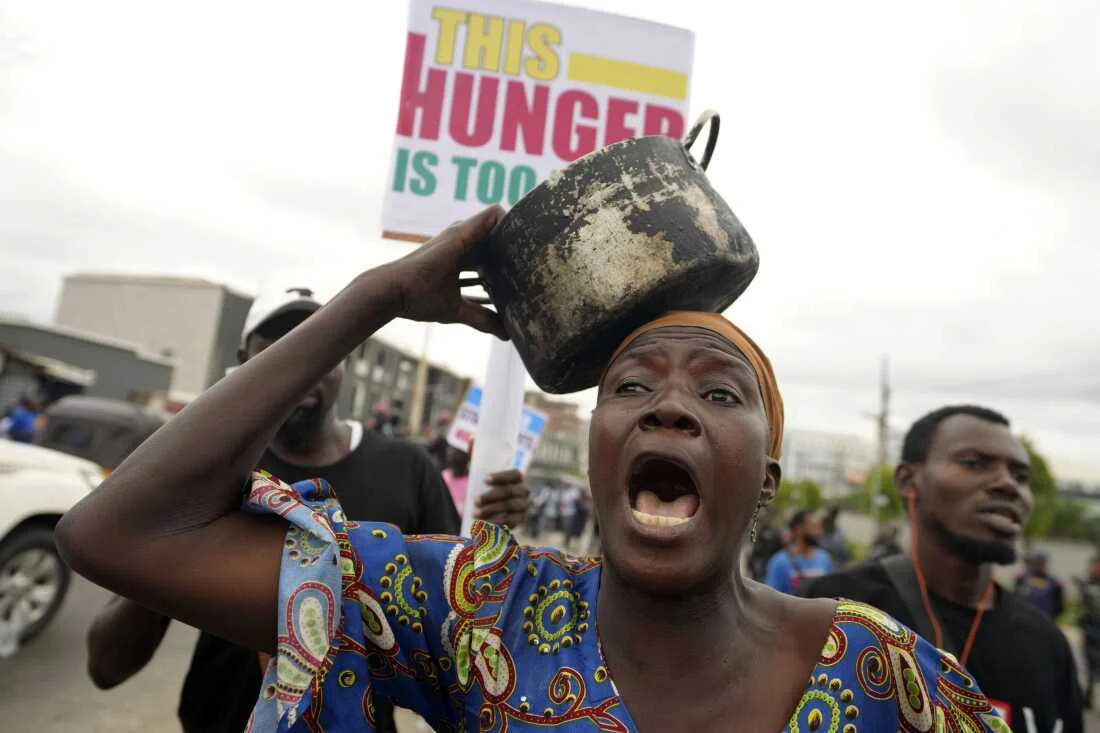
    By the start of 2026, the Nigerian economy had crossed a critical psychological threshold. For millions of households, survival, not prosperity, had become the central economic concern. Food prices climbed relentlessly, transportation costs ballooned, electricity tariffs rose, and the naira’s weakness continued to hollow out purchasing power. Wages, meanwhile, remained stubbornly stagnant. In one word: Nigeria’s cost-of-living crisis swirl.

    This is the economic terrain into which President Bola Tinubu’s administration has launched Nigeria’s most aggressive fiscal overhaul in decades. Framed as reform, sold as necessity, and defended as inevitability, the new tax regime arrives not as a technocratic adjustment but as an additional burden on a population already stretched to its limits.

    The question confronting Nigerians in 2026 is no longer whether reform is needed, but who bears the cost, and who decides how much pain is acceptable.

    Reform in the Middle of Hardship

    The removal of fuel subsidies unleashed a cascade of price increases that reverberated through every sector of the economy. Transport fares surged, food inflation accelerated, and informal businesses, already operating on thin margins, struggled to survive. Electricity tariff hikes followed, further eroding household incomes and raising production costs. Currency policy adjustments compounded the crisis, making imports more expensive and local substitutes scarcer.

    Rather than pause to stabilize living conditions, the government pressed ahead with sweeping tax reforms. For many Nigerians, the timing alone felt punitive: a state demanding more at the precise moment its citizens had less to give.

    A New Tax Regime, Old Trust Deficit

    The overhaul rests on four major laws that replace Nigeria’s chaotic tax framework with a centralized, digitally monitored system. On paper, the logic is compelling: fewer taxes, better enforcement, broader compliance. In reality, centralization without trust risks becoming coercion by another name.

    Progressive tax bands and exemptions for low-income earners are cited as evidence of fairness. Yet the lived experience tells a different story. Middle-income Nigerians comprising, civil servants, professionals, and small traders, are watching their take-home pay shrink as inflation bites and long-standing reliefs disappear. What remains is a widening gap between what the state demands and what it delivers.

    “Widening the Net” or Tightening the Noose?

    Officials insist the reforms are about widening the tax net rather than increasing the burden. But a net cast over a struggling economy does not magically become lighter because it is broader. When energy costs soar, food prices spike, and wages lag inflation, taxation, no matter how elegantly designed, feels punitive.

    The promise that higher revenue will eventually translate into better schools, hospitals, and infrastructure rings hollow in a country where decades of oil wealth failed to produce durable public value. Nigerians have heard this argument before. Each time, they were asked to be patient. Each time, patience yielded diminishing returns.

    VAT and Regional Fault Lines: Old Battles, New Weapons

    No element of Tinubu’s tax reset better exposes Nigeria’s unresolved national question than the proposed restructuring of the Value Added Tax (VAT) sharing formula. Presented by the government as a neutral, efficiency-driven move toward derivation, the reform has instead resurrected the ghosts of Nigeria’s most bitter fiscal conflicts, conflicts never resolved, only postponed. By tilting VAT allocation more decisively toward where consumption and economic activity are recorded, the reform overwhelmingly favours Lagos and a handful of commercially dominant states in the South-West. Lagos’s outsized contribution to VAT revenue is frequently cited to justify this shift. The logic is straightforward: where revenue is generated, revenue should remain.

    But Nigeria’s history warns that straightforward logic often produces dangerous outcomes. In the First Republic, a strong derivation principle allowed regions to retain up to 50 percent of revenues from cocoa, groundnuts, and palm produce. That system collapsed not because derivation was inefficient, but because widening regional disparities turned it into a political weapon. The fiscal tensions it generated contributed to the instability that ended civilian rule.

    After the civil war, military governments centralized revenue sharing not out of ideological preference, but because national survival required redistribution. Oil revenues were pooled to hold a fractured country together, not to reward efficiency. The VAT debate now retraces that path, without the trauma that once forced compromise.

    Many Northern states, heavily dependent on VAT allocations to fund basic services, see the reform not as fiscal federalism but as fiscal punishment. Their argument is blunt: productivity cannot be rewarded fairly in a country where productivity itself has been shaped by decades of uneven federal investment, insecurity, and policy bias. When ports, rail lines, industrial clusters, and financial infrastructure are concentrated in one region, derivation ceases to be neutral, it becomes structural exclusion.

    The echoes of the Niger Delta struggle are unmistakable. For decades, oil-producing communities watched wealth flow to Abuja while bearing the environmental and social costs of extraction. Today, roles appear reversed: commercially dominant states demand to keep what they generate, while poorer regions warn that redistribution, the glue of the federation, is being quietly dismantled.

    The federal government’s response, that states should simply “grow their economies,” rings hollow in regions battling insurgency, banditry, collapsing education systems, and mass poverty. Growth is not summoned by rhetoric; it is enabled by security, infrastructure, and human capital, public goods that require funding in the first place. History is unambiguous: Nigeria’s most destabilizing crises often begin as revenue disputes disguised as technical reforms. When groups feel fiscally cornered, resistance follows, political, legal, and sometimes worse. Wether anyone agrees or not, a VAT regime that sharpens inequality without robust equalization mechanisms is not reform, it is deferred instability. The question therefore becomes, wether Nigeria is prepared for another combustive civil disorder?

    The Lagos Model Goes National

    The reforms unmistakably bear the imprint of the Lagos model that is notorious for its centralized authority, digital surveillance, and uncompromising enforcement. In Lagos, this model thrived on a dense commercial base and a large formal sector. Nationally, it risks flattening Nigeria’s economic diversity into a one-size-fits-all template.

    Equally corrosive is the perception, fair or not, that fiscal power is increasingly concentrated within a narrow regional and ideological circle. In a federation where legitimacy depends on balance as much as performance, perception alone can be politically fatal.

    A Dangerous Gamble

    The tax reforms underpin President Tinubu’s ₦58 trillion 2026 Budget of Consolidation, a document that demands sacrifice now in exchange for promises later. But for Nigerians already suffocating under inflation, those promises feel remote and uncertain. This is the administration’s gamble: that Nigerians will endure sustained hardship on faith. Yet faith is precisely what the Nigerian state has depleted over decades of broken promises, opaque governance, and squandered revenues. Moreover, who shall have faith in your promises when it amounts to telling an economically distressed populace to fast while you, your family members and a few rogue elite feast?

    Tax reform without visible accountability is extraction.

    Ultimately, the success of Tinubu’s tax reset will not be decided in policy papers or revenue charts. It will be decided in markets, transport hubs, and households where people calculate daily whether survival is still possible.

    Without transparency, fairness, and immediate, visible improvements in public services, this reform risks doing more than failing. It risks hardening public cynicism, weakening compliance, and pushing an already fragile social contract toward a breaking point. As it is often asserted, Nigeria does not lack reform ideas. What it lacks is a state that convinces its citizens that reform is being done with them, not to them.

  • Tinubu Presents 2026 Budget, Projects ₦34.33tr Revenue, ₦58.18tr Spending

    Tinubu Presents 2026 Budget, Projects ₦34.33tr Revenue, ₦58.18tr Spending

    By Caroline Ameh

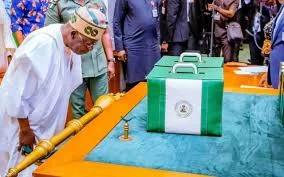
    President Bola Ahmed Tinubu on Friday presented the 2026 Appropriation Bill to a joint sitting of the National Assembly, pledging stricter discipline in budget execution, stronger accountability and enhanced monitoring of public spending in the new fiscal year.

    The budget, titled “Budget of Consolidation, Renewed Resilience and Shared Prosperity,” seeks to entrench recent economic reforms, stabilise macroeconomic conditions and convert recovery gains into sustained, inclusive growth.

    Addressing lawmakers, the President said he had directed key fiscal authorities—including the Minister of Finance and Coordinating Minister of the Economy, the Minister of Budget and Economic Planning, the Accountant-General of the Federation and the Director-General of the Budget Office—to enforce strict adherence to the approved budget framework and implementation timelines.

    “2026 will mark a turning point in budget execution. We will demand accountability, rigorous monitoring and reporting that translate policy into measurable outcomes for Nigerians,” Tinubu said.

    The President said the budget was formulated against a backdrop of emerging macroeconomic stability, following what he described as difficult but necessary policy adjustments implemented by his administration.

    He reported that Nigeria’s economy expanded by 3.98 per cent in the third quarter of 2025, up from 3.86 per cent in the corresponding period of 2024, while inflation declined for eight consecutive months to 14.45 per cent in November 2025, from 24.23 per cent in March.

    Tinubu further cited improved crude oil output, stronger non-oil revenue mobilisation driven by tax administration reforms, rising investor confidence and external reserves estimated at $47 billion, sufficient to cover more than 10 months of imports.

    “These results reflect deliberate policy choices. The task before us is to consolidate these gains so that stability evolves into prosperity and prosperity is broadly shared,” he said.

    Reviewing the performance of the 2025 budget, the President said the government realised ₦18.6 trillion in revenue and ₦24.66 trillion in expenditure by the third quarter, representing 61 per cent and 60 per cent of their respective annual targets.

    He attributed delays in capital releases partly to the extension of the 2024 capital budget into 2025, noting that the experience highlighted the need for firmer fiscal discipline in the 2026 budget cycle.

    For 2026, the President projected total revenue of ₦34.33 trillion and total expenditure of ₦58.18 trillion, including ₦15.52 trillion earmarked for debt servicing.

    Recurrent non-debt expenditure is estimated at ₦15.25 trillion, while capital expenditure is projected at ₦26.08 trillion. The resulting budget deficit of ₦23.85 trillion, he said, represents 4.28 per cent of Gross Domestic Product (GDP).

    Underlying the projections are assumptions of a crude oil price benchmark of $64.85 per barrel, daily production of 1.84 million barrels, and an exchange rate of ₦1,400 to the US dollar.

    The budget prioritises national security, infrastructure development and human capital investment, with proposed allocations of ₦5.41 trillion for defence and security, ₦3.56 trillion for infrastructure, ₦3.52 trillion for education and ₦2.48 trillion for health.

    Tinubu said security spending would be outcome-based, aligned with the implementation of a new national counter-terrorism doctrine and expanded intelligence-led operations.

    On education, he referenced the Nigerian Education Loan Fund, which has supported more than 418,000 students across 229 tertiary institutions, while noting that healthcare expenditure represents six per cent of total budgetary spending, net of liabilities.

    The President warned government-owned enterprises to meet their revenue remittance obligations, announcing plans to deploy digitised revenue collection systems to curb leakages and strengthen fiscal transparency.

    “A budget’s true value lies not in its announcement, but in its execution,” Tinubu said, pledging prudent expenditure management, enhanced revenue mobilisation and tighter oversight.

    He urged the National Assembly to support the proposals, expressing confidence that effective executive-legislative collaboration would ensure successful implementation.

    The President subsequently laid the 2026 Appropriation Bill before the National Assembly for legislative consideration.

  • Tinubu Constitutes Boards of NADF, Bank of Agriculture, and UBEC

    Tinubu Constitutes Boards of NADF, Bank of Agriculture, and UBEC

    President Bola Ahmed Tinubu has approved the constitution of the governing boards of the National Agricultural Development Fund (NADF), the Bank of Agriculture (BOA), and the Universal Basic Education Commission (UBEC).


    The announcement was contained in a statement by Bayo Onanuga, Special Adviser to the President on Information and Strategy.


    At the UBEC, Senator Umaru Tanko Al-Makura, earlier appointed in July, will continue to serve as chairman of the board.

    Other members include Uchendu Ikechi Mbaegbulem (South East), Gift Ngo (South South), Mrs. Ibiwunmi Akinnola (South West), Dr. Meiro Mandara (North East), Dr. Abdu Imam Saulawa (North West), and Professor Paul Ibukun-Olu Bolorunduro (North Central).Each member will serve a four-year term in the first instance.


    For the Bank of Agriculture (BOA), President Tinubu confirmed the appointments of Muhammad Babangida as chairman and Ayo Sotinrin as managing director.

    He also approved the appointments of three executive directors and five non-executive directors representing Nigeria’s six geo-political zones.


    The executive directors are:
    • Fatima Garba (Sokoto) — Executive Director, Corporate Services
    • Ka’amuna Ibrahim Khadi (Borno) — Executive Director, Risk Management and Strategy
    • Hakeem Oluwatosin Salami (Kwara) — Executive Director, Operations


    The non-executive directors include Aminu Malami Mohammed (North East), Charles Amuchienwa (South East), Oladejo Odunuga (South West), Rabiu Idris Funtua (North West), and Kochi Donald Iorgyer (North Central).


    In the National Agricultural Development Fund (NADF), the President reaffirmed the appointment of Muhammad Abu Ibrahim as Executive Secretary and CEO, while constituting a new board to support the agency’s mission of expanding access to affordable agricultural finance.


    Mallam Bello Maccido, pioneer chairman of FBNQuest Merchant Bank Limited and a veteran of over 30 years in financial services, will chair the NADF board, representing the North West.


    Other members include:
    • Dr. Nelson Henry Essien (Akwa Ibom, South South)
    • Amina Ahmed Habib (Jigawa, North West)
    • Engr. Akinyinka Olufela Akinnola (Ondo, South West)
    • Hassan Tanimu Musa Usman (Borno, North East)
    • Lufer Samson Orkar (Benue, North Central)
    • Felix Achibiri (Imo, South East).


    Achibiri is the Group Director of Genesis Energy Holdings and Chairman/CEO of DFC Holdings Limited.


    The new boards are expected to strengthen institutional performance, deepen accountability, and enhance national development outcomes in education, agriculture, and rural financing.

  • Tinubu Nominates Gen. Christopher Musa as New Minister of Defence

    Tinubu Nominates Gen. Christopher Musa as New Minister of Defence

    President Bola Ahmed Tinubu has nominated General Christopher Gwabin Musa as Nigeria’s new Minister of Defence.

    In a letter to Senate President Godswill Akpabio, President Tinubu announced the appointment of General Musa as the successor to Alhaji Mohammed Badaru Abubakar, who resigned from the position on Monday.

    General Musa, 58, who was born on December 25, 1967, is a distinguished military officer who served as Chief of Defence Staff from 2023 until October 2025.

    He is a recipient of the prestigious Colin Powell Award for Soldiering (2012).

    Born in Sokoto, General Musa attended primary and secondary schools in the state before proceeding to the College of Advanced Studies, Zaria.

    He graduated in 1986 and enrolled at the Nigerian Defence Academy the same year, earning a Bachelor of Science degree in 1991.

    Commissioned as a Second Lieutenant in 1991, Musa has held several key positions in the Nigerian Army, including:

    • General Staff Officer 1, Training/Operations, HQ 81 Division
    • Commanding Officer, 73 Battalion
    • Assistant Director, Operational Requirements, Department of Army Policy and Plans
    • Infantry Representative and Member, Training Team, HQ Nigerian Army Armour Corps

    He later served as Deputy Chief of Staff (Training/Operations) at the Infantry Centre and Corps Headquarters, and as Commander of Sector 3, Operation Lafiya Dole, and the Multinational Joint Task Force in the Lake Chad Region.

    In 2021, Musa was appointed Theatre Commander, Operation Hadin Kai, and later became Commander of the Nigerian Army Infantry Corps before being elevated to Chief of Defence Staff by President Tinubu in 2023.

    In his letter to the Senate, President Tinubu expressed confidence in General Musa’s capacity to lead the Ministry of Defence and strengthen Nigeria’s security architecture.

  • Tinubu Hails Jonathan as Guardian of Democracy

    Tinubu Hails Jonathan as Guardian of Democracy


    President Bola Tinubu has described former President Goodluck Jonathan as a guardian of democracy whose influence extends far beyond his time in office.

    Tinubu, represented by Vice-President Kashim Shettima, gave the commendation on Thursday at a dinner marking the 10th anniversary of the Goodluck Jonathan Foundation (GJF) in Abuja.

    He said Jonathan remains a powerful example of life after public service, noting that he safeguarded Nigeria’s democracy at a critical moment in history.

    Tinubu observed that Jonathan’s decision to establish the foundation demonstrated that service to humanity continues even after leaving high office.

    “There are not enough words to convey the country’s gratitude. Dr Jonathan has upheld national values since leaving office,” he said.

    The President contrasted leaders who use their post-office influence destructively with those who dedicate themselves to the public good.

    According to him, while some pursue narrow interests that can harm the society that once supported them, others choose the nobler path of serving humanity.

    Tinubu noted that democracy in West Africa and across the world has faced severe threats in the past decade, weakened by “adventurists and extremists who treat institutions as inconveniences and elections as mere formalities.”

    He commended Jonathan for proving that “no ambition should override the sovereignty of the state,” urging Nigerians to promote national unity and respect for democratic processes.

    “Democracy depends on respecting the choices of others. Mandates can always be renewed, but peace must be preserved,” he added.

    Tinubu described the Goodluck Jonathan Foundation as a model for leadership beyond office, emphasizing that governments succeed only with citizens’ cooperation and citizens progress under responsive leadership.

    “Nigeria’s democracy endures because of individuals like Jonathan who place the nation above personal ambition,” he said.

    He congratulated Jonathan and his team, expressing hope that the foundation would continue to guide Africa toward peace and prosperity.

    In his response, Jonathan thanked Vice-President Shettima, former President Ernest Koroma of Sierra Leone, and other dignitaries for honouring the event.

    He said the foundation’s mission was inspired by his experiences and challenges while leading Nigeria.

    According to him, the GJF has continued to focus on diplomacy, good governance, election management, and strengthening democratic institutions.

    Jonathan also sympathised with victims of recent abductions and attacks across the country, urging political leaders to act responsibly in addressing the security and welfare challenges facing Nigerians.

    Guest speaker, Dr Mohammed Ibn Chambas, underscored the importance of functional democracy, stressing that Africa’s future depends on strong institutions, youth empowerment, a free press, and an independent judiciary.

    He praised Jonathan’s leadership, describing him as “a believer in genuine democracy who values the sanctity of human life.”


  • A Minister of Particular Concern

    A Minister of Particular Concern

    By Ugo Onuoha


    A Minister of Particular Concern

    “What happened between the Minister of the Federal Capital Territory (FCT), Nyesom Wike, and Navy Lieutenant A.M. Yerima is unfortunate. When Wike arrived at the site of the disputed land in Abuja, the officer explained that he was simply obeying lawful orders. Wike should not have exchanged words with the officer; he ought to have addressed his concerns through the officer’s superiors. He is our colleague, and he could have reached out to us to resolve whatever issue there was.

    “The officer’s action was lawful—he was trained to be disciplined, loyal, and obedient to orders. Therefore, the young officer merely carried out his duty, which is worthy of commendation. He did not commit any offence under military regulations. If you observe carefully, he spoke respectfully and conducted himself properly.

    FCT Minister, Nyesom Wike in near fisticuff with an officer of the Nigerian Navy

    “There is, therefore, no offence under military law for which he should be charged. Wike should not have engaged him in an altercation, especially out of respect for the uniform he was wearing. Anyone who disrespects a soldier indirectly disrespects the President, who is the Commander-in-Chief of the Armed Forces. There is, therefore, no basis for any punishment against the officer. This is not about supporting the military to act disrespectfully towards civilians. The Minister should understand that every officer has superiors.

    “I gathered that he called the Chief of Defence Staff, who advised him to wait for an investigation. However, he did not wait and instead went straight to the site. As a leader, he ought to have exercised patience and waited for the outcome of the investigation. Wike also contacted the Chief of Naval Staff, who assured him that an inquiry would be conducted. Yet again, he did not wait. It was supposed to be a one-day inquiry, but he chose to go there and confront them. Now that the Chief of Naval Staff has visited the area—since it involves a land dispute—the matter will be investigated to determine who owns the lawful documents. If the land has been revoked, there are established procedures to follow diplomatically.

    “We [the Ministry of Defence] have not received any formal complaint from Wike, but I called him after the video went viral and advised that he should have spoken with me before going there, rather than confronting the officers directly.”


    A Matter Effectively Closed

    I have chosen to reproduce the words of Alhaji Bello Matawalle, the Minister of State for Defence, because of what they represent. Although he mentioned the need for further investigation, the tone and tenor of his statement suggest that the matter is effectively closed—and the naval officer has nothing to worry about. Lt. Yerima, by every indication, acquitted himself well. He was professional and measured in his conduct during that very public confrontation with a “super minister” known for his loquacity.

    To reinforce the sense that the matter is closed, one only needs to recall the words of the Minister of Defence, Alhaji Mohammed Badaru, who stated that his ministry and the armed forces “will always protect our officers on lawful duty.” Badaru added: “We will not allow anything to happen to him so far as he is doing his job, and he is doing his job greatly well.” The defence minister made this statement during a ministerial briefing for the 2026 Armed Forces Remembrance Day in Abuja. Let that sink in.

    You may call it esprit de corps, but several retired generals from both the North and the South—including former Chiefs of Defence Staff and Army Staff, Generals Lucky Irabor and Tukur Buratai—have spoken in Yerima’s defence. They even called for a public apology from Wike to both Yerima and the Commander-in-Chief, President Bola Tinubu, for dishonouring a military officer commissioned by the President himself.


    Lawyers, Silence, and Political Optics

    Notable voices have weighed in on the Wike–Yerima confrontation over the disputed plot of land in Abuja last Tuesday. Some are lawyers—senior and junior—while others are political commentators and public intellectuals. A few have argued in favour of Wike, citing the 1999 Constitution (as amended), but the majority have faulted him, emphasizing due process, the rule of law, and the impropriety of resorting to self-help, as appeared to be the case here.

    As usual, the legal community has been divided—lawyers seldom agree on anything, even when the law seems straightforward to the “unlearned.” For most of the past week, they have been doing what they do best: lawyering. Their disputations may be intellectually stimulating, but one must not take them too seriously. Often, their arguments are shaped by convenient partisanship masquerading as constitutional fidelity.

    By the way, has anyone noticed the deafening silence from Wike’s colleagues in the Federal Executive Council? Nearly fifty cabinet members, yet not one has publicly spoken in his defence. Does this silence reflect how they truly regard the Minister? As for President Tinubu, who appointed Wike “on our behalf,” the Minister may well be beyond reproach or removal—for obvious political reasons.


    The Politics of 2023 and the Future of 2027

    Wike appears untouchable—because of the past (2023) and the future (2027). President Tinubu, ever the political strategist, prioritizes electoral victory by any means necessary—the Machiavellian creed that the end justifies the means. And Wike fits perfectly into that school of thought.

    Tinubu “discovered” Wike in 2023, when the latter was nearing the end of his governorship of oil-rich Rivers State. Having fallen out with his own party, the PDP, Wike was eager to prove his relevance. Tinubu needed a foothold in the Niger Delta and, by extension, the national electoral map. In that year’s presidential election, Wike reportedly “delivered” Rivers State to Tinubu—an opposition candidate—in defiance of his own party’s standard-bearer, Atiku Abubakar.

    An APC governor from the North, astonished by Wike’s performance, allegedly remarked that his party merely begged for 25 percent of the votes but received an overwhelming—and inexplicable—victory. Unsurprisingly, the PDP still won the subsequent governorship election by a landslide, demonstrating the complex web of political transactions that define Nigerian elections.

    In essence, Wike paid with the votes of Rivers people for his current position in a supposedly opposition-led federal government. That, in part, explains his “untouchable” aura. He remains a crucial asset for the 2027 elections—and the President knows it.


    The Rivers Factor and a Trail of Conflict

    Wike has long been a person of concern throughout his political career—from his days as Chairman of Obio/Akpor Local Government Area, to Minister, to Governor, and now to FCT Minister. Since assuming office in August 2023, controversies have dogged both his official and personal conduct.

    He installed Siminalayi Fubara as his successor in Rivers State but soon fell out with him. Earlier this year, he was linked to political violence that led to a temporary declaration of emergency in the state, suspension of all elected officials—including the governor and lawmakers—by President Tinubu. The crux of the matter was political control. Wike openly claimed he nominated all elected officials, purchased their nomination forms, and installed them in office. The implication: Rivers State belongs to him.

    A chastened Fubara has since been reinstated under conditions widely reported to include a promise not to defect to the APC as its leader and to forgo a second-term bid.

    Throughout his political journey, Wike has sparred with nearly everyone who once aided his rise—from former President Goodluck Jonathan and his wife, Patience, to his predecessor, Rotimi Amaechi. His rift with Atiku Abubakar and the PDP leadership over the 2023 presidential ticket further cemented his image as a combative political loner.

    On Saturday, he and his loyalists were reportedly expelled from the PDP—a move he predictably dismissed with scorn. Wike is, as the Igbo say, an ikiri—a tenacious creature that never lets go once it bites. But the real casualty may be the PDP itself, now adrift and internally fractured.

    A court ruling against holding the party’s Ibadan convention underscores how the PDP’s legal and political machinery remains compromised. In Abuja, many judges are whispered to be “Wike’s judges,” highlighting his alleged influence over the judiciary.


    Money, Power, and the Capital Territory

    Wike’s public persona is equally polarizing. His frequent, combative media chats—lavishly funded from the FCT’s coffers—have become theatrical displays of arrogance. Barely two months after his appointment, he reportedly secured presidential approval to exempt the FCT from the Treasury Single Account (TSA) policy, giving him free rein over the territory’s internally generated revenue—beyond public scrutiny.

    Allegations have since swirled around him: the revocation and reallocation of prime land to cronies and family members, misuse of public resources (including taking his children on official foreign trips), and failure to fully declare assets, notably properties in the United States allegedly registered in his wife’s and children’s names. He has also been accused of using public venues for partisan political events, including hosting a factional PDP meeting at the FCDA conference hall. Wike, for his part, has strenuously denied all allegations of wrongdoing.


    A Dangerous Moment for Civil–Military Relations

    The Wike–Yerima spat, however, carries deeper implications—especially against the backdrop of an alleged coup plot reportedly involving northern military officers. Although the government insists the arrests were disciplinary, many Nigerians remain skeptical.

    The vehement defence of Lt. Yerima by northern political figures, including the Defence Ministers, raises its own concerns. And then came the cryptic post from the Nigerian Defence Headquarters’ X (formerly Twitter) account, in bold uppercase letters:

    “IT IS AN HONOUR TO SERVE IN THE NIGERIAN MILITARY. UNSHAKEN. UNBENT. UNBROKEN.”

    Make of that what you will.

    Meanwhile, the National Assembly is reportedly considering legislation to make the military answerable not only to the President but to all tiers of civilian authority.

    In a manner of speaking, may Wike not become Nigeria’s Achilles’ heel in this fragile and fractious democracy of twenty-six years.


    About the Author

    Ugo Onuoha is a veteran journalist, former Managing Director/Editor-in-Chief, Champion Newspapers Ltd, columnist, and public affairs analyst. His works often explore governance, power dynamics, and civic accountability in Nigeria’s evolving democracy. He writes from Lagos.


  • Tinubu, meets Rivers Gov, Ogoni leaders, at the Aso Rock

    Tinubu, meets Rivers Gov, Ogoni leaders, at the Aso Rock

    President Bola Tinubu met with Governor Sim Fubara of Rivers State and prominent leaders from Ogoniland at the Presidential Villa, Abuja.

     The meeting, attended by top federal officials and stakeholders, is believed to focus on critical issues affecting the Niger Delta region.  

    Governor Fubara was accompanied by Senators Magnus Abe, Lee Maeba, Olaka Nwogu, Chief Victor Giadom, and other prominent figures from Ogoniland.

    Federal officials present included the Group Chief Executive Officer of the Nigeria National Petroleum Company Limited (NNPC), Mele Kyari; Minister of Environment, Balarabe Abba; Minister of Information and National Orientation, Idris Mohammed; Minister of Regional Development, Abubakar Momoh; and National Security Adviser, Nuhu Ribadu.  

    Though the agenda was not officially disclosed, discussions are expected to address the cleanup of Ogoniland and the potential resumption of oil exploration in the area. 

    These issues have sparked debates in recent months, with civil society organizations demanding a $1 trillion allocation for environmental restoration and compensation before oil activities resume.  

    The 2011 UNEP report highlighted extensive pollution in Ogoniland, affecting land, water, and air, and recommended comprehensive cleanup efforts.

     Activists have expressed disappointment over delays in implementing the report’s recommendations and called for urgent action to address the environmental and economic concerns of the region.  

  • Tinubu ‘Recreating’ Nigeria in the Image of Lagos – Atiku

    Tinubu ‘Recreating’ Nigeria in the Image of Lagos – Atiku

    Former Vice President Atiku Abubakar has launched a scathing attack on President Bola Tinubu, accusing him of creating a government that prioritizes his personal interests and those of his family and associates over the welfare of Nigerians.
     Atiku, who ran as the Presidential candidate for the Peoples Democratic Party (PDP) in the last election, revealed this in a statesmen signed by his spokesperson, Paul Ibe.
    He revealed that Tinubu’s influence is deeply embedded in both Lagos and federal public enterprises.
    Atiku drew parallels between Tinubu’s influence in Lagos through firms like Alpha Beta and Primero and his increasing federal influence.
     “Just as these firms manage critical sectors in Lagos, Tinubu is extending this control to the federal level,” Atiku claimed.
    He expressed concern over recent developments with the Nigerian National Petroleum Corporation (NNPC), particularly the controversial acquisition of OVH, a company partly owned by Wale Tinubu’s Oando.
    “NNPC Retail’s acquisition of OVH, under opaque terms, is indicative of the ongoing misuse of public resources for personal gain,” Atiku said.
    The former Vice President criticized the handling of NNPCL’s management, including the retention of Mele Kyari as GMD and the appointment of Pius Akinyelure as Chairman, both of whom are closely tied to Tinubu.
    He described the situation as an example of “illogical business transactions and abuse of office.”
    Atiku also cast doubt on the impartiality of legislative investigations into the NNPCL’s dealings, pointing to the potential conflict of interest involving Senator Opeyemi Bamidele, who heads the panel and has close ties to Tinubu.
    Additionally, Atiku highlighted concerns over the Lagos-Calabar Coastal Highway project, which is now under litigation.
     The Organized Crime and Corruption Reporting Project (OCCRP) has reported on the close ties between Tinubu’s son, Seyi, and Gilbert Chagoury, who was awarded the contract without competitive bidding.
    Atiku described this as a conflict of interest that underscores a troubling pattern of favoritism and corruption.
    “This situation exemplifies how Tinubu’s influence permeates key national projects, raising serious questions about transparency and fairness in government dealings,” Atiku concluded.
  • APC, PDP Unveil Timetable, Costs for  Bye-Elections

    The All Progressives Congress (APC) and the Peoples Democratic Party (PDP) have each revealed their timelines and expenses for the upcoming 2024 bye-elections in accordance with the Independent National Electoral Commission (INEC) directives.

    For the Senate race, the APC set the expression of interest form at N3 million and the nomination form at N17 million.

    House of Representatives aspirants will pay N1 million for expression of interest and N9 million for nomination. 

    As for the House of Assembly, the expression of interest form stands at N500,000, while the nomination form is priced at N1,500,000. 

    The party encouraged female aspirants and people living with disabilities to obtain the expression of interest form, with the nomination form available for free. 

    Additionally, youths aged 25 to 40 can obtain the expression of interest form at a 50% discount on the nomination form.

    The PDP, on the other hand, outlined its costs differently. 

    The expression of interest form for the Senate is set at N500,000, with the nomination form at N3,000,000. 

    House of Representatives hopefuls will pay N500,000 for expression of interest and N2,000,000 for nomination. 

    For the State House of Assembly, the expression of interest form costs N100,000, while the nomination form is priced at N500,000. 

    Similar to the APC, the PDP stated that female aspirants and individuals living with disabilities will pay for nomination forms only. 

    Furthermore, individuals below 40 years old will receive a 50% discount on the nomination form after purchasing the expression of interest form.

  • Tinubu’s Intervention Can’t Solve Ondo Crisis – PDP

    Tinubu’s Intervention Can’t Solve Ondo Crisis – PDP

    Amidst the ongoing efforts to resolve the protracted political standoff in Ondo State, the Peoples Democratic Party’s state chapter has rebuffed the involvement of President Bola Tinubu, asserting that his intervention falls short in resolving the crisis.

    President Tinubu had convened a late-night meeting with the leadership of the State House of Assembly and the ruling All Progressives Congress (APC) in Abuja, aiming to address the contentious situation.

    Kennedy Peretei, the Publicity Secretary of the opposition party, labeled the meeting as a superficial attempt, emphasizing that the absence of Governor Rotimi Akeredolu poses a significant obstacle to any genuine resolution.

    Peretei expressed skepticism, drawing parallels to previous reconciliation endeavors that yielded no tangible results, citing the example of the Bello Masari Reconciliation Committee set up by APC National Chairman, Abdullahi Ganduje, which culminated in parties returning to court despite assurances of case withdrawal.

    “While the impeachment of the Deputy Governor might be halted out of deference for the presidential intervention, the crisis remains unresolved as long as Akeredolu evades return,” stated Peretei. 

    “The ongoing political deadlock is far from over, resembling a cat-and-mouse race until substantial steps are taken.”