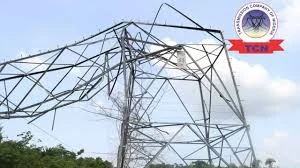
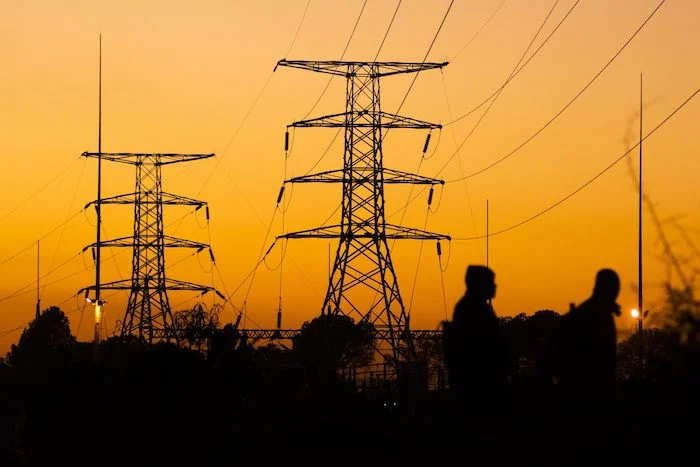
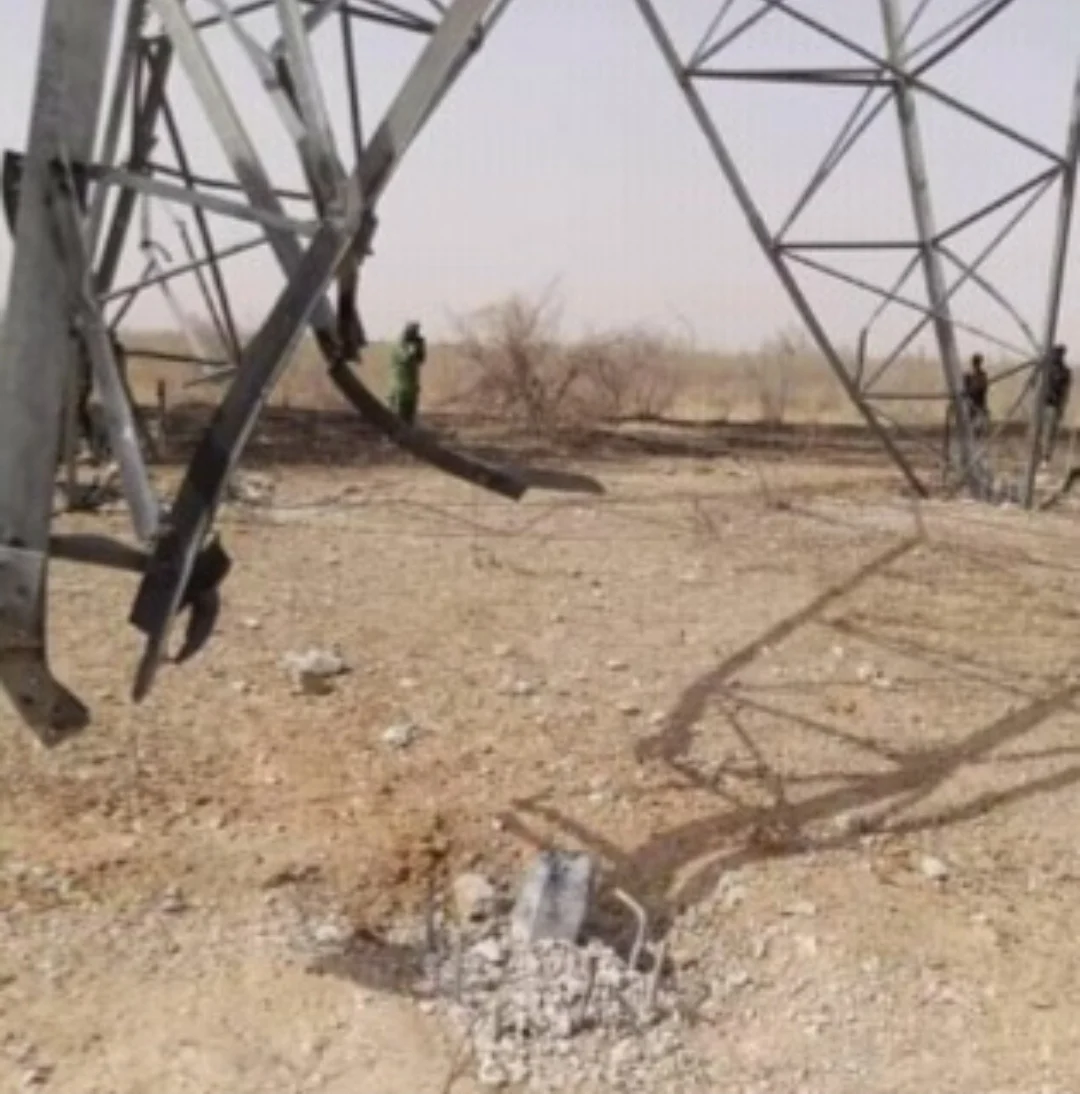
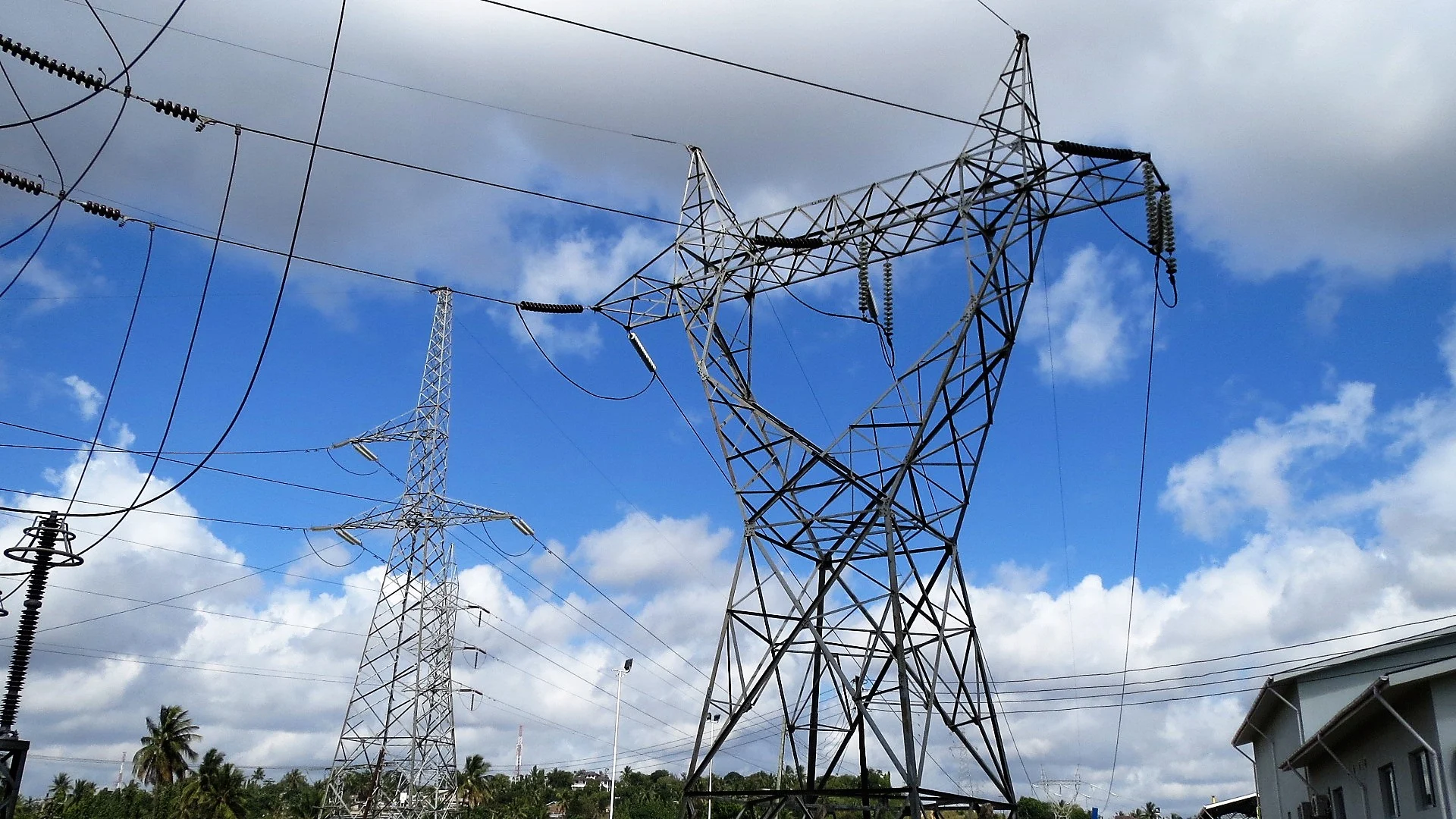
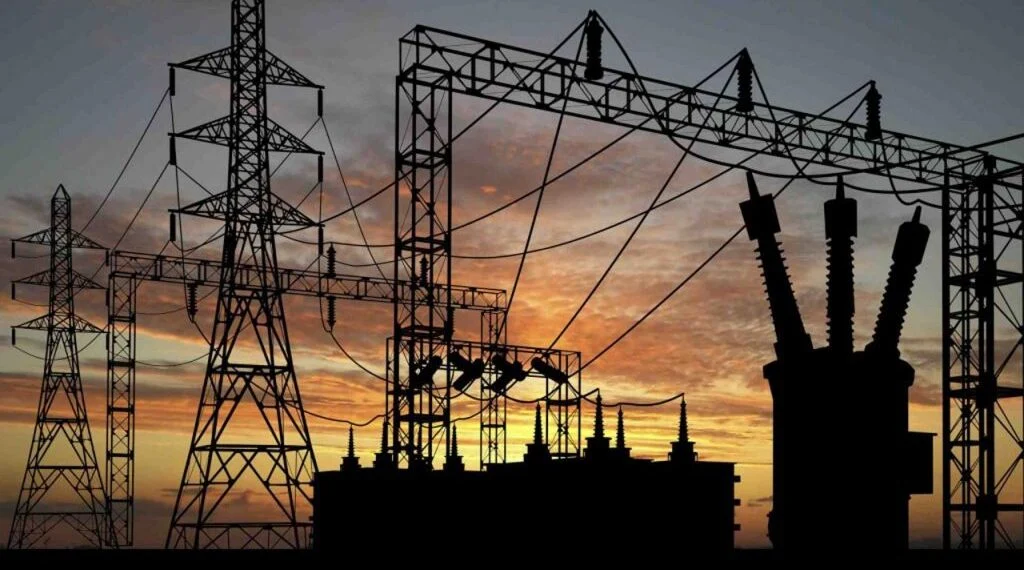
According to the Transmission Company of Nigeria (TCN) more than 18 transmission towers were vandalised between Jan 9 and Jan 14 across Rivers, Abia, and Kano states.
Mrs Ndidi Mbah, General Manager, Public Affairs, TCN said this in a statement in Abuja on Sunday.
Mbah said that Mr Emmanuel Okpa, General Manager, Transmission TCN’S Port Harcourt Region, reported that routine patrols by linesmen on Jan. 10, uncovered damage to towers 171 through towers 181 and 184.
She said that on Jan. 14, vandals targeted towers 146, 147, and 149 along the Owerri/Ahoada 132 Kilo Volt kV line in Rivers, removing base brackets and compromising the stability of the towers.
“In Abia State, Mr Azuh Lucky, Head of the Lines Department for the region, reported the theft of bolts, nuts, and structural members from towers 160 to 162 on the Alaoji/Umuahia 132kV line.
”Meanwhile, in Kano, towers 105, 106, and 107 along the Katsina-Gazoua 132/33kV transmission line were critically damaged by vandals on Jan. 9, compromising their structural integrity and risking collapse.
”In the early hours of Jan.17, vandalised 132kV underground transmission cables were discovered by TCN engineers near Millennium Park in Abuja. This affected power supply to the central area and its environs.
”These incidents pose a significant challenge to TCN’S operations as a company ” she said.
She said that the company had bolstered security measures, increased lines patrol and the number of vigilante groups, and is also collaborating with security operatives.
Mbah said that the company was appealing for the full support of every Nigerian, particularly those in communities hosting TCN’S installations.
“Nigerians must collectively recognise that the transmission network is our collective asset and essential for our socioeconomic development.
”The vandals and those who buy stolen materials are sabotaging the nation. All hands must be on deck to ensure the growth of the country’s power sector, which is critical to the development of our country
”TCN’s grid expansion plans are under tremendous strain due to the persistent vandalism of its installations,” she said.
She said that the financial implications of constant repairs to vandalised transmission installations, along with the stress on the grid, were having adverse effects on TCNs grid expansion drive.
”This is a clarion call for everyone to join forces with TCN to put an end to this menace and safeguard our electricity network,” Mbah said.
Four individuals have been arrested by the Gombe State Police command for allegedly damaging electrical transformers in the city of Gombe.
The Spokesman of the command, ASP Buhari Abdullahi said this while parading the suspects on Friday in Gombe.
He said the suspects allegedly vandalised and removed armoured cables from power transformers in the area.
“On Wednesday about 3 pm, information from one Abubakar Sulaiman of Hayin Kwari Misau quarters, Gombe Local Government Area that some groups of boys were sighted with armoured cable suspected to be have stolen around Hayin Kwari Misau quarters.
“On receipt of the information the Divisional Police Officer led patrol team to the scene where four suspects were arrested in connection to the case,” he said.
He said the police recovered 20 meters of 300mm armoured cables, and 20 meters of 500 mm armoured cables.
Abdullahi said preliminary investigation showed that the items were stolen from transformer 1 & 2 at Gandu quarters in the metropolis.
He enjoined the residents to be vigilant and protect public assets in their domains, as well as report suspicious persons and movements to security agencies.
The spokesman said that operatives of the command detained 21 other suspects for alleged criminal conspiracy; theft, possession of dangerous weapons, kidnapping, robbery, culpable homicide, among others.
According to him, the suspects will be charge to court upon completion of investigations.
He reiterated commitment of the command to tackle crimes, protect lives and property in the state.
The Transmission Company of Nigeria (TCN) has denied reports of a national grid collapse on Saturday, calling the claims inaccurate.
TCN’s General Manager of Public Affairs, Mrs Ndidi Mbah, made the clarification in a statement issued in Abuja on Saturday.
Mbah explained that earlier on Saturday, at approximately 1:41 p.m., the Osogbo-Ihovour line tripped, followed by the tripping of the Benin-Omotosho line.
Nigeria National Power Grid Collapse Incidents
She noted that these incidents only affected bulk power supply to the Lagos area.
She further clarified that just before the tripping, total generation on the grid was 4,335.63 Megawatts (MW), and after the trippings, generation dropped to 2,573.23 MW, which indicated the grid did not experience a collapse.
“The transmission line tripping affected Egbin, Olorunsogo, Omotosho, Geregu, and Paras,”
She added that all had been restored except for the Benin-Omotosho 330kV line, which was still being worked on.
Mbah emphasised that TCN was working hard to build a more robust transmission grid in spite of ongoing challenges.
She also urged caution against the spread of misinformation, stressing the importance of disseminating accurate and verifiable facts.
Accustomed to power outages due to national grid collapses and other faults, many Nigerians were quick to tally the counts yesterday, announcing that the national grid had collapsed for the 13th time in thirteen months, whereby, yesterday’s rumoured collapse would have been the first in 2025.
The recurrent rate of frequent collapse of the country’s national grid is a pressing issue that needs to be addressed urgently for Nigerians to enjoy a stable and reliable power supply,
A stable power supply is crucial for social economic development to thrive.
In 2024 alone, the national electricity grid collapsed more than eight times, throwing the nation into frequent darkness.
Millions of homes and businesses continue to suffer regular power outages due to the frequent grid collapse, resulting in huge losses.
Small and Medium-sized Enterprises (SMEs), which form the backbone of the country’s economy, suffer even more because many of them do not have the capital to invest in alternative power sources, leaving them at the mercy of the erratic national grid.
Experts and stakeholders in the power sector attribute the repeated grid collapse to factors like ageing facilities, lack of maintenance and requisite investment, as well as alleged sabotage by vandals.
They listed other factors to include obsolete equipment, inadequate gas supply, improper coordination of plants and gas pipelines, lack of operating/spinning reserve and voltage support scheme.
They called for Supervisory Control and Data Acquisition, (SCADA) system to help sustain stability in power supply.
The SCADA system is used for controlling, monitoring, and analysing industrial devices.
The experts have warned that the incessant national grid collapse may persist if urgent steps were not taken to address the several challenges bedeviling the power sector.
The Minister of Power, Mr Adebayo Adelabu, said that there was a need to have power grids in different regions or states.
According to Adelabu, having multiple power grids in each region and state would ensure stability.
He said that the decentralisation of the power sector would help the plan to build grids in each region.
“This has been made possible by the Electricity Act (EA) signed by President Bola Tinubu in 2023, which has decentralised power.
“It has enabled all the state governments and the local government councils to be able to participate in the generation, transmission, and distribution of electricity.
“We all rely on a single national grid today; if there is a disturbance of the national grid, it affects all 36 states. It should not be like that.
“The EA will enable us to start moving gradually towards having regional groups and possibly having state grids, and each of these grids will be removed and shielded from each other,” he said.
Adelabu said that the Federal Government was overhauling the national grid to reduce the frequent disturbances and improve power supply across the country.
According to him, the grid is over 50 years old, with weak, obsolete components, which includes the lines, sub-stations with old transformers
He said that most of the tower installed a long time ago were falling due to effect of weather and climate changes.
“This grid requires a huge revenue for maintenance.
“But what we have now, we will continue to manage it and prevent frequent disturbances until we are able to completely overhaul this infrastructure, ‘’ he said.
Adelabu said that the Federal Government was not quiet about revamping the entire grid structure as various programmes were being put in place to ensure that old infrastructure were replaced.
He listed the programmes to include Presidential Power Initiative (PPI) known as the Siemens project which is currently ongoing.
Power GridFormation
“There is also the Transmission Company of Nigeria (TCN)’s expansion programme supported by the World Bank and African Development Bank (AfDB) .
”So, what we have now, we will continue to manage and prevent frequent disturbances until we are able to overhaul these infrastructure a 100 per cent, ‘’ he said.
Some experts said that the only way to reduce the incessant grid collapse was for the Federal Government and stakeholders to invest more in the sector.
Mr Isreal Abraham, the President, Chartered Institute of Power Engineers (CIPEN), said that power infrastructure needed a lot of maintenance, adding that it was very costly to take care of equipment.
Abraham said that the grid collapsed often because there was no constant maintenance both from the generation, distribution and transmission companies.
“ The transmission company is doing its best, but more needs to be done and this should be done massively.
“A lot of things need to be put in place, and lot of funds are required to upgrade power facilities to the level where we can be sure that things are in the right place.
“For instance, the last collapse was as a result of shattered equipment that helps to manage the grid.
“If that equipment was maintained or replaced, it would not have gotten burnt easily, and the possibility of it breaking down would have been averted, ” he said.
Abraham also said that discipline was essential in managing the grid by ensuring that the right things are done.
According to him, the regulator, especially the system operators, are expected to direct the grid managers to do the right thing.
He said that anyone that failed to comply with such directives should be sanctioned.
“This goes for both the generation, transmission and distribution companies.
“All of them are supposed to comply with the instruction of the grid operator. So grid discipline is one of the major things that has to be done, ”he said.
Mr Denis Ukwuez, the Executive Director, CIPEN, said that the major cause of non-performance in the power sector was lack of adequate financing.
Ukwuez said that there were projects in the power sector that had been there for more than 20 years and had not been completed.
”We have projects in transmission which have been there for more than 20 years and not completed.
”Some of these power plants are taking over 30 years to be completed because of funding,”he said.
A power expert, Prof. Stephen Ogaji, emphasised the need for the system operator to complete and inaugurate the SCADA project to effectively supervise the national grid.
Ogaji also urged the system operator to implement the Generation Dispatch Tool (GDT) and enforce all provisions of the grid code.
He called on the Nigerian Electricity Regulation Commission (NERC) to approve the procurement of Ancillary Services that provide secondary controls (Spinning Reserve).
He warned that the incessant disruption of normal grid operation could lead to reduced plant availability, high generation costs, and significant revenue losses.
He said that the country had already recorded great losses in revenue due to the inability to generate power into the grid.
The expert also highlighted the impact of thermal fatigue on key components of power generation equipment, resulting in millions of dollars in damages.
He said that the entire economic system, not just utilities, was affected by the unstable power supply.
As Nigerians continue to endure epileptic power supply, stakeholders are unanimous that more investments should be channelled towards grid maintenance for the country to enjoy stable and reliable power supply.
Constance Athekame writes for the News Agency of Nigeria (NAN)
The Transmission Company of Nigeria (TCN) has notified the public about massive load sheding in parts of the Federal Capital Territory (FCT) and Nasarawa State, starting Monday, January 6th.
A notice by Mrs. Ndidi Mbah, TCN General Manager Public Affairs said the load sheding will last between January 6th and 20th.
She said the exercise has been necessitated by the need to relocate eight number 132kV and 33kV towers to make way for the road dualization project by the Federal Capital Development Authority (FCDA) along the Apo axis .
Accotding yo her, “the relocation work will necessitate a planned power outage from Monday, 6th January to Monday, 20th January 2025 from 9am to 4pm daily, which is the estimated duration for the dismantling and construction of the towers as well as restringing of the power cables that would enable resumption of bulk power supply to the Apo Transmission Substation from Gwagwalada Substation.”
Mrs. Mbah explained further that as a result of the exercise, “there will be a rationing of electricity supply for AEDC’s customers in Kubwa, Karu,Maraba, and Nyanya.”
Other areas to be affected by the load shedding are Masaka, Keffi, Kukwaba, and Apo Mechanic.
Parts of Lugbe, Trademore Estate, Pyakasa, Sabon Lugbe Chika Alaita axis will also be affected.
The TCN apologises to the public for the inconveniece the disruption of power will cause, but explained that ot was necessary to allow for the completion of the road.
It was affirmed in the statement that full stable power supply would be restored upon the completion of the relocation exercise.
“TCN apologizes for the inconvenience this planned power outage will cause and assures that power supply will be restored as soon as the towers relocation and cable stringing are completed,”
In response, TCN mobilized its maintenance crew to the site to replace the stolen conductor.
The repair process is ongoing, with the company working around the clock to restore the line and minimize disruptions to bulk power supply.
This recurring problem raises concerns about the security of critical infrastructure.
TCN has called on citizens to remain vigilant and report any unusual activities near power facilities.
Such cooperation is crucial in safeguarding vital assets from further vandalism and ensuring reliable electricity supply across the nation.
Efforts to enhance surveillance and tighten security measures around power installations are becoming increasingly important as these incidents persist.
These are very difficult times for Nigeria, as the “giant of Africa” is buffeted by a barrage of security challenges nationwide. The latest is that the Lokoja-Gwagwalada transmission line, a key component of Nigeria’s power grid, has been disrupted due to vandalism.
Three towers along this line were targeted, resulting in damaged infrastructure and missing spans of aluminum conductors.
This incident affects power transmission on the main route, though power continues via an alternative circuit.
The Transmission Company of Nigeria (TCN) is actively working to replace the stolen conductors and address the situation.
Rising cases of vandalism on power infrastructure are posing challenges to Nigeria’s power stability, prompting TCN to call on local communities to assist security forces in safeguarding transmission facilities.
Nigeria faces yet another nationwide power outage following the collapse of its national grid, marking the twelfth disruption in less than a year.
This incident, occurring at 11:29 a.m. on November 7, is the second within a week, raising fresh concerns about the reliability of the country’s power infrastructure.
The Ikeja Electricity Distribution Company (IKEDC) acknowledged the system failure, informing customers that supply disruptions are widespread.
Efforts to restore electricity are reportedly underway, though no specific timeline has been provided.
So far, the Transmission Company of Nigeria has not disclosed the cause of the latest grid failure.
The recurring outages continue to impact households and businesses, with stakeholders scrambling to resolve the persistent challenges.
President Bola Tinubu has appointed seven persons to serve as the new management team for the Niger Delta Power Holding Company.
The Presidency announced the appointments on Monday in a statement signed by Tinubu’s Special Adviser on Media and Publicity, Ajuri Ngelale, titled ‘President Tinubu appoints new management team for the Niger Delta Power Holding Company.’
The new members of the management of the company are Jennifer Adighije as Managing Director/Chief Executive Officer, Abdullahi Kassim as Executive Director (Generation), Bello Bello as Executive Director (Networks) and Emmanuel Umeoji as Executive Director (Corporate Services).
Others are Omololu Agoro as Executive Director (Finance and Accounts), Omoregie Ogbeide-Ihama as Executive Director (Strategy and commercial), and Steven Andzenge as Executive Director (Legal Services).
The new NDPHC Chief Executive Officer, Ms. Jennifer Adighije, holds a master’s degree in Wireless Networks and Telecommunications from Queen Mary University of London, UK, and a bachelor’s degree in Electrical/Electronics Engineering from the University of Lagos, Nigeria.
Ngelale said Tinubu “expects the new members of the management of the company to deploy their expertise and experience to drive NDPHC’s mandate of effectively managing the National Integrated Power Projects.”
The Transmission Company of Nigeria, TCN, has revealed the reason for the drop in power supply nationwide.
According to Ndidi Mbah, TCN’s general manager of public affairs, gas constraints on thermal generating companies resulted in low power generation across the country.
She said the situation had impacted the quantum of bulk power available on the transmission grid for onward transmission to the distribution load centres nationwide.
The statement reads: “The Transmission Company of Nigeria TCN hereby announces that there has been a gradual decrease in available generation into the grid due to gas constraints to the thermal generating companies, which has impacted the quantum of bulk power available on the transmission grid for onward transmission to the distribution load centres nationwide.
“TCN is doing everything possible in collaboration with stakeholders in the power sector to ensure that it keeps the grid intact despite the current low power generated into the system.
“Consequent to the current load on the grid, load distributed to the distribution load centres have also been reduced, as TCN can only transmit what is generated.
“TCN is committed to ensuring a gradual increase in electricity supply to load centres as gas improves to the power available thermal plants.
“Please bear with us as we continue to work with the stakeholders in the value chain to ensure that supply through distribution companies to electricity consumers nationwide improves”, the company stated.