Tag: UNITED NATIONS

  • UN Chief Guterres Mourns Deadly School Shooting in Rural Canada

    UN Chief Guterres Mourns Deadly School Shooting in Rural Canada

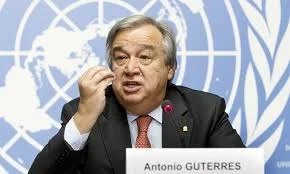
    Secretary-General of the United Nations, António Guterres, has expressed deep sorrow following Tuesday’s deadly school shooting in Tumbler Ridge that left at least eight people dead and 25 others injured.

    Speaking at the UN’s daily press briefing on Wednesday, the Secretary-General’s spokesperson, Stéphane Dujarric, said Guterres was “saddened to learn of the tragic shooting” in the small rural community located in British Columbia.

    “The Secretary-General extends his deepest condolences to those affected and his sympathies to the Government and people of Canada,” Dujarric told reporters.

    Victims Include Students and Teacher

    According to media reports, the victims include at least three female students, two male students and a teacher at the local secondary school. Two additional individuals were found dead at a nearby residence. Local police have reportedly identified them as the suspect’s mother and stepbrother.

    Authorities said the suspect, who was born male but was transitioning and identified as female, was discovered inside the school with an apparent self-inflicted fatal wound.

    Among the 25 injured, two individuals were airlifted to hospital in critical condition with life-threatening injuries.

    Small Community in Shock

    Tumbler Ridge is a remote community in the Canadian Rockies, located more than 1,000 kilometres northeast of Vancouver and near the Alberta border. The secondary school serves approximately 175 students from Grades 7 to 12, making the tragedy particularly devastating for the tight-knit town.

    The shooting has sent shockwaves across Canada, prompting expressions of grief and solidarity from national and international leaders. Authorities continue to investigate the circumstances surrounding the attack as the community begins mourning the victims and supporting those injured in the tragedy.

  • China Pushes Back Against UN Replacement Talk, Vows to Defend UN-Led Global Order

    China Pushes Back Against UN Replacement Talk, Vows to Defend UN-Led Global Order

    China has reaffirmed its commitment to multilateralism and to safeguarding the international system with the United Nations at its core, as questions emerge over the future role of the global body following remarks by U.S. President Donald Trump.

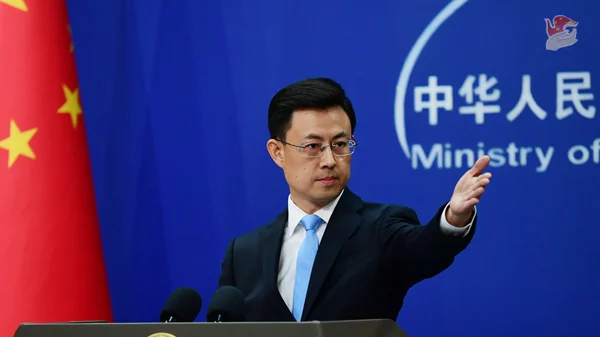
    Foreign Ministry spokesperson Guo Jiakun made the comments on Wednesday at a regular press briefing, responding to Trump’s statement a day earlier that the United Nations should continue because of its potential, while suggesting that a proposed “Board of Peace” could possibly replace the organization.

    Guo stressed that China’s position on the United Nations and the international order remains firm and unchanged. “No matter how the international situation evolves, China will resolutely safeguard the international system with the United Nations at its core,” he said.

    According to Guo, China has consistently advocated for true multilateralism and believes the UN plays an irreplaceable role in maintaining international peace and security, promoting development, and addressing global challenges.

    He emphasized that the UN-centered system reflects the collective will of the international community and should not be weakened or undermined.

    Guo further noted that China will continue to uphold the international order underpinned by international law, as well as the basic norms governing international relations based on the purposes and principles of the UN Charter.

    These principles, he said, remain the cornerstone of global governance and cooperation.

    The remarks come amid broader international debate over reforms to global governance institutions and concerns about unilateral approaches to international affairs.

    China, Guo added, supports strengthening the authority and effectiveness of the United Nations through cooperation and dialogue, rather than replacing existing multilateral mechanisms.

    “China will work with all parties to defend fairness and justice in international affairs, promote cooperation among countries, and contribute to a more stable and orderly international system,” Guo said.

  • Ban Ki-moon Warns UN Risks Irrelevance Without Security Council Reform

    Ban Ki-moon Warns UN Risks Irrelevance Without Security Council Reform

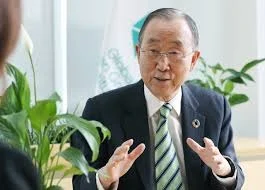
    Former United Nations Secretary-General Ban Ki-moon on Tuesday challenged the Security Council to overcome deep rivalry and distrust, warning that failure to reform its practices, particularly the use of the veto, risks pushing the Organisation toward irrelevance or collapse.

    Speaking during an open Security Council debate on “Leadership for Peace,” Ban called on Council members to look beyond narrow national interests and support UN leadership capable of steering the world away from catastrophe and toward renewed cooperation.

    “The path of each for themselves is no different from the path of mutual destruction,” Ban told the Council.

    Now an emeritus member of The Elders, Ban said global conditions have deteriorated significantly since he left office at the end of 2016, marked by growing confrontation among major powers, weakening multilateralism and persistent conflicts in which civilians bear the heaviest costs.

    “This deeply disappointing situation is characterised by confrontation rather than cooperation among major powers,” he said, citing the war in Ukraine, mass civilian casualties in Gaza and the erosion of international cooperation even as the global climate crisis accelerates.

    Ban said the broader crisis confronting the international system cannot be separated from the Security Council’s own shortcomings.

    “The Security Council’s ongoing failure to properly function constitutes the most egregious cause,” he said, pointing to the repeated use of the veto by permanent members to shield themselves, their allies and their proxies from accountability.

    Without meaningful reform, Ban warned, civilians would remain unprotected and impunity would persist. “Without it, the UN risks lurching towards either collapse or irrelevance,” he said.

    Turning to the selection of the next Secretary-General, Ban urged Member States to consider adopting a single, non-renewable seven-year term, arguing that it would strengthen the independence of the office.

    The current practice of two five-year terms, he said, leaves Secretaries-General “overly dependent on this Council’s Permanent Members for an extension,” even though the arrangement is a convention rather than a requirement of the UN Charter.

    “The General Assembly holds the power to set the terms of the appointment itself,” Ban said, calling on Member States to exercise that authority to empower future UN leaders more fully.

    Secretary-General António Guterres’s second term expires at the end of next year, and the formal selection process is already under way. In November, the Presidents of the General Assembly and the Security Council jointly launched the process in line with General Assembly resolution 79/327, which emphasizes transparency and inclusivity.

    Under established procedures, candidates are nominated by Member States or regional groups and must submit a vision statement, curriculum vitae and disclosures on campaign financing. The President of the General Assembly convenes publicly broadcast interactive dialogues with candidates while engaging closely with Member States throughout the process.

    As of mid-December, Rafael Mariano Grossi, Director-General of the International Atomic Energy Agency, is the only candidate formally nominated, put forward by Argentina.

    Addressing the Council during the debate, Anjali Dayal, Associate Professor of International Politics at Fordham University, said the next Secretary-General would assume office at a moment of unprecedented strain for the United Nations, including a deepening funding crisis that is already reducing the Organisation’s capacity to deliver essential services.

    “That will result not just in shrinking this Organisation, but also in less of the work that only the UN can do at scale,” Dayal said, warning of fewer vaccinations, reduced humanitarian assistance and diminished mine-clearance operations even as global needs continue to grow.

    Dayal said history demonstrates that, even during periods of acute geopolitical division, the Security Council has been capable of selecting leaders who advanced peace and cooperation.

    She recalled the prolonged deadlock that preceded the appointment of Javier Pérez de Cuéllar in 1981 and the criticisms faced by U Thant, noting that both Secretaries-General played key roles in helping to end the Iran-Iraq war, advance peace efforts in Cambodia and Nicaragua, and manage crises such as the Cuban Missile Crisis.

    Those examples, Dayal said, illustrate that the Secretary-General’s influence lies less in material power than in the ability to shape ideas, narratives and long-term cooperation within the international system.

  • Taliban Carry Out Public Execution in Khost for Mass Killing

    Taliban Carry Out Public Execution in Khost for Mass Killing

    KHOST, Afghanistan — Afghanistan’s Taliban-controlled Supreme Court has executed a man publicly in Khost for his role in the killing of 13 members of a family.

    The Supreme Court identified the man as Mangal, who was convicted of intentionally killing another Afghan with a Kalashnikov rifle. The victim’s family declined an offer of forgiveness, prompting the so-called retaliation punishment, known as qisas under Islamic law.

    Mustaghfir Gurbaz, spokesman for the provincial governor, said the man had been involved in the incident about 10 months ago that resulted in the deaths of 13 people, including women and children. Two other men convicted in the same case have also received qisas sentences, but their executions were postponed as the victims’ families are currently abroad.

    Since returning to power in August 2021, the Taliban have reinstated corporal punishments, including public executions and floggings, for crimes such as murder, robbery, and adultery. This latest execution marks the 11th public execution carried out under Taliban rule.

    The United Nations has condemned the Taliban’s use of corporal punishment, saying it violates the UN Convention against Torture and calling for an end to such practices. Taliban officials, however, defend the measures as consistent with Afghan law and necessary for public security.

    The execution took place in a stadium in the presence of local residents and Taliban officials.

  • The Misuse of “Genocide” in Nigeria’s Public Discourse

    The Misuse of “Genocide” in Nigeria’s Public Discourse

    Contextualizing The Horrific Killings in Nigeria Within The International Convention Against Genocide

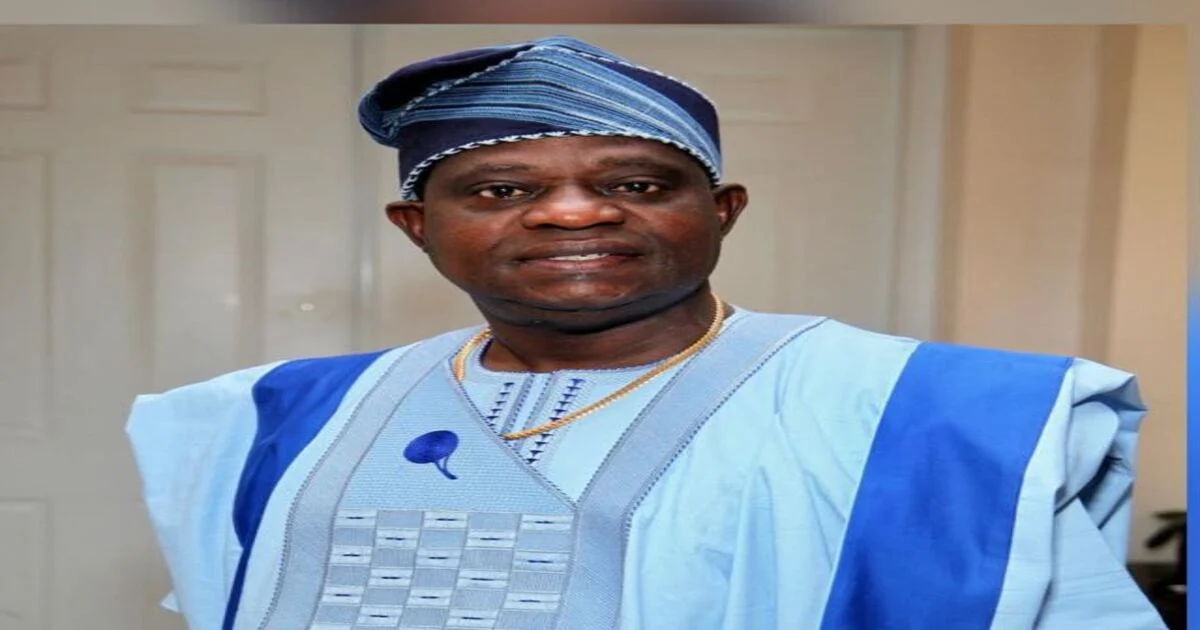
    By Wale Alonge

    Since President Donald Trump’s 2020 threat to “invade Nigeria” to stop what he called “the targeted genocide of Nigerian Christians by Muslims,” the term genocide has gained sudden, viral currency across Nigerian social media. It is now used casually, cavalierly, and often without any understanding of its historical roots or the international legal framework that defines it.

    When such a morally charged word is used loosely, it dilutes its moral and legal force — and makes enforcement far more difficult in genuine cases of genocide. That is why it is critical to define and apply it precisely, something sorely lacking in Nigeria’s public conversations.

    It is deeply ironic that the same President Trump who refuses to describe the state-sponsored mass killing, starvation, and displacement of Palestinians in Gaza as genocide was so quick to use the word for Nigeria’s communal violence.

    I am a Christian, so this is not a case of a non-Christian downplaying the killings of Christians. There is no doubt that many Nigerian Christians have been victims of murderous attacks by Islamist jihadist groups — often targeted specifically in their houses of worship. Only yesterday, reports emerged from Kwara State of Christians being slaughtered and kidnapped in church.

    But so have Muslims — indeed, in larger numbers according to widely available data — including many attacked in mosques. These killings are largely random, carried out by non-state insurgents and criminal militias using hit-and-run, opportunistic tactics, often also targeting government forces. There is no demonstrated element of state-sponsored intent to destroy a protected group, which is central to any credible genocide claim.

    What “Genocide” Actually Means

    The word itself derives from the Greek genos (“tribe” or “race”) and the Latin caedere (“to kill”). Polish lawyer Raphael Lemkin coined it during World War II, and in 1946 the United Nations General Assembly first recognized genocide as an international crime. It was later codified in the 1948 Convention on the Prevention and Punishment of the Crime of Genocide.

    Article II of the Convention defines genocide as any of the following acts committed with intent to destroy, in whole or in part, a national, ethnic, racial, or religious group:

    • Killing members of the group
    • Causing serious bodily or mental harm
    • Deliberately inflicting conditions of life aimed at destroying the group
    • Imposing measures intended to prevent births
    • Forcibly transferring children to another group

    The most difficult and crucial element is intent. Genocide requires a proven intention to physically destroy a protected group — not merely to displace it, weaken it, or target individuals for other reasons. This “special intent” (dolus specialis) distinguishes genocide from other international crimes.

    Nigeria’s Reality

    Every innocent life unjustly taken is one life too many. Nothing in this analysis minimizes the suffering of Nigerian Christians killed or displaced by jihadists or murderous Fulani militias that have devastated farming communities — particularly in the Middle Belt — through cycles of violence stretching back decades.

    But as horrific as these crimes are, to call them genocide is to misapply the term. The Genocide Convention arose from the ashes of the Holocaust — the targeted, systematic, state-orchestrated extermination of millions of Jews by Nazi Germany. That context matters.

    Nigeria’s insecurity is a grave humanitarian crisis, but not one that fits the legal or moral definition of genocide. The danger in misusing the word lies not just in linguistic carelessness, but in the erosion of its power to mobilize international justice where it is most needed — in places where governments, not bandits, plot the destruction of entire peoples.

    If we are to confront Nigeria’s violence meaningfully, we must name it for what it is: terrorism, mass atrocity, and state failure — not genocide. To do otherwise cheapens both the suffering of the victims and the gravity of one of humanity’s most serious crimes.


    Adewale Alonge, PhD, Founder & President, Africa Diaspora Partnership for Empowerment and Development. www.adped.org, writes in from Dadeland, Miami, Florida, USA.


  • UN Security Council Endorses Trump’s Gaza Peace Plan, Approves Temporary International Force

    UN Security Council Endorses Trump’s Gaza Peace Plan, Approves Temporary International Force

    New York, November 17, 2025 — The United Nations Security Council on Monday adopted a resolution endorsing a U.S.-proposed peace plan for Gaza and authorizing the deployment of a temporary international force in the enclave, following two years of war between Israel and Hamas.

    Resolution 2803 (2025), sponsored by the United States, passed with 13 votes in favour and none against, while China and Russia abstained.

    UN Security Council

    The text of the resolution welcomes the Comprehensive Peace Plan unveiled by U.S. President Donald Trump on September 29, which outlined a 20-point roadmap for ending hostilities and rebuilding Gaza. The plan’s first phase led to a ceasefire between Hamas and Israel several days after its announcement.


    Creation of Gaza Board of Peace

    The resolution further welcomes the creation of a Board of Peace (BoP), described as a “transitional administration” responsible for overseeing reconstruction efforts and political stabilisation in Gaza.

    It authorizes the BoP to establish a temporary International Stabilisation Force (ISF) “to deploy under unified command acceptable to the Board of Peace.” The ISF, the resolution says, will operate “in close consultation and cooperation” with Egypt and Israel, with member states contributing personnel and resources.

    📰 Related Story: UN Secretary-General Guterres Urges Swift Deployment of Gaza Peace Force – The UN chief calls for “urgent mobilisation” of resources to stabilise Gaza and rebuild basic services within six months.


    U.S. Hails ‘New Course’ for the Middle East

    Speaking after the vote, U.S. Ambassador to the UN, Mike Waltz, thanked Council members for supporting what he called “a new course in the Middle East for Israelis and Palestinians and all the people of the region alike.”

    “Today’s resolution represents another significant step towards a stable Gaza that will be able to prosper and an environment that will allow Israel to live in security,” Waltz said.

    He added that the International Stabilisation Force “will help stabilise the security environment, support the demilitarisation of Gaza, dismantle terrorist infrastructure, decommission weapons, and maintain the safety of Palestinian civilians.”

    📰 Related Story: Trump’s 20-Point Gaza Plan: Key Provisions and Reactions – A breakdown of the U.S. President’s proposed roadmap and how it aims to balance Israeli security with Palestinian reconstruction.


    Arab States Back Plan, Call for Justice

    Algerian Ambassador Amar Bendjama welcomed the initiative and acknowledged the efforts undertaken by President Trump to advance peace in the region. However, he stressed that “genuine peace in the Middle East cannot be achieved without justice for the Palestinian people, who have waited for decades for the establishment of their independent State.”

    Bendjama noted that the resolution had received broad support from Arab and Muslim countries, adding that “the Palestinian Authority at the highest level has openly welcomed the initiative.”

    📰 Related Story: Palestinian Authority Welcomes UN Vote, Calls It ‘First Step Toward Statehood’ – Ramallah officials say the new UN resolution could revive the long-dormant two-state framework.


    Russia, China Abstain

    Explaining Russia’s decision to abstain, Ambassador Vasily Nebenzya said the Council was, in essence, “giving its blessing to a U.S. initiative on the basis of Washington’s promises.”

    He warned that the resolution handed “complete control over the Gaza Strip to the Board of Peace and the ISF, the modalities of which we know nothing about so far.”

    China also abstained but did not issue an immediate statement following the vote.


    Background

    The two-year Gaza war, which began in late 2023, resulted in thousands of casualties and large-scale destruction across the enclave. The newly endorsed U.S. plan seeks to stabilise the territory, initiate reconstruction, and pave the way for eventual Palestinian self-governance under international supervision.

    The International Stabilisation Force, to be drawn from multiple countries, is expected to begin deployment within weeks, pending agreement on its command structure and mandate duration.


  • Financial crisis hits UN, cuts spending, freezes hiring, scales back services

    Financial crisis hits UN, cuts spending, freezes hiring, scales back services

    The UN says it has been forced to cut spending, freeze hiring and scale back some services as the global organisation faces a worsening cash crisis.

    Member States on Monday, urged members to pay up, warning that the deepening financial crisis threatened the world body’s ability to carry out vital work.

    The General Assembly’s Fifth Committee met throughout Monday to discuss the multilateral organisation’s financial health.

    With a growing shortfall in contributions, member states owed $2.4 billion in unpaid regular budget dues and $2.7 billion in peacekeeping.

    Officials warned that the non-payment of contributions risked eroding the UN’s credibility and its capacity to fulfil mandates entrusted to it by member states.

    Switzerland’s delegate, speaking also on behalf of Liechtenstein, said “Each delay in payment, each hiring freeze, each cancelled service chips away at trust in our ability to deliver”.

    One proposed solution was to allow the UN to temporarily keep unspent funds at year’s end, instead of returning them to member states as credits.

    Currently, this return is mandatory, even if the funds arrive late in the year, giving the UN little time to spend them.

    The suggested change would be expected to act as a buffer to keep operations running, particularly in January when payments tend to lag.

    Delegates also backed limited use of “special commitments”, which is emergency funding tools, early in the year to bridge gaps caused by delayed contributions.

    While these fixes might help, several speakers, including delegates from Kazakhstan, Norway and the United Kingdom, emphasised that the root cause was the continued late or non-payment of dues.

    Norway noted that such temporary measures would not solve the underlying problem and urged member states to support bold financial reforms.

    The European Union stressed that the crisis was not abstract,  adding they were real operational risks and the burden could not fall solely on countries that paid on time.

    Singapore, speaking for the Southeast Asian group of nations, ASEAN, echoed concerns that the UN’s liquidity problems had become routine.

    It cited the UN Economic and Social Commission for Asia and the Pacific’s (ESCAP) need to shut its offices for three months and suspend travel and hiring.

    Particularly troubling to many delegates was the fact that one country, unnamed in the meeting but widely known to be the U.S. was responsible for over half of all unpaid dues.

    The U.S. under President Donald Trump, is reportedly withholding the funds due to the UN for political reasons.

    Russia called for more transparency in how the UN managed cash-saving measures, cautioning against actions taken without member states’ input.

    Catherine Pollard, the UN’s top management official, noted that since May 9, a handful of countries had paid in full across several budget categories, while the number of nations who had paid in full for the regular budget stood at 106 for the year.

    As of May 19, the UN records showed only 61 countries had met all their UN’s obligations in full.

    The message from member states on Monday clearly states that without broad, timely financial support, the UN’s ability to serve the world, especially in times of crisis, is at serious risk.

  • Sub-Sahara Africa dominates global terrorism related deaths

    Sub-Sahara Africa dominates global terrorism related deaths

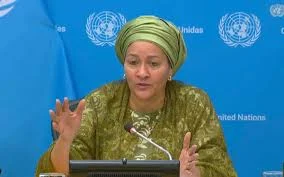
    Despite the best of effort of the leaders to curtail the trend, Sub-Sahara Africa now accounts for nearly 59 per cent of all terrorism-related deaths globally.

    This grim reality was revealed on Tuesday by the United Nations Deputy Secretary-General, Amina Muhammed during a UN Security Council meeting on the maintenance of international peace and security.

    Discussing under the theme, “African-led and development-focused counter-terrorism: strengthening African leadership and implementation of counter-terrorism initiatives.”

    According to Muhammed, for three years, terrorism related deaths have soared past 6000 making up more than half of all global fertilities.

    She said Burkina Faso now leads the world in terrorism deaths with a staggering 68 per cent increase, and with little support to reverse the trend.

    “Africa has tragically remained the epicenter of global terrorism. In all its forms and manifestations, terrorism is the most significant threat to peace, security and sustainable development across the continent today.”

    On her part, the impact of terrorism on women and families is particularly devastating.

    Muhammed noted that terrorists frequently exploit and brutalise women through sexual and gender-based violence, including forced marriages and abductions, causing profound trauma that reverberates through entire communities.

    She said terrorist networks are now pooling resources, finances, fighters and expertise, while sharpening their capabilities of new technologies, including unmanned aerial systems.

    “Countering terrorism must continue to innovate with an approach that holds the respect for human rights and the rule of law at its core and an outcome that addresses the conditions conducive to the spread of terrorism.

    “African member states, with the full backing of the international community must forge cohesive and conducted responses grounded in humanitarian development peace nexus and aligned with the guiding principles of the global counter terrorism strategy.”

    She said the pact for the future, agreed in September 2024 by UN member states gives a renewed momentum to global efforts against terrorism, adding that now is the time to implement promises made in the pact with determined action.

    Muhammed highlighted three priority areas with the first being the need to continually address the drivers of terrorism.

    She said terrorism thrives on fragility and feeds off poverty, inequality, and disillusionment.

    “When financing development regresses, when fragile institutions are matched with weak governance, and when women and youth are excluded from decision making, when public services are scarce or unequal, these conditions create fertile ground for radicalisation and recruitment.

    “Building inclusive, resilient and sustainable societies must be our goal and we have a road map to get there. The 2030 agenda, and in Africa, the 2063 agenda need to be implemented.

    She noted that human rights based approaches to counter terrorism grounded in accountable and inclusive institutions were needed.

    Muhammed further said regional cooperation was the linchpin of any effective counter terrorism strategy, adding that fragmenting efforts would serve perpetrators.

    “Our responses must be united, coherent and urgent, focused on fostering dialog, trust and coordinated action.

    “The African Union and its counterterrorism center have a leading role to play, but we must go further.

    “Above all, we must ensure that regional efforts are in lock step, unified in purpose and aligned with the strategy.

    “This is the only way we believe that we can ensure phasing down the threat of terrorism together.

    “Ultimately, African led and African owned solutions must take the lead in tackling terrorism across the continent,” she said. 

  • Foreign Affairs Minister, Tuggar calls for Nigeria’s Membership of UN Security Council

    Foreign Affairs Minister, Tuggar calls for Nigeria’s Membership of UN Security Council

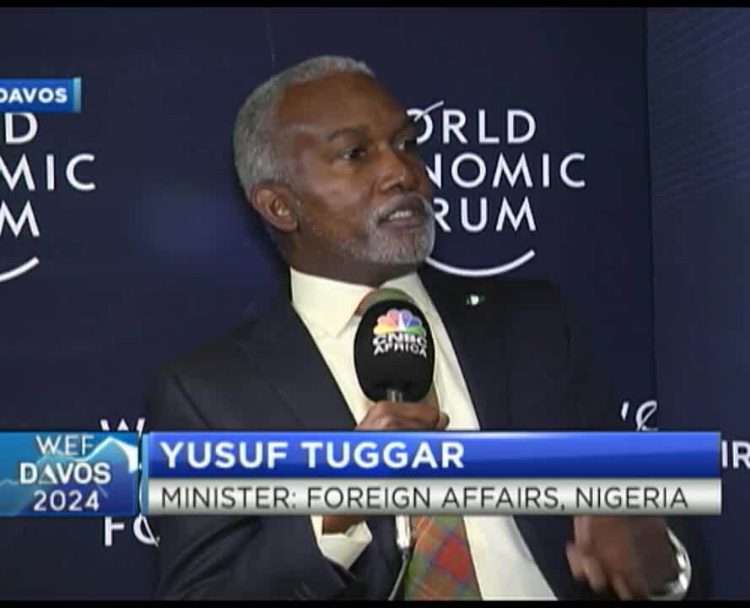
    Nigeria’s Minister of Foreign Affairs Ambassador Yusuf Maitama Tuggar, has said there is a need to democratise the United Nations (UN) security council and Nigeria with its population, economic size and strategic role in Africa has earned the right to be part of the UNSC.

    Ambassador Tuggar made the call while speaking at a panel discussion on the theme “Securing an Insecure World” at the World Economic Forum (WEF), Davos, Switzerland.

    Tuggar said the values of democracy – such as the rule of law – should be replicated in the world’s highest decision organs.

    Tuggar said the UN security council, as constituted, is not leaving up to its purpose.

    “What we have to do is collectively practice what we preach. The values that we uphold – democracy, rule of law – need to be practised, and we need to see them being practised in the very decision-making bodies or entities for the planet,” the minister said.

    “So, to begin with, the UN Security Council needs to be democratized. Clearly, it is not fit for purpose.

    “We should do away with the veto powers on the UN Security Council; clearly, it’s clumsy and not working. Again, when you look at the global security architecture, it is impacted by such undemocratic entities that influence decisions.

    “We have a situation where, in the past, during the bipolar world, there was neutral ground for diplomats to engage, allowing diplomacy to resolve issues, preempt conflicts, and diffuse them. Unfortunately, we don’t have that anymore.

    “We are increasingly seeing a situation where diplomats and diplomacy are taking the backseat, and disagreements are being securitized.”

    Tuggar expressed dismay that security chiefs and defence policymakers are taking the front seat in world security issues.

    “Of course, for the guy with the hammer, everything is a nail,” he said.

    Other speakers on the panel with Mr. Tuggar were, the Secretary of NATO, Jens Stoltenberg, Minister of Foreign Affairs of the Kingdom of Saudi Arabia, Prince Faisal bin Farhan Al Saud, Minister of Foreign Affairs of Finland Elina Valtonen, Senator from Delaware United States Christopher A. Coons, President, World Economic Forum Børge Brende, and Federal Minister of Foreign Affairs Federal Foreign Office of Germany Annalena Baerbock

    Discussions at the parley dwelled on persistent conflicts, the intensifying climate crises, the fragile global economies and the potential risks of new technologies that were creating a complex global security environment.

    The forum provided an opportunity for the participants to interrogate what the true state of global collective security looked like today and how leaders can strengthen it for the future.

  • Rising Incidents of Kidnappings in Abuja: UN Issues Stern Warning

    Rising Incidents of Kidnappings in Abuja: UN Issues Stern Warning

    The United Nations (UN) has sounded the alarm on the escalating wave of kidnappings for ransom in various regions of Nigeria, with a particular focus on the Federal Capital Territory (FCT), Abuja. 

    Expressing deep concern, the UN’s Chief Security Advisor, Phillip Ackatia-Armah, emphasized the need for urgent attention and heightened security measures.

    In an advisory, Ackatia-Armah urged UN staff and their dependents to exercise caution, especially during nighttime movements, as criminals increasingly target individuals perceived as capable of paying ransoms. 

    While UN personnel may not be directly singled out, their vulnerability lies in residing within communities where they may be recognized as potential sources of ransom funds.

    The advisory includes recommendations such as changing daily routes and timings to avoid predictability, keeping emergency contact numbers readily available, and informing others of whereabouts.

    It also provides guidance on interacting with kidnappers, emphasizing the importance of staying calm, subtly signaling for help, and continuously assessing surroundings for potential escape routes.

    The UN’s proactive measures come in response to a notable increase in kidnapping incidents in Abuja in recent weeks. 

    The organization aims to ensure the safety of its personnel by disseminating these guidelines to navigate the current security challenges in the Nigerian capital.