Tag: Vice President Kashim Shettima

  • October 1st, an anniversary, and a country’s blues

    October 1st, an anniversary, and a country’s blues

    If we are a serious people we should be looking back in anger as we celebrate the 65th anniversary of our country tomorrow. We have failed ourselves. We have failed Africa. And we have let down black people all over the world. The countries we started off with [indeed we were in front of some of them] have since left us behind. Nature endowed our country with so much natural resources to make it belong to the First World, but we have consistently given ourselves ruinous rulers whenever we have the opportunity to do so.”

    MOCKERY! This word probably best captures the slogan for the 65th anniversary of the independence of our country. The federal government unveiled the, what might as well be a tongue-in-cheek slogan, when it revealed the activities that will precede the anniversary celebrations of the country tomorrow. Nigeria gained political independence on October 1,1960, amidst funfare and much expectations from Africa and the Black World. The theme for the anniversary which will culminate tomorrow is “Nigeria @65: All Hands on Deck for a Greater Nation”. The theme is ostensibly designed to emphasize the critical place of unity, collaboration, and patriotism ‘among government institutions, the private sector, civil society, and citizens in building a nation of peace, prosperity, and progress”.

    As enunciated by the government the theme underscores the need for collective effort to consolidate past achievements and pursue greater national aspirations ‘under the Renewed Hope Agenda’. That’s where the ‘innovation’ ends. The other contents of the anniversary package are normal, routine and run-of-the-mill. They included Juma’at prayer on Friday, September 26, at 1:00p.m.; Inter-Denominational Church Service, on Sunday, September 28, at 10a.m.; and a World Press Conference, on Monday, September 29, at 10 a.m. During the rituals, and after them, our country will continue or return to its normal routine of bloodletting, grinding poverty, indifference of the ruling elite to the plight of citizens, insecurity, banditry, out of school children, increasing number of internally displaced persons [IDPs] in a country that’s not officially at war, renewed hopelessness, despondency, ‘japa’ syndrome [of youngsters and even adults] voting with their feet by fleeing the country in droves, profligacy of the rulers, arrested development, among other vices.

    Many previous rulers of our country, military and civilians, have been myopic, nepotistic, and suffered from tunnel vision. But the last 10 years of the rulership of the All Progressives Congress [APC] have stood out as signposts and symbols of everything that is designed to put pressure on the country’s fault lines. Former president, the late Maj.Gen. Muhammadu Buhari [2015-2023] was a threat to the cohesion and unity of this country in spite of his claims to the contrary. He had said with his own mouth in a foreign land that while he would be in charge as president, he would only take care of those who voted for him during the 2015 presidential election. That statement that divided the country into 97% positive voters, and 5% naysayers [ignore the percentages that did not add up] became the state policy. The atmosphere of the country was fouled and poisoned, but the consolation for the targeted victims of Buhari’s publicly stated meanness was that during his eight years the country experienced more of his non-presence [not necessarily absence], and  ‘non-governance’. They were eight years of waste that dragged Nigeria backwards by, at least, one generation. During a media chat in December 2015 [the only one in his eight-year underwhelming reign], Buhari berated a section of the country, asking angrily and dismissively “what do the Igbo[s] want”? That was his reaction to a question about youth restiveness in the south east who were demanding for a referendum to settle the issue of the Igbo nation continuing to remain part of Nigeria. Buhari did not fail to tell the global audience of the prime time TV programme that he was part of the marauding soldiers during the civil war [1967-1970] who killed the restive youths’ fathers, their unarmed mothers, and siblings irrespective of whether they were combatants or not. Down the line during his reign, he derisively and derogatively referred to the Igbo nation as a dot in a circle. At no time did the accursed ruler describe any other nation within Nigeria in such demeaning, dismissive and insensitive terms. Buhari’s era may have been marked by ‘ungovernance’, but he left behind a legacy of hate and disunity.

    If some Nigerians thought that Buhari will be the end of a president stoking hate and division, then they did not reckon with the coming of his successor, Alhaji Bola Ahmed Tinubu, also of the APC. Even before he acceded to office and power, he had publicly declared that the presidency was his, and Yoruba’s. Embedded in his ‘emi lo kan’ slogan were selfishness, nepotism, corruption, division, disunity, among other vices. And he is living up to it. His appointments into critical and sensitive public offices are skewed to the extent that they make Buhari look like an apprentice and a saint. To be fair to him, his appointments have, unlike Buhari’s, not been promoting a sectarian agenda. But it may be worse in its appearance of innocence. His appointments create the impression of building a cult and rewarding fealty to a cult leader. That could prove more dangerous and unsettling for this country at critical times. Tinubu is not restrained in putting his name or allowing his acolytes to affix his name on public buildings, institutions, and infrastructure, none of which he built in the two years of his four-year tenure. His appointment of the Yoruba into offices is virtually restricted to Lagos state where he was a governor from 1999-2007. And almost all the beneficiaries are from amongst his boys who worked for him as governor. Of course, there had been some outcasts from that cohort. They are frozen out. Lamentations have been rife in the two years of Tinubu so far including from his own Yoruba nation.

    Buhari made sure he mocked Nigerians during his campaign for reelection in 2018/2019 with his campaign slogan of ‘NextLevel’ which was plagiarized anyway. Now Tinubu is following suit by mocking Nigerians with the theme of the country’s 65th anniversary activities. If he did not intend to be cynical, how do you proclaim ‘All Hands on Deck for a Greater Nation’ while your actions promote the exclusion of swaths of the Nigerian society? There are many instances of Tinubu’s action being at variance with his calls for all hands to be on deck to build a greater country. Let’s illustrate with one. There has not been any national census in this country for about 20 years. The prescription is that a head count should happen in a country every ten years. Nigeria has not had any since the controversial and disputed census of 2006. The bungling and failed regime of Buhari pretended it would conduct one. It didn’t. And it couldn’t have. If it tried, the outcome would have been a disaster. Just as his regime was.Now Tinubu’s regime is preparing for a national head count. I wager that it also will not be able to deliver a credible census before his tenure expires in 2027. By the way, he has put his thumb on the scale, so whatever census he conducts with the present structure and personnel will be controversial and the results will be vigorously and justifiably disputed.

    Nigeria has 36 states and the federal capital territory. For the most part the country operates on the basis of an informal six geopolitical zones-the south east, south west, south south [in the southern part of the country], and the north east, north west, and the north central [in the northern part of the country]. These geopolitical zones are thin on law but strong on convention. As may be necessary, the zones form the basis for appointments and allocation of resources from the central government when states cannot be used. For instance, each geopolitical zone has a regional development commission created, staffed, and funded by the federal government in Abuja. Each of the commission is backed by an Act of the National Assembly [NASS]. However, many months ago this regime constituted a body of supreme overseers for the census it said it was planning to conduct. And the regime showed its hands. It was so glaring that even the blind will see the machinations and devious plots for the census. Members of the High Level Committee on National Population and Housing Census were drawn from three of the country’s six geopolitical zones. Even that does not tell the whole story. The Committee has three members from the North and five members from the south. Still the story is incomplete and the figures misleading. In the north only two geopolitical zones were represented- the north west and the north central. The north east, the zone of the Vice President, Alhaji Mohammed Kashim Shettima, was omitted. The real story is in the membership of the Committee from the south of the country. All five members are from the south west, the region of the president of Nigeria, Alhaji Tinubu. South east was not represented. South South was excluded. If this imbalance is not a basis to challenge the census and dispute the results, then what is? In many countries census results form a strong basis for resource allocations. It’s no less so in our country. How then do you justify the exclusion of critical segments of the country from membership of the High Level Committee which will superintend the population and housing census? But the exclusion of some stakeholders has become the standard fare of this country.

    If we are a serious people we should be looking back in anger as we celebrate the 65th anniversary of our country tomorrow. We have failed ourselves. We have failed Africa. And we have let down black people all over the world. The countries we started off with [indeed we were in front of some of them] have since left us behind. Nature endowed our country with so much natural resources to make it belong to the First World, but we have consistently given ourselves ruinous rulers whenever we have the opportunity to do so. We can console ourselves that we did not give ourselves successive military juntas from the 1960s to the 1990s, but that will be no valid excuse for allowing the ruination of Nigeria. In some other countries, citizens are known to have chased away bad military rulers. For elected leaders, except for once, we have also shown ourselves incapable of removing rulers who failed in their first term but chose to cling on to power by manipulating the ballot. May it never be that we will keep looking into the future in forlorn Hope.

  • Human Capital Development: Empowering Nigerians for global competitiveness

    Human Capital Development: Empowering Nigerians for global competitiveness

    The growth and development of Third World economies are usually hampered, largely, by the extractive nature of their productive bases. This developmental challenge is quite rife in the African continent.

    Take Nigeria as an example, the highest revenue the country ever recorded from the export of crude oil in a year was $35billion in 2011. As an absolute figure, the amount may seem impressive but it peters out significantly if compared with the country’s productive potential per capita.

     Nigeria is often referenced in very superlative terms as a land brimming with abundant natural and human resources. Nigerians speak of their country with great pride. Of course, they deserve the bragging right. Nigeria is a rich country of very happy people. One in every four black people in the world is a Nigerian, it is claimed. With a GDP of $474.5billion as of 2019, and growing at 3.19% in 2024, Nigeria has the largest economy in Africa.

    Unfortunately, the Nigerian economy is dependent on the export of oil and other natural produce for its mainstay. In other words, several decades of pivoting Nigeria’s development effort on finite resources have not led to much. This has led successive federal administrations to promise diversification of the productive base of the Nigerian economy, with most, if not all of them, failing to walk the talk.

    The most epochal decision to catalyze the economic potential of the Nigerian economy on a sustainable basis was taken in 2018 when the National Economic Council (NEC) initiated the National Human Capital Development Program to address poverty and ensure sustainable economic growth. This decision may have arisen from the realization that the most strategic growth plan is that which targets individuals as economic agents, or the engine room that drives much needed growth and development on a sustainable basis.

    According to NEC, the “HCD Program is an effort to accelerate more and better-streamlined investments in people for equitable and economic growth in Nigeria.” At this juncture, it is timely to address the subject matter of Human Capital Development.

    The World Bank Human Development Project defines Human Capital as consisting “of the knowledge, skills, and health that people accumulate throughout their lives, enabling them to realize their potential as productive members of society.” In other words, HCD is the painstaking exercise of transforming the human population of a society from being a liability to an economic asset that is required for the transformation of such society along a positive growth trajectory.

    According to the National Economic Council (NEC) HCD document: “Over the past decade, many of the key metrics relating to Human Capital Development (HCD) in Nigeria have been going in the wrong direction. Nigeria’s performance across all major global HCD indices, including the United Nations Human Capital Index, the Institute of Health Metrics and Evaluation (IHME) Expected Human Capital Index, and the World Bank Human Capital Index, is below the global average, as well as below the average for developing economies in sub-Saharan Africa (SSA).”

    The reasons for this high rate of underdevelopment of the human capital are not far-fetched, taking into account the low level of budgetary provisioning for education, decrepit state of infrastructure, pervasive state of insecurity and global economic headwinds.

    A lifeline for our nation

    The race towards developing the human capital assets of Nigeria may appear belated but the next best time is NOW! It is the cornerstone from which the building blocks of the Nigerian economy, post-Covid shall be aligned in aid of the realising the overarching objective of establishing a knowledge-based economy.

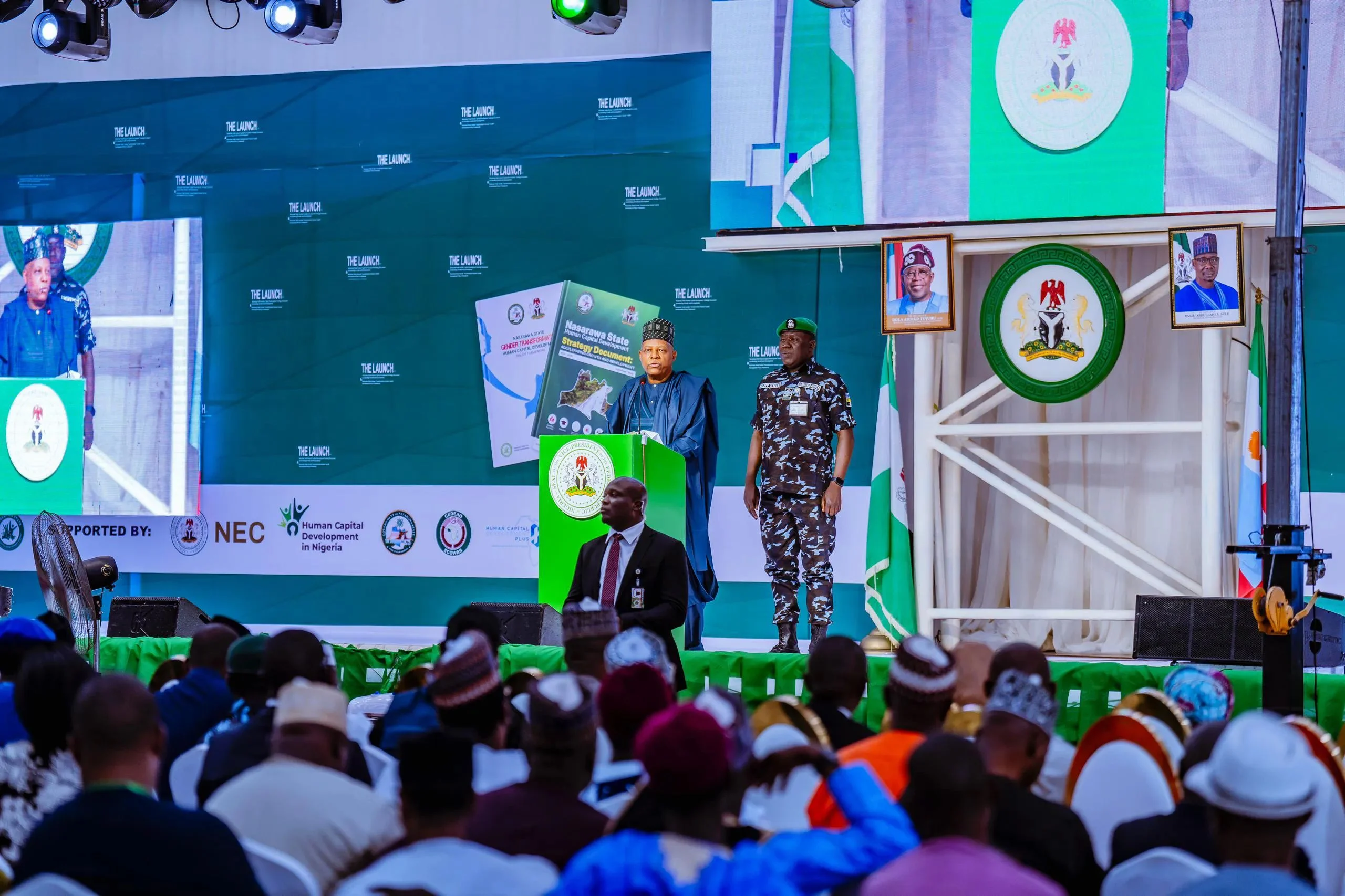
    According to the Vice President, Senator Kashim Shettima, Chairman of the NEC drives the Human Capital Development project, the “Program is a lifeline for our nation and built on the collective realization that enough is enough.

    Enough of the cycles that have held us back. Enough of the legacies of unplanned high fertility rates and alarming maternal and under-five mortality rates.”

    Senator Shettima who spoke while launching the Nasarawa State Human Capital Development in Lafia declared that HCD is a treasure which contains solutions to Nigeria’s human “capital challenges by focusing on education, health, and workforce development.”

    Nigeria’s Human Capital Development project is now in the second phase (HCD 2.0) with emphasis on gender and equal opportunities, climate change and sustainability, digital economy and financial inclusion as well as food and nutrition.

    With steady progress being made in attaining the set targets in the three thematic areas of health, education and skills, labour force participation and livelihoods, coupled with the avowed determination of the Vice President, as well as the HCD Secretariat towards the attainment of these goals, the presidency is not just walking the talk this time, but resolved to surpass its own targets. This is self-evident from the Vice President’s declaration that “The unemployment rates, the growing informal sector, and low labor force participation must be reversed. This is the dystopia our Human Capital Development Program is designed to abate, under the mandate of His Excellency President Bola Ahmed Tinubu, GCFR. For so long, at the National Economic Council, we have debated the ideal nation we wish to build and the paths we are to achieve it.”

  • Vice President Shettima Reveals Those Behind Hardship, Hunger

    Vice President Kashim Shettima has pointed accusing fingers at politicians, saying they are behind the attempt to pull the nation backward.
    Shettima disclosed this at the Public Wealth Management Conference, in Abuja, Tuesday.

    Shettima said politicians who lost in the 2023 general election of plotting to throw Nigeria into anarchy, sabotaging the country by smuggling food out to other countries to trigger food price hikes.

    According to him, “Just three nights ago, 45 trucks of maize were caught being transported to neighbouring countries.

    Just in that Ilela axis, there are 32 illegal smuggling routes. And the moment those foodstuffs were intercepted, the price of maize came down by N10,000. It came down from N60,000 to N50,000.

    “So, there are forces that are hell-bent on undermining our nation, but this is the time for us to coalesce into a singular entity.

    “We have to make this country work. We have to move beyond politics. We are now in the face of governance.

    “Sadly, some of our countrymen are still in the political mode. They are the practitioners of violence, advocating that Nigeria should go the Lebanon way. But, Nigeria is greater than anyone of us here. Nigeria will weather the storm.

    “Forces are hell-bent on plunging this country into a state of anarchy. Those who could not get to power through the ballot box, instead for them to wait till 2027, are so desperate.”