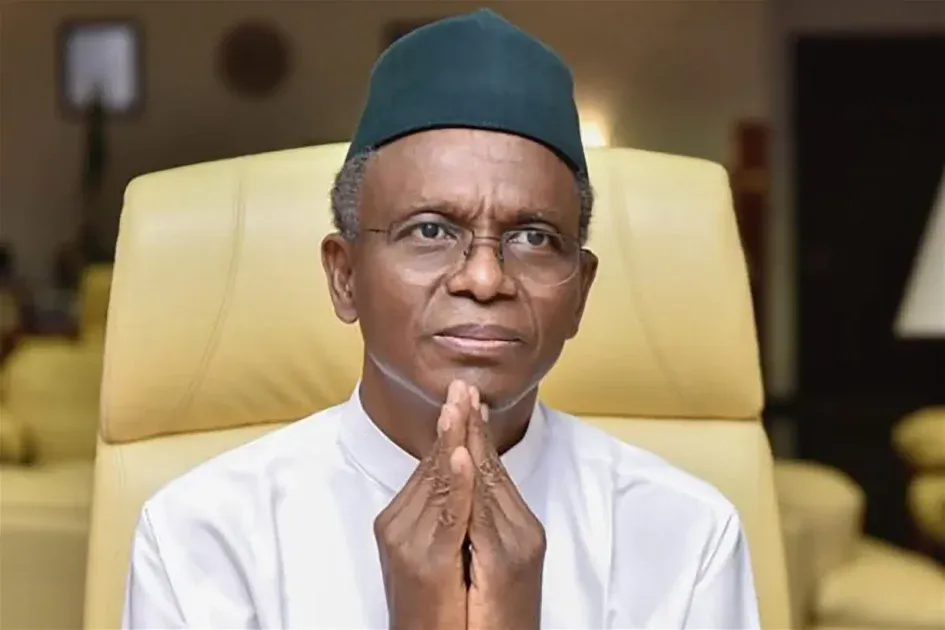
Governor Muhammadu Inuwa Yahaya has dissolved the Gombe State Executive Council and equally approved the termination of the appointment of all political appointees with effect from today, Friday, 26th May, 2023.
However, political office holders in statutory boards and commissions are excluded from this directive. Equally, Local Government Caretaker chairmen will remain in charge of their respective councils until the expiration of their tenure on 19th June, 2023.
Governor Inuwa Yahaya has also accepted the resignation of the Gombe State Head of Civil Service, Alhaji Bappayo Yahaya. In his place, the Governor has approved the appointment of the Permanent Secretary/Principal Private Secretary ( PPS) to the Governor, Ahmed Kasimu Abdullahi as Acting Head of Civil Service.
The Governor expressed appreciation to all the relieved appointees for their invaluable support and contribution to the success of his administration and wished them the best in their future endeavours.
The Federal Government has declared Monday, May 29, 2023 as work-free day for all workers in the country to commemorate the inauguration 16th elected President of Nigeria.
The declaration was made by the Minister of Interior, Ogbeni Rauf Aregbesola, in Abuja on Friday on behalf of the Federal Government.
A statement signed by the Permanent Secretary in the Ministry of Interior, Shuaib Belgore, said the Minister felicitated with all Nigerians on the momentous occasion, commending them for their faith in democracy as expressed in the nationwide election that produced the President-elect and his Deputy being inaugurated and indeed in all elections across the nation.
He enjoined them to continue to support and promote democracy through adherence to the rule of law and uphold all democratic institutions.
“Democracy anywhere is an unfinished business and the only way it can keep developing and serve its end of being the vehicle to good governance and the welfare of all the people is by adhering to its tenets of rule of law, support for democratic institutions, promotion of free and responsible press and advancement of the frontiers of freedom for all the people,” the Minister said.
Ogbeni Aregbesola urged Nigerian also to continue to promote ideals of peaceful coexistence and love for our neighbours, noting that we can only practice democracy and enjoy its dividends in a peaceful environment. The Minister commends all Nigerians for their strident efforts at achieving an unbroken civilian rule and successful change of governments since 1999.
Justice James Omotoso of the Federal High Court, Abuja, Friday awarded N17 million fine against three litigants and their lawyer for filing a frivolous suit seeking to stop the inauguration of the President-elect, Bola Ahmed Tinubu.
The decision is coming just hours after the Supreme Court dismissed another suit filed by the Peoples Democratic Party (PDP) seeking to void the candidacy of Tinubu and the Vice-president elect, Kashim Shettma.
The litigants, Praise Ilemona, Pastor Paul Issac Audu and Dr Anongu Moses jointly instituted the suit praying for an order to halt the May 29 swearing-in of Tinubu.
Dismissing the suit, the court held that it was frivolous and an abuse of court process.
The Judge held that the plaintiffs lacked the locus standi to file the suit, adding that the court could not exercise jurisdiction to hear it because it relates to a presidential election.
The three litigants are to jointly pay the President-elect a sum of N10 million and another N5 million to the All Progressives Congress (APC) who were part of the seven defendants in the suit.
The judgement held that an interest of 10 percentage be placed on the judgment debt per year until when finally liquidated.
Meanwhile, counsel to the petitioners, Daniel Elomah who filed the suit was ordered to pay N1m to Tinubu and the APC each.
Elomah in his motion alleged that the President-elect, Bola Tinubu supplied false information to the Independent National Electoral Commission (INEC) about his age and citizenship status.
Elomah had pleaded with the court to pardon his clients and advised that the court should counsel them against embarking frivolous suit in future.
In his argument, counsel to Tinubu, Prince Lateef Fagbemi SAN, had argued that the suit be dismissed on the ground that the three plaintiffs lacked locus standi to institute it
He submitted that non of the plaintiffs participated in the primary election that produced the President-elect but chose to harass, intimidate and irritate Tinubu through frivolous suit.
Fagbemi SAN further argued that the litigants engaged in gross abuse of court by their multiple cases against Tinubu and the All Progressives Congress in various courts without any reasonable cause of action.
President Muhammadu Buhari has congratulated Kwara State Governor AbdulRahman AbdulRazaq on his emergence as the new Chairman of Nigeria Governors’ Forum (NGF).
Buhari, in a congratulatory message issued by his Spokesman, Malam Garba Shehu, on Friday in Abuja, urged the governor to give his best in providing leadership for the forum.
He commended the governors for their maturity and stability of the NGF over the years, especially in electing new leaders.
The president also acknowledged the significant role which the forum has been playing in stimulating discussions on development, promoting democracy and counseling political leaders on service to the nation.
He was optimistic that the new NGF Chairman would further improve relations, tighten policy issues and provide more opportunities for growth among states and the Federal Government, considering his antecedents in business and government.
The president wished AbdulRazaq the very best in the new assignment.
My feet in the crocodile infested waters of the River Congo
My first glimpse of Kinshasa was the River Congo. As the African World Airline AWA Flight 342 from Accra, Ghana continued to circle in the air while awaiting permission to land, the sight of the gloriously serpentine river was a temporary relief to the anxiety of waiting.
Moments later, when the airport closure due to a ‘VIP Movement’ was over, the aircraft descended into the turbid embrace of a collection of clouds before erupting into the brilliant Congolese sunshine. That was when the river came fully into view. From my aerial position, I could see the river and its fan-shaped web of tributaries as it meandered through the vast mass of land before emptying into the Atlantic Ocean.
A quick investigation confirmed that River Congo is the second longest river in Africa, shorter only than the Nile, as well as the second largest river in the world by discharge volume, following only the Amazon. It is also the world’s deepest recorded river, with measured depths in excess of 220 m (720 ft). With its many tributaries, the River Congo forms Africa’s largest network of navigable waterways.
I was so enthralled by the river that within 24 hours of my arrival in the capital city of the Democratic Republic of Congo, I was by the riverside at the Gombe area of the city for a leisurely evening walk. It was a cool and windy evening and the riverside was full of people. There were joggers, loners, lovers as well as picnicking families and groups. Along the lyrical curve of the riverside, the river elicited a collage of dreams and sundry voices that left a myriad of images in the mind. For the young, the river represented a heart-pounding adventure, for the lonely, a companion, for the weary, a solace and for a writer, a repository of stories.
My first Lunch of fried plantain, chicken, butter and pepper.
The river, a romantic interlude to the difficult history of the Congo’s, is also the dividing line between the capital cities of the two countries.
From my position at the Gombe side of the river, Kinshasa, the capital of the Democratic Republic of the Congo (DRC) was on the right bank, while on the left bank was Brazzaville, the capital of the Republic of the Congo. Spanning the river far ahead in the horizon was a splendid bridge wthatjoined the two capital cities.
Expectedly, some major differences exist between the two equatorial Congo neighbors.
The DCR is much larger in both population and area with a population of about 100 million people and area of 2.345 mill km sq out of which, about 17 million people live in Kinshasa. On the other hand, the Republic of Congo has a population of 5.3 million and an area of 342k km sq with 2.3 million in the capital city of Congo Brazzaville. I was also informed that although my visa to the DRC would not permit me to visit the Republic of Congo, citizens of both Congos do not require visas to visit each other.
Apart from being a formidable navigable waterway, the River Congo is the largest source of hydroelectric power in Africa. When fully operational, the river is said to be capable of providing electricity to half of the African continent.
To the literary-minded, the river is evocative of the famous 1902 short story “Heart of Darkness” by Joseph Conrad. Conrad’s book conjured up an atmosphere of foreboding, treachery, greed, and exploitation. Today, however, the Congo appears as the key to the economic development of the central African interior.
In my usual practice of paying homage to any great river or ocean of my country of visit, I removed my shoes and stepped into the warm waters of the river.
I was still savouring the pleasure of the company of the deepest river in the world when a young man standing close to me shouted in French; “Attention monsieur, il y a des crocodiles dans la riviere” (Excuse me, Mister, there are crocodiles in the river).
I had come to the Democratic Republic of Congo on the invitation of the Congolese Writers Association for the official inauguration of the Pan African Literature Prize which had been endowed by the President of the DRC and current Chairman of the African Union (AU), His Excellency, Felix Tshisekedi. In addition, I was to also visit the Congolese minister for Culture and Tourism in addition to some other literary functions.
Established as a Belgian colony in 1908, the Democratic Republic of the Congo (DRC) French: République démocratique du Congo (RDC and historically Zaire, is a country in Central Africa.
It is, by area, the largest country in sub-Saharan Africa, the second-largest in all of Africa (after Algeria), and the 11th-largest in the world. With a population of around 100 million, the DRC is the most populous officially Francophone country in the world, as well as the 4th-most populous country in Africa (after Nigeria, Ethiopia, and Egypt) and the 15th-most populous country in the world.
It must have rained before my arrival as evidenced by the water-clogged roads which I traversed in a taxi cab that had been arranged by my hosts who had come to the airport to welcome me. With its teeming population of commuters waiting for transport in the congested after-work traffic, Kinshasa reminded me of Lagos. After a long winding and tortious journey through many back streets over potholed-riddled roads, we finally arrived in my hotel, Hacienda Hotel in the highbrow Gombe district of the city.
The following morning after a meeting with the President of the Congo Writers Association, Bia Bietusiwa, and some of his executive members in my hotel suite, I was driven to the venue of my main meeting with other members of the Association at the Kasa-vubu part of the city. To reach the meeting venue, we had to pass through the Boulevard du 30 Juin (Boulevard of 30 June) the main jugular of the city which was named for the date in 1960 when the country gained independence from her colonial master, Belgium.
After the meeting with my writer colleagues at Kasa-vubu (named after the country’s first President) I paid a courtesy call to the Hon Commissioner of Arts and Culture for Kinshasa, Madam Yvette Tabu Minangoy.
The trip took me past the Cathedral Notre Dame then on to Boulevard Triumph with its ‘People’s Palace, the seat of the Congolese parliament said to have been built by the Chinese during the reign of President Mobutu. Next was the country’s national stadium, the Stade des Martyrs (Stadium of the Martyrs) located in the Lingwala district of the city. It is the home stadium of the National Team of the DRC, as well as the local clubs; AS Vita Club and DC Motema Pembe. The stadium which has a capacity of 125,000 for most matches is considered to be the biggest in central Africa.
Also in the vicinity was the Avenue Democracy, with its Food and Towel markets, the defunct BIAC bank, the Police National Camp, and the National Research Centre. In addition, the National Museum (built by the Koreans), as well as the proposed site of the Congolese Cultural Centre (to be built by the Chinese).
Later that evening, I attended a reception in honour of delegates to the inauguration of the Pan African Literature Prize in the residence of Madam Kathryn Brahy, the General Delegate of the Belgium-based NGO, Wallonie Bruxelles International at her official residence at the Gombe area of the city. It was a large gathering of Diplomats, Academicians, Writers and Cultural enthusiasts. The event took place outdoors in the expansive garden of Madam Brahy’s colonial style house. While smartly dressed waiters passed round cocktails and ‘small chops’, a band pelted out beautiful and sonorous ‘Congolese music’ from the veranda.
As I put away the tantalizing food and drink, the music brought back childhood memories of listening to ‘Congo music’ every evening on the local radio in my native Nigeria. Not even the slight drizzle which came later and made us move into the main house could douse the beauty and enjoyment of the evening of cocktails, music, speeches and camaraderie.
Sassy, ebullient and restless, Kinshasa is Africa’s third-largest metropolitan area after Cairo and Lagos.
A street scene in Kinshasa
It is also the world’s largest Francophone urban area, with French being the language of government, education, media, public services and high-end commerce in the city, while Lingala is used as a lingua franca in the street Expectedly, the city is the engine room of the high decibel socio-political activities of the land made famous by a succession of leaders such as Patrice Lumumba, Joseph Kasa-Vubu, Mobutu SeseSeko, Laurent Kabila, his son, Joseph Kabila on to the current President, Felix Tshisekedi.
The DRC’s turbulent history has seen the country colonized, liberated, engaged in civil wars, suffered from military dictatorship and currently contending with the negative activities of some terrorists in the eastern part of the country.
However, despite DRC’s difficult past and current challenges, I found Kinshasa a lively place with a light-hearted festivity amidst a colourful social life. A festival city, with a rich offering of arts and cultural events, I quickly melted into the city with its fast paced, soulful beats of ‘Congo music’ (Rumba Lingala) that seemed to ooze from every corner of the energetic city.
Having realized my love for the popular music, my hosts quickly loaded my phone with the music of some of their stars such as Franco Luambo, Tabu Ley, Simaro Lutumba, Papa Wemba, Koffi Olomide, Kanda Bongo Man, Ray Lema, as well as one of the most talented and respected pioneers of African rhumba – Tabu Ley Pascal Rochereau. These musicians kept me awake every night during my stay as I listened and sometimes danced to their music in the solitude of my hotel room.
The big event, the inauguration of the Pan African Prize took place on a hot afternoon at the National Museum (Musee National De La RDC) located on the Boulevard Triumph (Boulevard Triumphal). Unfortunately, the cab which my interpreter, Edimo had hired to take me to the venue got stuck in a thick traffic snarl in the central part of the city.
Since most of the other dignitaries were already at the venue of the event, Edimo convinced me to abandon the cab and jump on a commercial motorbike (Moto). Although I had ridden motorbikes during some of my previous trips to places such as Rwanda, Uganda and Tanzania, riding a motorbike in the congested Kinshasa traffic was one of my scariest experiences in recent times.
On a number of occasions during the approximately 30 -minute trip to the National Museum, I had to close my eyes out of fear of a collision as my Congolese motorcyclist weaved his way in between tightly packed vehicles and pedestrians with an uncanny dexterity. Much to my relief, we arrived unscratched at the venue of the inauguration in time to be part of the historic and memorable ceremony.
My official visit to the riverside Office of the President of the DRC (Palais de la Nation) the following day was both historical and emotional. After the formalities of meeting with government officials in lieu of President Felix Tshisekedi whom I was informed had to urgently travel out of town, I was taken on a tour of the Presidential Palace.
Standing out of the multitude of historical mementoes was an elaborate tomb at the entrance of the Presidential office. Four enormous fists, sculpted in cement supported a structure that looked like a giant tent toppled with a gold star. ‘’That is the tomb of former President Laurent Kabila’’ my hosts explained. Although I could not inspect the tomb because of the late hour, I was reliably informed that the former President’s corpse rested in a coffin clad in the old colonial flag and enclosed in glass. Next to the tomb was the late President’s statue standing about eight meters high.
As I toured the forecourt of the Presidential Palace that oozed with much history and legend, I walked carefully, stepping tenderly on the grounds that the famous and the controversial had once trodden. I was careful not to disturb the spirits of those that had gone before but whom tradition still believes are looking after the place. The names came tumbling out in my mind; Patrice Lumumba, Joseph Kasa-vubu, Mobutu Seke Seko, Laurent-Desire Kabila…
My last official engagement in Kin (nickname for Kinshasa) was at the National Institute of Arts (Institut National Des Arts- INA) at the Flambeau Gombe district of the city. The occasion was a lecture on the Role of the French Language in African Literature to be delivered by Prof Andre Yoka Lye Mudaba, a veteran Congolese bilingual writer.
The Institute which I was told was for the training of youths in all areas of creative arts was jam packed with writers, musicians, actors among others when I arrived for the mid- morning event. In a corner of the hall, a two- man band was playing some old memorable music with the help of a keyboard and violin.
After a rendition of the country’s national anthem, a danceable fast paced music, the proceedings for the day began with beautiful poetry renditions to the accompaniment of ‘Congo music’.
This was followed by the lecture which centered mainly on the need to encourage Francophone countries to also learn English in order to open up their works and the country to Anglophone countries which he believed are more in number. After my own speech, the event came to a close with the band playing another Congo musical piece in my honor. Inspired by the melodious lyrical piece, I got up to dance much to the admiration of the crowd.
Twilight was setting when my hosts took me on a walking tour of the Barndal and Matonge parts of the city. As we walked down an expanse network of open -air bars, canteens and ‘drinking joints’ full of happy revelers, the percussions of sonorous ‘Congo music’ filled the air. ‘’People usually come here every day to relax after work before going back home’ my hosts explained.
The main delicacy among the patrons, I was informed was the grilled bottom part of turkey. ‘’Nobody wants to eat the main turkey, just the bottom part’’ my friends informed me amidst bouts of laughter.
We finally retired to the Writers secretariat for what appeared to be a farewell reception.
After some speeches, photographs and presentations, we feasted on hearty portions of fried chicken, plantain mutton, fish as well as boiled potatoes and cassava. These were followed by generous doses of assorted drinks before the introduction of the ubiquitous ‘Congo music’ which my hosts sang with gusto and relish alongside the musicians. The more the drinks flowed, the higher the decibel of their voices.
It was a befitting end to my one week visit to my Congolese brothers and sisters.
The Minister of Power, Mr Abubakar Aliyu has said that the Zungeru Hydroelectric Power Plant in Niger State has injected 700 Mega Watts (MW) into the National Grid to boost electricity.
Aliyu stated this during a farewell party for him and the Minister of State, Mr Goddy Jedy-Agba by the Ministry of Power on Friday in Abuja.
He said “Today the Zungeru Hydroelectric Power Plant has become a reality; we have as at today joined the grid with 700MW. Testing started Wednesday night.
“Information has reached us with the pictorial view of the meters showing us that the 700MW has gone on the grid,” he said.
The minister said that the Kashimbila Hydroelectric Power Project, a joint project with the Ministry of Water Resources had been completed.
He said phase one of the project which is the line taking electricity to Yandev in Benue over 240 kilometers, had been completed and inaugurated last week.
On the Siemens project, Aliyu said that the ministry had installed transformers in Abuja, Ajah, Lagos, adding that 10 massive mobile substations had been cleared.
“We have 10 of them at the port and the first one is in Ajah sub-station and some are also on the sea coming, ‘’ he said.
Aliyu also said that the ministry of power on Wednesday presented to the Federal Executive Council (FEC), a contract for over 13, 000kilometers distribution line.
He said that the contract was approved for the Presidential Power Initiative (PPI).
“One thing we should have in our minds is that these things don’t happen just at once, it is a process. These bring about delays of some of the projects,” he said.
The minister urged all players in the industry to continue to work together in synergy to be able to achieve the desired results.
According to him, electricity is a value chain from generation to distribution, urging players to work in synergy.
Aliyu commended members of staff of the ministry and stakeholders in the sector, for the cordial working relationship.
He said that the ministers would not have achieved what they achieved without the support of the staff of the ministry.
Also speaking, the Minister of State for Power, Jedy-Agba also thanked the staff for the working relationship that existed between them.
“It is a long journey but I enjoyed working with you all as you took directives from us and you implemented them,” he said.
Al Shabaab fighters on Friday attacked a military base housing Ugandan forces of the African Union peacekeeping mission in Somalia, with a Somali captain saying both sides suffered heavy casualties.
The militants attacked the base belonging to the African Union Transition Mission in Somalia (ATMIS) in Bulamarer, 130 km (80 miles) southwest of the capital Mogadishu.
Uganda People’s Defence Force (UPDF) deputy spokesman Deo Akiiki“there was an attack this morning at our base by elements of al Shabaab but we are waiting for official communication from ATMIS headquarters.’’
ATMIS had been assisting Somalia’s federal government in its war against the Islamist group.
The mission was assessing the security situation, it said on Twitter, without providing details.
Al Shabaab claimed in a statement that it carried out suicide bomb attacks and killed 137 soldiers.
There was no immediate official confirmation of the casualties and the group tends to give figures that differ from those issued by the authorities.
The militants attacked an ATMIS base and an adjacent one belonging to the Somali military, a Somali military captain who gave his name as Abdullahi told Reuters from the Lower Shabelle region.
“That prompted a fierce battle for hours. All groups including al Shabaab suffered heavy casualties,” he said.
Residents of the town said they woke up to the sound of huge explosions and heavy weapons.
Local resident Rukia Farah said “Now we see al Shabaab in the town. We cannot know how many died. We are not hearing any shots from ATMIS and government now.’’
Since 2006, the militant group has been fighting to topple the government and establish its own rule based on its strict interpretation of Islamic law.
A government pushback since last year has seen the group’s control erode over vast swathes of land. But it is still capable of launching significant attacks on government, commercial and military targets.
Nigeria’s number one ranked female tennis player, Marylove Edwards, is gradually closing in on her third straight women’s singles tennis open championship title in Abuja.
The country’s top-ranked female player had won both the 2023 VEMP Open as well as the DavNotch Tennis Open Championship titles, respectively in Abuja.
The number one seed has so far shown no signs of fatigue as she raced through her first and second rounds as well as her quarter-final fixtures of the ongoing CBN Tennis Open Championships.
Edwards strolled past number 39 ranked Ronke Akingbade 6-3, 6-1 in the first round and followed it up with another 6-3, 6-1 thrashing of number 12 ranked Favour Moses 6-3, 6-1 in the second round.
She then defeated number 19 ranked Khadijat Mohammed 6-4, 6-1 in the quarter-final on Thursday.
The defending champion next faces number 19 ranked Rebecca Ekpenyong in the semi-final on Friday for a shot at a possible third straight title in Abuja.
She told newsmen that she was looking to carry the momentum from her title victory in the last two championships in Abuja into the CBN Tennis Open final.
“We have reached the business end of the championship and so it’s a time to stay disciplined and focused like never before.
“It’s not the moment to stop and disconnect your mind.
“It’s the moment to stay focused and to keep holding that good momentum after winning 13 matches in a row here.
“My eyes are totally fixed on the prize to ensure I defend my title once again and make it three championship wins in a row here,” she said.
In other quarter-final matches decided on Thursday, number one ranked player, Uche Oparaoji, kept his hope of a second title alive after he defeated number 18 ranked player, Sylvanus Ayang, 6-4, 6-4.
Number 12 ranked player, Usman Kushimo, knocked out former champion Thomas Otu, 6-3, 6-3, while number four seed, Peter Lawal, beat Canice Abua 6-4, 6-1 to advance to the semi-final of the men’s singles event.
Also, number 24th ranked Musa Mohammed caused an upset as he stunned number eight seed, Ikechukwu Iloputa, 6-4, 4-6, 6-3 at the end of a pulsating encounter to claim the final ‘top eight’ spot.
The 45th CBN Tennis Open Championships, which served off on Monday, is expected to end on Sunday at the National Tennis Centre, Moshood Abiola National Stadium, Package B.
No fewer than 10 suspects have been arrested by the Police Command in Bauchi for various crimes, including rape and other criminal conspiracies in the state.
This is contained in a statement on Friday in Bauchi, by SP Ahmed Wakil, spokesperson of the command.
Wakil said that the suspects were arrested for crimes bothering on alleged rape and thuggery.
He explained that the operatives of the command were able to track five suspects for alleged rape and five others who engaged in various forms of thuggery and criminal conspiracy within the Bauchi metropolis, Dambam, Toro and Itas-Gadau Local Government Areas (LGAs).
“Investigation is ongoing, and efforts are being intensified to apprehend other accomplices.
“The suspects will be charged to court for prosecution on completion of the investigation,” he said.
The spokesman said that the Commissioner of Police (CP) in the state, Aminu Alhassan, has commended the operatives for their dedication and professionalism.
Alhassan also assured residents of the state of the command’s unwavering commitments toward the security of lives and property in the state.
He reiterated that there will be no hiding place for criminals in the state, urging residents to remain vigilant and security conscious.