Author: admin

  • Chief Solomon Enuma Azuka: Here Was a Soul in Whom No Guile Did Dwell

    Chief Solomon Enuma Azuka: Here Was a Soul in Whom No Guile Did Dwell

    By

    Romanus Ikechukwu Azuka

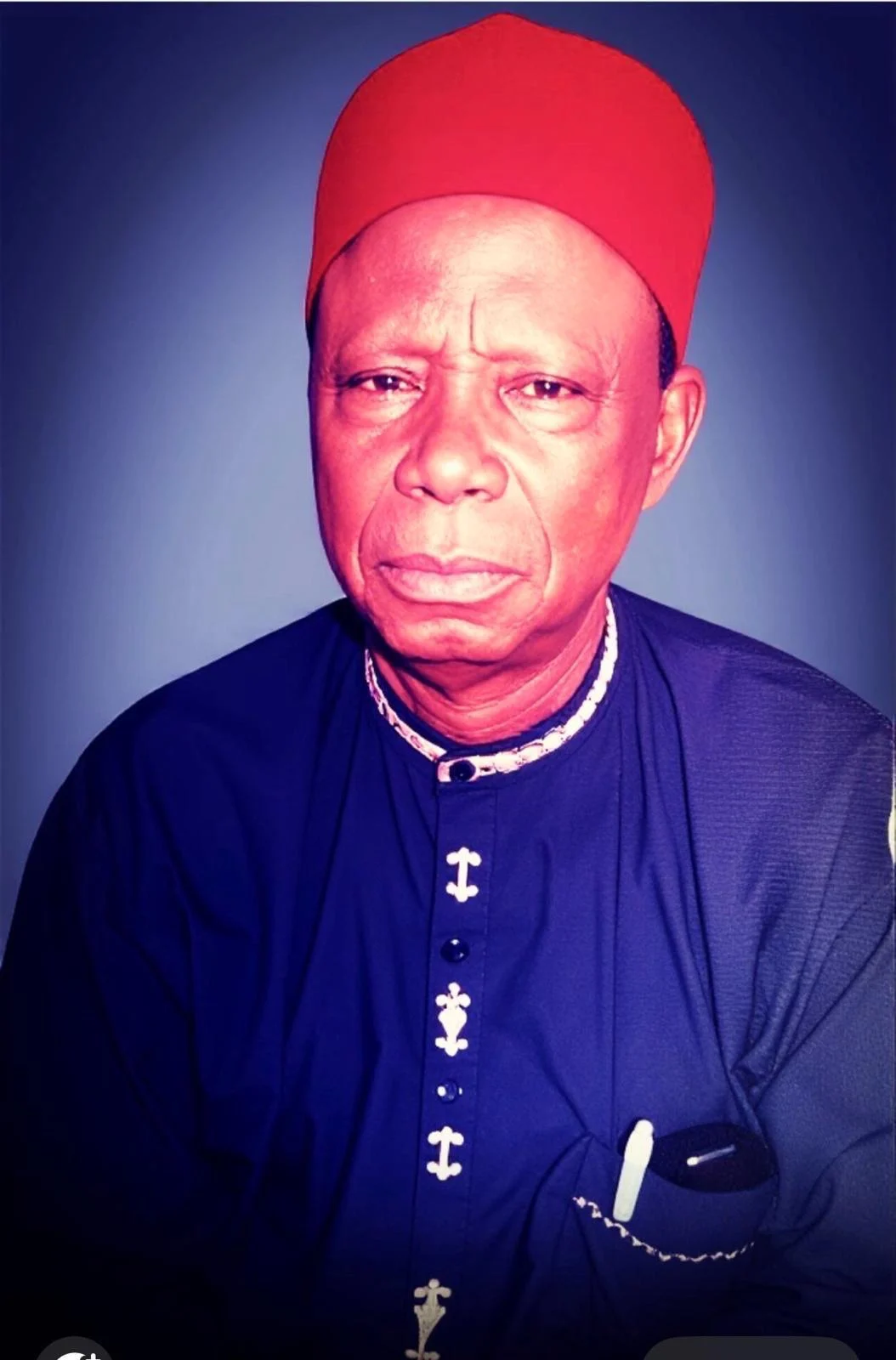
    In the annals of quiet heroism, few lives shine as steadily as that of my brother, my boss, my second father, my brother sui generis. The third of five siblings and the firstborn son of the first wife, Mrs. Lucy Nwamgbeke Azuka, he became the moon among all the stars of the family, illuminating every path without ever casting a shadow of favoritism or pride. He took care of everybody: family members, relatives and beyond, yet never abused that central privilege. No one can claim exemption from his benevolence; he was a true man of the people, amiable par excellence, with no enemies. He loathed flashlights and spotlights, preferring the gentle glow of quiet service. He never hurt a fly, lived without pretense, and set his house, and the extended family’s, in perfect order long before the world demanded it. Jordan Peterson’s rule resonates eternally here: ” Set your house in perfect order before you criticize the world.” He did precisely that, with magnanimity, generosity and resolute altruism—and left a legacy that outlasts tragedy. He was a man without cants.

    Born on December 31, 1936 in humble circumstances in Ojoto, he carried forward a chain of resolve forged in pain and providence, becoming the architect of equity for his family and beyond.

    The roots trace to our father, Chief Francis Okeke Nnaoma Azuka ( Kwaji-Kwaji), a man of unlettered depth whose rage at humiliation became the family’s unbreakable vow. With only one sibling, a strong-willed younger brother. Stubborn. Fearless. He lived far away, in Ahoda, Rivers state, with an older cousin. Their relationship was turbulent, often marked by quarrels. One day, a letter arrived. It was from that distant city. A letter our father could neither read nor reply to. Approaching a literate man from our village for aid, he met cruelty: the man demanded he cultivate cocoyam on massive land just to read it, and again for the reply. Twice he toiled in insult, fetching tools, laboring under mockery, all for words that should have been free. Rage consumed him; shame scarred him. He swore then: no child of his would suffer such degradation. Education would shield them forever.

    Had our father been schooled, he would have been a historian or lawyer, his stories never rushed, always dressed in rich preambles, layered with context and flair. Instead, his illiteracy fueled determination: every child would read, write , and rise. He kept that oath.

    This vow propelled my boss to the Merchants of Light Secondary School, Oba (1956 set), founded in 1946 by the renowned Dr. Enoch Ifediorah Oli–lde Oba, Oxford -educated. As the only one among his peers to attend secondary school, he arrived worst-dressed, sandals perforated, sleepy from 8-mile treks after dawn farming. Exhaustion often overtook him; he would nod off in class, head resting on folded arms amid the murmur of lessons. On a fateful day during one such “sleeping session”, the principal and owner of the school, Dr. Oli himself, approached quietly and touched him awake. The great man inquired gently: Who is your father? From which town? The neighboring one, came the reply. What does he do for a living? The truth poured out: a farmer who carried palm wine on his head over 10 miles to sell at Onitsha markets. Dr. Oli , marvelled at such humble sacrifice in an era when education was a rare luxury, extended a personal invitation to our father. Our father, deeply honored, went and shook hands with the great Oli of Oba, one of his lifelong boasts, recounted with pride again and again, as if the touch of that hand carried the weight of possibility itself. In those days, excelling in studies earned comparisons to Zik or Oli himself, such was the principal’s fame as a beacon of learning. He completed his studies in 1956, carrying away a creed of education as equalizer, opportunity without favoritism.

    Upon finishing school, like many educated Nigerians, he sought the Post Office, the coveted civil service prize. The forms were exhausted. Dejected on the balcony, frustration settling heavy, he prepared to leave. Then a stranger beckoned from the side. The man, observant and ordinary, called him over and spoke with simple directness: ” Why don’t you try Customs and Excise? It’s a new department. Not every person should work at the Post Office.” My boss, ever quiet and agreeable, listened. He took the form, filled it out. That single act—prompted by a stranger’s gentle nudge, proved one of the best decisions of his lifetime. In 1959, he joined the Department of Customs and Excise; postings followed from Lagos to Port Harcourt ( his golden peak), Jos ( during my UniJos days), Aba , and then back to Lagos where he retired in 1994. In 1971, he married madam Veronica Nwogo Azuka, beginning a shared journey of dignity and care.

    Por Harcourt proved providential. Had his influence not anchored me there, l might have missed becoming a Dengramite.

    After passing Common Entrance in Primary 5, my boss refused premature advancement: “Finish primary six, earn your First School Leaving Certificate.” Then: “Attend a grammar school.” I searched; DMGS was my first choice. It was the last published in the state newspaper, if unseen, I’d have left Port Harcourt for Ojoto to repeat primary six. Returning from Ojoto that evening, he yelled my name in anger, assuming failure. Quietly, l approached. He declared that l should be returning to Ojoto to repeat primary six since I had failed. I said that l made it. “What school?” I revealed: “the exact grammar school you wanted. DMGS.” He stepped forward and shook my hands. “Congratulations!” -the first and last such gesture from a reserved man. I knew then I made him proud.

    He was my second father, training me identically to his children—no discrimination despite my mother as second wife.

    Two deeds he performed stand as monuments to his magnanimity and generosity, teaching me , until this day, to detest discrimination in family and to recognize the purest form of altruism.

    My mother, Mrs.Florence Ego Azuka, was the second wife. Custom and tradition imposed no obligation on him to build a house for her. Yet he did—not merely a house, but one identical in every detail to the one he built for his own mother. The same design, the same structure, the same time of construction, the same dignity. That perfect sameness struck me deeply then and echoes in me still. It was no small gesture; it was a deliberate, silent declaration that no one in the nfamily would be treated as lesser, no matter the circumstances of birth or marriage. In that act of equity, he taught me the ugliness of favoritism and the beauty of impartial love.

    Another deed, equally luminous, occurred in the middle 1970s, when electricity was still a luxury in our town. Not for us. He purchased a giant Lister generator and ensured that each of the five clustered family compounds ( out of the six grand branches) received reliable power. Wires were run, connections made, light brought to homes that had known only darkness. The sixth branch lived far away, but the five he could reach—he reached. Whenever l read Jordan Peterson’s words about putting one’s house in order before attempting to rule the world, these memories flood back. He ordered not just his own home, but the homes of his relatives, lending a brother’s hand when no one else could or would. That was generosity in its purest form—altruism without fanfare, a quiet lending of strength to those bound by blood.

    Amid the Nigerian Civil War( 1967-1970) when Biafra conscripted aggressively—men stopped on roads, pulled from travels—divine providence intervened. Returning from a Nnobi meeting on a bicycle, he was forcibly enlisted. In camp queuing recruits, a bomb landed. The man ahead died instantly, stomach emptied in the blast. It could have been him. One step, one shift—and no further story: there might not be DMGS, no UniJos, and maybe not even Uninove, São Paulo, and by extension, Brazil. Six children across continents would not be. Providence spared him, allowing light to spread.

    Yet in quiet flashes, the question arises: Was the dementia —-the slow extinguishing we witnessed in Lagos the price for that salvation? Why grant escape from the bomb, only to claim mind and dignity in age? The man who ordered chaos into comfort, who never harmed, reduced to frozen helplessness.

    This enigma ignited fully last year during my mother’s burial. One of my cousins, Mr. Linus Ilonze, knowing how deeply l cherished him, warned me before I even left São Paulo: it would not be advisable to go upstairs to see him, given my emotional nature. I normally stayed in his Lagos home. When I arrived, his last son, Chibuzor, a lawyer, told me to go up and see him. I refused, relaying the cousin’s caution. He insisted that it didn’t matter. Almost immediately, my brother’s wife came downstairs and urged me again. I refused once more, explaining why. She gave almost the same reassurance. I thought the cousin had exaggerated. After a few minutes, l summoned courage and climbed the stairs.

    Behold—the exact moment: the paid caregiver and my boss’s wife were carrying him from the shower to the living room. His body frozen, mouth wide open, no flicker of consciousness, no recognition—the unmistakable signs of advanced dementia had taken him completely. I froze. The peak sensation overwhelmed—no movement, only shock. When awareness returned, rage consumed me wholly. Why my beloved boss? Why that generous man who couldn’t hurt a fly? Just why him? I refused to accept it.

    That moment in the living room became my own funeral oration—not spoken, but felt. Like Mark Antony standing over Caesar’s body, l could only say to myself what he declared to the plebeians: “My heart is in the coffin there with Caesar, and l must pause till it comes back to me.” I found myself undone by what l saw—not slain by daggers, but by something far more merciless: the slow erasure of a man l loved. In Lagos, l met silence, and my heart stayed upstairs in that room, entombed with the man who had once brought light to us all. It has never fully returned; it lingers there still, pausing the world whenever memory revives the sight.

    Those memories of that Lagos encounter still haunt me. That image haunts as Duncan’s death haunts Macbeth. Macbeth slays innocent, sleeping Duncan—grace and order—unleashes curse: “Sleep no more! Macbeth does murder sleep.” Guilt invades relentlessly—blood no ocean washes, hallucinations, Paranoia. Though there is no blood shed here, the parallel is merciless: seeing my boss—embodiment of order, equity, harmless goodness—murdered in dignity by dementia, consciousness extinguished—shattered inner peace irrevocably. Sleep flees in memory; the sight replays, provoking unquenchable anger at injustice.

    That was when the question began: Why do good people suffer?

    Fyodor Dostoevsky, in The Brothers Karamazov’s “Rebellion,” voices this torment through Ivan. Confining anguish to innocents—the blameless untainted by sin—Ivan protests any harmony purchased with unavenged tears: “If even one child’s suffering is required to make the grand design of truth or justice complete, l reject it completely. That kind of truth isn’t worth the price of a single innocent tear. I give God back my ticket—l won’t accept a world built on such cruelty.” No mother has the right to forgive the person who tortured her child just so the universe can have its supposed harmony. My boss’s decline—harmless, upright—evokes that innocent affliction. Ivan’s rebellion mirrors my Lagos rage: the price too high; no explanation suffices when goodness fades without cause.

    In the same Dostoevskian spirit, another profound moment from The Brothers Karamazov resonates here: in Ivan’s parable, “The Grande Inquisitor”, Christ returns to Earth during the Inquisition. The old Inquisitor arrests Him and delivers a long speech: “You offered people freedom, but they can’t bear it. They want bread, not choice; they want miracles and mystery, not responsibility. The Church has fixed Your mistake—we give them security and control instead of freedom, and that’s what they truly need for happiness.” Christ offers no words, no defence, no rebuttal. He remains silent. Then, in that silence, He steps forward and kisses the lnquisitor gently on his withered lips—an act of pure, forgiving love that burns in the old man’s heart, yet changes nothing of his resolve. Dostoevsky draws on the Gospel of John, where Christ is often silent before accusers ( as before Pilate), answering not with argument but with presence and compassion—the seed of love’s wordless power, as in the foot-washing humility.

    So too, in the face of the unanswerable—why the harmless, benevolent man who illuminated so many lives should fade into Frozen silence—there may be no verbal resolution. The question “Why him?” echoes Ivan’s rebellion, yet the kiss whispers a different possibility: love persists beyond explanation, forgiveness meets injustice without justification, and quiet presence endures where words fail. My boss’s life was that kiss— wordless benevolence to all, never abusing privilege, loathing the flashlights and spotlights. In Lagos, l met silence; perhaps the enduring response is the same: to kiss the memory with reverence, to let love burn on in protest and gratitude.

    The Book of Job confronts the enigma starkly: blameless Job loses all, yet “Why” remains a mystery. It tells of a truly good man who loses everything—children, wealth, health—for no apparent reason. His friends insist he must have sinned. Job refuses: “I did nothing to deserve this.” He demands answers from God. God does not give a reason. Instead, God speaks from whirlwind, showing the vastness of creation: ” Where were you when l laid the foundations of the earth?” Job is humbled, not explained to. He accepts the mystery and is eventually restored— not because the pain made sense, but because faithfulness endures.

    Ecclesiastes echoes futility: time and chance befall all. Theologically, in a fallen world, tragedy touches the innocent and guilty alike. Philosophically, life’s tragic structure—entropy, fragility—claims even the great. Jordan Peterson framed it: tragedy inherent, response voluntary responsibility amid chaos. For him, tragedy isn’t something that happens to some people— it’s the basic condition of being alive. Everything breaks down, people hurt each other, death waits. The only real answer is to step up anyway: willingly carry your share of the suffering , take care of what you can control, and build meaning out of the mess.

    My boss lived that response: equal homes for his mother and mine ( no obligation, yet identical structure—teaching detest of discrimination); giant Lister generator in mid -1970s powering five of six family branches when electricity rare. Great leadership, foresight, collective well-being.

    An ancient Greek tale, too, casts its light on this tension. Democritus, the Laughing Philosopher, laughed at everything—the follies of men, the vanities of power, the absurdities of existence. His constant laughter so alarmed his fellow citizens that they summoned Hippocrates, the great physician, to examine him for madness. After spending time with him, Hippocrates declared: this is not madness; this is the wisest man on earth. Democritus saw clearly enough to laugh where others despaired.

    Heraclitus, his near-contemporary, was the opposite —-the Weeping Philosopher. He wept at the injustices, the endless flux, the strife that defines the world. “War the father of all,” he said; everything changes and suffering woven into the fabric. His tears were not despair but honest recognition of life’s tragic current.

    My brother lived between these two postures. In his daily deeds, he was Democritean—quietly amused at life’s pretensions, ordering chaos with steady hands, bringing light without seeking applause, laughing in the gentle way of one who knows the absurdity of discrimination and chooses equity anyway. Yet in Lagos, when l saw him carried, frozen, mouth agape, the victim of advanced dementia, l met the Heraclitean river full force. The tears—my tears, my rage—came unbidden, as they came to Heraclitus, before the injustice of a good man extinguished.

    Neither laughter nor weeping alone suffices. Wisdom, perhaps, lies in bearing both: to order the house while the world burns, to laugh at folly while weeping for the innocent who suffer. My second father bore that tension without complaint. Hippocrates might have examined him and said the same: here is a wise man.

    The question—Why do good people suffer?”—-persists, unconditional and raw. No tidy resolution erases pain; anger is love’s protest. Yet his legacy endures: light brought where darkness reigned, education extended without bias, family ordered with magnanimity. From cocoyam’s humiliation, Merchants of Light Secondary School,Oba, to the admission to the department of Customs and Excise, to the bomb’s near-miss to Lagos’s revelation, his life testifies: goodness multiplies beyond suffering. In any next world, bonds renew—l choose him again.

    Our father called him Enuma.
    His mother called him the same.
    His devoted wife called him Solo.
    His folks called him collector.
    His friends called him okaa Customs.
    His extended kin, in playful mischief, called him “Bunker”—for his quiet, recluse ways.
    In school, he was Solomon.
    His colleagues in the office called him chief Azuka.
    His younger sibling called him Obieze
    And l—l called him my boss.

    Different names. The same man.

    He passed on January 23, 2026.

    He left behind six children— Chinwe, Obiageli, Ifeanyi, Benji, Nwike and Chibuzor. Three live in Nigeria, and the other three live in the United States.

    His light shines on.

  • Iran Declares Strait of Hormuz Closed, Threatens to Fire on Passing Ships

    Iran Declares Strait of Hormuz Closed, Threatens to Fire on Passing Ships

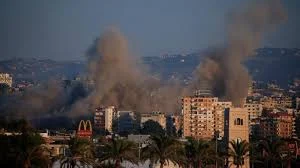
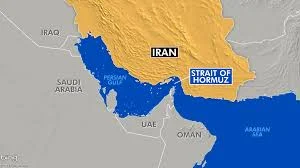
    Iran has reportedly declared the Strait of Hormuz closed and warned that it will fire on any vessel attempting to transit the critical maritime corridor, according to Iranian media reports.

    The move raises immediate concerns over global energy supplies, as roughly one-fifth of the world’s oil consumption flows through the narrow waterway.

    The strait, situated between Iran and Oman, connects the Persian Gulf to the Gulf of Oman and onward to the Arabian Sea.

    At its narrowest point, the strait is approximately 21 miles (33 kilometers) wide, with shipping lanes just two miles (3 kilometers) wide in each direction, making it one of the world’s most strategically sensitive maritime chokepoints.

    Critical Artery for Global Oil

    According to data from analytics firm Vortexa, more than 20 million barrels per day of crude oil, condensate, and refined fuels passed through the strait on average last year.

    This accounts for about 20% of global petroleum liquids consumption.

    The strait serves as the primary export route for several members of the OPEC, including Saudi Arabia, United Arab Emirates, Kuwait, Iraq, and Iran itself.

    The majority of these exports are destined for Asian markets, which are heavily dependent on Gulf crude supplies.

    Any disruption to traffic through the strait could therefore trigger sharp increases in global oil prices and heightened volatility in energy markets.

    LNG Shipments Also at Risk

    The potential closure also threatens global liquefied natural gas (LNG) flows. Qatar, one of the world’s largest LNG exporters, sends nearly all of its LNG shipments through the Strait of Hormuz. Any sustained disruption would have far-reaching consequences for gas-importing nations, particularly in Asia and Europe.

    Strategic and Economic Implications

    Given the strait’s narrow shipping lanes and high volume of daily traffic, any attempt to enforce a closure would significantly escalate regional tensions and could prompt international naval responses to ensure freedom of navigation.

    Energy analysts warn that even the threat of military action in the area is enough to rattle global markets. With over 20 million barrels per day transiting the waterway and critical LNG supplies at stake, the Strait of Hormuz remains one of the most strategically vital—and vulnerable—energy corridors in the world.

  • Africa Tops Global Rise in Breast Cancer, Nigeria Records 542% Increase

    Africa Tops Global Rise in Breast Cancer, Nigeria Records 542% Increase

    African nations have recorded the sharpest rise in new breast cancer cases globally, with Equatorial Guinea leading the surge at 312 per cent, according to a new report from the Global Burden of Disease Study published on the website of The Lancet.

    The study, released Monday, analyzed data from population-based cancer registries, national vital registration systems, and interviews with family members or caregivers of women who died from breast cancer. It provides updated global, regional, and national estimates of female breast cancer burden and associated risk factors from 1990 to 2023 across 204 countries and territories, with projections extending to 2050.

    Equatorial Guinea Records Highest Increase

    Between 1990 and 2023, Equatorial Guinea recorded the highest increase in new breast cancer cases worldwide at 312 per cent. The country also saw the second-highest rise in breast cancer-related deaths, which climbed by 212 per cent during the same period.

    Other African countries experiencing sharp increases in new cases include:

    • Ethiopia – 207 per cent
    • Egypt – 189 per cent
    • Democratic Republic of the Congo – 160 per cent
    • Mauritania – 141 per cent
    • Uganda – 135 per cent
    • Mali – 133 per cent
    • Liberia – 129 per cent

    Nigeria Faces Growing Public Health Burden

    In Nigeria, the study revealed a substantial increase in both breast cancer incidence and mortality, highlighting an escalating public health crisis and the urgent need for stronger prevention, early detection, and treatment strategies.

    In 2023 alone, Nigeria recorded 53,500 new breast cancer cases — representing a staggering 542.9 per cent increase since 1990. The age-standardised incidence rate stood at 72.1 per 100,000 in 2023, marking a 108.8 per cent rise over three decades.

    Breast cancer deaths in Nigeria reached 26,200 in 2023, reflecting a 408.3 per cent increase since 1990. The age-standardised death rate rose to 38.7 per 100,000, a 73.5 per cent increase compared to 1990 levels.

    Global Death Toll Projected to Rise by 44% by 2050

    Globally, the study projects that annual breast cancer deaths will increase by 44 per cent — from 764,000 in 2023 to nearly 1.4 million by 2050 — with most of the rise occurring in low- and lower-middle-income countries.

    The number of new cases worldwide is also expected to climb by about one-third, rising from 2.3 million in 2023 to more than 3.5 million by 2050.

    Breast cancer remains the most common cancer among women globally. In 2023, an estimated 2.3 million new cases were diagnosed, with 73 per cent occurring in high- and upper-middle-income countries.

    The study found that women aged 55 and older were three times more likely to be diagnosed with breast cancer in 2023 than women aged 20 to 54. However, incidence rates among younger women have risen since 1990, while rates among older women have remained relatively stable.

    Researchers noted that these differences may reflect shifting age patterns and variations in risk factors between pre- and post-menopausal women.

    Lifestyle Risk Factors Account for 28% of Cases

    The report attributed 28 per cent of global breast cancer cases to six modifiable risk factors, including smoking, high blood sugar, obesity, high red meat consumption, alcohol use, and low physical activity.

    High red meat consumption had the largest impact, contributing to nearly 11 per cent of total healthy life lost. High alcohol intake and low physical activity each accounted for two per cent of healthy life lost.

    The study emphasized that maintaining a healthy lifestyle — avoiding smoking, engaging in regular physical activity, reducing red meat intake, limiting alcohol consumption, and maintaining a healthy weight — could significantly reduce breast cancer risk.

    Call for Stronger Health Systems

    The study’s lead author, Lisa Force, stressed the need for coordinated global action to strengthen health systems.

    Force highlighted the importance of ensuring functional healthcare systems capable of early diagnosis and comprehensive treatment in all countries. She also called for reducing the cost of breast cancer therapies and integrating essential breast cancer services into universal health coverage schemes to protect patients from catastrophic healthcare expenses and improve survival outcomes.

    As projections point to a continued rise in cases and deaths, experts warn that without urgent interventions, the global burden of breast cancer — particularly in Africa — will intensify in the coming decades.

  • Global Migrant Death Toll Remains Alarmingly High – UN

    Global Migrant Death Toll Remains Alarmingly High – UN


    At least 7,667 people died or went missing along migration routes worldwide last year, the United Nations’ International Organization for Migration (IOM) said on Thursday, warning that the true figure is likely far higher due to underreporting and shrinking resources for aid organisations.

    The documented cases reflect only confirmed incidents, the IOM said, noting that many deaths can no longer be traced after a sharp decline in funding for search, rescue, and monitoring operations.

    The agency stressed that hundreds of additional migrants are believed to have disappeared without any official record.

    In 2024, the IOM recorded approximately 9,200 migrant deaths globally — the highest number since the agency began systematically tracking fatalities in 2014.

    So far this year, the situation appears to be worsening in key regions.

    As of Feb. 24, at least 606 deaths have been registered in the Mediterranean Sea, more than double the 285 recorded during the same period in 2025, according to IOM data.

    The agency said the figures exclude many migrants reported missing by families and humanitarian groups, underscoring what it described as a persistent and deadly protection gap.

    The IOM urged governments and donors to provide greater financial support for rescue organisations and called for stronger international action against smuggling networks that prey on vulnerable migrants.

    “The continued loss of life on migration routes is a global failure we cannot accept as normal,” said IOM Director General Amy Pope.
    “We must act now to expand safe and regular routes, and ensure people in need can be reached and protected, regardless of their status.”

    Last year, nearly 2,200 people died or went missing while attempting to cross the Mediterranean, while around 1,200 perished on the Atlantic route between West Africa and the Canary Islands. Both totals were lower than those recorded in 2024, the agency said.

    However, risks along lesser-monitored routes remain acute.

    Three boats were recently found along the coasts of Brazil and islands in the Caribbean, with migrants believed to have died while attempting the long and dangerous crossing from West Africa toward the Canary Islands.

    For the third consecutive year, the highest number of migrant deaths — nearly 4,000 — occurred on routes in Asia and between the Horn of Africa and the Arabian Peninsula.

    The IOM attributed much of this trend to an increase in people fleeing Afghanistan, as prolonged instability continues to drive displacement across the region.

    The agency warned that without urgent investment in safe migration pathways, humanitarian response, and coordinated international enforcement, preventable deaths along migration routes will continue to rise.

  • FG to Spend N21.68bn on First Phase of NAMA Headquarters in Abuja

    FG to Spend N21.68bn on First Phase of NAMA Headquarters in Abuja

    The Federal Government has approved the sum of N21.68 billion for the construction of the first phase of a new corporate headquarters for the Nigerian Airspace Management Agency (NAMA) in Abuja, as part of efforts to modernise Nigeria’s aviation infrastructure.

    The Minister of Aviation and Aerospace Development, Festus Keyamo, disclosed this on Thursday during the groundbreaking ceremony for the project.

    According to the minister, the contract for the first phase has been awarded to NHD Interbiz Projects Ltd, with a completion period of 30 months.

    “We will hold them to the highest standards of quality and timelines as stipulated in the agreement.
    The contract is valued at N21.68 billion, inclusive of all taxes, with a completion period of 30 months,” Keyamo said.

    Project Tied to Executive Order 12

    Keyamo described the project as a deliberate implementation of Executive Order 12, noting that it reflects the Federal Government’s commitment to coordinated infrastructure development.

    “This groundbreaking is not an isolated event. It is a direct and deliberate action pursuant to Executive Order 12,” he stated.

    He said the government remained focused on upgrading infrastructure that underpins the safety, efficiency and growth of Nigeria’s aviation sector, adding that many agencies under the ministry had operated for years in outdated and fragmented facilities.

    Integrated, Technology-Driven Facility

    According to the minister, the new headquarters will consolidate NAMA’s administrative and operational units into a modern, purpose-built facility, integrating executive management offices with a state-of-the-art Air Traffic Management Centre.

    “With this new headquarters, we are providing a conducive environment that fosters innovation, enhances collaboration and boosts staff morale,” Keyamo said.

    He explained that the integrated structure would improve efficiency, strengthen safety oversight and enable real-time operational responsiveness in the management of Nigeria’s sovereign airspace.

    Procurement Compliance and Economic Impact

    Keyamo stressed that the project strictly complied with the Public Procurement Act 2007, following a transparent and competitive tender process.

    He linked the project to President Bola Tinubu’s Renewed Hope Agenda, describing it as a catalyst for job creation, economic stimulation and enhanced national security.

    “Ultimately, it builds confidence in the aviation sector, encouraging investment and seamless movement of people and goods,” he added.

    NAMA MD Calls for Excellence

    Also speaking at the ceremony, the Managing Director of NAMA, Ahmed Farouk, described aviation as an interdependent ecosystem that thrives on strong partnerships.

    “To the contractor, NHD Interbiz Projects Ltd., we expect nothing short of excellence and timely completion,” Farouk said.
    “As we turn the sod today, we are laying the foundation for the future of air navigation services in Nigeria.”

    The new headquarters is expected to serve as a central hub for air navigation management, reinforcing Nigeria’s position in regional and international aviation operations.

  • Nigeria’s Youth Confab Is Being Replaced, Not Rescheduled

    Nigeria’s Youth Confab Is Being Replaced, Not Rescheduled

    As the 2026 federal budget advanced through the National Assembly, complete with the familiar reassurances that priority sectors had been fully captured, one of the government’s most consequential decisions revealed itself not through what was announced but through what was quietly thinned out. In the budget defence delivered by the Minister of Youth Development, Ayodele Olawande, the National Youth Conference, once framed as a generational intervention rather than a routine programme, appeared only as an idea suspended in abstraction, absent the timelines, funding clarity, and institutional urgency that signal political intent.

    In its place stood a confident architecture of skills-based interventions, from digital training pipelines to innovation challenges and vocational grants, all of which align neatly with a governing instinct that prefers administrable solutions to contested dialogue, and measurable outputs to unpredictable engagement. Within this framework, youth are increasingly addressed as economic units expected to adapt continuously, rather than as political actors whose collective grievances demand confrontation rather than containment.

    This recalibration matters because Nigeria has walked this road before. When President Bola Ahmed Tinubu announced the Youth Confab in 2024, it came as a response to the #EndBadGovernance protests against a backdrop of deepening insecurity, excruciating cost of living crisis, and policy reforms that many young Nigerians experienced as exclusionary rather than corrective. The promise of a national youth dialogue carried weight precisely because it echoed an older recognition in Nigerian politics: that when grievances accumulate faster than institutions can absorb them, dialogue becomes a stabilising necessity rather than a symbolic gesture.

    That lesson was imperfectly learned during previous national dialogue efforts. Under President Olusegun Obasanjo, the 2005 National Political Reform Conference was convened amid mounting tensions over federalism, resource control, and representation. Despite its breadth, the conference collapsed under political calculation, leaving core questions unresolved, many of which later resurfaced with greater intensity in electoral disputes and regional agitation. Nearly a decade later, President Goodluck Jonathan’s 2014 National Conference produced extensive recommendations, yet its timing, too close to a charged election cycle, ensured that its outcomes were shelved rather than institutionalised.

    In both cases, the pattern was unmistakable: dialogue deferred or diluted did not neutralise dissent; it merely displaced it.

    It is against this historical backdrop that the slow hollowing-out of the Youth Confab becomes more than a scheduling issue. As timelines slipped, substantive engagement gave way to procedural gestures, including delegate registration portals that created the appearance of movement while postponing the harder work of convening disagreement. Participation statistics were offered where political listening was expected, reinforcing a familiar Nigerian cycle in which process substitutes for resolve.

    The consequences of continued deferral sharpen further as the electoral calendar advances. With the Independent National Electoral Commission already laying groundwork for the 2027 general elections, and civil society organisations such as Yiaga Africa warning that consultative platforms risk contamination once campaign logic takes hold, the space for a credible, non-partisan youth dialogue is narrowing by the month. History suggests that when national conversations are postponed until politics intrudes, they cease to be conversations at all.

    Meanwhile, the government’s reliance on skills acquisition as a response to youth discontent sits uneasily beside the persistence of insecurity. Despite vast allocations to defence in the 2026 budget, violence continues to shape daily life in parts of the country, including Zamfara, Niger, Kwara, Benue, Plateau, Kaduna and Katsina states where repeated attacks underscore the gap between expenditure and safety. In such contexts, digital empowerment narratives risk sounding less like opportunity and more like displacement, asking young people to adapt individually to conditions the state has failed to collectively resolve.

    The deeper danger, as history repeatedly demonstrates, lies not in protest itself but in what follows prolonged institutional deafness. When dialogue is consistently postponed, grievances migrate from conference halls to courtrooms, from courtrooms to streets, and from streets into long-term disengagement or radicalisation. Nigeria’s past national dialogues faltered not because conversation was unnecessary, but because it was treated as expendable once political risk increased.

    Seen through this lens, the Youth Confab’s current ambiguity is not a neutral pause but a familiar warning sign. By privileging adaptability over accountability, and management over engagement, the state risks repeating an old mistake under new branding. Young Nigerians have already demonstrated an extraordinary capacity to adjust to economic and social instability. What remains untested is whether a government that repeatedly avoids listening can indefinitely rely on that adaptability without consequence.

    History suggests otherwise.

    In that sense, the Youth Confab is no longer simply a postponed programme awaiting political convenience. It has become a measure of whether the Nigerian state has truly absorbed the lessons of its own past, or whether it is once again deferring a conversation until it returns under far less forgiving conditions.

    Time will tell.

  • NASS Seeks Take-Off Grants for Otukpo, Other New Teaching Hospitals

    NASS Seeks Take-Off Grants for Otukpo, Other New Teaching Hospitals

    The Joint Committee on Health of Nigeria’s National Assembly has appealed to the Joint Committee on Appropriations to make financial provisions for take-off grants to support newly established federal hospitals across the country.

    Chairman of the committee, Ipalibo Banigo, made the appeal on Wednesday while presenting the harmonised report of the joint Senate and House Committees on Health on the 2026 budget proposals of ministries, departments and agencies (MDAs).

    Banigo said the proposed take-off grants were critical to ensuring the effective and efficient operation of the new health facilities, noting that they would provide essential start-up funding to address immediate operational needs.

    The newly established hospitals include the Federal University Teaching Hospital, Lafia and the Federal University Teaching Hospital, Akure.

    Others are the Federal University of Health Sciences Teaching Hospital, Otukpo and the Federal University of Health Sciences Teaching Hospital, Ila-Orangun.

    Banigo stated that the Federal Government is targeting an investment of six per cent of the total national budget allocation to the health sector, net of liabilities, as part of efforts to strengthen healthcare systems nationwide.

    “The aim is to revitalise our hospitals with medication and better resources, and to care for all Nigerians by procuring essential drugs for distribution to the public, ensuring quality healthcare facilities nationwide,” she said.

    She disclosed that the 2026 budget proposal for the Federal Ministry of Health and Social Welfare includes N1.17 trillion for personnel costs, N57.03 billion for overheads, and N924.25 billion for capital expenditure, bringing the total allocation to N2.14 trillion.

    The committee, she added, observed during its review of the 2025 budget performance and the 2026 budget defence that many hospitals were yet to receive 100 per cent of their 2024 appropriations.

    “Although all of the 2024 appropriation had been uploaded, about 60 per cent of payments are still outstanding, and in some cases as much as 30 per cent of the appropriations remain unpaid,” Banigo said.

    Responding, the Deputy Chairman of the Joint Committee on Appropriations, Mohammed Monguno, assured lawmakers that the committee would look into the funding concerns raised by the health committee.

  • NRS Targets N40.7tn Revenue from 2026 Tax Reforms — Adedeji

    NRS Targets N40.7tn Revenue from 2026 Tax Reforms — Adedeji

    The Executive Chairman of the National Revenue Service, Mr Zach Adedeji, has said Nigeria’s 2026 tax reforms have positioned the service to generate N40.7 trillion in taxes and royalties.

    Adedeji disclosed this on Wednesday in Abuja while speaking at a roundtable organised by the House of Representatives Committee on Appropriations for key stakeholders in the financial sector.

    According to him, the projected revenue reflects the impact of recent reforms that transferred petroleum and solid mineral royalties, alongside other revenue streams, to the National Revenue Service.

    “In light of the tax reforms transferring petroleum and mineral royalties and other revenues to the NRS, the total target is N40.7 trillion,” Adedeji said.

    “We believe that with the support of the House, we will achieve what we have proposed.”

    Strong 2025 Performance

    The NRS chairman also highlighted the agency’s strong performance in 2025, noting that it exceeded its revenue target by a wide margin.

    He said the service generated N28.23 trillion in 2025, surpassing its target of N25.2 trillion.

    “Compared with 2024, we collected N6.5 trillion more in 2025, representing a 30.3 per cent increase, driven largely by non-oil taxes,” he stated.

    Finance Minister Explains Reform Rationale

    The Minister of Finance and Coordinating Minister of the Economy, Mr Wale Edun, said Nigeria had previously relied heavily on Ways and Means financing to cover large fiscal deficits.

    He added that the Nigerian National Petroleum Company had been funding petrol subsidies through an under-recovery arrangement, which he described as unsustainable.

    Edun said the government was compelled to address these structural distortions and replace them with market-based solutions, leading to the current wave of fiscal and tax reforms.

    Lawmakers Seek Clarity on Revenue Projections

    The Chairman of the House Committee on Appropriations, Rep. Abubakar Bichi (APC–Kano), said the roundtable was organised to allow lawmakers to engage directly with the presidential economic team on the 2026 Appropriation Bill.

    “This is for us to study, consider and approve the request. We decided to engage the President’s team on 2025 performance and the 2026 proposal,” Bichi said.

    He added that lawmakers also engaged the NRS leadership to gain clarity on the ambitious 2026 revenue projections.

    “In 2025, we achieved about N28 trillion against a N25 trillion target. We need more information so Nigerians can understand what is going on,” he said.

  • Kano to Begin 2026 Hajj Airlift May 13

    Kano to Begin 2026 Hajj Airlift May 13

    The Kano State Pilgrims Welfare Board has fixed May 13, 2026, for the airlift of the first batch of pilgrims for this year’s Hajj.

    Director-General Abubakar Ibrahim-Matawalle announced this on Wednesday during a visit to the Kano State House of Assembly, following the official airlift schedule released by the National Hajj Commission of Nigeria.

    According to a statement by the board’s spokesman, Sulaiman Dederi, Ibrahim-Matawalle said all logistics and administrative arrangements had been completed.

    “We are fully prepared. Every necessary arrangement is in place to guarantee a smooth, safe and hitch-free operation for our pilgrims,” he said, stressing that briefing the Assembly ahead of the airlift was part of the board’s commitment to transparency and accountability.

    He said the board would combine experience with new strategies to ensure a successful Hajj exercise for pilgrims from Kano State.

    Deputy Speaker of the Assembly, Muhammad Bello, congratulated Ibrahim-Matawalle on his appointment and pledged the legislature’s continued support to ensure a seamless operation.

    The Director-General also visited the Protocol Section of the Federal Ministry of Foreign Affairs in Kano to strengthen inter-agency collaboration. The Head of Protocol, Nu’uman Nuhu-Bamalli, assured the board of the ministry’s support.

    Ibrahim-Matawalle reaffirmed the board’s resolve to ensure the welfare, safety and spiritual fulfilment of all pilgrims from Kano State during the 2026 Hajj.