


Category: Energy

  • Untitled post 34649

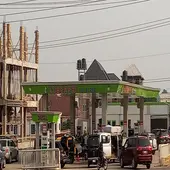
    Dangote Refinery Raises Depot Price, Fuel Hits N1,000/Litre in South-East

    Petrol prices have surged to as high as N1,000 per litre in parts of Nigeria’s South-East following an increase in the ex-depot price of Premium Motor Spirit (PMS) by Dangote Petroleum Refinery & Petrochemicals.

    The Chairman of the Independent Petroleum Marketers of Nigeria (IPMAN), Enugu Zone, Mr. Chinedu Anyaso, said the rise in pump price was triggered by an increase at the supply source rather than actions by marketers.

    Speaking with the News Agency of Nigeria (NAN) on Wednesday, Anyaso, whose zone covers Anambra, Ebonyi and Enugu states, explained that Dangote Refinery raised its depot price by about N110 per litre, which directly affected retail prices.

    “The price of PMS has increased and this is because Dangote, which is our major supplier, added about N110 to every litre,” he said.

    “So, the hike is not artificial, it is not arbitrary, it is a direct reflection of the reality we are facing.”

    According to him, the situation may worsen if the ongoing conflict in the Middle East persists, warning that instability in the region could disrupt crude oil production and drive global prices higher.

    “Prices of petroleum products will definitely go higher if the war in the Gulf continues because it will have negative impact on production and price of crude,” he added.

    Petrol Now Selling Between N950 and N1,000

    Findings by NAN showed that petrol currently sells between N950 and N1,000 per litre in Anambra, Ebonyi and Enugu states. This represents a sharp increase from the N840–N850 per litre price recorded in the last week of February.

    Major fuel retailers across the country had already adjusted their pump prices earlier in the week to between N930 and N970 per litre following the refinery’s N100 upward review in its ex-depot price.

    In Abakaliki, Ebonyi State, filling stations including NNPC Retail outlets and Rainoil increased their pump price from N870 to N970 per litre.

    A pump attendant at one of the stations, who spoke on condition of anonymity, said the new pricing reportedly caused a temporary pause in petrol loading operations.

    Queues Begin to Appear

    In Awka, the Anambra State capital, queues have begun forming at some filling stations, indicating growing pressure on supply.

    Similarly, investigations in Enugu State showed that petrol prices jumped from between N780 and N820 per litre to N950 and N980 per litre across the state capital.

    In semi-urban areas such as Obollo Afor, Orba and Enugu Ezike in Udenu and Igboeze North Local Government Areas, petrol is reportedly selling for as high as N1,000 per litre, depending on the marketer.

    Residents Express Concern

    Residents, traders and motorists have expressed concern over the continuous rise in fuel prices, warning that it could worsen economic hardship.

    A food trader, Mr. John Okoh, lamented the situation and called for government intervention.

    “Though the hike has not affected food items yet, it is too bad the way citizens wake up to increases in petroleum product prices, forgetting that it is the lifeline of the nation’s economy,” he said.

    A civil servant, Mrs. Eunice Nwankwo, described the development as troubling, saying the petroleum sector had continued to impose hardship on Nigerians.

    “I don’t think there has been any increase in transportation yet. I paid the same amount I usually pay from where I live,” she said.

    Transporters Yet to Adjust Fares

    Transport operators said they were still assessing the situation before deciding whether to raise fares.

    Commercial driver Mr. Chinedu Odo noted that many drivers only discovered the price increase while buying fuel.

    “The N950 petrol price just started today; I noticed it when I went to the filling station,” he said.

    “After today’s work we will know what’s next. If the increase continues, surely we will increase transport fares.”

    A tricycle operator, Mr. Innocent Eze, said many riders had not yet felt the full impact of the new fuel price.

    “Some of us buy fuel after work; by the close of work today, we will know the situation. By tomorrow there will likely be a slight adjustment in transport fares,” he said.

    Marketers Blame Global Oil Market

    An independent marketer, Mr. Emeka Ugwuagbo, also blamed global developments for the increase.

    He pointed to the recent announcement by Dangote Group adjusting the depot price of petrol from N774 to N884 per litre.

    “What do you want to hear from me; didn’t you hear the announcement by Dangote? It is not our fault,” he said.

    “Everybody knows what is happening in Iran, which has affected oil prices globally. Nigeria is not an exception.”

  • Tinubu Cuts NNPC Out, Orders Direct Oil Revenue Remittance as PENGASSAN Sounds Alarm

    Tinubu Cuts NNPC Out, Orders Direct Oil Revenue Remittance as PENGASSAN Sounds Alarm

    President Bola Tinubu has signed an Executive Order mandating the direct remittance of all oil and gas revenues to Nigeria’s Federation Account, a move that significantly alters revenue management in Africa’s largest oil-producing economy.

    The directive, signed on February 13, 2026, removes the Nigerian National Petroleum Company Limited (NNPCL) from its long-standing role as the primary collector and distributor of oil proceeds. Analysts say the order represents the most far-reaching fiscal intervention in the sector since the enactment of the Petroleum Industry Act (PIA).

    However, the decision has triggered pushback from industry labour unions, with the Petroleum and Natural Gas Senior Staff Association of Nigeria (PENGASSAN) warning of potential operational and workforce implications if the reform is not carefully implemented.

    Ending Deductions at Source

    Under the PIA framework, NNPCL was authorized to deduct several charges from oil and gas proceeds before remitting funds to the Federation Account. These included a 30 percent management fee from profit oil and gas, 30 percent allocation to the Frontier Exploration Fund, and 20 percent profit retention for the company’s operations. Gas flare penalties were also routed to special-purpose funds outside the main revenue pool.

    In effect, these deductions meant that between 60 and 70 percent of upstream revenues failed to reach the Federation Account, sharply reducing funds available for distribution to the federal, state, and local governments through the Federation Account Allocation Committee (FAAC).

    The new Executive Order suspends these deductions entirely, directing that all royalties, taxes, and oil proceeds be paid directly into the Federation Account. Under the new regime, NNPCL must fund its operations through budgetary appropriations or rely strictly on its commercial earnings.

    Why the Government Acted

    The policy shift comes amid growing fiscal pressure on the Nigerian state. Despite episodes of relatively strong global oil prices, government revenues have remained constrained, driving increased borrowing, delayed salary payments, and stalled infrastructure projects across several states.

    Government officials familiar with the decision say the administration concluded that Nigeria’s oil wealth was no longer translating into fiscal stability. Transparency concerns surrounding NNPCL’s deductions and questions about the constitutionality of some PIA provisions also influenced the move, with the government insisting that all mineral revenues belong to the Federation under the 1999 Constitution.

    PENGASSAN Raises Red Flags

    While acknowledging the need for transparency, PENGASSAN has expressed concern that the Executive Order could weaken NNPCL’s operational capacity if not backed by a clear funding framework.

    Union officials warned that stripping the company of direct access to operational funds without a predictable budgetary mechanism could disrupt projects, affect cash flow, and expose workers to uncertainty. PENGASSAN has called for structured engagement with labour unions and industry stakeholders to prevent unintended consequences for production stability and employment.

    Implications for States and the Economy

    With deductions removed, state and local governments are expected to receive higher monthly FAAC allocations, potentially easing fiscal stress and improving their ability to meet salary and recurrent spending obligations.

    Economists also suggest that direct remittance could strengthen federal oversight of foreign exchange inflows, improve macroeconomic coordination, and support efforts to stabilize the naira.

    For NNPCL, the reform marks a decisive shift toward operating strictly as a commercial entity, with greater emphasis on efficiency, cost discipline, and accountability.

    Despite widespread support from fiscal policy analysts, questions remain about the long-term durability of the reform. Legal experts note that many deduction mechanisms are embedded in the Petroleum Industry Act, raising the likelihood that legislative amendments will be required to prevent future reversals.

    There are also increasing calls for stronger oversight of state governments, as improved revenue inflows raise expectations for better service delivery, transparency, and accountability at the subnational level.

    A Defining Moment for Oil Governance

    President Tinubu’s decision represents a clear break from a system in which Nigeria’s oil revenues passed through multiple institutional layers before reaching the public purse. By restoring the Federation Account as the primary destination for oil income, the administration has reasserted the principle that petroleum wealth is a collective national asset.

    Whether the reform delivers lasting economic gains will depend on legislative follow-through, institutional discipline, and how effectively increased revenues are translated into tangible improvements for Nigerians—while addressing the concerns raised by industry stakeholders and labour unions. effectively increased revenues are translated into tangible improvements for Nigerians.

  • Africa Must Align Infrastructure and Capital to Secure Energy Future – Ojulari

    Africa Must Align Infrastructure and Capital to Secure Energy Future – Ojulari

    The Group Chief Executive Officer of NNPC Limited, Engr. Bashir Bayo Ojulari, has identified shared infrastructure, policy alignment, coordinated investment frameworks, and cross-border collaboration among African National Oil Companies (NOCs) as critical pillars for securing Africa’s energy future.

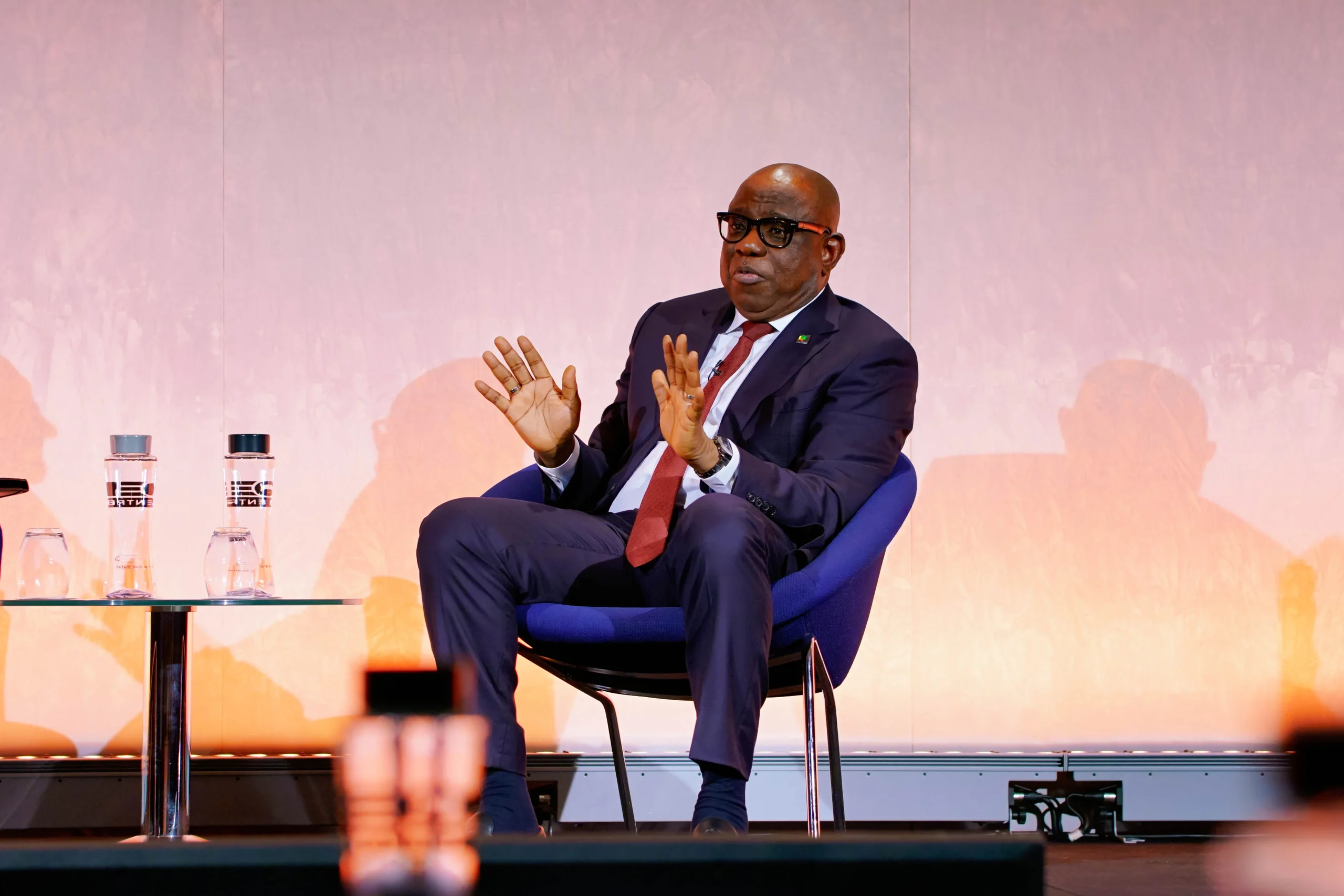
    Ojulari made the remarks during a fireside chat at the International Energy Week 2026 in London, according to a press statement issued on Wednesday by Mr. Andy Odeh, Chief Corporate Communications Officer of NNPC Limited.

    The session featured discussions with Mr. Andy Brown, Deputy Chair of Ørsted and President of the Energy Institute, focusing on Africa’s pathway to energy security and sustainable growth.

    Bayo Ojulari, GCEO, NNPC Ltd (r) and Mr. Andy Brown, Deputy Chair of Ørsted and President of the Energy Institute

    Expanding Regional Infrastructure

    Ojulari stressed the imperative of expanding cross-border energy infrastructure across Africa, noting that NNPC Limited’s ongoing regional gas initiatives demonstrate how shared assets can unlock scale, efficiency, and resilience.

    He highlighted flagship projects such as the Nigeria–Morocco Gas Pipeline and the expansion of the West African Gas Pipeline as vital to strengthening regional integration and advancing cross-border energy trade.

    According to the statement, Ojulari described these initiatives as strategic levers for deepening economic integration and boosting industrialisation across the continent.

    Harmonising Policies to Attract Investment

    The NNPC GCEO also called for aligned pricing frameworks, harmonised transit protocols, local content standards, and joint technical regulations across African markets.

    Drawing lessons from Nigeria’s Petroleum Industry Act, he said regulatory clarity and consistency are essential to reducing investment friction, safeguarding cross-border infrastructure, and ensuring equitable access to shared energy assets.

    The statement noted that such reforms are crucial to creating a predictable investment climate capable of attracting long-term capital into Africa’s energy sector.

    Collective Capital Mobilisation

    Ojulari further advocated structured joint investment platforms among African NOCs, stressing that acting collectively would enhance the continent’s ability to mobilise and deploy capital efficiently.

    “Africa can attract and deploy capital more effectively when acting collectively rather than individually,” he was quoted as saying in the statement.

    Balancing Growth with Climate Commitments

    On NNPC Limited’s ambition to grow oil production, scale gas output, and attract investment, Ojulari emphasised the need for a pragmatic, Africa-centric strategy that positions energy as both a driver of economic development and a contributor to global climate goals.

    “Our pathway is clear: grow production responsibly, scale gas as the backbone of Africa’s industrialisation, strengthen environmental accountability, and align with global decarbonisation objectives—while ensuring that Africans are not left behind in the energy transition,” he stated.

    International Energy Week is a leading global platform that brings together policymakers, industry executives, investors, regulators, and technology innovators to shape dialogue on energy security, transition pathways, capital formation, and sustainability.

    Fireside at the International Energy Week, London

    The statement reaffirmed NNPC Limited’s commitment to regional cooperation, integrated gas market development, and sustained diplomacy among African NOCs to secure the continent’s energy future.

  • Breaking News! NNPC, Chevron Record Major Oil Find in Awodi-07 Well

    Breaking News! NNPC, Chevron Record Major Oil Find in Awodi-07 Well

    Efforts to grow Nigeria’s hydrocarbon reserves have received a significant boost following the confirmation of a hydrocarbon discovery at the Awodi-07 appraisal and exploration well by the NNPC Ltd/Chevron Nigeria Limited Joint Venture in the shallow offshore western Niger Delta.

    The well, operated by Chevron Nigeria Limited, was drilled as part of the joint venture’s ongoing exploration and appraisal programme aimed at further delineating reserves and unlocking additional hydrocarbon potential within its asset portfolio. Drilling operations commenced in late November 2025 and were completed in mid-December 2025.

    According to a statement released, Monday afternoon in Abuja, by NNPC Ltd Chief Corporate Communications Officer, Mr. Andy Odeh, the drilling campaign was executed safely, efficiently, and in full compliance with approved operational and regulatory requirements.

    The operation was carried out under the oversight of the Nigerian Upstream Petroleum Regulatory Commission (NUPRC), in line with applicable upstream regulations.

    Following the completion of drilling activities, the well underwent comprehensive logging, testing, and data acquisition to evaluate reservoir characteristics, after which it was safely secured.

    Data obtained from the well is expected to be submitted to the NUPRC for detailed technical review as part of the post-drilling regulatory process.

    NNPC Ltd said results from the Awodi-07 well confirmed the presence of hydrocarbons across multiple reservoir zones, describing the outcome as encouraging and a significant milestone for the joint venture.

    The discovery strengthens confidence in the asset and further reinforces the prospectivity of the shallow offshore western Niger Delta.

    In the statement, the Group Chief Executive Officer of NNPC Ltd, Engr. Bashir Bayo Ojulari, was reported to have said that the success of the Awodi-07 well highlights the strength of the partnership between NNPC Ltd and Chevron Nigeria Limited and supports national efforts to grow Nigeria’s hydrocarbon reserves.

    Also commenting, the Executive Vice President, Upstream, NNPC Ltd, Mr. Udy Ntia, said the results demonstrate the importance of disciplined exploration programmes, sound technical evaluation, and sustained collaboration between joint venture partners.

    Under the Petroleum Industry Act (PIA), discoveries such as Awodi-07 are expected to progress through a structured appraisal and development process, including further reservoir evaluation, submission of field development plans, and regulatory approvals from the NUPRC prior to any final investment decision.

    Industry sources say the NNPC Ltd/Chevron Joint Venture is expected to review the Awodi-07 data to determine the scope of additional appraisal drilling and commercial viability.

    Subject to regulatory approvals, the discovery could be matured towards development and eventual monetisation.

    The NNPC Ltd/Chevron Joint Venture operates several onshore and offshore oil and gas assets in Nigeria’s Niger Delta under a joint venture arrangement in which Chevron holds a 40 per cent participating interest, while NNPC Ltd owns the remaining share.

    The partners are targeting an increase in oil production to approximately 146,000 barrels per day, a move expected to support government revenue, job creation, and Nigeria’s energy supply.

  • From Secrecy to Discipline: Inside NNPCL’s Bold Rebuild

    From Secrecy to Discipline: Inside NNPCL’s Bold Rebuild

    By Enam Obioso

    For decades, the national conversation around the Nigerian National Petroleum Company Limited (NNPCL) has been clouded by politics, suspicion, and loosely framed financial arguments. The latest controversy broke out when a legislative committee claimed that N210 trillion had gone missing from the company’s accounts, a figure that travelled quickly across headlines and social media.

    But behind the uproar lies a more fundamental issue: a public debate often disconnected from how national oil revenues actually flow. What emerges from a closer examination is not a tale of vanishing trillions, but of a company undergoing a difficult, disciplined rebuild, one anchored in clearer accounting, stronger governance, and a determined break from decades of opaque practices.

    Experts dismissed the N210 trillion claim almost immediately, not out of corporate loyalty, but because the maths simply did not hold. As one analyst put it, the allegation was “an accounting impossibility that betrays a basic misunderstanding of national cash flows.” The amount exceeds Nigeria’s entire gross domestic product (GDP) and far outstrips what decades of crude exports could yield. More critically, it treats gross national oil revenue as if it were NNPC’s personal cash, which it never was.

    Under the old model, NNPC acted as the government’s crude marketer, obligated to cover multiple first-line costs before remitting anything to the Federation Account. Joint venture (JV) cash calls had to be paid to keep rigs running, petrol subsidies were funded to stabilize pump prices, and operating expenses had to be met. The remaining balance, often unpredictable, was what eventually found its way into national coffers.

    These deductions, long misunderstood by the public, sustained the oil sector but also fed confusion and mistrust. The Petroleum Industry Act (PIA) sought to fix that by transforming NNPC into a limited liability company, a taxable, dividend-paying entity with finances distinct from the federal purse. Where money once flowed through a single opaque channel, it now moves through auditable, rule-based streams.

    Another chronic problem was NNPC’s mountain of unpaid cash calls to its JV partners. The arrears had a disabling effect on investment and production, though the cause was structural rather than ethical: government budgets simply couldn’t keep pace with the rising cost of oil production.

    Here again, the PIA triggered a quiet revolution. The shift to incorporated joint ventures (IJVs) and alternative funding models has changed the game. Each JV now raises its own financing, taking liabilities off NNPC’s books and freeing the company from legacy debt traps.

    So, when NNPC declares today that it owes no current cash calls, that statement is accurate under the new structure. Old arrears are being reconciled separately, while ongoing operations are funded in real time. The change has already begun to restore investor confidence, with partners once again backing multi-billion-dollar upstream projects

    Then came the headline number: N5.4 trillion profit in 2024. It raised eyebrows – and questions. Could it last? Analysts say part of the surge came from subsidy removal, which erased a major cost centre that had drained profits for decades. But they also point to deeper, more meaningful improvements: operational efficiency, falling production costs per barrel, and better refinery utilization. These shifts suggest that the profit reflects more than just policy windfalls – it reflects management discipline.

    The real test, experts warn, will be how NNPC deploys its earnings. Reinvesting in upstream projects and critical gas infrastructure could sustain long-term growth. Allowing quasi-fiscal pressures to creep back in could unravel the gains. Encouragingly, the company’s current strategy, published and publicly defended, leans toward reinvestment, financial discipline, and a long-term growth model.

    Criticism of opaque remittances, while valid in the past, now belongs to a fading era when NNPC acted both as operator and collector. Today’s system is simpler: NNPC sells crude, pays taxes, pays royalties, and declares dividends. Each stream is traceable through statutory reporting and subject to independent audit. The adoption of IFRS-compliant accounting standards and audits by a major international firm adds another layer of credibility. Transparency is no longer aspirational; it is structural.

    Skeptics have also questioned whether large-scale gas projects like the Ajaokuta–Kaduna–Kano (AKK) pipeline risk becoming stranded in a world turning toward renewables. But analysts counter that such concerns misread both global energy trends and Nigeria’s developmental realities.

    Global gas demand is projected to remain stable for decades as nations use it to balance renewables until large-scale storage matures. For Nigeria, the AKK pipeline is primarily a domestic growth engine, designed to displace diesel, cut emissions, power industries, and diversify the economy. It also carries strategic flexibility: the infrastructure can be retrofitted for hydrogen in the future, aligning with global energy transition pathways.

    Ultimately, the most convincing evidence of NNPC’s transformation may not lie in its profit margins, but in its new corporate discipline. The decision to hold earnings calls, publish audited reports, and discuss a potential IPO openly marks a clear cultural shift. It exposes management to investor scrutiny – something impossible under the old regime. “You can’t fake this for long,” one analyst noted. “The market will punish any backsliding.”

    That willingness to operate under market standards, and be judged by them, may be the clearest sign that NNPC’s transformation is real. After decades defined by opacity and public mistrust, Nigeria’s energy giant is slowly evolving into something more than a state behemoth. It is learning to act like a modern company, disciplined, transparent, and accountable. In a sector long haunted by secrecy, that alone is a turning point.

  • NNPC Limited Unveils Record ₦5.4 Trillion Profit

    NNPC Limited Unveils Record ₦5.4 Trillion Profit

    Announces $60 Billion Expansion Plan,

    … As Ojulari Pledges Strategic Investments to Sustain Growth into Next Decade

    NNPC Limited has recorded a historic Profit After Tax of ₦5.4 trillion on revenue of ₦45.1 trillion for 2024, marking its strongest financial performance in recent years.

    The results showcase the company’s operational excellence and set the stage for ambitious investments to sustain growth through the next decade.

    Strong Financial Performance

    In a statement, Andy Odeh, Chief Corporate Communications Officer, quotes Bayo Ojulari, NNPC Ltd Group Chief Executive Officer as saying that the results reflect NNPC Limited’s financial resilience and the success of its transformation into a fully commercial, profit-driven entity.

    Key figures from the 2024 financial year include:

    • Revenue: ₦45.1 trillion, up 88% year-on-year
    • Profit After Tax: ₦5.4 trillion, up 64% year-on-year
    • Earnings Per Share (EPS): ₦27.07, up 64%

    “The 2024 results demonstrate the positive impact of our ongoing transformation and the dedication of our workforce,” Ojulari said.

    “They provide a strong foundation for the company’s ambitious growth plans and reaffirm our commitment to delivering value to Nigerians.”

    $60 Billion Investment Pipeline

    NNPC Limited is accelerating investments across oil and gas production, infrastructure, and clean energy initiatives to drive energy security and economic growth.

    Strategic targets include:

    • Crude Oil Production: 2 million barrels per day (bpd) by 2027; 3 million bpd by 2030
    • Natural Gas Production: 10 billion cubic feet per day (bcf/d) by 2027; 12 bcf/d by 2030
    • Completion of major gas infrastructure projects including Ajaokuta-Kaduna-Kano (AKK), Escravos-Lagos Pipeline System (ELPS), and Obiafu-Obrikom-Oben (OB3) pipelines
    • Mobilising $60 billion in investments across upstream, midstream, and downstream sectors by 2030

    “Our transformation is anchored on transparency, innovation, and disciplined growth,” Ojulari added. “NNPC Limited is positioning itself as a globally competitive energy company, delivering sustainable returns while powering the future of Nigeria and Africa.”

    About NNPC Limited

    Founded in 1977, NNPC Limited is Nigeria’s leading oil and gas company.

    The organisation, fully commercial and profit-driven since 2022 under the Petroleum Industry Act (PIA), operates across the entire oil and gas value chain, from exploration and production to refining and distribution.

    NNPC Limited plays a pivotal role in driving energy security and economic growth for Nigeria and the continent.

    The 2024 Audited Financial Statement is available at www.nnpcgroup.com.


  • Nigeria aims to refine more oil locally – Lokpobiri

    Nigeria aims to refine more oil locally – Lokpobiri

    Minister of State for Petroleum Resources (Oil), Heineken Lokpobiri, says the Federal Government is determined to ensure that every barrel of crude produced in Nigeria adds real value at home and abroad.

    He said this while speaking at the 2025 COREN Summit in Lagos on Tuesday.

    Lokpobiri, who was represented by his technical adviser, Ndah Adaba, said improving local refining capacity and energy security remains central to Nigeria’s development goals.

    The theme of the summit is “Refinery – Key to Energy Security in Africa”.

    It brought together engineers, policymakers, and energy professionals from across the continent.

    According to the minister, as part of a deliberate policy and broader strategy, the ‘Naira for Crude’ sales agreement will continue to play a vital role in reducing the cost of fuel production.

    He added that it also help in mitigatinh exchange rate volatility, and supporting indigenous refining capacity.

    Lokpobiri stated that through the Nigerian Midstream and Downstream Petroleum Regulatory Authority (NMDPRA), the government had streamlined the licensing process, from the Licence to Establish, to Construct, and Operate.

    This, he added, helps in ensuring that credible investors are supported rather than hindered by bureaucratic bottlenecks.

    The minister noted “Beyond licensing, the government is also facilitating crude oil supply to domestic refiners through the effective implementation of the Domestic Crude Oil Supply Obligation (DSCO).

    “No nation can claim energy independence without the ability to refine its own crude.

    He noted that the timing of the summit is critical, as Nigeria, and Africa at large, faces a pivotal moment requiring bold action to ensure energy security, promote indigenous refining, and position the continent as a net exporter of petroleum products.

    He said that under the Renewed Hope Agenda of President Bola Tinubu, indigenous refining had been identified as a key driver of energy independence, job creation, and industrial revitalisation.

    “Today, we have seen indigenous success stories such as Dangote Refinery & Petrochemical, Waltersmith Petroman Refinery, and Aradel Holdings, among others.

    “These demonstrate that Nigerians possess both the capacity and the will to refine Nigeria’s crude oil locally.

    “These projects are more than just facilities; they symbolize confidence in our policy direction. We are committed to replicating such success across all oil-producing states,”Lokpobiri said.

    In a move to expand Nigeria’s refining influence beyond its borderthehe added  that the government had  launched the West African Fuel Reference Market, aimed at positioning Nigeria as a regional hub for refining and petroleum product supply within the West African subregion.

    “With increased domestic refining capacity, Nigeria will not only meet its internal demands but also become a reliable supplier to neighboring countries, reducing dependence on distant refineries and costly maritime imports.

    “This aligns with the African Union’s vision for energy integration and intra-African trade under the African Continental Free Trade Area (AfCFTA),” he noted.

    Looking ahead, Lokpobiri said the government would  ensure feedstock security for all licensed refiners and deepen fiscal incentives to attract further investments.

    He also highlighted ongoing efforts to enhance collaboration among the Ministry of Petroleum Resources, NMDPRA, NUPRC, and security agencies to combat crude theft, pipeline vandalism, and improve relationships with host communities.

    The minister further stressed the need for African nations to collaborate on product exchange, logistics, and shared energy infrastructure.

    “The path to Africa’s energy security runs through the gates of our refineries and the institutions that support them.

    “The Federal Government remains fully committed to supporting indigenous refiners, strengthening regulatory institutions, and creating an enabling environment for sustainable growth in the downstream sector.

    “Let this COREN Summit 2025 serve as a renewed call to industry players, regulators, investors, and policymakers—to unite in building an Africa that refines what it produces and powers its future through its own resources,” he said.

  • Strike: Dangote, NUPENG talks deadlocked 

    Strike: Dangote, NUPENG talks deadlocked 

    Prospects of the return of fuel queues loom as a marathon meeting convened by the Federal Government to resolve NUPENG’s strike against alleged Dangote Refinery’s anti- union practices ended in stalemate at dawn.

    The Federal Government, through the Ministry of Labour and Employment, yesterday convened the emergency meeting in a bid to end the planned industrial action on Monday in Abuja.

    The meeting aimed to address allegations of anti-union practices against the Dangote Refinery, but discussions reportedly  broke down as the Dangote representatives walkout of the meeting.

    The Minister of Labour and Employment, Alhaji Muhammad Dingyadi, who presided over the meeting, told newsmen that progress was slow.

    “We have not been able to reach final agreement on this matter. Negotiations will continue.

    “Maybe by tomorrow, we will resolve the issues. I appeal to everyone to maintain peace as discussions continue,” he said.

    The minister, therefore assured all, that the government is still committed to finding common ground for all parties.

    Speaking, Mr Benson Upah, Acting General Secretary of the Nigeria Labour Congress (NLC), alleged that the Dangote’s delegation was deliberately sabotaging the process.

    “The representative of the Dangote Refinery walked out on the Honourable Minister and Organised Labour. So, there was no agreement.

    “Even, when we bent backwards to accommodate his uncompromising behaviour, he still did what he did.

    “So, we are left with no choice than to do the needful. The action continues,” Upah said.

    He added that the labour movement remained open to dialogue, but, could not negotiate alone.

    “It takes more than one party to reach a resolution.

    “Whenever the Dangote Refinery sees the need for genuine dialogue, we are ready, even this night, if they return,” he said.

    NUPENG President, Mr Williams Akporeha, accused Dangote Refinery of seeking to suppress workers’ rights, while expanding its monopoly in Nigeria’s energy sector.

    According to him, NUPENG’s action on the matter is for the interest of Nigerians.

    “We cannot stand an investor whose main purpose is to enslave Nigerians.

    “Dangote cannot take us back to the dark days of slavery.”he added.

    He further accused the refinery of denying employees the right to unionise.

    “Nigerians have wished him well. He should not enslave them.

    “He wants to monopolise the entire system and even the workers. This, we say, No to,” he said. 

  • NUPENG strike suffers setback as key associate withdraws

    NUPENG strike suffers setback as key associate withdraws

    The Association of Distributors and Transporters of Petroleum Products (ADITOP) has dissociated itself from the intended strike by the Nigeria Union of Petroleum and Natural Gas Workers (NUPENG) and its cohorts.

    The National President of ADITOP, Alhaji Lawan Dan-Zaki, said this in an interview with newsmen on Monday in Abuja.

    Nigerian Anchor reports that NUPENG had announced that its members would commence a nationwide strike from Monday, and warned of an imminent nationwide fuel scarcity.

    The strike is in protest against what it described as anti-labour practices linked to the deployment of newly imported Compressed Natural Gas (CNG)-powered trucks by the Dangote Refinery, for direct distribution of petroleum products.

    Dangote’s programme on direct distribution of petroleum products to end users is aimed at eliminating logistics costs, enhancing energy efficiency, promoting sustainability and supporting Nigeria’s economic development.

    Dan-Zaki, while stating that the purported strike was uncalled for, added that ADITOP was in support of Dangote’s new petroleum products distribution scheme.

    He said that Dangote’s transformational efforts would not only sanitise the industry, but would further stabilise both supply and distribution, while providing jobs and new skills to millions of unemployed Nigerians.

    “We, members of ADITOP, hereby inform the General Public and the Federal Government that we dissociate ourselves from any intended strike or disruption by NUPENG and its cohorts.

    “We intend to continue moving petroleum products across the country without fear of molestation.

    ADITOP is in support of any petroleum products distribution scheme aimed at distributing products to the end users seamlessly and promoting economic development,’’ he said.

  • Andy Odeh is  the Spokesman of NNPCL

    Andy Odeh is the Spokesman of NNPCL

    Morenike Adewunmi is Chief Relations Officer

    The Nigerian National Petroleum Company Limited (NNPCL) has announced the appointment of Andy Odeh as Chief Corporate Communications Officer and Morenike Adewunmi as Chief Relations Officer.

    Odeh’s appointment follows the resignation of Femi Soneye two months ago.

    With over three decades of experience spanning communications, advertising, broadcasting, and oil and gas, he joins NNPCL after a 26-year career at Nigeria LNG (NLNG).

    At NLNG, Odeh held senior roles in community relations, business logistics, government engagement, and corporate communications.

    He also spearheaded the company’s rebranding, developed a micro-credit scheme for host communities, and established the NLNG Prize for Energy Reporting.

    Odeh is an alumnus of the University of Jos, University of Lagos, INSEAD Business School, and the National Institute for Policy and Strategic Studies (NIPSS).

    Meanwhile, Morenike Adewunmi, a seasoned legal professional with over 25 years in the oil and gas industry, takes up the role of Chief Relations Officer.

    She previously worked with Shell Companies in Nigeria (SCIN), where she specialized in stakeholder management, advocacy, and regulatory compliance.

    According to NNPCL, Adewunmi is widely respected for her ability to navigate complex external landscapes and safeguard the company’s license to operate.