


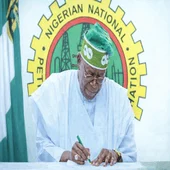
President Bola Tinubu has signed an Executive Order mandating the direct remittance of all oil and gas revenues to Nigeria’s Federation Account, a move that significantly alters revenue management in Africa’s largest oil-producing economy.
The directive, signed on February 13, 2026, removes the Nigerian National Petroleum Company Limited (NNPCL) from its long-standing role as the primary collector and distributor of oil proceeds. Analysts say the order represents the most far-reaching fiscal intervention in the sector since the enactment of the Petroleum Industry Act (PIA).
However, the decision has triggered pushback from industry labour unions, with the Petroleum and Natural Gas Senior Staff Association of Nigeria (PENGASSAN) warning of potential operational and workforce implications if the reform is not carefully implemented.
Ending Deductions at Source
Under the PIA framework, NNPCL was authorized to deduct several charges from oil and gas proceeds before remitting funds to the Federation Account. These included a 30 percent management fee from profit oil and gas, 30 percent allocation to the Frontier Exploration Fund, and 20 percent profit retention for the company’s operations. Gas flare penalties were also routed to special-purpose funds outside the main revenue pool.
In effect, these deductions meant that between 60 and 70 percent of upstream revenues failed to reach the Federation Account, sharply reducing funds available for distribution to the federal, state, and local governments through the Federation Account Allocation Committee (FAAC).
The new Executive Order suspends these deductions entirely, directing that all royalties, taxes, and oil proceeds be paid directly into the Federation Account. Under the new regime, NNPCL must fund its operations through budgetary appropriations or rely strictly on its commercial earnings.
Why the Government Acted
The policy shift comes amid growing fiscal pressure on the Nigerian state. Despite episodes of relatively strong global oil prices, government revenues have remained constrained, driving increased borrowing, delayed salary payments, and stalled infrastructure projects across several states.
Government officials familiar with the decision say the administration concluded that Nigeria’s oil wealth was no longer translating into fiscal stability. Transparency concerns surrounding NNPCL’s deductions and questions about the constitutionality of some PIA provisions also influenced the move, with the government insisting that all mineral revenues belong to the Federation under the 1999 Constitution.
PENGASSAN Raises Red Flags
While acknowledging the need for transparency, PENGASSAN has expressed concern that the Executive Order could weaken NNPCL’s operational capacity if not backed by a clear funding framework.
Union officials warned that stripping the company of direct access to operational funds without a predictable budgetary mechanism could disrupt projects, affect cash flow, and expose workers to uncertainty. PENGASSAN has called for structured engagement with labour unions and industry stakeholders to prevent unintended consequences for production stability and employment.
Implications for States and the Economy
With deductions removed, state and local governments are expected to receive higher monthly FAAC allocations, potentially easing fiscal stress and improving their ability to meet salary and recurrent spending obligations.
Economists also suggest that direct remittance could strengthen federal oversight of foreign exchange inflows, improve macroeconomic coordination, and support efforts to stabilize the naira.
For NNPCL, the reform marks a decisive shift toward operating strictly as a commercial entity, with greater emphasis on efficiency, cost discipline, and accountability.
Legal and Political Questions Ahead
Despite widespread support from fiscal policy analysts, questions remain about the long-term durability of the reform. Legal experts note that many deduction mechanisms are embedded in the Petroleum Industry Act, raising the likelihood that legislative amendments will be required to prevent future reversals.
There are also increasing calls for stronger oversight of state governments, as improved revenue inflows raise expectations for better service delivery, transparency, and accountability at the subnational level.
A Defining Moment for Oil Governance
President Tinubu’s decision represents a clear break from a system in which Nigeria’s oil revenues passed through multiple institutional layers before reaching the public purse. By restoring the Federation Account as the primary destination for oil income, the administration has reasserted the principle that petroleum wealth is a collective national asset.
Whether the reform delivers lasting economic gains will depend on legislative follow-through, institutional discipline, and how effectively increased revenues are translated into tangible improvements for Nigerians—while addressing the concerns raised by industry stakeholders and labour unions. effectively increased revenues are translated into tangible improvements for Nigerians.