

Category: Energy

  • Debt: AEDC Issues Ultimatum to Government Agencies Or Risk Disconnection

    Debt: AEDC Issues Ultimatum to Government Agencies Or Risk Disconnection

    The Abuja Electricity Distribution Company (AEDC) has sternly warned 86 government agencies and departments, including the Presidential Villa, CBN Governor, EFCC, FIRS, FAAN, and various ministries, to settle outstanding electricity bills totaling N47.1 billion within the next ten days. 

    Failure to comply will result in disconnection effective Wednesday, 28th February, 2024, as stated in the notice issued on Monday by AEDC.

    “The Abuja Electricity Distribution PLC is constrained to do this publication with the details of Government, Ministries, Departments and Agencies with long outstanding unpaid bills for services rendered to them through the provision of electricity supply in that our previous attempts to make them honour their obligations have not achieved the desired results.

    “The relevant MDAs are hereby given notice that the AEDC shall after the expiration of 10 days from the date of this publication, that is, after Wednesday, 28th February, 2024, embark on the disconnection of my our services to them until they discharge their obligations to us by paying their debts,” the notice read.

  • NUPRC To Move Key Departments To Lagos

    NUPRC To Move Key Departments To Lagos

    The Nigerian Upstream Petroleum Regulatory Commission is contemplating relocating some of its units to Lagos.

    This was disclosed in a memo dated February 14, 2024. 

    The move aims to bolster service delivery, trim operational costs, and optimize assets in Lagos.

    Dr. Kelechi Onyekachi Ofoegbu, on behalf of the Commission, signed the memo urging departments to identify units capable of independent operation with minimal supervision. 

    The statement read;

    “In line with our objectives of improving organizational efficiency, driving industry growth, and managing office accommodation in Abuja, we are exploring the possibility of relocating certain units to Lagos.

    “This initiative is driven by the need to enhance our service delivery, reduce operational costs, and make adequate utilization of our assets in Lagos.

    “Consequently, we are requesting that each department identify and provide a list of units that can operate independently with minimal supervision.

    “Submissions on the above are expected on or before the close of business on Friday 23rd February 2024.

    “This is submitted for your further necessary action, please.”

    This move follows the recent relocation of the Federal Airport Authority of Nigeria (FAAN) headquarters and CBN departments to Lagos.

  • FG Moves To End Electricity Subsidy

    FG Moves To End Electricity Subsidy

    Nigeria’s Power Minister, Adebayo Adelabu, has announced an end to electricity subsidies, citing a national debt of 1.3 trillion naira to GenCos and 1.3 billion dollars owed to gas companies.

    Adelabu in a press conference on Wednesday revealed that despite a budget allocation of 450 billion naira for subsidies this year, the ministry requires over 2 trillion naira to sustain the subsidy program.

    As part of the proposed changes, state governments will now be permitted to independently generate power to supply their states.

    Addressing the recurring issue of grid collapses, Adelabu attributed these incidents to various factors including gas shortages, aging infrastructure within the grid, limited capacity to evacuate generated power, and the destruction of power stations in the North-East region.

    He further disclosed that the Transmission Company of Nigeria has shelved over 100 projects due to contract variations caused by fluctuations in forex rates.

    Consequently, the company will refrain from awarding new contracts until existing projects are completed.

    In a bid to address power challenges in remote areas, Adelabu announced a budget allocation of over 50 billion naira in 2024 for the construction of mini grids.

    Adelabu issued a stern warning to electricity distribution companies (DisCos), cautioning that those found negligent in their duties risk having their licenses revoked.

    In a move to bolster security for power infrastructure, the minister revealed reaching out to the National Security Adviser, Nuhu Ribadu, for assistance in providing adequate security measures.

  • NNPC Opens Up On Fuel Price Increase

    NNPC Opens Up On Fuel Price Increase

    The Nigerian National Petroleum Company (NNPC) Ltd. has stated that there is no immediate plan to raise the cost of Premium Motor Spirit (PMS), commonly referred to as petrol.

    The company made this known in a statement by its Chief Corporate Communications Officer, Olufemi O. Soneye on Thursday, February 8.

    The NNPC urged the public to dismiss unfounded speculations circulating about a possible upward review of PMS prices.

    The company reassured Nigerians that no such measures are in the pipeline.

    Motorists have been strongly advised against succumbing to panic buying, as NNPC affirms that there is an abundant supply of PMS across the nation. 

    NNPC assured citizens of its commitment to maintaining stable fuel prices for the foreseeable future.

  • Google Signs Power Purchase Agreement for Offshore Wind Projects

    Google Signs Power Purchase Agreement for Offshore Wind Projects

    In a significant move towards greening its power supply, technology giant Google has inked its largest-ever power purchase agreement (PPA) with offshore wind projects situated off the coast of the Netherlands. 

    This strategic initiative aligns with Google’s commitment to meeting climate targets while promoting sustainable energy solutions.

    As reported by Reuters, renewable power project developers are increasingly opting for long-term PPAs to ensure revenue security, while corporate buyers like Google are eager to secure a stable supply chain to fulfill their clean energy goals.

    Google’s landmark offshore wind PPA entails the procurement of 478 megawatts (MW) of power from two cutting-edge wind farms developed by Crosswind & Ecowende Consortia. 

    These joint ventures, helmed by energy giants Shell and Dutch utility Eneco, exemplify collaborative efforts in advancing renewable energy initiatives.

    Additionally, Google has revealed smaller-scale renewable PPAs in Italy, Poland, and Belgium, underscoring its global commitment to sustainable energy practices. 

    However, specific financial details of these agreements remain undisclosed.

    Matt Brittin, President of Google in EMEA, emphasized the company’s overarching ambition to operate on carbon-free energy round the clock by 2030. 

    This vision necessitates clean energy solutions across all grids where Google operates, signifying a steadfast dedication to environmental sustainability.

    While many companies pursue renewable energy goals on an annual basis, typically matching PPAs or renewable energy certificate purchases with their yearly electricity consumption, Google stands out with its forward-thinking approach. 

    The tech giant aims to synchronize each hour of electricity consumed with an equivalent hour of clean power production, a methodology hailed by proponents for its accurate reflection of companies’ actual energy usage patterns.

  • Why There’s Shortage Of Electricity In Nigeria – FG

    Why There’s Shortage Of Electricity In Nigeria – FG

    Minister of Power, Bayo Adelabu has  attributed the ongoing poor power supply in Nigeria to a low supply of gas to generating companies (GenCos).

    Adelabu emphasized the government’s commitment to resolving the issue promptly.

    Adelabu stated that following discussions with GenCos and Distribution companies (DISCOs), investigations revealed the primary cause of the setbacks in the new year to be the insufficient supply of gas to GenCos. 

    The minister personally visited facilities in Olorunshogo, Ogun State, and Omotosho, Ondo State, to assess the challenges firsthand.

    Addressing the indebtedness to GenCos by the Nigeria Bulk Electricity Trading Company (NBET), Adelabu acknowledged the sector’s liquidity challenge and assured that efforts are underway to validate the debt and determine a fair resolution.

    To ensure a steady gas supply, the minister urged GenCos to establish contractual arrangements with gas suppliers, recognizing that concessions may be necessary. 

    He expressed the government’s commitment to working collaboratively to stabilize the power sector and emphasized the formation of a committee involving all stakeholders.

    The committee’s mandate is to develop recommendations for resolving gas supply and liquidity challenges, aiming for a more reliable and consistent power supply. 

    Adelabu also revealed plans to initiate discussions with the Minister of State for Petroleum Resources to underscore the importance of prioritizing Gas to Power.

  • Why there is a drop in power supply across the country – TCN

    Why there is a drop in power supply across the country – TCN

    The Transmission Company of Nigeria, TCN, has revealed the reason for the drop in power supply nationwide.

    According to Ndidi Mbah, TCN’s general manager of public affairs, gas constraints on thermal generating companies resulted in low power generation across the country.

    She said the situation had impacted the quantum of bulk power available on the transmission grid for onward transmission to the distribution load centres nationwide.

    The statement reads: “The Transmission Company of Nigeria TCN hereby announces that there has been a gradual decrease in available generation into the grid due to gas constraints to the thermal generating companies, which has impacted the quantum of bulk power available on the transmission grid for onward transmission to the distribution load centres nationwide.

    “TCN is doing everything possible in collaboration with stakeholders in the power sector to ensure that it keeps the grid intact despite the current low power generated into the system.

    “Consequent to the current load on the grid, load distributed to the distribution load centres have also been reduced, as TCN can only transmit what is generated.

    “TCN is committed to ensuring a gradual increase in electricity supply to load centres as gas improves to the power available thermal plants.

    “Please bear with us as we continue to work with the stakeholders in the value chain to ensure that supply through distribution companies to electricity consumers nationwide improves”, the company stated.

  • FG Expands Power Generation at Kanji, Commissions additional 300KWp Project

    FG Expands Power Generation at Kanji, Commissions additional 300KWp Project

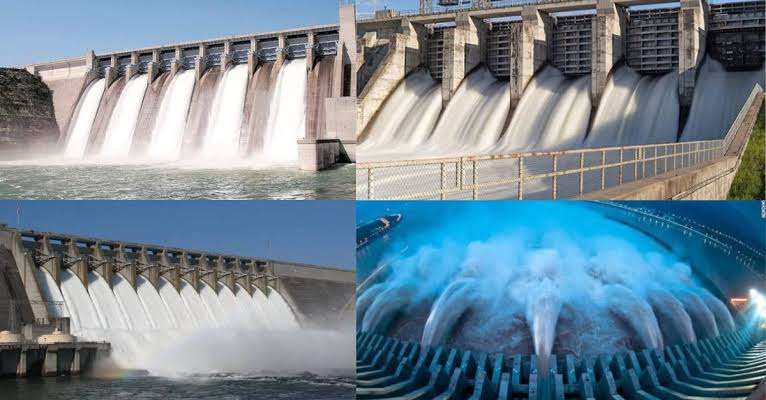
    Further to the Renewed Hope agenda to provide adequate , reliable, and quality electricity to businesses and households in the country, the Federal Government has commissioned a 300KWp Solar PV pilot project in Kainji , Niger State.

    While commissioning the project, the Minister of Power, Chief Adebayo Adelabu said the project will increase power generation capacity, lower electricity costs while also fostering enhanced collaboration between the main concessionaire, Mainstream Energy Solution and its Chinese partner, HEDC in the renewable energy field.

    A statement by Bolaji Tunji, Special Adviser, Strategic Communication and Media Relations to the Minister stated that the power project comes with 675KWh Battery Energy Storage System (BESS), which is an integral part of the extension of 1G3 and 1G4 under the rehabilitation of the 1G9 in Kainji HPP project.

    The Minister who said efforts were progressing in achieving President Tinubu’s turnaround agenda on supply of reliable and quality power said the Power Ministry’s objective is to meet power demand by ensuring improved distribution and transmission infrastructure to minimize technical and commercial losses, closing the metering gap and resolving theliquidity, power theft and vandalism challenges.

    The Minister also said the destruction of some power towers around the country has been reported to the National Security Adviser (NSA) in order to strengthen security around the power infrastructure.
    “It is of no use to expend so much energy in providing power facilities if the delivery channel is weak, that is why the Ministry is concentrating on improvement of the transmission and distribution capacity.”

    On power theft and destruction of power infrastructure, Adelabu again emphasized the need for Nigerians and the different Communities where the facilities are located to protect them.
    “What is the essence of government and private companies expending resources on these power facilities while some elements within the society will deliberately move to destroy the facilities which are national assets. What we witnessed towards the end of 2023 was disheartening. Some of the power towers were brought down with loss of lives, in some cases, this is quite unfortunate. We should take it as a personal and collective responsibility to protect the infrastructure”. He added that plans are also underway to wield the big stick onpower theft through adequate legislation in order to serve as deterrent to others.

    The Minister also revealed that efforts have begun to bridge metering gaps in the country. “Presently, we have about 12 million electricity users, but only about five million are metered. As we are all aware, the President set up the Presidential Mass Metering Initiative of which I am the chairman, we are working assiduously on this initiative to bridge the metering gap.”

    Adelabu gave government’s assurance to continue to provide enabling environment for the private sector to leverage on opportunities inherent in government policies, incentives and regulations for sustainable power supply for economic development and improvement of the standard of living of Nigerians, especially rural dwellers adding that government had also come up with relevant policies and programmes in order to provide direction in ensuring power availability to the people.

    Speaking earlier, Managing Director of Mainstream Energy Solution, Engineer Lamu Audu said the project is in line with the National Renewable Energy and Energy Efficiency policy of the Federal government which sets out the blueprint to increasing the country’s renewable energy development by 2030.

    He said the pilot project is the beginning of Mainstream’s integration of Variable Renewable Energy into its core business, adding that plan is at an advanced stage to build a 450MWp and 150MWp Solar PV at Kainji and Jebba Hydro Power Plants (HPPs).

    Audu called on government to continue to provide the enabling environment that would attract more funding from private investors.

  • Unpaid Bills: TCN Issues 14-Day Suspension Notice to Ajaokuta Steel Company Ltd

    Unpaid Bills: TCN Issues 14-Day Suspension Notice to Ajaokuta Steel Company Ltd

    The Transmission Company of Nigeria (TCN) has taken decisive action against Ajaokuta Steel Company Limited (ASCL) due to non-compliance with market rules, issuing a 14-day disconnection notice. 

    According to TCN’s statement, ASCL has accumulated a substantial debt of N33.71 billion as of November 2023, with N30.85 billion owed for energy and capacity supplied by Nigerian Bulk Electricity Trading PLC (NBET) and N2.22 billion to service providers.

    Despite prior notifications and interventions by the Minister of Power to rectify the defaults, ASCL’s non-compliance remains unresolved. 

    TCN has demanded the settlement of outstanding invoices and the provision of bank guarantees within the specified 14-day period to avoid disconnection from the National Grid, as per Section 45 of the Market Rules.

    Failure to rectify these defaults within the stipulated timeframe may lead to disconnection, and if left unresolved after 30 business days, the Market Operator may terminate ASCL’s Market Participation Agreement, escalating the matter to the Nigerian Electricity Regulatory Commission (NERC) for further action.

    This action by TCN follows a hint in the NERC’s 2022 annual report regarding the potential disconnection of Ajaokuta Steel from the national grid due to its significant indebtedness of N25.06 billion.

  • NNPCL Dismisses Rumors of Impending Fuel Price Increase

    NNPCL Dismisses Rumors of Impending Fuel Price Increase

    The Nigerian National Petroleum Company Limited (NNPCL) has quashed rumors circulating on social media regarding an alleged plan to increase petrol prices to N1,200 per litre.

    Responding to the speculations, the NNPC clarified that there are no imminent plans to hike fuel prices despite widespread discussions on various platforms.

    The NNPC’s Group Communications Officer, Olufemi Soneye, issued a rejoinder today, affirming that the company has not engaged in any conflicts related to this matter. 

    The statement emphasized the inaccuracy of a headline from The Punch, terming it “unfortunate.”

    Additionally, NNPC addressed inquiries about subsidy reductions, clarifying that the subsidy has indeed been completely eliminated.

    “NNPC Ltd emphasises it has not clashed with any party. The Punch headline is deemed unfortunate. The publication sought confirmation on the alleged subsidy reduction, to which NNPC responded that the subsidy has been entirely removed.”

    This response comes amidst heightened concerns and mixed reactions among the public due to the challenging economic conditions prevalent in the country.