
Category: Energy

  • Ikeja Electric slashes tariff for Band A customers

    Ikeja Electric slashes tariff for Band A customers

    Ikeja Electric Distribution Company (IE) Monday, revealed that it has reduced it’s electricity tariff for customers under Band A from N225/kWh to N206.80/kWh.
    This was made known through a circular by the management of the company on its “X”(Formerly Twitter) page on Monday.
    Specifically, it said the customers will now pay N206.80/kwh as against the N225/kwh ordered by the Nigeria Electricity Regulatory Commission (NERC).
    According to the statement, IE guaranteed to provide 20 to 24 hours of electricity to users under this Band, adding that the tariff for customers under other categories will remain the same.

    It said: “Dear Esteemed Customers, Please be informed of the downward tariff review of our Band A feeders from N225/kwh to N206.80/kwh effective 6th May 2024 with guaranteed availability of 20-24hrs supply daily.
    “The tariff for Bands B, C, D, and E remains unchanged.”

  • TCN Transfers Market and System Functions to Newly Established Entity

    TCN Transfers Market and System Functions to Newly Established Entity

    In a bid to revitalize Nigeria’s power sector, President Bola Tinubu, in collaboration with the Nigerian Electricity Regulatory Commission (NERC), has introduced sweeping reforms by unveiling the Nigerian Independent System Operator of Nigeria Limited (NISO). This significant restructuring marks a pivotal moment for the country’s energy landscape.

    The decision was formalized through an official order signed by TCN’s Chairman, Mr. Sanusi Garba, and Vice Chairman, Mr. Muslim Oseni, in Abuja on Saturday.

    Under the directives outlined in the order, TCN will undergo a comprehensive transfer of all market and system operation functions to the newly established NISO.

    This realignment of responsibilities is in accordance with the stipulations set forth in the Electricity Act 2023, aimed at providing a more streamlined approach to the management of Nigeria’s power infrastructure.

    Previously, TCN held critical licenses, including Transmission Service Provider (TSP) and System Operations (SO) licenses issued by NERC. With the inception of NISO, TCN will divest its market and system operation assets and liabilities to the newly formed entity, allowing for a sharper focus on its core transmission functions.

    To facilitate this transition, the Bureau of Public Enterprises (BPE) has been tasked with overseeing the incorporation of a private company limited by shares under the provisions of the Companies and Allied Matters Act (CAMA) by May 31.

    This entity, named the Nigerian Independent System Operator of Nigeria Limited (NISO), will assume full responsibility for market and system operation functions as outlined in the Electricity Act and TCN’s system operation license.

    NISO’s mandate encompasses the efficient management of assets and liabilities associated with market and system operations on behalf of market participants and consumer groups.
    Furthermore, the newly established ISO will play a crucial role in negotiating contracts for ancillary services with independent power producers and generation licensees, ensuring the stability and reliability of Nigeria’s national grid.

  • There Will Be Total Blackout For The Next Three Months If You Reject New Policy – Minister of Power Warns Senate

    There Will Be Total Blackout For The Next Three Months If You Reject New Policy – Minister of Power Warns Senate

    The Minister of Power, Adebayo Adelabu, has warned that there will be a total blackout in Nigeria in the next three months if the proposed electricity tariff hike is not implemented.

    The minister stated this yesterday in Abuja when he appeared before the Senate Committee on Power at an investigative hearing over the recent electricity tariff hike by the Nigerian Electricity Regulatory Commission (NERC).

    This is after the Senate committee, led by Senator Enyinnaya Abaribe, rejected the new tariff regime.

    Adelabu warned that the entire sector would be grounded if the Commission fails to increase the tariff.

    Adelabu said, “The entire sector will be grounded if we don’t increase the tariff. With what we have now in the next three months, the entire country will be in darkness if we don’t increase tariffs.

    “The increment will catapult us to the next level. We are also Nigerians. We are also feeling the impact.”

    He said $10 billion yearly for the next ten years is needed to revive the nation’s power sector and nip in the bud the challenges bedevilling it.

    “For this sector to be revived, the government needs to spend nothing less than 10 billion dollars annually in the next 10 years.

    “This is because of the infrastructure requirement for the stability of the sector. But the government can not afford that. And so we must make this sector attractive to investors and to lenders.

    “So, for us to attract investors and investment, we must make the sector attractive, and the only way it can be made attractive is that there must be commercial pricing.

    “If the value is still at N66 and the government is not paying subsidy, the investors will not come. But now that we have increased the tariff for A Band, there are interests being shown by investors,” he said.

  • Dangote Refinery Gives Update On Diesel Price Reduction

    Dangote Refinery Gives Update On Diesel Price Reduction

    Dangote Petroleum Refinery said its N940 per litre diesel price cut is only applicable to customers buying five million litres and above.

    The Head of Communication, Mr Anthony Chiejina made the clarification in a statement on Tuesday, noting that N970 per litre is for customers buying one million and above.

    Dangote Refinery made its third diesel price cut to N940 and N970 per litre, respectively.

    The company had earlier announced two price cuts which saw the price of diesel drop to N1,000 per litre from N1,600.

    Recall that the entrance of Dangote Refinery into the sale of Automotive Gas Oil, AGO, had impacted the West Africa oil & gas industry.

    On May 22 last year, the 650,000 barrels per day crude oil refinery was commissioned.

    However, the facility is yet to commence the sale of fuel.

    Standard and Poor’s Global Commodities said Dangote Refinery will commence the sale of fuel in the fourth quarter of 2024.

  • FG begins unbundling of DISCOS

    FG begins unbundling of DISCOS

    The Federal Government has announced the unbundling of power distribution companies in Nigeria along state lines.

    This is due to their large sizes which often result in inefficiency and ineffectiveness.

    The Minister of Power, Adebayo Adelabu stated this on Monday when he received the Senate Committee on Power, led by their Chairman, Senator Eyinnaya Abaribe.

    Adelabu said the Tinubu-led administration had commenced the restructuring of Nigeria’s 11 power distribution companies.

    According to him, the privatisation of the firms would not be reversed but stressed that the Discos would be broken into more efficient structures

    The Nigerian government has also ordered the sale of Discos that have been taken over by banks and the Assets Management Corporation of Nigeria from its original investors/owners.

    The likes of Abuja Electricity Distribution Company, AEDC; Benin Electricity Distribution Company, BEDC; Kaduna Electricity Distribution Company, KEDC; and Kano Electricity Distribution Company are all being managed by banks and AMCON.

    AEDC is under the management of UBA, and Fidelity Bank manages BEDC, KEDC and Kano Electricity Distribution Company.

    AMCON is in charge of the Ibadan Electricity Distribution Company.

    This is due to their inability to repay their loans to the financial institutions.

    The Senate Committee on Power said the distribution companies have failed to meet the expectations of Nigerians since they took over the privatised assets over 10 years ago.

    The Minister further revealed that over 100 projects of the Transmission Company of Nigeria have not been completed since 2001, a period of about 23 years.

    “We are unbundling the Discos along state lines. Some of the Discos are too big for efficiency. They are too big for effectiveness. Ibadan Disco covers seven states. It is practically impossible for them to be efficient,” he said.

    “So we are rearranging and restructuring the Discos along state lines so that each state government will know the responsible Disco for their states.

    “Also, the federal and state governments should start exercising their rights in the operation and management of the Discos because we still own 40 per cent in the firms.

    “But we have left it for the private sector operators for too long and they have messed it up. So the government must come back to take over its own right in the Discos. We are also planning to franchise the unserved communities under the Discos.”

    The minister went ahead to state that “we will start seeing regulations about franchising. The fact you are Eko Disco doesn’t mean that you cannot have smaller Discos that are ready to invest in your unserved communities. So we are looking at franchising.”

  • Again, Dangote reduces diesel, aviation fuel prices 

    Again, Dangote reduces diesel, aviation fuel prices 

    Dangote Petroleum Refinery has once more announced a further crash in the prices of diesel and aviation fuel to N940 and N980 per litre, respectively.

    This comes in the wake of its widely celebrated price crash to N1,000 barely two weeks ago.

    The new price of N940 is applicable to customers buying five million litres and above from the refinery, while N970 is for customers buying one million litres and above.

    While speaking on the new development, the Head of Communication, Dangote Group, Anthony Chiejina, pointed out that the new price is in consonance with the company’s commitment to cushion the effect of economic hardship in Nigeria.

    “I can confirm to you that Dangote Petroleum Refinery has entered a strategic partnership with MRS Oil and Gas stations, to ensure that consumers get to buy fuel at affordable price, in all their stations be it Lagos or Maiduguri. You can buy as low as 1 litre of diesel at N1,050 and aviation fuel at N980 at all major airports where MRS operates,” Chiejina said.

    He added that the partnership will be extended to other major oil marketers.

    “The essence of this is to ensure that retail buyers do not buy at exorbitant prices. The Dangote Group is committed to ensuring that Nigerians have a better welfare and as such, we are happy to announce these new prices and hope that it would go a long way to cushion the effect of economic challenges in the country,” he stated.

  • Rainstorm Plunges 40 Ogun Communities Into Darkness

    Rainstorm Plunges 40 Ogun Communities Into Darkness

    Forty communities in Ogun State have been plunged into darkness following a rainstorm on Sunday. 

    The downpour which began around midday, destroyed electricity facilities in some parts of the state, leading to a blackout.

    “Due to broken poles occasioned by the heavy downpour at Ota and Mowe, customers in the following communities: lyana lyesi, Osuke Town, Egan Road, lyana Ilogbo, Ijaba, Ijagba, Itele, Lafenwa, Singer, Joju, Alishiba, Oju Ore, Tollgate, Eledi, Akeja, Abebi, Osi Round About, Ota Town, Ota Industrial Estate, Igberen, lju, Atan, Onipanu, Obasanjo, Lusada, Arigba, Odugbe, Ado-Odo, Igbesa, Owode,” the Ibadan Electricity Distribution Company (IBEDC) said in a statement late Sunday.

    “Olokuta, Hanushi, Bamtish Camp Lufiwape, Eltees Farm, August Engineering, Spark Cear Soap Ayetoro, Amazing Grace Oil, Christopher University, Royal Garden Estate, Pentagon Estate, and environs are experiencing power outages”.

    It called on residents of the areas to avoid “contact with the broken poles, saggy wires or any other electrical installation affected by the rain”.

    “Our technical team is working to clear and replace the broken poles and installations to ensure power supply is restored as soon as possible,” IBEDC said.

  • NNPC’s Mele Kyari Earns Energy Times’ GCEO of the Year Award, Vows Gas Revolution

    NNPC’s Mele Kyari Earns Energy Times’ GCEO of the Year Award, Vows Gas Revolution

    By Doris Israel Ijeoma

    Mele Kyari, Nigerian National Petroleum Corporation Limited (NNPCL)’s Group Chief Executive Officer, has been honoured with the prestigious Energy Times’ GCEO of the Year Award, a testament to his dedication to excellence in the energy sector.

    The accolade recognizes Kyari’s unwavering commitment to transparency, accountability, and outstanding performance.

    At the award ceremony held at Lagos’ Eko Hotel & Suites, NNPC’s Chief Corporate Communications Officer, Mr. Olufemi Soneye, accepted the award on Kyari’s behalf.

    The Energy Times Award Committee praised Kyari’s leadership, citing his pivotal role in NNPC’s success and his contributions to Nigeria’s energy industry.

    In his acceptance speech, Kyari highlighted NNPC’s efforts to transition Nigeria into a gas-powered nation, leveraging the country’s abundant natural gas reserves.

    He outlined key initiatives, including the development of gas infrastructure such as the OB-3 and AKK gas pipelines, as well as strategic partnerships for global gas exports.

    Kyari also emphasized NNPC’s expansion into the power sector, citing investments in independent power plants and plans for new facilities along the AKK pipeline corridor.

    He underscored NNPC’s commitment to sustainable energy solutions and its role in driving Nigeria’s economic growth.

    Dedicating the award to NNPC staff, Kyari expressed gratitude to the Energy Times editorial board for the recognition, pledging to redouble efforts in advancing NNPC’s mission and the Nigerian oil and gas industry.

  • Senate gives update on P/Harcourt Refinery

    Senate gives update on P/Harcourt Refinery

    The Senate Ad-Hoc Committee to Investigate the Turnaround Maintenance of Nigeria’s Refineries has said the Port Harcourt Refinery will begin operation before the end of December.

    This is as the Rivers State Governor, Siminalayi Fubara, has stated that his administration is working in tandem with President Bola Tinubu-led Federal Government’s policies designed to make life better for Nigerians through the Renewed Hope Agenda.

    Fubara noted that, in doing so, the Woji-Aleto-Alesa-Refinery Road, now 70 per cent completed, was being constructed to provide a bypass to easily access the Port Harcourt Refinery and take off traffic from the East-West Road.

    He made the remark when members of the Senate Ad-Hoc Committee to Investigate the Turnaround Maintenance of Nigeria’s Refineries, led by their Chairman, Senator Ifeanyi Ubah, paid him a courtesy visit at the Government House in Port Harcourt on Friday.

    This was contained in a statement issued in Port Harcourt on Saturday by the Chief Press Secretary to the Governor, Nelson Chukwudi.

    The governor said the purpose of governance was to make life easy for the people. He expressed delight that the Senate Committee’s investigation would make life easy and meaningful for Nigerians.

    The statement read, “We, as a state, before the commencement of the rehabilitation job, had a contribution that we wanted to make to support the work at the refinery because of the deplorable state of the East-West Road.

    “There is a road: Woji-Aleto-Alesa Refinery Road. We are almost completing the bridge. It’s about 70 per cent completed. We are doing almost the last part of it. With that road, it will help to decongest and reduce the trouble commuters face along the East-West Road while providing easy access, straight to the refinery.

    “So, you can see that our government is working in line, supporting the Administration of President Bola Tinubu to give our people hope and assurance that things will soon get better.”

    It added, “And it is this role that you are playing, genuinely. With the support of this state government, that is the only way we can achieve the purpose of governance for everyone.

    “The purpose of governance is to make life easy for the people. I am happy that your investigation would make life easy for the people,” the governor explained.

    Fubara pointed to the derivable benefits when the refinery is eventually revamped and becomes operational, both to the Federal Government and host, Rivers State.

    He added, “When the refinery restarts production, there will be petroleum products available locally. The issue of importation will go down.

    “We will now make an impact, the economy will grow, and internally generated revenue will increase. More projects will be executed in this state. You can see that it’s a chain effect thing. So, I want to thank you.”

  • Israel-Iranian Conflict: Oil prices Soar

    Israel-Iranian Conflict: Oil prices Soar

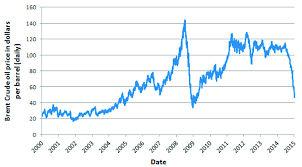
    Oil prices have seen a significant spike, with Brent crude surpassing $90 per barrel, a notable rise from $87, in the wake of escalating tensions between Israel and Iran.

    The increase exceeded 3% on Friday following confirmed reports of an Israeli military operation on Iranian soil.

    The strike, which targeted strategic locations in Iran, has intensified fears of a potential full-scale conflict in the region, prompting a swift reaction in global oil markets.

    A U.S. official, speaking to NBC News, confirmed Israel’s involvement in the operations conducted in Iran, marking a significant escalation in the ongoing hostilities between the two nations.

    Further reports from CNN indicate that Iran’s Fars news agency reported hearing explosions at an airport in the city of Isfahan, although the cause of the blasts has yet to be determined.

    This incident has led to several commercial flights being diverted to avoid Iranian airspace, highlighting the broader regional implications of the conflict.

    This surge in oil prices reflects the market’s sensitivity to geopolitical events in the Middle East, a critical hub for global oil production and export.

    Investors and analysts are closely monitoring the situation, aware that continued unrest could lead to further disruptions in oil supply chains and additional increases in prices.