


Category: Security/Defence

  • Nigeria, US Renew Security Partnership as Violence and Displacement Soar

    Nigeria, US Renew Security Partnership as Violence and Displacement Soar

    — But Results Remain Elusive

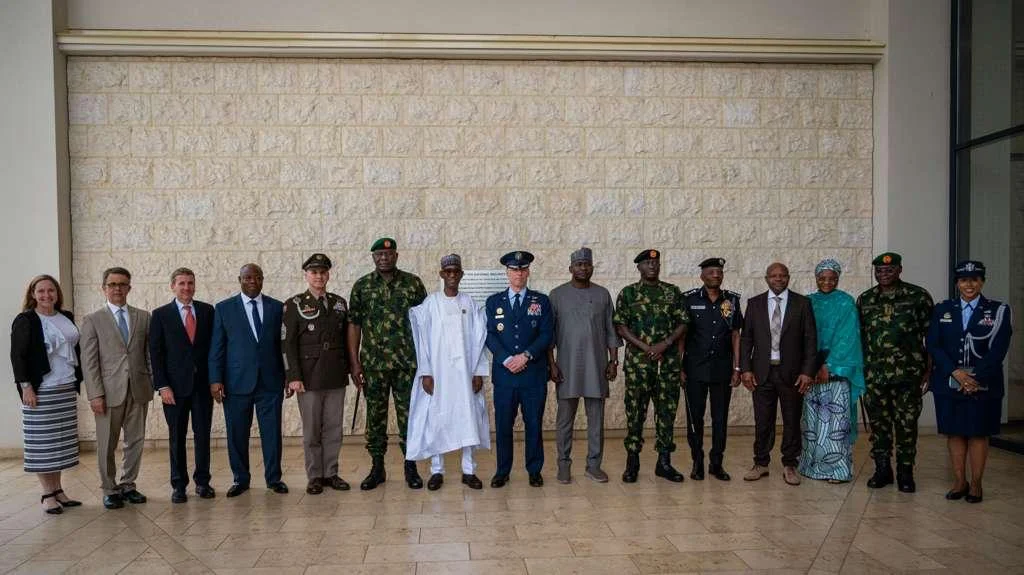
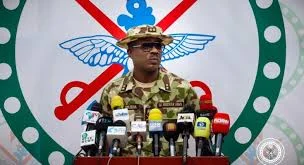
    Nigeria’s Defence Headquarters (DHQ) says a recent visit by the Commander of the United States Africa Command (AFRICOM), Dagvin Anderson, has reaffirmed security cooperation between Abuja and Washington. But with violence continuing to claim lives, displace communities, and deepen humanitarian strain, analysts and rights groups say both governments owe the public clearer evidence of what the partnership has actually achieved.

    In a statement attributed to the DHQ’s Director of Defence Information, Samaila Uba, officials said the visit was meant to “deepen collaboration” against terrorist groups threatening Nigeria and the wider region. Gen. Anderson met with Bola Tinubu, the National Security Adviser, Nuhu Ribadu, the Minister of Defence, Christopher Musa, and the Chief of Defence Staff, Olufemi Oluyede, and visited a joint US–Nigeria intelligence fusion cell.

    But concrete outcomes remain vague. Officials did not detail new commitments, metrics for success, or timelines for measuring progress — a pattern critics say has characterised past security dialogues.

    Violence Continues Despite Longstanding Cooperation

    Despite years of military training, intelligence sharing, and international support (including US-approved arms deals), Nigeria’s insecurity shows little sign of abating:

    • Deadly attacks have surged. In early February 2026, at least 162–200 people were killed in coordinated extremist assaults on the villages of Woro and Nuku in Kwara State — among the deadliest attacks in recent months.
    • Statewide and national figures point to a broader crisis. Amnesty International reported that between May 2023 and May 2025, armed attacks across multiple states killed at least 10,217 people and forced the displacement of hundreds of towns and villages.
    • Longer-term conflict toll. Insurgent violence in northern Nigeria — particularly linked to Boko Haram and splinter groups — has been associated with the deaths of tens of thousands of civilians and the displacement of over 2 million people since the conflict began.

    These figures reflect not just battlefield deaths but the chronic security failures that have driven families from their homes, disrupted local economies, and crippled access to basic services.

    Intelligence and Cooperation — Impact or Optics?

    The DHQ highlighted the role of a joint US–Nigeria intelligence fusion cell in enhancing surveillance and operational response. Yet, there are persistent reports of militants reaching remote communities, executing mass killings, and kidnapping civilians with impunity, suggesting that improved information flow has not always translated into timely or effective protection for vulnerable populations.

    Moreover, public statements from both governments rarely clarify how shared intelligence leads to changes in on-the-ground outcomes — such as preventing massacres like the one in Kwara or reducing daily attacks in the northeast and northwest.

    Opaque Budgets and Unclear Outcomes

    Budget details on US assistance — including equipment transfers, training, and advisory support — are often disclosed in generic terms without comprehensive reporting on results relative to expenditure. For example, in 2025, the United States approved a potential $346 million weapons sale to Nigeria aimed at strengthening military capacity, but there is limited publicly available data on how such resources have measurably reduced violence or improved civilian safety.

    Without transparent benchmarks or regular independent assessments, experts warn that security cooperation risks becoming a diplomatic talking point rather than a force for measurable change.

    Looking Ahead: What Nigerians Want to See

    Analysts and civil society groups increasingly call for:

    • Clear public metrics tracking trends in violence, arrests, and successful interventions attributable to joint efforts.
    • Independent evaluation of intelligence-sharing mechanisms and their operational impact.
    • Human security indicators, such as reductions in displacement and civilian casualties, rather than purely military success markers.

    For many Nigerians living amid recurring attacks and displacement, the question is no longer whether Nigeria has partners, but whether those partnerships can be held accountable to the people they are supposed to protect.

  • Human Trafficking: NAPTIP Raises Alarm Over Baby-Selling in Akwa Ibom, rescue 68 victims

    Human Trafficking: NAPTIP Raises Alarm Over Baby-Selling in Akwa Ibom, rescue 68 victims

    NAPTIP rescued 68 victims of human trafficking and arrested 62 suspected traffickers in Akwa Ibom State in 2025, raising fresh concerns over the state’s deepening trafficking crisis.

    The Uyo Zonal Commander of the agency, Mr Ubong Ekwere, disclosed this on Thursday in Uyo during an interview with the News Agency of Nigeria (NAN).

    Ekwere said 51 of the rescued victims were females, while 17 were males. Five victims—two males, one female and two babies—are still receiving care at NAPTIP’s shelter, while others have been reunited with their families.

    He revealed that the command handled 58 trafficking cases during the year, with five transferred from the police, four from the Department of State Services (DSS), two from the Nigeria Immigration Service and 47 handled directly by the Uyo command.

    Despite the scale of the problem, Ekwere said only two convictions were secured, while 22 cases remain in court at various stages of prosecution. He, however, expressed confidence that more convictions would follow to serve as a strong deterrent.

    Describing Akwa Ibom as an endemic hub for human trafficking, the zonal commander warned of a disturbing new trend involving the sale of babies, which he described as a grave crime against the state.

    He urged parents and guardians to be alert to traffickers’ tactics, particularly promises of greener pastures for young girls, which often end in child labour or prostitution.

    Ekwere said NAPTIP would intensify aggressive sensitisation across churches, mosques, schools and rural communities to expose trafficking networks and protect vulnerable children.

    He called on state and local governments, corporate organisations and well-meaning individuals to support the agency, lamenting the absence of an operational vehicle to patrol the state’s 31 local government areas.

    The commander commended sister security agencies for intelligence sharing and warned traffickers to desist, stressing that Akwa Ibom and Nigeria were no longer safe for the crime.

  • Otti Hails Home-State Posting as Game Changer for Policing

    Otti Hails Home-State Posting as Game Changer for Policing

    Abia State Governor, Dr Alex Otti, has commended the Inspector-General of Police, Kayode Egbetokun, for directing that newly commissioned police officers be posted to their states of origin.

    The Governor describes the policy as a significant step towards strengthening community-based policing and internal security.

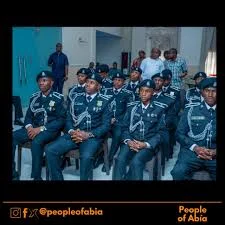
    Otti gave the commendation on Thursday in Nvosi, Isiala Ngwa South Local Government Area, when 31 Abia-born officers of the 7th Regular Course of the Nigeria Police Academy paid him a courtesy visit.

    The governor noted that officers deployed to unfamiliar environments often encounter challenges such as language barriers, cultural differences and limited understanding of local terrain, which could affect effective policing.

    According to him, posting officers to their home states enhances familiarity with local languages, customs and security dynamics, thereby improving intelligence gathering, crime prevention and trust between the police and host communities.

    Otti observed that the policy mirrors a long-standing practice in the Nigerian Army, where personnel are routinely posted to formations within or near their states of origin, especially at early stages of their careers, to leverage local knowledge and strengthen civil-military relations.

    He said the army’s experience had shown that home-state deployment promotes discipline, accountability and cooperation with local populations, while reducing friction arising from cultural misunderstandings.

    The governor commended the Inspector-General and his management team for extending a similar principle to the Nigeria Police Force, noting that the initiative was capable of deepening community policing nationwide.

    He expressed satisfaction with the presence of the officers in Abia and acknowledged their requests for support, assuring them that the state government would explore ways to assist, as it had consistently done in the past.

    Otti congratulated the officers on their commissioning and prayed for their safety and success in the discharge of their duties.

    Also speaking, Senior Advocate of Nigeria, Mr Monday Ubani, urged the officers to remain focused and uphold the highest standards of integrity, honour and professionalism.

    Ubani warned them against involvement in criminal or fraudulent activities and cautioned against turning policing into a transactional exercise where citizens are required to pay money before their complaints are addressed.

    According to him, policing should be anchored on justice, service and security, not financial inducement.

    Speaking on behalf of the officers, Assistant Superintendent of Police Somtochukwu Irozuru said Governor Otti’s leadership had restored public confidence and inspired young people to embrace service, integrity and sacrifice.

    Irozuru said the posting of the officers to their state of origin was aimed at strengthening community policing, describing it as the first time such a policy had been applied to newly commissioned police officers.

    He described the deployment as a privilege that would deepen their bond with the people and appealed to the Abia State Government for support in welfare needs, including accommodation, mobility and laptops, to enhance effective policing and career development.

    He thanked the governor for granting them audience despite his busy schedule and pledged the officers’ commitment to the peace, security and development of Abia State.

  • U.S. Strike on ISIS in Sokoto Sparks Questions Over Motive and Target Selection

    U.S. Strike on ISIS in Sokoto Sparks Questions Over Motive and Target Selection

    Abuja — As security analysts question the true motive behind recent U.S. military action in Nigeria, U.S. President Donald Trump has said American forces carried out strikes against Islamic State (ISIS) targets in the country’s northwest, citing attacks on Christians amid worsening insecurity.

    In a post on his Truth Social platform late Thursday, Trump said the operation targeted ISIS fighters he accused of “viciously killing, primarily, innocent Christians.”

    “The United States launched a powerful and deadly strike against ISIS Terrorist Scum in Northwest Nigeria,” Trump wrote. He added a Christmas message that included a warning that further attacks would result in additional U.S. military action.

    Motive Under Scrutiny

    The stated rationale for the strike has drawn skepticism from Nigerian security experts and residents, particularly in Sokoto State, where the targets were reportedly located.

    Retired Nigerian Air Force officer and security analyst, Group Captain Sadeeq Shehu (rtd), is among those questioning the true motive of the operation. He called for urgent clarification from relevant authorities, especially regarding the reported selection of Jabo, a community in Sokoto State.

    He urged authorities to provide:

    • A transparent explanation—within security limits—of the intelligence basis for the strike
    • Clear assurances on civilian harm mitigation
    • Verification and accountability mechanisms to assess potential collateral damage

    “People in Sokoto are not dismissing security threats,” Shehu said. “They are asking for logic, evidence, and accountability.”

    Across the state, a recurring question continues to surface:
    Why Jabo? Why Sokoto, of all places in a country grappling with terrorism in multiple regions? Was this a symbolic strike on what some consider the historical ‘seat of the Caliphate’?

    Pentagon Releases Video

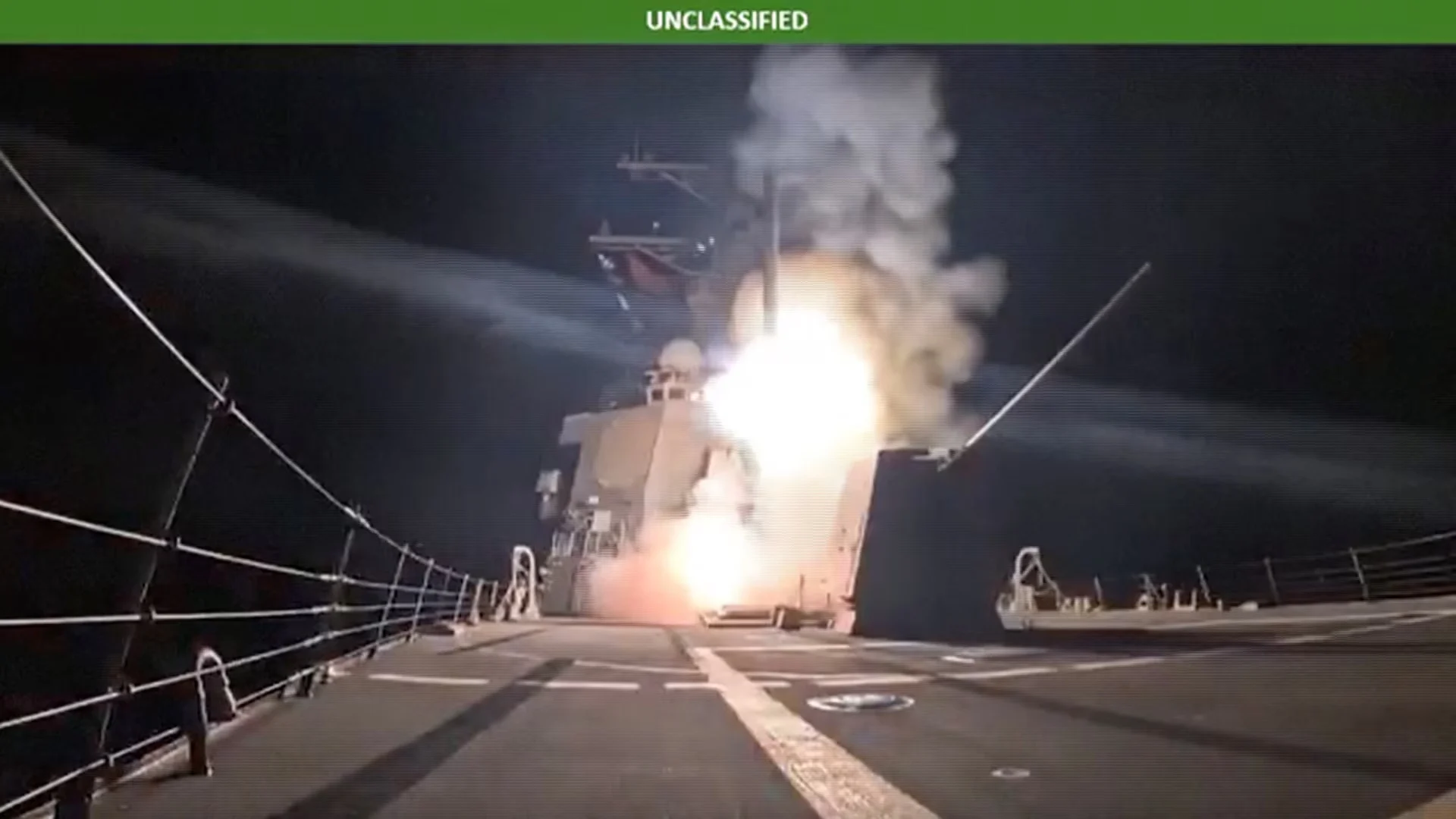
    The Pentagon later released video footage appearing to show a missile being launched from a U.S. warship. Officials did not immediately disclose details on casualties or the extent of damage caused by the strike.

    According to the United States Africa Command (AFRICOM), the targets were located in Sokoto State. U.S. Defence Secretary Pete Hegseth said he was “grateful for Nigerian government support and cooperation” following the operation.

    Rising Violence in Nigeria

    The strike comes amid growing security challenges in Africa’s most populous country, particularly in the north and northeast, where Islamist militant groups remain active.

    Boko Haram, which originated in Nigeria, along with Islamic State–affiliated factions, has intensified attacks in recent weeks. Mass abductions from churches and schools have heightened fear and unrest among local populations.

    Earlier this month, Trump warned that Washington could intervene if attacks on Christians continued, urging the Nigerian government to prevent further bloodshed or risk reduced U.S. aid.

    Despite those warnings, violence has persisted. On Thursday, a suicide bombing in northeastern Nigeria killed at least five people and injured 35 others, according to a police spokesperson.

    Limited Details on Casualties

    U.S. officials have not released figures on the number of militants killed in the strike, and Nigerian authorities have yet to issue a comprehensive public response.

    As questions linger over intelligence, targeting, and civilian impact, the situation remains fluid, with Nigeria continuing to battle multiple insurgent groups across several regions.

  • U.S. Military Strike in Nigeria: A Blow to National Pride and a Projection of Weakness

    U.S. Military Strike in Nigeria: A Blow to National Pride and a Projection of Weakness

    By Wale Alonge

    No amount of official reassurance or diplomatic damage control can erase the profound injury done to Nigeria’s national pride by a United States military strike on Nigerian soil. At the core of statehood lies a single, non-negotiable responsibility: the protection of sovereignty and territorial integrity against incursion by foreign powers, regardless of the justification offered.

    For a country of over 220 million people, one that consistently projects itself as the giant of Africa, the very occurrence of a foreign military strike within its borders raises unsettling questions. These questions become even more troubling when the foreign power involved is led by an administration that has previously denigrated Nigeria in crude terms and promoted a deeply flawed narrative of a Muslim-orchestrated genocide against Christians. Such rhetoric is not merely offensive; it is dangerous, polarizing, and destabilizing.

    The suggestion that Nigeria willingly opened its airspace to a unilateral U.S. military operation, or that Washington fully coordinated its plans with Abuja, deserves serious scrutiny. Under President Donald Trump, the United States repeatedly demonstrated a preference for unilateral action, particularly in matters framed as counterterrorism. Trump publicly pledged to strike Islamist terrorists in Nigeria, presenting the issue through a religious lens that ignored the country’s complex security realities.

    Context matters. The strike followed closely after a terrorist bombing of a mosque in northern Nigeria and days after U.S. servicemen were killed by ISIS in Syria. To view the timing as coincidental is to ignore the pattern of retaliatory signaling that has characterized U.S. military actions in recent years. Whether or not Nigeria was informed after the fact, the broader message remains troubling: a foreign power exercised lethal force within Nigeria’s borders, reinforcing the perception that Nigeria lacks full control over its own security space.

    Once a nation allows its sovereignty and airspace to be pierced, whether by consent, coercion, or quiet acquiescence, it sets a precedent that is exceedingly difficult to reverse. Sovereignty, once compromised, rarely returns intact. The genie, as the saying goes, does not go back into the bottle.

    This issue transcends partisan loyalty or personal support for any sitting president. The defense of national sovereignty is sacrosanct and must stand above politics. African states have demonstrated this principle before. Burkina Faso’s firm response to the unauthorized penetration of its airspace by a Nigerian aircraft underscored a simple truth: respect among nations begins with the enforcement of boundaries.

    Calls to celebrate foreign military intervention as a victory against terrorism are therefore premature. The true consequences of the strike—potential civilian casualties, destruction of villages, and political fallout in northern Nigeria—remain to be seen. These outcomes carry serious implications for domestic stability and could impose substantial political costs on the presidency.

    In the final analysis, regardless of how the event is framed, the optics are damaging. The strike projects weakness, not strength; dependency, not leadership. It casts an unflattering light on Nigeria’s military capability, raises questions about the government’s control over national security, and undermines the country’s standing as a sovereign regional power.

    For Nigeria, the lesson is stark and unavoidable: no nation can claim greatness while its sovereignty is negotiable.

  • Fresh Clashes Erupt Between Egba-Ologba Communities Over Fishing Pond

    Fresh Clashes Erupt Between Egba-Ologba Communities Over Fishing Pond

    Fresh violence has erupted between the Egba and Ologba communities in Agatu Local Government Area of Benue State over ownership of the Ochulo fishing pond, leading to the loss of several lives.

    The latest clash occurred despite the fact that the long-standing dispute is currently before a court of law. It also happened while representatives of both communities were in Makurdi, the Benue State capital, engaging in dialogue aimed at reaching a peaceful resolution.

    The conflict over control of the Ochulo fish pond dates back to 1972. Since then, it is estimated that more than 2,800 lives have been lost in recurrent violent confrontations linked to the dispute.

    A new and troubling dimension to the conflict is the involvement of neighbouring communities, whose residents now openly take sides and join their preferred factions during clashes, thereby escalating the violence.

    It was also gathered that the current Chairman of Agatu Local Government Council, Melvin James Ejeh has initiated about ten different peace overtures, all of which have so far failed to yield lasting peace.

    Reacting to the situation, a concerned social commentator has called on Benue State Governor, Rev. Fr. Hyacinth Alia, to urgently establish a permanent government institution or security presence along the disputed boundary to forestall further violence.

    Agatu Local Government Area, which is largely an aquatic environment located in the lowlands of the Benue River Basin, has previously been an epicentre of violent clashes between armed herdsmen and indigenous communities over grazing routes and farmlands.

    There are growing fears that the renewed internal conflict could expose the area to fresh attacks by marauding herdsmen and other criminal elements, further worsening the security situation in the region.

  • Tinubu Hails Rescue of 24 Kebbi Schoolgirls, Orders Tougher Security Action

    Tinubu Hails Rescue of 24 Kebbi Schoolgirls, Orders Tougher Security Action

    President expresses relief as freed girls reunite with authorities; vows increased security in vulnerable areas

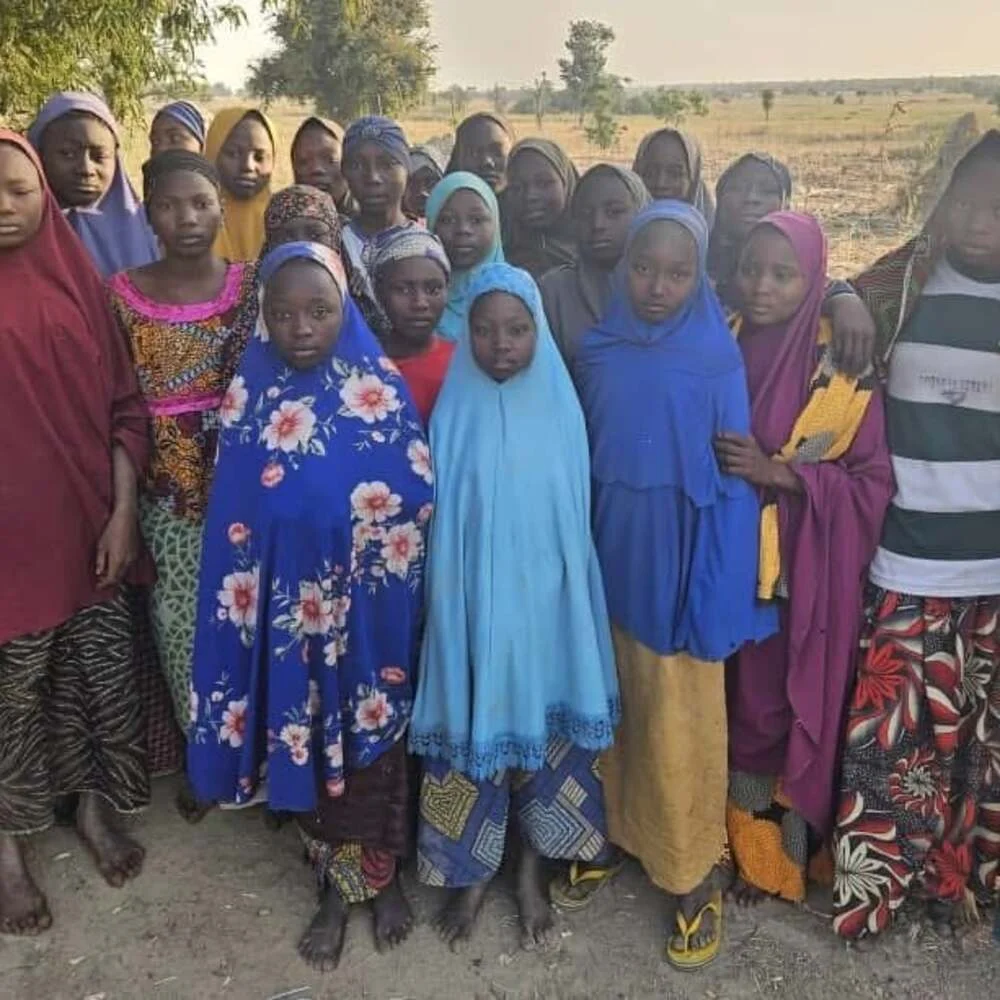
    Abuja, November 25, 2025: President Bola Tinubu has welcomed the release of the 24 schoolgirls abducted by terrorists from the Government Girls’ Comprehensive Secondary School, Maga, in Danko-Wasagu Local Government Area of Kebbi State, on November 17.

    In a statement issued on Tuesday in Abuja by his Special Adviser on Information and Strategy, Mr. Bayo Onanuga, the President expressed relief that the girls, who were kidnapped shortly after a military detachment left the school premises, had been safely reunited with the authorities.

    Tinubu noted that the Kebbi abduction appeared to have triggered similar incidents in Eruku, Kwara State, and Papiri, Niger State.

    According to reports, all 38 victims abducted in Eruku were released on Sunday, while the Chairman of the Christian Association of Nigeria (CAN) in Niger State confirmed that 50 missing students from a Catholic school in the state had also returned home.

    Commending the security agencies for their sustained efforts, the President urged them to intensify operations to rescue those still in captivity.

    “I am relieved that all the 24 girls have been accounted for. Now, we must, as a matter of urgency, put more boots on the ground in vulnerable areas to avert further incidents of kidnapping,” Tinubu said.

    “My government will offer all the assistance needed to achieve this,” he vowed.

  • NAF confirms killing scores of armed men in coordinated air raid

    The Nigerian Air Force (NAF) says several armed bandits were killed in series of coordinated air strikes by the Air Component of Operation FASAN YAMMA, on Makakkari Forest in Zamfara.

    This is contained in a statement by the Director, Public Relations and Information, NAF, Air Commodore Ehimen Ejodame, on Monday in Abuja.
    According to him, Intelligence Surveillance and reconnaissance (ISR) had confirmed movements of over 400 bandits, planning to invade a farming community.

    He said the operation involved precision airstrikes and ground assaults, resulting in the deaths of several notorious kingpins and scores of their foot soldiers.

    “The synergy between air and land components made the operation exceptional,” he said. 

  • Bomb at a scrap company kills 5, injures 15 in Kano 

    The Kano state police command has confirmed the death of five people from a military grade explosive in the state.

    It revealed that the unfortunate incident occurred on Saturday at a scrap collection company located at Eastern bypass in the state.

    According to the police the vehicle was coming from Yobe state when the explosion happened.

    The Commissioner, Kano State Police Command, Mr. Ibrahim Adamu Bakori said he was informed of an emergency explosion in the area.

    He added that on arrival, he witnessed the explosion scene.

    “It was a military EOD personnel. It was a military model bomb that exploded. 15 people were injured, and taken to Aminu Kano Teaching Hospital.”

    He added that on arrival at the hospital, five people were confirmed dead, while 10 others were receiving treatment.

    The Police Commissioner said from preliminary investigation, the vehicle came from Yobe, adding that though the matter is under investigation, he was informed that the vehicle carrying the bomb  was a truck from Yobe state.

    CP Bakori assured of details as soon as more investigation into the matter is done.

  • Obi praises Zulum’s dedication, laments growing insecurity in Borno.

    Obi praises Zulum’s dedication, laments growing insecurity in Borno.

    The 2023 Presidential Candidate of the Labour Party,  Mr Peter Obi has decried the  rising insecurity in Borno, lauding Gov. Babagana Zulum for his commitment in handling the challenge.

    Obi, a former governor of Anambra, in his X handle on Tuesday, said that the security situation in the Marte area of the state is unsettling and called  for emergency action.

    According to him,  the apparent commitment of   Zulum, who had courageously relocated to the troubled area is  laudable.

    “The security situation in Borno state  is concerning and very unsettling.

    “What is happening in the Marte area of the state is not just a local emergency; it is a national alarm bell that must not be ignored.

    “Zulum, by choosing to spend the night in a town under threat, has once again, demonstrated what leadership should look like; present, proactive, and people-centred.

    “His courage is not for commendation alone; it is a challenge to those in authority to match words with decisive action,” he said.

    Obi said everything possible must be done to  support the state and  prevent an entire local government from falling into the hands of terrorists.

    He revealed that over 300 communities are  exposed, while more than 20,000 of them  were displaced yet again.

    He explained that these were not just numbers, they are families, children, and communities whose hopes are hanging by a thread.

    He said that Zulum had raised critical concerns that insurgents were regrouping around Lake Chad and the Mandara Hills; that Marte is on the verge of collapsing and that the window for action is closing.

    “These are facts. And it is not enough to acknowledge them; we must respond with urgency and sincerity.

    “We cannot afford to continue this culture of delayed response and distant governance.

    “Our security forces need reinforcements, our displaced citizens need protection, We  must show the will to act swiftly and consistently.

    “I have always maintained that Nigeria works best when leadership is driven by compassion, competence and courage.  and Zulum had shown  all three,”  he added.

    He stressed that this is not about politics, but  the people, and about protecting the soul of our nation.