

By using this site, you agree to the Privacy Policy and Terms of Use.
Accept
Nigerian News, Politics, Business, Economy, Investment, Entertainment and Sports.Nigerian News, Politics, Business, Economy, Investment, Entertainment and Sports.Nigerian News, Politics, Business, Economy, Investment, Entertainment and Sports.
  • News
    • News Menu
  • Business
  • Economy
  • Governance
  • Politics
    • North Central
      • Benue Update
      • Kogi Update
      • Kwara Update
      • Nasarawa Update
      • Niger Update
      • Plateau Update
      • FCT Update
    • North East
      • Adamawa Update
      • Bauchi Update
      • Borno Update
      • Gombe Update
      • Taraba Update
      • Yobe Update
    • North West
      • Jigawa Update
      • Kaduna Update
      • Kano Update
      • Katsina Update
      • Kebbi Update
      • Sokoto Update
      • Zamfara Update
    • South East
      • Abia Update
      • Anambra Update
      • Ebonyi Update
      • Enugu Update
      • Imo Update
    • South South
      • Akwa Ibom Update
      • Bayelsa Update
      • Cross River Update
      • Delta Update
      • Edo Update
      • Rivers Update
    • South West
      • Ekiti Update
      • Lagos Update
      • Ogun Update
      • Ondo Update
      • Osun Update
      • Oyo Update
  • Sports
    • SOCCER
      • Football
      • Sports
      • AFCON
      • NPFL
      • Premier League
    • EURO SOCCER
      • Champions League
      • Europa Conference
      • Europa League
      • La Liga
      • Boxing
      • Tennis
      • UFC
  • Editorial
  • MORE
    • Opinion
    • Entertainment
    • Investigation
    • Politics Lite
    • Publications
    • Travelogue
Reading: U.S. Military Strike in Nigeria: A Blow to National Pride and a Projection of Weakness
Share
Notification Show More
Font ResizerAa
Nigerian News, Politics, Business, Economy, Investment, Entertainment and Sports.Nigerian News, Politics, Business, Economy, Investment, Entertainment and Sports.
Font ResizerAa
  • Politics
  • Business
  • Technology
  • News
    • News Menu
  • Business
  • Economy
  • Governance
  • Politics
    • North Central
    • North East
    • North West
    • South East
    • South South
    • South West
  • Sports
    • SOCCER
    • EURO SOCCER
  • Editorial
  • MORE
    • Opinion
    • Entertainment
    • Investigation
    • Politics Lite
    • Publications
    • Travelogue
Have an existing account? Sign In
Follow US
  • Advertise
© 2022 Foxiz News Network. Ruby Design Company. All Rights Reserved.
Nigerian News, Politics, Business, Economy, Investment, Entertainment and Sports. > Blog > News > Security/Defence > U.S. Military Strike in Nigeria: A Blow to National Pride and a Projection of Weakness
Security/Defence

U.S. Military Strike in Nigeria: A Blow to National Pride and a Projection of Weakness

admin
Last updated: December 26, 2025 2:41 pm
admin
5 months ago
Share
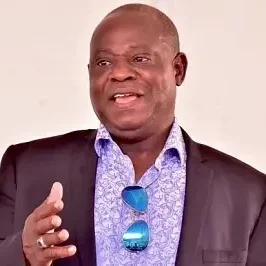
Wale Alonge, Dadeland, Miami, US-based Nigerian writer and political commentator.
Dr. Adewale Alonge
SHARE

By Wale Alonge

No amount of official reassurance or diplomatic damage control can erase the profound injury done to Nigeria’s national pride by a United States military strike on Nigerian soil. At the core of statehood lies a single, non-negotiable responsibility: the protection of sovereignty and territorial integrity against incursion by foreign powers, regardless of the justification offered.

For a country of over 220 million people, one that consistently projects itself as the giant of Africa, the very occurrence of a foreign military strike within its borders raises unsettling questions. These questions become even more troubling when the foreign power involved is led by an administration that has previously denigrated Nigeria in crude terms and promoted a deeply flawed narrative of a Muslim-orchestrated genocide against Christians. Such rhetoric is not merely offensive; it is dangerous, polarizing, and destabilizing.

The suggestion that Nigeria willingly opened its airspace to a unilateral U.S. military operation, or that Washington fully coordinated its plans with Abuja, deserves serious scrutiny. Under President Donald Trump, the United States repeatedly demonstrated a preference for unilateral action, particularly in matters framed as counterterrorism. Trump publicly pledged to strike Islamist terrorists in Nigeria, presenting the issue through a religious lens that ignored the country’s complex security realities.

Context matters. The strike followed closely after a terrorist bombing of a mosque in northern Nigeria and days after U.S. servicemen were killed by ISIS in Syria. To view the timing as coincidental is to ignore the pattern of retaliatory signaling that has characterized U.S. military actions in recent years. Whether or not Nigeria was informed after the fact, the broader message remains troubling: a foreign power exercised lethal force within Nigeria’s borders, reinforcing the perception that Nigeria lacks full control over its own security space.

Once a nation allows its sovereignty and airspace to be pierced, whether by consent, coercion, or quiet acquiescence, it sets a precedent that is exceedingly difficult to reverse. Sovereignty, once compromised, rarely returns intact. The genie, as the saying goes, does not go back into the bottle.

This issue transcends partisan loyalty or personal support for any sitting president. The defense of national sovereignty is sacrosanct and must stand above politics. African states have demonstrated this principle before. Burkina Faso’s firm response to the unauthorized penetration of its airspace by a Nigerian aircraft underscored a simple truth: respect among nations begins with the enforcement of boundaries.

Calls to celebrate foreign military intervention as a victory against terrorism are therefore premature. The true consequences of the strike—potential civilian casualties, destruction of villages, and political fallout in northern Nigeria—remain to be seen. These outcomes carry serious implications for domestic stability and could impose substantial political costs on the presidency.

In the final analysis, regardless of how the event is framed, the optics are damaging. The strike projects weakness, not strength; dependency, not leadership. It casts an unflattering light on Nigeria’s military capability, raises questions about the government’s control over national security, and undermines the country’s standing as a sovereign regional power.

For Nigeria, the lesson is stark and unavoidable: no nation can claim greatness while its sovereignty is negotiable.
You Might Also Like

US Embassy Warns Citizens in Nigeria Over Shiites Protest
Gunmen Kill 7 Imo JTF Operatives, Set 2 Patrol Vans Ablaze
MultiChoice defies court order, increases DStv, GOtv subscriptions
Don’t Use Oro To Threaten Protesters – Gbadebo
NALDA To Crash Maize, Rice Prices Across Nigeria
TAGGED:Foreign PolicyNational securityNational SovereigntyNigeriaU.S. Military
Share This Article
Facebook Email Print
Previous Article Nasarawa Assembly Passes N545.2bn 2026 Budget, Raises Allocation Amid Inflation Pressures Nasarawa Assembly Passes N545.2bn 2026 Appropriation Bill
Next Article “Pentagon-released footage showing a missile launch during a U.S. military strike linked to Nigeria.” U.S. Strike on ISIS in Sokoto Sparks Questions Over Motive and Target Selection
about us

We influence 20 million users and is the number one business and technology news network on the planet.

Find Us on Socials

© Nigerian Anchor. All Rights Reserved.
na_logo
Join Us!
Subscribe to our newsletter and never miss our latest news, podcasts etc..
[mc4wp_form]
Zero spam, Unsubscribe at any time.
NA Logo For Search
Welcome Back!

Sign in to your account

Username or Email Address
Password

Lost your password?