
Category: Politics Lite

  • Court Disqualifies Timipre Sylva From Contesting Bayelsa Guber Poll

    Court Disqualifies Timipre Sylva From Contesting Bayelsa Guber Poll

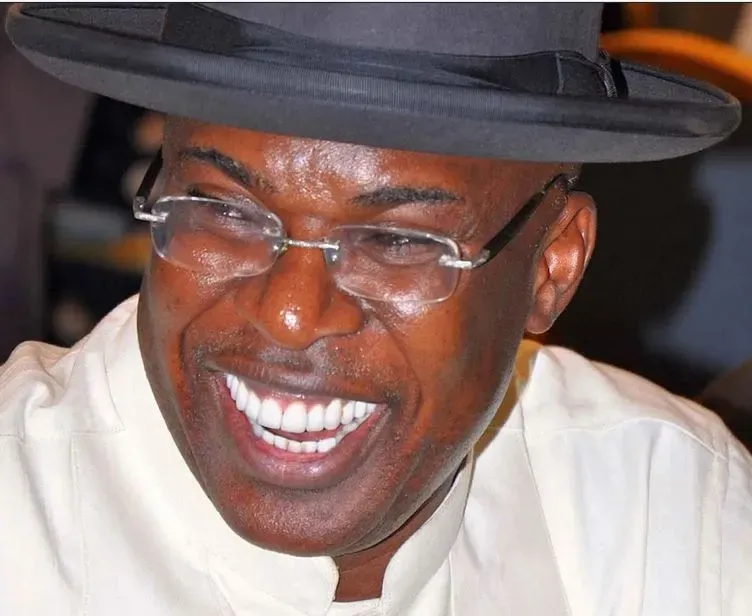
    A Federal High Court, Abuja has disqualified the governorship candidate of the All Progressives Congress (APC), Chief Timipre Sylva, from contesting the November 11 election in Bayelsa.

    Justice Donatus Okorowo, in a judgment delivered Monday night, held that Sylva, having been sworn in twice and ruled for five years as governor of the state, would breach the 1999 Constitution (as amended) if allowed to contest again.

    Justice Okorowo, who agreed with the plaintiff’s argument, further held that if Sylva was allowed to contest and won the poll, he would have spent more than eight years in office as governor of the state in contravention with the constitution.

    While citing the case of Marwa vs Nyako at the Supreme Court, Okorowo maintained that the drafters of the country’s constitution stated that nobody should be voted for as governor for more than two times.

    According to the judge, the Supreme Court has also ruled in the case of Marwa vs Nyako that nobody can expand the constitution or its scope.

    He held that if Sylva was allowed to contest the next election, it meant a person could contest as many times as he wanted.

    Chief Deme Kolomo, a member of the APC, had prayed the court to order the Independent National Electoral Commission (INEC) to delete Sylva’s name from list of candidates contesting the Nov. 11 governorship poll.

    In the originating summons marked: FHC/ABJ/CS/821/2023 dated and filed June 13, Kolomo had sued Sylva, the immediate-past Minister of State for Petroleum; APC and INEC as 1st to 3rd defendants respectively.

    Kolomo had asked the court to determine whether Sylva is qualified to contest in the election, having occupied the office of governor of Bayelsa May 29, 2007 to April 15, 2008 and May 27, 2008 to Jan. 27, 2012.

    In the affidavit attached, Kolomo deposed that besides being an APC member, he was also a registered voter in the state.

    He said INEC recently published the names of governorship candidates for the state, including Sylva’s name.

    The plaintiff said he was motivated by the need to vindicate Sections 180 (2)(a) and 182(1)b) of the1999 Constitution, the rule of law and to know the applicability of same as it relates to Sylva based on the above facts.

    Kolomo also averred that the question raised by the instant suit was a constitutional one and of grave importance to him as a voter and other voters in the sate so that they would not vote for someone who was not qualified to contest in the poll and had their votes wasted at the end of the day.

    But Sylva, who was the immediate-past Minister of Petroleum, in a counter affidavit, asked the court to dismiss the suit for lacking in merit.

    The ex-minister, through his lawyer, Babayemi Olaniyan, said that he was never elected as the state’s governor on two occasions.

    He argued that the Appeal Court in its judgement held that the election that brought Sylva as Bayelsa governor in 2007 was null and void, while directing INEC to conduct a fresh election within 90 days.

    The lawyer though admitted he was a former governor of Bayelsa, he stressed that he had only been elected once as the state’s governor. He asked the court to dismiss the suit.

    Corroborating Olaniyan’s argument, Dr Dennis Otiotio, who appeared for APC, urged the court to dismiss the suit with substantial cost.

    In the preliminary objection argued, Otiotio said that Kolomo lacked locus standi to institute the suit as he was never an aspirant in the primary election that produce Sylva.

    While arguing his case, Prof. Abiodun Amuda-Kannike, who appeared for Kolomo, said contrary to the argument of the counsel, his client had locus, in accordance with the law, to file the suit whether as a pre-election matter or not.

    He argued that all the sections and cases cited by the defence were unrelated with the instant suit.

    He said contrary to their argument, the suit was not statute barred, as the final day which the list of candidates was published was also part of their case.

    The senior lawyer prayed the court to uphold their argument and dismiss the preliminary objection of the defence.

    Justice Inyang Ekwo had, on September 26 in another suit marked: FHC/ABJ/CS/575/2023 and filed by an APC aspirant, Mrs Ogbomade Johnson, against Sylva, dismissed the case for failure to prove the case with evidence as required by law.

  • Atiku’s Lawyer Accuses Tinubu of Submitting Forged Certificate To INEC

    Atiku’s Lawyer Accuses Tinubu of Submitting Forged Certificate To INEC

    Following the release of President Bola Tinubu’s academic records by the Chicago State University, Kalu Kalu, a lawyer representing Atiku Abubakar, the presidential candidate of the Peoples Democratic Party (PDP) in the 2023 general elections, has made allegations that Tinubu submitted a counterfeit degree certificate to the Independent National Electoral Commission (INEC) ahead of the elections.

    Kalu, who spoke in a press conference on Thursday in Abuja, contended that despite Tinubu and his supporters vehemently denying the allegations, the documents obtained from Chicago State University support the claims of forgery.

    He pointed out several discrepancies, including the use of a female name on the qualifying certificate from South West College to Chicago State University, indicating that the document may not belong to Bola Ahmed Tinubu.

    Additionally, he said that the admission form from Chicago State University suggests that Tinubu attended Government College Lagos and graduated in 1970, even though the school was established in 1974.

    “The document indicates that the certificate’s owner is a black American, contradicting Tinubu’s claim of not having dual citizenship. Finally, there is an inconsistency between the name “Ahmed” on the document from Chicago State University and “Adekunle” on the NYSC certificate submitted to INEC,” Kalu argued.

    Former Vice President Atiku Abubakar is seeking to overturn Tinubu’s election through legal means after the Presidential Election Tribunal dismissed his petition. As part of this effort, he initiated a case in the United States to obtain the President’s academic records, which have now become a subject of controversy.

    Kalu emphasized that the Supreme Court, under established legal principles, allows for the introduction of fresh evidence under certain conditions, which he believes have been met in this case.

    He asserted that a party found to be at fault should not be permitted to benefit from its illegality according to the law.

  • Rivers: Tribunal Dismisses Labour Party’s Petition Against Fubara’s Election Victory

    The Rivers State Governorship Election petition, convened in Abuja, has rejected the petition submitted by the Labour Party’s gubernatorial candidate in Rivers State, Beatrice Itubo.

    She was challenging the victory of Simnalayi Fubara from the People’s Democratic Party (PDP).

    After the announcement of Fubara as the victor in the March 18 governorship election, both the Labour Party (LP) and the All Progressives Congress (APC), along with their respective candidates, submitted petitions to the tribunal.

    Fubara secured 302,614 votes, defeating his closest rival Tonye Cole of the APC, who garnered 95,274 votes. The Social Democratic Party (SDP) candidate, Senator Magnus Abe, and Itubo trailed behind in third and fourth places, with 46,981 and 22,224 votes, respectively.

    On September 13, the tribunal reserved its judgment on Cole’s petition, which sought the annulment of Fubara’s victory. After the parties presented their final written arguments and made their case for or against the petition, the three-member tribunal, chaired by Justice Cletus Emifonye, adjourned the matter for judgment.

    However, in its ruling on the LP’s petition on Monday, the Justice Emifonye-led tribunal dismissed the petition, citing a lack of merit and the failure to substantiate the allegations made.

  • Atiku Vs Tinubu: US Court Confirms Nigeria’s Supreme Court Can Consider New Evidence

    In a recent ruling by Justice Nancy Maldonado of the United States Court, it has been confirmed that the Supreme Court of Nigeria possesses the mechanism to consider new evidence under “exceptional circumstances.”

    This significant decision comes in response to President Ahmed Tinubu’s objection to presenting documents from Chicago University as evidence in Alhaji Atiku Abubakar’s case.

    The US court emphasized that President Tinubu failed to provide any testimony or evidence indicating that the Court of Appeal’s decision somehow prevented the Supreme Court of Nigeria, in its discretion, from considering new arguments and evidence under “exceptional circumstances.”

    It was noted that President Tinubu, in fact, conceded this procedural mechanism before Judge Gilbert and did not dispute its existence.

    The court further clarified that President Tinubu’s suggestion that the evidence “cannot be considered under any circumstances” is unsupported by the record, highlighting that the US court cannot speculate on Nigerian law and procedure.

    However, it recognized the undisputed existence of a mechanism allowing Mr. Abubakar to potentially introduce the requested discovery into foreign proceedings. The decision regarding whether the Supreme Court of Nigeria will accept these documents or consider them in its decision lies within the jurisdiction of that court.

    The court stressed the undeniable significance of the discovery and the crucial issues at stake. It acknowledged that Chicago State University (CSU) is the sole source of the sought-after information concerning President Tinubu’s diploma and education, with no alternative means for Mr. Abubakar to access it.

    Based on Rule 26 considerations and the paramount importance of the discovery, the court supported the request for discovery. It affirmed that it would not obstruct the flow of discovery when it is within the possession of a US institution, especially given CSU’s readiness to provide it. The court concluded that Mr. Abubakar’s interest in the discovery outweighs President Tinubu’s privacy concerns.

    Considering these factors, the court found that the discretionary factors support granting Mr. Abubakar’s application. It also noted that President Tinubu did not specifically object to the scope of the discovery requests and that the requests were appropriately tailored to seek relevant information.

    In conclusion, the US court overruled President Tinubu’s objections and adopted Judge Gilbert’s ruling in full. Mr. Abubakar’s Application for discovery was granted. An expedited schedule was set for completion of discovery, aligning with the pending Supreme Court of Nigeria deadline.

    CSU was directed to produce relevant documents and complete the deposition, ensuring compliance with the established timeline.

  • US Court Mandates Chicago Varsity to Disclose Tinubu’s Academic Records to Atiku

    US Court Mandates Chicago Varsity to Disclose Tinubu’s Academic Records to Atiku

    A United States Court has issued a directive to the Chicago State University (CSU) regarding the release of President Bola Tinubu’s academic records to former Vice President Atiku Abubakar.

    The presiding judge, Nancy Maldonado, has dismissed Tinubu’s objections and set a two-day deadline for CSU to provide the requested documents to Atiku.

    Judge Maldonado upheld the earlier ruling made on September 20 by US Magistrate Judge Jeffery Gilbert, which had ordered CSU to release Tinubu’s academic records in response to Atiku’s request.

    The judge emphasized that Atiku, the presidential candidate of the People’s Democratic Party (PDP), had the right to access these records.

    In her ruling, Judge Maldonado stated, “For the reasons stated in the Court’s accompanying Memorandum Opinion and Order, the Court overrules President Tinubu’s objections and adopts Judge Gilbert’s recommended decision in full.

    The Court, therefore, grants Mr. Abubakar’s application under 28 U.S.C. § 1782.”

    Furthermore, the court has set a timeline for CSU to comply with the directive. CSU is instructed to produce all relevant and non-privileged documents in response to specific requests by Atiku’s legal team by 12:00 p.m. (noon) CDT on Monday, October 2, 2023.

    Additionally, the Rule 30(b)(6) deposition of CSU’s corporate designee must be completed by 5:00 p.m. CDT on Tuesday, October 3, 2023.

    Atiku’s request for Tinubu’s academic records stems from his ongoing legal challenge to the outcome of the February 25 presidential election in Nigeria.

    Atiku, the PDP candidate, has argued that the documents are essential in supporting his claim that Tinubu allegedly forged a certificate from CSU in 1979, which he submitted to Nigeria’s Independent National Electoral Commission (INEC) for the 2023 presidential election.

    This court ruling represents a significant development in the legal proceedings surrounding the presidential election and the authenticity of Tinubu’s academic qualifications.

  • Tribunal Validates Gov Agbu Kefas’ Mandate In Taraba

    In a significant verdict that reverberated through the political landscape of Taraba State, the Taraba Governorship Election Petition Tribunal, convening in Jalingo, delivered a resounding affirmation of Governor Agbu Kefas’ victory under the banner of the Peoples Democratic Party (PDP).

    The three-man tribunal, led by Justice Ayo Sunmonu, rendered its judgment on a petition lodged by the New Nigerian Peoples Party (NNPP) and its gubernatorial candidate, Prof. Yahaya Sani, who contested the election, alleging irregularities.

    The crux of the tribunal’s decision was the insufficiency of evidence presented by the petitioners to substantiate their claims. Justice Sunmonu firmly asserted that the petitioners failed to provide convincing arguments to challenge Governor Kefas’ election, rendering their case bereft of merit.

    “The petitioner failed to prove his ground that the governor was not duly elected, and therefore, the petition lacked merit,” declared Justice Sunmonu.

    In the wake of this decisive ruling, Governor Kefas and his legal counsel, Mr. Sam Adda, welcomed the judgment with jubilation. Mr. Adda described it as a “landmark judgment,” highlighting the victory as a reaffirmation of the people’s choice and the integrity of the electoral process.

    The NNPP and its candidate had petitioned the tribunal, seeking the annulment of the election on the grounds of alleged irregularities and non-compliance with the Electoral Act of 2022. They also pressed for the tribunal to order a fresh election in Taraba State.

    However, with the tribunal’s dismissal of the petition, Governor Kefas remains firmly in the saddle as the duly elected governor of Taraba State. This verdict not only solidifies his mandate but also underscores the importance of substantiated evidence in challenging electoral outcomes.

    It stands as a testament to the resilience and strength of the democratic processes in Nigeria, where justice is served through the careful examination of evidence and adherence to due process.

  • How Tribunal Upheld Election Of ‘Happy Hour’ Governor, Umo Eno

    There was ‘Happy Hour’ jubilation in Uyo after the Akwa Ibom Governorship Election Petitions Tribunal at the weekend upheld the election of Governor Umo Eno of the Peoples Democratic Party (PDP).

    The tribunal, in a two and a half hours’ judgment, also dismissed the petition of Sen. Bassey Akpan of Young Progressives Party (YPP) who had challenged the election of the g.overnor.

    Delivering the unanimous judgment on the matter, the tribunal held that Eno did not present forged WAEC certificates j as claimed by the petitioner, describing Akpan’s petition as ‘frivolous’.

    The panel’s judgment, which was read by its Chairman, Justice Adekunle Adeleye, held that a WAEC official, who was summoned via a subpoena as PW10, authenticated the governor’s certificates.

    “WAEC did not disclaim the 1981 and 1983 WAEC certificates. Without a disclaimer by the issuing authority, the certificates remained valid.

    “There is no legislation in Nigeria that a person’s name should be arranged in a particular order on a document.

    “In the absence of any other person holding claims to the said 1981 and 1983 WAEC certificates, I hold that the certificates belong to the 2nd Respondent.”

    “Even the 1st Petitioner himself told the court that he was a victim of the same issue as three documents bearing his name tendered as exhibits before the tribunal carried different arrangements of his name, Sen. Akpan, Sen. Akpan Bassey Albert and Bassey Albert Akpan. This is a case of a pot calling a kettle black,” the tribunal ruled.

    The tribunal also upheld the preliminary objections bothering on jurisdiction and non-qualification of the 2nd Respondent, and declared that Eno was eminently qualified.

    It further ruled that an earlier judgment of the Supreme Court in the case filed against Eno by Mr Akan Ekpe Okon was binding to all human beings in the world, including the petitioners.

    Adeleye fumed at the petitioners for abuse of judicial process in resurrecting the matter which had already been buried by the Apex Court.

    The tribunal also decided that the petitioners lacked the locus to challenge how the 3rd Respondent (PDP) conducted its primaries to produce a candidate.

    In striking out the accusations of electoral infractions leveled against Mr Iniobong Robson, the tribunal ruled that the said person was not joined as a respondent in the case by the petitioners and any decision taken under such circumstances would amount to lack of a fair hearing.

    On another WAEC certificate of 1998, which the petitioners claimed belonged to the 2nd Respondent, the tribunal upheld the objection of the 2nd respondent.

    The panel ruled that it was a fresh allegation that was not in the main petition, adding that the time for amendment of petitions had long elapsed, hence the petitioners were merely attempting to spring surprises, contrary to the provisions of the law.

    The tribunal also dismissed the testimonies of APC wards and local governments collation agents who were paraded as witnesses of the petitioners, stressing that their testimonies were speculative.

    According to the tribunal, a particular witness, PW16, one Daniel Akpan, who was presented by Sen. Akpan as a staff of the University of Uyo, is in fact a liar.

    It explained that the witness claimed to have been admitted as a student of Quantity Survey of the University of Uyo in 1998 and graduated in 2021, spending over 22 years for the course.

    The panel also wondered how a senior staff of a university could not know the meaning of CONTISS, could not remember his telephone number, did know his gross salary and take-home pay and came to the court with mask and fez cap, an indication that he was hiding something.

    Accordingly, the tribunal discountenanced the evidence of the said Daniel Akpan, described him an impostor and dismissed all the exhibits he tendered.

    On the report of a “so-called” statistician (PW17) relied upon by petitioners, the tribunal ruled that the report was of no probative value because it was founded on reports of petitioners’ unit agents, who were never called to give evidence on their reports.

    The tribunal also held that the statistician, who confessed to having not been involved in any electoral matter before, also admitted being well paid by the petitioners and as such had obligations to please his clients.

    The Election Panel further held that the 2nd Respondent’s Witness, RW1, Uwem Okoko, tendered all the local government results of the election and none was objected to by the petitioner, hence was the reason for its decision to uphold same.

    Reacting to the judgment, the Counsel to the first, second and third respondents, Paul Bassey SAN; Uwemedimo Nwoko SAN; and Mr Emmanuel Enoidem, respectively, expressed satisfaction with the verdict.

    They called on all parties to support Eno to move the state forward.

    The petitioners’ counsel, Mr Tunde Olaola, however, said that the tribunal was not the final bus stop, so there was room for his client to appeal the judgment. 

  • NNPP BoT Expels Rabiu Kwankwaso, Dissolves NWC

    The Board of Trustees (BoT) of the New Nigeria People’s Party (NNPP) has officially confirmed the expulsion of the party’s Presidential candidate in the 2023 general elections, Sen. Rabiu Kwakwanso.

    The BoT also dissolved the Abba Kawu-led National Working Committee (NWC) of the party.

    This is contained in a communique issued at the end of the party’s meeting held in Lagos.

    The communiqué was signed by the National Publicity Secretary of the party, Alhaji Abdulsalam Abdulrasaq, and made available to newsmen in Ilorin.

    “The Constitution of the New Nigeria People’s Party (NNPP) 2022 (As Amended) remains the constitution of the party and no constitution amendment is approved until after the 2027 general election.

    “The dissolved Abba Kawu, Ali led National Working Committee of the party, which was constituted without due process and laid down provisions of the party’s constitution, is dissolved and INEC to be notified immediately.

    “The expulsion of Sen. Rabiu Musa Kwankwaso from the New Nigeria People’s Party (NNPP) is confirmed and ratified.

    “The resignation of Dr Boniface Okechukwu Aniebonam as the Chairman of BoT of the party during the last board meeting on 29th August 2023 is accepted and ratified.

    “Dr Boniface Okechukwu Aniebonam remains the Founder and life member of the BoT.

    “The elections of Dr Temitope Aluko as the Chairman of BoT and Engr. Babayo Mohammed Abdullahi as the Secretary to the board, on 29th of August 2023, were accepted and ratified.

    “Moreso, the elections of Dr Gilbert Major Agbo as the National Chairman, Comrade Olaposi Oginni as the National Secretary, Chief Felix Chukwura as the Deputy National Chairman (South).

    “Also, Alhaji Babayo Liman as the Deputy National Chairman (North), Mr Abdulrazaq Abdulsalam as the National Publicity Secretary, and Peter Ogah Esq., as the National Legal Adviser of the party.

    “Their oaths of office having been administered accordingly, were accepted and ratified and the list of other members of the BoT and the National Working Committee will be published subsequently,” the statement read in part.

    The NNPP’s BoT therefore urged members of the public to disregard the press conference and expression of the Kwankwasiya group, led by Kwankwaso.

    It explained that the actions were taken over the state of affairs of the party and the judgment of Kano State governorship election petitions tribunal.

    It stated that: “The groups are mere interest groups who used the party’s platform for the 2023 general elections, but their alliance ended with the elections and as such, the groups have no authorisation to speak or act for the party.

    “The judgment of Kano State governorship election petitions tribunal which sacked the party’s candidate, Governor Abba Yusuf, on Wednesday, 20th of September, 2023 is to be carefully studied with the view of approaching the appellate court for necessary redress.”

    The Chairman of the NNPP’s BoT, Dr Temitope Aluko, had on Sept. 22, clarified that the party’s management was not factionalised.

    Aluko, in a statement he personally signed, insisted that there were no factions within the NNPP as a party.

    He therefore appealed to the media to desist from promoting issues tending to suggest that the party has been factionalised.

    Aluko added: “Let it be on record that NNPP is one of the 19 registered political parties in Nigeria, which has existed since 2001.

    “Let us equally make it clear that the Kwankwasiya Movement, National Movement and Nagaff are political pressure groups with specific interest in the polity of Nigeria.

    “They are not political parties in Nigeria and cannot operate as such in the eye of the law under the regulation and control of the Independent National Electoral Commission (INEC).

    “NNPP’s relationship with the aforementioned pressure groups are not political alliances, because they are not political parties.”

    Her stressed that: “NNPP simply entered into memorandum of understanding with these groups for the purpose of 2023 general election.

    “In particular was the interest of Senator Rabiu Musa Kwankwaso to contest presidential election under the platform of the NNPP.

    “It is in the public domain that the presidential election of 2023 have come and gone, and a winner duly emerged and sworn into office.

    “It is also on record that Senator Kwankwaso and NNPP are not contesting the outcome of the presidential election in court.”

    “We equally know that members of TNM led by Prof. Alkali and Prof. Angwe resigned their membership of NNPP, and left in accordance with the Memorandum of Understanding (MoU), thereafter the general election.

    “Under the circumstances the board of NNPP in consultation with the General Assembly (National Convention) have resolved and taken a decision to terminate the MoU.

    “Between NNPP on one part and Kwankwasiya and TNM on the other, formally, with effect from 28th of August 2023,” according to him.

  • Tribunal Declares Kaduna Governorship Election Inconclusive

    The Kaduna Governorship Election Petition Tribunal has declared the governorship election held on March, 18 as inconclusive.

    In a split decision of a ratio of 2:1, the three-man tribunal panel led by Justice Victor Oviawe declared the election inconclusive and directed that a supplementary election should be held by the Independent National Electoral Commission (INEC) within 90 days.

    INEC is also to conduct election in seven wards, four local govts, 24 polling units consisting of 16,300 register voters.

    The Peoples Democratic Party (PDP) is challenging the election of Uba Sani as the Governor of Kaduna State on the grounds of alleged irregularities and electoral fraud, saying that its candidate, Isa Mohammed Ashiru won the election.

    During the hearing of the petition, the PDP and Ashiru called 24 witnesses and presented claims and documents to prove their case.

  • Ebonyi: Tribunal Dismisses APGA’s Case Against Nwifuru

    In a recent development, the Ebonyi State Governorship Election Petitions Tribunal, situated in Abuja, has dismissed the legal petition filed by Prof. Benard Odoh, representing the All Progressives Grand Alliance (APGA), against Governor Francis Nwifuru, a member of the All Progressives Congress (APC).

    Justice Lekan Ogunmoye, who led the three-member panel, rendered the judgment, emphasizing that the petitioners lacked the necessary legal standing to initiate the lawsuit. The tribunal ruled that the issues raised in the petition pertained to the internal affairs of the APC.

    It’s worth noting that the Independent National Electoral Commission (INEC) had previously declared Governor Nwifuru as the winner of the Ebonyi State governorship election held on March 18.

    Dissatisfied with this electoral outcome, Prof. Benard Odoh and APGA submitted their petition, identified as EPT/EB/GOV/01/2023, against INEC, Francis Ogbonna Nwifuru, and the APC. Their primary argument revolved around the alleged improper nomination of Nwifuru by the APC. They claimed that Nwifuru was still a member of the People’s Democratic Party (PDP) as the Speaker of the House of Assembly when the APC nominated him.

    However, the tribunal’s verdict clarified that APGA had neglected to challenge a prior Federal High Court judgment affirming Governor Nwifuru’s defection.