Tag: APC

  • Ndigbo in the Crosshairs of ‘Days of Rage’ (2)

    By Ugo Onuoha

    THE ‘Ides of March’ are now set for August. And that month is two days hence. Typical of Nigerians the ides of March have been re-branded and rechristened and restructured. Our own, if they actually happen, will not be for one momentous occasion. They are programmed to last for days, all of 10 consecutive days, from August 1. What a time to be alive.

    Nigeria, with its history of bloodletting and the highhandedness of its security agents, is on edge. The regime of this president, Alhaji Bola Ahmed Tinubu, is worried. Look beyond the tough guy posturing. Strategy meetings of its henchmen and security goons have become almost a daily affair recently. The truth is that no administration covets any demonstration or protest, not even the so-called peaceful variety. In every such situation, the line between peace and violence is thin, indeed blurred. And it is worse in Nigeria.

    In the case of the widely advertised ‘Days of Rage’ planned to begin in two days, the elements that could spark violence, destructions and deaths are embedded in the demands of the organisers and the inevitable highhanded and deadly reaction of a regime that has been struggling with legitimacy from the get go. The precarious position and hypersensitivity of the regime is not made any better by its struggles in many areas.

    As we know the two most important duties of any government are securing lives and property of citizens, and ministering to the welfare of the people. It will be a stretch even for the choristers of this regime to remotely claim that the administration is meeting the minimal expectations of people in the two cardinal areas of governance. It does not appear that the regime has made a dent in securing the country. Insecurity is actually becoming endemic. Its scorecard on the economic front is woeful. Worse still is that the prognosis is not looking good.

    Last week, the central bank of Nigeria raised its benchmark interest rate for the umpteenth time. Many more Nigerians are projected to slip below the poverty line. That should be concerning for a country that is officially designated as the poverty capital of the world. The monetary czars appear fixated with using only monetary tools to cure the ills of an economy that is afflicted in many sectors. There are no indications that there’s a consciousness to align monetary and fiscal policies.

    The confusion and desperation in the government circle is palpable. The evidence was writ large last Wednesday night when the national secretary of the ruling All Progressives Congress political party, Senator Ajibola Bashiru appeared for a programme on national television. He strained to deny the evidence of economic devastation before our very eyes even to the extent of disclaiming the inflation data published by their own government agency – the National Bureau of Statistics (NBS).

    It’s the in-your-face lies and denials of APC apparatchiks such as their national secretary that infuriate many Nigerians and that make the imminent ‘Days of Rage’ almost unavoidable. But danger looms. A regime marked by serial bungling is a danger to everyone. It is worse when that regime is populated by opportunists and pseudo democrats. And headed by a man incapable of hiding his dictatorial tendencies. ‘Days of Rage’ could be bloody and may end up achieving little or no results worth the potential losses. The inevitable is that when the cloud lifts, the Igbo people and the Igbo nation will bear the brunt. That has been the story of Ndigbo in Nigeria since the 1940s, and even earlier.

    Igbo -hating is a pastime for some Nigerians. In fact, sometimes the hating comes from inside of the Igbo themselves. For instance, long before the furious debates on the impending protests hugged the national media headlines, Joe Igbokwe, from Nnewi in the heart of Igbo land had affixed Ndigbo in the bull’s-eye of the protests. Two weeks ago, Igbokwe wrote a gratuitous letter to the Igbo in Lagos, warning that the authorities in the state will deal decisively with them if they participate in the August protests.

    “I am the leader of Ndigbo in APC Lagos… I know what I went through and what I experienced during the #Endsars protest in October 2020 which opened a can of worms that shook the long existing cordial relationship and understanding between (the) Igbo and the owners Lagos”.

    The summary of Igbokwe’s warning are that the Igbo were culpable in the #Endsars protests of 2020 and the destruction of public property in Lagos; that there are indications that Ndigbo are in the thick of the planned August protests; that relations between the ‘owners of Lagos’ and the Igbo are irretrievably bad; that the owners of Lagos had learned valuable lessons from the events of 2020 and will finish off the Igbo in Lagos if they dared to join the protests; and, that the Igbo who are unwilling to lay down and be trampled upon and rolled over had better leave Lagos.

    Joe Igbokwe may not be a fool, but he at times says patently foolish things.

    The leadership of the conveners and protagonists of the ‘Days of Rage’ are well advertised. It’s scanty on Igbo. How Igbokwe, therefore, conjures and dumped Ndigbo in the heart of the agitation can only be befuddling. The other day I happened on the same Joe Igbokwe arguing at the top of his voice in Igbo language that the Igbo do not like the APC. That encounter with his kith and kin appeared to have happened on twitter (now X) space and then exported to WhatsApp. His opponents, who were mostly female, were equally insistent that they would not approve of APC for as long as the party approximated maladministration beginning with the regime of Muhammadu Buhari, Nigeria’s affliction. By his stance in the encounter, Igbokwe may have said that the Igbo political elite in APC, including himself, are charlatans who are not representing the yearnings and aspirations of Ndigbo. Could this be true?

    We have heard isolated but strident voices in the weeks leading up to the ‘Days of Rage’, many of them suggesting, without any shred of evidence, that the Igbo are orchestrating the August protests. There was a video about one unidentified Islamic teacher in the north who asked northern youths not to participate in the protests because Ndigbo were the people stoking the fire, and that they were using other means to attain Biafra by fueling the disintegration of Nigeria. He said that any protest is ‘haram’. Other sheikhs promptly shot him down.

    One fellow, Very Revd. Edward Obumneme Joseph who identified himself as president of the PFN youth wing offered different reasons why the protests should be shunned. He said that the protests were being promoted by sponsors of terrorism and the Igbo were the ultimate target of the fallouts.

    By last weekend all the security agencies have busied themselves with running political commentaries on the protests, the organisers, sources of their funding, the modus operandi, why the protests should be aborted, how deadly force will be used, and the resolve of the regime to protect life and property of Nigerians.

    The most comical of the running political commentaries came from the federal secret police otherwise called the Directorate of State Services (DSS). By last Thursday the Agency said it had identified the promoters of the protests, ignoring the fact that the names of the promoters had been in the public domain for weeks. It claimed it had identified the sponsors but provided neither evidence nor clues. It said it had unmasked how third parties were plotting to hijack the protests for regime change. It said that the protests were political and not economic. And that the claim about hardship was a ruse.

    It may not be entirely correct to say that the Nigerian secret police are the dumbest in the world, but they may be close to the bottom of the scale. Except in dictatorships the secret police in other jurisdictions are not known to be loquacious. They are usually taciturn. That code of not talking much was on display last week when the US director of the secret service, Kimberly Cheatle, appeared before lawmakers investigating the attempted assassination of former President Donald Trump. It did not matter that it cost her job.

    If the DSS had iron-cast evidence that the protests were political with sinister motives, the expectation is that it will move fast, arrest the insurrectionists and let them have their day in court. Of course, the DSS was lying. It had no evidence that could stand up in court about its claims. Is this not the same DSS that was scheming to arrest the former governor of the central bank, Godwin Emefiele, last year on allegations of sponsoring terrorists? The same Emefiele has been in detention and restricted movement since June 10, 2023, yet the secret police have failed to charge him with terrorism.

    Even before the protests commence enough grounds have been prepared to make Ndigbo the fall guys. Whether they participate in the protests or not will count for nothing. For more than 70 years they’ve borne the burden of striving to be Nigerians by losing their lives, limbs and livelihoods.

    The truth is that the Igbo really do not have any stake or interest in the looming ‘Days of Rage’. The majority of them did not believe that Bola Ahmed Tinubu would make a good president for a country that was, and still is, in dire straits. And they rejected him at the ballot box in 2023. They also did not believe in 2015 that Nigeria’s affliction, Buhari would be a good president. They were vindicated after eight years of disaster.

    The Igbo are masters in diverse fields but their expertise in commerce is unequalled. Commerce thrives in a conducive environment, not in uncertainty, chaos and war. Protests, no matter their ultimate outcome, enthrone chaos and so bad for business. It is bad for Ndigbo. It is especially so for people who have been deliberately excluded from Nigeria’s governing structure at the centre since 2015. They are punished for voting their conscience.

    The danger for the Igbo during the ‘Days of Rage’ is that the government will, as usual, bus thugs to infiltrate and disrupt the protesters and cause violence. The situation will degenerate to arson and destruction. The regime will then order its security agencies including the army to move in, to shoot and to kill the unarmed marchers. In America the Conservatives say that when the looting starts, the shooting starts. But here at home it’s usually when the shooting starts, the looting starts. And the Igbo will be left to count their losses. Whether they participate or not, Ndigbo will lose from the ‘Days of Rage’. That’s the default button of Nigeria’s crisis for decades. No reason to believe it will be different this time.

  • Philip Shaibu defects from PDP to APC

    Philip Shaibu defects from PDP to APC

    By Doris Isreal Ijeoma

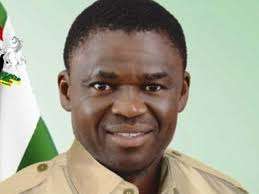
    Philip Shaibu, reinstated deputy governor of Edo state, has officially dumped the Peoples Democratic Party (PDP) and returned to the All Progressives Congress (APC).

    Shaibu made the announcement on Saturday in Benin City, the state capital,

    He was said to have rejoined the APC with leading members of the Dan Orbih-led Legacy Group of the PDP.

    “On behalf of the Legacy Group, I announce our movement to the APC. We have come to add value to the party,” Shaibu said.

    “It is time to take back our state. We will not talk too much because action will speak for us. We are not afraid. We are ready to move forward.

    “We, the homeboys, are ready to take our state back through the APC governorship candidate, Monday Okpebholo, and his running mate, Dennis Idahosa.

    “We are not troublemakers, but if it comes, we will use it to rub our body, and we move on.”

  • Rivers Guber: Court Upholds Gov Fubara’s Victory

    The Appeal Court in Lagos State has reaffirmed Governor Siminalayi Fubara of the Peoples Democratic Party (PDP) as the validly elected governor of Rivers State. 

    This decision came as the court dismissed a petition filed by the All Progressives Congress (APC) governorship candidate in Rivers State, Patrick Tonye-Cole, against Governor Fubara and the Independent National Electoral Commission (INEC).

    The court upheld the Tribunal’s previous ruling from October that validated Fubara’s electoral win, citing the withdrawal of the petition by the APC, the party backing Cole. 

    Despite Cole personally presenting the case in court, his petition sought to challenge the election’s outcome, alleging irregularities and misconduct in the electoral process. 

    However, the court’s decision supported Fubara’s victory based on the circumstances presented, further solidifying his position as the governor of Rivers State.

  • Plateau: Muftwang Debunks Reports Of Bribery Collection By Judges

    Plateau State Governor, Caleb Mutfwang, has vehemently denied allegations suggesting judges received a $5 million bribe to annul his election victory.

    Elected under the Peoples Democratic Party (PDP), Governor Mutfwang labeled the claims as “baseless and defamatory.”

    Through his Director of Press and Public Affairs, Gyang Bere, in Jos on Friday, Mutfwang refuted the allegations, attributing them to deliberate attempts by detractors to sow discord between him and the judiciary.

    Expressing deep concern, Mutfwang urged thorough investigations by security agencies to apprehend those responsible for the libelous publication, emphasizing the importance of facing legal consequences to deter such misconduct.

    Terming the report a fabrication by individuals manipulated as pawns by the opposition party in Plateau State, Governor Mutfwang highlighted that it aims to tarnish the PDP government’s image in the state.

    He reaffirmed his unwavering support for the Judiciary while cautioning against disparaging justices and respected leaders, warning of severe consequences for those engaging in destructive activities.

  • Kano Guber: Appeal Court Affirms Abba Yusuf’s Sack 

    The Court of Appeal sitting in Abuja has upheld the judgment of the Kano State Governorship Tribunal that sacked Governor Abba Kabir Yusuf of the New Nigeria Peoples Party (NNPP) as the governor of the state.

    The Governorship Election Petition Tribunal declared the All Progressives Congress (APC) flagbearer, Nasiru Yusuf Gawuna, as the winner of the state’s governorship poll held on March 18.

    The Independent National Electronic Electoral Commission (INEC) had announced Yusuf as the winner of the March 18, 2023 election, saying he garnered 1,019,602 votes to defeat Gawuna who got 890,705 of the votes cast.

    Consequently, the APC headed the Tribunal, citing alleged electoral malpractice.

    The Tribunal in it ruling nullified Yusuf’s election, adding that over 160,000 ballot papers “were not signed or stamped by INEC”.

    The three-man panel of the Tribunal led by Justice Oluyemi Akintan Osadebay sacked Yusuf on September 20, 2023, after deducting 165,663 of his votes.

    Yusuf’s votes were subsequently reduced to 853,939 while Ganuwa’s 890,705 votes were not affected.

    Not satisfied, Yusuf proceeded to the appeal court which held that it can be seen that the Tribunal acted in the overall interest of justice when it allowed APC’s tendering of documents during trial.

    The court held that INEC released documents to the APC piecemeal in order to defeat the petition of the petitioner.

    The judgement further posited 

    the the Petitioner’s insistence that APC ought to have joined its candidate, Ganuwa, as a party at the Tribunal proceedings, was not backed by the 1999 Constitution.

    It maintained that a candidate is entitled to be represented by his political party during litigation, adding that every political party shall maintain the register of its voters.

    The court said the appellant to his own detriment did not submit his NNPP membership registrar or even tendered his statement on oath regarding his membership of the party.

    The court added that the name of Abba is not the NNPP membership registrar.

    “As rightfully found, Yusuf Abba was not a member of the NNPP at the time he was purportedly sponsored by his party and he was not qualified to contest the March Governorship Election,” the court while affirming the judgment of the Tribunal.

    “If you claim to be a member of a political party, is it not logical for you to say so by yourself and not by proxy?

    “Even though membership of a political party is an internal affair, a political party cannot be permitted to circumvent or breach the provisions of the 1999 Constitution.

    “The Tribunal was wrong not to have disqualified the appellant.

    “Therefore, the failure of the appellant and the NNPP to comply with the 1999 Constitution is fatal to their election.

    “All issues in this appeal are dismissed and the judgment of the Tribunal is affirmed,” the court held.

  • Peter Obi Slams Tinubu For Blaming Buhari For Nigeria’s Bankruptcy

    *Charges APC On Transparency, Accountability To Nigerians

    The Labour Party’s presidential candidate for the 2023 election, Peter Obi, has strongly criticized Nuhu Ribadu’s claims of inheriting a financially bankrupt nation from the past administration of President Muhammadu Buhari.

    During an address on Monday, the National Security Adviser, Nuhu Ribadu said the incumbent government, under President Bola Tinubu, inherited a “bankrupt country”.

    He conveyed that they are encountering significant budgetary limitations, affirming that “I’m comfortable sharing this information with you. It’s important for you to understand. Our current situation is highly critical.

    “We’ve taken on an immensely challenging nation, one in financial disarray to the extent that we’re repaying debts accumulated in the past. The severity of this matter cannot be overstated.

    “Nevertheless, our administration is making every effort to fulfill our obligations, notably those concerning the armed forces, amid these challenging circumstances.”

    However, in response to Ribadu’s statements, Peter Obi faulted the All Progressives Congress (APC) government for its lack of transparency regarding the extent of the financial deficit inherited. 

    Obi emphasized the need for clear disclosure to inform the public about the nation’s current standing and future trajectory.

    Drawing parallels to the past, Obi recalled how the APC administration previously blamed the Peoples Democratic Party (PDP) in 2015 for inheriting financial challenges and subsequently escalating the country’s debt profile.

    Expressing concern over the escalating debt from N12.6 trillion in 2015 to N87 trillion in 2023 during the APC’s tenure, Obi highlighted the nation’s deteriorating state across various developmental indices, including education, healthcare, poverty alleviation, and security.

    Obi stressed the urgency of implementing measures to reduce the high cost of governance, redirecting resources towards critical sectors such as security, healthcare, education, and poverty eradication.

    The statement by Peter Obi on X formerly Twitter further questioned the rationale behind certain expenditures in the recently approved supplementary budget, emphasizing the necessity of allocating resources prudently to address the nation’s pressing needs.

    Obi called for concrete and measurable steps aimed at improving Nigeria’s current economic situation rather than allocating funds to non-essential areas.

  • Diri Secures Second Term, Defeats Sylva in Bayelsa Governorship Election

    Governor Douye Diri has successfully secured a second term in office, emerging as the winner of the fiercely contested Bayelsa governorship election.

    The Returning Officer, Prof Faruq Kuta, declared Diri of the Peoples Democratic Party (PDP) the winner after a prolonged process with multiple breaks and adjournments.

    Diri garnered a total of 175,196 votes, defeating his main rival, Timipre Sylva of the All Progressives Congress (APC), who polled 110,108 votes.

    The victory margin for the PDP candidate was significant, with 65,088 votes ahead. The Labour Party (LP) secured a distant third place with a total of 905 votes.

    In a field of 18 candidates, Sylva was Diri’s primary contender, seeking to return as the governor for a third term.

    However, a month before the election, a Federal High Court in Abuja initially disqualified Sylva, citing constitutional limits on the number of terms served.

    Although the APC candidate challenged the decision and won an appeal, the 2023 election concluded with victory for Diri.

    The election results mark a decisive moment for Diri, who first assumed office in 2020.

    The PDP mobilized support in the face of legal challenges, including Sylva’s temporary disqualification, to secure a notable win in the oil-rich state.

  • APC’s Ododo Emerges Winner In Kogi Guber Race, Defeating Ajaka, Melaye

    The November 11, 2023 Kogi State Governorship Election concluded with the All Progressives Congress (APC) candidate, Usman Ododo, emerging victorious, as announced by the State Returning Officer, Prof Johnson Urama, who is the Deputy Vice-Chancellor (Academics) of the University of Nigeria, Nsukka.

    The declaration came late Sunday night, marking the end of a keenly-contested race.

    Ododo secured a significant win with 446,237 votes, surpassing his closest rival, Murtala Ajaka of the Social Democratic Party (SDP), who garnered 259,052 votes.

    Dino Melaye of the Peoples Democratic Party (PDP) trailed with 46,362 votes. The APC candidate dominated over half of the 21 local government areas (LGAs) in Kogi.

    As an ex-Auditor General of Local Government in Kogi under Governor Yahaya Bello, Ododo was the governor’s anointed candidate, seeking to succeed in the wake of Bello’s double terms of eight years.

    However, the electoral process was not without controversy. Melaye and civil rights groups raised concerns about “filled result sheets” in the Ogori/Magongo Local Government Area, leading to the suspension of the election in nine wards by the Independent National Electoral Commission (INEC).

    INEC subsequently announced that fresh polls would be conducted in 59 polling units in the affected area on November 18, 2023. The condition for holding these polls is subject to the Returning Officer’s determination of the application of the Margin of Lead Principle.

    In his late Sunday declaration, Urama highlighted that the total number of Permanent Voter Cards in the affected polling units was 16,247, which seemed insignificant compared to the substantial lead of about 200,000 votes garnered by the APC candidate ahead of Ajaka.

    The rejection of the election outcome by both Ajaka and Melaye stems from their expressed disappointment in INEC and security agencies, whom they accuse of collusion with the ruling APC in Kogi.

    The political aftermath of the Kogi State Governorship Election underscores the complex dynamics and contentious issues surrounding the electoral process in the state.

  • Guber Election: Respect Wishes Of Kogi People, APC Tells INEC

    The All Progressives Congress (APC) has called on the Independent National Electoral Commission (INEC) to protect the popular will of Kogi electorate in Saturday ‘s governorship election.


    Mr Felix Morka, the APC National Publicity Secretary said this in a statement on Sunday in Abuja.


    “With the candidate of the APC, Usman Ododo, coasting to spectacular victory in Saturday’s Kogi governorship election, we call on INEC to protect the integrity of the legitimate votes of the Kogi electorate.


    “Announced and uploaded results, so far, show our candidate maintaining a landslide lead in Kogi West and Central, with a competitive showing in Kogi East,” Morka said.


    He said the APC was aware of intense pressure, including violent threats on INEC staff by agents and supporters of trailing opposition parties aimed at unduly influencing or disrupting ongoing collation of results in the state.


    He urged INEC to stand fast in discharge of its constitutional duty to deliver free, fair and credible election in the state, and ensure that the freely exercised will of Kogi electorate prevailed.

  • Imo Guber: How INEC Declared APC’s Hope Uzodimma Winner

    Governor Hope Uzodimma of the All Progressives Congress (APC) emerged victorious in the November 11, 2023, Imo State governorship election, as officially declared by the Independent National Electoral Commission (INEC).

    The announcement was made by Prof Abayomi Fashina, the state Returning Officer and Vice Chancellor of the Federal University, Oye Ekiti, following over eight hours of meticulous collation of local government results, culminating in a confirmation of Uzodimma’s re-election at around 10 am on a Sunday morning.

    Uzodimma’s political journey in Imo State began with a significant twist when, in January 2020, the Supreme Court nullified the election of Emeka Ihedioha of the Peoples Democratic Party (PDP), declaring Uzodimma as the governor.

    However, this turn of events seemingly intensified political tensions, leading to increased opposition against Uzodimma.

    The state faced challenges, including a security phenomenon characterized by “unknown gunmen,” abductions, and persistent Monday sit-at-home protests organized by pro-secessionist groups.

    In the recent election, Uzodimma faced formidable opponents, including Samuel Anyanwu of the PDP, Nneji Achonu of the Labour Party (LP)l;l, and Jack Ogunewe of the Action Alliance (AA), alongside 14 other contenders. Despite the competitive field, the APC candidate secured a resounding victory with 540,308 votes.

    His closest rivals, Anyanwu and Achonu, garnered 71,503 and 64,081 votes, respectively. This electoral outcome solidifies Uzodimma’s position as the re-elected governor and further shapes the political landscape in Imo State.