Tag: Nigeria economy

  • Youth Without Opportunity Is a Threat, Shettima Warns Nigeria

    Youth Without Opportunity Is a Threat, Shettima Warns Nigeria

    Nigeria’s Vice President, Kashim Shettima, has warned that the country’s status as one of the youngest nations in the world could become meaningless without deliberate institutional investment to harness its demographic potential.

    Speaking on Monday in Abuja at the Abuja Dialogue 2026, Shettima stressed that Nigeria’s youthful population should no longer be treated as a mere talking point but as a strategic national reality requiring urgent policy attention. The event was organised by the Office of the Vice President in collaboration with the Lateef Jakande Leadership Academy.

    According to him, the country’s growing youth population risks turning into a liability if investments in education, skills acquisition, and economic opportunities are not prioritised.

    “We are one of the youngest nations on earth. That fact should not be treated as a line for conferences or a statistic for brochures. It is a national condition with profound consequences,” Shettima said.

    Call for Structured Youth Leadership Development

    The Vice President emphasised that Nigeria’s future would depend not only on natural resources or government ambitions, but on the strength of systems designed to ensure leadership continuity.

    He advocated a deliberate and forward-looking framework for youth leadership development, noting that leadership must be cultivated through structured pathways rather than left to chance.

    Shettima explained that youth leadership should not be seen as a ceremonial transition based on age, but as a continuous process of preparing and integrating young people into governance and nation-building institutions.

    Sanwo-Olu Highlights Role of Leadership Academy

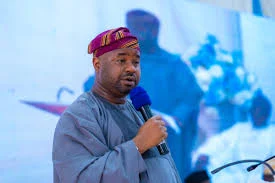
    Also speaking at the event, Lagos State Governor, Babajide Sanwo-Olu, described the dialogue as a strong signal of the federal government’s commitment to youth leadership development.

    He noted that the Lateef Jakande Leadership Academy serves as a talent incubator, providing young Nigerians with practical exposure to public sector governance.

    Sanwo-Olu called for stronger policy frameworks, adequate funding, and political will to transform youth-focused initiatives into sustainable institutions.

    Federal Government Reaffirms Commitment to Youth Empowerment

    Other government officials echoed the importance of investing in youth development.

    Deputy Chief of Staff to the President, Ibrahim Hadejia, described youth leadership as critical infrastructure that determines the strength of national institutions.

    Minister of Youth Development, Ayodele Olawande, said Nigerian youths are ready to contribute meaningfully to national progress. He added that President Bola Tinubu remains committed to creating enabling platforms for young people to thrive.

    Youth at the Centre of National Development

    Executive Secretary of the academy, Ayisat Agbaje-Okunade, said the collaboration between the federal and Lagos State governments reflects a growing recognition of youth as central to national development.

    She noted that the Abuja Dialogue provides an opportunity to build consensus, align institutions, and reposition youth leadership from the margins to the core of policy and governance.

    A Critical Moment for Nigeria’s Future

    The Abuja Dialogue 2026 comes at a time when governments globally are grappling with rapid technological, economic, and social changes.

    For Nigeria, Shettima’s message underscores a pressing reality: without intentional investment and structured planning, the country’s demographic advantage could become a burden rather than a catalyst for growth.

  • NRS Targets N40.7tn Revenue from 2026 Tax Reforms — Adedeji

    NRS Targets N40.7tn Revenue from 2026 Tax Reforms — Adedeji

    The Executive Chairman of the National Revenue Service, Mr Zach Adedeji, has said Nigeria’s 2026 tax reforms have positioned the service to generate N40.7 trillion in taxes and royalties.

    Adedeji disclosed this on Wednesday in Abuja while speaking at a roundtable organised by the House of Representatives Committee on Appropriations for key stakeholders in the financial sector.

    According to him, the projected revenue reflects the impact of recent reforms that transferred petroleum and solid mineral royalties, alongside other revenue streams, to the National Revenue Service.

    “In light of the tax reforms transferring petroleum and mineral royalties and other revenues to the NRS, the total target is N40.7 trillion,” Adedeji said.

    “We believe that with the support of the House, we will achieve what we have proposed.”

    Strong 2025 Performance

    The NRS chairman also highlighted the agency’s strong performance in 2025, noting that it exceeded its revenue target by a wide margin.

    He said the service generated N28.23 trillion in 2025, surpassing its target of N25.2 trillion.

    “Compared with 2024, we collected N6.5 trillion more in 2025, representing a 30.3 per cent increase, driven largely by non-oil taxes,” he stated.

    Finance Minister Explains Reform Rationale

    The Minister of Finance and Coordinating Minister of the Economy, Mr Wale Edun, said Nigeria had previously relied heavily on Ways and Means financing to cover large fiscal deficits.

    He added that the Nigerian National Petroleum Company had been funding petrol subsidies through an under-recovery arrangement, which he described as unsustainable.

    Edun said the government was compelled to address these structural distortions and replace them with market-based solutions, leading to the current wave of fiscal and tax reforms.

    Lawmakers Seek Clarity on Revenue Projections

    The Chairman of the House Committee on Appropriations, Rep. Abubakar Bichi (APC–Kano), said the roundtable was organised to allow lawmakers to engage directly with the presidential economic team on the 2026 Appropriation Bill.

    “This is for us to study, consider and approve the request. We decided to engage the President’s team on 2025 performance and the 2026 proposal,” Bichi said.

    He added that lawmakers also engaged the NRS leadership to gain clarity on the ambitious 2026 revenue projections.

    “In 2025, we achieved about N28 trillion against a N25 trillion target. We need more information so Nigerians can understand what is going on,” he said.

  • Industry Ministry’s $500m Export Claim Faces Scrutiny

    Industry Ministry’s $500m Export Claim Faces Scrutiny

    Nigeria’s Minister of Industry, Trade and Investment, Jumoke Oduwole, says the ministry generated more than $500 million in export revenue in 2025 through industrial development and diversification initiatives. However, details presented to lawmakers raise questions about attribution, scale, and the ministry’s capacity to sustain impact under persistent capital constraints.

    Oduwole made the disclosure on Monday while defending the ministry’s 2026 budget proposal before the Senate Committee on Trade and Investment.

    The minister also claimed that the ministry’s programmes created over 20,000 direct jobs in 2025. No supporting data was provided on the sectors involved, the duration or quality of the jobs, or the methodology used to separate ministry-driven outcomes from broader private sector activity.

    From a trade perspective, Oduwole pointed to a reported 500 per cent increase in traded volumes on the Nigeria Commodity Exchange. While the growth suggests rising activity in structured commodity markets, the ministry did not disclose absolute volume figures, making it difficult to assess whether the increase reflects meaningful market depth or a rebound from a low base.

    She said the ministry advanced plans for a national trade and distribution company to improve commodity aggregation and market access. However, key commercial details, including capital structure, governance, funding sources, and expected timelines, were not outlined, leaving uncertainty around execution and private sector participation.

    On policy delivery, the minister confirmed that the Federal Executive Council approved the National Industrial Policy in November 2025 and that Nigeria launched its first National Intellectual Property Policy. While these approvals expand Nigeria’s policy framework, they add to a growing list of strategies whose effectiveness will depend on implementation capacity rather than regulatory intent.

    Funding constraints dominated the budget defence. Oduwole said the ministry’s 2025 appropriation totalled ₦11.8 billion, largely consumed by personnel and overhead costs. Apart from a ₦3.8 billion capital allocation, she said no capital funds had been released, effectively limiting the ministry’s ability to execute industrial infrastructure, cluster development, or export-support programmes.

    Despite these limitations, the minister disclosed that the ministry exceeded its revenue target by approximately ₦100 million, with full remittance to the Consolidated Revenue Fund. In macro terms, however, the figure remains marginal when set against Nigeria’s industrial financing gap and the scale of the country’s non-oil export ambitions.

    Looking to 2026, Oduwole said the ministry’s priorities align with the Renewed Hope Agenda of Bola Tinubu, the National Development Plan, and existing trade, investment and industrial policy frameworks. She said the emphasis would shift from policy formulation to implementation across priority value chains, industrial clusters, and special economic zones, with a renewed focus on local production and non-oil exports.

    The minister described domestic investors as the primary signal of confidence in the economy, while foreign investors would continue to be targeted through trade missions and investment roadshows. She also announced plans for a National AfCFTA Tour and expanded sub-national engagement to embed trade and industrial outcomes at state level.

    She said these initiatives would be supported by digital investor portals and trade intelligence tools, measures long promised by successive administrations but yet to materially change investor experience.

    Oduwole disclosed that the ministry’s proposed 2026 capital allocation stands at ₦2.72 billion, a level she acknowledged would be insufficient given the ministry’s mandate and execution targets. She urged lawmakers to approve an increase, warning that without improved funding, delivery risks would persist.

    For investors and market operators, the central issue remains whether the ministry can translate policy approvals and headline revenue figures into measurable gains in industrial output, export competitiveness, and market infrastructure , or whether ambition will continue to outpace execution capacity.

  • Naira Extends Weekly Rally, Appreciates to ₦1,386.55/$ on CBN Reforms

    Naira Extends Weekly Rally, Appreciates to ₦1,386.55/$ on CBN Reforms

    he naira closed the week on a stronger note on Friday, appreciating further against the U.S. dollar at the official market to trade at ₦1,386.55/$1.

    Data published on the official website of the Central Bank of Nigeria (CBN) showed that the local currency gained ₦10.43, representing a 0.7 per cent appreciation compared with Thursday’s closing rate of ₦1,396.99/$1.

    The naira has remained relatively stable in recent days, buoyed by ongoing CBN reforms, recording a week-long appreciation trend.

    Earlier in the week, the currency traded at ₦1,418.95 on Monday, ₦1,401.22 on Tuesday, and ₦1,400.47 on Wednesday.

  • Nigeria Records 3.98% GDP Growth in Q3 2025, Misses Target

    Nigeria Records 3.98% GDP Growth in Q3 2025, Misses Target

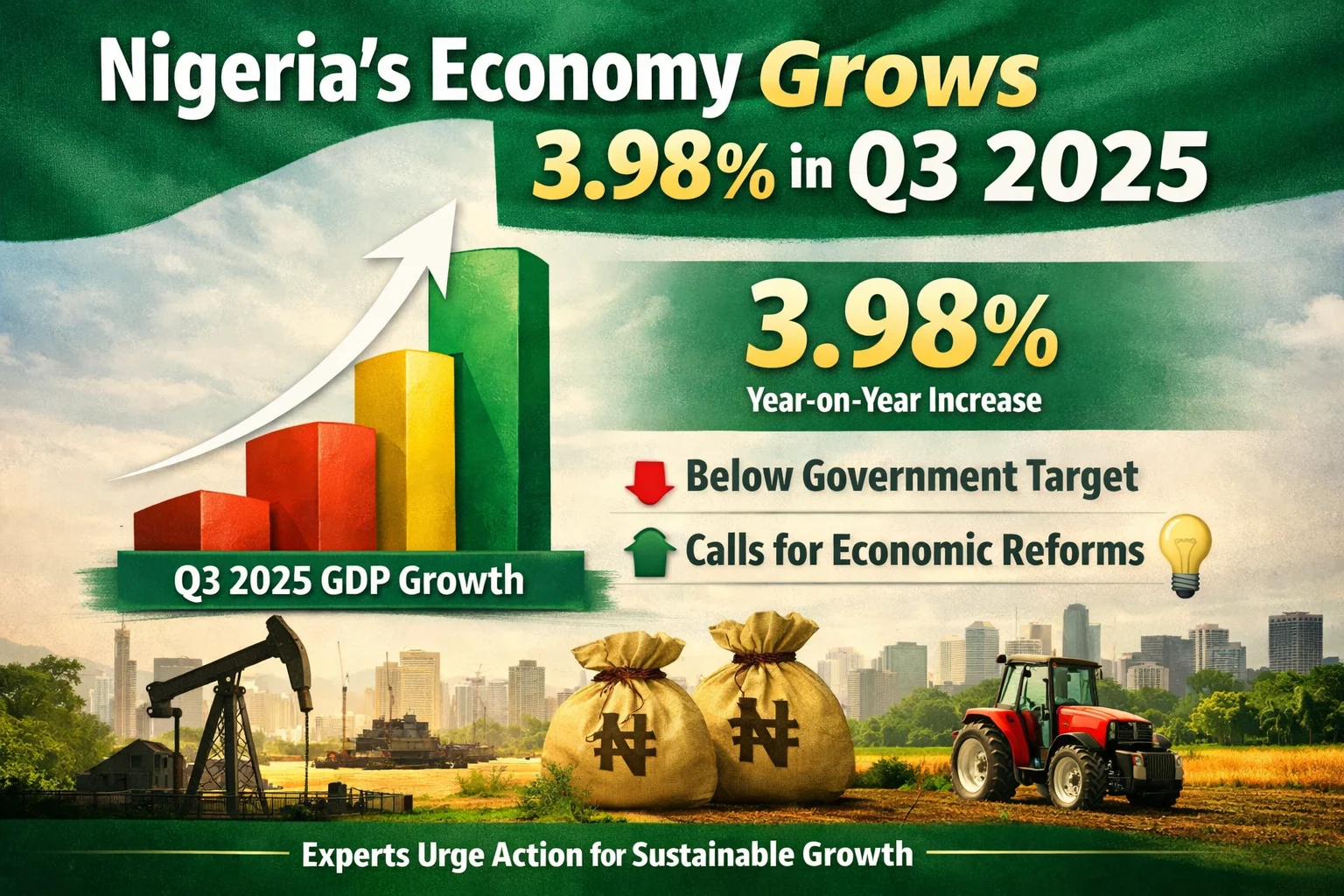
    Abuja / Lagos — Nigeria’s economy recorded a 3.98 per cent growth in the third quarter of 2025, a modest expansion that has intensified calls for decisive reforms to unlock faster, broader-based and more sustainable growth.

    The National Bureau of Statistics (NBS) said the Gross Domestic Product (GDP) grew in real terms on a year-on-year basis, reflecting increased output of goods and services across key sectors of the economy.

    However, the performance remains below the Federal Government’s 4.6 per cent growth target for 2025, and its long-term ambition of achieving about seven per cent annual growth needed to drive sustainable development.

    The Central Bank of Nigeria (CBN) had projected a 4.1 per cent growth rate for 2025, citing easing inflation and improved foreign exchange inflows, while the International Monetary Fund (IMF) recently revised Nigeria’s growth forecast upward to 3.9 per cent.

    Economists Call for Targeted Interventions

    Against this backdrop, economists who spoke with to the media on Friday said targeted policy interventions could help bridge the gap between projections and actual performance.

    Prof. Sherifdeen Tella of the Department of Economics, Babcock University, urged the government to prioritise investment in the industrial sector to stimulate domestic production.

    “The government should empower domestic production firms in critical areas with funds that can be repaid in the future,” Tella said, likening the approach to the U.S. industrial bailout during the 2008 global financial crisis.

    He also stressed the importance of subsidising energy, particularly electricity and petroleum products, to support productivity, and called for sustained peace in the Niger Delta to boost oil production and export earnings.

    Business Environment and Security

    Similarly, Prof. Ndubisi Nwokoma of Caleb University said improving the business environment and ensuring macroeconomic stability were essential to accelerating growth.

    “Insecurity must be reduced to restore investor confidence in the economy,” he said, adding that Nigeria should prioritise the development of its rare earth minerals through partnerships with experienced private firms to boost exports and revenue.

    Agriculture as Growth Driver

    Former President of the Chartered Institute of Bankers of Nigeria (CIBN), Mr Okechukwu Unegbu, said increased investment in modern agriculture could significantly accelerate economic growth.

    He urged the government to allocate at least 10 per cent of the annual budget to agriculture, in line with recommendations by the Food and Agriculture Organisation (FAO), to mechanise the sector and strengthen its value chain.

    Unegbu also called for incentives to encourage private sector participation in agricultural processing and packaging, noting that value addition would enhance the sector’s contribution to the economy.

  • Reps Summon Dangote Refinery, NMDPRA Over Downstream Sector Tensions

    Reps Summon Dangote Refinery, NMDPRA Over Downstream Sector Tensions

    Abuja — The House of Representatives Joint Committee on Petroleum Resources has invited the Dangote Petroleum Refinery and the Nigerian Midstream and Downstream Petroleum Regulatory Authority (NMDPRA) to an emergency meeting following a dispute that threatens stability in Nigeria’s downstream petroleum sector.

    Chairman of the committee, Ikenga Ugochinyere, disclosed this after an emergency meeting held in Abuja on Monday, warning that escalating tensions between key industry players could undermine recent gains achieved in fuel supply, pricing, and regulation.

    Ugochinyere said the committee’s intervention had become necessary as Nigeria continues efforts to stabilise the petroleum market in the post-fuel subsidy era.

    “We are guarding the hard-won stability in the downstream sector. Sustainable solutions require that we identify and address the critical issues, which is why we have invited the leadership of Dangote Refinery and the NMDPRA,” he said.

    The lawmaker explained that the renewed tension followed concerns and allegations raised by Africa’s richest man, Alhaji Aliko Dangote, against the petroleum regulator. He noted that several petitions submitted to the committee relate to the issuance of import licences and questions surrounding the capacity of domestic refineries to meet Nigeria’s daily petroleum consumption.

    According to Ugochinyere, the committee will comprehensively examine all outstanding matters when both the refinery and regulatory authorities appear before lawmakers.

    He stressed that resolving the disagreement is critical to maintaining investor confidence and ensuring uninterrupted fuel supply amid ongoing reforms in Nigeria’s oil and gas sector.

  • No Shortage Of Naira Notes In Circulation, Says CBN

    The Central Bank of Nigeria (CBN), has assured Nigerians that there is adequate supply of Naira notes in the economy.

    The bank’s Director, Corporate Communications, Isa AbdulMumin, said this in a statement on Thursday in Abuja.

    Some bank customers in recent times have been complaining about scarcity of Naira notes at the counters, Automated Teller Machines (ATMs), Point of Sale (PoS), and Bureaux de Change (BDCs).

    According to Abdulmumin, the seeming currency scarcity is occasioned by large volume withdrawal of cash from various CBN branches by Deposit Money Banks (DMBs).

    He said that panic withdrawals by bank customers was also partly responsible for the seeming scarcity.

    “The attention of the CBN has been drawn to reports of alleged scarcity of
    cash at banks, ATMs, PoS and BDCs in some major cities across the country.

    “Our findings reveal that the seeming cash scarcity in some locations is due largely to high volume withdrawals from the CBN branches by DMBs and panic withdrawals by customers from the ATMs.

    “While we note the concerns of Nigerians on the availability of cash for financial transactions, we wish to assure the public that there is sufficient stock of currency notes for economic activities in the country.

    “The branches of the CBN across the country are also working to ensure the seamless circulation of cash in their respective states of operation,” he said.

    The director advised members of the public to guard against panic withdrawals as there was sufficient stock to facilitate economic activities.

    He also advised Nigerians to embrace alternative modes of payment, which would reduce pressure on using physical cash. 

  • Naira Hits All-Time N1065/$ Low, As BDC Operators Seek Urgent Reforms

    The nation’s currency, the Naira, experienced a historic low on Wednesday in the parallel market, with the unofficial exchange rate reaching an unprecedented N1065 to the US dollar.

    On Tuesday, the Naira closed at N1060 to the dollar on the unofficial market, driven by a shortage of dollars, leading to a rapid depreciation of the currency.

    Additionally, the Naira weakened by 8.9 percent to N848.12 against the dollar in the official Investors and Exporters (I&E) forex market on Tuesday, according to data from FMDQ.

    Foreign exchange trades took place within the range of N700 to N981 per dollar, with the dollar’s trading volume surging to $133 million, according to an investment note by the Lagos-based investment banking firm Chapel Hill.

    The Central Bank of Nigeria (CBN) had relaxed foreign exchange controls in mid-June following criticism of monetary policy measures by President Bola Tinubu and a pledge to end the multiple exchange rate regime.

    The official rate briefly aligned with the parallel market, plunging 40 percent, but the spread began to widen again. Until Tuesday, the official rate remained near N800 to the dollar, while the street rate surpassed N1,000 to a dollar.

    Foreign exchange operators attributed the Naira’s depreciation to persistent illiquidity in the market in the absence of central bank intervention. The widening premium between the official rate and the black market is a sign that the exchange rate has not found a clearing price.

    The Chairman of the Association of Bureau de Change Operators in Nigeria (ABCON), Aminu Gwadabe, explained that the Naira’s rapid devaluation is due to significant liquidity driving up demand for unavailable dollars in the market. He also pointed to uncertainties, loss of public and international confidence in the economy, rising inflation, and a low interbank market interest rate, which have reduced the appeal for alternative investments.

    Gwadabe recommended abolishing the I&E window and allowing willing buyers and sellers to dictate price mechanisms with legislative backing.

  • Insufficient Supply Fueling FX Market Pressures –Peter Obi

    Insufficient Supply Fueling FX Market Pressures –Peter Obi

    Labour Party’s presidential candidate in the 2023 election, Mr. Peter Obi, has noted that Nigeria’s current foreign exchange liquidity challenges is primarily due to insufficient supply of the greenback to the ma

    Fielding questions on Arise TV’s ‘The Morning Show’ on Monday, Obi said there should have been broad consultation before the government rolled out the policy.

    “You can’t float a currency you don’t have supply with. It’s like building a non-gated house in a criminal-ridden society. You have to have a defence mechanism. Nobody floats what you don’t have a supply for. I believe that now that we have new CBN leadership, they have to look at the overall monetary policy.

    “It’s again not something you announce haphazardly. It’s something you look at critically. Nobody floats his currency without having an adequate supply. When you don’t have adequate supply, there will be pressure and criminality. We should have worked on eliminating those criminalities and excesses in our FX regime,” he said.

    The former Anambra State governor insisted that rather than float the naira, he would have devalued the naira.

    “What we would have done is devalue the currency to about 600 or thereabout while trying to manage what you have and encouraging exports. I can tell you that not even in the developed world has anybody left their currency to market forces because you might not be able to control it. After all, you cannot reverse your policy.

    “These are announcement defects that would have been well thought through by a proper economic team and consultation,” he added.

    It would be recalled that in June 2023, the Central Bank of Nigeria (CBN) unified exchange rate windows to maintain Naira stability against foreign currencies, notably the United States Dollar.

    The exchange rate in the investors’ and exporters’ window hit N810.78/$1 on Thursday, the highest rate for the day, and also fell to a low of N590/$1.

    However in the parallel market, bureau de change operators demanded an average rate of N1008 per dollar.