Tag: Nigeria Security

  • US–Nigeria Military Cooperation: A Strategic Wake-Up Call

    US–Nigeria Military Cooperation: A Strategic Wake-Up Call

    By

    Ambassador Uzo Owunne*

    The proposed deployment of additional U.S. troops to Nigeria for counter-terrorism training and intelligence support demands careful national reflection.

    Security cooperation, in itself, is not inherently negative. Nigeria faces persistent threats from insurgent and extremist groups such as Boko Haram and Islamic State West Africa Province, alongside widespread armed banditry. Strengthened surveillance systems, improved intelligence coordination, and enhanced tactical capacity are all necessary in confronting these threats.

    However, international partnerships are rarely acts of charity. They are shaped by strategic calculations and national interests.

    Nigeria’s Internal Challenge

    Nigeria’s insecurity is fundamentally domestic. External assistance cannot resolve core structural weaknesses such as weak governance and corruption, poor troop welfare and equipment shortfalls, leakages in defence procurement, and political interference combined with limited accountability.

    When defence spending fails to translate into operational effectiveness at the frontline, foreign assistance risks treating symptoms rather than causes. Sustainable security must be rooted in institutional reform, transparency, and leadership accountability within Nigeria itself.

    The Reality of External Interests

    Major powers engage abroad based on strategic objectives, whether geopolitical influence, regional stability calculations, or economic considerations.

    When military assistance is reportedly quantified at tens of millions of dollars, it reinforces the transactional nature of such engagement. Nigeria must therefore ask critical questions about the long-term commitments that accompany this support, the strategic concessions embedded within cooperation agreements, and whether such engagement strengthens national sovereignty or gradually constrains it.

    History suggests that foreign policy priorities can shift abruptly. When they do, smaller partner states may find themselves exposed.

    The Lesson of Strategic Autonomy

    The experience of countries like Afghanistan illustrates the risks of over-reliance on external military backing. When a superpower recalibrates its interests, domestic institutions must be strong enough to stand independently.

    Nigeria must avoid constructing its security architecture around external saviours. Training programs and intelligence collaboration are valuable, but legitimacy, governance reform, and community-driven stabilization efforts must remain Nigerian-led.

    The insurgency is not America’s war. It is Nigeria’s responsibility.

    The Way Forward

    If Nigeria is serious about restoring lasting stability, it must ensure that defence funds reach operational units, strengthen troop welfare and morale, reform procurement systems to close financial leakages, build indigenous intelligence and surveillance capacity, and maintain strategic clarity and balance in foreign military agreements.

    Foreign partnerships should reinforce national capacity rather than substitute for it.

    Final Reflection

    No nation has successfully outsourced its sovereignty.

    Missiles and military hardware alone do not secure peace. Accountability, institutional reform, public trust, and effective governance are the true pillars of national security. External assistance can support these efforts, but the responsibility for Nigeria’s safety ultimately rests at home.

    *Ambassador Uzo Owunne is a Nigerian diplomat and international development expert based in the United Kingdom.

  • Fresh Clashes Erupt Between Egba-Ologba Communities Over Fishing Pond

    Fresh Clashes Erupt Between Egba-Ologba Communities Over Fishing Pond

    Fresh violence has erupted between the Egba and Ologba communities in Agatu Local Government Area of Benue State over ownership of the Ochulo fishing pond, leading to the loss of several lives.

    The latest clash occurred despite the fact that the long-standing dispute is currently before a court of law. It also happened while representatives of both communities were in Makurdi, the Benue State capital, engaging in dialogue aimed at reaching a peaceful resolution.

    The conflict over control of the Ochulo fish pond dates back to 1972. Since then, it is estimated that more than 2,800 lives have been lost in recurrent violent confrontations linked to the dispute.

    A new and troubling dimension to the conflict is the involvement of neighbouring communities, whose residents now openly take sides and join their preferred factions during clashes, thereby escalating the violence.

    It was also gathered that the current Chairman of Agatu Local Government Council, Melvin James Ejeh has initiated about ten different peace overtures, all of which have so far failed to yield lasting peace.

    Reacting to the situation, a concerned social commentator has called on Benue State Governor, Rev. Fr. Hyacinth Alia, to urgently establish a permanent government institution or security presence along the disputed boundary to forestall further violence.

    Agatu Local Government Area, which is largely an aquatic environment located in the lowlands of the Benue River Basin, has previously been an epicentre of violent clashes between armed herdsmen and indigenous communities over grazing routes and farmlands.

    There are growing fears that the renewed internal conflict could expose the area to fresh attacks by marauding herdsmen and other criminal elements, further worsening the security situation in the region.

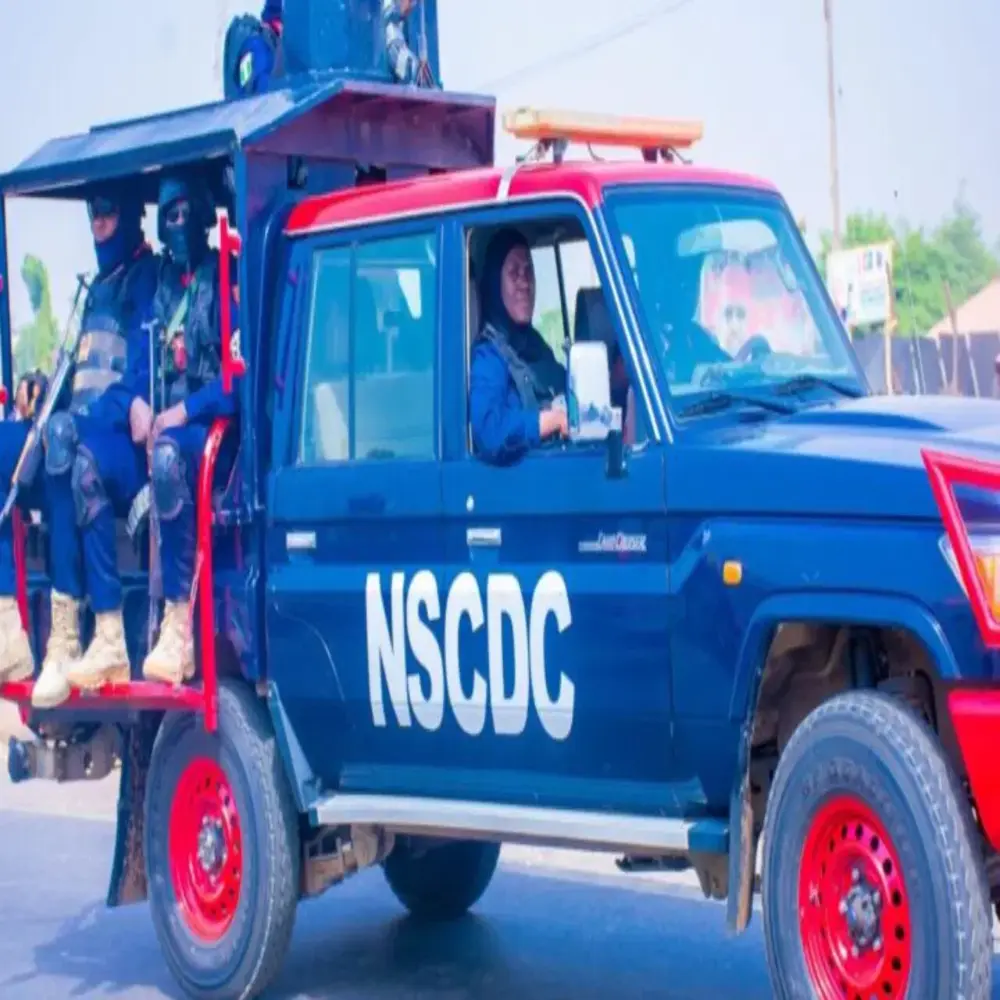
  • Why Nigeria Must Establish an Air Wing for the NSCDC Now

    Why Nigeria Must Establish an Air Wing for the NSCDC Now

    By Chris Echikwu

    Nigeria stands at a critical juncture in managing its internal security. Rising insecurity – from mass kidnappings and school attacks to assaults on religious institutions and the displacement of rural communities – has exposed a glaring weakness in the nation’s security architecture. While government efforts, including troop deployments and recruitment drives, are important, the reality is clear: Nigeria needs not just more boots on the ground, but new eyes in the sky.

    The call for an Air Wing within the Nigeria Security and Civil Defence Corps (NSCDC) has never been more urgent.

    Insecurity Has Outpaced Our Security System

    Criminal networks exploit Nigeria’s forests, borderlands, and waterways as operational hideouts. Camps and routes exist deep in ungoverned spaces, beyond the reach of standard patrols. Ground forces are often reactive, arriving after crimes have already occurred.

    School kidnappings have become a hallmark of this crisis. Children are abducted, transported through bush corridors, and hidden in forest camps for weeks or months. The state frequently responds too late, relying only on limited human intelligence and local reports.

    This is not just a tactical failure, it is a structural one. Nigeria’s internal security agencies remain almost entirely land-based in an era where surveillance, rapid response, and deterrence demand aerial capabilities.

    Why the NSCDC is the Right Agency

    The NSCDC is far from peripheral. It already plays a central role in Nigeria’s internal security:

    • Protecting critical national infrastructure
    • Ensuring school safety
    • Monitoring pipelines and industrial assets
    • Securing border communities
    • Supporting civic protection operations

    Yet, it cannot effectively monitor or respond to threats across vast forests, swamps, and deserts. An Air Wing would transform the NSCDC from a reactive, defensive body into an intelligence-driven force.

    Strategic Benefits of an NSCDC Air Wing

    An Air Wing would provide:

    • Persistent aerial surveillance of ungoverned spaces
    • Real-time intelligence for operations
    • Early warning systems for schools and villages
    • Aerial mapping of criminal routes and hideouts
    • Rapid assessment during attacks or emergencies
    • Faster coordination with police, army, and Air Force
    • Enhanced monitoring of pipelines and critical infrastructure

    This is not about militarizing the NSCDC; it is about modernizing it. Across Africa and Asia, countries Nigeria often compares itself to already deploy drones and light aircraft as standard tools for internal security. Fighting 21st-century crime with 20th-century methods is no longer viable.

    Financing: Affordable and Sustainable

    Arguments that Nigeria “cannot afford it” ignore the true cost of inaction. Insecurity already drains the economy through:

    • Disrupted agriculture
    • Flight of investment
    • Insurance losses
    • School closures
    • Community displacement
    • Damage to national assets

    A modest fleet of drones and light aircraft would cost far less than the economic loss caused by a single kidnapping wave. Financing could come from:

    • Federal appropriations
    • Security intervention funds
    • Infrastructure protection levies
    • Public-private partnerships
    • International security grants

    The return on investment would be immediate.

    The Risk of Doing Nothing

    Without modernization, the human and economic toll will worsen:

    • Education in unstable regions will collapse further
    • Rural economies will remain devastated
    • Citizens may turn to private militias and vigilante groups
    • Criminals will outpace the state
    • Public confidence in lawful authority will continue to erode

    A state that cannot see its territory cannot govern it.

    Conclusion: The Skies Matter

    Nigeria faces a choice: remain trapped in reactive security measures or invest in intelligence, speed, and foresight.

    An NSCDC Air Wing will not end insecurity overnight, but it will end Nigeria’s blindness to the spaces where crime is planned and executed. National security is no longer determined solely by personnel numbers, but by the ability to see, interpret, and respond faster than the threat.

    Nigeria must choose vision over delay.

  • EFCC and National Defence College Join Forces to Update Curriculum on Financial Crimes

    EFCC and National Defence College Join Forces to Update Curriculum on Financial Crimes

    New partnership aims to equip future leaders with skills to tackle corruption, public fund mismanagement, and emerging financial threats.


    he Economic and Financial Crimes Commission (EFCC) and the National Defence College (NDC) have agreed to collaborate on revamping the College’s curriculum to reflect Nigeria’s evolving security and governance landscape.

    During a courtesy visit to EFCC Chairman Ola Olukoyede in Abuja, NDC Commandant Rear Admiral Ahmed emphasized the need for a curriculum update to better prepare participants in public fund management and strategic governance.

    • EFCC Launches Advanced Anti-Fraud Training for Public Officers
    • National Defence College Partners with Nigerian Navy on Maritime Security
    • Cryptocurrency Fraud on the Rise: EFCC Warns Investors

    Ahmed lauded EFCC’s expertise in fighting economic crimes and requested the agency’s input in designing the new course content. “We want participants to learn how to manage public funds effectively so that they are ready for leadership roles,” he said.

    Olukoyede welcomed the proposal, highlighting EFCC’s readiness to support the initiative and noting emerging threats such as cryptocurrency fraud, which caused global losses exceeding $2 trillion last year. “There are areas where our work overlaps, and collaboration will help strengthen Nigeria’s fight against financial crimes,” he said.