Tag: Nigerian politics

  • Youth Without Opportunity Is a Threat, Shettima Warns Nigeria

    Youth Without Opportunity Is a Threat, Shettima Warns Nigeria

    Nigeria’s Vice President, Kashim Shettima, has warned that the country’s status as one of the youngest nations in the world could become meaningless without deliberate institutional investment to harness its demographic potential.

    Speaking on Monday in Abuja at the Abuja Dialogue 2026, Shettima stressed that Nigeria’s youthful population should no longer be treated as a mere talking point but as a strategic national reality requiring urgent policy attention. The event was organised by the Office of the Vice President in collaboration with the Lateef Jakande Leadership Academy.

    According to him, the country’s growing youth population risks turning into a liability if investments in education, skills acquisition, and economic opportunities are not prioritised.

    “We are one of the youngest nations on earth. That fact should not be treated as a line for conferences or a statistic for brochures. It is a national condition with profound consequences,” Shettima said.

    Call for Structured Youth Leadership Development

    The Vice President emphasised that Nigeria’s future would depend not only on natural resources or government ambitions, but on the strength of systems designed to ensure leadership continuity.

    He advocated a deliberate and forward-looking framework for youth leadership development, noting that leadership must be cultivated through structured pathways rather than left to chance.

    Shettima explained that youth leadership should not be seen as a ceremonial transition based on age, but as a continuous process of preparing and integrating young people into governance and nation-building institutions.

    Sanwo-Olu Highlights Role of Leadership Academy

    Also speaking at the event, Lagos State Governor, Babajide Sanwo-Olu, described the dialogue as a strong signal of the federal government’s commitment to youth leadership development.

    He noted that the Lateef Jakande Leadership Academy serves as a talent incubator, providing young Nigerians with practical exposure to public sector governance.

    Sanwo-Olu called for stronger policy frameworks, adequate funding, and political will to transform youth-focused initiatives into sustainable institutions.

    Federal Government Reaffirms Commitment to Youth Empowerment

    Other government officials echoed the importance of investing in youth development.

    Deputy Chief of Staff to the President, Ibrahim Hadejia, described youth leadership as critical infrastructure that determines the strength of national institutions.

    Minister of Youth Development, Ayodele Olawande, said Nigerian youths are ready to contribute meaningfully to national progress. He added that President Bola Tinubu remains committed to creating enabling platforms for young people to thrive.

    Youth at the Centre of National Development

    Executive Secretary of the academy, Ayisat Agbaje-Okunade, said the collaboration between the federal and Lagos State governments reflects a growing recognition of youth as central to national development.

    She noted that the Abuja Dialogue provides an opportunity to build consensus, align institutions, and reposition youth leadership from the margins to the core of policy and governance.

    A Critical Moment for Nigeria’s Future

    The Abuja Dialogue 2026 comes at a time when governments globally are grappling with rapid technological, economic, and social changes.

    For Nigeria, Shettima’s message underscores a pressing reality: without intentional investment and structured planning, the country’s demographic advantage could become a burden rather than a catalyst for growth.

  • Tinubu’s Choice of Tunde Disu as Acting IGP Triggers Nepotism Firestorm

    Tinubu’s Choice of Tunde Disu as Acting IGP Triggers Nepotism Firestorm

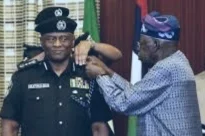
    The appointment of Tunde Disu as Acting Inspector General of Police (IGP) has continued to generate intense public controversy, with critics accusing President Bola Tinubu of nepotism and a growing disregard for Nigeria’s federal character principle.

    Across social media and political commentary spaces, Nigerians have questioned both the timing and rationale behind Disu’s elevation, arguing that it undermines seniority within the Nigeria Police Force and reinforces perceptions of regional and ethnic imbalance in key national appointments.

    One of the most vocal critics, social commentator Isaac Fayose, openly condemned the decision, describing it as nepotistic and difficult to justify on professional grounds.

    Fayose queried why the president would overlook a more senior officer, Frank Mbah, whom he referred to as a “Super Cop” who holds the rank of Deputy Inspector General of Police, in favour of a junior officer appointed only in an acting capacity.

    According to Fayose, the appointment aligns with what he described as a pattern under Tinubu’s administration with the concentration of strategic security, defence, and economic positions among individuals from the South West and of his Yoruba extraction.

    He cited several top offices, including the Chief of Defence Staff, Director General of the Department of State Services, Chairman of the Independent National Electoral Commission, Governor of the Central Bank of Nigeria, Chairman of the National Revenue Service, and the Minister of Finance.

    Fayose questioned what he described as the president’s apparent fear of broadening appointments to reflect Nigeria’s ethnic and regional diversity.

    The criticism gained further momentum following comments by former presidential candidate and human rights activist Omoyele Sowore, who called for the immediate appointment of a substantive Inspector General of Police.

    Sowore stressed that Disu’s position is inherently temporary, noting that the acting IGP is expected to retire from the Nigeria Police Force in April.

    Speaking during an interview on Channels Television, Sowore acknowledged the acting nature of the appointment as announced by the presidency.

    “Tunji Disu is retiring in April, and it is clear that once he is no longer in the police force, he must give way,” he said. “What we know for now is that he has been appointed in an acting capacity, pending the appointment of a substantive IGP.”

    Sowore went further to warn against any arrangement that would allow a retired officer to continue leading the police force.

    He argued that Disu’s elevation had already resulted in the displacement of more than 30 senior police officers, an outcome he described as unnecessary and destabilising for an institution already grappling with public trust challenges.

    With an estimated strength of between 300,000 and 450,000 officers, Sowore insisted that the Nigeria Police Force has no shortage of experienced and competent senior officers capable of assuming the role without controversy.

    He maintained that adherence to seniority, professionalism, and constitutional balance would help restore confidence in the force and the government’s commitment to fairness.

    As the backlash continues to grow, analysts say the controversy underscores broader national concerns about equity, inclusion, and transparency in high-level appointments.

    Pressure is mounting on the presidency to clarify its long-term plan for police leadership and to reassure Nigerians that competence and constitutional principles, rather than ethnicity or political loyalty, will guide decisions at the highest levels of national security.

  • I Can Fix Benue APC Crisis — Omale Omale, Declares Chairmanship Bid

    I Can Fix Benue APC Crisis — Omale Omale, Declares Chairmanship Bid

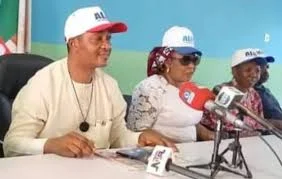
    Former Benue State Commissioner for Power, Renewable Energy and Transport, Chief Omale Omale, has declared that he has the capacity to end the lingering internal crisis rocking the All Progressives Congress (APC) in Benue State.

    Omale, who is contesting for the state chairmanship position of the party, made the declaration on Wednesday while speaking with journalists in Makurdi, insisting that only party members with deep knowledge of APC’s history should be entrusted with its leadership.

    “I understand the various tendencies within the party, and I have the capacity to manage them,” he said, citing his experience in party management and government administration.

    The APC founding member accused the current Unity Caretaker Committee of failing to deliver on its mandate of uniting the party, noting that no inclusive meeting involving all factions has been convened since the committee assumed office.

    “The divide is still there. There is a missing link, and it flows from the capacity and personality of those managing the party,” Omale stated.

    He also criticised what he described as the rise of “overnight political players” who lack understanding of the party’s history, while long-standing members who laboured to build the APC are being sidelined.

    Omale assured party members that his leadership would prioritise inclusiveness, internal democracy, and strict adherence to the party’s manifesto, stressing that loyalty must be to the party and not to individuals or factions.

    “For democracy to work, everyone must have a say, and the majority must have their way without creating further division,” he said.

  • Ugly optics from Turkiye and return of our visiting president

    Ugly optics from Turkiye and return of our visiting president

    By

    UGO ONUOHA

    Nigeria’s president, Alhaji Bola Ahmed Tinubu, enjoys gallivanting. Put together he has been out of the country for more than half of one year in the two years and some months that he had been in office so far. For this period alone counting from December 28, 2025 to today, February 3, 2026, Tinubu would have spent only 11 days in Nigeria out of 34 days, less than one-third. He has set the tone for this year because the Igbo say that “ana esi n’uto ahuru mara uto nsi”. For decency we will just say that this means that the taste of the pudding is in the eating. But in truth, the transliteration of that Igbo sentence would come out as “you can guess the taste of feces from the smell of the fart that preceded it”. Those who keep tabs on presidential travels in the modern era of our country may yet find out that he holds the record as the most travelled Nigerian head of state in the first two years of their being in office.

    Tinubu has spent about 220 days abroad since he acceded to office on May 29, 2023. He just returned to the country on Saturday, several days after the state visit to Turkiye ended. That was not unusual. That explains why his handlers announce his departure dates but never the return dates. It’s the same when he goes to Brazil as an observer during the BRICS [Brazil, Russia, India, China and South Africa] summit. It’s the same when he visits London. It becomes worse whenever he is in Paris, France, his preferred home which coincidentally is the abode of his long time friend and business associate, Gilbert Chargouri [GCON], the Lebanese Nigerian. Some angry Nigerians have dubbed this secretly awarded medal of Grand Commander of the Order of Nigeria as Gilbert Chargouri Order of Nigeria [GCON].

    Whenever President Tinubu travels out of the country, which turns out to be very very often, the only thing that is known is the date for his departure. His return date is never or at best seldom stated in presidential communications. Sometimes the country he would be going to is never named. For instance, on December 28, 2025, one of the president’s spokespersons, Bayo Onanuga, caused a statement to be issued wherein Nigerians were told in a contemptuous, disdainful and derisive manner that Tinubu had departed for Europe as part of his end of year activities. He said that from Europe, the president would go to Abu Dhabi in the United Arab Emirates [UAE] for a programme. That event was scheduled to last for one week. On that trip, the president stayed away from the country for three weeks. The name[s] of the European country[ies] he went to remained a mystery. Though he was said to have been sighted in Paris during that period.

    When he returned from Abu Dhabi,Tinubu managed to spend one week in Nigeria, the very country he swore an oath to govern, and then he hurried out to Turkiye for a state visit. Though the presidency avoided putting a timeframe to the visit, the understanding was that the Turkiye state visit was not meant to last beyond two days. That’s the way it should be. Nobody should expect the president of Turkiye, Recep Tayyip Erdogan, a busy and obviously serious-minded leader of a country to devote or waste one week babysitting the president of another ostensibly unfocused and unserious country whose ruler may desire to even stay longer in a foreign land. For Tinubu, it’s obvious that better anywhere else but in Nigeria.

    In hindsight it should now be obvious even to the not too discerning that this ruler of Nigeria had a game plan for the duration of his presidency – four years, eight years or any number of years in-between. Travel. Travel. And travel. That should explain why he hastily acquired a well-appointed wide body Airbus aircraft as an addition to the presidential fleet. The prior talks that the aircraft in the presidential fleet were too many to start a commercial aviation service were not for him. Tinubu had made up his mind that he would rule Nigeria from the skies, and from across oceans, and from foreign lands. Of course, as should be expected for a jet procured in a hurry and in an untardy manner, there was no appropriation for it by what has turned out to be a supine national assembly [NASS]. Onanuga later explained, obviously reluctantly amidst national outcry, that the multi billion Naira jet was bought with monies from a slush fund otherwise called Service Wide Vote. It has to be said that this Vote is not unique to this regime. Tinubu did not create it. It has been in existence. Such opaque budgetary provisions are not unusual in jurisdictions such as Nigeria’s where kleptomania rules. To accentuate the proclivity to hedonism, an armour-plated and bomb-resistant Cadillac was added to spruce up the comfort and safety of President tinubu.

    However, Tinubu’s state visit to Turkiye last week demonstrated that there is so much that the perks and appurtenances of a high and demanding office can mask. They cannot mask a man suspected of infirmity to become suddenly strong. Even a performance enhancing steroid wears away over time. Comforts and access to the best of medical facilities and technologies and inventions are useful and life-enhancing. But they cannot cure slowdowns and noticeable sluggishness that come with age. It gets worse when there’s a combination of infirmity and old age. To be sure old age could be grace that comes from on high which many actually covet but do not have. It has to be said, however, that for some people old age could be karma designed to serve them cold dinner in the twilight of their lives when they are helpless and most vulnerable. When suspected infirmity combines with old age, living a jet-set lifestyle becomes ill-advised. It certainly will not be good for a man in his mid-70s or actually in his mid-80s.

    In national terms Nigeria is in a dire straits in almost all facets. If Nigeria were to be a human being it would be a key candidate for admission in the ICU [intensive care unit]. Its politics is bastardised. Its economy is comatose. Paranoid. Paralysed. Its sovereignty is challenged by domestic non-state actors and foreign powers with morbid interests. The claims of the unity of the country and its indissolubility are convenient and self-serving slogans in the mouths of the members of the corrupt and looting ruling elite. In Turkiye last week, it was the instability of Nigeria that was in the global spotlight. Tinubu merely approximated it. The world saw Nigeria on display through their ruler. Nigeria told the world that this was the best it had on offer. The irony is that this country is still a mystery to the international community. It presents a contradictory image of itself – a country of young and tech savvy people and, at the same time, a country of a bungling and utterly corrupt ruling class. It’s a mystery. And an enigma.

    There’s no attempt here to diagnose the health status of President Tinubu. I am not a certificated health professional. And I am not his personal physician. But the telltale signs of a stumbling and tumbling man in Turkiye last week who needed to be assisted by his host to stabilise and focus should be concerning, nay troubling for any Nigerian who means well for this country. The signs were writ large prior to the 2023 election after which he was declared the winner. What this means in effect is that this country which is in ICU has had the dubious burden of nursing its nurse for the better part of 10 years. A president should be a nurse for an ailing country.

    The affliction of Nigeria who masqueraded as its president from 2015-2023, Maj. Gen.[rtd] Muhammadu Buhari, became a patient instead of a nurse for the country. He was in and out of hospitals abroad for the duration of his eight years of reign. At a time he was on a hospital bed in London for 103 consecutive days. His appointees formed cabals which ran the country to benefit themselves. The chickens are now coming home to roost. The only achievement of Buhari was ‘non-governance’ which ensured that the country went back by at least 30 years. It will be frightening if  this country is on the cusp of witnessing a déjà vu. Already, people who should be in the know are indicating that Tinubu is not firmly in control of his regime. They claimed that contending cabals have been pulling at opposite ends which accounts for the many missteps by the regime including smuggling a strange name into the list of ambassadors-designate. Indeed, the strangler had been assigned to a duty post before the scheme was uncovered. The burgeoning perception and image of Nigeria as a rolling crime scene is foreboding.

    UGU ONUOHA, Veteran Journalist, Managing Director/Editor-in-Chief, Champion Newspapers Limited writes from Lagos, Nigeria’s Centre of Excellence

  • Olofu to Hold Diaspora Dialogue in Lagos as Part of Senate Bid

    Olofu to Hold Diaspora Dialogue in Lagos as Part of Senate Bid

    ADC senatorial aspirant to host focus group discussion ahead of Benue South party primaries

    In line with a growing shift toward participatory and forward-looking politics, David Olofu, senatorial aspirant for the Benue South Senatorial District is expected to continue his stakeholder engagement drive this Saturday with a Focus Group Discussion (FGD) involving Idoma socio-cultural groupings based in Lagos.

    Dr. Olofu is a member of the African Democratic Congress (ADC).

    The engagement, which will form part of Olofu’s evolving bottom-up consultative strategy, is aimed at harnessing diaspora perspectives to shape responsive representation ahead of the forthcoming elections.

    Political observers note that such consultations increasingly reflect a transition toward citizen-driven politics, where policy priorities are informed by structured dialogue with constituents.

    According to the campaign, the Lagos-based Idoma diaspora is expected to contribute views on governance, development priorities, and effective legislative representation for Benue South.

    The aspirant has maintained that opinions formed within the diaspora often influence voting behavior and political conversations at the grassroots level back home.

    The FGD is also anticipated to provide a platform for building sustainable interpersonal relationships between the aspirant and a broad spectrum of his constituents, while encouraging participatory engagement beyond the electoral cycle.

    Discussions are expected to touch on governance innovation, youth inclusion, economic development, and future-ready leadership.

    Olofu is expected to reiterate his commitment to inclusive, transparent, and people-centered leadership, with assurances that similar stakeholder engagements will be extended to other demographic and professional groups as part of a long-term vision for effective representation in the National Assembly.

  • Turaki Rejects Ibadan Judgment, Vows Legal Battle as Opposing Faction Claims Victory

    Turaki Rejects Ibadan Judgment, Vows Legal Battle as Opposing Faction Claims Victory

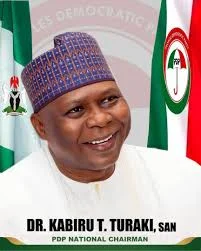
    The Chairman of the embattled faction of the Peoples Democratic Party (PDP), Tanimu Turaki (SAN), has furiously rejected Friday’s judgment of the Federal High Court sitting in Ibadan, describing it as perverse, politically motivated and a dangerous assault on internal party democracy.

    In a strongly worded statement, Turaki said the ruling nullifying the party’s National Convention of Nov. 15 and Nov. 16, 2025, was a clear travesty of justice that failed to reflect the facts, evidence and binding legal authorities presented before the court.

    He accused the court of overreaching its jurisdiction, insisting that the conduct of the convention fell squarely within the internal affairs of the party and was carried out in substantial compliance with the PDP Constitution and the Electoral Act.

    “This judgment represents a disturbing departure from settled judicial principles. It amounts to judicial endorsement of impunity and rewards those who chose chaos, disobedience and manipulation over lawful party processes,” Turaki declared.

    The senior advocate further alleged that the opposing faction deliberately engaged in forum shopping, misleading the court and weaponising the judiciary to seize control of the party through the back door after failing to gain legitimacy from PDP stakeholders.

    Turaki maintained that his leadership enjoys overwhelming support across the states and warned that the judgment, if allowed to stand, would set a dangerous precedent capable of destabilising political parties nationwide.

    “We will not surrender the PDP to impostors masquerading under court orders obtained through deception. Our legal team has been instructed to immediately challenge this judgment at the appellate court,” he said.

    He urged PDP members loyal to his leadership to remain resolute, describing the ruling as a temporary setback that would be overturned, while cautioning against any attempt by the opposing faction to forcefully take over party structures.

    Reacting with equal force, the PDP National Caretaker Working Committee dismissed Turaki’s claims as baseless, reckless and contemptuous of the judiciary, insisting that the judgment had exposed what it described as the illegality underpinning the Turaki-led faction.

    In a statement issued in Abuja, Jungude Mohammed, National Publicity Secretary of the Caretaker Committee, said the ruling of the Federal High Court was a crushing blow to “years of impersonation, lawlessness and constitutional violations.”

    Mohammed said the court’s decision conclusively proved that the Ibadan convention was convened in blatant defiance of subsisting court orders and in total disregard of the PDP Constitution.

    “The era of self-help and illegal occupation of party offices is over. No amount of propaganda or legal gymnastics can overturn the truth established by the court,” Mohammed said.

    He accused the Turaki faction of deliberately undermining party unity while falsely presenting themselves as reformers.

    “Those who desecrated the PDP Constitution cannot now pretend to be victims. The judgment has stripped them bare and returned the party to the path of legality,” he added.

    Mohammed warned that any attempt by the Turaki-led group to continue parading as party leaders would amount to contempt of court, stressing that the PDP National Caretaker Committee, under Abdulrahman Mohammed, would not hesitate to enforce the ruling through lawful means.

    While reiterating the committee’s openness to reconciliation, Mohammed insisted that it must be based on submission to the rule of law, not intimidation or blackmail.

    “This judgment is final as far as legality is concerned. Anyone genuinely interested in the future of the PDP must first respect the law and the party constitution,” he said.

  • ADC Signals Ideas-First Politics With 50-Member Policy Committee

    ADC Signals Ideas-First Politics With 50-Member Policy Committee

    The African Democratic Congress (ADC) has constituted a 50-member Wise Men and Women Policy and Manifesto Committee to provide strategic direction and shape the party’s ideological and policy framework ahead of future political engagements.

    The committee is chaired by former National Chairman of the APC, John Odigie-Oyegun, bringing decades of political leadership experience to the role. Serving as Deputy Chairman is renowned political economist and public intellectual Pat Utomi, while seasoned political organiser Salihu Lukman will act as Secretary, overseeing coordination and documentation.

    Other prominent members of the committee include former Senator Gershon Bassey, former Deputy Governor of Kogi State Simon Achuba, former Chief of Defence Staff Sadique Abubakar(rtd.), and respected diplomat Abioye Mohammed.

    The committee also features leading academics and policy experts, including Chidi Odinkalu, Remi Sonaiya, Anthony Kila, Sam Amadi, Jude Njoku, and Ibrahim Garba, underscoring the party’s emphasis on intellectual depth and evidence-based governance.

    Civil society representation is strong, with the inclusion of Oseloka Obaze, Otive Igbuzor, Nkoyo Toyo, Yemi Adamolekun, and Usman Bugaje.

    Gender inclusion is reinforced through the participation of figures such as Funke Awolowo, Hafsat Moji Bello, Jumoke Olawoyin, and Salametu Izuagie.

    Also listed is David Olofu, an emerging political figure in Benue State and aspirant for the Benue South Senatorial seat in the 2027 general election.

    According to the party, the committee reflects the ADC’s commitment to inclusivity, national spread, and cross-sector expertise, drawing members from politics, academia, security, civil society, and professional practice.

    The formal inauguration of the committee is scheduled for Monday, February 2, 2026, at the ADC National Secretariat in Abuja, where members are expected to commence deliberations on the party’s manifesto and long-term policy vision.

  • ADC Warns Aspirants’ Supporters Against Divisive Rhetoric Ahead of June Primaries

    ADC Warns Aspirants’ Supporters Against Divisive Rhetoric Ahead of June Primaries

    The African Democratic Congress (ADC) has cautioned supporters of its presidential aspirants to desist from promoting division and claims of exceptionality ahead of the party’s June primaries.

    The party’s National Publicity Secretary, Mallam Bolaji Abdullahi, issued the warning on Saturday while speaking during a live audio conversation on X (formerly Twitter) on the state of the nation and the polity in Abuja.

    Abdullahi said divisive rhetoric among aspirants’ supporters could weaken the party and work to the advantage of the ruling All Progressives Congress (APC), stressing that unity was critical to ADC’s chances in the next general elections.

    He also described the proposal to hold the 2027 general elections in 2026 as a “double-edged sword” for the party, noting that while an early election could make it difficult for ADC to heal internal wounds, it could also benefit the party as Nigerians were increasingly dissatisfied with the current administration.

    According to him, the party leadership is actively engaging key political figures to strengthen internal cohesion ahead of the elections.

    “I spent time talking to Atiku Abubakar, Peter Obi, Rotimi Amaechi and Nasir El-Rufai on uniting the party and improving Nigeria,” Abdullahi said.

    “Our leaders are aware of the task ahead, and every one of them is committed to ensuring that we win this election together resolutely.”

    Speaking further on the timing of the elections, Abdullahi said, “Whether elections hold this year or next year, it will work for and against us as opposition.”

    He warned supporters against adopting an “all-or-nothing” posture around any aspirant, saying such attitudes undermine the party’s broader goal of winning elections.

    “Saying it is either this candidate or nothing is not helpful; winning the election matters, and divisiveness cannot deliver victory for the party,” he said.

    Abdullahi added that all ADC aspirants were qualified, cautioning against the vilification of individuals or regions, which he said complicates efforts to build nationwide support.

    “We will ignore people creating exceptionality and focus on our work because we want to win these elections credibly, peacefully and inclusively nationwide together as one,” he stated.

    He specifically criticised slogans suggesting “Peter Obi or nothing,” arguing that such rhetoric limits outreach and hardens positions needed for electoral success across regions.

    The ADC spokesman also said the party was taking the forthcoming Federal Capital Territory (FCT) area council elections seriously, following its poor showing in the Anambra off-season governorship election, and hoped to make a strong statement in the FCT polls.

    In addition, Abdullahi expressed concern over reports that some state governments were allegedly compelling civil servants with National Identification Numbers (NIN) to register as members of their political parties.

  • Presidency Slams Wike’s Actions, Reaffirms Fubara’s Authority in Rivers

    Presidency Slams Wike’s Actions, Reaffirms Fubara’s Authority in Rivers

    In what appears to be the clearest expression yet of official disapproval of his actions, the Presidency has reportedly cautioned the Minister of the Federal Capital Territory (FCT), Nyesom Wike, to desist from further actions perceived as undermining the administration of Governor Siminalayi Fubara of Rivers State.

    The directive was conveyed through the President’s Special Adviser on Media and Policy Implementation, Daniel Bwala, who spoke on behalf of the Presidency amid the lingering political crisis in Rivers State.

    According to Bwala, President Bola Ahmed Tinubu made it clear that Wike, a former governor of Rivers State, has been “adequately compensated” by his appointment into the Federal Executive Council and therefore should not pursue personal or political interests at the expense of national stability and governance.

    The Presidency emphasized that the ongoing tensions in Rivers State must not be allowed to disrupt governance or undermine democratic institutions, stressing that all parties involved should place the interests of Nigeria above individual political ambitions.

    Regarding the purported plan of the Rivers House of Assembly to impeach Gov. Fubara, Mr. Bwala advised the governor to take necessary legal steps to quash the move.

    In a significant political statement, the President also reaffirmed Governor Siminalayi Fubara as the undisputed leader of the ruling party in Rivers State, a declaration widely seen as a strong show of support for the embattled governor.

    Disclosing these details on a Channel TV programme titled “Hard Copy,” the Presidency warned that no individual or group should obstruct the governor from freely carrying out his constitutional responsibilities as the duly elected chief executive of the state.

    The Rivers State political crisis, which has been marked by a power struggle between Wike and his former political ally, Fubara, has generated widespread concern within political circles and among the public.

    Analysts believe the Presidency’s intervention signals a decisive move to de-escalate the conflict and reinforce party discipline and constitutional order.

    Observers also interpret the President’s remarks as a reminder to political actors that federal appointments are not licenses to interfere in state governance, particularly where such actions threaten political stability.

    As tensions persist, stakeholders are calling for reconciliation, restraint, and respect for democratic norms to ensure peace and effective governance in Rivers State.

  • Benue South and the Politics of Listening: Inside Hon. David Olofu’s Unusual Town Hall

    Benue South and the Politics of Listening: Inside Hon. David Olofu’s Unusual Town Hall

    By

    Dahiru Ali

    In a political culture long defined by monologues, Hon. David Olofu’s interactive session held last Friday at the serene Armed Forces Officers’ Mess and Suite, near Lungi Barracks, Abuja felt disarmingly different. It was not a rally. It was not a coronation. It was, quite deliberately, a conversation.

    For many in attendance, that alone marked a departure from the norm. Never before, participants said, had a senatorial aspirant from the district convened such a broad gathering of Idoma elders, former legislators, academics, technocrats, professionals, and youth leaders, not for endorsement, but for interrogation. One participant described the audience as “the crème de la crème of Idoma sons and daughters,” brought together to think, not applaud.

    The meeting carried the mood of a long-delayed beginning, quiet, deliberate, and heavy with expectation. In a country where citizens often encounter power only after decisions have been made, the symbolism of listening first was not lost on anyone in the room.

    A Deliberate Tone

    Proceedings opened with prayers by Pastor Omale, lending solemnity to what would become an unusually reflective political engagement. Dr. Adakole Elaija moderated the session with steady restraint, while respected figures such as Venerable Akp’olofu and Barrister John Ochoga anchored the event with moral and legal weight.

    The welcome address by Prof. David Salifu, former Secretary to the Government of Benue State, set the intellectual tone. Drawing on history, he recalled how the Idoma people began “hearing from the horse’s mouth” as far back as 1865 in Czarist Russia, an evocative metaphor for direct engagement and political awareness. The message was clear: this was not to be politics at a distance.

    Dr. Elaija reinforced that framing, describing Hon. Olofu’s aspiration as rooted in equity, fairness, and justice, values he argued must define any serious effort to reposition Benue South in the national equation.

    Naming the Problem Without Evasion

    When Hon. David Olofu spoke, he avoided flourish. Instead, he offered a blunt diagnosis. Years of moving through communities across Benue South, he said, had revealed a stubborn reality: poverty in its most pervasive form. Poor schools. Weak healthcare. Crumbling infrastructure. Limited opportunity.

    These conditions, he argued, are not isolated failures but symptoms of deeper structural neglect. Benue South’s underdevelopment, in his telling, is less about absence of effort and more about absence of equity. Representation, he insisted, must go beyond presence in Abuja to sustained advocacy that delivers tangible outcomes.

    Equality as a Political Project

    Guided by the principles of People, Power, Prosperity, and Progress, Hon. Olofu outlined a twelve-point legislative and advocacy agenda. At its core is a single, insistent demand: equal treatment of senatorial districts in national policy, budgeting, and resource allocation.

    Although senatorial districts are constitutionally equal, he noted, practice tells a different story. Some districts attract infrastructure, investment, and federal attention; others are left to stagnate. Correcting this imbalance, he said, would be a defining priority of his tenure.

    “There is no fairness, equity, or equality among senatorial districts nationwide,” he stated plainly, promising to press the issue consistently within the National Assembly.

    From Policy to Practical Outcomes

    Beyond advocacy, Hon. Olofu presented a development blueprint that cut across sectors. Education, he said, must be reimagined as social engagement, with a deliberate shift toward science, technology, engineering, and mathematics. Healthcare reform would focus on upgrading Primary Healthcare Centres to strengthen access at the grassroots.

    Agriculture featured prominently, framed not as subsistence but as a pathway to industrialisation and shared prosperity. Mechanised farming, beginning with land clearing, would anchor this shift. Entrepreneurship and SME support, particularly access to capital, were identified as engines for expanding commercial activity across the district.

    The aspirant also placed strong emphasis on ICT, proposing hubs and incubation centres to channel youth creativity into productive enterprise. Infrastructure renewal, local government reforms, and insecurity rounded out the agenda. On security, he called for a review of existing laws and the establishment of a command-and-control coordination system in Otukpo.

    Redefining Representation

    What most distinguished the session, however, was Hon. Olofu’s approach to governance itself. Rejecting the idea of representation as a solo act, he proposed institutionalised citizen participation through the creation of a Benue South People’s Assembly to monitor project implementation, and a Benue South Council to provide advisory input and early warning signals.

    Under these bodies, thematic working groups would help shape legislative priorities, ensuring that governance remains responsive rather than remote. It was an approach many present described as rare in Nigeria’s political space.

    Industry, energy, strategic partnerships, diaspora engagement, and women, youth, and sports development were also highlighted as essential to human capital development and long-term economic revival.

    The audience listens in rapt attention

    The Room Responds

    The floor discussion was candid. Hassan Sale described the agenda as ambitious but urged the aspirant to sharpen priorities and remain focused on district-wide needs rather than narrow community concerns.

    Dr. Odatche, Convener of the Benue Rebirth Movement, commended the interactive format and encouraged sustained focus on agriculture, ICT, sports, and youth development as levers for social change.

    Participants also raised politically charged questions: How many terms does Hon. Olofu intend to serve if elected? What is his position on lobbying for the creation of Apa State? The questions underscored the seriousness with which the audience engaged the process.

    Beyond Party, Toward Purpose

    As the session closed, one sentiment cut across party lines. The Idoma nation, speakers agreed, has an opportunity to make a decisive statement in Zone C, not merely through electoral numbers, but through clarity of purpose and unity of voice.

    In the end, Hon. David Olofu’s interactive session did not promise miracles. What it offered instead was something rarer: the politics of listening, the discipline of inclusion, and the possibility that representation, properly imagined, can still mean something. Whether that promise survives the heat of electoral politics remains to be seen. But for a few hours in Benue South, the conversation itself felt like progress.e South, the conversation itself felt like progress.