Contrary to public expectations of renewed presidential intervention, the Rivers State House of Assembly has voted overwhelmingly to commence an investigation into allegations leveled against Governor Siminalayi Fubara.
Twenty-five of the state assembly’s 32 lawmakers voted in favor of initiating the impeachment process. The decision came after efforts to resolve the political impasse through behind-the-scenes negotiations proved futile.
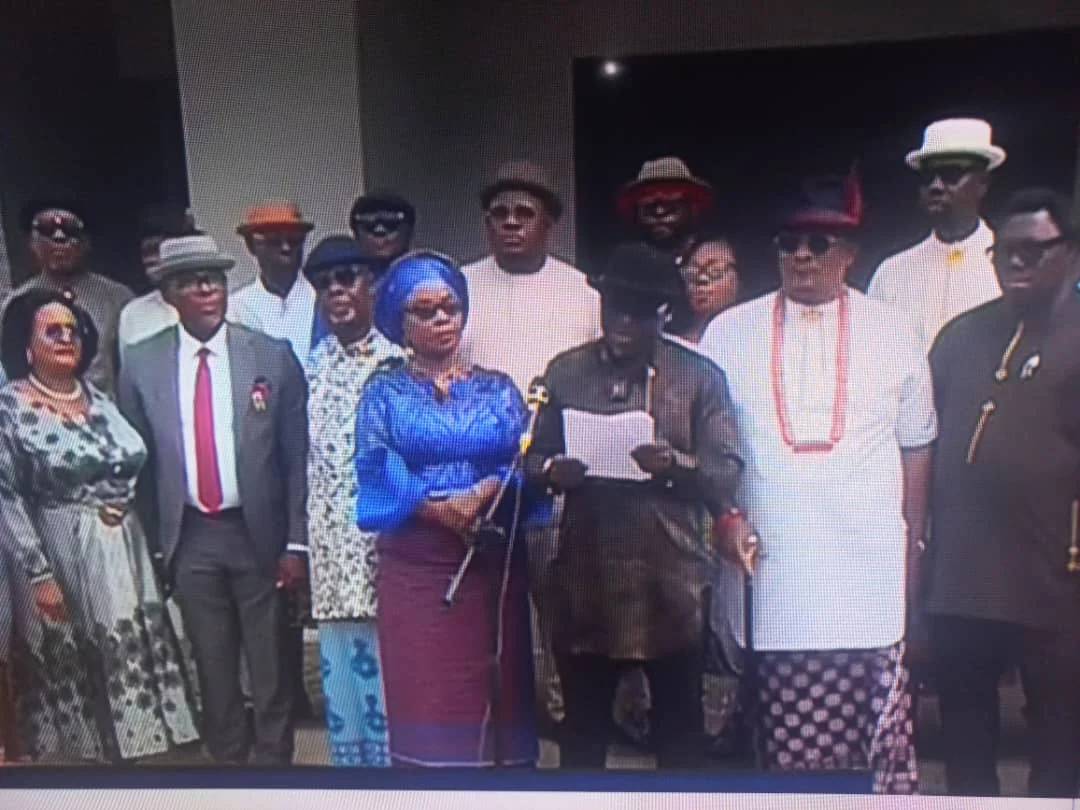
Lawmakers announced the decision on Friday at the temporary Assembly complex, addressing the press on why the impeachment process had reached what they described as a point of no return. During the briefing, a member read a written statement outlining the Assembly’s position.
The House said the decision followed the presentation of formal allegations against the governor and the subsequent resolution to proceed with an investigation.
Some lawmakers who had previously distanced themselves from the impeachment threat have now reversed their positions. Hon. Emelia Amadi, speaking at the Assembly premises, said she had decided to close ranks with her colleagues, citing what she described as Governor Fubara’s continued unconstitutional actions.
Other members reiterated their resolve to continue with the process, emphasizing that their actions were guided by constitutional responsibility and the need to uphold the rule of law.
Legal Backgrounder: How a Governor Can Be Impeached
The impeachment of a state governor in Nigeria is governed by Section 188 of the 1999 Constitution (as amended).
Under the Constitution, impeachment may be initiated on grounds of gross misconduct, defined as grave violations of the Constitution or serious misconduct in the performance of official duties.
The process begins with a notice of allegation signed by at least one-third of the members of the State House of Assembly and served on the governor. Within 14 days, the Assembly must decide whether to investigate the allegations. Such a decision must be supported by not less than two-thirds of all members.
If approved, the Speaker requests the Chief Judge of the State to constitute a seven-member investigative panel of persons of unquestionable integrity. The panel is required to investigate the allegations and allow the governor to respond.
The panel must submit its report within three months. If the allegations are not proven, the matter ends. If they are proven, the House may proceed to adopt the report.
A governor is removed from office only if the panel’s report is adopted by a resolution supported by not less than two-thirds of the Assembly members, after which the removal takes immediate effect.
While the Constitution limits court interference in impeachment proceedings, the process must strictly comply with constitutional provisions to be valid.
A technocrat shaped by fiscal discipline, community loyalty, and quiet conviction steps forward to test experience against the demands of electoral leadership in Benue South.
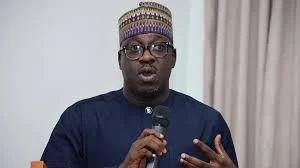
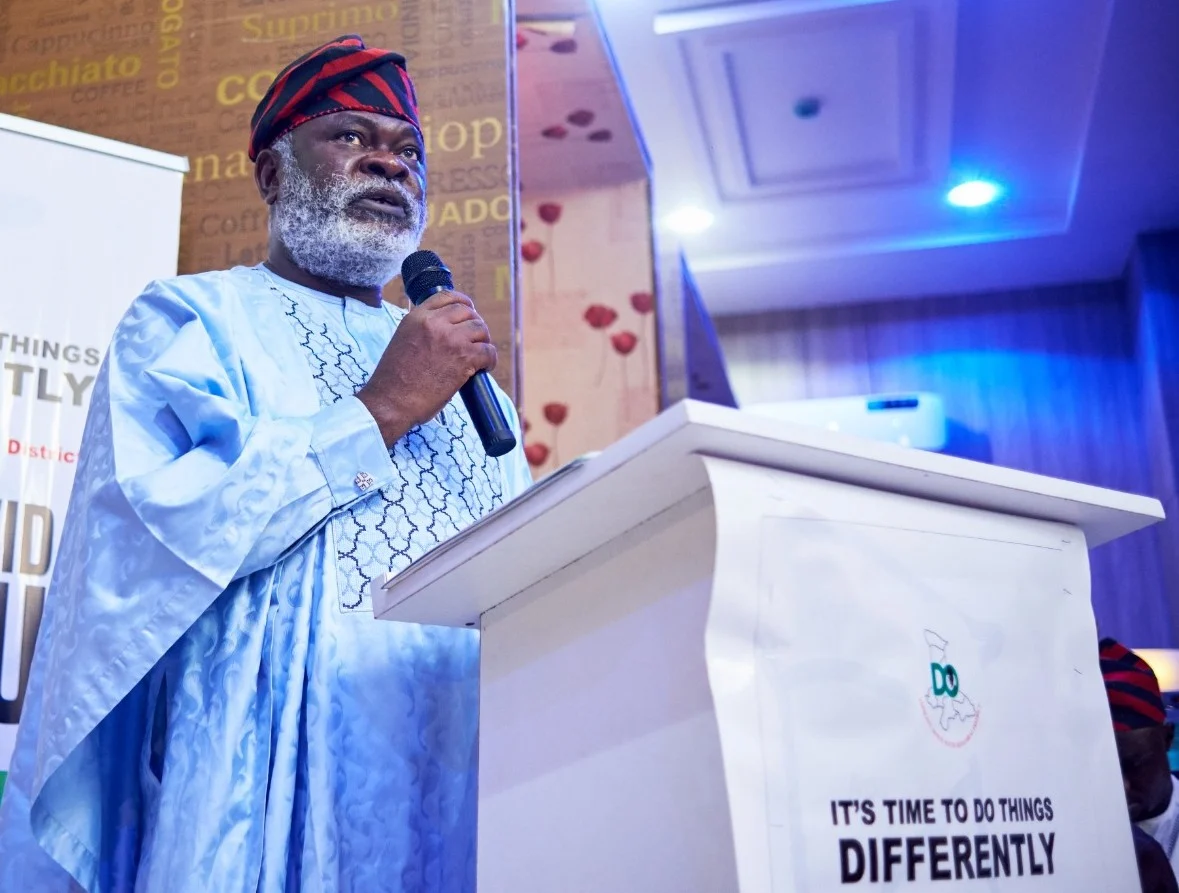
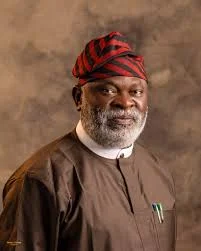
Shortly after dawn in Abuja, as the city settles into its familiar rhythm of traffic, briefings, and guarded optimism, a quieter political moment begins to take shape. At an understated venue, Hon. David Olofu prepares to meet the media, not to stage a spectacle, but to explain a decision that has been forming over years of public service.
Further to his declaration in October 2025 to contest the Benue South Senatorial seat in the 2027 General Election, Olofu’s interactive session with journalists this morning marks a defining point in his political journey. It is the moment where preparation meets public intent, where experience built largely away from cameras is brought deliberately into open conversation.
For those who have followed his path, the step feels less like an announcement than a culmination.
Olofu’s story begins far from Abuja, in Opaha, Edikwu Ward 2 of Apa Local Government Area, where community life leaves little room for abstraction. Growing up within the Idoma nation, he learned early that leadership is measured by proximity to people and responsiveness to shared challenges. Those formative experiences never loosened their hold on him, even as his career carried him into the inner workings of government.
That grounding became especially evident in 2015, when he assumed office as Commissioner for Finance and Budget in Benue State. Over the next eight years, he worked in one of the most demanding corners of governance, steering fiscal planning through economic uncertainty and mounting public expectations. Colleagues recall a man methodical under pressure, convinced that budgets were not merely technical exercises but moral documents—expressions of government’s priorities and credibility.
His steady stewardship soon drew national attention. Between 2019 and 2023, Olofu served as Chairman of the Forum of State Commissioners for Finance in Nigeria, coordinating fiscal conversations among the states and engaging federal institutions on sustainability and reform. His later appointment as Senior Technical Adviser to the Nigeria Governors’ Forum placed him within national policy spaces where decisions quietly shape the direction of states long after political cycles turn.
Yet, national relevance only sharpened an enduring question: how could this experience be translated into direct representation for the people who shaped him?
That question came into focus in June 2025, when Olofu resigned from the People’s Democratic Party (PDP) after years of membership. The move was neither abrupt nor confrontational. Instead, he described it as a recalibration, an effort to align platform with principle and representation with conviction. In Apa Local Government Area, the decision ignited renewed political conversations, positioning him as a rallying figure for those seeking leadership defined more by competence than allegiance. His eventual alignment with the African Democratic Congress (ADC) reflected this evolving political direction.
By October 2025, months of consultations across Benue South matured into resolve. Olofu formally declared his intention to contest the senatorial seat, following engagements that included community meetings, stakeholder dialogues, and symbolic royal blessings in Ugbokpo, Otukpo, Obagaji, and Ohimini. Across these interactions, his message remained consistent: development anchored on infrastructure, improved security, economic inclusion, and deliberate youth empowerment—pursued through informed and effective legislative action.
Running parallel to this political journey is a quieter, deeply personal commitment to service. Through the Apa Legacy and Sustainability Initiative, Olofu has invested in education, healthcare, and community empowerment. His ₦50 million Education Support Fund has enabled Idoma students to remain in tertiary institutions, while his ₦10 million contribution to maternal and infant healthcare at St. Helen’s Specialist Hospital, Otukpo, addressed urgent local needs. To those close to him, these efforts are not political gestures but reflections of a leadership philosophy that views service as continuous rather than episodic.
Taken together, Olofu’s profile reveals a leadership style shaped by patience, preparation, and proximity to people. With a background in finance, a record of public accountability, and enduring grassroots ties, he represents a growing class of Nigerian leaders whose credibility is built quietly and sustained deliberately.
As Benue South looks toward the 2027 elections, Olofu’s transition from state commissioner to national policy adviser and now senatorial aspirant reads less like a leap and more like a progression, anchored in experience, guided by conviction, and sustained by belonging. As he sits before the media in Abuja this morning, he does so not with urgency, but with intent, offering himself for a responsibility he believes he has long been preparing to carry.
In a political season often defined by haste and high volume, David Olofu’s entrance is measured, an argument that leadership, like trust, is best built before it is demanded.
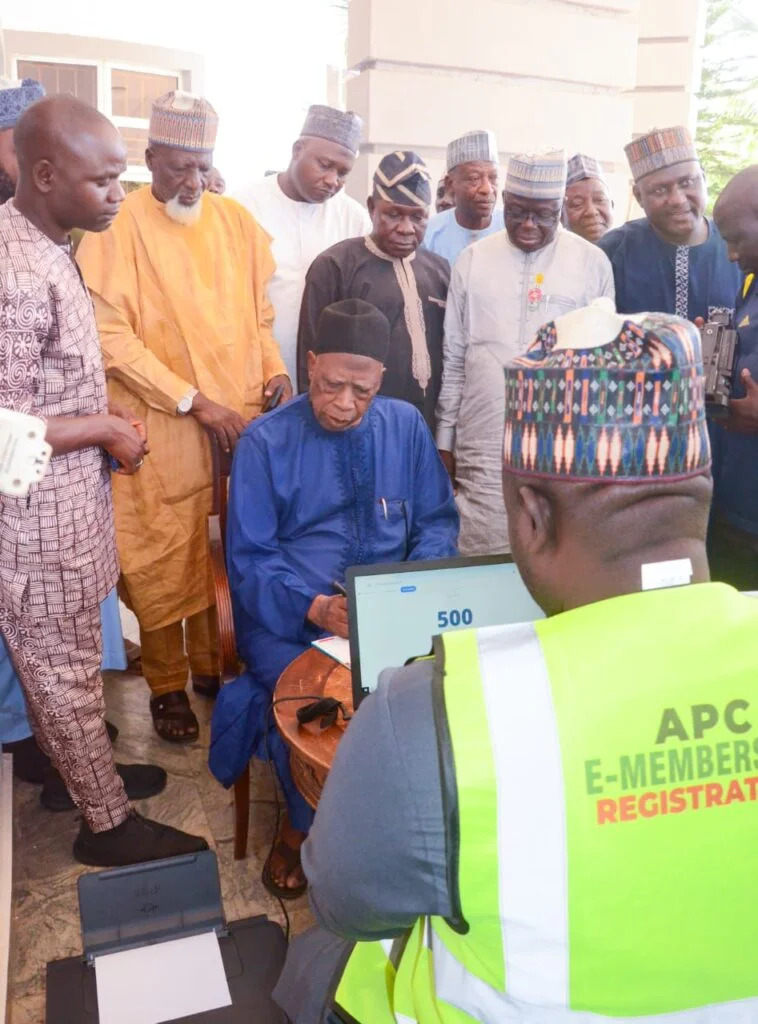
The All Progressives Congress (APC) in Nasarawa State has dismissed as false and misleading reports circulating on social media alleging that a former National Chairman of the party, Senator Abdullahi Adamu, has defected to the African Democratic Congress (ADC).
The denial was contained in a statement issued on Thursday in Lafia by Hassan Abubakar, the party’s State Organising Secretary and Coordinator of the APC e-membership registration exercise.
Abubakar described the reports as baseless propaganda deliberately designed to mislead the public and create confusion within the party.
According to the statement, Senator Adamu, a former governor of Nasarawa State, remains a committed and card-carrying member of the APC.
“For the avoidance of doubt, Senator Abdullahi Adamu has at no time defected, contemplated defection, or associated himself with any other political party,” the statement said.
Abubakar explained that the photograph being circulated online as evidence of the alleged defection was taken during the ongoing APC e-membership registration and revalidation exercise — a nationwide initiative aimed at strengthening the party’s database and internal democracy.
He noted that the image clearly showed Senator Adamu revalidating his APC membership in line with the party’s constitutional processes and reform agenda.
The APC described the attempt by unnamed individuals to misrepresent a legitimate party activity as a defection as irresponsible and politically desperate, adding that it amounted to deliberate misinformation.
The statement further stressed that Senator Adamu’s loyalty to the APC, as well as his contributions to the party’s growth and stability, remained well documented and unquestionable.
The party urged its members, the media, and the general public to disregard the claims and rely only on verified information from credible sources.
It reaffirmed that the APC in Nasarawa State and across the country remains united and focused on advancing progressive governance.
LATE last year, precisely on December 28, a presidential spokesman, Bayo Onanuga, wrote across his social media platforms that Nigeria’s president, Alhaji Bola Ahmed Tinubu, had departed to Europe as part of his end-of-year pleasure and winding down activities. The statement was not explicit that he would be on vacation. He hates the word ‘vacation’ because it might require him to transfer power to vice president Kashim Shettima, who is an orphan in the administration. The statement was as vague as they come, including the announcement that Tinubu would travel from ‘Europe’ to Abu Dhabi in the United Arab Emirates [UAE] in January to attend the annual Abu Dhabi Sustainability Week [ADSW 2026] Summit.
Onanuga’s statement was careful to emphasize that Tinubu’s planned attendance of ADSW 2026 was to honour an invitation that was apparently graciously extended to him by the president of UAE, His Highness Sheikh Mohamed bin Zayed Al Nahyan.
But there are issues surrounding the processes leading to the nebulous year-end activities and the detour from ‘Europe’ to UAE for a one-week stay. But the issues are not new, and they are not out of tune with the proclivities of Tinubu from his years as governor of Lagos State between 1999-2007.
The statement announcing Tinubu’s itinerary, which will be a blatant abuse of the use of that word ‘itinerary’, was deliberately vague, dismissive, and designed to demonstrate how much the presidency, the president himself, and his enablers hold Nigerians in utter contempt.
As president, Alhaji Bola Ahmed Tinubu, is this country’s number one public figure. The statement said that he was departing for ‘Europe’ on December 28. The last time we checked, Europe was not a country, even if anyone is minded to stretch the concept of the European Union [EU].
If Tinubu planned in the course of his usual junckets abroad to visit more than one country on the continent of Europe, decency and accountability required that Nigerians whom he is supposed to be serving should be apprised of his movements. But no, not for Tinubu, and certainly not for his collaborators. He treats a majority of Nigerians as though they do not exist and do not matter.
Alone in the silence of an empty street, power fades and only the weight of the journey remains.
To this presidency, Nigerians are veritable ‘mumus’ who do not know the difference between a continent and the countries therein. And even if they know the difference, they have been so pauperised and castrated by the rulers’ policies and programmes to ask questions and to demand answers.
Tinubu’s indifference to, and contempt for, Nigerians has been evident for close to one generation. He was not different while he was the governor of Lagos State. He could pretend for all he cares, but he’s not a democrat. Contrary opinion counts for nothing in his politics. The receipts are in the public domain.
His braggadacio, not withstanding, Tinubu exhibits the traits of an insecure person. Here’s a man who craves adulation and public office but despises accountability to the people. Not many Nigerians imagined that after the years of the locusts that marked the presidency of the former head of state, the late Muhammadu Buhari, that Nigerians would yet be saddled with another man who regards the presidency as a trophy, and not a call to service that imposes a duty of care on the occupant. One of the Obamas [either Barack or Mitchell] once said that the presidency of the United States does not change its occupant. It reveals the person. That profound assertion was prior to the emergence of Donald Trump as America’s president. Trump 2.0 is unravelling.
The presidency of Nigeria revealed the person of Buhari – as incompetent, low on energy, clueless, sectarian, myopic, divisive, and a man with little or no redeeming feature. Buhari came, he saw, and he was overwhelmed and conquered. Some of us were surprised only by the magnitude of his spectacular failure.
Tinubu was an open book ever before he ascended to the presidency. There was not much waiting to be revealed about him. He said that becoming Nigeria’s president was his lifelong ambition. Ahead of the 2023 presidential election, he commanded his henchmen and supporters to “grab, snatch, and run” with ballot boxes and ostensibly the result sheets. His supporters dutifully went beyond the brief. They disrupted balloting in places suspected to be the stronghold of opposition political parties. On election day, they attacked and bloodied voters whom they feared would vote for candidates other than Tinubu. State security agencies played their own part in an alleged industrial scale electoral heist.
Earlier, during the stomping, Tinubu had declared that it was his turn to be coronated as president in his fraud- tainted and entitlement-laddened claim of “emi lo kan”.
Like Buhari, but from a different prism, the Nigerian presidency is also unmasking Tinubu – that he’s at best a pseudo-democrat if not a dictator, he’s unprepared for the job in spite of claims to the contrary, he may not really be in the best of health, he prefers to operate as a sole administrator or an emperor, he’s epicurean, he listens only to himself, he detests accountability, he delights in adulation and praise-singing, faces of citizens contorted by pains do not move him to sympathy and empathy, that he can only work with people from a section of his Yoruba nation, among other parochial considerations.
The other concerning aspects of his current end of year trip to ‘Europe’ has to do the Abu Dhabi leg this January. For the Abu Dhabi Sustainability Week Summit, the presidency would rather treat it like the mystery of Tinubu’s travel to ‘Europe’ where nothing definite was disclosed. Not the country or countries he was travelling to; not the specific purposes of the visit beyond the claim of end-of-year activities; not how long he would be in ‘Europe’, or any other things for that matter.
Except for the cruise and the opportunity to ‘flex’ as we are wont to say on Nigerian streets, no serious president of any serious country, especially a country like ours which is in the lower rungs of the global development index should ever elect to waste one whole week in a foreign land for this kind of summit. In any case, we are not persuaded that the president is currently equipped with the necessary alertness, mental capacity, and requisite attention span to absorb the technical details and jargon of such a summit. We have seen the president at events at home and abroad, and his struggles to remain alert and follow conversations have been, to put it mildly, very embarrassing.
Furthermore, it was difficult to imagine that Nigeria’s president departed for ‘Europe’ hours after the US president, Donald Trump, ordered the American military to bomb alleged terrorists enclave in parts of Sokoto state in the north west region of our country. Tinubu behaves in a troubling manner. His behaviour can be likened to the case of “onye ulo ya na-agba oku ona achu oke,” or a home owner who is busy chasing rats while his home was being consumed by an inferno.
In a little over two years of this regime, one issue has dogged its leadership – persistent allegations of forgery. Somehow, a sentence on forgery and sundry shenanigans is deemed incomplete until the name of the president of Africa’s most populous country or the ruling APC is featured in it.
If any name is controversial, some people would be minded to use the name of the president to illustrate the unsavoury subject. If a certificate is suspected to be from the ‘Oluwole’ area of Lagos, instinctively, some Nigerians would allow their minds to wander to the same suspect. Why not, given that Tinubu and his team created their own bishops ahead of the 2023 election. By the way, ‘Oluwole’ is a byword for anything and everything fraudulent in our country.
When unknown persons suspected to be from the bureaucracy, the presidency and the national assembly [NASS] forged the 2024 budget with the insertion of strange items worth billions of Naira, it was difficult to exculpate the lead figure and the usual suspect. The same thing is currently playing out with the alleged forgery of the new and controversial tax laws, which came into effect on January 1.
The abduction of Maduro
It was bound to happen – the abduction of the president of Venezuela, Nicholas Maduro, by the president of the United States, Donald Trump. It did happen last weekend. The pretext was drug trafficking by Maduro, but the quest was to seize the over 300 billion barrels of crude oil in the belly of Venezuela.
Trump framed the exercise as a ‘capture’, but it was not. It was a case of the abduction or kidnapping of another country’s head of state. Trump violated the US constitution and ignored international laws. He has said that he would run Venezuela for some time. This is curious coming from a man who bankrupted casinos as a private businessman. What Trump has succeeded in doing is turning the world’s order upside down. And made it less safe. The sovereignty of nations is now a myth and the United Nations a caricature. Might is now right. It will be a matter of time before China seized Taiwan, and Putin escalated his hunger for an imperial Russia to straddle Europe.
UGO ONUOHA, A Veteran Journalist, was the Managing Director/Editor-in-Chief, Champion Newspapers Limited
Abuja, December 30, 2025 – The Economic and Financial Crimes Commission (EFCC) will arraign former Attorney-General of the Federation (AGF), Abubakar Malami, his son, and Bashir Asabe, an employee of Rahamaniyya Properties Ltd, before the Federal High Court in Abuja on 16 counts of fraud and corruption.
The case is scheduled to be heard by Justice Emeka Nwite.
Malami has been under investigation by the EFCC since December 8, 2025.
The anti-graft agency alleges that between 2015 and 2025, the former AGF, alongside his son and Asabe, engaged in a series of suspicious transactions, attempting to conceal billions of naira through bank accounts and property acquisitions across Abuja, Kano, and Kebbi.
According to the EFCC, the defendants conspired to disguise the origin of funds, acquire property indirectly, and retain sums they allegedly knew were proceeds of unlawful activity, in violation of the Money Laundering (Prohibition and Prevention) Acts of 2011 and 2022.
Some of the key allegations include:
Counts 1 and 2: Between July 2022 and February 2021, Malami and his son allegedly concealed over N1.6 billion through Metropolitan Auto Tech Limited accounts at Sterling Bank.
Count 3: In March 2021, the duo allegedly retained N600 million as collateral for a N500 million loan to Rayhaan Hotels Ltd, knowing the funds were illicit.
Counts 4–16: The EFCC claims the defendants acquired multiple properties, including luxury duplexes in Maitama and residences in Garki, Asokoro, and Jabi districts, with funds allegedly from unlawful sources. The amounts involved range from N120 million to over N1.3 billion.
The commission said it plans to call several witnesses, including EFCC staff, bank representatives, Bureau de Change operators, and financial experts.
Among the key witnesses are Folarin Dare, Chinedu Eneanya, and Sani Lukeman, who are expected to testify on intelligence and petitions received by the EFCC, and Abdulrahman Musa Basheer, who will provide evidence regarding Rahamaniyya Properties Ltd’s role in purchasing properties for Malami.
Representatives from Zenith Bank Plc and Sterling Bank Plc are also expected to testify.
The EFCC alleges that the offences span Malami’s tenure as AGF under former President Muhammadu Buhari, highlighting a decade-long pattern of concealing and misappropriating funds through complex financial and property transactions.
The New Nigeria People’s Party (NNPP) has re-elected Dr. Ahmed Ajuji as its National Chairman, a move party leaders say signals a renewed push to expand the party’s influence ahead of the 2027 general elections.
Ajuji was returned unopposed through a voice vote at the party’s National Convention held on Saturday in Abuja. Officials of the Independent National Electoral Commission (INEC) were present to monitor the exercise.
The convention also saw the re-election of Dipo Olayoku as National Secretary, alongside other members of the party’s national leadership, all of whom emerged unopposed and were later affirmed by delegates.
Speaking after his re-election, Ajuji thanked party members for the confidence reposed in the leadership and pledged that the NNPP would intensify efforts to strengthen its structures nationwide.
He said the new leadership accepted the responsibility of steering the affairs of the party over the next four years, describing the moment as critical to the NNPP’s future.
“Our task is clear. We must work harder, remain united and position this party to win the trust of Nigerians ahead of 2027,” Ajuji said.
He urged national officers to treat their re-election as a call to service and to uphold the oath of office administered to them.
“Our Flag Must Fly Higher” — Ajuji
Earlier in his welcome address, Ajuji called on NNPP members across the country to remain hopeful and committed to the party’s vision of a united and prosperous Nigeria.
He said the NNPP was determined to build a strong, progressive and inclusive nation, stressing that the party had been repositioned to play a leading role in Nigeria’s democratic process.
“Our flag must fly higher across all parts of Nigeria. Nigerians want reassurance that a better country is possible, and NNPP is ready to provide that hope,” he said.
According to him, the party’s restructuring and internal reforms have strengthened its readiness to compete nationally.
“All eyes are on NNPP to show the way forward for sustainable democracy and development. Nigerians deserve a fresh start and a new deal,” Ajuji added.
Kwankwaso, Abba Yusuf Back New Leadership
The National Leader of the NNPP and former Governor of Kano State, Senator Rabiu Musa Kwankwaso, congratulated the re-elected national executives and urged them to remain disciplined and loyal to the party.
Kwankwaso said the performance of the NNPP-led government in Kano State offered a clear picture of what Nigerians could expect if the party is elected into power in 2027.
Kano State Governor, Abba Kabir Yusuf, described the convention as a defining moment for the party, saying it reflected the NNPP’s growing national relevance.
He urged the new leaders to promote unity, fairness and inclusivity within the party.
“Let this convention mark a new beginning where no one is left behind,” Yusuf said.
NNPP Dismisses Rumours of Internal Crisis
Chairman of the National Convention Planning Committee, Bala Mohammed, said the NNPP had recorded notable achievements in the past four years, strengthening its place in Nigeria’s political landscape.
He explained that the convention was held to ratify key decisions of the National Executive Committee and formally elect national officers.
“This gathering is also about reinforcing the unity and brotherhood that define us as a political family,” Mohammed said.
The party’s National Adviser, Magaji Ibrahim, dismissed claims of division within the NNPP, insisting the party remained united under Kwankwaso’s leadership.
“I can assure Nigerians that nothing will divide this party. We are solid and focused as we move toward 2027,” Ibrahim said.
A major highlight of the convention was the ratification of the suspension of Article 37(1) of the NNPP Constitution (2024 as amended).
The Economic and Financial Crimes Commission (EFCC) will arraign former Minister of Labour and Employment, Chris Ngige, on Friday over alleged corruption, the News Agency of Nigeria (NAN) reports.
Ngige, also a former Governor of Anambra State, will appear at a Federal Capital Territory High Court in Gwarimpa, Abuja, as the sole defendant in an eight-count corruption charge (FCT/HC/CR/726/2025).
Filed on December 9 by a legal team led by Sylvanus Tahir, SAN, the charges allege that Ngige, while serving under ex-President Muhammadu Buhari, used his position to benefit companies linked to his associates.
He is accused of awarding NSITF contracts worth over N1.8 billion to companies including Cezimo Nigeria Limited, Zitacom Nigeria Limited, Jeff & Xris Limited, Olde English Consolidated Limited, and Shale Atlantic Intercontinental Services Limited.
Ngige is also alleged to have accepted gifts totaling N119,783,000 through organisations linked to him, including the Senator Chris Ngige Campaign Organisation and the Chris Ngige Scholarship Scheme, while performing official duties.
The offences contravene the Corrupt Practices and Other Related Offences Act, 2000, specifically Sections 17(a) and 19, and are punishable under Section 179(c) of the Act.
In a move many described as politically motivated, the Rivers State House of Assembly has endorsed President Bola Ahmed Tinubu for a second term in office.
The endorsement, announced on Wednesday, was presented as a vote of confidence in appreciation of what the lawmakers called the “numerous Federal Government projects and interventions” in the state under Tinubu’s leadership.
The motion, signed by 26 members and read by the House Leader, Mr. Major Jack (Akuku-Toru), claimed that Tinubu’s administration had demonstrated commitment to peace, stability, and development.
In a controversial justification, the legislators cited Tinubu’s declaration of a state of emergency and the temporary suspension of the state legislature, moves widely criticized by Nigerians and international observers, as evidence of his “fatherly role” in restoring order.
Speaker of the House, Mr. Martin Amaewhule (Obio/Akpor I), praised the president as a “compassionate father” working to reposition the nation for growth.
He also lauded the appointment of Rivers indigenes into key federal positions, saying it reflected Tinubu’s inclusiveness and strengthened the state’s relationship with the Federal Government.
The lawmakers further pledged loyalty to the Minister of the Federal Capital Territory (FCT), Nyesom Wike, and promised to mobilize grassroots support for Tinubu’s “Renewed Hope Agenda.”
The Pan Yoruba Socio-Political Group, Afenifere, has faulted the Supreme Court verdict that granted fiscal autonomy to local government areas.
It lamented that the Apex Court verdict has “done incalculable injury to the Nigerian state.
This was contained in a statement signed by the leader of the group, Pa Ayo Adebanjo and it’s National Publicity Secretary Prince Justice Faloye, made available to newsmen in Akure, the state capital.
It’s entitled ” Tinubu and the Grand Conspiracy Against Democracy and True Federalism in Nigeria.
The statement declared that ” Afenifere views the judgment of the Supreme Court in the case filed by the Federal Government on the so-called Local Government autonomy as sheer judicial conspiracy in cahoots with the Tinubu administration against the Nigerian state and its foundational principles of federalism.
Rather than interpret the constitution to uphold its elementary but overriding federal principle which recognises only a two-tier federal structure of the central government and federating states, the Supreme Court played to the gallery and wittingly allowed itself a most retrogessive declaration that the power of the government is portioned into three arms of government, the federal, the state and the local government.
For the avoidance of any doubt, Afenifere makes bold to say that in line with its negotiated basis of existence, Nigeria is a “Federation consisting of States and a Federal Capital Territory”. as affirmed by Section 2 (2) of the 1999 constitution.
While Afenifere frowns at corruption and misuse of public funds at levels of government, it condemns in most unmistaken terms the subjugation of the states and its constitutional roles including the Local Government system to the whims and caprices of the federal government by any means including obvious manipulation of the federation account as in the present case.
The 1999 constitution, which in spite of its flaws, gives life and power to the Supreme Court provides in Section 162 and particularly subsection (6) that “each state shall maintain a special account to be called “State Joint Local Government Account” into which shall be paid all allocations to the local government councils of the state from the Federation Account and from the Government of the state”.
“Against this unambiguous provision the Supreme Court held that “demands of justice requires a progressive interpretation of the law.
”It is the position of this court that the federation can pay Local Government allocations to the Local Government directly or pay them through the states.
”In this case, since paying them through states has not worked, justice of this case demands that Local Government allocations from the federation account should henceforth be paid directly to the Local Governments .
”Contrary to this invented alternative routes, Section 162 of the Constitution is not ambivalent about the process and route through which “all allocations to the local government councils of the state from the Federation Account and from the Government of the state” shall become payable to the Councils.
‘In other words, the interpretation does not require a voyage into jurisprudential sophistry leading to the absurdity of deliberate judicial amendment of the grundnorm.
“By wittingly or inadvertently equating the Nigerian Federation with the Federal Government in the erroneous belief that both expressions are used interchangeably, such that the President may withold funds to the credit of the Local Governments from the Federation Account, under the guise of having no democratically elected officials, which is obviously subject to the interpretation by the Federal Government.
”The apex court has not only done incalculable injury to the Nigerian state, it has lent itself to setting aside its precedent in the hallowed judgment against the President Obasanjo administration withholding funds to the credit of Local Governments in Lagos State even when the Supreme Court said so.
The presidency has reacted to Thursday’s victory against 36 state governors at the Supreme Court on local government autonomy.
The Supreme Court ruled that all federal allocations for local government councils should be paid directly into their accounts.
In Nigeria, most states operate a joint account with local governments, Justice Emmanuel Agim, who led a seven-member panel of justices, said local government allocation should be paid directly to a separate account belonging to each local government.
The federal government through the Attorney-General and Minister of Justice, Lateef Fagbemi (SAN) approached the Supreme Court, in a suit, marked SC/CV/343/2024, and sought that 36 governors of the federation grant full autonomy to the 774 local governments.
Giving details of federal government’s prayer in the suit, Special Adviser to President Tinubu on Information and Strategy, Bayo Onanuga, on his X handle on Thursday, wrote, “The details of the Supreme Court ruling giving 774 local councils financial autonomy
“The Supreme Court ruled on Thursday that all federal funds for local government councils should be paid directly into their accounts.
“Justice Emmanuel Agim, who led a seven-member panel of justices, delivered the judgment in a suit filed by the federal government against the 36 state governors.
“According to the judgment, henceforth, no more payments of local government area allocations will be made to state government accounts. The court also prohibited the governors from receiving, tampering with, or withholding funds meant for local governments.
“Furthermore, the court barred the governors from dissolving democratically elected officials for local governments and deemed such actions a breach of the 1999 Constitution.
“The federal government had approached the Supreme Court with a suit seeking to compel the governors of the 36 federating states to grant full autonomy to local governments in their domains. The suit, marked SC/CV/343/2024, was filed by the Attorney-General of the Federation and Minister of Justice, Lateef Fagbemi (SAN), on behalf of the Federal Government.
“The Federal Government accused the state governors of gross misconduct and abuse of power in its suit, which was based on 27 grounds. In the originating summons, the FG prayed the Supreme Court to make an order stating that funds standing to the credit of local governments from the Federation Account should be paid directly to the local governments rather than through the state governments.
“The justice minister also requested an order restraining governors, their agents, and privies from receiving, spending, or tampering with funds released from the Federation Account for the benefit of local governments when no democratically elected local government system is in place in the states.
“Finally, the Federal Government sought an order stopping governors from constituting caretaker committees to run the affairs of local governments, contrary to the constitutionally recognized and guaranteed democratic system.”