Tag: political marginalisation

  • The Marginalisation of Benue Zone C

    The Marginalisation of Benue Zone C

    Deleterious Effects on President Tinubu’s 2027 Presidential Election Prospects and the Unwitting Drift of Zone C to the ADC

    By Chris Echikwu

    The deepening political marginalisation of Benue State’s Zone C has evolved from a long-standing grievance into a full-scale electoral threat with direct implications for President Bola Tinubu’s 2027 re-election bid. Nearly five decades after Benue State was created, the Idoma and Igede peoples of Benue South remain completely excluded from the state’s highest executive and legislative offices, an imbalance now fuelling an organised political realignment toward the opposition African Democratic Congress (ADC).

    Political analysts warn that unless urgently addressed, this exclusion could trigger the collapse of the ruling All Progressives Congress (APC) structure across Benue South’s nine local government areas, with devastating consequences for Tinubu’s presidential vote tally in a state he cannot afford to lose.

    A Historical Exclusion Hardened Into Policy

    Benue State is divided into three senatorial districts: Zones A and B, dominated by Tiv-speaking communities, and Zone C, Benue South, home primarily to the Idoma and Igede peoples. Since the state’s creation in 1976, every governor and every Speaker of the Benue State House of Assembly has come from Zones A or B.

    Traditionally, political balance was loosely maintained through the allocation of deputy positions and the powerful Secretary to the State Government (SSG) slot to Zone C. That convention began to unravel during the second term of former governor Samuel Ortom, when an Idoma SSG was replaced by a Tiv appointee. The current administration under Governor Hyacinth Alia has not only retained this structure but reinforced it.

    To political leaders in Zone C, the message is unmistakable: exclusion is no longer incidental, it is systemic.

    2023: Votes Delivered, Exclusion Returned

    The sense of betrayal peaked after the 2023 governorship election. Electoral data and party intelligence indicate that APC’s performance in Benue was significantly bolstered by turnout and bloc voting from Zone C. Yet, unlike previous electoral cycles, no substantive concessions followed, not even symbolic gestures.

    The SSG position remained outside Zone C, key appointments bypassed the zone, and no credible zoning discussion for the 2027 governorship emerged. For many Idoma political actors, this marked the end of goodwill politics.

    Why Zone C Is Drifting to the ADC

    The political vacuum created by APC’s internal crisis has been swiftly occupied by the ADC, which is increasingly viewed in Benue South as a viable platform for both protest and power.

    The ADC’s growing influence is underpinned by heavyweight political figures, including former Vice President Atiku Abubakar, former Benue governor Gabriel Suswam, and former Senate President David Mark. Their combined networks give the ADC instant organisational depth across the North-Central region.

    Suswam’s deep understanding of Benue’s internal political fault lines, particularly the Zone C grievance, has made him a highly effective bridge between the ADC and disaffected APC stakeholders. For many in Zone C, the ADC now represents not just opposition, but recognition.

    APC in Benue South: An Implosion in Plain Sight

    The crisis within the APC has spilled into the open. A coalition of APC stakeholders from Benue South has publicly accused the state party chairman and traditional authorities of imposing candidates and appointments, undermining party legitimacy at the grassroots.

    More alarming for the Tinubu campaign is the structural consequence: once the party’s ward and local government machinery collapses, presidential votes cannot be mobilised. In Nigeria’s electoral system, governorship and presidential campaigns rely on the same local structures. A broken APC in Zone C for the governorship race is automatically a broken APC for Tinubu’s presidential campaign.

    Benue: A State Tinubu Cannot Lose

    Benue State is not electorally optional for Tinubu. It was one of only six northern states he carried in the 2023 presidential election. The North-Central zone has been identified by APC strategists as decisive terrain for 2027, with ambitious targets of securing up to 90 per cent of regional votes.

    Zone C’s nine local government areas represent a substantial share of Benue’s voter population. Even partial defection or organised voter apathy in the zone could flip the state, and with it, undermine Tinubu’s broader North-Central strategy.

    The demolition of Tinubu’s campaign office in Makurdi shortly after its commissioning has only reinforced perceptions of institutional dysfunction and hostility within the APC’s Benue structure.

    A Regional Grievance With National Implications

    Zone C’s alienation resonates beyond Benue. It feeds into a wider North-Central narrative of marginalisation, insecurity, and political disposability—sentiments the ADC is actively consolidating into a regional movement.

    David Mark’s stature on security issues, combined with Suswam’s organisational reach, gives the ADC a compelling alternative message in communities battered by herder-farmer violence and state neglect. For many voters, the choice is no longer ideological but existential.

    What Tinubu Must Do—And Fast

    Political observers agree that cosmetic interventions will not suffice. To arrest the drift, decisive national-level action is required:

    • Direct Presidential Engagement: A public, personal intervention by President Tinubu with Zone C leaders would signal seriousness and reset trust.
    • Substantive Federal Appointments: High-impact federal positions for respected Idoma and Igede figures would demonstrate inclusion beyond rhetoric.
    • A Binding 2027 Zoning Commitment: Without a credible guarantee of the Benue governorship ticket for Zone C, all other concessions will be dismissed as tactical.
    • Resolution of APC’s Internal Crisis: Allegations of imposition and manipulation within the party must be addressed through credible mediation.

    Conclusion

    The marginalisation of Benue Zone C is no longer a local grievance, it is a strategic vulnerability with national consequences. Left unresolved, it threatens to dismantle APC’s grassroots machinery in Benue, flip a critical state, and weaken President Tinubu’s standing across the North-Central region.

    The ADC’s advance into Zone C is structured, deliberate, and increasingly irreversible. The window for intervention is closing.

    Unless decisive action is taken, Benue State may well become the first domino in a chain reaction that imperils Tinubu’s 2027 re-election bid.

    Chris Echikwu is a public affairs analyst.

  • Benue at 50: Ochetoha K’Idoma Salutes Progress, Raises Alarm Over Political Exclusion

    Benue at 50: Ochetoha K’Idoma Salutes Progress, Raises Alarm Over Political Exclusion

    As Benue State marks 50 years since its creation, the apex socio-cultural organisation of the Idoma people worldwide, Ochetoha K’Idoma, joins the Golden Jubilee celebrations with warm congratulations—but also with a firm call for reflection on what it describes as a deep and persistent imbalance in the state’s political life.

    Speaking for the organisation, its President-General, Yakubu Aboki Ochefu, says the anniversary is both symbolic and instructive. While acknowledging the progress recorded over five decades, he argues that the state’s political history reveals a pattern of exclusion that continues to sideline Benue South Senatorial District from the highest levels of power.

    Ochefu recalls that Benue State comes into existence on February 3, 1976, under the military administration of the late Murtala Muhammed, following earlier political arrangements that place Idoma land within the former Northern Region and later Benue-Plateau State. Long before these administrative constructs, he says, the Idoma people occupy the fertile Benue Valley for centuries, sustaining a distinct identity while maintaining a reputation for resilience, hospitality, and peaceful coexistence.

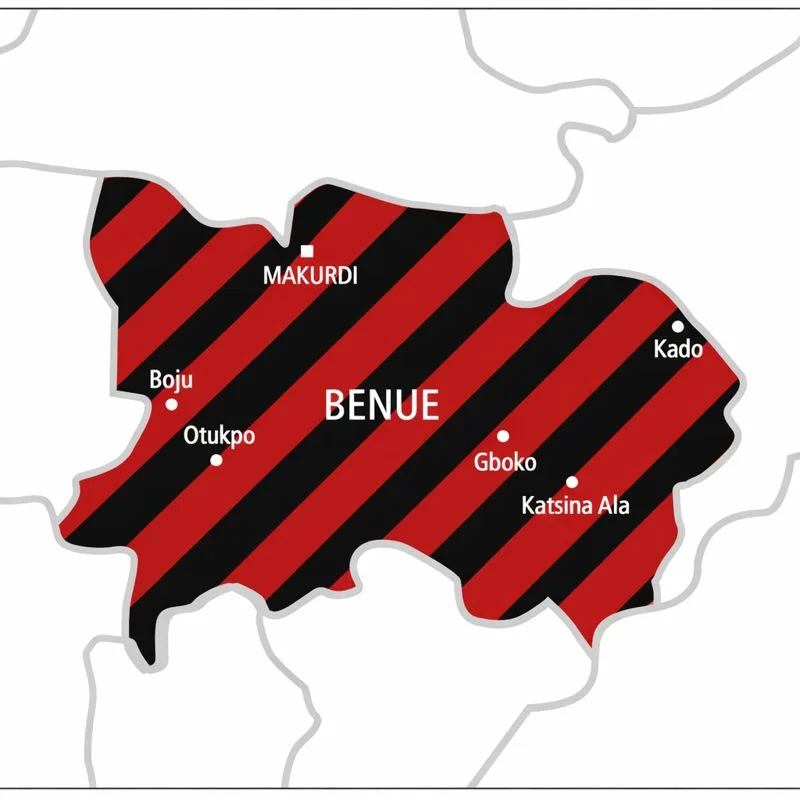
    Map of Benue State @50

    He says the Idoma experience within Nigeria is defined by consistent national service. Despite being a numerical minority, Idoma sons and daughters, according to him, have left enduring footprints across governance, the civil service, the military, academia, culture, sports, and faith. From the early post-independence years to the present, their influence cuts across generations. Ochefu cites Dr. Edwin Ogbu, who becomes the first indigene of Benue State to serve as a Federal Permanent Secretary in 1966, and Abu Obe, who later rises to Head of the Civil Service of the Federation, as early markers of that contribution.

    In legislative politics, he notes that Idoma land produces two Presidents of the Senate—Ameh Ebute and David Mark. Mark’s eight-year tenure, spanning four consecutive terms, remains the longest in Nigeria’s democratic history and, Ochefu says, firmly places the Idoma nation at the centre of national leadership. He also points to the national roles played by Audu Ogbeh, former Minister of Agriculture and ex-national chairman of the Peoples Democratic Party, as well as Senator Abba Moro and the late Professor Jerry Agada, all of whom serve at ministerial level.

    Beyond politics, Ochefu says the Idoma presence remains deeply woven into Nigeria’s security architecture. From participation in the Second World War and the Nigerian Civil War to leadership at the highest levels of the armed forces, Idoma officers continue to play defining roles. He references the late Ebije Ikwe, who serves as Chief of Air Staff between 1967 and 1975, as well as several Idoma military governors who administer states across the federation.

    In education and culture, Ochefu says the Idoma people produce Benue State’s first university graduate as far back as 1954 and go on to contribute professors, vice-chancellors, and national policy thinkers whose work shapes Nigeria’s intellectual and professional landscape. He also highlights the global reach of Idoma creativity, pointing to the late Bongos Ikwue, whose genre-blending sound defines an era, and Afrobeats icon 2Baba, whose music projects Nigerian identity to international audiences.

    Yet, Ochefu says, this long record of contribution stands in stark contrast to the political reality within Benue State itself. In 50 years, he notes, Benue South has never produced a governor or a speaker of the State House of Assembly, has produced only one Chief Judge, and has never produced a Vice-Chancellor of Benue State University. He describes the pattern as structural rather than accidental, warning that prolonged exclusion erodes trust, weakens cohesion, and contradicts the ideals of unity on which the state is built.

    On development, Ochefu acknowledges the presence of key federal institutions in Idoma land, including the Federal University of Health Sciences in Otukpo, but says sustained industrial investment remains largely absent since the administration of former Governor Aper Aku. He argues that without deliberate investment in infrastructure, agriculture, solid minerals, and youth-driven enterprise, the economic potential of Benue South will remain unrealised.

    He also commends Elaigwu Odogbo Obagaji John, the Och’Idoma V and Paramount Ruler of the Idoma Nation, for providing steady leadership and promoting peace and unity across Idoma land amid growing social and security challenges.

    Looking ahead, Ochefu says the next phase of Benue State’s history must be defined by inclusion, balance, and fairness. The aspiration for an Idoma governor, he stresses, should not be framed as a request for concession but recognised as a legitimate democratic expectation in a state that claims unity as a foundational value.

    Only through equity, mutual respect, and intentional inclusion, he concludes, can Benue State fully harness its diversity and build a future that delivers shared prosperity for all its people.