Tag: public policy

  • Nigeria’s Youth Confab Is Being Replaced, Not Rescheduled

    Nigeria’s Youth Confab Is Being Replaced, Not Rescheduled

    As the 2026 federal budget advanced through the National Assembly, complete with the familiar reassurances that priority sectors had been fully captured, one of the government’s most consequential decisions revealed itself not through what was announced but through what was quietly thinned out. In the budget defence delivered by the Minister of Youth Development, Ayodele Olawande, the National Youth Conference, once framed as a generational intervention rather than a routine programme, appeared only as an idea suspended in abstraction, absent the timelines, funding clarity, and institutional urgency that signal political intent.

    In its place stood a confident architecture of skills-based interventions, from digital training pipelines to innovation challenges and vocational grants, all of which align neatly with a governing instinct that prefers administrable solutions to contested dialogue, and measurable outputs to unpredictable engagement. Within this framework, youth are increasingly addressed as economic units expected to adapt continuously, rather than as political actors whose collective grievances demand confrontation rather than containment.

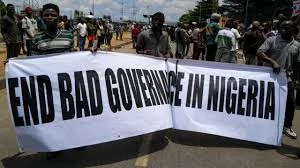
    This recalibration matters because Nigeria has walked this road before. When President Bola Ahmed Tinubu announced the Youth Confab in 2024, it came as a response to the #EndBadGovernance protests against a backdrop of deepening insecurity, excruciating cost of living crisis, and policy reforms that many young Nigerians experienced as exclusionary rather than corrective. The promise of a national youth dialogue carried weight precisely because it echoed an older recognition in Nigerian politics: that when grievances accumulate faster than institutions can absorb them, dialogue becomes a stabilising necessity rather than a symbolic gesture.

    That lesson was imperfectly learned during previous national dialogue efforts. Under President Olusegun Obasanjo, the 2005 National Political Reform Conference was convened amid mounting tensions over federalism, resource control, and representation. Despite its breadth, the conference collapsed under political calculation, leaving core questions unresolved, many of which later resurfaced with greater intensity in electoral disputes and regional agitation. Nearly a decade later, President Goodluck Jonathan’s 2014 National Conference produced extensive recommendations, yet its timing, too close to a charged election cycle, ensured that its outcomes were shelved rather than institutionalised.

    In both cases, the pattern was unmistakable: dialogue deferred or diluted did not neutralise dissent; it merely displaced it.

    It is against this historical backdrop that the slow hollowing-out of the Youth Confab becomes more than a scheduling issue. As timelines slipped, substantive engagement gave way to procedural gestures, including delegate registration portals that created the appearance of movement while postponing the harder work of convening disagreement. Participation statistics were offered where political listening was expected, reinforcing a familiar Nigerian cycle in which process substitutes for resolve.

    The consequences of continued deferral sharpen further as the electoral calendar advances. With the Independent National Electoral Commission already laying groundwork for the 2027 general elections, and civil society organisations such as Yiaga Africa warning that consultative platforms risk contamination once campaign logic takes hold, the space for a credible, non-partisan youth dialogue is narrowing by the month. History suggests that when national conversations are postponed until politics intrudes, they cease to be conversations at all.

    Meanwhile, the government’s reliance on skills acquisition as a response to youth discontent sits uneasily beside the persistence of insecurity. Despite vast allocations to defence in the 2026 budget, violence continues to shape daily life in parts of the country, including Zamfara, Niger, Kwara, Benue, Plateau, Kaduna and Katsina states where repeated attacks underscore the gap between expenditure and safety. In such contexts, digital empowerment narratives risk sounding less like opportunity and more like displacement, asking young people to adapt individually to conditions the state has failed to collectively resolve.

    The deeper danger, as history repeatedly demonstrates, lies not in protest itself but in what follows prolonged institutional deafness. When dialogue is consistently postponed, grievances migrate from conference halls to courtrooms, from courtrooms to streets, and from streets into long-term disengagement or radicalisation. Nigeria’s past national dialogues faltered not because conversation was unnecessary, but because it was treated as expendable once political risk increased.

    Seen through this lens, the Youth Confab’s current ambiguity is not a neutral pause but a familiar warning sign. By privileging adaptability over accountability, and management over engagement, the state risks repeating an old mistake under new branding. Young Nigerians have already demonstrated an extraordinary capacity to adjust to economic and social instability. What remains untested is whether a government that repeatedly avoids listening can indefinitely rely on that adaptability without consequence.

    History suggests otherwise.

    In that sense, the Youth Confab is no longer simply a postponed programme awaiting political convenience. It has become a measure of whether the Nigerian state has truly absorbed the lessons of its own past, or whether it is once again deferring a conversation until it returns under far less forgiving conditions.

    Time will tell.

  • US–Nigeria Military Cooperation: A Strategic Wake-Up Call

    US–Nigeria Military Cooperation: A Strategic Wake-Up Call

    By

    Ambassador Uzo Owunne*

    The proposed deployment of additional U.S. troops to Nigeria for counter-terrorism training and intelligence support demands careful national reflection.

    Security cooperation, in itself, is not inherently negative. Nigeria faces persistent threats from insurgent and extremist groups such as Boko Haram and Islamic State West Africa Province, alongside widespread armed banditry. Strengthened surveillance systems, improved intelligence coordination, and enhanced tactical capacity are all necessary in confronting these threats.

    However, international partnerships are rarely acts of charity. They are shaped by strategic calculations and national interests.

    Nigeria’s Internal Challenge

    Nigeria’s insecurity is fundamentally domestic. External assistance cannot resolve core structural weaknesses such as weak governance and corruption, poor troop welfare and equipment shortfalls, leakages in defence procurement, and political interference combined with limited accountability.

    When defence spending fails to translate into operational effectiveness at the frontline, foreign assistance risks treating symptoms rather than causes. Sustainable security must be rooted in institutional reform, transparency, and leadership accountability within Nigeria itself.

    The Reality of External Interests

    Major powers engage abroad based on strategic objectives, whether geopolitical influence, regional stability calculations, or economic considerations.

    When military assistance is reportedly quantified at tens of millions of dollars, it reinforces the transactional nature of such engagement. Nigeria must therefore ask critical questions about the long-term commitments that accompany this support, the strategic concessions embedded within cooperation agreements, and whether such engagement strengthens national sovereignty or gradually constrains it.

    History suggests that foreign policy priorities can shift abruptly. When they do, smaller partner states may find themselves exposed.

    The Lesson of Strategic Autonomy

    The experience of countries like Afghanistan illustrates the risks of over-reliance on external military backing. When a superpower recalibrates its interests, domestic institutions must be strong enough to stand independently.

    Nigeria must avoid constructing its security architecture around external saviours. Training programs and intelligence collaboration are valuable, but legitimacy, governance reform, and community-driven stabilization efforts must remain Nigerian-led.

    The insurgency is not America’s war. It is Nigeria’s responsibility.

    The Way Forward

    If Nigeria is serious about restoring lasting stability, it must ensure that defence funds reach operational units, strengthen troop welfare and morale, reform procurement systems to close financial leakages, build indigenous intelligence and surveillance capacity, and maintain strategic clarity and balance in foreign military agreements.

    Foreign partnerships should reinforce national capacity rather than substitute for it.

    Final Reflection

    No nation has successfully outsourced its sovereignty.

    Missiles and military hardware alone do not secure peace. Accountability, institutional reform, public trust, and effective governance are the true pillars of national security. External assistance can support these efforts, but the responsibility for Nigeria’s safety ultimately rests at home.

    *Ambassador Uzo Owunne is a Nigerian diplomat and international development expert based in the United Kingdom.

  • FCTA Demolishes 11,705 Shanty Colonies, Generates N2.5bn Revenue

    The Department of Development Control, Federal Capital Territory Administration (FCTA) has demolished 11,705 shanty colonies across the city, Abuja, from January to October, according to an official.

    The department also generated N2.5 billion and created 13,873 direct and indirect jobs within the period.

    Mr Mukhtar Galadima, Director, Development Control, Abuja Metropolitan Management CouncilFCTA, disclosed this during a media briefing on the activities of the department in Abuja on Sunday.

    Galadima explained that the shanties and illegal developments were demolished in conjunction with the Ministerial Enforcement Task Force Team.

    He identified the affected areas as Kabusa, Kasuwan dare, Galadimawa junction, Mabushi scavenger colony and Gudu District along Oladipo Diya way.

    He equally said that the department also removed obstructing structures on waterways at Lugbe, Jahi and Lokogoma.

    This, according to him, has curtailed the flooding being experienced within the city in recent years.

    He also said that the encroachment on rights of way and security black spots were equally dismantled in collaboration with security agencies in the FCT.

    The director also disclosed that a total of 1,764 building plan applications were received within the period, out of which 1,422 were granted approvals, including backlogs of previous years.

    On revenue generation, Galadima said that the N2.5 billion was generated from building plan approval and land use contraventions from January to October.

    He said that amount represents 68.5 per cent of the N3.7 billion target for the year, adding that of the N2.5 billion, N1.7 billion was generated from building plan approval alone.

    The director also explained that the 13,873 direct and indirect jobs were created at different stages of construction at various sites as approved by the department.

    Another achievement according to Galadima included the inauguration of One-Stop Vetting Team to treat backlog of files and fast -track of building plan approval for Plots within areas serviced with infrastructure.

    He added that the department also established Regional Offices to decentralise monitoring and enforcement activities in the Area Councils and Satellite Towns.

    “We equally inaugurated a Committee on the Prevention of Building Collapse in the FCT to proffer modalities and institutional framework to avert building collapse in the territory.

    “The department also inaugurated a Post-Development Audit which commenced at Dawaki as a pilot scheme.

    “The staff of the department equally carried out routine monitoring of physical development activities within the territory where contravening developments are served either with stop work, quit notice or demolition notice,” he said.

    On staff welfare, Galadima said that the department has institutionalised end of year activities where it appraises itself, enhances staff bonding as well as presents awards to deserving staff to boost morale.

    “There is also a monthly medical fitness check for all staff and monthly sporting activities to boost physical fitness of staff,” he added.

    He identified increasing cases of land grabbing and harassment of the department staff by security agencies as some of the challenges recorded within the period under review.

    “There is also the problem of non-resettlement of indigenous communities which created pockets of expanding slums throughout the city.

    “Another challenge is the inadequate and obsolete utility vehicles for monitoring and heavy-duty equipment for enforcement to cover the ever-growing territory.

    “Others are inadequate office accommodation, slow adoption information and communication technology, and non-0utilisation of land after removal of squatter settlements.

    “There is also the challenge of slow pace of infrastructural development especially in the satellite towns and abandoned buildings serving as criminal hideouts among others,” he said.