Author: admin

  • Alleged N90.4m Fraud: Court Admits More Exhibits Against Ex-NHIS Boss

    Alleged N90.4m Fraud: Court Admits More Exhibits Against Ex-NHIS Boss

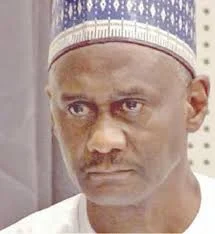
    The Federal Capital Territory High Court sitting at Kuchiako, Kuje, Abuja, has admitted additional documentary exhibits in the ongoing trial of former Executive Secretary of the National Health Insurance Scheme, Usman Yusuf, who is standing trial over alleged financial impropriety.

    Justice Chinyere E. Nwecheonwu admitted the documents on Wednesday, February 25, 2026, following their presentation by the prosecution led by the Economic and Financial Crimes Commission.

    The documents were tendered through the second prosecution witness, James Balami, the Director of Procurement at the National Health Insurance Scheme, during proceedings that commenced earlier in January 2026.

    In her ruling, Justice Nwecheonwu held that the documents were properly admitted in line with extant legal provisions, noting that the defence raised no objection at the point of tendering. Defence counsel, O. I. Habeeb, SAN, did not oppose their admissibility.

    Among the exhibits admitted were Certified True Copies of letters dated November 11, 2016, marked as Exhibits E1–E32. Also admitted were the Certified True Copy of the NHIS Procurement Plan for 2016 (Exhibits F1–F4), the NHIS Procurement Plan for 2017 (Exhibits G1–G5), and the Certified True Copy of the NHIS Procurement Act 2016 (Exhibits H1–H2).

    While being led in evidence by prosecution counsel Francis Usani, the witness narrated his interactions with the EFCC following his invitation by the commission.

    “After I took those documents to the Commission, I made statements. The statements were not made in one day. I can recognise the statements. There are five,” Balami told the court.

    However, attempts by the prosecution to tender the extra-judicial statements of the witness were opposed by the defence.

    Following arguments from both sides, Justice Nwecheonwu adjourned the matter to May 13 and 14, 2026, for ruling on the admissibility of the statements and continuation of trial.

    Professor Yusuf is facing a five-count charge bordering on embezzlement, conferring undue advantage, and fraud involving the sum of N90,439,178.00.

    Public Reactions Trail Trial

    The court proceedings have continued to attract strong reactions on social media, where opinions remain sharply divided.

    While some commentators insist that Yusuf should be allowed to defend himself in court, others have questioned what they describe as selective prosecution by anti-graft agencies.

    Several commenters compared the case with other high-profile corruption allegations involving former governors and senior political figures, arguing that public confidence in the anti-corruption fight depends on fairness and consistency.

    Others cautioned against drawing conclusions before the conclusion of trial, stressing the constitutional principle of presumption of innocence.

    As the case progresses, the court is expected to rule on the disputed extra-judicial statements at the next adjourned date, a decision that could shape the direction of the trial going forward.

  • Tinubu’s Choice of Tunde Disu as Acting IGP Triggers Nepotism Firestorm

    Tinubu’s Choice of Tunde Disu as Acting IGP Triggers Nepotism Firestorm

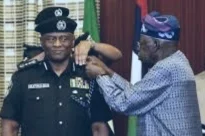
    The appointment of Tunde Disu as Acting Inspector General of Police (IGP) has continued to generate intense public controversy, with critics accusing President Bola Tinubu of nepotism and a growing disregard for Nigeria’s federal character principle.

    Across social media and political commentary spaces, Nigerians have questioned both the timing and rationale behind Disu’s elevation, arguing that it undermines seniority within the Nigeria Police Force and reinforces perceptions of regional and ethnic imbalance in key national appointments.

    One of the most vocal critics, social commentator Isaac Fayose, openly condemned the decision, describing it as nepotistic and difficult to justify on professional grounds.

    Fayose queried why the president would overlook a more senior officer, Frank Mbah, whom he referred to as a “Super Cop” who holds the rank of Deputy Inspector General of Police, in favour of a junior officer appointed only in an acting capacity.

    According to Fayose, the appointment aligns with what he described as a pattern under Tinubu’s administration with the concentration of strategic security, defence, and economic positions among individuals from the South West and of his Yoruba extraction.

    He cited several top offices, including the Chief of Defence Staff, Director General of the Department of State Services, Chairman of the Independent National Electoral Commission, Governor of the Central Bank of Nigeria, Chairman of the National Revenue Service, and the Minister of Finance.

    Fayose questioned what he described as the president’s apparent fear of broadening appointments to reflect Nigeria’s ethnic and regional diversity.

    The criticism gained further momentum following comments by former presidential candidate and human rights activist Omoyele Sowore, who called for the immediate appointment of a substantive Inspector General of Police.

    Sowore stressed that Disu’s position is inherently temporary, noting that the acting IGP is expected to retire from the Nigeria Police Force in April.

    Speaking during an interview on Channels Television, Sowore acknowledged the acting nature of the appointment as announced by the presidency.

    “Tunji Disu is retiring in April, and it is clear that once he is no longer in the police force, he must give way,” he said. “What we know for now is that he has been appointed in an acting capacity, pending the appointment of a substantive IGP.”

    Sowore went further to warn against any arrangement that would allow a retired officer to continue leading the police force.

    He argued that Disu’s elevation had already resulted in the displacement of more than 30 senior police officers, an outcome he described as unnecessary and destabilising for an institution already grappling with public trust challenges.

    With an estimated strength of between 300,000 and 450,000 officers, Sowore insisted that the Nigeria Police Force has no shortage of experienced and competent senior officers capable of assuming the role without controversy.

    He maintained that adherence to seniority, professionalism, and constitutional balance would help restore confidence in the force and the government’s commitment to fairness.

    As the backlash continues to grow, analysts say the controversy underscores broader national concerns about equity, inclusion, and transparency in high-level appointments.

    Pressure is mounting on the presidency to clarify its long-term plan for police leadership and to reassure Nigerians that competence and constitutional principles, rather than ethnicity or political loyalty, will guide decisions at the highest levels of national security.

  • NPA: Arrival of 33 Ships at Lagos Ports Expected to Ease Fuel, Food Supply Pressures

    NPA: Arrival of 33 Ships at Lagos Ports Expected to Ease Fuel, Food Supply Pressures

    The Nigerian Ports Authority (NPA) has announced the expected arrival of 33 vessels carrying petroleum products, food items and other cargoes at major Lagos ports, a development analysts say could help ease supply shortages and moderate inflationary pressures in the country.

    According to the Authority’s Daily Shipping Position released on Monday, the vessels are scheduled to arrive between February 22 and February 27 at the Apapa Port, Tin Can Island Port, and the Lekki Deep Sea Port.

    The NPA disclosed that 17 of the incoming ships are container vessels transporting assorted goods, while the remaining 16 ships will berth with bulk gas, diplomatic cargo, bulk urea, empty containers, crude oil, bulk clinker and blended stock.

    The mix of cargoes highlights the role of Lagos ports as a critical gateway for consumer goods, industrial inputs and energy products.

    The Authority also revealed that seven ships and tanker vessels have already arrived at the ports and are currently waiting to berth with aviation fuel, petrol, containerised goods and general cargo, while 17 vessels are actively discharging bulk wheat, soya beans oil, general cargo, bulk sugar, bulk urea, trucks, fresh fish and containers of various goods.

    Economic and Inflation Implications

    Economists say the steady inflow of vessels laden with petroleum products could help stabilise domestic fuel supply, particularly for aviation fuel and petrol, at a time when energy costs remain a major driver of inflation in Nigeria. Improved fuel availability is expected to reduce logistics and transportation costs, which often cascade into higher prices for goods and services.

    Similarly, the discharge of food-related cargoes such as wheat, sugar, soya beans oil and fresh fish is seen as critical to easing pressure on food prices, which account for a significant portion of Nigeria’s inflation basket. Adequate supply of these commodities supports food processors, bakeries and retailers, potentially slowing the pace of price increases if distribution bottlenecks are minimised.

    The arrival of bulk urea and clinker is also expected to support the agricultural and construction sectors. Urea availability is vital for fertiliser production and farm output, while clinker imports are essential for cement manufacturing. Improved access to these inputs could help contain production costs in both sectors, with positive spillover effects on food prices and housing costs.

    Industry analysts note that while vessel arrivals alone do not automatically translate into lower prices, efficient port operations, timely cargo evacuation and improved inland transportation are key factors that will determine the overall economic impact. Delays, congestion or high logistics costs could offset the potential benefits of increased cargo inflow.

    The NPA reiterated its commitment to improving operational efficiency across Nigeria’s ports, stating that faster vessel turnaround and enhanced cargo handling remain central to efforts aimed at supporting trade, economic stability and inflation management.

  • Idoma at 100+: Trustees Begin Planning for Historic Cultural, Developmental Milestone

    Idoma at 100+: Trustees Begin Planning for Historic Cultural, Developmental Milestone

    Abuja — February 2026

    Preparations for the Idoma Centenary Plus Celebration gained momentum in Abuja as the Board of Trustees held its inaugural meeting, laying the groundwork for a year-long programme marking a century of shared history and identity.

    The meeting, chaired by Prof. Yakubu Ochefu with Chief Emmanuel Ogbile as co-chair, followed the formal inauguration of the board by the Ochi’Idoma on January 24, 2026.

    The celebration commemorates the 1923 establishment of the Idoma Division, a defining administrative milestone for the Idoma, Igede, Ufia, and Akweya peoples of present-day Benue South.

    Organisers described the event, themed “Honouring Our Century, Forging Our Future,” as a strategic platform for cultural renewal, policy engagement, youth empowerment, and diaspora mobilisation.

    Scheduled to run from March to December 2026, the programme will feature an academic and policy summit, innovation and youth showcases, women-focused initiatives, cultural festivals, and inter-local government sports competitions.

    A grand finale will crown the celebration, featuring interfaith prayers, cultural durbar, awards, and the launch of legacy institutions including a digital museum, leadership academy, hall of fame, and scholarship and innovation fund.

    The board constituted 10 sub-committees to drive implementation across key sectors and affirmed the participation of traditional institutions, development associations, diaspora groups, professional bodies, and civil society organisations.

    In his closing remarks, Prof. Ochefu emphasised the need for timely planning, noting that the centenary-plus celebration must reflect both the historical depth and future aspirations of the Idoma people.

    Media Contact:
    Media and Publicity Committee
    Idoma Centenary Plus Celebration
    Email: media@idomacentenary.org

  • FCT Council Polls: Between Political Triumph and Democratic Questions

    FCT Council Polls: Between Political Triumph and Democratic Questions

     The reaction of the Minister of the Federal Capital Territory (FCT), Nyesom Wike, to Saturday’s area council elections has sparked debate about whether the results represent genuine democratic consolidation or the growing dominance of the ruling party under President Bola Tinubu.

    Speaking in Abuja on Sunday, Wike described the outcome—where the All Progressives Congress (APC) won five of the six chairmanship seats—as a clear endorsement of Tinubu’s “visionary leadership” and the Renewed Hope Agenda. However, critics argue that such framing risks conflating electoral success with unquestioned public approval.

    According to the News Agency of Nigeria (NAN), the APC swept victories in Abuja Municipal, Bwari, Kuje, Abaji and Kwali, while the Peoples Democratic Party (PDP) secured Gwagwalada. While Wike portrayed this distribution as proof of a healthy democratic contest, analysts note that the overwhelming win by the ruling party raises concerns about the shrinking political space for opposition voices in the nation’s capital.

    Wike’s assertion that the elections demonstrated a “renewed and credible democratic process” has also drawn scrutiny. Although the polls were largely peaceful, critics argue that peace alone does not fully address deeper questions about voter confidence, electoral fairness, and the influence of incumbency power in local elections within the Federal Capital Territory.

    The minister’s praise for President Tinubu’s role in strengthening democracy, including support for amendments to the Electoral Act, has been welcomed in principle. Yet observers point out that legislative reforms must translate into consistently transparent practices on the ground to earn lasting public trust.

    Wike also commended the Independent National Electoral Commission (INEC) and security agencies for conducting what he described as a free and credible poll. While there were no widespread reports of violence, civil society groups maintain that credibility should be measured not only by orderly voting but also by equal access, reduced state influence, and genuine competition.

    Perhaps most controversially, Wike’s remarks distinguishing between what he called the “real opposition party” and “emergency democrats” have been interpreted by critics as dismissive of dissenting political voices. Such rhetoric, they argue, risks deepening political polarization rather than fostering the inclusive democratic culture the administration claims to champion.

    As the newly elected council chairmen prepare to assume office, the elections leave behind mixed signals: a ruling party celebrating dominance and continuity, and a democracy still grappling with how to balance stability, opposition strength, and genuine grassroots participation.

    Ultimately, whether the FCT council polls mark a true renewal of democratic confidence or simply reinforce existing power structures will depend less on victory speeches and more on governance outcomes in the months ahead.

  • Nigeria Defeats European Dynamics in $6.2m Arbitration Case

    Nigeria Defeats European Dynamics in $6.2m Arbitration Case

    Nigeria has secured a major legal victory after an arbitral tribunal dismissed in its entirety a $6.2 million claim brought against the country by European Dynamics UK Ltd, an international technology contractor, over a disputed national e-Procurement project.

    The ruling followed an arbitration initiated by the company against the Bureau of Public Procurement (BPP) and was delivered at the International Centre for Arbitration and Mediation, Abuja. The decision, which is final and not subject to appeal, was handed down by Mrs Funmi Roberts, the sole arbitrator.

    This development was disclosed in a statement issued by Mr Kamarudeen Ogundele, Senior Assistant on Communication and Publicity to the Lateef Fagbemi, the Attorney-General of the Federation and Minister of Justice.

    According to the statement, the tribunal dismissed all claims by European Dynamics, thereby relieving Nigeria of a potential financial exposure estimated at more than $6.2 million—equivalent to about ₦9.3 billion in claimed payments and damages.

    European Dynamics had sought approximately $2.4 million for alleged milestone completions, $3 million in general damages, and an additional $800,000 as settlement claims, all of which were rejected by the tribunal.

    Background to the Dispute

    The dispute arose from a contract for the design, development, customisation, supply, installation and maintenance of a national electronic Government Procurement (eGP) system. The project was financed with support from the World Bank and was designed to enhance transparency, accountability and efficiency in federal public procurement.

    Upon assuming office, the Director-General of the BPP, Adebowale Adedokun, inherited both a stalled technology project and ongoing arbitration proceedings. Although discussions had previously taken place regarding an out-of-court settlement, the bureau opted to proceed with arbitration, insisting that payments must be strictly tied to verifiable value delivered.

    Tribunal Upholds Nigeria’s Position

    Central to the dispute was the User Acceptance Test (UAT) conducted by the BPP, which revealed significant functional deficiencies in the system, including critical omissions and errors affecting performance.

    The bureau argued that unlike traditional supply contracts, software customisation projects require performance validation, with delivery deemed complete only after a successful UAT confirming compliance with technical, statutory and operational requirements.

    The tribunal agreed with Nigeria’s position, holding that the identified deficiencies were the contractor’s responsibility to remedy at no additional cost. It further ruled that European Dynamics, as the technical expert, bore full responsibility for ensuring compliance with contractual obligations, regardless of any earlier technical documents approved by the BPP.

    The arbitrator also found no contractual basis for the contractor’s claim that multiple project phases had been merged into a single phase, noting that payments under the contract were clearly structured in phases.

    A Landmark Signal for Public Sector Contracting

    Presenting the arbitral award to the Minister of Justice, Adedokun described the outcome as a landmark moment for public sector technology contracting in Nigeria.

    “This particular vendor has taken various African countries to court and won every single case. Nigeria is the first to defeat them,” he said, praising the confidence placed in Nigerian legal professionals.

    He expressed appreciation to the Attorney-General for authorising the proceedings, noting that the decision saved the country billions of naira that can now be redirected toward critical national development.

    Commending the BPP leadership and the legal team, Fagbemi described the victory as a strong signal to the international community.

    “By standing up to European Dynamics, Nigeria has instilled courage in other African nations to protect their own resources. It is no longer business as usual,” the minister said.

    Nigeria’s legal team was led by Johnson & Wilner LLP, a Nigerian business and technology law firm, with Basil Udotai, the firm’s founding partner, leading the arbitration alongside strategic partners and associates.

    The ministry noted that legal representatives for the BPP have encouraged the integration of lessons from the arbitration into ongoing e-procurement reforms, with the aim of strengthening contract performance oversight and reducing the risk of future disputes.

  • The Marginalisation of Benue Zone C

    The Marginalisation of Benue Zone C

    Deleterious Effects on President Tinubu’s 2027 Presidential Election Prospects and the Unwitting Drift of Zone C to the ADC

    By Chris Echikwu

    The deepening political marginalisation of Benue State’s Zone C has evolved from a long-standing grievance into a full-scale electoral threat with direct implications for President Bola Tinubu’s 2027 re-election bid. Nearly five decades after Benue State was created, the Idoma and Igede peoples of Benue South remain completely excluded from the state’s highest executive and legislative offices, an imbalance now fuelling an organised political realignment toward the opposition African Democratic Congress (ADC).

    Political analysts warn that unless urgently addressed, this exclusion could trigger the collapse of the ruling All Progressives Congress (APC) structure across Benue South’s nine local government areas, with devastating consequences for Tinubu’s presidential vote tally in a state he cannot afford to lose.

    A Historical Exclusion Hardened Into Policy

    Benue State is divided into three senatorial districts: Zones A and B, dominated by Tiv-speaking communities, and Zone C, Benue South, home primarily to the Idoma and Igede peoples. Since the state’s creation in 1976, every governor and every Speaker of the Benue State House of Assembly has come from Zones A or B.

    Traditionally, political balance was loosely maintained through the allocation of deputy positions and the powerful Secretary to the State Government (SSG) slot to Zone C. That convention began to unravel during the second term of former governor Samuel Ortom, when an Idoma SSG was replaced by a Tiv appointee. The current administration under Governor Hyacinth Alia has not only retained this structure but reinforced it.

    To political leaders in Zone C, the message is unmistakable: exclusion is no longer incidental, it is systemic.

    2023: Votes Delivered, Exclusion Returned

    The sense of betrayal peaked after the 2023 governorship election. Electoral data and party intelligence indicate that APC’s performance in Benue was significantly bolstered by turnout and bloc voting from Zone C. Yet, unlike previous electoral cycles, no substantive concessions followed, not even symbolic gestures.

    The SSG position remained outside Zone C, key appointments bypassed the zone, and no credible zoning discussion for the 2027 governorship emerged. For many Idoma political actors, this marked the end of goodwill politics.

    Why Zone C Is Drifting to the ADC

    The political vacuum created by APC’s internal crisis has been swiftly occupied by the ADC, which is increasingly viewed in Benue South as a viable platform for both protest and power.

    The ADC’s growing influence is underpinned by heavyweight political figures, including former Vice President Atiku Abubakar, former Benue governor Gabriel Suswam, and former Senate President David Mark. Their combined networks give the ADC instant organisational depth across the North-Central region.

    Suswam’s deep understanding of Benue’s internal political fault lines, particularly the Zone C grievance, has made him a highly effective bridge between the ADC and disaffected APC stakeholders. For many in Zone C, the ADC now represents not just opposition, but recognition.

    APC in Benue South: An Implosion in Plain Sight

    The crisis within the APC has spilled into the open. A coalition of APC stakeholders from Benue South has publicly accused the state party chairman and traditional authorities of imposing candidates and appointments, undermining party legitimacy at the grassroots.

    More alarming for the Tinubu campaign is the structural consequence: once the party’s ward and local government machinery collapses, presidential votes cannot be mobilised. In Nigeria’s electoral system, governorship and presidential campaigns rely on the same local structures. A broken APC in Zone C for the governorship race is automatically a broken APC for Tinubu’s presidential campaign.

    Benue: A State Tinubu Cannot Lose

    Benue State is not electorally optional for Tinubu. It was one of only six northern states he carried in the 2023 presidential election. The North-Central zone has been identified by APC strategists as decisive terrain for 2027, with ambitious targets of securing up to 90 per cent of regional votes.

    Zone C’s nine local government areas represent a substantial share of Benue’s voter population. Even partial defection or organised voter apathy in the zone could flip the state, and with it, undermine Tinubu’s broader North-Central strategy.

    The demolition of Tinubu’s campaign office in Makurdi shortly after its commissioning has only reinforced perceptions of institutional dysfunction and hostility within the APC’s Benue structure.

    A Regional Grievance With National Implications

    Zone C’s alienation resonates beyond Benue. It feeds into a wider North-Central narrative of marginalisation, insecurity, and political disposability—sentiments the ADC is actively consolidating into a regional movement.

    David Mark’s stature on security issues, combined with Suswam’s organisational reach, gives the ADC a compelling alternative message in communities battered by herder-farmer violence and state neglect. For many voters, the choice is no longer ideological but existential.

    What Tinubu Must Do—And Fast

    Political observers agree that cosmetic interventions will not suffice. To arrest the drift, decisive national-level action is required:

    • Direct Presidential Engagement: A public, personal intervention by President Tinubu with Zone C leaders would signal seriousness and reset trust.
    • Substantive Federal Appointments: High-impact federal positions for respected Idoma and Igede figures would demonstrate inclusion beyond rhetoric.
    • A Binding 2027 Zoning Commitment: Without a credible guarantee of the Benue governorship ticket for Zone C, all other concessions will be dismissed as tactical.
    • Resolution of APC’s Internal Crisis: Allegations of imposition and manipulation within the party must be addressed through credible mediation.

    Conclusion

    The marginalisation of Benue Zone C is no longer a local grievance, it is a strategic vulnerability with national consequences. Left unresolved, it threatens to dismantle APC’s grassroots machinery in Benue, flip a critical state, and weaken President Tinubu’s standing across the North-Central region.

    The ADC’s advance into Zone C is structured, deliberate, and increasingly irreversible. The window for intervention is closing.

    Unless decisive action is taken, Benue State may well become the first domino in a chain reaction that imperils Tinubu’s 2027 re-election bid.

    Chris Echikwu is a public affairs analyst.

  • All Eyes on Abuja as Area Council Polls Test New Electoral Law

    All Eyes on Abuja as Area Council Polls Test New Electoral Law

    Residents of Abuja are expected to file out to polling units as the nation’s capital prepares for Area Council elections that will mark the first major test of Nigeria’s newly enacted Electoral Act.

    The elections, scheduled to take place across the six Area Councils of the Federal Capital Territory, will see voters elect chairmen and councillors in a process closely watched by political stakeholders and civil society groups nationwide.

    The polls come days after President Bola Tinubu signed the revised Electoral Act into law, a development that has sparked widespread debate.

    While supporters of the legislation argue that it is designed to strengthen transparency and credibility in elections, critics contend that some provisions remain controversial and could pose implementation challenges.

    Electoral officials say the Abuja polls are expected to provide an early opportunity to assess how the new law performs in practice, particularly in areas such as voter accreditation, result management, and legal compliance.

    Security agencies are expected to be deployed across the capital to ensure a peaceful voting environment, while election observers are anticipated to monitor the exercise for compliance with the new legal framework.

    Political analysts note that the conduct of the Area Council elections could shape public confidence in electoral reforms ahead of future nationwide polls.

    A smooth process may reinforce trust in the new Act, while any operational or legal disputes could intensify calls for further amendments.

    The elections are expected to take place amid heightened public interest, with attention focused not only on local governance outcomes but also on the broader implications for Nigeria’s evolving democratic process.

  • Tinubu Cuts NNPC Out, Orders Direct Oil Revenue Remittance as PENGASSAN Sounds Alarm

    Tinubu Cuts NNPC Out, Orders Direct Oil Revenue Remittance as PENGASSAN Sounds Alarm

    President Bola Tinubu has signed an Executive Order mandating the direct remittance of all oil and gas revenues to Nigeria’s Federation Account, a move that significantly alters revenue management in Africa’s largest oil-producing economy.

    The directive, signed on February 13, 2026, removes the Nigerian National Petroleum Company Limited (NNPCL) from its long-standing role as the primary collector and distributor of oil proceeds. Analysts say the order represents the most far-reaching fiscal intervention in the sector since the enactment of the Petroleum Industry Act (PIA).

    However, the decision has triggered pushback from industry labour unions, with the Petroleum and Natural Gas Senior Staff Association of Nigeria (PENGASSAN) warning of potential operational and workforce implications if the reform is not carefully implemented.

    Ending Deductions at Source

    Under the PIA framework, NNPCL was authorized to deduct several charges from oil and gas proceeds before remitting funds to the Federation Account. These included a 30 percent management fee from profit oil and gas, 30 percent allocation to the Frontier Exploration Fund, and 20 percent profit retention for the company’s operations. Gas flare penalties were also routed to special-purpose funds outside the main revenue pool.

    In effect, these deductions meant that between 60 and 70 percent of upstream revenues failed to reach the Federation Account, sharply reducing funds available for distribution to the federal, state, and local governments through the Federation Account Allocation Committee (FAAC).

    The new Executive Order suspends these deductions entirely, directing that all royalties, taxes, and oil proceeds be paid directly into the Federation Account. Under the new regime, NNPCL must fund its operations through budgetary appropriations or rely strictly on its commercial earnings.

    Why the Government Acted

    The policy shift comes amid growing fiscal pressure on the Nigerian state. Despite episodes of relatively strong global oil prices, government revenues have remained constrained, driving increased borrowing, delayed salary payments, and stalled infrastructure projects across several states.

    Government officials familiar with the decision say the administration concluded that Nigeria’s oil wealth was no longer translating into fiscal stability. Transparency concerns surrounding NNPCL’s deductions and questions about the constitutionality of some PIA provisions also influenced the move, with the government insisting that all mineral revenues belong to the Federation under the 1999 Constitution.

    PENGASSAN Raises Red Flags

    While acknowledging the need for transparency, PENGASSAN has expressed concern that the Executive Order could weaken NNPCL’s operational capacity if not backed by a clear funding framework.

    Union officials warned that stripping the company of direct access to operational funds without a predictable budgetary mechanism could disrupt projects, affect cash flow, and expose workers to uncertainty. PENGASSAN has called for structured engagement with labour unions and industry stakeholders to prevent unintended consequences for production stability and employment.

    Implications for States and the Economy

    With deductions removed, state and local governments are expected to receive higher monthly FAAC allocations, potentially easing fiscal stress and improving their ability to meet salary and recurrent spending obligations.

    Economists also suggest that direct remittance could strengthen federal oversight of foreign exchange inflows, improve macroeconomic coordination, and support efforts to stabilize the naira.

    For NNPCL, the reform marks a decisive shift toward operating strictly as a commercial entity, with greater emphasis on efficiency, cost discipline, and accountability.

    Despite widespread support from fiscal policy analysts, questions remain about the long-term durability of the reform. Legal experts note that many deduction mechanisms are embedded in the Petroleum Industry Act, raising the likelihood that legislative amendments will be required to prevent future reversals.

    There are also increasing calls for stronger oversight of state governments, as improved revenue inflows raise expectations for better service delivery, transparency, and accountability at the subnational level.

    A Defining Moment for Oil Governance

    President Tinubu’s decision represents a clear break from a system in which Nigeria’s oil revenues passed through multiple institutional layers before reaching the public purse. By restoring the Federation Account as the primary destination for oil income, the administration has reasserted the principle that petroleum wealth is a collective national asset.

    Whether the reform delivers lasting economic gains will depend on legislative follow-through, institutional discipline, and how effectively increased revenues are translated into tangible improvements for Nigerians—while addressing the concerns raised by industry stakeholders and labour unions. effectively increased revenues are translated into tangible improvements for Nigerians.

  • BOBA Calls for Revival of Discipline, Integrity in Leadership at Murtala Muhammed Book Launch

    BOBA Calls for Revival of Discipline, Integrity in Leadership at Murtala Muhammed Book Launch

    The Barewa Old Boys Association (BOBA) has renewed calls for the revival of Nigeria’s founding values of discipline, integrity, and courage in leadership, drawing inspiration from the enduring legacy of former Head of State, Murtala Muhammed.

    The call was made at the launch of the book Murtala Muhammed: Unveiling the Ancestral Roots of a Nigerian General, where the President of BOBA was represented by Sarkin Shanun Kano, HRH Shehu Mohammad, FCA, FCCA, who described the occasion as “both an institutional privilege and a national obligation to celebrate a life of patriotic service.”

    Speaking on behalf of the Association, the BOBA President noted that, fifty years after his death, Murtala Muhammed’s name still resonates with urgency, courage, and deep patriotism.

    “Fifty years after his passing, Murtala’s name still carries the electricity of urgency, courage, and patriotism. Before he commanded troops, he commanded respect among his peers. Before he led the nation, he learned to lead himself,” he said.

    The Association traced the foundation of the late General’s leadership to his formative years at Barewa College, where he was admitted in 1952.

    The college’s strict discipline and leadership-oriented culture were described as crucial in shaping his character, instilling values of responsibility, courage, and excellence that later defined his national service.

    According to the BOBA President, three enduring lessons stand out from Murtala Muhammed’s life: that leadership begins early, discipline is the architecture of greatness, and courage is a moral decision before it becomes a public act.

    He reminded Nigerians that Murtala Muhammed’s famous declarations: “Nigeria will not tolerate indiscipline” and “Africa has come of age,” were reflections of convictions formed long before he assumed national power.

    “The story of Murtala Muhammed is not only a military story; it is an educational story. It proves that institutions matter and that the character we build in youth determines the destiny we reach in adulthood,” he added.

    In the press release authored by Stephen Ogboli, BOBA reaffirmed its commitment to strengthening schools and mentoring young Nigerians in values-based leadership, describing such efforts as “the truest memorial to the Murtala Muhammed legacy.”

    The Association further urged public officials and institutions to restore discipline, integrity, and urgency in national service, noting that Murtala Muhammed’s brief tenure in office remains a benchmark for courageous, people-centred governance.

    The solemn event attracted scholars, government officials, military representatives, and members of the Barewa community, and concluded with prayers for the late leader, asking Allah to grant General Murtala Ramat Muhammed eternal rest in Jannatul Firdaus.