Author: admin

  • Fear, Anger as Gory Details of Massacre Emerge from Kwokoso Village in Niger State

    Fear, Anger as Gory Details of Massacre Emerge from Kwokoso Village in Niger State

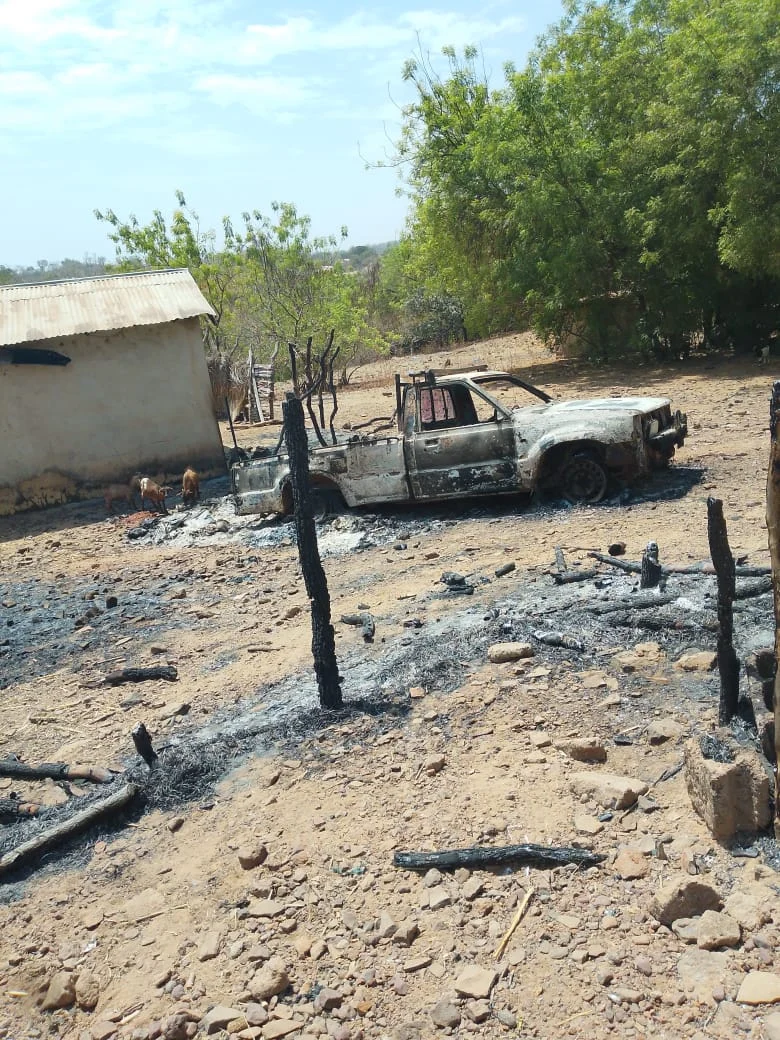
    Gory details are emerging from Kwokoso village in Borgu LGA of Niger State, where a deadly weekend attack left several residents dead and communities accusing leaders of abandoning rural areas to violent criminals.

    The latest violence adds to mounting insecurity concerns across Niger State, as survivors demand urgent security action and accountability from authorities.

    Local accounts describe how armed assailants invaded the village, unleashing terror on unsuspecting residents. Victims were said to have been attacked in their homes and on nearby farmlands, leaving families devastated and forcing many villagers to flee the area for safety.

    Survivors told reporters that the attackers operated for an extended period without any immediate security intervention, heightening fears over the vulnerability of rural communities in the state.

    The scale and brutality of the assault have left Kwokoso largely deserted, with women, children, and the elderly seeking refuge in neighbouring towns.

    The incident has triggered anger and frustration among residents, who accuse political leaders of abandoning remote communities to their fate.

    According to locals, repeated appeals for improved security in the area had yielded little response before the attack occurred.

    “Our people are being killed, yet those in authority appear unbothered,” a resident said, lamenting what he described as official indifference to the plight of rural dwellers.

    As at press time, there was no comprehensive official confirmation of the number of casualties, nor information on arrests linked to the incident.

    Community leaders, however, have called on the Niger State Government and security agencies to launch a thorough investigation, deploy security personnel to the area, and provide relief for displaced residents.

    The killings in Kwokoso add to growing concerns over insecurity in parts of Niger State, where armed attacks on villages have become increasingly frequent.

    Analysts warn that unless urgent and sustained measures are taken, rural populations will continue to bear the brunt of the security crisis.

  • Africa in the New Global Order: Playing the Recolonization Victim Card Is a Losing Strategy

    Africa in the New Global Order: Playing the Recolonization Victim Card Is a Losing Strategy

    By

    Wale Alonge

    The recent speech by Marco Rubio has generated significant global attention within the broader context of Donald Trump’s ongoing effort to unravel the post–World War II rules-based global order. Trump’s threat to invade and forcibly take over Greenland—a NATO territory linked to Denmark—has shaken the very foundations of Europe’s security architecture. Since the end of World War II, Europe has slept with two eyes closed, complacently relying on the U.S.-led NATO umbrella as the ultimate guarantor of its security. Trump has now thrown that guarantee off the rails, plunging Europe into panic.

    It was within this context that Rubio’s speech in Munich assumed enormous geopolitical significance. Every word was scrutinized, parsed, and analyzed. The speech was directed squarely at Europe—intended as a reassuring olive branch. Yet pseudo-analysts on social media have cherry-picked snippets, twisted them to fit preexisting narratives, and spun wild conjectures. In one video circulating widely on Nigerian social media, a gentleman who could not even pronounce “Munich” correctly alleged that Rubio was advocating the recolonization of Africa.

    Sadly, in today’s attention economy—devoid of the editorial gatekeeping that once characterized traditional media—every Dick, Tom, and Harry with a mobile phone is suddenly an expert. All it takes is the most outlandish, attention-grabbing claim to go viral. Predictably, this long-winded and incoherent video has been widely shared, further inundating our social media space with half-baked and outrageous content. The unnamed speaker has now been elevated, by sheer virality, into a supposed geopolitical analyst.

    Yes, Rubio—himself the son of immigrants from colonized Cuba—did, in seeking to mend fences with a frazzled Europe, echo elements of Trump’s rhetoric about restoring a lost Western “glory.” That rhetoric is rooted in white Christian Euro-nationalism, xenophobia, and rage against perceived mass immigration from non-white countries. Trump has openly castigated Europe and the United States for what he describes in crude terms as allowing immigrants of color from “shithole” and “hellhole” countries to dilute and replace a supposedly superior white identity. He has repeatedly railed against European leaders for permitting large-scale immigration, arguing that it has destroyed the continent.

    In Trump’s worldview, immigrants from Scandinavia are preferable to immigrants of color. He even offered white South African farmers fast-tracked green cards while simultaneously threatening to denaturalize Omar, the Somali-American member of Congress. He has openly embraced the so-called “replacement theory,” blaming it for the decline of Western civilization and the erosion of its racial and cultural identity.

    However, nowhere in Rubio’s Munich speech did he recommend—or even hint at—Europe recolonizing Africa.

    Rather, the speech was aimed at peeling Europe away from its growing romance with China, which has become an increasingly attractive partner as Trump alienated Europe with threats to undermine NATO’s Article 5 and seize Greenland. Rubio’s remarks were an attempt to recalibrate the geopolitical imbalance that China has exploited under Trump’s misguided “America First”—or more accurately, “America Alone”—neo-Monroe Doctrine.

    With a pointed focus on China, Rubio warned against the illusion that the post–Cold War rules-based order would supplant national interest, ushering in a borderless world of global citizenship. He argued that the West embraced dogmatic free trade while other nations protected their economies, subsidized their industries, undercut Western companies, shuttered factories, deindustrialized communities, and shipped millions of working- and middle-class jobs overseas—handing control of critical supply chains to rivals and adversaries. There was no ambiguity about his target: China.

    Yet somehow, this was twisted into an argument for Africa’s recolonization.

    What Rubio was actually advocating was a united Euro-American front to counter China’s expanding influence in the Global South. He made this explicit by calling for Western-controlled supply chains for critical minerals—insulated from coercion by rival powers—and a coordinated effort to compete for market share in emerging economies of the South.

    What should truly concern Africa is not imaginary European recolonization, but the dangerous over-romanticization of military juntas and Vladimir Putin’s proxies in the Sahel. Africa must not replace one imperial colonial master with another. In its engagement with China, the continent must also avoid sliding into a new, long-term neo-colonial dependency reminiscent of Europe’s past exploitation.

    Africa is not helpless. Acting collectively, the continent can determine its own future and decide who has access to its vast resources—including its human capital, which since the era of the transatlantic slave trade has been extracted and exploited by successive foreign powers for their our benefit at the detriment of the continent. That cycle must end, and only Africans can end it—without apology.

    Africa holds extraordinary advantages if its leaders regain confidence and play to the continent’s strengths. Africa possesses in abundance what the world urgently needs: lithium and rare earth minerals essential to the digital economy; a vast youth population that, with proper education and digital skills, represents immense human capital in a rapidly depopulating world; and enormous arable land with the potential to feed a hungry planet. What Africa must not continue to do is export raw, unprocessed materials. Value addition must be non-negotiable in every trade and investment agreement. China is a benevolent partner, neither is the West. We live in dog eat dog world where the weak and vulnerable gets the shaft.

    The future belongs to Africa—but only if we are bold enough to claim it, instead of endlessly playing the victim. One striking quality of Bola Tinubu is the confidence he projects on the global stage. Educated in the West and well-traveled, he does not carry the inferiority complex that afflicts many African leaders. He has even managed to recast a bombastic Trump from a condescending overlord into a security partner.

    That confidence—not hand-wringing victimhood—is what Africa needs. The world has little sympathy for the weak.

  • Timing Dispute Sparks Protest as Akpoti-Uduaghan Misses NCDC Budget Session

    Timing Dispute Sparks Protest as Akpoti-Uduaghan Misses NCDC Budget Session

    A dispute over scheduling on Monday sparked fresh controversy in the Senate as Natasha Akpoti-Uduaghan protested what she described as her exclusion from a budget defence session of the North-Central Development Commission (NCDC).

    The budget defence, held at the National Assembly of Nigeria, was scheduled to begin at 10:00 a.m. and concluded shortly after 11:00 a.m. According to sources familiar with the proceedings, the Kogi Central lawmaker arrived at the venue around noon, only to discover that deliberations had already ended.

    Senators Akpoti-Uduaghan, Titus Zam and aids during the rowdy session.

    Akpoti-Uduaghan reportedly expressed dissatisfaction with the timing of the session, arguing that it effectively prevented her from taking part. Sources said her protest was not aimed at the substance of the proposed ₦140 billion 2026 NCDC budget, but rather at what she perceived as being shut out of the process entirely.

    Earlier, the chairman of the Senate Committee on NCDC, Titus Zam, told journalists that committee members had examined the commission’s estimates and found them aligned with the development priorities of the North-Central region. He said the panel advised the commission to place strong emphasis on agriculture and security during implementation.

    Monday’s incident comes just days after Akpoti-Uduaghan staged a walkout during a separate oversight session of the Senate Committee on Steel Development. During that meeting, she clashed with committee chairman Patrick Ndubueze after he moved to conclude questioning of the Minister of Steel Development, Shuaibu Audu, despite her request to continue speaking.

    The senator insisted she still had critical issues to raise and accused the committee leadership of curtailing her participation before walking out of the session.

    Taken together, the two episodes have intensified scrutiny of procedural practices within Senate committees, particularly around meeting schedules, members’ participation, and the management of speaking opportunities during budgetary and oversight engagements.

  • US–Nigeria Military Cooperation: A Strategic Wake-Up Call

    US–Nigeria Military Cooperation: A Strategic Wake-Up Call

    By

    Ambassador Uzo Owunne*

    The proposed deployment of additional U.S. troops to Nigeria for counter-terrorism training and intelligence support demands careful national reflection.

    Security cooperation, in itself, is not inherently negative. Nigeria faces persistent threats from insurgent and extremist groups such as Boko Haram and Islamic State West Africa Province, alongside widespread armed banditry. Strengthened surveillance systems, improved intelligence coordination, and enhanced tactical capacity are all necessary in confronting these threats.

    However, international partnerships are rarely acts of charity. They are shaped by strategic calculations and national interests.

    Nigeria’s Internal Challenge

    Nigeria’s insecurity is fundamentally domestic. External assistance cannot resolve core structural weaknesses such as weak governance and corruption, poor troop welfare and equipment shortfalls, leakages in defence procurement, and political interference combined with limited accountability.

    When defence spending fails to translate into operational effectiveness at the frontline, foreign assistance risks treating symptoms rather than causes. Sustainable security must be rooted in institutional reform, transparency, and leadership accountability within Nigeria itself.

    The Reality of External Interests

    Major powers engage abroad based on strategic objectives, whether geopolitical influence, regional stability calculations, or economic considerations.

    When military assistance is reportedly quantified at tens of millions of dollars, it reinforces the transactional nature of such engagement. Nigeria must therefore ask critical questions about the long-term commitments that accompany this support, the strategic concessions embedded within cooperation agreements, and whether such engagement strengthens national sovereignty or gradually constrains it.

    History suggests that foreign policy priorities can shift abruptly. When they do, smaller partner states may find themselves exposed.

    The Lesson of Strategic Autonomy

    The experience of countries like Afghanistan illustrates the risks of over-reliance on external military backing. When a superpower recalibrates its interests, domestic institutions must be strong enough to stand independently.

    Nigeria must avoid constructing its security architecture around external saviours. Training programs and intelligence collaboration are valuable, but legitimacy, governance reform, and community-driven stabilization efforts must remain Nigerian-led.

    The insurgency is not America’s war. It is Nigeria’s responsibility.

    The Way Forward

    If Nigeria is serious about restoring lasting stability, it must ensure that defence funds reach operational units, strengthen troop welfare and morale, reform procurement systems to close financial leakages, build indigenous intelligence and surveillance capacity, and maintain strategic clarity and balance in foreign military agreements.

    Foreign partnerships should reinforce national capacity rather than substitute for it.

    Final Reflection

    No nation has successfully outsourced its sovereignty.

    Missiles and military hardware alone do not secure peace. Accountability, institutional reform, public trust, and effective governance are the true pillars of national security. External assistance can support these efforts, but the responsibility for Nigeria’s safety ultimately rests at home.

    *Ambassador Uzo Owunne is a Nigerian diplomat and international development expert based in the United Kingdom.

  • NASS Puts INEC on the Spot Over ₦873.78bn 2027 Election Budget

    NASS Puts INEC on the Spot Over ₦873.78bn 2027 Election Budget

    Nigeria’s next general election may be one year away, but the battle over its price tag has already begun.

    The Independent National Electoral Commission (INEC) has projected a staggering ₦873.778 billion to conduct the 2027 general elections — a figure that immediately triggered pointed questions and heightened scrutiny at the National Assembly.

    INEC Chairman, Prof. Joash Amupitan, presented the projection while defending the Commission’s ₦171 billion 2026 budget proposal before the Joint Committee on Electoral Matters. He was emphatic: the ₦873.78 billion earmarked for 2027 is separate from the 2026 allocation, which is meant to fund routine activities such as off-cycle governorship elections, by-elections, voter registration updates, logistics, and administrative operations.

    But lawmakers made it clear that separating the figures does not soften the impact of the headline number.

    Nearly ₦1 Trillion — and Counting?

    Amupitan further disclosed that the ₦873.78 billion projection does not include a fresh request from the National Youth Service Corps (NYSC), which is seeking an upward review of allowances for corps members deployed as ad-hoc election staff.

    That revelation raises a critical possibility: the final cost of the 2027 elections could climb even higher.

    With inflationary pressures, rising logistics costs, security challenges, and technological upgrades expected ahead of the polls, legislators signaled that Nigerians deserve clarity on every naira proposed.

    Lawmakers Draw the Line

    Chairman of the Senate Committee on INEC, Simon Lalong, assured the Commission of legislative cooperation but stressed that support would not translate into a blank cheque.

    He indicated that the National Assembly would rigorously examine the assumptions behind the projection, demanding detailed breakdowns and measurable benchmarks to justify the enormous public expenditure.

    Similarly, Chairman of the House Committee on Electoral Matters, Bayo Balogun, pledged backing for credible elections but delivered a pointed warning: INEC must avoid overpromising and underdelivering.

    Balogun cautioned that operational failures, procurement irregularities, or unrealistic commitments would not be excused under the weight of a near-trillion-naira budget.

    Transparency or Trouble

    Members of the joint committee reiterated that the credibility of the 2027 elections will depend not only on logistics and technology but also on fiscal discipline. With public trust in institutions often tested during election cycles, lawmakers emphasized that transparent budgeting, early planning, and strict oversight are non-negotiable.

    The message from the National Assembly was unmistakable: INEC will get the support it needs, but every kobo must be accounted for.

    As preparations for 2027 quietly gather pace, one thing is clear: the politics of funding the election may prove just as intense as the election itself.

  • Opposition’s Hyper-Hysteria over E-Transmission: A Case of the Boy Who Cries Wolf

    Opposition’s Hyper-Hysteria over E-Transmission: A Case of the Boy Who Cries Wolf

    By

    Wale Alonge

    Even before a single vote has been cast, Nigeria’s opposition has already declared the 2027 elections rigged and democracy murdered. Their hyper-hysteria over the e-transmission provisions of the newly enacted Electoral Act 2022 (Repeal & Re-enactment) Amendment Bill 2026 has reached such absurd heights that one would not be surprised if election boycotts are soon threatened.

    One is almost tempted to believe that the opposition is convinced that the only path to electoral victory in 2027 lies in hacking a real-time electronic results transmission system. Otherwise, how does one explain the incessant wailing, outlandish accusations, and collective hyperventilation—long before a single ballot has been cast? The hysteria would suggest that no credible election was ever conducted anywhere on the planet prior to the invention of the internet.

    Yet history tells a different story. The most credible and transparent election in Nigeria’s history remains the low-tech Option A4 election of 1993, where voters simply lined up behind the photograph of their preferred candidate. Technology can enhance elections, but it has never been the sole determinant of electoral credibility.

    The new electoral law allows for the electronic transmission of vote tallies from polling units to INEC’s IReV portal, with clear and practical safeguards. Where electronic transmission fails—due to network or technological challenges—the physically signed Form EC8A serves as the primary and legally binding result. To any rational observer, this is a commonsense provision, especially in a country where network failures are a daily reality, whether during phone calls or online banking transactions.

    Yet the opposition insists that e-transmission must be mandatory under all circumstances, regardless of technological failure. This absolutist position ignores Nigeria’s infrastructural realities and elevates performative outrage above practical governance. It is the classic case of the boy who cries wolf.

    Lost amid this feigned hysteria are several far-reaching reforms embedded in the amended Electoral Act—reforms that, taken together, strengthen electoral integrity far beyond the narrow fixation on e-transmission.

    First, the law formally replaces the old smart card reader with the Bimodal Voter Accreditation System (BVAS) for voter accreditation and result collation. BVAS has already been deployed in recent elections; the amendment simply embeds it firmly in law.

    Second, the Act introduces harsher penalties for electoral offences, including increased fines—up to ₦5 million—for vote-buying, alongside existing jail terms. It also imposes tougher sanctions for result falsification and obstruction of the electoral process.

    Third, the legislation strengthens the institutional capacity and independence of INEC, clarifying its election management role and ensuring earlier release of election funds. These provisions are designed to reduce logistical bottlenecks and enhance operational efficiency—issues that have historically plagued Nigerian elections.

    Fourth, the amended law tightens candidate qualification and party nomination rules, setting clearer timelines for party primaries and submissions, thereby reducing intra-party disputes and post-primary litigation.

    Finally, the Act introduces important legal and procedural clarifications, particularly regarding the consequences of candidate disqualification and related judicial processes, closing loopholes that have previously undermined electoral certainty.

    A serious opposition would engage these substantive reforms honestly and constructively. Instead, we are treated to crocodile tears and manufactured outrage over a single provision that already balances transparency with practicality. Democracy is not safeguarded by hysteria, nor is electoral credibility built on absolutism divorced from reality.

    Nigeria’s democracy deserves rigorous debate, not theatrical panic. The real danger is not in conditional e-transmission, but in the deliberate erosion of public trust through reckless, pre-emptive delegitimization of the electoral process.

  • UN Chief Guterres Mourns Deadly School Shooting in Rural Canada

    UN Chief Guterres Mourns Deadly School Shooting in Rural Canada

    Secretary-General of the United Nations, António Guterres, has expressed deep sorrow following Tuesday’s deadly school shooting in Tumbler Ridge that left at least eight people dead and 25 others injured.

    Speaking at the UN’s daily press briefing on Wednesday, the Secretary-General’s spokesperson, Stéphane Dujarric, said Guterres was “saddened to learn of the tragic shooting” in the small rural community located in British Columbia.

    “The Secretary-General extends his deepest condolences to those affected and his sympathies to the Government and people of Canada,” Dujarric told reporters.

    Victims Include Students and Teacher

    According to media reports, the victims include at least three female students, two male students and a teacher at the local secondary school. Two additional individuals were found dead at a nearby residence. Local police have reportedly identified them as the suspect’s mother and stepbrother.

    Authorities said the suspect, who was born male but was transitioning and identified as female, was discovered inside the school with an apparent self-inflicted fatal wound.

    Among the 25 injured, two individuals were airlifted to hospital in critical condition with life-threatening injuries.

    Small Community in Shock

    Tumbler Ridge is a remote community in the Canadian Rockies, located more than 1,000 kilometres northeast of Vancouver and near the Alberta border. The secondary school serves approximately 175 students from Grades 7 to 12, making the tragedy particularly devastating for the tight-knit town.

    The shooting has sent shockwaves across Canada, prompting expressions of grief and solidarity from national and international leaders. Authorities continue to investigate the circumstances surrounding the attack as the community begins mourning the victims and supporting those injured in the tragedy.

  • Africa Must Align Infrastructure and Capital to Secure Energy Future – Ojulari

    Africa Must Align Infrastructure and Capital to Secure Energy Future – Ojulari

    The Group Chief Executive Officer of NNPC Limited, Engr. Bashir Bayo Ojulari, has identified shared infrastructure, policy alignment, coordinated investment frameworks, and cross-border collaboration among African National Oil Companies (NOCs) as critical pillars for securing Africa’s energy future.

    Ojulari made the remarks during a fireside chat at the International Energy Week 2026 in London, according to a press statement issued on Wednesday by Mr. Andy Odeh, Chief Corporate Communications Officer of NNPC Limited.

    The session featured discussions with Mr. Andy Brown, Deputy Chair of Ørsted and President of the Energy Institute, focusing on Africa’s pathway to energy security and sustainable growth.

    Bayo Ojulari, GCEO, NNPC Ltd (r) and Mr. Andy Brown, Deputy Chair of Ørsted and President of the Energy Institute

    Expanding Regional Infrastructure

    Ojulari stressed the imperative of expanding cross-border energy infrastructure across Africa, noting that NNPC Limited’s ongoing regional gas initiatives demonstrate how shared assets can unlock scale, efficiency, and resilience.

    He highlighted flagship projects such as the Nigeria–Morocco Gas Pipeline and the expansion of the West African Gas Pipeline as vital to strengthening regional integration and advancing cross-border energy trade.

    According to the statement, Ojulari described these initiatives as strategic levers for deepening economic integration and boosting industrialisation across the continent.

    Harmonising Policies to Attract Investment

    The NNPC GCEO also called for aligned pricing frameworks, harmonised transit protocols, local content standards, and joint technical regulations across African markets.

    Drawing lessons from Nigeria’s Petroleum Industry Act, he said regulatory clarity and consistency are essential to reducing investment friction, safeguarding cross-border infrastructure, and ensuring equitable access to shared energy assets.

    The statement noted that such reforms are crucial to creating a predictable investment climate capable of attracting long-term capital into Africa’s energy sector.

    Collective Capital Mobilisation

    Ojulari further advocated structured joint investment platforms among African NOCs, stressing that acting collectively would enhance the continent’s ability to mobilise and deploy capital efficiently.

    “Africa can attract and deploy capital more effectively when acting collectively rather than individually,” he was quoted as saying in the statement.

    Balancing Growth with Climate Commitments

    On NNPC Limited’s ambition to grow oil production, scale gas output, and attract investment, Ojulari emphasised the need for a pragmatic, Africa-centric strategy that positions energy as both a driver of economic development and a contributor to global climate goals.

    “Our pathway is clear: grow production responsibly, scale gas as the backbone of Africa’s industrialisation, strengthen environmental accountability, and align with global decarbonisation objectives—while ensuring that Africans are not left behind in the energy transition,” he stated.

    International Energy Week is a leading global platform that brings together policymakers, industry executives, investors, regulators, and technology innovators to shape dialogue on energy security, transition pathways, capital formation, and sustainability.

    Fireside at the International Energy Week, London

    The statement reaffirmed NNPC Limited’s commitment to regional cooperation, integrated gas market development, and sustained diplomacy among African NOCs to secure the continent’s energy future.

  • NAHCON in Turmoil as Usman Resigns, Stakeholders Demand Total Overhaul

    NAHCON in Turmoil as Usman Resigns, Stakeholders Demand Total Overhaul

    Nigeria’s Hajj industry is once again under intense scrutiny following the resignation of Prof. Abdullahi Usman as Chairman and Chief Executive Officer of the National Hajj Commission of Nigeria (NAHCON), with stakeholders calling for a comprehensive overhaul of the commission.

    Usman’s resignation, which takes effect Monday, was announced on Wednesday in Abuja. He cited personal reasons for stepping down after about 14 months in office.

    However, industry experts argue that his exit reflects deeper structural and political tensions that have continued to destabilize the commission.

    Recurring Leadership Changes Raise Concern

    Within the last two years, NAHCON has witnessed three leadership changes, a trend stakeholders describe as troubling for the stability of Hajj operations.

    Alhaji Zikrullah Hassan served as NAHCON Chairman from December 2019 to October 2023 following his appointment by former President Muhammadu Buhari.

    During his tenure, the commission navigated the challenges of COVID-19 restrictions, introduced the Hajj Savings Scheme, and established the Hajj Institute of Nigeria.

    Hassan was replaced by Alhaji Jalal Ahmad Arabi, appointed by President Bola Tinubu on Oct. 17, 2023, for a four-year term. Arabi was later removed amid an investigation into alleged misappropriation of funds released for the 2024 Hajj exercise.

    Following those allegations, Tinubu appointed Usman in October 2024. His tenure, however, was marked by internal disputes and allegations concerning financial management during the 2025 Hajj, generating public scrutiny and tension within the commission.

    “Campaign of Calumny” — Experts React

    Abubakar Jiddah Usman, a Hajj industry expert, said the frequent leadership changes highlight entrenched discord within and outside the sector.

    “Yes, Prof. Abdullahi Usman has resigned. Whether voluntary or forced is immaterial,” he said.

    “What remains indisputable is that anyone overseeing the Hajj industry in Nigeria faces a campaign of calumny from within and outside the sector. Within two years, NAHCON has changed leadership three times. Shall we continue this way?”

    He dismissed claims that Usman lacked administrative competence, arguing that fluency in Arabic or clerical background had never been a defining criterion for success in managing Hajj operations.

    “To argue that modern Hajj operations require less Arabic fluency is baseless. Were previous chairmen deficient in administrative skills?” he queried.

    He added that past chairmen also faced allegations ranging from abuse of office to political interference, suggesting systemic issues rather than individual shortcomings.

    Call for Sole Administrator

    Another expert, Abdullahi Mohammad, advocated for a radical administrative intervention.

    According to him, NAHCON requires a “no-nonsense” reform strategy, potentially through the appointment of a sole administrator with full authority to restructure the commission.

    “The administrator must insulate the Hajj process from material interests and political interference. Only a radical administrative reset can restore diligence, transparency and service to pilgrims,” he said.

    Concerns Over 2026 Hajj Operations

    Muhammed Ibrahim, Coordinator of Independent Hajj Reporters, described Usman’s exit as unfortunate but not unexpected, noting that most pre-Hajj activities, including registration and airline contracts, had already been completed.

    “Given the discord, it may be best to allow the chairman step down to avoid conflicts affecting pilgrims,” he said.

    He recommended that an experienced insider oversee ongoing operations to ensure continuity until after the Hajj, when a substantive appointment can be made.

    Operators Lament Slot Allocation Issues

    Alhaji Abdullateef Yusuf, President of the Association for Hajj and Umrah Operators of Nigeria, pointed to challenges surrounding the allocation of additional Hajj slots.

    “Many members paid millions for hotels and tickets in Saudi Arabia, amounting to billions of naira. Slots promised were later withdrawn, and there is still no clarity. Our operators are in serious limbo,” he said.

    He urged the government to appoint a calm, reputable and experienced individual with integrity, warning against politically motivated appointments.

    Tinubu Nominates New Chairman

    In response to the resignation, President Tinubu has nominated Ambassador Ismail Yusuf as the new Chairman and Chief Executive Officer of NAHCON.

    The nomination, subject to confirmation by the Nigerian Senate under Section 3(2) of the NAHCON Act 2006, was conveyed in a statement by presidential spokesman Bayo Onanuga.

    The President confirmed that he had written to Senate President Godswill Akpabio seeking expeditious confirmation of the nominee.

    Ambassador Yusuf is a career diplomat who served as Nigeria’s Ambassador to Türkiye from 2021 to 2024.

    As stakeholders await Senate action, many insist that beyond leadership changes, what NAHCON urgently needs is structural reform to restore credibility, transparency and stability to Nigeria’s Hajj operations.

  • Amachree Petitions Tinubu, Warns of Rivers Instability

    Amachree Petitions Tinubu, Warns of Rivers Instability

    Abuja — A serious political confrontation is unfolding over Rivers State following a blistering petition submitted to President Bola Ahmed Tinubu by political scientist and international executive Kio Amachree, who has accused the Federal Government of reckless interference, selective justice, and actions capable of destabilising the Niger Delta.

    The petition, dated 8 February 2026, was formally addressed to the President through his Chief of Staff and copied to Nigeria’s top security chiefs, the Attorney-General of the Federation, and the leadership of the country’s anti-corruption agencies. In it, Amachree warned that the federal posture in Rivers State is “dangerous, provocative, and unnecessary,” and risks igniting a crisis in one of Nigeria’s most economically vital regions.

    Amachree rejected any suggestion that Rivers State constitutes a security emergency, arguing that the state is being treated as though it were an insurgency zone despite facing none of the terrorism or banditry challenges afflicting other parts of the country. Rivers State, he said, is neither Boko Haram territory nor a bandit stronghold, yet is experiencing what he described as disproportionate federal pressure and political manipulation.

    He warned that the Niger Delta, which remains the backbone of Nigeria’s oil-dependent economy, cannot be governed through intimidation or manufactured political crises without severe national consequences. According to the petition, Abuja’s current approach risks undoing years of fragile stability in the oil-producing region.

    At the centre of the petition is a direct demand for the immediate removal of Minister Nyesom Wike from federal office pending investigation. Amachree described Wike’s continued presence in federal power as a destabilising factor in Rivers State and a matter of national concern.

    The petition calls for full-scale investigations by the Economic and Financial Crimes Commission and the Independent Corrupt Practices and Other Related Offences Commission into allegations of corruption, abuse of office, diversion of public funds, and unexplained wealth. It further demands a comprehensive asset and lifestyle audit, including scrutiny of luxury vehicles, overseas properties, and alleged proxy holdings.

    Amachree argued that the absence of visible accountability in high office fuels public cynicism and erodes confidence in the rule of law. “Selective justice destroys nations,” the petition stated.

    The document also raises questions over a widely circulated audio recording shared across social media platforms, allegedly capturing Wike making threats of violence against a political opponent. Amachree questioned why, despite the recording’s widespread circulation, no public arrest, interrogation, or formal investigation has been announced by security agencies.

    He warned that the apparent reluctance to act in such a high-profile case sends a damaging signal that power, rather than law, determines accountability in Nigeria.

    Beyond current politics, Amachree framed his intervention within the longer history of Rivers State and the Niger Delta. He identified himself as the son of Chief Godfrey Kio Jaja Amachree, a former Solicitor-General of the Federation, Acting Attorney-General of Nigeria, and senior United Nations official who played a central role in the creation and early administration of Rivers State.

    Amachree stressed that his petition was not driven by party politics or personal ambition, stating that he does not belong to any political party and holds no political office. He described his action as a civic intervention motivated by concern for constitutional order, justice, and regional stability.

    The petition also demands renewed action on the killing of Amachree’s cousin, Miss Ibyami Amachree, allegedly by a soldier. He called for the identification of the soldier involved, disclosure of the unit and chain of command, and prosecution where evidence supports it. According to the petition, unresolved killings involving security personnel deepen public anger and lay the groundwork for future unrest.

    As of the time of this report, the Presidency and the federal agencies copied on the petition have not issued an official response, and no indication has been given as to whether the allegations raised will be investigated. Attempts to obtain comments from representatives of the minister named in the petition were unsuccessful.

    Political analysts say the petition now places the matter squarely at the feet of the President. According to them, the silence or response of the Presidency will be read as a signal — either that allegations of corruption and intimidation at the highest levels will be confronted, or that political expediency will prevail over accountability.

    They warn that failure to act decisively could deepen mistrust in federal authority across the Niger Delta and reinforce perceptions that power shields allies from scrutiny. In a region historically sensitive to marginalisation and coercion, analysts say, such a signal carries consequences far beyond Rivers State.

    For President Tinubu, the petition represents an early and defining test of leadership in the Niger Delta. Whether he orders investigations, distances the presidency from the allegations, or allows the matter to fade into silence may determine not only the immediate political temperature in Rivers State, but Nigeria’s credibility in claiming commitment to justice, federal balance, and the rule of law.