Author: admin

  • 720,000 people commit suicide annually – WHO

    720,000 people commit suicide annually – WHO

    More than 720,000 people commit suicide every year and many more attempt it, the World Health Organisation (WHO) has said.

    The Director-General of WHO Tedros Ghebreyesus is calling for “shifting the narrative” on the issue “to challenge harmful myths, reduce stigma and foster compassionate conversations.”

    Speaking on the World Suicide Prevention Day, which is marked annually on September 10, Tedros said “each life lost leaves a profound impact on families, friends, colleagues and entire communities.”

    All age groups are affected by suicide and was the third leading cause of death among 15–29-year-olds globally in 2021, the last year for which data has been gathered by WHO.

    Suicide does not just occur in high-income countries and impacts all regions of the world, close to three quarters of global suicides occurred in low and middle-income countries in 2021.

    The average number of suicides across the world in 2021 was 8.9 per 100,000 people.

    In Africa, the figure stood at 11.5, while in both Europe and Southeast Asia the number of suicides was recorded at 10.1 per 100,000 people.

    The link between suicide and mental disorders, in particular, depression and alcohol use disorders, and a previous suicide attempt is well established in high-income countries.

    However, many suicides happen impulsively in moments of crisis with a breakdown in the ability to deal with life stresses, such as financial problems, relationship disputes, or chronic pain and illness.

    In addition, experiencing conflict, disaster, violence, abuse or loss and a sense of isolation are strongly associated with suicidal behaviour.

    Suicide rates are also high among vulnerable groups who experience discrimination, such as refugees and migrants, indigenous peoples, lesbian, gay, bisexual, transgender, intersex (LGBTI) persons and incarcerated prisoners.

    “We must move from silence to openness, from stigma to empathy, and from neglect to support,” Tedros said.

    “We must create environments where people feel safe to speak up and seek help,” he stressed.

    “Shifting the narrative on suicide also means driving systemic change, where governments prioritise and invest in quality mental health care and policies to ensure everyone gets the support they need.”

    According to the 2024 Mental Health Atlas report by WHO, median government spending on mental health has remained at a modest two percent of total health budgets since 2017.

    Moreover, there is a significant disparity between high-income and low-income nations.

    Whilst high-income nations allocate up to $65 per person to mental health, low-income nations spend as little as $0.04.

    WHO recognises mental health as a universal human right.

    WHO says that there are effective measures that can be taken to prevent suicide and self-harm.

    LIVE LIFE, the agency’s initiative for suicide prevention, recommends limiting access to the means of suicide (eg, pesticides, firearms, certain medications).

    It also recommended interaction with the media for responsible reporting of suicide;

    Fostering socio-emotional life skills in adolescents, early identification, assessment, management and following up anyone who is affected by suicidal behaviours are other effective measures, according to WHO

  • CSCS to launch T+2 settlement cycle in November

    CSCS to launch T+2 settlement cycle in November

    The Central Securities Clearing System (CSCS) of the Nigerian Exchange on Wednesday organised a sensitisation session for stakeholders on the smooth transition to a T+2 settlement cycle.

    Nigerian Anchor reports that the T+2 settlement cycle shall be due for launch on November 28, 2025.

    Towards the realisation of this objective the management of the exchange organised a webinar, bringing together capital market operators, regulators, and the Nigerian Exchange Ltd.

    The programme’s theme was ‘Advancing Market Efficiency through T+2 Settlement’ and it provided updates, guidance, and clarity on the transition process.

    CSCS Chief Executive Officer, Haruna Jalo-Waziri, highlighted the extensive groundwork done to ensure a seamless transition, stressing the importance of efficiency and liquidity in Nigeria’s capital market.

    Represented by Adeyinka Shonekan, CSCS Executive Director, Jalo-Waziri explained that the shortened cycle was part of CSCS’s mandate to improve efficiency and liquidity in the market.

    He said CSCS worked closely with the Securities and Exchange Commission (SEC), which led to the formation of a market-wide committee on settlement transition.

    The committee, comprising stakeholders across the market ecosystem, benchmarked global best practices, assessed risks, and recommended the optimal path for Nigeria’s capital market.

    Its report recommended a phased transition from T+3 to T+2, and eventually T+1.

    He noted that SEC’s approval of T+2 for November 2025, and T+1 for April 2026, marked a major milestone.

    Sub-working groups were established to amend rules, test processes, conduct gap analyses, and drive stakeholder engagement for smooth adoption.

    He stressed that the transition would align Nigeria’s market with global standards, strengthen liquidity, reduce risks, and boost investor confidence.

    The shift, he said, would enhance Nigeria’s ability to attract and retain domestic and international capital.

    SEC Executive Commissioner, Operations, Bola Ajomale, said the transition would redefine Nigeria’s capital market and economy.

    Ajomale assured stakeholders of SEC’s full support in testing and implementing the new system.

    “In case of modifications, our doors are open. We urge stakeholders to review systems, conduct checks, and support this transition with clients,” he added.

    Nigerian Exchange Ltd. CEO, Jude Chiemeka, emphasised that building a future-ready market required strong collaboration among regulators, brokers, custodians, and investors.

    He said implementing T+2 was a major step forward, paving the way for a T+1 settlement cycle.

    “The adoption of T+2 reduces the settlement period from three to two business days. NGX is prepared to lead this transformational shift,” he stated.

    He added that industry stakeholders were investing heavily in training and sensitisation programmes to ensure readiness.

    NASD Managing Director, Eguarekhide Longe, represented by Chinwendu Ekeh, said the association was ready for seamless transition, with platforms synchronised with CSCS and other stakeholders.

    He explained that access, trading time, and rules would remain unchanged, but proceeds from securities sales would be available sooner, enhancing liquidity and market attractiveness.

    Longe urged operators to strengthen processes around trade confirmation, documentation, and fund availability, stressing NASD’s commitment to collaboration.

    Lagos Commodities and Futures Exchange CEO, Akinsola Akeredolu-Ale, said commodities markets would greatly benefit from the T+2 cycle.

    He noted that farmers, aggregators, and investors would gain quicker access to funds, reduced risks, and improved confidence.

    He said NASD played a strategic role in achieving the transition by positioning Nigeria as a transparent, competitive commodities hub.

    Akeredolu-Ale added that NASD had invested in training market intermediaries and Pan-African programmes to strengthen capacity across the continent.

    “We have secured approval to fully engage in this new settlement ecosystem, and we are ready,” he said.

    Onome Komolafe, Divisional Head, CSCS Depository, gave a technical overview of the transition and reaffirmed the organisation’s readiness. 

  • INEC finally recognises Mark-led ADC leadership

    INEC finally recognises Mark-led ADC leadership

    It was victory at last for members of the Sen. David Mark-led National Working Committee (NWC) of the African Democratic Congress (ADC) as it finally secured the recognition of the Independent National Electoral Commission (INEC)

    The Nigerian Anchor reports that the commission updated its website on Wednesday to reflect the names of Sen David Aleichenu Bonarventure Mark and others as the new members of the NWC of the party.

    Among those listed to replace the former Raph Nwosu-led NWC was Mr Rauf Aregbesola, who now serves as the party’s National Secretary.

    Also published on the website were Mani Ahmad as National Treasurer, Akibu Dalhatu as National Financial Secretary, and Prof. Oserheimen Osunbor as National Legal Adviser.

    The outgoing National Chairman, Raph Nwosu, had on July 2 announced the appointment of David Mark as interim chairman and Aregbesola as interim secretary.

    The development serves as a morale booster to the leadership and membership of the party as it puts pay to months of meddlesome interference by some disgruntled members of the party, following its adoption as the party of choice by members of the opposition coalition.

  • Train derailment: House Cmte summons transport minister

    Train derailment: House Cmte summons transport minister

    After dishonouring earlier invitations, Blessing Onuh Committee issues the minister 48-hour ultimatum to appear

    The House of Representatives Committee on Land Transport has given the Minister of Transportation, Mr Sa’idu Alkali, 48 hours to appear over the Abuja-Kaduna train derailment.

    Chairman of the committee, Rep. Blessing Onuh (APC-Benue), issued the ultimatum on Tuesday during an investigative hearing in Abuja.

    It would be recalled that the Kaduna-bound train derailed on Aug. 26 at 11:09 a.m. between Kubwa and Asham stations.

    Also summoned are the Managing Director of the Nigerian Railway Corporation, Mr Kayode Opeifa, and the Managing Director of China Civil Engineering Construction Corporation (CCECC) Nigeria Ltd., Mr Guan Shuai.

    Onuh explained that the ultimatum followed the minister’s failure to honour earlier invitations to explain the incident.

    She said it was unacceptable for the minister to “turn his back on Nigerians at a time they needed him most.”

    “A toad does not run in the daytime for nothing. We are on recess, but many cut their break and travelled from Lagos over this tragedy.

    “Only for the minister to snub parliament. We strongly object. Our people were endangered. This is not a joke. He must appear within 48 hours,” she declared.

    Onuh stressed that the committee seeks not only the immediate cause of the derailment, but also the remote and root causes to prevent future occurrences.

    Rep. Cyril Hart (PDP-Rivers) condemned the minister’s absence, saying that Alkali, as a former parliamentarian, should not be seen to dishonour the House.

    “Over 618 Nigerians could have died. This raises grave questions about the safety of our rail system.

    “For a former lawmaker to shun this committee when Nigerians need answers is betrayal. We cannot allow anyone to toy with lives,” Hart said. 

  • Just in: Victory at last!

    Just in: Victory at last!

    NUPENG suspends strike as Dangote workers can join labour unions

    Following an agreement with Dangote Refinery and Petrochemicals management on the controversial topic of workers’ unionization, the Nigeria Union of Petroleum and Natural Gas Workers (NUPENG) has called off its statewide strike.

    Both sides signed a Memorandum of Understanding (MoU) at a conciliation meeting called by Labor Minister Muhammad Maigari Dingyadi in Abuja.

    It was stated in the resolutions that Dangote Refinery and Petrochemicals will permit willing workers to become members of legally recognized unions.

    This decision came after NUPENG members accused the Dangote Group of depriving workers the opportunity to join recognized labor unions during two days of industrial action.

    When the dispute came to a head, the federal government stepped in through the Ministry of Labour and Employment.

    The process of unionization will start right away and be finished in two weeks, from September 9 to September 22, 2025.

    Additionally, the agreement states that no employee would face consequences for taking part in the strike.

    A part of the MoU read: “That since workers’ unionisation is a right in line with the provisions of the extant laws, the management of Dangote Refinery and Petrochemicals agreed to the unionisation of employees of Dangote Refinery and unionisation of employees of Petrochemicals, who are willing to unionise.

    “That the process of unionisation shall commence immediately and be completed within two weeks (9th–22nd September, 2025), and it was agreed that the employer will not set up any other union.

    “Arising from the strike notice, no worker or employee of Dangote Refinery and Petrochemicals will be victimised.”

    The Nigerian Labour Congress (NLC), the Trade Union Congress (TUC), the Dangote Group, NUPENG, the Nigerian Midstream and Downstream Petroleum Regulatory Authority (NMDPRA), and the Ministry of Labour and Employment all signed the agreement.

  • PDP condemns move to stop Sen. Akpoti-Uduaghan’s resumption

    PDP condemns move to stop Sen. Akpoti-Uduaghan’s resumption

    The party however, fell short of stating the action it would take to protect Sen Akpoti-Uduaghan

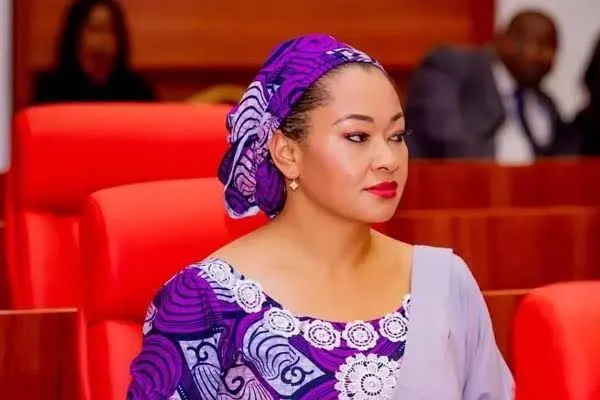
    In a usually tepid act of opposition, the Peoples Democratic Party (PDP) merely condemned the alleged plan by the Senate to bar Sen. Natasha Akpoti-Uduaghan from resumption.

    Sen Uduaghan is currently serving a six-month suspension and expected to resume when her colleagues return from the annual recess that ends September 23.

    It has however, been reported that the Clerk of the National Assembly, Dr. Yahaya Danzaria has released a communication asserting that Senator Natasha Akpoti-Uduaghan may not be allowed to resume at the expiration of her suspension due to a pending court order.

    Dr. Yahaya Danzaria, Clerk of the National Assembly

    Responding to the stance of the management of the National Assembly, PDP National Publicity Secretary, Mr. Debo Ologunagba issued a statement, Tuesday in Abuja to condemn it.

    Ologunagba said that the reported action by the Clerk of the National Assembly was a calculated attempt to abridge the right of representation of the people of Kogi Central Senatorial District and deny them a voice at the highest law-making body in the country.

    He noted that the attempt to use the National Assembly establishment against an elected Senator was in gross violation of the provisions of the Constitution of the Federal Republic of Nigeria,1999 (as amended) and the Standing Rules of the Senate.

    According to him, this constitutes a clear danger to the democracy of the country and attempt to silent the opposition and attacks on the right of women.

    Ologunagba called on the Senate President, Sen. Godswill Akpabio to come clean of the matter.

    He said that the extreme persecution of six months suspension unjustly imposed on Akpoti-Uduaghan, “contrary to the Rules of the Senate” was more than enough.

    He expressed the PDP solidarity with the people of Kogi Central and all well-meaning Nigerians in condemning the unwarranted renewed plot against the lawmaker.

    The PDP national publicity secretary called on the Clerk of the National Assembly to withdraw the said letter and play by the rules by being neutral as a bureaucrat.

    He advised the Clark not to allow himself to be politically entangled and used as a tool to undermine democracy and the Rule of Law in the National Assembly and Nigeria.

    He also urged Akpoti-Uduaghan to discountenance the reported letter by the Clerk of the National Assembly and get ready to resume at the Senate.

    He further called on the Senate leadership to ensure that Akpoti-Uduaghan was allowed to resume her duties and perform her roles as an elected Senator of the Federal Republic of Nigeria unhindered.

    Mr. Ologunagba, however, did not state the action that the leadership of the PDP, Nigeria’s leading opposition party would take in the event that the National Assembly prevented Sen Uduaghan from resuming at the senate.

  • Wike spoils for a fight with old friend, Tambuwal

    Wike spoils for a fight with old friend, Tambuwal

    In his ever expanding list of enemies, Federal Capital Territory (FCT) Nyesom Wike, has vowed to take on his former friend, former Governor of Sokoto State, Aminu Tambuwal.

    Over the weekend, Mr. Tambuwal appeared on Channels TV’s “Politics Today” where he was alleged to have made statements considered offensive to Mr. Wike and President Bola Tinubu.

    Not someone reputed for shying away from fights, Wike vowed to square up to Tambuwal in no distant future.

    Mr Lere Olayinka, the Minister’s Senior Special Assistant on Public Communications and Social Media, made this known in a statement issued on Monday in Abuja.

    Olayinka assured that the FCT minister would not allow Tambuwal’s  aspersions  against him and the President, to go without appropriate responses.

    Tambuwal had said on Channels Television’s “Politics Today”, on Friday, that his political choices had always been guided by principles of leadership and not by personal relationships.

    The former governor also said that he would support former Vice President Atiku Abubakar over Wike, if he had to make a choice on who should lead the country.

    Olayinka said that he had been inundated with calls, especially from journalists, seeking the minister’s reaction to Tambuwal’s comments.

    “Apart from what he said against the minister, Tambuwal also cast aspersions on President Tinubu and such will not go unresponded to.

    “Therefore, what I can say is that the minister will respond accordingly. He will definitely tell Nigerians what a betrayal is and what it means to have integrity.

    “Till then, let’s keep our fingers crossed,” he said.

  • Strike: Dangote, NUPENG talks deadlocked 

    Strike: Dangote, NUPENG talks deadlocked 

    Prospects of the return of fuel queues loom as a marathon meeting convened by the Federal Government to resolve NUPENG’s strike against alleged Dangote Refinery’s anti- union practices ended in stalemate at dawn.

    The Federal Government, through the Ministry of Labour and Employment, yesterday convened the emergency meeting in a bid to end the planned industrial action on Monday in Abuja.

    The meeting aimed to address allegations of anti-union practices against the Dangote Refinery, but discussions reportedly  broke down as the Dangote representatives walkout of the meeting.

    The Minister of Labour and Employment, Alhaji Muhammad Dingyadi, who presided over the meeting, told newsmen that progress was slow.

    “We have not been able to reach final agreement on this matter. Negotiations will continue.

    “Maybe by tomorrow, we will resolve the issues. I appeal to everyone to maintain peace as discussions continue,” he said.

    The minister, therefore assured all, that the government is still committed to finding common ground for all parties.

    Speaking, Mr Benson Upah, Acting General Secretary of the Nigeria Labour Congress (NLC), alleged that the Dangote’s delegation was deliberately sabotaging the process.

    “The representative of the Dangote Refinery walked out on the Honourable Minister and Organised Labour. So, there was no agreement.

    “Even, when we bent backwards to accommodate his uncompromising behaviour, he still did what he did.

    “So, we are left with no choice than to do the needful. The action continues,” Upah said.

    He added that the labour movement remained open to dialogue, but, could not negotiate alone.

    “It takes more than one party to reach a resolution.

    “Whenever the Dangote Refinery sees the need for genuine dialogue, we are ready, even this night, if they return,” he said.

    NUPENG President, Mr Williams Akporeha, accused Dangote Refinery of seeking to suppress workers’ rights, while expanding its monopoly in Nigeria’s energy sector.

    According to him, NUPENG’s action on the matter is for the interest of Nigerians.

    “We cannot stand an investor whose main purpose is to enslave Nigerians.

    “Dangote cannot take us back to the dark days of slavery.”he added.

    He further accused the refinery of denying employees the right to unionise.

    “Nigerians have wished him well. He should not enslave them.

    “He wants to monopolise the entire system and even the workers. This, we say, No to,” he said. 

  • People, privations and public policy priorities [5]

    People, privations and public policy priorities [5]

    By

    UGO ONUOHA

    CALAMITY of unimaginable proportion will befall this already fragile country if the economic reform programme of Nigeria’s president, Alhaji Bola Ahmed Tinubu, fails. And the prognosis for its success is not looking good. Tinubu’s SAP 2.0 is almost a wholesale clone of Ibrahim Babangida’s SAP 1.0 of about 40 years ago. That endeavour failed. There’s nothing yet to suggest that its successor will succeed. Though Babangida was a military ruler, his own SAP and its implementation had a human face and a humane touch.Tinubu’s SAP 2.0 is different. Its prescriptions are wide ranging and their implementation ostensibly designed to punish and pauperise and crush Nigerians. Last week, we said that in the concluding part of our intervention today, we will analyse how the country’s “burgeoning [external] debt, lingering cost of living crisis, currency devaluation, increasing despondency and hopelessness among Nigerians, diminishing faith in democracy, general distrust and mistrust of politicians, among others, will most likely constitute strong, even fierce, headwinds to the ongoing economic agenda [of Nigeria’s president, Alhaji Bola Ahmed] Tinubu”. So we will strive to drill them down and examine how a few of these issues could constitute a drag in the quest for economic recovery. We will start with the continuing devaluation of the Naira. Fortunately for us someone has done a historical story on the trajectory of the devaluation of the currency over the decades.

    About three months ago, one Winifred Amase traced the purchasing power of the Naira over the years, using N100 to illustrate. She wrote on the platform of Voronoi, an organisation that asserts that it visualises data to provide “answers to the world’s questions”. Voronoi’s infographic and historical narration on The Price of 100 Naira over the decades was published on May 26, 2025, the eve of the second anniversary of the rule of Tinubu. Under the headline: ‘Once, N100 Had Serious Buying Power’, Voronoi claimed that “In 1973, N100 could buy 20 bags of rice”. It’s important to remind ourselves that in the 1960s, ‘70s, and even the ‘80s, rice was not our staple food. In the 1960s and the 1970s rice was meal for the elite and the well heeled, and a Sunday Sunday delight for the rest in the cities. For the rural poor, and they are the overwhelming majority, rice was a rare meal reserved for festive seasons such as Christmas, New Year, Easter etc. Children and some adults eagerly looked forward to such occasions. Today, rice meal has been demystified, so much so, that it has become a routine, indeed a daily food stripped of its alluring trappings and garnishing.

    On the average, a 50kg bag of rice now costs about N80,000 in a country where the minimum wage is N70,000. But back to Voronoi’s jarring findings. The same N100 that could buy 20 bags of rice about 50 years ago can barely procure two pure water sachets. “As at January 2025”, Voronoi continues, “it’s [N100] value had dropped so significantly that it could only purchase two pure water sachets. [Pure water aka sachet water is drinking water packaged in heat-sealed sachets. It usually holds around 35cl of drinking water]. This infographic charts the decline in the purchasing power of N100 from 1960 to 2025 – highlighting over six decades of inflation and currency devaluation”. For context, it said that Algeria which gained its independence two years after Nigeria’s, had by 2024 “overtaken Nigeria as the third largest economy in Africa, with its economy maintaining a significantly stronger exchange rate in which 1 Algerian Dinar equals approximately 12 Naira”. Voronoi was mindful to state that Naira was introduced as Nigeria’s national currency in 1973.

    Another person also ran a commentary on the trajectory of the value of the Naira vis-a-vis the United States Dollars in the last 50 years and counting. The commentator said it was $1:N0.58k in 1973 when Gen. Yakubu Gowon was in office; $1:N0.63k in 1974; $1:N0.61k in 1975 under Gen. Murtala Muhammed; under Gen. Olusegun Obasanjo who succeeded the slain Muhammed in 1976, the exchange rate was $1:N0.62k and later during his tenure fell to N0.68k in 1978; in 1979 during the time of the first executive president of Nigeria, Alhaji Shehu Aliyu Shagari, the exchange rate was N0.59k to one United States Dollar. In 1983 during the first incarnation of the man who turned out to be the country’s affliction, one dollar exchanged for N0.72k and N0.76k in 1984: in 1985 with Gen. Ibrahim Babangida as military president, the rate was $1:N0.89kobo. That year was the end of the innocence of the Naira. By 1986 and with the introduction of SAP 1.0, the value of the Naira began the precipitous journey down the slippery slope against the Dollar and the other world currencies. It started from N2.2k to N9.91k in 1992.

    Then came Gen. Sani Abacha in 1993 and $1 exchanged for N21.90k and down to N84. 56k in 1997. At the demise of Abacha and Abdusalami Abubakar took over in 1998, the exchange rate was N84.70k:$1. Nigeria returned to democracy in 1999 with the election of Obasanjo as a civilian president. Here’s how the Naira value fared in the eight years of Obasanjo: 1999, $1:N90; 2000, $1:N105; 2001, $1:N106; 2002, $1:N113; 2003, $1:N127; 2004, $1:N130; 2005, N136; 2006, N131.80k. President Umaru Yar’Adua took office in 2007 with $1 exchanging for N125, but in 2008 a dollar exchanged for N120 in what appeared to be an arrest of the free fall of the Naira. But in 2009, the Naira dropped to N171 to the dollar. Under the presidency of Goodluck Jonathan in 2010 the exchange rate fell from N171 to N199 in 2014, the last full year of his presidency. Gen. Buhari became the elected president in 2015 and the rate fell to N300/$, and left office in 2023 with the rate at N460. Between 2023 and 2024, the first year of President Tinubu, the exchange rate of the Naira fell from N460 to N1,483 to one US dollar. Between 2024 and this year the exchange rate dropped to almost N2000 to the dollar, before currently ‘stabilising’ at about N1560/$. The Naira is currently confronted by the legendary propensity of this regime to lie. Last week, precisely on Wednesday, September 3, the president claimed that the Naira exchanged for N1,900/$1 when he assumed office on May 29, 2023. And that his regime had succeeded in bringing it to N1,450/$1. Both claims were lies. When he took office in 2023 after a controversial and disputed presidential election result, the exchange rate was N460/$1. When he spoke last week the rates in both the official and street markets were above N1,500/$1. And by the way, the projection at the onset of the devaluation gamble two years ago was that the Naira exchange rate against the USD would stabilise at N800/$1. Leading lights in the regime said as much, and their echo chambers in the global financial world affirmed the claim. Regime cheerleaders ran with the story. In local parlance, we ask people who are misguided ‘how (is) market?’ In like manner, regime acolytes claimed earlier this year that Tinubu inherited a broken economy from the late Muhammadu Buhari in 2023 with foreign reserves at $3.5billion. That also was an egregious lie. Though there were encumbrances which were not disclosed but the accretion into the foreign reserves was in excess of $35billion in 2023. No government that erects its phoney policies and phantom accomplishments on propaganda and outright falsehoods can endure. Such regime will ultimately unravel and collapse under the weight of its own contradictions.

    The standard argument has been that when a country devalues its currency, it automatically stimulates exports. The argument rests on the premise of one-size-fits-all. It’s bogus and specious. Nigeria has little or nothing apart from crude oil to export. And the determination of the price of a barrel of crude oil in the international market is not solely in the hands of our country. If indeed currency devaluation stirs exports, how come Nigeria’s export trade has remained the same or even stagnated in the past five decades that we have embarked on devaluation? The truth is that Nigeria’s successive rulers and the current one have treated devaluation as an end in itself. It’s not. It should not be. And it will never be. An unknown author recently submitted that “devaluation is not and cannot be an export engine in Nigeria or anywhere [for that matter]”. The person argues, and rightly so, that our rulers have been erecting devaluation on grossly faulty economic foundations. “For devaluation to make economic sense- reduce imports and increase exports- it must meet sufficient conditions. What are those conditions? Supply of exports must be price elastic. In most cases this does not happen in real life. In the case of Nigeria, we devalued Naira by about 200% and export earnings grew by less than 20%. Demand for imports must also be price elastic. No data in the public domain can support this. We continue to depend critically on imported rice and our largest refinery is importing crude! [oil feedstock]. Demand for imports must also be income inelastic”. The writer submits that “Despite worsening poverty in Nigeria occasioned by devaluation and another destructive domestic energy pricing policy, we are yet to see demand for imports of basic goods..reduce in the same proportion as the devaluation”. In addition, many of the non-oil products that we export are mostly non-processed. In other words, we export raw products and buy processed imports at more than five times the value of what we exported. Raw cocoa export and processed chocolate import is one ready example.

    Another headwind for SAP 2.0 is the rate at which the regime is accumulating external debts. The All Progressives Congress (APC) political party and the administrations it has birthed thus far have been borrowing and creating the impression that they are in a hurry to do so because borrowing will soon go out of fashion. It has been worse under Tinubu. The table of how this regime has piled debts upon debts is in the public domain. Our children, grandchildren, great grandchildren and generations down the line will be saddled with the repayment. It appears that our rulers are determined to eat the dinner of Nigeria’s children down to the fourth generation. The Debt Management Office (DMO) had once, when it was worth its name, warned that this country’s indebtedness to external lenders was becoming unsustainable. Other international institutions including some of those who lend to us have had cause to express anxiety over Nigeria’s increasing indebtedness.

    The federal government itself has projected that Nigeria’s debt-to-GDP ratio will hit 60% by next year. That should be a red flag for any conscious and conscientious ruling elite. What’s debt-to-GDP ratio and what are the implications when it is on the high side? Simply put, it is an economic metric that compares a country’s government debt to its gross domestic product [GDP]. It measures a country’s ability and capacity to pay back its debts based on its economic output. A low debt-to-GDP ratio will indicate that Nigeria’s economy produces sufficient goods and services to pay off debts without incurring further debt. On the reverse side, a high ratio would suggest potential difficulties in debt repayment. Any country which finds itself in this category will suffer from arrested economic growth and will face the heightened risk of default. On the debt-to-GDP issue Nigeria is not particularly in a good place. There could still be a wiggle room but if our rulers sustain the rate of borrowing, our debt-to-GDP ratio will climb beyond 70%. And the alarm bells will be triggered nationwide. Given our population the catastrophe could be more damning than the combined experiences of Zimbabwe, Argentina, Sri Lanka, Somalia, and Venezuela, and the reverberations in their respective subregions. West African countries will be overrun by fleeing Nigerians, and their economies will crash. Far flung countries will not be spared either. For too long Nigeria has been a hope deferred. But may it not get worse than that in spite of the current slogan of Renewed Hope. Anyway, the regime won’t care. It’s already primed for victory lap before the 2027 election irrespective of the material conditions of Nigerians. How do we know? From mounting brazen falsehoods from the administration – including that it has eradicated corruption within two years; that it has been fair to all regions in terms of federal investments in projects and financial allocations; that it inherited an exchange rate of N1,900/$1 in 2023 and had moved it to N1,450/$1 by August 2025; and, that insecurity has been tamed. The expectation is that a regime that could look us in the eyes and tell such stomach – churning lies will glibly claim in 2026, and certainly before the 2027 balloting that it had delivered on all the promises it made to Nigerians in 2023. The voices that would say no will be muffled by every means possible including violently.

    *Concluded.

    Ugo Onuoha, Veteran Journalist, was Managing Director/Editor-in-Chief, Champion Newspapers Limited.

  • New academic year: Massive turnout at Abuja schools  – FCTA 

    New academic year: Massive turnout at Abuja schools – FCTA 

    The Federal Capital Territory Administration (FCTA) says FCT schools have recorded an impressive turnout of students, pupils and teachers as they resumed 2025/2026 academic session.

    Some FCT Administration’s top management officials, led by the Secretary for Education, Dr Danlami Hayyo, said this while carrying out a routine inspection visit to schools in Abuja on Monday.

    The inspection activity was carried out in primary and secondary schools within Garki Area 11, Garki Area 3, Wuye, Wuse Zone 6 and Wuse zone 3 respectively.

    Hayyo, who was represented by the Permanent Secretary, Mrs Joy Okeke, said both private and public schools in Abuja recorded an impressive turnout of students, pupils and teachers.

    He said that school inspection was part of the secretariat’s ritual at the beginning of every term to monitor students’ resumption and teachers’ preparedness.

    He expressed satisfaction with the resumption level .

    “This shows that the school children are ready to learn, and the teachers are also ready for their teaching activities,”he said.

    Hayyo urged the parents whose children and wards are yet to resume, to release them so that they can join others in learning.

    “All FCT schools both private and public have resumed, I am very impressed with the situation.

    “As we can see, the environment is looking well renovated. Because our Minister, Nyesom Wike’s priority is education.

    “That is why he has invested billions of naira in the renovation of the schools.

    “Relevant stakeholders are grateful to the Minister for renovating their schools because they are very good and conducive for learning”, he stated.

    On his part, James Kuta, Director and Principal, Government Science Technical College (GSTC), Area 3, Garki-Abuja, said lessons have started as the turnout was encouraging.

    Kuta said that prior to the resumption, the school management had done fumigation, levelled the grasses, cleaned the classes and hostels, for the students to begin learning.

    “They are supposed to be 1,060 plus students, we have 631 on resumption. So, we have just about 400 left, and I am sure they will be back.

    Similarly, Gold Iyabo, Principal of JSS, Garki, Area 11, revealed that on the first day of resumption, the school recorded attendance of 238 out of its total number of 520 students.