Author: admin

  • Steering NNPCL towards transparent, productive future: The Ojulari model

    Steering NNPCL towards transparent, productive future: The Ojulari model

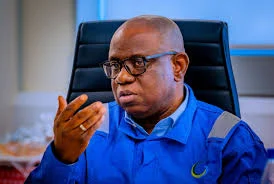
    In a bold move well commended by industry experts globally, President Bola Tinubu appointed Engr. Bayo Bashir Ojulari as Group Chief Executive Officer (GCEO) of the Nigerian National Petroleum Company Limited (NNPCL) in April 2025, signaling Nigeria’s renewed commitment to revitalising its oil and gas sector..

    Succeeding Mr. Mele Kyari, Engr. Ojulari has hit the ground running, implementing sweeping reforms under President Bola Tinubu’s mandate to boost production, expand refining capacity, and foster unprecedented transparency. In just a few short months, his leadership has already yielded impressive results, positioning NNPCL as a beacon of progress in Africa’s energy landscape.

    Transformation Agenda

    Engr. Ojulari’s focus is clear about transforming NNPCL into a world-class energy company that not only meets Nigeria’s domestic needs but also attracts global investment. “Our reforms are about building a sustainable future for Nigeria’s energy sector,” he emphasised in recent statements. Operating with a mandate from the moment of his appointment, he has focused on three pillars: ramping up production and investments, revitalising refining infrastructure, and embedding transparency into the fabric of the company.

    One of Engr. Ojulari’s most notable achievements has been the dramatic boost in crude oil output. When he assumed office, Nigeria’s daily production hovered around 1.2 million barrels/day. In August 2025, through enhanced collaboration with upstream partners and fortified pipeline security measures, output surged to 1.8 million barrels per day (mbpd). This 50% increase is not just a statistic – it is a lifeline for Nigeria’s economy, reducing reliance on imports and stabilising foreign exchange reserves.

    Engr. Ojulari’s appetite for reform is voracious. To sustain this momentum, NNPCL under his guidance is aggressively pursuing $60 billion in fresh investments. “Investor confidence is key,” he notes, highlighting how ongoing transformations are designed to create a predictable and profitable environment for partners. This includes targeted gas development initiatives, such as accelerating the Ajaokuta-Kaduna-Kano (AKK) pipeline project. In engaging with off-takers and customers, NNPCL aims to significantly ramp up gas output, unlocking new revenue streams and supporting Nigeria’s transition to cleaner energy sources.

    AIndustry experts have commended these efforts. “Engr. Ojulari’s approach is pragmatic and results-oriented,” says Dr. Amina Bello, an energy analyst at the Lagos-based Institute for Energy Studies. “In addressing security bottlenecks and fostering partnerships, he is laying the groundwork for long-term growth.”

    For decades, Nigeria’s refining sector has been plagued by inefficiencies and breakdowns. Engr. Ojulari is changing that narrative with a focused revival strategy. Key refineries in Warri and Port Harcourt are being rehabilitated through an Incorporated Joint Venture (IJV) model, emphasising sustainable operations over quick fixes. “We are not just patching things up; we are building resilience,” Engr. Ojulari states.

    The outlook

    Looking ahead, his mandate includes expanding the nation’s refining capacity by an additional 500,000 barrels per day by 2030. This ambitious target aligns with President Tinubu’s vision of energy self-sufficiency, reducing the billions spent annually on imported petroleum products. Early progress in these areas has already sparked optimism among stakeholders, who see Engr. Ojulari’s leadership as a turning point for domestic refining.

    Perhaps the most transformative aspect of him in the saddle is his unwavering commitment to transparency. After years of opacity, NNPCL has resumed publishing monthly financial and operational reports, a move hailed by civil society groups as a step toward accountability. “Transparency is not optional; it is essential for trust,” Engr. Ojulari affirms.

    To bolster this, the company has strengthened internal structures, including the appointment of a Chief Compliance Officer. Furthermore, NNPCL is deepening its collaboration with the Nigeria Extractive Industries Transparency Initiative (NEITI), pledging comprehensive data for the 2024 and 2025 audits. These initiatives are not mere formalities; they represent a cultural shift within the organisation, ensuring that every decision is scrutinised and aligned with best practices.

    Of course, no transformation is without hurdles. Engr. Ojulari has openly acknowledged resistance to his reforms, from entrenched interests to operational complexities. “Change is difficult, but we are committed to seeing it through,” he assured stakeholders during a recent industry forum. Sustaining these early gains will require continued vigilance, particularly in attracting major investments and maintaining production levels amid global market fluctuations.

    Yet, Engr. Ojulari’s track record suggests he is up to the task. With a background in engineering and a proven ability to deliver results, he embodies the innovative spirit Nigeria needs. As NNPCL continues to evolve under his stewardship, the ripple effects could extend far beyond the oil fields, driving economic growth, job creation, and a more prosperous future for all Nigerians.

    In a time where energy security is paramount, Engr. Bayo Bashir Ojulari is not just leading NNPCL; he is redefining what a national oil company can achieve. As the company presses forward, the world will be watching – and Nigeria stands to gain immensely.

  • People, privations and public policy priorities (3)

    People, privations and public policy priorities (3)

    By

    UGO ONUOHA

    LAST week, here, we said that we probably have been down the path that the regime of Nigeria’s president, Alhaji Bola Ahmed Tinubu, has been taking us to in the last 27 months through his economic reform agenda. We wrote that the current economic reform bore a striking resemblance to military president, Gen. Ibrahim Badamasi Babangida’s [IBB’s] structural adjustment programme [SAP] of the mid-1980s. Subsequently we dubbed Tinubu’s programme SAP 2.0. The major planks of the Babangida economic recovery agenda which he introduced in 1986 were economic diversification to reduce Nigeria’s over dependence on crude oil revenues; the development of the non-oil sectors like agriculture, manufacturing, and services; to restore fiscal discipline by implementing austerity measures, curbing government expenditures, and controlling inflation; devaluation of the Naira to make exports more competitive, encourage foreign investments, and reduce trade imbalances; liberalise the market by reducing government intervention and control in designated sectors to promote a more market-driven economic system; to privatize state-owned enterprises so that the private sector would be encouraged to drive economic development which was expected to promote efficiency and productivity; to stimulate economic growth by improving resource allocation and utilisation; improve the standard of living of Nigerians through poverty reduction; to improve government revenue by expanding and widening the tax base; and, to enhance resource allocation and utilisation for sustainable economic development. Does the above economic policy direction sound familiar to the adults in the house? Is this déjà vu? A quick reminder: it will be 40 years, next year, since Babangida introduced and implemented his own economic reform agenda. What were the benefits? How did it end? How much pain did it inflict on Nigerians? If it worked, why are we still where we are today? The answers to the questions are obvious. And we will explore some of them in the wake of the current gamble.

    As we said earlier, Tinubu’s economic reform agenda is SAP 2.0. SAP 1.0 failed, and the reasons why Babangida failed may yet afflict Tinubu’s SAP, though he cleverly dodged calling it by its proper name for fear of a backlash and a pushback by Nigerians. So why did Babangida, a military ruler who sat atop his command and control military/government structure for about nine years, fail with his own SAP after putting Nigerians through so much pain 39 years ago? Could it be because his SAP had no buy-in from citizens? Yes, that’s partly the reason. It also suffered from poor implementation. There was no doubt that it was externally imposed shortly after a charade called a national debate on whether to adopt the programme or not was conducted. It was neither well planned nor intentionally and faithfully executed. Unintended consequences which should have been foreseen and provisions made to alleviate them took a huge toll on the programme. It should be concerning that the ongoing economic programme is grappling with the same problems of unintended consequences, lack of buy-in, and poor implementation. SAP objectives also failed to materialize because of the country’s poor and weak infrastructure. In 1986 Nigeria’s infrastructure was not developed enough to support the goals of the programme. Is there evidence today that the country’s public facilities are strong and robust enough to support the ongoing drastic and indeed reckless surgical procedures on the fragile and largely informal economy of the country? Can what is happening be likened to using a chainsaw for brain surgery? Corruption hobbled Babangida’s SAP, and hindered its effectiveness. Has this monster been tamed? Is it capable of dealing a death blow on Nigeria?

    With succeeding administrations corruption became more pervasive. It has been suggested in some quarters that the extant regime is a haven for corrupt politicians and public servants and their collaborators. It’s a well known fact that some of the leaders of this government were suspects in multi-billion Naira fraud cases before their files were conveniently forgotten and allowed to gather dust on the shelves of the so-called anti-graft agencies, the Economic and Financial Crimes Commission [EFCC] and the Independent Corrupt Practices and Other Related Offences Commission [ICPC], the moment they assumed political offices through nepotistic appointments or rigged elections. Ahead of the 2019 election, a former national chairman of the ruling APC who is currently a senator of the federal republic had reportedly said in public that the sins, including looting of the treasury by office holders and opposition politicians, would be forgotten and forgiven once they joined the ruling party. Seven years after, that offer still remains on the table, and suspected and confirmed corrupt politicians have been enjoying the ‘amnesty’ to the detriment of Nigerians. It is now so bad that state governors, state and national assembly lawmakers are hawking and trading mandates given to them on the platforms of opposition parties to seek favours and protection from the APC. It sounds like what obtains in the mafia world. And this could be one of the reasons why a court in Canada was recently reported to have likened Nigeria’s dominant political parties – APC and PDP – to terrorist organisations. These parties thrive in holding Nigerians as hostages, intimidating citizens, extracting oaths of allegiance and fealty to their leaderships, violence and bloodletting. PDP used to have a cult leader or Capone while it was in power at the centre. APC still does probably because it now controls the federal government.

    Meanwhile, like Babangida’s SAP, Tinubu’s SAP 2.0 is primarily focused on economic austerity measures without publicly saying so. At Inception of the economic programme no heed was paid to cushioning the harsh and inevitable painful fallouts from the agenda. Not much has been done in this regard since 2023, bar the student loan scheme. Other palliatives such as the conditional cash transfers to the poorest of the poor households and individuals, and access to funding for small scale enterprises have suffered from credibility problems. In fact, their implementations have been dogged by allegations of political partisanship and the challenge of verification. Even the register of beneficiaries of the cash transfers exists only in the closets of the implementers. Anybody who wants to assess the store that this regime sets on helping the less privileged and vulnerable, that person should look at the state of the ministry of humanitarian affairs. The ministry’s minister under the immediate past failed regime of Muhammadu Buhari is in court on allegations of financial fraud while she was in office. Her successor, another woman this time under Tinubu, was the first to be suspended from office by the regime also on allegations of financial malfeasance. Her suspension has lingered for almost two years. She has not been sacked, and her suspension has not been lifted. About one year ago she was summoned by the EFCC for interrogation over allegations of fraud in the ministry. There’s no evidence that she was ever charged to court. The minister’s slot remained vacant for a long time before a successor, this time a man, was appointed. But the man has also been removed, and promoted as the new national chairman of the APC. Other government agencies that could positively impact the property-less group are in no better stead. So the materially challenged are choking and suffocating under the weight of SAP 2.0. Cries are getting louder from many segments of the society for the regime to step back and to concentrate more on provision of safety nets for the people. Will it listen and reflect and course correct? Not likely because this regime is right in its own eyes.

    Next, the over-reliance on external factors proved to be an Achilles heels of SAP 1.0. The expectation under Babangida was that his economic reform agenda would succeed on the strength of massive influx of foreign investments, and aid from donor agencies and countries. The expectation did not materialise. So the agenda crashed. The situation is worse now with palpable donor-fatique in the international community. One of the biggest donor agencies was the United States Agency for International Development [USAID]. For all intents and purposes, that body has been scrapped by the new administration in America led by non conventional President Donald Trump. The adverse impact of this development has been projected to be telling on less developed countries like Nigeria. Food aid, support for healthcare and others will suffer massive hits. The vanishing support from donors will put further pressure on the already limited financial resources of Nigeria and other countries which are in a similar category. The prospects of the financial wellbeing of many less developed countries do not look good. Indeed, they are scary. The fact that Tinubu virtually lives abroad allegedly in pursuit of foreign investors, loans and aid, and visits Nigeria occasionally has not borne any significant results. And it may not in terms of investment and aid. For loans, we are likely to be getting them with repayment that we will kick down the road for our children, grandchildren, and great grandchildren.

    In the concluding part of this month-long intervention we will analyse how Nigeria’s burgeoning debt, deepening cost of living crisis, currency devaluation, increasing despondency and hopelessness among Nigerians, diminishing faith in democracy, general distrust of politicians, among others, will most likely constitute strong, even fierce, headwinds to the realisation of the ongoing economic agenda of Tinubu.

    Ugo Onuoha, Veteran Journaist, was the Managing Director/Editor-in-Chief, Champion Newspapers Limited.

  • Hoodlums attack Malami in Kebbi

    Hoodlums attack Malami in Kebbi

    A crowd suspected to be hoodlums, have attacked the convoy of the former Justice Minister and Attorney-General, Abubakar Malami (SAN), in Birnin Kebbi.

    Malami’s convoy was attacked on Monday while returning from a condolence visit in the state capital.

    Subsequently, the Police Command in the state says it has begun investigation into the reported attack on the convoy of the former minister.

    Malami resigned from the All Progressives Congress (APC) on July 2 and later joined the African Democratic Congress (ADC).

    After an emergency security meeting with security chiefs, the Commissioner of Police, Mr Bello Sani, confirmed that no arrest had been made.

    “We have commenced investigation into the attack, and no arrest has been made yet. The governor convened this meeting to review security developments,” Sani said.

    He added that incidents occurred around the GRA area involving political party members, linked to breaches of Independent National Electoral Commission (INEC) campaign regulations.

    The commissioner stated that leaders of political parties would be summoned and cautioned against further violations of electoral guidelines.

    He stressed that the measures aimed to prevent further violence as the elections draw nearer.

    The commissioner also urged political leaders to remain calm and sustain peace and stability in the state.

  • Christopher Okigbo: NCAC Celebrates Poet’s Induction into UNESCO’s Memory of the World Register

    Christopher Okigbo: NCAC Celebrates Poet’s Induction into UNESCO’s Memory of the World Register

    The National Council for Arts and Culture (NCAC) has celebrated the induction of the archives of late poet Christopher Ifekandu Okigbo into UNESCO’s prestigious Memory of the World Register.

    Okigbo, regarded as one of Nigeria’s greatest literary figures, made history in 2007 when he became the first Nigerian and indeed the first African to receive the distinction.

    His collection of manuscripts, letters, photographs, and unpublished works was inscribed into the register, placing his legacy among humanity’s collective heritage.

    In a statement, the NCAC said the honor reaffirms the global significance of Okigbo’s contributions to literature.

    His poetry, which fused Igbo spirituality with modernist brilliance, continues to resonate with readers and scholars around the world.

    The Council noted that the recognition immortalizes a writer whose promising career was cut short by the Nigerian civil war but ensures that his voice will endure for generations to come.

    It added that the induction also serves as inspiration to upcoming Nigerian poets, authors, and cultural pioneers.

    “Christopher Okigbo remains not only a national treasure but also a symbol of Africa’s enduring contribution to world literature and culture,” the NCAC said.


    Recall that the late poet became the first Nigerian, and indeed the first African, to be accorded the distinction, placing his literary legacy alongside the world’s most treasured cultural and intellectual heritage.

  • Threat of military rule looms in Africa – CDD

    Threat of military rule looms in Africa – CDD

    A Civil Society Organisation, the Centre for Democracy and Development (CDD-West Africa) has expressed concern over the looming threat and normalisation of military rule in West and Central Africa.

    The organisation warned that the trend posed a major threat to democracy, stability and regional integration, especially with the rise of ‘military populism’ in Francophone Africa.

    Dr Dauda Garuba, Director of CDD-West Africa, stated this in Abuja on Wednesday while releasing the organisation’s background paper titled “Militarism Reloaded: The Rise of Military Populism in Francophone West Africa”.

    According to him, recent coups in Mali, Burkina Faso, Niger and Guinea are not simply reversions to old authoritarian patterns but expressions of a more sophisticated, ideologically packaged form of militarism.

    “Far from being isolated disruptions, these military interventions present themselves as national corrections, cloaked in the language of sovereignty, anti-imperial resistance, and Pan-African revivalism.

    “But beneath the surface of patriotic slogans and digital virality lies a strategic attempt to consolidate power, silence dissent, delay transitions, and reconfigure what legitimacy means in postcolonial Africa,” Garuba said.

    He explained that the appeal of military populism is rooted in public frustration with democratic failures, insecurity and inequality.

    However, he warned that its allure was deceptive as regimes increasingly postponed elections, suspended constitutions, and curtailed civil society under the guise of national security.

    Read Also: Contextualizing the lovefest between Presidents Lula of Brazil and Tinubu

    Garuba added that in the Sahelian states of Burkina Faso, Mali and Niger, military juntas were now manipulating digital platforms to spread disinformation and mobilise support.

    He said the regimes also cultivate parallel narratives in which the army is portrayed as the “saviour of the state”.

    He stressed that this evolving phenomenon carries serious regional implications.

    “ECOWAS, once a bulwark of democratic norms, now struggles to enforce its own red lines.

    “The weakening of regional institutions, coupled with a geopolitical pivot away from traditional allies, threatens to undermine decades of democratic progress across West Africa,” he said.

    According to him, CDD-West Africa, in partnership with regional organisations, will over the next eight months conduct in-depth research on how military populism spreads and is sustained.

    He said the centre would monitor digital propaganda, analyse ideological framing, and assess the threats posed to elections, civic space and regional cohesion.

    “The goal is to generate evidence-based insights and practical recommendations to safeguard West Africa’s information environment and strengthen democratic resilience,” he added.

    Garuba urged African governments, civil society, regional bodies and citizens not to mistake military populism for genuine reform.

    “Coups are not answers to civilian failures; they are only accelerators of fragility. The time to act is now.

    “It is essential to underscore this before narratives harden, institutions crumble, and another generation of citizens grow up believing that the gun, not the vote, is the legitimate path to power in Africa,” he said.

  • Reintroduce Arts, Culture Ministry: Festival organisers urge KDSG

    Reintroduce Arts, Culture Ministry: Festival organisers urge KDSG

    Organisers of the 8th Kaduna International Film Festival (KADIFF) have urged the Kaduna State Government to reintroduce the Ministry for Arts and Culture which served as a tool of social transformation.

    Recall that in 2019, former Gov. Nasir El-Rufa’i had  issued an Executive Order that restructured the State’s Ministries including abolishing the Ministry of Youth, Sports and Culture, under which Culture previously fell.

    The ministry was replaced by the Ministry of Human Services and Social Development, effectively reducing the status of culture to a Department within a broader portfolio.

  • N104,000 monthly pay for Imo workers

    N104,000 monthly pay for Imo workers

    The state’s doctors’ pay was also raised from N215,000 to N503,000, while that of tertiary institution teachers went up from N119,000 to N222,000

    It’s a bumper season in Imo as Gov. Hope Uzodimma approves a new minimum wage of N104,000 for civil servants in the state.

    Uzodimma made this known during a meeting with various labour union leaders on Tuesday night at the Government House in Owerri.

    The current value represents a 84.2 percent increase from N76,000 that was the minimum wage previously approved by the governor.

    Similarly, the minimum wage of doctors was raised from N215,000 to N503,000, while that of tertiary institution teachers went up from N119,000 to N222,000, among others.

    He said Imo citizens had faced numerous challenges since his government took office, including insecurity, the COVID-19 pandemic, economic hardship from reform policies, and disputes over minimum wage and subsidy removal.

     “There is no way any government will do well if it doesn’t have a friendly and cordial relationship with the organised labour.

    “When workers are paid well, productivity rises, families are happier, and the local economy grows.

    “This is our way of investing in Imo people. Government believes in stimulating political and economic activities, carrying bureaucrats along, and making sure that workers’ welfare was highly respected,” he said.

    Uzodimma said that the state Internally Generated Revenue (IGR) had grown from N400 million to over N3 billion monthly.

    According to him, in 2020, we were receiving allocations between N5 billion to N7 billion, but has increased to N14 billion.

    “In 2020, the state recorded a debt profile of over N280 billion but has reduced to less than N100 billion,” he added.

    The governor recalled that when he assumed office in 2020, the major infrastructure in all sectors were totally collapsed.

    He said a lot had been expended to rebuild the collapsed infrastructure especially roads and combating the insecurity challenges.

    He stressed that the removal of fuel subsidy had equally raised the cost of living in Nigeria as much as it had its own advantages.

    “It is a thing of joy that we have started seeing the dividends of that bold decision of President Bola Tinubu to remove fuel subsidy.

    “What government is confronted with now is how to ensure that the dividends of that policy trickles down to the common man on the street.

    “Cognisant of the fact that our effort has started yielding dividends and that our IGR had improved and that reform policies of the President has also increased our allocations to sub-national governments, every responsible government must be transparent about it,” he said.

    The governor further said that the state government will on Aug. 27, begin  payment of the last batch of gratituity of N16 billion owed pensioners in the state.

    He said his administration had carried out major reforms in the health sector, including initiating health insurance scheme and equipping health facilities to ensure world class treatment for Imo citizens.

    He said his government had keyed into the Federal Government project of establishing 1,000 businesses in every active INEC ward.

    He charged labour unions to unite to foster good working relations between labour and government,

    Uzodimma, who solicited for value addition from workers, also cautioned them against unethical practices and redundancy at work.

    Responding, the state Chairman of the Nigeria Labour Congress (NLC), Mr Uchechigemezu Nwigwe described the increase in minimum wage in the state as “victory for the entire work force in the state.”

    Nwigwe said Uzodimma did not only rescue the workers from the economic challenges, but had made the state one of the highest in payment of minimum wage.

    “Today, no worker in Imo will say you (Uzodimma) have not been fair to us,” he noted.

    Nwigwe prayed God to continue to protect the governor, assuring him that workers will reciprocate the gesture with more diligent, efficient and effective service.

    Also speaking, the state Chairman of Trade Union Congress, Mr Uchenna Ibe, also lauded the governor for his “strong political will in taking up strong projects, including the increase in minimum wage.”

  • Contextualizing the lovefest between Presidents Lula of Brazil and Tinubu

    Contextualizing the lovefest between Presidents Lula of Brazil and Tinubu

    Wale Alonge

    Many have been totally taken by surprise by the over-the-top grand reception and welcome that has been extended to President Tinubu and his delegation by his host President Lula of Brazil. No doubt, Nigeria and Brazil have had cultural and historical ties dating back to the shipment of our people across the Atlantic on cruel inhumane slave ship. That cultural connection cannot be overemphasized. We also must not underestimate how much the entire global has acknowledged and credited President Tinubu for his bold, transformative, yes painful reform agenda. It has done a lot to restore much needed confidence in our country even as the citizens groan under its excruciating pain. There can be no gain with pain.

    Having said all that, we will be missing the boat if we fail to contextualize the over-the-top warm embrace and welcome mat being extended to Nigeria and President Tinubu by Lula of Brazil within the context of the broad geopolitical realignment taking place in the globe with the erratic unpredictable, and unreliable leadership in Washington DC. The Trump administration is upending what many have assumed for decades as settled norms. America as the bastion of democracy, of federalism, and of a predictable global order is under assault and is being revealed as a mythology.

    The entire globe, including the U.S. once reliable ally, Europe no longer trusts Washington DC. Everyone is scrambling to find a realignment of an alternative global order.

    Brazil’s Lula is looking for allies across the globe in his titanic conflict with Trump. Nigeria, with its reform agenda under the presidency of Tinubu and its re-emergence as Africa’s powerhouse is becoming once again an attractive bride. There is also the BRICS agenda to contend with.

    So, yes while we cannot underestimate the influence of
    Tinubu as president. we must see the lovefest between Nigeria and and Brazil within that broader global context.

    Nigeria is rising and many of us are missing the train by focusing on the current challenge of the reform agenda. Like I tell many of my fellow Nigerians in the diaspora there will be gnashing of the teeth when many people realize that they have lost out of the early bird windfall and find in a few years that Nigeria has become unaffordable the longer they wait to jump in.

    Nigeria is transforming in our very own eyes and yet many are too distracted to see it. Brazil is sending that message loud and clear. The question is will we harken to it and catch the wave before it is too late.

    Wale Alonge

  • It’s World Hausa Day: Daura Emirate celebrates

    Daura Emirate Council in Katsina State on Tuesday hosted the maiden grand celebration of the 2025 World Hausa Day.

    The day is dedicated to promote the language, history and traditions of the Hausa people globally.

    The event with the theme: “Our Culture yesterday, today and tomorrow,” attracted mammoth gathering of traditional rulers, cultural enthusiasts, youths and women, who thronged to the Emir of Daura’s palace in colourful attires to honour Hausa culture.

    The Acting Governor of the state, Faruk Lawal-Jobe, commended the Emir of Daura for hosting the event.

    Represented by Usman Abba-Jaye, Commissioner for Local Government and Chieftaincy Affairs, Lawal-Jobe underscored the role of Hausa culture in promoting peace and unity.

    “Hausa culture is not just a heritage, it is a unifying factor that binds millions of people across borders.

    “The government will continue to support efforts that promote our traditions, language, and values as part of our collective identity,” he said.

    The Prime Minister of Niger Republic, Ali Lamine-Zain, thanked the emir for inviting him to attend the event.

    Lamine-Zain was represented by the Governor of Zinder, Col. Muhammad Umar.

    “Whenever a Nigerien visits Nigeria, he knows he has come home. Likewise, whenever a Nigerian travels to Niger, he also feels at home.

    “We are one family, united by love, friendship, and shared heritage.

    “The President of Niger cherishes this kind of unity and cultural revival, as it strengthens Hausa Language and preserves our traditions for generations to come,” he said.

    Alhassan Ado-Doguwa, the Sardaunan-Kasar Hausa, who spoke on behalf of the seven Hausa states, expressed joy for the opportunity to be part of the celebration.

    Ado-Doguwa, is a member representing Doguwa/Tudun Wada Federal Constituency from Kano State in the House of Representatives.

    He said the National Assembly would enhance the role of the traditional institutions in the constitution, to further strengthen the campaign against insecurity bedeviling parts of the country.

    Also, Sen. Ibrahim Ida, the Wazin-Katsina, said there are about 200 million Hausa speakers globally.

    He, however, decried infiltration of some bad things into Hausa culture, and called on those concerned to remove them to preserve the good rich cultural heritage.

    The event featured colourful display of traditional crafts like durbar, blacksmith, sculpture, barbing, and traditional wrestling/boxing, with the aim of showcasing the richness of the Hausa culture and traditions. 

  • Another ASUU strike gathers storm, UNN branch threatens

    As Academic Staff Union of Universities (ASUU), threatens nationwide strike, University of Nigeria, Nsukka (UNN) branch, says members are ready to join.

    The impending strike, the union threatens, shall be nationwide and indefinite, if the Federal Government fails to meet their demands.

    Comrade Oyibo Eze, the Chairman of ASUU-UNN said this while briefing newsmen in Nsukka on Tuesday shortly after the union’s congress, followed by protest rally by members.

    Eze said Nigerians should hold government responsible in case of any nationwide indefinite strike by ASUU as government had failed to do the needful.

    “Government inability to implement agreement reached with the union since 2009 is very unfortunate and an indication that education is not the priority of government,” he said.

    The chairman said that the rally/protest was in compliance with the directive of the national leadership on branches of the union to carry out protest rally so as to appeal to government to do the needful.

    “We held congress earlier before carrying out this rally.

    ”Our members expressed their readiness to join any nationwide indefinite strike that may be directed by ASUU national leadership, if government fails to meet their demands.

    “The congress urged government to implement all agreements reached with the union as well as pay members three and half months salary owed them by the government.

    “That is why you see members in their numbers participating in this protest directed by ASUU national leadership because enough is enough of government failures to fulfill agreements entered with ASUU,” he said.

    He said that ASUU National Executive Council (NEC) would meet on Sept. 2, after meeting with the Federal Government on Aug. 28 to determine the next line of action.

    The protesters marched through some major roads in UNN and ended at the administrative building of the university.

    Addressing ASUU protesting members, the Vice-chancellor of UNN, Prof. Simon Ortuanya, represented by Prof. Romanus Ezeokonkwo, the Deputy Vice-chancellor, Administration, commended ASUU for the peaceful protest in seeking their demands.

    Ortuanya urged the union to take the option of nationwide strike as the last resort after exploring all available avenues to resolve the issue with the government.

    The VC promised to forward the union’s demands to the Federal Ministry of Education.

    Some placards carried by the protesting ASUU members include “Federal Government honour the 2009 agreement with ASUU”.

    “Our wives and children are hungry; pay our three and half months salaries owed members, “Nigeria lecturers are the least paid globally”.

    Others are “FG please, pay lecturers wage awards of 25 per cent and 35 per cent”.

    NAN reports that ASUU National leadership recently directed its various branches to stage protest rallies on campus as well as conduct a referendum in congress to give backing to their proposed strike.