
Category: Judiciary

  • Kanu Requests New Judge, Opposes Resumption of Trial

    Kanu Requests New Judge, Opposes Resumption of Trial

    Nnamdi Kanu, leader of the Indigenous People of Biafra, remains firm in his objection to the resumption of his trial, citing a lack of trust in Justice Binta Nyako. 

    He insisted that the judge should step aside, despite the Federal Government’s push for proceedings to continue under her oversight.

    The case has faced multiple twists since Kanu’s re-arrest and extradition from Kenya in 2021. Initially handled by Justice Nyako since 2015, the trial saw her step down in September 2024 after Kanu challenged her impartiality.

     However, the Chief Judge of the Federal High Court reassigned the case back to her, stating her long-standing familiarity with it. 

    Kanu’s legal team contends that Justice Nyako’s decision to recuse herself still stands, making the Federal Government’s push for trial resumption improper. 

    Meanwhile, government lawyers argue that her recusal was not formalized by the required legal process and demand a trial date.  

    The prolonged legal battle, involving allegations of treason and terrorism, has kept Kanu in custody under the Department of State Services, with repeated bail applications denied.

     The dispute over the judge’s role further delays proceedings, leaving the case in a state of uncertainty.

  • NULGE Express Frustration Over Delay In LGA Financial Autonomy

    NULGE Express Frustration Over Delay In LGA Financial Autonomy

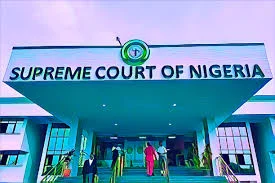
    The National Union of Local Government Employees (NULGE) has expressed frustration over the six-month delay in implementing financial autonomy for local governments, despite a Supreme Court ruling that directed direct disbursement of funds.

     The July 2024 judgment invalidated the practice of governors controlling local government finances, ordering that funds be paid directly to local government accounts. 

    However, despite the ruling, governors have continued to handle the allocations, disregarding the court’s decision. 

    NULGE National President, Hakeem Ambali, has called for immediate action from President Bola Tinubu to enforce the ruling, noting that the situation should have been resolved by October.

    Ambali also addressed recent promises that direct allocation would begin by the end of January 2025, citing the Nigerian Governors’ Forum’s visit to the President during the festive period.

     He urged the government to follow through on its commitment to end the practice of routing local government funds through state-level intermediaries.

    Furthermore, Ambali criticized governors such as Charles Soludo of Anambra and Alex Otti of Abia for attempting to pass laws counteracting the court’s decision, warning that such laws are illegal and cannot override the court’s verdict. 

    In response to these challenges, a technical committee has proposed measures to improve transparency in the allocation process, including publishing monthly allocations in newspapers and creating oversight bodies.

     Ambali emphasized that local governments must control their finances directly, warning that any attempt to undermine this process would not succeed.

  • Edo LG Chairmen Suspension Declared Invalid by AGF

    Edo LG Chairmen Suspension Declared Invalid by AGF

    The Attorney-General of the Federation and Minister of Justice, Prince Lateef Fagbemi, has described the suspension of Local Government Chairmen and Vice Chairmen in Edo State as unconstitutional.  

    The controversy began when the Edo State House of Assembly suspended council leaders from all 18 local governments for two months. 

    The suspension was based on allegations of gross misconduct and insubordination.

     Governor Monday Okpebholo reinforced the decision by directing the officials to hand over to their legislative leaders, citing their failure to submit financial reports dating back to September 2022.  

    In defiance, the suspended officials have vowed to remain in office until their terms end in 2026. 

    According to Fagbemi, the suspensions violate the Supreme Court’s July 2024 ruling, which safeguards the autonomy of local government councils and restricts state interference.  

    The AGF clarified that disciplining local government leaders is solely the responsibility of their legislative houses, emphasizing that governors lack the authority to remove elected council officials.  

    This development has reignited discussions about the separation of powers between state and local governments, with implications for governance across Nigeria’s 774 local councils.

  • Legal Battle Begins Over CCT Chair’s Removal

    Legal Battle Begins Over CCT Chair’s Removal

    Two civil society groups and a lawyer have filed a lawsuit challenging the removal of Justice Danladi Umar as Chairman of the Code of Conduct Tribunal (CCT). 

    The case, submitted to the Federal High Court in Abuja, named President Bola Tinubu, Senate President Godswill Akpabio, and other officials as defendants.  

    The plaintiffs claimed the National Assembly’s decision to remove Umar violated constitutional provisions. 

    They sought to block the implementation of the Senate and House of Representatives’ resolution and prevent the president from acting on it. 

    The legal team argued that the process lacked due process and contradicts the 1999 Constitution and the Code of Conduct Bureau and Tribunal Act.  

    The court, presided over by Justice James Omotosho, has directed that notices be served through alternative means and set January 14, 2025, for the hearing. 

  • Farotimi brought to court in handcuffs, granted bail

    Farotimi brought to court in handcuffs, granted bail

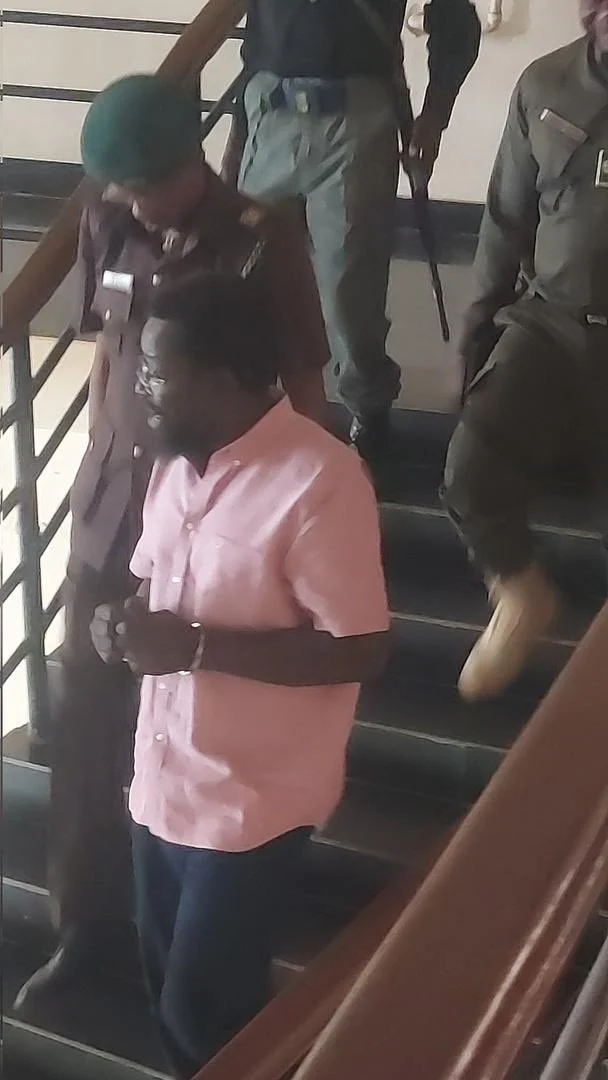
    To the consternation of lawyers and others of the human rights community, Dele Farotimi was brought to court today in handcuffs as the Ekiti State High Court granted bail at the sum of ₦50 million. 

    The conditions for bail include a surety with the same sum and ownership of a landed property. 

    The Ekiti State High Court has approved bail for human rights lawyer Dele Farotimi, setting the amount at ₦50 million. 

    The conditions for bail include a surety with the same sum and ownership of a landed property.  

    Reacting to Farotimi’s court appearance, activist lawyer, Deji Adeyanju posted on X, “Shame on everyone involved in this embarrassment to the legal profession.

    “A lawyer in handcuffs over defamation, not armed robbery, kidnapping or any crime.

    “No wonder they abducted Dele Farotimi and took him to where Baba Afe Babalola is king, Ekiti.”

    The case, linked to a defamation suit brought by Chief Afe Babalola, claims Farotimi’s book, Nigeria and Its Criminal Justice System, damaged his reputation.  

    Another human rights lawyer, Inibehe Effiong wonders why Farotimi had to be brought to court in handcuffs when he is neither violent nor resisted being taken to court.

    “Dele Farotimi is a political prisoner and will come out stronger,” he concluded.

    Farotimi’s arrest by the Ekiti Police sparked reactions from civil right groups and the Nigerian Bar Association.

     Many criticized the move, describing it as a threat to freedom of expression and justice.

    The case will continue on January 29, 2025.

    Babalola, a Senior Advocate of Nigeria, claims Farotimi’s book, Nigeria and Its Criminal Justice System, damaged his reputation.

  • NBA Condemns Abduction of Dele Farotimi by the Police

    NBA Condemns Abduction of Dele Farotimi by the Police

    The Nigerian Bar Association (NBA) has expressed strong disapproval over the recent arrest of human rights lawyer, Dele Farotimi by the Nigerian Police on allegations of libel.

     In a statement issued on Tuesday evening, NBA President Afam Osigwe criticized the reported police actions, including the invasion of Farotimi’s law firm and the alleged harassment of his staff and colleagues.

    Osigwe pointed out that libel, the alleged offense in this case, is not classified as a criminal offense under Lagos State law.

     He noted that the 2011 Criminal Law of Lagos State decriminalized defamation, shifting it to a civil matter. This move aligns with global practices that treat defamation as a civil wrong.

    The NBA also expressed concern over the police’s conduct, highlighting that their authority must be exercised within legal limits, especially when investigating matters that do not constitute criminal offenses under Nigerian law.

     Furthermore, the seizure of phones and harassment of employees at Farotimi’s law firm raised alarms about the protection of legal professionals’ rights and the sanctity of legal practice.

    The NBA has called for Farotimi’s immediate release, asserting that his arrest has no legal grounds in Lagos State, and demanded accountability for the actions at his law office.

     They urged law enforcement agencies to uphold the rule of law, human rights, and the principles of justice in their operations.

  • EFCC To Arraign Yahaya Bello Again Today

    EFCC To Arraign Yahaya Bello Again Today

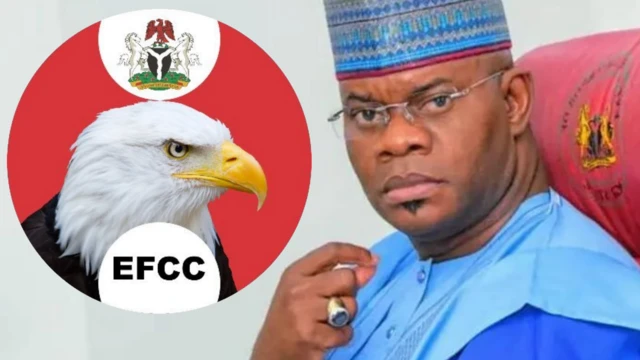
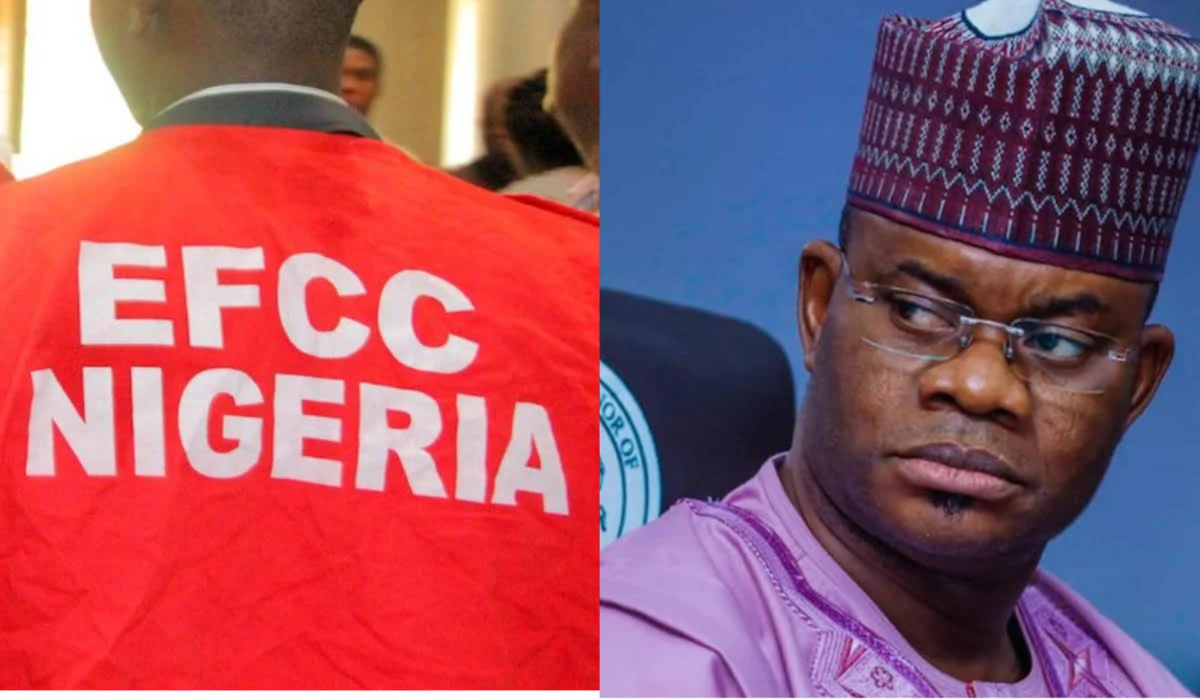
    The troubles may just be starting for former Kogi State Governor Yahaya Bello, who is about to face another round of legal troubles as the Economic and Financial Crimes Commission (EFCC) is arraigning him on allegations of mismanaging N80.2 billion in public funds.

     The proceedings will take place today at the Federal High Court in Abuja, presided over by Justice Emeka Nwite.  

    The case follows months of evasion by Bello, who was previously ordered to be arrested after missing court appearances.

     Earlier in April, Justice Nwite had issued an arrest warrant, but efforts to detain Bello were allegedly obstructed by Kogi’s current governor, Ahmed Ododo. 

    Reports revealed that Ododo used his official vehicle to shield Bello from EFCC operatives.  

    After months of avoiding legal proceedings, Bello voluntarily turned himself in to the EFCC last Tuesday.

     This led to his appearance before Justice Maryanne Anenih of the Federal Capital Territory (FCT) High Court, where he pleaded not guilty and was subsequently remanded in EFCC custody.  

    Initially scheduled for January 21, 2025, the case was fast-tracked by the anti-corruption agency, ensuring that Bello and his co-accused, including his nephew Ali Bello, Dauda Suleiman, and Abdulsalam Hudu, appear in court today. 

    The charges they face span money laundering, misappropriation of public funds, and breach of trust.  

  • More Drama as Yahaya Bello’s Fraud Trial Resumes

    More Drama as Yahaya Bello’s Fraud Trial Resumes

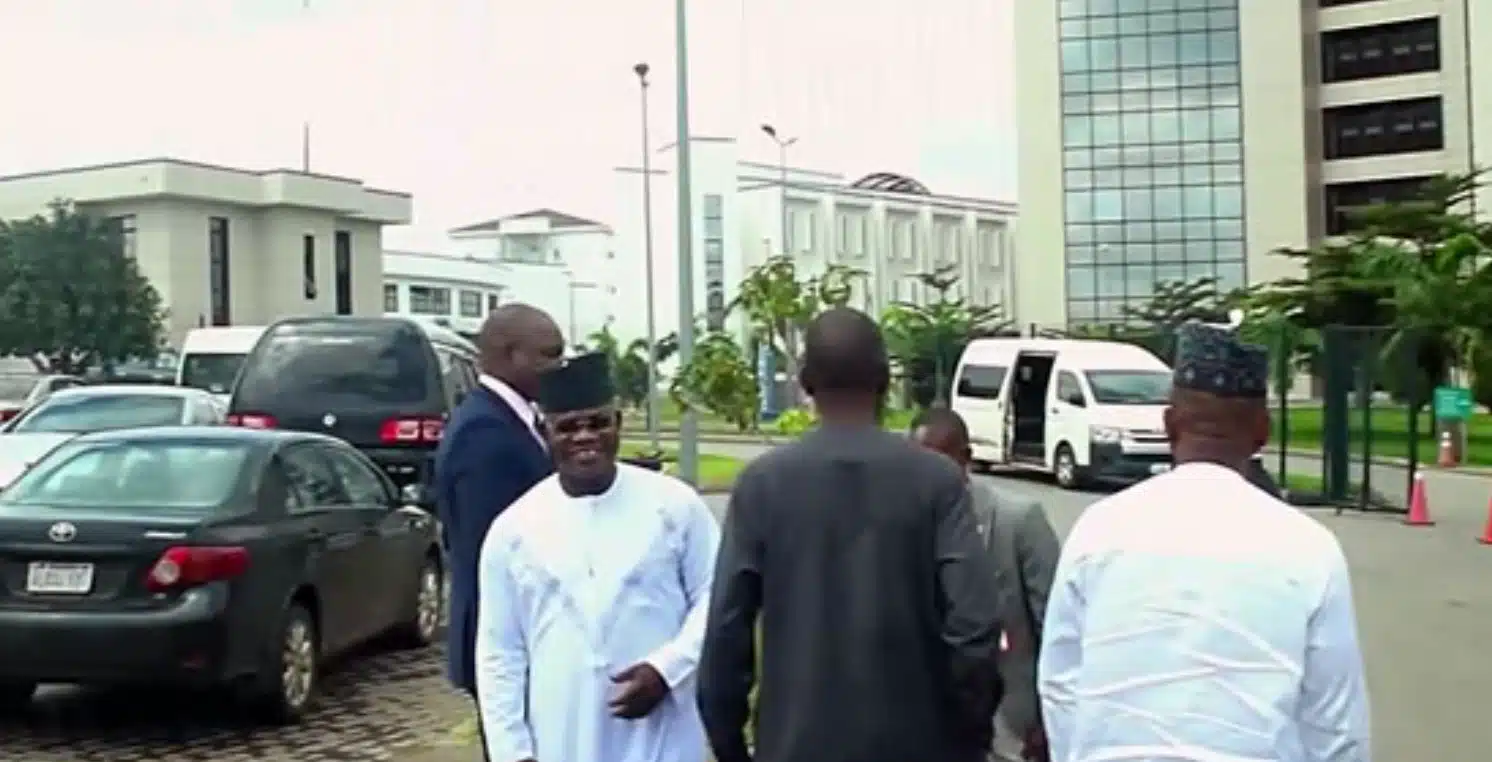
    The trial of Yahaya Bello, the immediate past governor of Kogi State finally got off to a dramatic start today as the trial Justice Maryann Anenih bolted out of the courtroom at some point due to the surging crowd that accompanied the ex-governor.

    How it occurred that agents of the law could not maintain order in the Federal High Court remains inexplicable but it took the intervention of the Mr. Bello himself to bring calm to the courtroom as he prevailed on his crowd of supporters to vacate the courtroom.

    At the resumption of proceedings, the former Kogi State Governor, denied the charges of financial fraud leveled against him by the Economic and Financial Crimes Commission (EFCC). 

    Appearing before Justice Maryann Anenih at the Federal High Court in Maitama, Abuja, Bello and his two co-defendants, Umar Oricha and Abdulsalami Hudu, were confronted with a series of serious allegations of embezzlement involving ₦110 billion.

    The court heard that Bello and his associates were accused of criminal conspiracy, breach of trust, and the possession of stolen property. 

    The charges are linked to accusations of embezzling state funds, which were allegedly used to acquire a series of high-value properties across Nigeria and beyond.

    Bello, who had been elusive in the weeks leading up to the trial, surrendered to the EFCC just a day before the court appearance, amid reports of his avoidance of authorities. Dressed in a traditional white caftan and blue cap, he entered the dock to formally respond to the charges in the case, which the EFCC has termed CR/7781.

    The list of properties tied to the accused includes real estate in Abuja, such as a building in Maitama valued at ₦950 million, a property in Gwarimpa worth ₦100 million, and another mansion in Asokoro priced at ₦920 million. Other properties are located in areas like Wuse Zone 4 and Dubai, including a hotel apartment valued at over 5 million dirhams.

    Additionally, the EFCC claims that Bello and his co-defendants were involved in transferring substantial amounts of money abroad, including $570,330 and $556,265 to a US-based bank. The investigation also uncovered that they were in possession of ₦677.8 million linked to an illicit business, Bespoque Business Solution Limited.

    Bello’s trial has sparked considerable attention, and the outcome of the proceedings could have serious ramifications for the former governor, who served as Kogi’s leader for two terms. 

    The case continues to unfold, with the EFCC determined to recover the allegedly misappropriated funds.

  • Reps Vote to Remove CCT Chairman

    Reps Vote to Remove CCT Chairman

    The House of Representatives voted to remove Danladi Umar as Chairman of the Code of Conduct Tribunal (CCT) during a plenary session on Tuesday. 

    The motion cited specific sections of the 1999 Constitution and the Code of Conduct Bureau and Tribunal Act as grounds for his removal, which include issues such as misconduct or failure to properly perform his duties.

    However, the decision was met with controversy, as reports indicated that fewer than 150 lawmakers were present during the vote, far below the necessary two-thirds majority of the 360-member House required by the Constitution for such actions.

    This raises concerns over the legitimacy of the session.

    In a related development, the Nigerian Senate recently acknowledged an error in its motion to remove Umar. 

    Sponsored by Senate Leader Michael Bamidele Opeyemi, the motion referenced an incorrect section of the Constitution, which pertains to the Code of Conduct Bureau, not the CCT Chairman.

  • Senate Sacks CCT Chairman Over Misconduct  

    Senate Sacks CCT Chairman Over Misconduct  

    Danladi’s filled up this Wednesday as the Senate has dismissed him from his position as Chairman of the Code of Conduct Tribunal (CCT) due to allegations of gross misconduct.

    This action was carried out under Section 157(1) of the 1999 Constitution, which permits the removal of public officials after due process.  

    The decision followed a lengthy closed-door session during which over 84 senators supported the motion. 

    The Senate Leader, Opeyemi Bamidele, initiated the process, citing various allegations against Umar, including corruption, absenteeism, and public misconduct. 

    These accusations had prompted earlier investigations by the Senate Committee on Ethics, Code of Conduct, and Public Petitions, where Umar’s attendance was inconsistent.  

    The dismissal also comes amid ongoing investigations by multiple anti-corruption agencies into Umar’s conduct, further raising concerns about his suitability for the role. 

    The Senate highlighted the need to uphold the Tribunal’s reputation and ensure its leadership reflects accountability and integrity.  

    Following Umar’s removal, Abdullahi Usman Bello has been confirmed as the new Chairman of the Tribunal, marking a significant administrative shift within the institution.

     This is the first time since 1999 that the Senate has invoked constitutional powers to remove a head of a federal agency.