
Category: Judiciary

  • Federal High Court adjourns whistleblower’s bail hearing until September 17

    Federal High Court adjourns whistleblower’s bail hearing until September 17

    The Federal High Court in Abuja has postponed Isaac Bristol’s bail hearing to September 17.


    Bristol, who appeared in court on Wednesday morning with his lawyer, Deji Adeyanju, was set to have his bail application heard by Justice Emeka Nwite. However, the judge did not proceed with the hearing.


    Adeyanju confirmed the postponement in a statement shared via WhatsApp after the court session.


    “The court granted bail to the protesters, but moved Bristol’s bail application to the 27th of this month,” Adeyanju said, though later clarification indicated the hearing will take place on September 17.


    Bristol, also known as ‘Pidom,’ was charged by police in August on nine counts, including terrorism, money laundering, cybercrime, and evidence tampering.


    The charges relate to his whistleblowing activities, where he operated the X (formerly Twitter) account ‘@PIDOMNigeria,’ which exposed alleged misconduct in Nigeria.


    The adjourned hearing will determine whether Bristol will be granted bail or remain in custody as his case proceeds through the judicial system.


  • #EndBadGovernance: Court grants N10m bail on each 10 Protesters 

    #EndBadGovernance: Court grants N10m bail on each 10 Protesters 

    1. Justice Emeka Nwite of the Federal High Court Abuja, Wednesday, granted N 10 million bail each on the ten #endbadgovernance# protesters who were charged with attempt to overthrow President Bola Ahmed Tinubu between July 1 and August 4, 2024.


    Pending the perfection of their respective bail conditions, the Judge ordered that they be remmanded in prison custody.


    According to the court, the defendants are produce one surety each in the same amount while the sureties must be resident in Abuja.


    The sureties must have property in Abuja and must deposit documents of the properties to the court in addition to swearing to affidavit of means.


    Also both the defendants and the sureties must deposit their international passports and three recent passport photographs with the court.


    Justice Nwite while rejecting the objections of the Inspector General of Police against the bail request however ordered the defendants not to participate in any public rally throughout their trial.


    Meanwhile, September 27 has been fixed for commencement of their trial.


    The accused persons were said to have committed the treason offence during their one week nationwide protests when they allegedly levied war against Nigeria.


    The offences were said to be contrary to sections 96, 410 and 413 of the Penal Code.


    Inspector General of Police (IGP) who brought the charges against them alleged that the accused persons broke into the Abacha Army Barracks and openly called on the military to take over the constitutional government of President Tinubu.


    He also alleged that they attempted to force their way into into the seat of power during which they allegedly burned down police station and injured police officers.


    They were also said to have incited the Nigerian public against the government and destroyed several public properties comprising Police station, High Court complex and National Communication Commission (NCC) facilities.


    The accused persons are Michael Tobiloba Adaramoye, Adeyemi Abiodun Abayomi, Suleiman Yakubu, Comrade Opaluwa Eleojo Simon, Angel Love Innocent, Buhari Lawal, Mosiu Sadiq, Bashir Bello Nurudeen Khamis and Abduldalam Zubair.

  • Online Affidavit Application: Federal High Court Launches Portal

    Online Affidavit Application: Federal High Court Launches Portal

    The Federal High Court (FHC) in Lagos has embraced the digital world by inaugurating an online platform that enables the public to obtain affidavits directly from the court.
    This initiative, spearheaded by FHC Chief Judge Justice John Tsoho, aligns the court with contemporary digital best practices on a global scale.
    During a Friday visit to the Lagos division of the court, the court’s Deputy Chief Registrar, Godwin Long, facilitated a tour of the newly established ICT department, which Agwu Charles oversees.
    Agwu provided an explanation of how the general public can utilize this new innovation.
    “It is now a norm that the Affidavit for loss of items, age declaration, change of name, etc can now be done via portal.fhc.gov.ng and following the instructions.
    “What you just need to do is to login to the site: portal.fhc.gov.ng,” Agwu explained.
    DCR Longe further explained that, at the moment, the portal can only process Affidavits that are non-cases related.
    “Affidavits filed to support a case are still done manually because of the peculiar disposition in such Affidavits.
    He reiterated the need for people to be aware that henceforth, “they don’t necessarily have to be physically present to procure the type of Affidavits mentioned above,” he noted.
  • Hunger Protests: Court strikes out suit against protesters, IGP, DSS, others

    Hunger Protests: Court strikes out suit against protesters, IGP, DSS, others

    Justice Peter Lifu of the Federal High Court in Abuja, Thursday, struck out a suit instituted against the anti-hunger protesters and Attorney General of the Federation, (AGF) for want of diligent prosecution.


    The court action followed the absence of the 17 plaintiffs and 26 defendants in court and without legal representation from the two parties.


    Other Respondents in the suit instituted by 17 Nigerians are Inspector General of Police, Department of the State Service, DSS, and the Chiefs of Army and Defence Staff.


    Although the suit was fixed for hearing, Justice Lifu was however shocked that none of the 17 plaintiffs showed up neither were they represented by any legal practitioner.


    To worsen the matter, the defendants comprising Take it back movement, Nigerians against hunger, DSS, IGP, Chiefs of Army and Defence Staff had no legal representation while no excuses or explanations were offered for boycott of the proceedings.


    Justice Lifu concluded that it had become apparent that the plaintiffs were no longer interested in the matter and subsequently struck it out.


    The plaintiffs drawn from the six geo political zones of the country had approached the court seeking order to terminate the protest on the ground that their fundamental rights to freedom of movement, human dignity, right to own property, economic, social and cultural development and right to national peace and security were been breached.


    They asked the court to compel the Director General of the DSS, Inspector General of Police, Chiefs of Army and Defence Staff as well as the AGF to enforce their fundamental rights for them by bringing the protesters to order.


    The plaintiffs cited Kaduna, Kano, Jigawa among others where great destructions were allegedly done to public and private properties.


    The suit was however terminated by Justice Lifu as a result of lack of diligent prosecution on the part of the plaintiffs.


    Some of the plaintiffs are Danladi Goje, Buky Abayomi, Adiza Abbo, Ocholi Aduku, Francis John, Nnamdi Eze, Chibuzor Ifeanyi, Fesco Olatunde and Ishaya Istifanus among others.

    Also, Omoyele Somore, AGF, National Security Adviser IGP Chief of Army Staff and Chief of Defence Staff among others

  • Imo Guber: S/Court affirms Gov, Hope Uzodinma election 

    Imo Guber: S/Court affirms Gov, Hope Uzodinma election 

    In furtherance of what the critical public now calls “Judiocracy” the Supreme Court of Nigeria pronounced three major judgements today, Friday, August 23, 2024 all, affirming the electoral victory of state Governors.

    The beneficiaries of these judgements were Bayelsa, Kogi and Imo state governors.

    In the case of Governor Hope Uzodimma of the All Progressive Congress APC, just as the other two cases, the Supreme Court affirmed his election.


    The court had in a judgement declared by Justice Mohammed Baba Idris, dismissed the two separate appeals brought to it by the Labour Party LP and the People’s Democratic Party PDP against the declaration of Hope Uzodinma.


    The supreme court held that the appeals of the LP governorship candidate, Athan Achonu and that of PDP Samuel Anyawu were was lacking in merit.


    According to the judgement, the LP and PDP gubernatorial candidates were said to have failed to establish allegations of over voting and other malpractices against the November 11,2023 poll.

  • Bayelsa Guber: Supreme court authenticates Gov Diri’s election

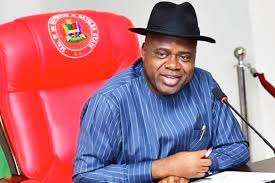
    The Supreme Court, Friday, declared that Duoye Diri, remains the authentic governor of Bayelsa State.

    The Apex court affirmed the re-election of Diri after dismissing the appeal of the candidate of All Progressive Congress(APC) Timipre Sylva, in the November 11 off-cycle election.

    The five-man panel of the supreme court lead by Justice Lawal Garba, affirmed the Court of Appeal decision of 15 July, that declared Sylva’s appeal an abuse of court process for filing two notices of appeal.

    Citing a part of section 246(1) of the 1999 Constitution, the Apex Court panel held that the APC Governorship candidate has only one right to appeal the judgment of the Tribunal and not multiple.

    Consequently, it faulted the APC appellant who filed two notices of appeal to the Appellate Court.

    In a unanimous judgment, the appeal was therefore dismissed by the Supreme Court for lacking merit.

    The Electoral body, INEC had declared that governor Diri of the PDP garnered a total of 175,196 votes to defeat his closest rival, Sylva of the APC who polled 110,108 votes.

    The unanimous decision of the apex court upheld the earlier decision of the Court of Appeal and the Election Petition Tribunal.

    The Court of Appeal in Abuja had on July 18 in a unanimous judgment affirmed the decision of the Bayelsa Governorship Election Petition Tribunal, which upheld the November 11, 2023, re-election of Governor Douye Diri of Bayelsa State.

    A 3-man panel of the appellate court had dismissed an appeal brought before the Court by Timipre Sylva and APC seeking to set aside the decision of the Tribunal.

    The Justice Adekunle Adeleye-led three-member tribunal had on May 27, dismissed the petition filed against Governor Diri’s re-election by the APC and its candidate for lacking in merit.

    The tribunal had held that both Sylva and APC failed to adduce any credible evidence to substantiate any of the allegations they raised against the outcome of the governorship poll.

  • Olukayode Ariwoola retires as CJN

    Olukayode Ariwoola retires as CJN

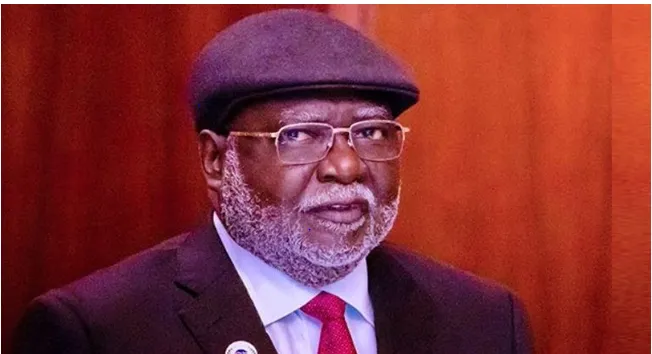
    Justice Olukayode Ariwoola, the 22nd Chief Justice of Nigeria (CJN), has officially retired from service upon reaching the mandatory retirement age of 70.

    Born on August 22, 1954, Justice Ariwoola’s retirement marks the end of a distinguished judicial career.

    Justice Ariwoola was appointed to the Supreme Court bench on November 22, 2011, and later became the substantive CJN on June 27, 2022, following the resignation of his predecessor, Justice Tanko Muhammad.

    His appointment as CJN was formally confirmed by the Nigerian Senate on September 21, 2022.

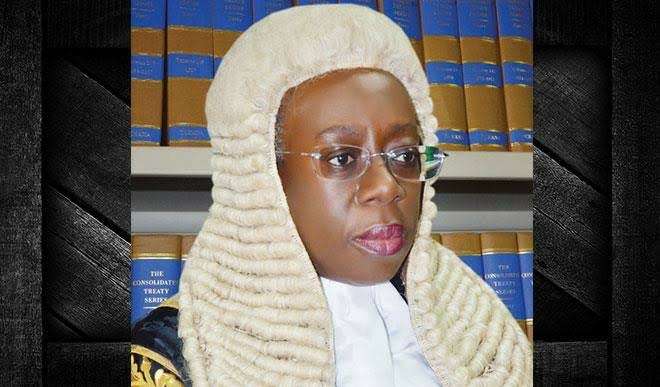
    As events marking his retirement unfold at the Supreme Court, there are strong indications that Justice Kudirat Kekere-Ekun may be named as his successor, making her the new Chief Justice of Nigeria.

  • Ex-CJN Onnoghen, appeals CCT judgment

    Ex-CJN Onnoghen, appeals CCT judgment

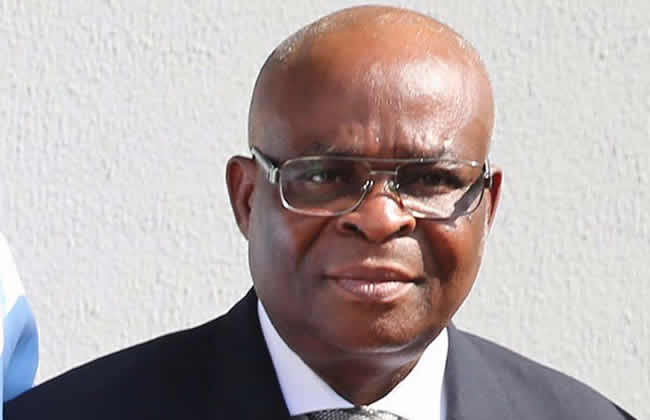
    The former Chief Justice of Nigeria (CJN), Justice Walter Onnoghen, has appealed the judgment of the Code of Conduct Tribunal, CCT, that ordered his removal from office in 2019.


    The legal battle which commences, Tuesday, 20th August 2024, in Abuja was filed at the Court of Appeal since April 2019.


    Onnoghen is specifically praying the Court of Appeal to void and set aside the CCT judgment delivered against him on April 18, 2019, on various grounds.


    In his appeal marked CA/ABJ/375 & 376 & 377/2019, Justice Onnoghen through his lead counsel, Adegboyega Awomolo, SAN, is asking the appellate court to quash his conviction primarily on ground of want of jurisdiction, bias and and absence of fair hearing.


    With Onnoghen as the appellant, the Federal Republic of Nigeria is the sole respondent.


    A notice for hearing of the appeal just sighted by our correspondent is entitled, “CA/ABJ/375 & 376 & 377/2019 BTW: Justice Onnoghen and FRN”.


    It read, “Please take notice that the above matter is listed for hearing on Tuesday the 20th day of August, 2024 at 9 o clock in Court Appeal, Abuja Division.


    “Please take note that this serves as a hearing notice”.


    The Code of Conduct Tribunal had in 2019 convicted Onnoghen in all the 6-count charges of breach of Code of Conduct for Public Officers brought against him by the federal government while in office as head of the country’s judiciary.


    In the lead judgment delivered by Chairman of the CCT, Danladi Yakubu Umar, he had ordered the immediate removal of Onnoghen from office as the CJN.


    The Tribunal had also stripped him of all offices earlier occupied among which were the Chairman of the National Judicial Council, NJC, and also the chairmanship of the Federal Judicial Service Commission.


    The tribunal also ordered the forfeiture of his five bank accounts and the money in the accounts which Onnoghen did not declare in his asset declaration form submitted to the Code of Conduct Bureau, CCB, an agency of the Federal Government.


    Although Onnoghen had been on suspension since January 25, 2019 and had resigned on April 4, the tribunal nonetheless ordered his removal from office as the Chief Justice of Nigeria and also as the chairman of both the National Judicial Council and the Federal Judicial Service Commission.


    However, dissatisfied with the CCT decision, Onnoghen in 2019 approached the Court of Appeal in Abuja with 16 grounds on why his conviction by the Tribunal should be quashed.


    Among others, he maintained that the Danladi Umar-led CCT panel erred in law and occasioned a miscarriage of justice against him, when it failed to decline jurisdiction to entertain the six-count against him.


    He contended that the CCT Chairman ought to have recused himself from presiding over his trial.


    In his seven-point reliefs, Onnoghen, applied for an order setting aside his conviction as well as quashing the order for forfeiture of his assets and to discharge and acquit him of all the charges levelled against him.


    Listing some of the particulars of error in the CCT’s verdict, Onnoghen argued that he was s judicial officer at the time the charges were filed against him on January 11, 2019 and as such cannot be subjected to the jurisdiction of the lower tribunal.


    “0n the authority of Nganiiwa v. FRN (2018) 4 NWLR (Pt. 1609) 30: at 340. 341 only the National Judicial Council (NJC) has the power to discipline the Appellant for misconduct and not the lower tribunal.


    “The lower tribunal had in the case of FRN V. Sylvester Nwali Nguta in charge No: CCT/ABJ/01/2017 delivered on 9th January, 2018, affirmed the position of the Court in FRN Nganjiwa v. FRN and dismissed the charges and acquitted and discharged Justice Ngwuta being a Judicial Officer subject only to the discipline of the National Judicial C0uncil.


    “The lower tribunal has no iurisdittion over servng judicial officers such as the appellant, save the National Judicial Council.


    “The Motion on Notice dated 14th January, 2019, challenging iurisdiction ought to be granted in all material particular as it purports to save the lower tribunal of needless futile exercise.


    “The lower tribunal erred In law when it dismissed the Appellant’s Application seeking the chairman to recuse himself from further proceedings on the ground of real likelihood of bias and thus occasioned a miscarriage of justice.


    “The Appellant has alleged that the chairman of the lower tribunal is biased towards him as a result of open remarks in the tribunal as well as the manner in which the proceedings was being conducted.”


    Contrary to the CCT finding, Onnoghen, said he did not admit the fact of non-declaration of Assets from 2005 as the Justice of the Supreme Court, adding that he only stated that he did not declare in 2009 as required because he forgot.


    Onnoghen challenged the order for the confiscation of his assets on the grounds that the assets were legitimately acquired, as against the provisions of paragraph three of the section 23 of the CCB Act which only permits the seizure of such assets “if they were acquired by fraud.”


    He faulted the failure of the prosecution to present the petitioner, Denis Aghanya, before the tribunal whose petition led to the charges against him.


    Onnoghen maintained that all the allegations brought against him “constitute no offence and should therefore not have formed the basis for his conviction”.


    The former CJN asked the Court of Appeal to issue some orders against the CCT judgment among which are that the tribunal lacks the jurisdiction to entertain the case and that its Chairman ought to have recused itself from the proceedings.


    Consequently, he wants an order setting aside his conviction and another one setting aside the order for forfeiture of his assets made by the Tribunal.


    He also wants the appallete court to discharge and acquit him from the charges.

  • CJN: NJC recommends Kekere-Ekun

    CJN: NJC recommends Kekere-Ekun

    By Vivian Michael, Abuja
    “…recommends the appointment of 27 others as Judges of various courts.
    The National Judicial Council (NJC), has recommended Justice Kudirat Kekere-Ekun as the next Chief Justice of Nigeria (CJN).
    This is imperative as Hon. Justice Olukayode Ariwoola, GCON, will formally bow out of office as the Chief Justice of Nigeria next week Thursday, August 22.
    This was part of the outcome of the meeting of the NJC, which also recommended the appointment of 27 others as Judges of various courts.
    The decision was confirmed by the spokesman of the NJC, Soji Oye, in a statement on Thursday.
    The emergence of Kekere will be subject to confirmation by President Bola Tinubu and screening by the Senate.
    The recommend twenty-seven (27) candidates for appointment as Judges of States Courts and a candidate for appointment as Kadi of the Sharia Court of the FCT, Abuja to their various State Governors and Mr. President as follows.
    Six judges for high court of Kwara state are; Olawoyin, Ibijoke, Abdulrazaq, Fatimah Funsho, Folorunsho, Oba Muritala, Dikko, Yusuf Adebayo, Adeniyi, Oluwatosin Adenike, Osuolale-Ajayi and Temitope Olalekan.
    One judge for high court of Lagos state; Zubairu, Murtala Ja’afaru.
    Four judges for high court of Benue state includes, Kor, Vincent Tersoo; Ikwulono, Maigida Maimuna; Adagba, Nguhemen Julie; Tor, Damian Tersugh.
    Two judges for customary court of Appeal, Benue state are Onche, Ogah Inalegwu, and Igba, Theophilus Terhile.
    Others are eight judges for high court of River State which includes, Onyiri, Frank Ugoji, Victor Chinedum, Obomanu, Godswill Vidal, Oguguo, Rita Chituru, Fubara, Alatuwo Elkanah, Kokpan, Bariyima Sylvester Obu, Ibietela Innocent Madighi and Wifa-Adedipe, Lesi.
    The recommended Six judges for high court of Ondo state are Daomi, Williams Adebisi, Fabuluje, Adewumi William, Ogunwumiju, Mobayonle, Idowu, Demehin-Ogunbayo, Inumidun Happiness, Kpemi, Ojufisintei Justinah, Adegoroye, Olufunke Adeola.
    Concluding, it recommend one Kadi for Sharia court of Appeal, FCT in the person of Muhammad, Lawal Munir.
    All recommended candidates are expected to be sworn-in after the approval of the NJC recommendations to the President and their respective State Governors.
  • LG Allocation: S/Court judgement Nationally Applicable – Ozekhome

    LG Allocation: S/Court judgement Nationally Applicable – Ozekhome

    ... no ambiguity in the judgement to warrant delay in implementation


    Constitutional lawyer, Professor Mike Ozekhome has again insisted that the judgment of the Supreme Court which ordered allocations of funds directly to the 774 local governments in Nigeria is enforceable in all parts of the country.


    Ozekhome, a Senior Advocate of Nigeria (SAN) and human rights activist said that there was no ambiguity in the judgment to warrant any delay in its implementation.


    In a fresh statement issued on Thursday in Abuja, the senior lawyer maintained that section 162 of the 1999 Constitution upon which the judgment was predicated, was rightly interpreted by the 7-man panel of Justices of the apex court.


    Ozekhome asserts “Many Nigerians and non-Nigerians alike have repeatedly asked me if the Supreme Court was not wrong in its interpretation of section 162(3), (4), (5) and (6) of the 1999 Constitution and what happens to the allegedly wrong judgement.


    “They want to know if the judgment is superior to the said “clear” provisions of the Constitution and if it is enforceable or capable of being enforced.


    “They also want to know how, in the event that I say it is enforceable. My simple answers to both questions are yes, yes and yes.


    “Let’s take them one after the other, the judgment of the Supreme Court is superior to the provisions of the Constitution.

    .

    “A law is only what the courts interpret it to be, not what it says on bare paper. That was why Oliver Wendell Holmes Jnr, a very influential civil rights Jurist, Brevet Colonel during the American Civil War and longest serving Justice of the US Supreme Court (1902-1932), who retired from the US Supreme Court at 90, once famously declared;


    “The prophesies of what the courts will do in fact, and nothing more pretentious, are what I mean by the law”. In other words, the law, whether constitutional, substantive, statutory, or adjectival, remains what it is-inanimate and dead on paper-until the life and the oxygen of interpretation are breathed into it by a court of law.


    “Consequently, it is thus the interpretation which was given by the Supreme Court to the entire section 162 of the Constitution on the sharing procedure between the Federal government, states and the LGs, and not the bare provisions of the Constitution that prevails.


    “On the enforceable of the judgment, the answer is also in the affirmative. Section 287 (1) of the 1999 Constitution comes to our rescue by providing that “the decisions of the Supreme Court shall be enforced by in any part of the Federation by all authorities and persons and by courts of subordinate jurisdiction to that of the Supreme Court”.


    “Even if the Supreme Court was wrong in its interpretation of section 162 dealing with the State Joint Local Government Account, the judgement remains binding on all and for all times.


    “It is only an amendment of the Constitution under section 9 thereof that can override the decision. No person or authority can decide, whimsically and arbitrarily to disobey the judgement or pick and choose what portions of the judgment to obey or which to discard.


    “In Rt Hon Michael Balonwu & Ors V Governor of Anambra State& Ors (2007) 5 NWLR ( Pt 1028) 488, the intermediate court held that “an order of court whether valid or not must be obeyed until it is set aside.


    “An order of court must be obeyed as long as it is subsisting by all no matter how lowly or lightly placed in the society. This is what the rule of law is all about, hence the courts have always stressed the need for obedience to court orders”.


    “It therefore does not matter that the judgment is downright stupid, illogical or not well researched; or that parties affected do not like it.


    “Right or wrong therefore, court judgements must be obeyed until set aside by a higher court, or a challenged section is amended by the Legislature.


    “Since no court is higher than the Supreme Court of Nigeria, only an amendment to the Constitution by the NASS under section 9 can override the judgment.


    “That was why the same Supreme Court, acutely aware that it is susceptible to mistakes and errors being constituted by mere mortals and not almighty God or angels, once famously declared through late venerable Socrates of the Nigerian Bench, Honourable Justice Chukwudifu Oputa, in the causa celebre of Adegoke Motors Ltd v Adesanya (1989) NWLR ( Pt 109) 250, that “the Supreme Court is final not because it is infallible, it is infallible because it is final”.


    “On how the Supreme Court judgment is implementable, yhe answer is equally simple. The FG, states and LGs should now meet (and I am told they have been meeting) at FAAC and decide on modalities and procedures of opening up accounts for LGs so that their allocation under section 162 is paid directly to them and not to the joint state LG account that is oftentimes waylaid by state Governors and fleeced without the helpless and hamstrung LGs being able to raise a finger.


    “This is not rocket science.That refusal by state governors to remit to the LGs was the ugly mischief the Apex Court judgment sought to cure; and it did so perfectly, loud and clear, in my own humble opinion.


    “Inter alia, the Apex Court had declared emphatically that, “by virtue of section 162(3) and (5) of the Constitution of Nigeria, 1999, the amount standing to the credit of LGs in the Federation Account shall be distributed to them and be paid directly to them”; that “a state, either by itself or Governor or other agencies, has no power to keep, control, manage, or disburse in any manner, allocations from the Federation Account to LGs”.


    “The Apex Court also granted injunctive orders restraining “Governors and their agents, officials or privies from tampering with funds meant for the LGs in the Federation Account” ; and further ordered “immediate compliance by the states, through their appointed officials and public officers with the terms of the judgment and orders”.


    “The apex court further ordered the “Federation or Federal Government of Nigeria through its relevant officials, to forthwith commence the direct payment to each LG of the amount standing to the credit of each of them in the Federation Account”.


    “The content, terms and directives contained in this judgement, are in my humble opinion, very straight forward, unambiguous and are as clear and clean as a whistle.


    “All parties concerned, – FG, states and LGs- must therefore obey and enforce this judgement immediately. There is no option.I had earlier made public this same opinion of mine.


    “I had written and stated on several fora that in my humble understanding of the principles of interpretation, the Supreme Court was right in the interpretation it gave to section 162 of the Constitution, so as to prevent continuation of years of wanton abuse of the provisions of section 162 by state governors.


    .”I still stand very firmly by this my earlier opinion.God bless Nigeria as we collectively seek true fiscal federalism and not the present unitary system of government that we are currently operating under the thin guise of federalism”, Ozekhome said.