
Category: ECOWAS

  • ECOWAS Departure: Burkina Faso launches biometric passport

    In a move that indicates further severance of relations with the regional body, the government of Burkina Faso has unveiled a new generation biometric instead of the old generation ECOWAS passport.

    This moves puts pay to any likelihood of the French speaking West African country rejoining the ECOWAS fold despite appeals by regional authorities for a change of stand.

    The new passport, unlike the one of the old generation, doesn’t carry the ECOWAS Logo or any related inscriptions on its cover page.

    The new passport is produced by Emptech a Chinese biometrics technology company.

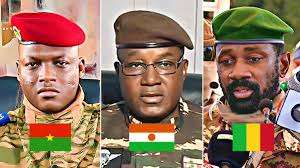
    Following harsh sanctions due to military coups, Burkina Faso, Mali, and Niger—three West African nations currently under military rule—announced in January that they would be leaving the 15-member ECOWAS bloc.

    Burkina Faso-Emptech Biometric Passport Launch

    Reuters quotes the country’s Security Minister Mahamaou Sana as affirming that “on this passport, there’s no ECOWAS logo, and no mention of ECOWAS either.”

    The government official adds that “since January, Burkina Faso has decided to withdraw from this body, and this is just a realisation of the action already taken by Burkina Faso.”

    The ECOWAS bloc has a policy on visa-free movement for nationals of member states using either the ECOWAS passport or the regional biometric ID implemented under the World Bank-supported (West Africa Unique Identification for Regional Integration and Inclusion  (WURI) program. Burkina Faso and Niger were among the first six ECOWAS countries to benefit from the WURI initiative.

    President Bola Tinubu, ECOWAS Chairman

    When the countries announced their departure from ECOWAS early in the year, regional officials raised concerns that citizens of the three countries will no longer be able to use the regional passport and ID card.

    According to Burkina 24 TV, Arzouma Daouda Parfait Louré, the director general of the National Identification Agency, stated at the passport’s launch early this month that the accomplishment is the result of a procedure that began in 2022. He said that the outdated passport production system, in use since 2018, had undergone a comprehensive diagnosis.

    The new passports will be produced with technology of the latest generation and in line with security standards for travel documents prescribed by the International Civil Aviation Organization (ICAO), the official explained.

    The head of the ID agency announced that one of the latest developments is that people can now apply online for passports using an easily customizable and streamlined data collection method. The passport application process may be tracked by applicants, and passports can be issued in as little as 24 hours, regardless of where the applicant is located in the world.

    It is speculated that funding for this project may have come the $150 million World Bank’s International Development Association approved funding for Burkina Faso earlier this year to enable the West African country to its digital public infrastructure.

  • Tinubu’s Broadcast: ECOWAS Breaks Silence on Hunger Protests

    The Economic Community of West African States (ECOWAS) has broken its silence on the ongoing protests in Nigeria.
    In a statement released on Tuesday, the ECOWAS Commission urged protesters to heed the call for dialogue and peaceful resolution of their grievances.
    The body expressed deep concern over the violence, fatalities, and property destruction that have marred the demonstrations
    The commission extended condolences to the families of those who have lost their lives in the protests and expressed sympathy with the Nigerian government and its people over the losses incurred.
    The statement said, “The ECOWAS Commission has been closely monitoring the ongoing protests by citizens of the Federal Republic of Nigeria and deeply regrets reports of violence in the course of the protests and the unfortunate death of some protesters as well as alleged looting and destruction of public and private properties.
    “The commission extends heartfelt condolences to the bereaved families and sympathizes with the Government and people of the Federal Republic of Nigeria over the losses.
    “The ECOWAS Commission recognises the right of citizens to peaceful protests, as guaranteed by the 2001 ECOWAS Supplementary Protocol on Democracy and Good Governance and enshrined in the 1999 Constitution of the Federal Republic of Nigeria, as amended.”
    ECOWAS also welcomed President Bola Tinubu’s recent State of the Nation address on Sunday, in which he called for inclusive dialogue to address the grievances of protesters.
    “The Commission welcomes the State of the Nation address of August 4, 2024 by President Bola Tinubu and urges the protesters and all stakeholders to heed the President’s call for inclusive dialogue for the resolution of all grievances and the preservation of peace and security in Nigeria and the ECOWAS region at large,” it added.
    The hunger protests in Nigeria, which began as a peaceful demonstration against the rising cost of living and food insecurity, took a violent turn last week, resulting in numerous deaths and the burning of properties.
  • EndSARS Protest: ECOWAS Court finds FG guilty of human rights violations

    EndSARS Protest: ECOWAS Court finds FG guilty of human rights violations

    The Court of Justice of the Economic Community of West African States(ECOWAS) has found the Federal Government guilty of violating the fundamental human rights of youths that participated in the October 2020, EndSARS protest.

    A three-man panel of Justices, had in a unanimous decision, held that there was merit in a suit brought before it by three participants in the protest – Obianuju Catherine Udeh, Perpetual Kamsi and Dabiraoluwa Adeyinka.

    Specifically, the court held that the Federal Republic of Nigeria, through its security agencies, violated Articles 1, 4, 6, 9, 10, and 11 of the African Charter on Human and Peoples’ Rights, ACPHR, pertaining to the right to life, security of person, freedom of expression, assembly and association, prohibition of torture, duty of the state to investigate, and the right to effective remedy.

    The Applicants had, in their suit, alleged that these violations occurred during peaceful protests they held at the Lekki Toll Gate in Lagos State on October 20 and 21, 2020.

    In the judgement delivered by the lead Judge Rapporteur, Justice Koroma Mohamed Sengu, the regional court dismissed the Applicants’ allegation that their right to life as guaranteed under Article 4 of the ACPHR, was violated.

    However, it ordered FG to pay each of the Applicants the sum of N2million as compensation for violations of their security of person, prohibition of torture and cruel, inhuman, and degrading treatment, rights to freedom of expression, assembly, and association, duty to investigate human rights violations, and right to effective remedy.

    Additionally, it held that FG must adhere to its obligations under the ACPHR by investigating and prosecuting its agents responsible for the violations.

    The court ordered FG to, within the next six months, report to it, measures it has taken to implement the judgment.

    The Applicants had alleged that during the peaceful protests against the SARS Unit of the Nigerian Police Force at Lekki Toll Gate, Lagos State, on October 20 and 21, 2020, the Respondent, committed several human rights violations.

    Triggered by the alleged killing of one Daniel Chibuike, the protests were aimed to address police harassment and brutality.

    In the suit, the 1st Applicant, among other things, told the court that soldiers shot life ammunitions at protesters, resulting in deaths and injuries, which she live-streamed.

    She told the court that subsequently, she started receiving threatening phone calls that forced her not only to go into hiding but also to seek asylum.

    Likewise, the 2nd Applicant, who said she was responsible for the welfare of the protesters, described how soldiers began shooting after a power cut, leading to her hospitalisation due to excessive tear gas she inhaled.

    On her part, the 3rd Applicant narrated how she narrowly escaped being shot and how soldiers refused to allow an ambulance to enter the protest ground to help the injured participants.

    She further told the court that she later witnessed how the victims were neglected without the provision of adequate healthcare for them at the hospital.

    She further submitted that with the help of her colleagues, she eventually took over and started taking care of the victims.

    She alleged that she faced numerous threats and was placed on surveillance by security agents.

    Consequently, all the Applicants prayed the court to issue declaratory reliefs against FG and award compensation to them for the gross violations of their fundamental human rights.

    Meanwhile, in processes it filed before the court, FG, through its team of lawyers, denied all the allegations and claims that were made up by the Applicants.

    It told the court that the protesters unlawfully assembled at Lekki Toll Gate on October 20, 2020, under the guise of protesting against SARS.

    FG also maintained that its agents followed strict rules of engagement and did not shoot or kill protesters.

    It argued that the 1st Applicant incited the crowd by playing music and using her Instagram page to stir disaffection against law enforcement agents who were targeting escapee members of Boko Haram and bandits.

    FG further contended that the 2nd Applicant’s provision of logistics and welfare packages indicated her support for the violent protest.

    It claimed that soldiers were present to restore peace until the police arrived, denying any harm inflicted on protesters and the alleged refusal to access the ambulance.

    More so, FG denied that the 3rd Applicant’s presence was peaceful, asserting it was meant to escalate violence.

    It argued that the treatment and care of the injured were managed by the Lagos State government, insisting that the Applicants failed to provide credible evidence to support their claims and the reliefs they sought from the court.

    In its judgment on Wednesday, the court held that it could not establish that there was a violation of the right to life as the Applicants failed to adduce any evidence to that effect.

    Nevertheless, it held that several articles of the ACHPR were breached by the Respondent (FG), which occasioned fundamental breaches of human rights.

    Furthermore, the Court said it was satisfied that the Applicants were denied the right to an effective remedy.

    It ordered FG to make reparations to the Applicants for the violation of their fundamental human rights.

    Other members of the panel that concurred with the lead judgement were Justice Dupe Atoki, who presided, and Justice Ricardo Claúdio Monteiro Gonçalves

  • ECOWAS President condemns non enforcement of its court judgments

    ECOWAS President condemns non enforcement of its court judgments

    The ECOWAS Commission President, Omar Touray, has condemned the non enforcement of its judgements among the member statess.

    Touray insisted that the enforcement ofjudgmentss of the Community Court has remained a major issue in the effective delivery of the mandate and responsibility of the judicial institution to the community citizens.

    Speaking at the ECOWAS Judicial Council meeting, in Abuja Tuesday, Touray noted that the supplementary protocol relating to the ECOWAS Community Court provides a role for the national judicial institutions in the enforcement of these judgements.

    “I believe that it is time for deliberate action to be taken to address this challenge.

    “In this era, where instability and insecurity are overwhelming our community, the role of the justice sector is crucial in conflict prevention, through the promotion and defence of the rule of law and human rights.

    He stressed the need to institutionalise a more regular meeting of the Judicial Council to ensure that the activities of the Court benefit from theregulary review and guidance of the Council.

    The ECOWAS Commission President noted that the Community Court has become an exemplary institution, which is being emulated by other regional courts in the continent, adding that the Court has witnessed the transition of judges over the years: the recruitment of Judges of high quality and standards to preside over the affairs of the Court.

    The 2-day ECOWAS judicial council conference on enforcemenot of ECOWAS court judgments was declared open by the Chief Justice of Nigeria, Justice Olukayode Ariwoola.

    The meetin, which started on Tuesday, and had in attendance, the Chief Justices of member countries of ECOWA, is presided over by Justice Ariwoola, the Chairman of the ECOWAS Judicial Council.

    In an opening address, Justice Ariwoola recalled that in June 2006, the Authority of Heads of State and Government of ECOWAS decided to establish a Judicial Council of the Community with the responsibility for recruiting judges for the Community Court and handling disciplinary matters of the judges, including the functioning of the Court.

    Justice Ariwoola said
    the ECOWAS Judicial Council, though not as widely known as some other bodies, plays a crucial role in maintaining the rule of law and justice within ourregionn.

    “The Judicial Council serves as the guardian of the rule of law and the protector of human rights within
    the region, he said.

    In addition, the ECOWAS Judicial Council plays a crucial role in the resolution of disputes among member states, ensuring that conflicts are resolved peacefully and in accordance with the rule of law.

    The objective of this starutory meeting of ECOWas Judicial Council is to review the legal framework of the Community Judicial Council, look deeply on our responsibilitie, and suggest areas for improvement.

    The ECOWAS Judicial Council plays a crucial role in the resolution of disputes among memberstatess, ensuring that conflicts are resolved in peacefully and in accordance with the rule of law.

    “It acts as a mediator and facilitator in resolving disputes, promoting dialogue and reconciliation among member states.

    “By doing so, the Council contributes to the maintenance of peace and stability in the regio,n” Justice Ariwoola stated.

    The ECOWAS Judicial Council Chairman hinted that the objective of the Statutory meeting of ECOWAS Judicial Council is to review the legal framework of the Community Judicial Council, look deeply on our responsibilities and suggest areas for improvement.

    “No doubt, the ECOWAS Judicial Council is an indispensable institution in the West African region.

    “Through its numerous functions, the Council strives to ensure the independence and integrity of the judiciary, protect human rights, interpret regional laws, and resolve disputes among member states.

    “As we move forward, it is crucial to support and strengthen the ECOWAS Judicial Council, as it continues to play vital role in our collective journey towards a more just, peaceful, and integrated West Africa” Justice Ariwoola stated.

  • CJN Ariwoola Declares ECOWAS Judicial Council Conference Open

    CJN Ariwoola Declares ECOWAS Judicial Council Conference Open

    Chief Justice of Nigeria (CJN) Justice Olukayode Ariwoola has declared open a 2-day Statutory Meeting of the ECOWAS judicial council conference on enforcement of ECOWAS court judgments.

    The meeting, which started on Tuesday and has in attendance, the Chief Justices of member countries of the ECOWAS, is holding at the conference hall of the National Judicial Council Abuja.

    Justice Ariwoola, the Chairman of the ECOWAS Judicial Council, is presiding over the meeting.

    In an opening address, Justice Ariwoola said the ECOWAS Judicial Council plays a crucial role in the resolution of disputes among member States, ensuring that conflicts are resolved in peacefully and in accordance with the rule of law.

    “It acts as a mediator and facilitator in resolving disputes, promoting dialogue and reconciliation among member states.

    “By doing so, the Council contributes to the maintenance of peace and stability in the region,” Justice Ariwoola stated.

    The ECOWAS Judicial Council Chairman hinted that the objective of the Statutory meeting of ECOWAS Judicial Council is to review the legal framework of the Community Judicial Council, look deeply on our responsibilities and suggest areas for improvement.

    “No doubt, the ECOWAS Judicial Council is an indispensable institution in the West African region.

    “Through its numerous functions, the Council strives to ensure the independence and integrity of the judiciary, protect human rights, interpret regional laws, and resolve disputes among member states.

    “As we move forward, it is crucial to support and strengthen the ECOWAS Judicial Council, as it continues to play vital role in our collective journey towards a more just, peaceful, and integrated West Africa” Justice Ariwoola stated.

  • Mali, Niger, and Burkina Faso, Exit ECOWAS

    Mali, Niger, and Burkina Faso, Exit ECOWAS

    Mali, Niger, and Burkina Faso, nations that were recently brought under military dictatorships have unilaterally withdrawn their membership of the Economic commission of West african States (ECOWAS).

    The military regimes of these countries jointly released a statement on Sunday, characterizing their departure as a “sovereign decision” that will be promptly executed.

    The move follows a series of coups in the region, with Niger experiencing a coup in July 2023, Burkina Faso in 2022, and Mali in 2020.

    ECOWAS responded by suspending all three nations and imposing severe sanctions, intensifying the already strained relations. The military regimes argue that ECOWAS’ measures hinder their ability to address pressing issues, leading to this decisive withdrawal.

    The exit is seen as a bold assertion of sovereignty by these countries aiming to tackle their challenges independently.

    However, concerns arise about potential disruptions to regional cooperation and integration, given ECOWAS’ pivotal role in fostering economic collaboration, regional security, and political stability.

    The departure of these nations may undermine these efforts, causing fragmentation in regional initiatives.

    The Sahel region, grappling with persistent jihadist violence, faces heightened security risks due to the absence of a unified regional approach. Moreover, the withdrawal may impact the international standing of these countries, limiting their access to diplomatic relations and foreign investments facilitated by ECOWAS.

    This decision has garnered international attention, sparking debates among experts and analysts.

    The uncertainty surrounding its consequences will be closely monitored in the coming months, as the withdrawal signifies a pivotal moment in the region’s political dynamics. The potential impact on regional stability, security, and development remains a subject of intense scrutiny.

  • Ex-President Koroma, arrives Nigeria under an ECOWAS-brokered deal

    Ex-President Koroma, arrives Nigeria under an ECOWAS-brokered deal

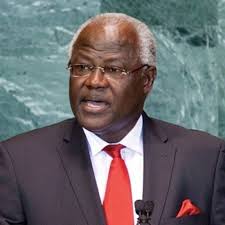
    Sierra Leone’s former President Ernest Bai Koroma, facing treason charges, has arrived in Nigeria under an ECOWAS-brokered deal, ostensibly labeled as a “medical trip” by the Sierra Leone government.

    Originally scheduled for January 4th, the departure was delayed as President Julius Maada Bio faced internal opposition, fearing ECOWAS interference.

    The political unrest in Sierra Leone escalated after the disputed June 2023 presidential election, culminating in an alleged coup attempt on November 26th, attributed to opposition figures, including Koroma.

    Despite his denial of involvement, Koroma was placed under house arrest, later charged with treason, and taken to court on January 3rd.

    During the ECOWAS summit in December 2023, President Bio sought mediation, leading to a delegation, including Presidents Nana Akufo-Addo and Macky Sall, intervening in Freetown. President Bio insisted on Koroma’s exile for peace, similar to his asylum granted by the U.S. in 1996.

    Koroma initially resisted, but ECOWAS persuasion led to an agreement, contingent on dropping charges, retaining entitlements, and Nigeria as the host country.

    The Sierra Leone government introduced the “medical trip” narrative to save face, masking Bio’s initiation of the plan.

    Uncertainty looms over ECOWAS considering Bio’s request for a stabilization force.

    The alleged coup’s trial, involving 15 of Koroma’s bodyguards, gains significance with his exit. Sierra Leone, marked by ethnic division and post-civil war recovery, faces a critical juncture as it navigates these political challenges.

  • ECOWAS Condemns Plot To Truncate Peace In Sierra Leone

    ECOWAS Condemns Plot To Truncate Peace In Sierra Leone

    *As Sierra Reschedules Flights For Departing Airlines 

    The Economic Community of West African States (ECOWAS), has condemned the plot by some individuals to disturb the peace of Sierra Leonians.

    The condemnation is contained in a statement issued by ECOWAS on Sunday in Abuja.

    “The bloc has learnt, with utter disgust, a plot by certain individuals to acquire arms and disturb the peace and constitutional order in Sierra Leone.

    “ECOWAS condemns this act and calls for the arrest and prosecution of everyone involved in the illegality.

    “The bloc has always maintained its zero-tolerance for unconstitutional change of government.

    “We want to reaffirm our commitment to supporting the government and the people of Sierra Leone’s quest to deepen democracy and good governance by consolidating peace and security so as to foster socio-economic development,” it stated.

    The Sierra Leonean government has declared a 24-hours nationwide curfew in a proactive step to ensure that the peace is not tampered with.

    Meanwhile, the Sierra Leone Civil Aviation Authority (SLCAA) has imposed a rescheduling of flights for departing airlines.

    In a statement on Sunday by the Management of SLCAA, the authority said the rescheduling of the flights is in view of the nationwide curfew imposed by the government.

    “SLCAA is aware that passengers intending to depart from and arrive at the Freetown International Airport (FNA) on flights scheduled for today, Sunday Nov. 26, 2023 are affected by the nationwide curfew declared by the state and currently in force,” the authority said.

    SLCAA urged all airlines to reschedule departing passengers on the next available flights after the curfew is lifted, “as SLCAA airspace remains open.”

    “While we appreciate the inconvenience this may cause, we urge all to respect the curfew and follow directives of the state security forces.

    “The SLCAA assured the airlines and the wilder aviation industry of its unflinching support,” the authority added in the statement.

  • ECOWAS rejects Niger Junta’s 3-year transition plan

    The transition plan presented by the Niger junta for a three-year period to presumably establish a democratic government has been unequivocally dismissed by the Economic Community of West African States (ECOWAS).

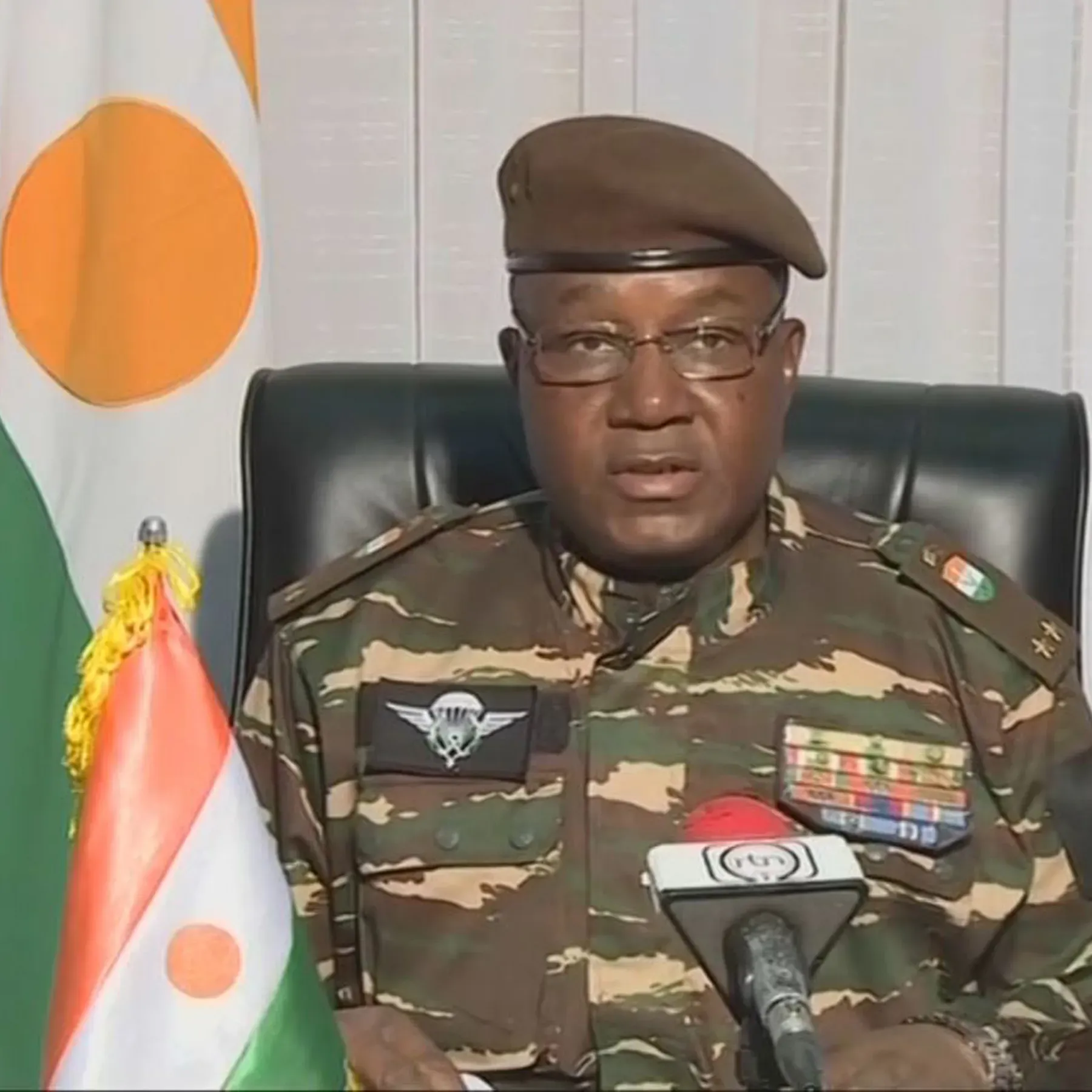
    General Abdourahamane Tchiani, leader of the Niger junta, had said in a televised broadcast on Saturday night that the army will hand over power to the civilian government within the next three years.

    According to him, his ambition is not to confiscate power but help the country out of its current conundrum.

    “Our ambition is not to confiscate power,” General Abdourahamane Tiani emphasized in a televised address. He further stated, “Any transition of power would not go beyond three years.”

    However, in a contrary view, the ECOWAS Commissioner for Political Affairs, Amb. Abdel-Fatau Musah, who made an appearance on Channels Television on Monday, voiced the West African bloc’s strong objection to the proposal.

    “This offer is completely unacceptable, and ECOWAS insists on the restoration of constitutional order as quickly as possible,” Amb. Musah stated firmly, emphasizing that the commission had prior experience dealing with similar maneuvers by military regimes.

    He referred to the situation in Niger, highlighting the creation of the “new” constitution in 2010, which was subsequently revised in 2017.

    Musah posed a pointed question, “What dramatic change do you need in the governance architecture of the country to require three years to experiment with something else?

    Expressing skepticism about the junta’s intentions, Musah remarked, “This is like subterfuge to throw ECOWAS off-course and then do whatever they want.”

    Drawing comparisons, he pointed out that some other West African countries under military rule had been given about three years, yet they were now “negotiating” with their populations for an additional 18 months.

    Putting the timeframe into perspective, he highlighted the fact that even a democratically elected president in Nigeria only has four years in office. Musah concluded by questioning the legitimacy of the junta’s decision to start with a three-year period and implying that it could extend beyond that.

    ECOWAS’ response underscores its unwavering commitment to democratic governance and stability in the region, raising concerns about the motives behind the proposed three-year transition plan.

  • Niger Coup: Tchiani asserts defensive stance against ECOWAS

    Niger Coup: Tchiani asserts defensive stance against ECOWAS

    In the wake of the recent coup in Niger, General Abdourahamane Tchiani, the leader of the mutineers who assumed control, emphasized his nation’s reluctance for conflict but readiness to safeguard itself when necessary.

    Tchiani conveyed that both the military and the populace of Niger are averse to the prospects of war, yet they remain steadfast in their determination to counter any signs of aggression, as reported by Al Jazeera.

    The head of the junta underscored the unawareness of member states within the Economic Community of West African States (ECOWAS) regarding Niger’s pivotal role in preventing regional destabilization amidst a surge in terrorist activities.

    He expressed skepticism towards the imposed sanctions on his country, suggesting that they aimed to exert pressure on the rebels rather than resolve the ongoing crisis.

    Tchiani further clarified that the insurgents’ objective isn’t to seize power but to facilitate a solution that aligns with the best interests of the populace.

    The coup leader disclosed that an ECOWAS delegation visited Niger’s capital and held discussions both with the deposed President Mohamed Bazoum, who was removed and detained by his own guard led by Tchiani, and with Tchiani himself.

    Since the coup’s occurrence on July 26, ECOWAS has responded by suspending financial aid to Niger, freezing rebel-held assets, and imposing travel restrictions on flights to and from the nation.

    A subsequent summit in Nigeria’s Abuja resulted in ECOWAS leaders agreeing to ready a standby force to potentially compel the Nigerien military to reinstate Bazoum.

    On a recent note, ECOWAS Commissioner for Political Affairs, Abdel-Fatau Musah, indicated that the general staff chiefs within ECOWAS have set a date for an undisclosed military intervention. This decision comes as tensions and uncertainties persist within Niger’s political landscape.

    General Abdourahamane Tchiani’s statements echo a stance against war while highlighting the nation’s resolve to defend itself against aggression, as Niger navigates through these challenging times of political transition and unrest.