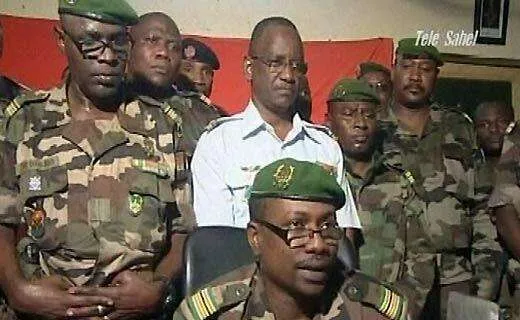

Lamine Zeine, Niger’s newly appointed Prime Minister, has characterized the sanctions imposed on the nation’s military junta as an “unfair challenge,” while expressing optimism that Niger will ultimately overcome them.
Despite this obstacle, Zeine reaffirmed Niger’s commitment to fostering economic cooperation with the Economic Community of West African States (ECOWAS).
Following the military’s ousting of democratically-elected President Mohamed Bazoum on July 26, which led to the suspension of the constitution and the installation of a transitional government, ECOWAS responded with sanctions against the new military junta.
The regional body demanded an immediate return to constitutional order and activated a standby force in preparation for potential military intervention in Niger.
Prime Minister Zeine acknowledged the significance of possible negotiations with both ECOWAS and neighbouring Nigeria, which had taken a lead role in addressing the situation in Niger.
He emphasized the importance of preserving the historical relationship between Niger and ECOWAS, originally founded as an economic group to promote prosperity in West Africa.
Zeine expressed his hopes for maintaining the economic solidarity envisioned by ECOWAS but noted concerns if political and military considerations overshadow this objective.
He highlighted Niger’s dedication to working within the framework of regional cooperation while also voicing the nation’s desire to address issues in a balanced manner.
The ECOWAS Parliament was on Saturday divided over taking military action as an option aimed at tackling the political situation in Niger Republic and restoring civil rule there.
Some members called for actions that would nip the military incursion into politics within the region, while others identified diplomacy and dialogue as the best approaches to tackling the crisis.
No fewer than 22 parliamentarians participated in the virtual extraordinary meeting to discuss the political crisis in Niger.
Some members who were against military intervention highlighted the economic woes that the people of Niger could experience if invaded.
Ali Djibo, from Niger Republic, said already at least 9,000 schools had been shut down owing to the crisis.
“War will only compound the economic woes the peoples of the sub-region are already going through.
“As we speak, over a thousand trucks, loaded with goods, are stranded at the border.
“If a coup happened in Nigeria or Cote’d’Iviore tomorrow, where’s the ECOWAS going to mobilise troops to fight the Nigerian or Ivorian military? How many borders are we going to close?
“We must also bear in mind that if we’re applying the ECOWAS treaty, it should be applicable to all.”
Awaji-Inombek Dagomie Abiante (Rivers), ECOWAS must pay keen attention and treat the root causes of coups in ECOWAS countries
Members of the ECOWAS Parliament making a case for military intervention in Niger said diplomacy had contributed in no small measure to the increase in the spate of military takeover of government in the West African sub-region.
Contributing, Adebayo Balogun, posited that ECOWAS leaders were proposing military action to remove the junta, and not clamouring for a fully-fledged war.
Also, Bashir Dawodu expressed the belief that the body should open itself up to the possibility of a military option and apply pressure on the junta while also exploring dialogue.
The ECOWAS Parliament will on Saturday, August 12 hold a virtual Extra-Ordinary Session to exhaustively discuss the recent political developments in the Republic of Niger.
This is contained in a statement by the Communications Division of the parliament.
The parliament said that within the context of giant changes that occurred in the politico-economic spectrum of the world in the late 1980s, several ECOWAS member states were motivated to take decisive steps towards achieving peace and security through the development of democracy and good governance by the early 1990s.
“Thus, the ECOWAS Supplementary Protocol on Democracy and Good Governance came into force in 2001, marking an important stage in the sub-region’s political development.
“Military regimes and one-party systems caved in for the emergence of multi-Party democracies.
“Nevertheless, recent political developments in the region are pointing toward a reversal of the political gains of the past two decades.
“There is a resurgence of unconstitutional changes of government through military coup d’etat, as recorded in four Member States of the sub-region, namely: the Republics of Mali, Guinea, Burkina Faso, and most recently, Niger,’’ the parliament observed.
It said consequent upon such developments, the day-long session would see the 115-member parliament considering the emerging developments, following the unconstitutional change of government by the military of the Republic of Niger.
Niger’s military last month imprisoned President Mohamed Bazoum and assumed power, drawing condemnation from international powers and raising the spectre of further conflict in the impoverished Sahel region of West Africa which is already overrun by a deadly Islamist insurgency.
The ECOWAS Parliament has a total of 115 seats and 14 Standing Committees.
Each member state is guaranteed a minimum of allotted five seats, with the remaining 40 seats distributed in proportion to the population of each country.
Consequently, Nigeria has a total of 35 seats, followed by Ghana with eight seats.
Côte d’Ivoire is allotted seven seats, while Burkina Faso, Guinea, Mali, Niger, and Senegal have six seats respectively.
The remaining ECOWAS member states, namely Benin, Cabo Verde, The Gambia, Guinea Bissau, Liberia, Sierra Leone, and Togo, have allotted to each of them, five seats.
The African Union (AU) has expressed its endorsement of the proposed military intervention led by the Economic Community of West African States (ECOWAS) against the coup perpetrators in Niger.
Moussa Faki Mahamat, the Chairperson of the AU, conveyed his solidarity with ECOWAS’ stance against the Niger Republic coup.
Following a pivotal summit held in Abuja, Nigeria’s capital on Thursday, ECOWAS directed its military leaders to establish a rapid-response force for potential deployment to Niger.
The organization emphasized the importance of prioritizing peaceful means to address the crisis.
Mahamat reiterated his call for the immediate release of ousted Nigerien President Mohamed Bazoum and all individuals from his administration and family.
He condemned the treatment of a democratically elected leader and expressed concern about Bazoum’s reportedly deteriorating detention conditions.
The upheaval occurred on July 26 when Niger’s presidential guard removed Bazoum from power.
Subsequently, the commander of the elite unit, Abdourahamane Tchiani, seized control and dissolved the constitution. Bazoum and his family have remained confined to their residence for over two weeks.
Niger had been a noteworthy exception within the Sahel region’s “coup belt,” maintaining a democratic government and serving as a vital ally to the West in the fight against regional Islamist extremists.
The international community has unequivocally criticized the coup and urged the coup leaders to restore order and transfer authority back to the democratically elected administration.
President Bola Tinubu, as the Chair of the ECOWAS Heads of State and Government, has called upon the leaders of member countries to continue pursuing diplomatic solutions to the political turmoil in the Republic of Niger.
His remarks were delivered during the 2nd Extraordinary Summit on the Socio-Political Situation in Niger held in Abuja on Thursday.
Tinubu emphasized the importance of assessing the effectiveness of interventions undertaken and identifying any obstacles that may have impeded progress. He stressed,
“Only through this comprehensive assessment can we collectively chart a sustainable path toward lasting peace, stability, and prosperity in Niger.”
In his address, he reaffirmed the commitment to democracy, human rights, and the well-being of the Nigerien people. He underscored the necessity of prioritizing diplomatic negotiations and dialogue to reach a resolution.
“We must engage all parties involved, including the coup leaders, in earnest discussions to convince them to relinquish power and reinstate President Bazoum. It is our duty to exhaust all avenues of engagement to ensure a swift return to constitutional governance in Niger,” Tinubu asserted.
While urging the leaders to recognize the impact of the political crisis on Niger’s stability and the broader sub-region, he advocated adherence to democratic principles, good governance, and the rule of law to restore peace and prosperity.
Tinubu also regarded the summit as a momentous occasion to reinforce West Africa’s unity and resilience. “Let us seize this opportunity to make a lasting impact on the lives of our fellow Africans as we strive to build a future defined by peace, progress, and prosperity,” he remarked.
He commended the diplomatic envoys deployed to mediate in Niger, Libya, and other partner countries.
The summit attendees included Presidents Julius Maada Bio of Sierra Leone, Umaro Mokhtar Sissoco of Guinea Bissau, Everiste Ndayishimiye of Burundi, Alassane Ouattara of Cote d’Ivoire, Mohamed Ould Ghazouani of Mauritania, Nana Akofo-Ado of Ghana, Macky Sall of Senegal, and Patrice Talon of Benin Republic. Retired Gen. Abdulsalami Abubakar, Babagana Kingibe, and the Sultan of Sokoto, Abubakar Sa’ad III, were also present.
In response to the military coup in Niger, ECOWAS had implemented a no-flight zone over the country, aiming to curb the junta’s influence. Immediate financial sanctions were imposed, and the junta was given a week to relinquish power, with the possibility of a military intervention if necessary. ECOWAS maintained recognition of President Mohamed Bazoum and called upon member states and the international community to uphold these decisions to restore peace and stability.
Speaking at the emergency meeting, President Tinubu condemned the coup and asserted that Africa had reached a new level of maturity.
President Bola Tinubu delivering his speech at the ECOWAS Summit on Thursday in Abuja.
High-level representatives hailing from the West African region have convened in Abuja for an emergency summit aimed at addressing the recent coup in Niger, subsequent to the military junta’s defiance of an ultimatum urging the restoration of elected President Bazoum.
The pivotal meeting took place in Abuja, Nigeria’s political capital, and was attended by several West African leaders, including President Bola Tinubu, who holds the role of Chairman within the Economic Community of West African States (ECOWAS).
Notable figures from the United Nations and African Union were also present at the event.
In his capacity as the convener, President Tinubu officially initiated the extraordinary gathering and emphasized the profound ramifications of the coup in Niger on the stability of democratically established governments within the sub-region.
He articulated the imperative of prioritizing diplomatic negotiations and open dialogue with the military junta in Niger to ameliorate the crisis.
President Tinubu expressed, “Reaffirming our unwavering commitment to democracy, human rights, and the welfare of the Nigerien people, it is of utmost importance that we place diplomatic negotiations and dialogue at the forefront of our strategy.
“We must engage all stakeholders, including the leaders of the coup, in sincere discussions aimed at persuading them to relinquish authority and reinstate President Bazoum. Our responsibility is to exhaust all possible avenues of engagement in order to ensure a swift return to constitutional governance in Niger.”
The President further expounded, “In a more specific context, as leaders representing our respective nations, we must acknowledge that the political turmoil in Niger not only jeopardizes the nation’s stability but also casts extensive reverberations across the entire West African region.
“Through unwavering adherence to the principles of democracy, effective governance, and the rule of law, we can reestablish tranquility, stability, and prosperity within the Republic of Niger, thereby cultivating an environment conducive to comprehensive growth and development for all.”
“More so, in reaffirming our relentless commitment to democracy, human rights, and the well-being of the people of Niger, it is crucial that we prioritize diplomatic negotiations and dialogue as the bedrock of our approach.
“We must engage all parties involved, including the coup leaders, in earnest discussions to convince them to relinquish power and reinstate President Bazoum. It is our duty to exhaust all avenues of engagement to ensure a swift return to constitutional governance in Niger.
“More specifically, as leaders of our respective nations, we must recognize that the political crisis in Niger not only poses a threat to the stability of the nation but also has far-reaching implications for the entire West African region.
“By remaining steadfast in our adherence to the principles of democracy, good governance, and the rule of law, we can restore peace, stability, and prosperity in the Republic of Niger, thereby fostering an environment conducive to growth and development for all.”
Following President Tinubu’s address, the summit transitioned into a confidential deliberation phase. The meeting, convened two weeks subsequent to the coup that ousted Mohamed Bazoum, who ascended to power in 2021, signifies ECOWAS’s proactive pursuit of a diplomatic resolution while keeping the prospect of employing force as a last resort.
Critical determinations are anticipated from the gathering held in Abuja, as ECOWAS endeavors to curtail the succession of coups among its member states that has been unfolding since 2020.
The coalition granted the military forces, which assumed control on July 26, a grace period until the prior Sunday to reinstate President Bazoum, aged 63, under the threat of potential military intervention.
In response to the crisis, Nigeria, among other measures including border closures, has suspended electricity supply to Niger as part of a series of economic sanctions.
Nonetheless, the leaders of the coup remained steadfast in their stance, and the deadline elapsed without any observed action.
Tinubu’s Full Speech at the Summit
Your Excellency, the President of the ECOWAS Commission;
Your Excellency, President of the African Union Commission;
Your Excellency, President of the UEMOA Commission;
The Special Representative of the Secretary General of the United Nations in West Africa and the Sahel; and
Distinguished Ladies and Gentlemen.
1. Let me commence by welcoming you all to the Second (2nd) Extraordinary Summit on the Socio-Political Situation in the Republic of Niger, within the space of ten days. Your presence here, despite the short notice, demonstrates the unwavering dedication of our esteemed community to finding a lasting solution to the political situation in the Republic of Niger.
2. Today, we gather with a profound sense of urgency and firm determination, building upon the commitments made during our first Extraordinary Summit, on the grave political crisis befalling our sister nation. During that initial meeting, we voiced our solidarity with the people of Niger and their democratically elected President, H.E Mohamed Bazoum, by condemning the military take over and the unjust detention of their democratically elected President.
Your Excellencies, Distinguished Ladies and Gentlemen,
3. As you may recall, we called on the junta to rescind its decision of toppling a legitimate government. We proceeded to impose sanctions with the hope that this resolute measure would serve as a catalyst for the restoration of the constitutional order in Niger. Regrettably, the seven-day ultimatum we issued during the first Summit has not yielded the desired outcome. We have also made diligent efforts through the deployment of various ECOWAS mediation teams, to engage the military junta for a peaceful resolution of the political situation. One of the facilitators, former Head of State of Nigeria, General Abdulsalami Abubakar, would update us on the outcome of his mission to Niamey.
4. Similarly, as part of a coherent diplomatic initiatives, Special Envoys were dispatched to non-ECOWAS nations, particularly Libya and Algeria. During these engagements, the Envoy designated for Libya had the privilege of an audience with the President of Libya. This discourse resulted in an unequivocal expression of support for the resolutions adopted by ECOWAS aimed at restoring constitutional governance in Niger. In Algeria, the Envoy was received by the Minister of Foreign Affairs on behalf of the President of the country. These initiatives are aimed at presenting a cohesive and united stance regarding the ongoing circumstances in Niger, thus showing a collaborative and concerted approach among African nations.
Your Excellencies, Distinguished Ladies and Gentlemen,
5. Following the resolution of our previous Extraordinary Summit to initiate a meeting of the ECOWAS Chiefs of Defense Staff, the meeting of the Chiefs of Staff Committee was duly held from 2nd to 4thAugust, 2023. The outcome of that meeting, as well as a Memorandum by the President of the ECOWAS Commission on current socio-political developments in Niger, will be presented during this Summit. These will offer critical insights that will inform our collective decision-making process at this meeting.
6. Today’s Summit provides a significant opportunity to meticulously review and assess the progress made since our last gathering. It is essential to evaluate the effectiveness of our interventions and identify any gaps or challenges that may have hindered progress. Only through this comprehensive assessment can we collectively chart a sustainable path towards lasting peace, stability, and prosperity in Niger.
Moreso, in reaffirming our relentless commitment to democracy, human rights, and the well-being of the people of Niger, it is crucial that we prioritize diplomatic negotiations and dialogue as the bedrock of our approach. We must engage all parties involved, including the coup leaders, in earnest discussions to convince them to relinquish power and reinstate President Bazoum. It is our duty to exhaust all avenues of engagement to ensure a swift return to constitutional governance in Niger.
7. More specifically, as leaders of our respective nations, we must recognize that the political crisis in Niger not only poses a threat to the stability of the nation but also has far-reaching implications for the entire West African region. By remaining steadfast in our adherence to the principles of democracy, good governance, and the rule of law, we can restore peace, stability, and prosperity in the Republic of Niger, thereby fostering an environment conducive to growth and development for all.
Esteemed Excellencies, Distinguished Ladies and Gentlemen,
8. I am confident that this 2nd ECOWAS Extraordinary Summit on the Socio-Political Situation in the Republic of Niger will be a defining moment in our journey towards a stronger, more resilient, and integrated West Africa. Let us seize this opportunity to make a lasting impact on the lives of our fellow Africans as we strive to build a future defined by peace, progress, and prosperity.
9. In conclusion, I extend my gratitude to each of you for your attention to this critical issue. I trust that our deliberations will be productive and fruitful, leading us to find an amicable solution to the political crisis in Niger. As we continue to work together in solidarity and harmony, we can ensure a prosperous future for the entire West African region.
10. With these remarks, I hereby declare this Extraordinary Summit open.
An International Civil Group, Egalitarian Mission for Africa (EMA) has dragged President Bola Tínubu of Nigeria before the Economic Community of West African (ECOWAS) Court of Justice, invoking the Protocols of the Court to stop the planned military action against the Republic of Niger over coup plot.
The group, in the suit instituted on its behalf by a Nigerian lawyer, Dr Oluwakayode Ajulo, OON, is praying the Regional Court to invoke relevant ECOWAS treaties and international laws to stop the military invasion of Niger Republic being spearhead by the Nigerian Government.
The grouse of the Civil Group, among others, is that the planned military action or invasion will run foul of the obligations in the ECOWAS treaties and therefore amounting to illegality.
The suit marked ECW/CCJ/APP/3/23 emphasized categorically that ECOWAS treaties prohibit aggression among member States.
Apart from the Egalitarian Mission for Africa (EMA), other plaintiffs in the matter are a former Director General of the Nigerian Institute of the Internal Affairs (NIIA), Professor Bola Akinterinwa and a Nigerian Northern Region lawyer, Hamza Nuhu Dantani.
Defendants are ECOWAS, Authority of Heads of State & Government of ECOWAS, President of ECOWAS Mission, Federal Republic of Nigeria and Republic of Niger.
A military group led by General Abdourhamane Tchiani had on July 26 toppled the civilian and democratic government of President Mohammed Bazoun who has since been clamped into unlawful military detention.
Although the three plaintiffs in the regional suit described the coup detat as most unfortunate, they however warned that Nigeria should not travel the dangerous road of military hostilities that may further escalate the crisis in the Niger Republic.
According to them, over 300,000 refugees, mainly Nigeria citizens, have already fled the Niger Republic adding that military action against Niger Republic would lead to breach of fundermrntal rights to life, right to dignity of human persons and liberty to life.
The plaintiffs therefore prayed the ECOWAS Court of Justice for a restraining order against any form of military action in Niger Republic that may undermine the sovereignty and the territorial integrity of Niger Republic.
Besides the Court action, the plaintiffs’ Counsel, Dr Ajulo wrote a strongly worded letter to President Tinubu, notifying him of pendency of the suit and invoking the Protocol of the ECOWAS Court on the need to respect and obey the rule of law as well as to refrain from doing that will militate against the subject matter.
The letter is entitled “Notification of Pendency of case before the ECOWAS Community Court of Justice ; Call For Strict Adherence To The Protocol of the Honourable Court of the ECOWAS Commumity Court of Justice’.
It read in part “We are Counsel to the Plaintiffs/Applicants in the above case before the ECOWAS Community Court of Justice and it is on their firm and unequivocal instructions that we write.
Sequel to the Resolution and several sanctions imposed by the ECOWAS in the aftermath of the unfortunate and unconstitutional takeover of the democratically elected Government of the Republic of Niger, we have lodged a Case before the ECOWAS Community Court of Justice in an application for reliefs as the proposed military intervention in the Republic of Niger would be tantamount to aggression between ECOWAS Member States.
” The intervention will specifically violate Articles 1, 5, 15, 16, 17, 21, 22 & 24 of the African Charter on Human and Peoples’ Rights; Articles 1 (2), 2, 3, 4, 5, 6, 7, 8, 9, 11, 12, 13 & 14 of the International Covenant on Economic, Social and Cultural Rights; Articles 1, 3, 22, 23 (3), 25 (1) & 26 of the Universal Declaration of Human Rights 1948; Articles 1, 2, 3, 4, 5, 6, 7, 8, 9 & 10 of the Declaration on the Right to Development 1986; Articles 6, 15, 31, 63 & 64 of the Revised Treaty of the Economic Community of West African States; Article 10 of the Supplementary Protocol (A/SP.1/01/05) amending the Protocol (A/P.I/7/91) relating to the Community Court of Justice and Articles 10 (c), 22, 26, 27, 28, 56 of the ECOWAS Protocol Relating to the Mechanism for Conflict Prevention, Management, Resolution, Peace– Keeping and Security 1999.
“The Case, an official copy of which has been duly served on your Excellency through the ECOWAS Secretariat, 101, Yakubu Gowon Crescent, Asokoro, Abuja, has invoked the jurisdiction of the International Court to consider conventions, treaties, Protocols and regulations to which your Excellency and the Federal Republic of Nigeria are signatories and which override the resolutions, sanctions, domestic law and practices and which the ECOWAS Community Court of Justice has been called upon to declare illegal. Another copy of the Case is attached for your informed action.
“We wish to further draw your attention to Article 22(2) of the Protocol on the Community Court of Justice which mandates that “When a dispute is brought before the Court, Member states or institutions of the Community shall refrain from any action likely to aggravate or militate against its settlement”
“In the Case before the ECOWAS Community Court of Justice, The Economic Community of West African States (ECOWAS), Authority of Heads of State and Government (of which your Excellency is the Chairman), President, ECOWAS Commission, The Federal Republic of Nigeria (of which your Excellency is the President and Commander-in-Chief of the Armed Forces) have been sued as sovereign legal representatives of respective institutions including the Republic of Niger.
“It is your Excellency’s sacred duty as the Chairman of the Authority of Heads of State and Government of ECOWAS and the President and Commander-in-Chief of Armed Forces of Federal Republic of Nigeria under your hand to bring the institution of the Case before ECOWAS Community Court of Justice to the attention of the other Defendants and to insist, particularly in your Excellences’ subsequent meetings, that the Defendants refrain from taking any action in respect of the subject matter pending the determination of the case, in view of your Excellency and Nigeria’s protocol obligation under the Article above quoted.
“Your Excellency, it is our firm confidence that by your enviable knowledge of high international standard of due adherence to the rule of law and respect for the supranational judicial process obtainable in a Case of this nature, we need not further stress the need to ensure that all the Defendants concerned maintain the status quo presently obtaining, and restrain themselves from taking any step susceptible to being regarded by the ECOWAS Community Court of Justice and international Community as prejudicial to the interest of our client or any of the parties in court.
“Your Excellency would agree with us that as the law stands presently, the Resolution on proposed military actions be discontinued pending the determination of the Case by the ECOWAS Community Court of Justice.
The Alliance for Deepening Democracy (A4DD) has called on leaders of the Economic Community of West African States (ECOWAS) to take urgent measures to address challenges to democracy principles and good governance in the region in order to stem the scourge of unconstitutional takeover of governments now afflicting some of its member countries.
In a statement issued Monday/ in Abuja, the alliance of organizations working to advance democracy in Nigeria, strongly condemned the July 28, 2023 coup in which President Mohamed Bazoum of Niger Republic was removed from power in a military takeover but noted that the failure of leaders in many ECOWAS member states to adhere to the universally accepted norms of democratic practice and good governance principles had become a ready justification for insurgents and coup plotters undermining democratic governance, peace and stability of the region.
The Alliance identified some of the challenges to good governance in West Africa as the failure of some leaders to respect constitutional term limits in their countries, the manipulation of electoral processes leading to the emergence of governments with dubious legitimacy from such flawed elections, widespread violation of human rights and constriction of civic space in many countries, the high level of corruption, lack of independence of the Judiciary, and the inability of governments to deliver basic public services to their citizens in countries across the region.
Noting that the coup in Niger was the seventh coup attempt and fourth successful military takeover of power in West Africa since 2020, the Alliance said it was deeply concerned that a region that was once celebrated as demonstrating the strongest political will and leadership in advancing democratic governance, peace and stability is now referred to as “the coup belt of Africa”.
It said although some of the coups are greeted with jubilations on the streets of the different countries, the reactions were not necessarily informed by the people’s love for military regimes but are frequently motivated by a growing frustration among the people about democratic governance, especially the failure of leaders to meet the collective and individual aspirations of their citizens.
Insisting that ECOWAS leaders had a duty to ensure good governance and adherence to sound democratic principles and practices, the Alliance contended that since they have always cited the violation of the region’s Supplementary Protocol on Democracy and Good Governance as the basis for their zero tolerance for military takeover of governments, it is imperative that they also abide by a key feature of the Protocol, which is the common and universal norms on democratic governance expected of member states through “constitutional convergence”.
The Alliance argued that the failure of ECOWAS leaders to address other challenges to good governance and democracy while seeking to take decisive action against coups would only reinforce the impression that they are only interested in ensuring their continued stay in office and have no real desire to promote universally accepted democratic norms and good governance.
The Deputy Chairperson of the Steering Committee of the Alliance, Ms Faith Waziri, who is also the Communications Officer of the Women in Politics Forum, said: “Sadly, experience from the past in some of the West African countries under military leadership has demonstrated that the military is no different to the political class they often claim to liberate the people from. Thus, if this dangerous precedent is not curtailed immediately, we are concerned that it may become an uncontrolled trend in the region, putting the freedom of the people at risk.”
She said that “While we commend the region’s zero tolerance for military takeover, the conspicuous silence of ECOWAS leaders in the face of violations of the constitutional convergence principles as outlined in the Supplementary Protocol on Democracy and Governance has raised legitimacy concerns and doubts over the sincerity of ECOWAS in championing democracy and good governance in the region.”
Heads of State and Government of ECOWAS on Sunday in Abuja called for the immediate release and reinstatement of President Mohamed Bazoum as the legitimate Head of State and Government of the Republic of Niger.
This is contained in a communique at the end of the Extraordinary Summit on Socio-Political Situation in the Republic of Niger read by the President, ECOWAS Commission, Dr Omar Touray.
The leaders also rejected any form of purported resignation by Bazoum and declared him as the only recognised and elected President by ECOWAS, the African Union and the international community.
‘‘In this regard, only official acts of President Bazoum or his duly-mandated officials will be recognized by ECOWAS,’’ they said.
The leaders expressed strong condemnation of the attempted overthrow of constitutional order in Niger, and the illegal detention of President Bazoum, as well as members of his family and government.
They demanded full restoration of constitutional order in the Republic of Niger and considered the illegal detention of Bazoum as a hostage situation, holding the coupists solely responsible for his safety and that of his family and government.
In the event the ECOWAS’ demands are not met within one week, the leaders said they would take all measures necessary to restore constitutional order in the Republic of Niger.
“Such measures may include the use of force for this effect, the Chiefs of Defence staff of ECOWAS is to meet immediately,’’ the leaders said.
ECOWAS leaders also condemned the pronouncement of support by foreign governments and foreign private military contractors, while expressing appreciation to various governments and partners for their stance and solidarity.
The Summit hosted by President Bola Tinubu, in his capacity as the Chairperson of the ECOWAS Authority of Heads of State and Government, also agreed to appoint and dispatch a Special Representative to deliver the demands of the authority.
In response to the coup attempt, the Summit announced immediate sanctions on Niger including the closure of land and air borders between ECOWAS countries and Niger.
They also agree on establishing a no-fly zone on all commercial flights to and from Niger, and suspending all commercial and financial transactions between ECOWAS Member States and Niger.
Furthermore, assets of the Republic of Niger in ECOWAS Central Bank, Niger state enterprises, and parastatals in commercial banks will be frozen.
Niger will also be suspended from all financial assistance and transactions with financial institutions within ECOWAS.
Additionally, travel bans and assets freezes were imposed on the military officials involved in the coup attempt, as well as their family members and civilians who accept to participate in any institution or government established by these military officials.
In his closing remark, Tinubu thanked fellow leaders, Moussa Faki Mahamat, the African Union Commission (AUC) Chairperson, the Special Representative of the Secretary -General and Head of the United Nations Office in West Africa and the Sahel, Leonardo Simaõ, for their active engagement and invaluable contributions to the discussions.
‘‘As we come close to this Extraordinary Summit on the socio- political situation in the Republic of Niger, I send my heartfelt gratitude to each and every one of you for your active engagement in our open and closed door meeting.
‘‘Your invaluable contributions to our discussions have got us this far and hopefully, we will achieve our objective.
‘‘The essence of African unity and solidarity is hereby reaffirmed. Our unwavering commitment to democracy, peace and prosperity is hereby resolved.
‘‘Throughout our deliberations, we have recognized that the challenges faced by Niger are inter connected with broader issues affecting our region.
‘‘As African leaders, it is our shared responsibility to foster stability and progress, placing the wellbeing of our people at the forefront of our endeavours, and working together towards their prosperity and happiness must always consistently be our goals.
‘‘We will stand with our people in freedom and our commitment to the rule of law and not the barrel of gun. Africa has come of age. We reject coup and interruption to constitutional order,’’ he said.
Before the Summit, the President also held bilateral meetings with President Umaro Embalo of Guinea Bissau, President Mahmat Itno of Chad, and Michael Health, the US Deputy Assistant Secretary of African Affairs.
Presidents Patrice Talon of Benin Republic, Alassane Ouattara of Cote d’Ivoire, Adama Barrow of The Gambia, Nana Akufo-Addo of Ghana, Embalo of Guinea Bissau, Macky Sall of Senegal, Faure Gnassingbé of Togo attended the Summit while the Presidents of Cape Verde, Liberia, Niger and Sierra Leone were represented.