



Category: International News

  • Israeli Airstrikes Expand Across Lebanon as Middle East Conflict Escalates

    Israeli Airstrikes Expand Across Lebanon as Middle East Conflict Escalates

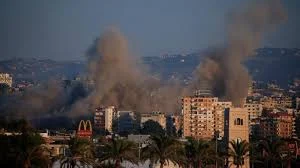
    Israeli airstrikes expanded across Lebanon on Thursday, targeting locations from the south to the far north of the country as regional tensions continued to escalate, according to security sources.

    The intensified campaign followed the expiration of a 24-hour ultimatum issued by Israel calling on Iranian officials and commanders from the Islamic Revolutionary Guard Corps (IRGC) to leave Lebanon.

    Israeli authorities had warned that broader military action could follow if the deadline was ignored.

    Strikes Hit Beirut, Zahle and Northern Lebanon

    Israeli warplanes widened their operations beyond their earlier focus on the southern suburbs of Beirut, widely considered a stronghold of Hezbollah.

    Overnight strikes hit several locations, including a busy highway along Beirut’s airport road. Two vehicles were reportedly struck shortly after midnight, according to local residents who described loud explosions and thick smoke rising from the area.

    On Thursday morning, another Israeli strike targeted a car in the eastern Lebanese city of Zahle.

    A photographer at the scene reported seeing two charred bodies removed from the vehicle.

    Lebanon’s Ministry of Public Health said the strike on the Zahle–Karak highway killed two people and injured two others.

    Elsewhere, Israeli attacks reportedly reached the Beddawi Refugee Camp in northern Lebanon, one of the furthest northern locations hit since the latest escalation began.

    Security sources said the strike killed a senior official from Hamas.

    Earlier, the Israeli military warned residents of a building in Beirut’s southern suburbs to evacuate, saying the site was being used by Hezbollah as a base and could be targeted.

    Late Wednesday, the Israel Defence Forces (IDF) said it had struck multiple Hezbollah rocket and missile launch sites as well as a drone production facility near the Israeli border, though the claims could not be independently verified.

    Hezbollah-Israel Clashes Intensify

    The renewed hostilities came after Hezbollah launched rockets toward Israel earlier this week following the killing of Iran’s Supreme Leader, Ali Khamenei, in what regional reports described as a joint U.S.–Israeli attack on Iran.

    As the war involving Iran entered its sixth day, the conflict has increasingly spilled over into neighbouring countries.

    Lebanese security sources reported sustained Israeli airstrikes on the southern market town of Nabatieh and nearby villages, areas Israel claims host operational positions belonging to Hezbollah.

    Lebanon’s state-run National News Agency also reported that Israeli warplanes bombed a house at the northern entrance of Zawtar al-Sharqiya at dawn, killing a family of four.

    Hezbollah later said it had carried out several attacks against Israeli forces as the fighting intensified.

    According to a Lebanese security official, Israeli ground troops have already entered at least nine towns near the southern border amid the widening confrontation.

    Hezbollah Vows Continued Resistance

    In his first public address since the escalation began, Hezbollah Secretary-General Naim Qassem condemned the Israeli strikes as “premeditated aggression” and vowed the group would continue its response.

    “We will not surrender, no matter the sacrifices,” Qassem said.

    The expanding air campaign and cross-border clashes signal a growing risk that the conflict between Israel, Hezbollah, and Iran could draw more of the region into a broader war.

  • UN Chief Guterres Mourns Deadly School Shooting in Rural Canada

    UN Chief Guterres Mourns Deadly School Shooting in Rural Canada

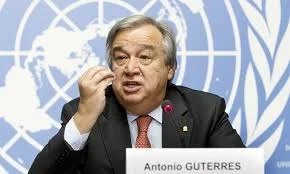
    Secretary-General of the United Nations, António Guterres, has expressed deep sorrow following Tuesday’s deadly school shooting in Tumbler Ridge that left at least eight people dead and 25 others injured.

    Speaking at the UN’s daily press briefing on Wednesday, the Secretary-General’s spokesperson, Stéphane Dujarric, said Guterres was “saddened to learn of the tragic shooting” in the small rural community located in British Columbia.

    “The Secretary-General extends his deepest condolences to those affected and his sympathies to the Government and people of Canada,” Dujarric told reporters.

    Victims Include Students and Teacher

    According to media reports, the victims include at least three female students, two male students and a teacher at the local secondary school. Two additional individuals were found dead at a nearby residence. Local police have reportedly identified them as the suspect’s mother and stepbrother.

    Authorities said the suspect, who was born male but was transitioning and identified as female, was discovered inside the school with an apparent self-inflicted fatal wound.

    Among the 25 injured, two individuals were airlifted to hospital in critical condition with life-threatening injuries.

    Small Community in Shock

    Tumbler Ridge is a remote community in the Canadian Rockies, located more than 1,000 kilometres northeast of Vancouver and near the Alberta border. The secondary school serves approximately 175 students from Grades 7 to 12, making the tragedy particularly devastating for the tight-knit town.

    The shooting has sent shockwaves across Canada, prompting expressions of grief and solidarity from national and international leaders. Authorities continue to investigate the circumstances surrounding the attack as the community begins mourning the victims and supporting those injured in the tragedy.

  • Starmer to Meet Danish PM After Trump Drops Tariff Threat Over Greenland

    Starmer to Meet Danish PM After Trump Drops Tariff Threat Over Greenland

    UK Prime Minister Keir Starmer will meet Danish Prime Minister Mette Frederiksen on Thursday, a day after U.S. President Donald Trump withdrew his threat to impose tariffs on the UK and other NATO allies over their opposition to his ambitions concerning Greenland.

    Trump stepped back from the proposed tariffs on Wednesday evening following talks with NATO Secretary-General Mark Rutte on the sidelines of the World Economic Forum in Davos, Switzerland. The meeting, according to Trump, led to the formation of a framework for a future security agreement in the Arctic region.

    The development capped a turbulent day for NATO’s European members after Trump ruled out the use of force to secure Greenland, a self-governing territory of Denmark rich in critical minerals. He had earlier threatened to impose 10 per cent tariffs on eight NATO countries, including the UK, for opposing his stance on the territory.

    However, after what he described as a “very productive meeting” with Rutte, Trump indicated he had reconsidered his position.

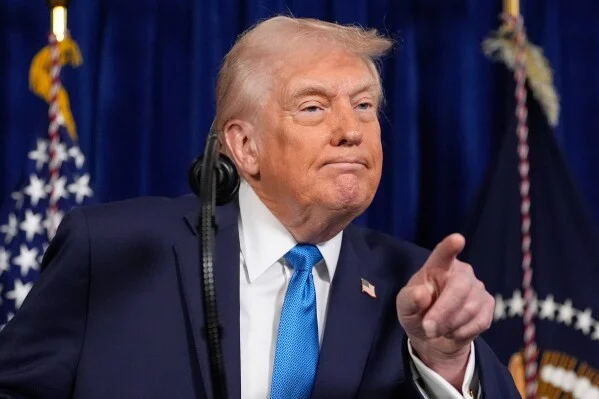
    Writing on his Truth Social platform, the U.S. president said: “We have formed the framework of a future deal with respect to Greenland, and in fact, the entire Arctic Region. This solution, if consummated, will be a great one for the United States of America and all NATO Nations.

    “Based upon this understanding, I will not be imposing the tariffs that were scheduled to go into effect on Feb. 1.”

    Denmark’s Foreign Minister, Lars Lokke Rasmussen, welcomed the shift in tone, saying the day was “ending on a better note than it began.”

    “Now, let’s sit down and find out how we can address the American security concerns in the Arctic while respecting the red lines of the Kingdom of Denmark,” he said.

    Frederiksen’s visit to Britain is expected to include discussions with Starmer on Greenland’s sovereignty and wider Arctic security, although few details have emerged about the agreement reached between Trump and the NATO chief.

    Trump told reporters the arrangement would be a “long-term deal” and an “infinite deal,” but declined to say whether it would involve the United States gaining ownership of Greenland.

    UK government sources suggested there was quiet satisfaction in London that Starmer’s diplomatic approach—urging restraint and dialogue rather than direct confrontation with Trump—had paid off.

    Earlier on Wednesday, Starmer told the House of Commons he would “not yield” on the issue of Greenland’s sovereignty, marking his strongest public stance yet against the U.S. president and pledging to stand firm in defence of international law and allied unity.

  • France Pushes NATO Exercise in Greenland as Arctic Security Tensions Rise

    France Pushes NATO Exercise in Greenland as Arctic Security Tensions Rise

    Paris / Copenhagen / Washington — France has urged NATO to conduct a military exercise in Greenland, signaling European concern over the strategic and security challenges emerging in the Arctic.

    Élysée Palace sources confirmed Wednesday that Paris is ready to participate, stressing that safeguarding the Arctic is increasingly vital amid shifting geopolitical dynamics.

    The announcement comes as Denmark has formally requested a permanent NATO presence on the island, local media reported Tuesday.

    Danish Prime Minister Mette Frederiksen suggested that NATO’s enhanced presence in the Baltic Sea and the Baltic States could serve as a blueprint for Greenland, highlighting the alliance’s potential role in countering growing Russian influence in the region.

    Both Denmark and Greenland have previously proposed a NATO mission in the Arctic, reflecting the strategic importance of the territory.

    Earlier this month, international troops—including units from Germany and France—visited Greenland on a multi-day reconnaissance mission. Danish officials emphasized that this operation was Danish-led and not an official NATO exercise, though it underscored Greenland’s emerging significance on the international security stage.

    Complicating matters, U.S. President Donald Trump has openly expressed interest in acquiring Greenland, a semi-autonomous territory of Denmark, fueling tensions with European allies.

    White House spokeswoman Karoline Leavitt noted last week that the Danish-led reconnaissance mission was unlikely to influence the President’s decisions regarding Greenland.

    In a dramatic escalation, Trump announced punitive tariffs on eight countries starting February 1, in apparent response to European NATO nations backing Denmark’s desire to maintain Greenland’s current status.

    The tariffs have drawn immediate criticism from the affected nations and other global actors, signaling potential friction between U.S. economic policies and European security priorities.

    As the Arctic gains strategic, economic, and environmental importance, NATO exercises and international cooperation are increasingly seen as essential measures to ensure stability.

    France’s call for a NATO operation in Greenland reflects a broader European effort to assert influence and maintain balance in a region of growing geopolitical significance.

  • China Pushes Back Against UN Replacement Talk, Vows to Defend UN-Led Global Order

    China Pushes Back Against UN Replacement Talk, Vows to Defend UN-Led Global Order

    China has reaffirmed its commitment to multilateralism and to safeguarding the international system with the United Nations at its core, as questions emerge over the future role of the global body following remarks by U.S. President Donald Trump.

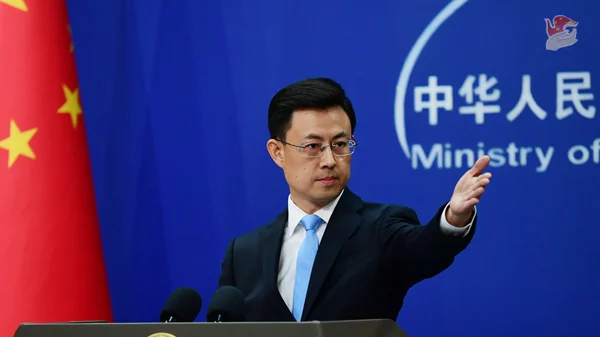
    Foreign Ministry spokesperson Guo Jiakun made the comments on Wednesday at a regular press briefing, responding to Trump’s statement a day earlier that the United Nations should continue because of its potential, while suggesting that a proposed “Board of Peace” could possibly replace the organization.

    Guo stressed that China’s position on the United Nations and the international order remains firm and unchanged. “No matter how the international situation evolves, China will resolutely safeguard the international system with the United Nations at its core,” he said.

    According to Guo, China has consistently advocated for true multilateralism and believes the UN plays an irreplaceable role in maintaining international peace and security, promoting development, and addressing global challenges.

    He emphasized that the UN-centered system reflects the collective will of the international community and should not be weakened or undermined.

    Guo further noted that China will continue to uphold the international order underpinned by international law, as well as the basic norms governing international relations based on the purposes and principles of the UN Charter.

    These principles, he said, remain the cornerstone of global governance and cooperation.

    The remarks come amid broader international debate over reforms to global governance institutions and concerns about unilateral approaches to international affairs.

    China, Guo added, supports strengthening the authority and effectiveness of the United Nations through cooperation and dialogue, rather than replacing existing multilateral mechanisms.

    “China will work with all parties to defend fairness and justice in international affairs, promote cooperation among countries, and contribute to a more stable and orderly international system,” Guo said.

  • Trump Threatens 25% Tariff on Countries Doing Business With Iran Amid Protests

    Trump Threatens 25% Tariff on Countries Doing Business With Iran Amid Protests

    WASHINGTON — President Donald Trump said the United States would impose a 25 per cent tariff on all trade with any country that does business with Iran, escalating economic pressure on Tehran as it faces its largest anti-government protests in years.

    “Effective immediately, any Country doing business with the Islamic Republic of Iran will pay a Tariff of 25 per cent on any and all business being done with the United States of America,” Trump said in a post on Truth Social, adding that the order was “final and conclusive.”

    No official documentation outlining the policy appeared on the White House website, and the administration has not clarified the legal authority for the proposed tariffs or whether they would apply to all of Iran’s trading partners. The White House did not respond to a request for comment.

    Under U.S. law, tariffs are paid by American importers, meaning the cost would likely be borne initially by U.S. companies and consumers.

    Iran, a member of the OPEC oil-producing group, has been under extensive U.S. sanctions for years. It exports most of its oil to China, with Turkey, Iraq, the United Arab Emirates and India also among its key trading partners.

    China criticised Trump’s announcement, with its embassy in Washington opposing what it called “illicit unilateral sanctions and long-arm jurisdiction.” A spokesperson said China would take “all necessary measures” to safeguard its interests, adding that “tariff wars and trade wars have no winners.”

    Japan and South Korea, both of which reached trade agreements with the United States last year, said they were closely monitoring developments. South Korea’s trade ministry said it would consider its response once U.S. actions became clear, while Japan said it would examine the potential impact and respond appropriately.

    Trump’s comments come as Iran grapples with widespread unrest that has evolved from protests over economic hardship into calls for the overthrow of the country’s clerical leadership.

    The demonstrations represent one of the most serious challenges to Iran’s ruling establishment since the 1979 Islamic Revolution.

    U.S.-based rights group HRANA said it had verified the deaths of 599 people since protests began on December 28, including 510 protesters and 89 members of security forces.

    Iran, which fought a brief war with U.S. ally Israel last year and whose nuclear facilities were bombed by U.S. forces in June, said it is keeping communication channels open with Washington. Trump has said the U.S. may meet Iranian officials and that he has been in contact with Iran’s opposition, while also threatening military action.

    “Diplomacy is always the first option for the president,” White House press secretary Karoline Leavitt said on Monday, though she acknowledged that other options remain on the table.

    The tariff threat is consistent with Trump’s broader trade strategy in his second term, during which he has repeatedly used tariffs to pressure countries over trade practices and ties with U.S. adversaries. However, his approach faces legal uncertainty, as the U.S. Supreme Court is considering whether to strike down a wide range of existing Trump-era tariffs.

    According to World Bank data, Iran exported goods to 147 trading partners in 2022, underscoring the potentially wide-reaching implications of Trump’s proposal if it is formally implemented.

  • UN Security Council Endorses Trump’s Gaza Peace Plan, Approves Temporary International Force

    UN Security Council Endorses Trump’s Gaza Peace Plan, Approves Temporary International Force

    New York, November 17, 2025 — The United Nations Security Council on Monday adopted a resolution endorsing a U.S.-proposed peace plan for Gaza and authorizing the deployment of a temporary international force in the enclave, following two years of war between Israel and Hamas.

    Resolution 2803 (2025), sponsored by the United States, passed with 13 votes in favour and none against, while China and Russia abstained.

    UN Security Council

    The text of the resolution welcomes the Comprehensive Peace Plan unveiled by U.S. President Donald Trump on September 29, which outlined a 20-point roadmap for ending hostilities and rebuilding Gaza. The plan’s first phase led to a ceasefire between Hamas and Israel several days after its announcement.


    Creation of Gaza Board of Peace

    The resolution further welcomes the creation of a Board of Peace (BoP), described as a “transitional administration” responsible for overseeing reconstruction efforts and political stabilisation in Gaza.

    It authorizes the BoP to establish a temporary International Stabilisation Force (ISF) “to deploy under unified command acceptable to the Board of Peace.” The ISF, the resolution says, will operate “in close consultation and cooperation” with Egypt and Israel, with member states contributing personnel and resources.

    📰 Related Story: UN Secretary-General Guterres Urges Swift Deployment of Gaza Peace Force – The UN chief calls for “urgent mobilisation” of resources to stabilise Gaza and rebuild basic services within six months.


    U.S. Hails ‘New Course’ for the Middle East

    Speaking after the vote, U.S. Ambassador to the UN, Mike Waltz, thanked Council members for supporting what he called “a new course in the Middle East for Israelis and Palestinians and all the people of the region alike.”

    “Today’s resolution represents another significant step towards a stable Gaza that will be able to prosper and an environment that will allow Israel to live in security,” Waltz said.

    He added that the International Stabilisation Force “will help stabilise the security environment, support the demilitarisation of Gaza, dismantle terrorist infrastructure, decommission weapons, and maintain the safety of Palestinian civilians.”

    📰 Related Story: Trump’s 20-Point Gaza Plan: Key Provisions and Reactions – A breakdown of the U.S. President’s proposed roadmap and how it aims to balance Israeli security with Palestinian reconstruction.


    Arab States Back Plan, Call for Justice

    Algerian Ambassador Amar Bendjama welcomed the initiative and acknowledged the efforts undertaken by President Trump to advance peace in the region. However, he stressed that “genuine peace in the Middle East cannot be achieved without justice for the Palestinian people, who have waited for decades for the establishment of their independent State.”

    Bendjama noted that the resolution had received broad support from Arab and Muslim countries, adding that “the Palestinian Authority at the highest level has openly welcomed the initiative.”

    📰 Related Story: Palestinian Authority Welcomes UN Vote, Calls It ‘First Step Toward Statehood’ – Ramallah officials say the new UN resolution could revive the long-dormant two-state framework.


    Russia, China Abstain

    Explaining Russia’s decision to abstain, Ambassador Vasily Nebenzya said the Council was, in essence, “giving its blessing to a U.S. initiative on the basis of Washington’s promises.”

    He warned that the resolution handed “complete control over the Gaza Strip to the Board of Peace and the ISF, the modalities of which we know nothing about so far.”

    China also abstained but did not issue an immediate statement following the vote.


    Background

    The two-year Gaza war, which began in late 2023, resulted in thousands of casualties and large-scale destruction across the enclave. The newly endorsed U.S. plan seeks to stabilise the territory, initiate reconstruction, and pave the way for eventual Palestinian self-governance under international supervision.

    The International Stabilisation Force, to be drawn from multiple countries, is expected to begin deployment within weeks, pending agreement on its command structure and mandate duration.


  • Ex-President Clinton urges Israel, Hamas to seize “lasting peace’

    Ex-President Clinton urges Israel, Hamas to seize “lasting peace’

    Former US President Bill Clinton has said he is “grateful” for the ongoing ceasefire in the Israeli war on Gaza.

    Mr. Clinton was the host of the signing of the historic Oslo Accords, which was the closest the warring parties came close to attaining a ceasefire.

    The Elder Statesman was magnanimous in attributing the current breakthrough to the efforts of Mr. Donald Trump, the current US President and Qatar, the lead mediating country.

    Jubilant Palestinians

    Clinton said “Mr. Trump and his administration, Qatar, and other regional actors deserve great credit for keeping everyone engaged until the agreement was reached.”

    Mr. Clinton issued a statement on X where he said, “Now Israel and Hamas – with the support of the United States, the region, and the world – must try to turn this fragile moment into lasting peace that provides for the dignity and security of both Palestinians and Israelis,”

    Mr. Clinton urged that the warring parties- Israel and Hamas- with support of the United States, the Middle East region and the world should “try to turn this fragile moment into a lasting peace for the dignity and security of both Palestinians and Israelis.”’

  • Tinubu Urges Bold UN, Financial Reforms at UNGA80

    Tinubu Urges Bold UN, Financial Reforms at UNGA80

    President Bola Ahmed Tinubu has called for sweeping reforms to restore the credibility of the United Nations and global financial systems, urging world leaders to adapt institutions to present-day realities.

    Speaking through Vice-President Kashim Shettima at the 80th United Nations General Assembly (UNGA80) in New York, Tinubu said the world could not afford “the luxury of inaction” in the face of conflicts, climate change, debt crises, and widening inequality.

    “The United Nations will recover its relevance only when it reflects the world as it is, not as it was,” Tinubu declared, arguing that Nigeria deserves a permanent seat on the UN Security Council. He noted that while Nigeria was a colony of 20 million when the UN was founded in 1945, it is now a sovereign state of more than 236 million, projected to be the world’s third most populous country.

    He outlined four priorities for change which includes:

    a) Security Council Reform: that is it’s expansion to reflect current global realities, including Nigeria’s representation.

    b) Debt Relief and Fair Financing: as a new binding mechanism for sovereign debt management, “an International Court of Justice for money.”

    c) Resource Equity: by ensuring mineral-rich countries to benefit directly from their resources through local processing and jobs, and;

    d) Closing the digital divide as a global initiative to expand technology access, declaring that “A.I. must stand for ‘Africa Included.’”

    Reaffirming Nigeria’s commitment to peace, Tinubu highlighted the country’s participation in 51 of 60 UN peacekeeping operations since 1960. He also backed a two-state solution in Palestine, saying the right to life “should not be trapped in the corridors of endless debate.”

    On regional security, he warned against terrorism and extremism, describing them as threats that prey on division and undermine human dignity.

    Tinubu further described climate change as a pressing security concern tied to migration, instability, and inequality, urging the UN to channel climate funds into education, resilient housing, and community development.

    Referencing Nigeria’s ongoing economic reforms, including subsidy removals and currency adjustments, Tinubu acknowledged the hardship but said they were necessary steps to unlock growth and attract investment.

    He pointed to the inaugural West Africa Economic Summit held in Abuja as proof of Africa’s potential when innovation and investment intersect.

    Warning against growing disillusionment with multilateralism, Tinubu said: “We must make real change, change that works, and change that is seen to work. If we fail, the direction of travel is already predictable.”

    He closed with a reminder of shared responsibility: “For none of us is safe until all of us are safe.”

  • Libya erupts again!

    Libya erupts again!

    Heavy clashes in western city of Zawiya

    Heavy clashes erupted Wednesday in the western Libyan city of Zawiya, between rival factions affiliated with the Government of National Unity (GNU).

    According to the Libyan News Agency (LANA), the fighting broke out between the GNU Interior Ministry’s Security Threats Apparatus and a local armed group known as Al-Kaboutat, which is linked to the Defense Ministry.

    The clashes were triggered by the apparatus’s arrest of several members of Al-Kaboutat.

    Local media said the fighting killed a member of the Petroleum Facilities Guard when a mortar shell struck near him. No further information on casualties has been released.

    Sources said the clashes quickly spread into residential neighborhoods and around the city’s oil refinery. Videos circulating on social media showed the use of medium and heavy weapons.

    Heavy military reinforcements were also deployed on main roads, including the coastal highway, which was blocked with sand barriers.

    No official statements have been issued by the government or security bodies on efforts to contain the violence, while residents voiced concern over the fighting’s proximity to schools and vital facilities.

    In a statement carried by LANA, the Zawiya Oil Refining Company expressed “deep concern” over the dangers posed by the clashes near its facilities, warning of “serious threats to lives and vital infrastructure.”

    The company called for an immediate ceasefire and urged authorities to secure the complex, stressing that any attack on the refinery “would directly undermine the resources of the Libyan people and their national wealth.”

    Meanwhile, the Zawiya Education Directorate announced the suspension of classes in all city schools to protect students and staff. Local authorities also urged residents to stay indoors and venture out only if absolutely necessary.

    The violence came amid rising armed confrontations among factions and militias in western Libya. Over the past week, clashes were reported in Janzour, 12 km west of Tripoli, and in the city of Sorman.

    Observers said the latest escalation underscores the ongoing political and security crisis in Libya, driven by the lack of a final resolution to the conflict between rival governments.

    Libya has remained divided since the 2011 NATO-backed uprising that toppled longtime leader Muammar Gaddafi.

    The country is split between rival administrations: the GNU in Tripoli and an eastern-based government backed by the Libyan National Army under commander Khalifa Haftar.