
Russian President Vladimir Putin has said he is willing to meet with Ukrainian President Volodymyr Zelensky, but only if the meeting is adequately prepared and has the potential for meaningful outcomes.
Putin made the remarks during a press conference in Beijing on Wednesday, at the conclusion of his four-day state visit to China.
The event was broadcast live on Russian state television.
“Zelensky can come to Moscow if he is ready. If there is proper preparation and a favourable outcome is possible, such a meeting will take place,” Putin said.
His comments come amid continued efforts to end the war in Ukraine, which began with Russia’s full-scale invasion in 2022 and had resulted in tens of thousands of casualties and massive displacement.
Zelensky had long called for direct talks with Putin to negotiate a ceasefire and a potential path to peace, but Russia has maintained pressure on the battlefield while offering limited diplomatic engagement.
Putin reiterated that he was opened to dialogue only if negotiations were thoroughly prepared and dismissed symbolic meetings without concrete plans or agreements in place.
He also revealed that former U.S. President Donald Trump had raised the idea of a possible meeting between the two leaders.
“Donald asked me if it was possible to organise such a meeting. I said yes, it is possible,” Putin told reporters, referencing his recent summit with Trump in Alaska a month earlier.
However, Putin again cast doubt on Zelensky’s legitimacy, claiming the Ukrainian leader’s term had expired in 2024 and questioning his authority to negotiate on behalf of Ukraine.
Zelensky continues to govern under martial law, which under the Ukrainian constitution allows the president to remain in office beyond the official term during wartime.
Putin has remained in power since 2012, after a series of constitutional amendments enabled him to extend his presidency beyond the original term limits.
…approximately one-third of Tel Aviv has been “damaged or destroyed,”
Retired U.S. Army Colonel, Douglas Macgregor has sparked global attention with a stark assessment of Israel’s current situation in the ongoing conflict, claiming the nation is facing far greater damage than publicly acknowledged.
In a statement posted on his verified Twitter account, Macgregor warned, “Don’t be fooled, Israel is in worse shape than people think.”
According to the former senior Pentagon advisor, approximately one-third of Tel Aviv has been “damaged or destroyed,” a figure that—if confirmed—would mark a significant escalation in the toll the conflict has taken on Israeli infrastructure. Tel Aviv, often regarded as Israel’s commercial and cultural capital, has not been widely reported as a central target in recent weeks, making Macgregor’s statement particularly alarming.
The retired colonel also suggested that Israeli military preparedness has been significantly undermined. “As far as their military installations are concerned, I’m told many Israeli aircrafts are being flown to Cyprus to avoid being struck,” Macgregor said, implying that the Israeli Air Force is repositioning assets out of concern for further Iranian strikes.
“Israel was not prepared for Iran’s response,” he concluded, suggesting that the scale and precision of Tehran’s retaliatory attacks caught the Israeli military establishment off guard.
Macgregor’s post has reignited debates online about the transparency of war reporting and the real extent of the conflict’s impact. While Israeli authorities have not confirmed the extent of damage suggested, his comments are likely to raise questions about the effectiveness of Israel’s defense systems and the broader strategic outlook of the conflict.
Donald Trump said on Saturday his relationship with his billionaire donor Elon Musk is over and warned there would be “serious consequences” if Musk funds U.S. Democrats.
President Trump specifically warned Elon Musk against funding Democrats contesting against Republicans who vote for the president’s sweeping tax and spending bill.
In a telephone interview with NBC News, Trump declined to say what those consequences would be, and went on to add that he had not had discussions about whether to investigate Musk.
Asked if he thought his relationship with the Tesla and SpaceX CEO was over, Trump said, “I would assume so, yeah.”
“No,” Trump told NBC when asked if he had any desire to repair his relationship with Musk.
“I have no intention of speaking to him,” Trump said.
However, Trump said he had not thought about terminating U.S. government contracts with Musk’s StarLink satellite internet or SpaceX rocket launch companies.
Musk and Trump began exchanging insults this week, as Musk denounced Trump’s bill as a “disgusting abomination”.
Musk’s opposition to the measure complicated efforts to pass the legislation in Congress, where Republicans hold only slim majorities in the House of Representatives and Senate.
The bill narrowly passed the House last month and is now before the Senate, where Trump’s fellow Republicans are considering making changes.
Nonpartisan analysts estimate the measure would add $2.4 trillion to the $36.2 trillion U.S. debt over 10 years, which worries many lawmakers, including some Republicans who are fiscal hawks.
Musk also declared it was time for a new political party in the United States “to represent the 80 per cent in the middle!”
Trump said on Saturday he is confident the bill would get passed by the U.S. July 4 Independence Day holiday.
“In fact, yeah, people that were, were going to vote for it are now enthusiastically going to vote for it, and we expect it to pass,” Trump told NBC.
Republicans have strongly backed Trump’s initiatives since he began his second term as president on Jan. 20.
While some Republican lawmakers have made comments to the news media expressing concern about some of Trump’s choices, they have yet to vote down any of his policies or nominations.
The last straw
Musk has deleted some social media posts critical of Trump, including one that signaled support for impeaching the president, appearing to seek a de-escalation of their public feud which exploded on Thursday.
During his first term as president, the House, then controlled by Democrats, twice voted to impeach Trump but the Senate both times acquitted him.
The White House and Musk did not immediately respond to requests for comment on Saturday on the deleted posts.
People who have spoken to Musk said his anger has begun to recede and they thought he would want to repair his relationship with Trump.
One of the X posts that Musk appeared to have deleted was a response to another user posting: “President vs Elon. Who wins? My money’s on Elon. Trump should be impeached and (Vice President) JD Vance should replace him.” Musk had written “yes.”
On Theo Von’s “This Past Weekend” podcast – recorded on Thursday as the feud between Trump and Musk unfolded and released on Saturday – Vance called Musk’s criticism of Trump a “huge mistake.”
“I’m always going to be loyal to the president, and I hope that eventually Elon kind of comes back into the fold. Maybe that’s not possible now because he’s gone so nuclear.
But I hope it is,” said Vance, describing Musk as an “incredible entrepreneur.”
Trump is due to attend an Ultimate Fighting Championship fight card on Saturday in New Jersey.
Since his second election win, he has attended two previous UFC mixed martial arts fight cards with Musk. Musk is not expected to attend on Saturday.
Musk, the world’s richest man, bankrolled a large part of Trump’s 2024 presidential campaign, spending nearly 300 million dollars in last year’s U.S. elections.
Musk was also credited for Republicans retaining a majority of seats in the House and retaking a majority in the Senate.
Trump named Musk to head an effort to downsize the federal workforce and slash spending, lauding him at the White House only about a week ago for his work as head of the Department of Government Efficiency.
Musk cut only about half of one per cent of total spending, far short of his brash plans to axe two trillion dollars from the federal budget.
Mr Mahmoud Youssouf, Chairperson of the African Union Commission (AUC), has emphasised the need for Africans to strive for freedom from conflict, underdevelopment, and war.
Youssouf made this known in a statement on Sunday marking Africa Day 2025, reiterating a call for justice, unity, and shared progress among AU member states.
According to Mr Nuur Sheekh, Spokesperson for the Chairperson, Youssouf reflected on Africa’s historic journey during the event and called for bold steps toward a just and prosperous future.
He said, “This year’s theme, ‘Justice for Africans and People of African Descent through Reparations,’ honours the memory of those who suffered under slavery and colonialism.
“It also promotes the rights of Africa and its diaspora to truth, justice, and restoration.
“Justice and reparations remain long overdue. Africa will not be held hostage by the pain of its past.
“Africa continues to sacrifice and strive toward freedom from conflict, underdevelopment, and war.
“The continent is steadily building a future of peace, prosperity, and integration.”
Youssouf highlighted Africa’s strategic assets, including its youthful and growing population, vast arable land, rich mineral wealth, and abundant renewable energy potential.
With its population expected to exceed 2.5 billion by 2050, he said, Africa was not only the continent of the future but also a key driver of global transformation.
He commended the resilience of African economies, noting that many countries achieved macroeconomic gains and even double-digit growth prior to the COVID-19 pandemic.
He also lauded the dynamism of African youth and women, who were leading community transformation and innovation across the continent.
Youssouf stressed Africa’s evolving role in global governance, pointing to the continent’s membership in the G20 as both a well-deserved participation and global recognition of Africa’s importance.
“Africa must no longer be an afterthought in global geopolitics. Let us reaffirm our shared values and take rightful ownership of our future on the global stage.
“Pan-Africanism was forged through the dreams and determination of our people, but also through strategic foresight. Let us honour that legacy with bold, united action,” he added.
He urged Africans to stand tall in their identity, pursue justice with courage, and shape the continent’s future with confidence and pride as Africa Day is marked across the continent and in the diaspora.
Further to its new defense strategy codenamed Readiness 2030, EU member countries have agreed to establish a loan fund worth 150 billion euros (169.5 billion dollars).
The fund shall be deployed to finance arms purchases, according to a report by The Financial Times on Monday, citing officials familiar with the decision.
The fund will be backed by the national budgets of EU member states. While member countries had already expressed support for the initiative, the agreement is expected to be formally signed on Wednesday.
On March 19, the European Commission unveiled a new defense strategy, initially called ReArm Europe, later renamed Readiness 2030, aiming to raise EU defense spending to 1.5 per cent of GDP.
The strategy’s estimated cost is 800 billion euros over the next four years, with 650 billion euros to come from national budgets and the remaining 150 billion euros through loans.
To support this plan, the European Commission would offer budgetary concessions to member states and reallocate some regional development funds toward defense spending.
The move came amid rising tensions in Europe. Russia had consistently raised concerns about NATO’s growing military presence near its western borders, calling it a threat to regional stability.
The Kremlin had stated that while Russia posed no threat to other nations, it would respond to actions it considered potentially dangerous to its security.
In a 2024 interview with U.S. journalist Tucker Carlson, Russian President Vladimir Putin reiterated that Moscow had no intention of attacking NATO countries.
He accused Western leaders of exaggerating the Russian threat to distract from domestic issues.
Ukrainian President Volodymyr Zelenskyy has said he expects Russia to implement a ceasefire and that he will personally be waiting for President Vladimir Putin in Türkiye on May 15.
Zelenskyy announced this on Telegram, Turkish news agency, quoting Ukrinform, said on Sunday.
“We await a full and lasting ceasefire, starting from tomorrow, to provide the necessary basis for diplomacy.
“There is no point in prolonging the killings,” the Ukrainian President stated.
Zelensky added: “I’ll be waiting for Putin in Türkiye on Thursday. Personally.”
“I hope that this time the Russians will not look for excuses,” he emphasised.
According to the report, on May 10, Ukraine, together with its allies — France, Germany, the United Kingdom, and Poland — proposed a 30-day unconditional ceasefire.
Should Russia reject it, Ukraine’s allies plan to tighten sanctions against Moscow.
Later, Putin proposed holding direct negotiations with Ukraine “where they were interrupted” in 2022
Israeli army forces on Thursday raided six UN-run schools in occupied East Jerusalem to enforce military closure orders, Palestinian authorities said.
A statement by the Jerusalem Governorate said Israeli soldiers moved into the facilities in the Shu’afat refugee camp to demand the immediate departure of students and teachers.
It called the closure orders of the schools “part of an Israeli systematic escalation against Palestinian education institutions” in East Jerusalem.
Earlier, the UN agency for Palestinian refugees (UNRWA) warned that the Israeli closure orders of the six schools risk depriving some 800 Palestinian students of their right to education.
Israeli authorities ordered the schools in the camp to close by May 8, citing the lack of a license. Under the orders, no one will be allowed into the schools, including principals, teachers, and other staff.
The Israeli closure orders are seen as part of Tel Aviv’s wider campaign against UNRWA and its mandate of serving Palestinian refugees.
In October 2024, the Israeli Knesset (parliament) passed two laws banning UNRWA’s operations in Israel and areas under its occupation and prohibiting Israeli authorities from having any contact with the agency.
The laws took effect on Jan. 30.
Israel alleges that UNRWA employees were involved in a Hamas attack on Oct. 7, 2023, a charge vehemently denied by the UN agency.
UNRWA was established in 1949, and has served as a critical lifeline for Palestinian refugees, supporting nearly 5.9 million people across Gaza, the West Bank, Jordan, Syria, and Lebanon.
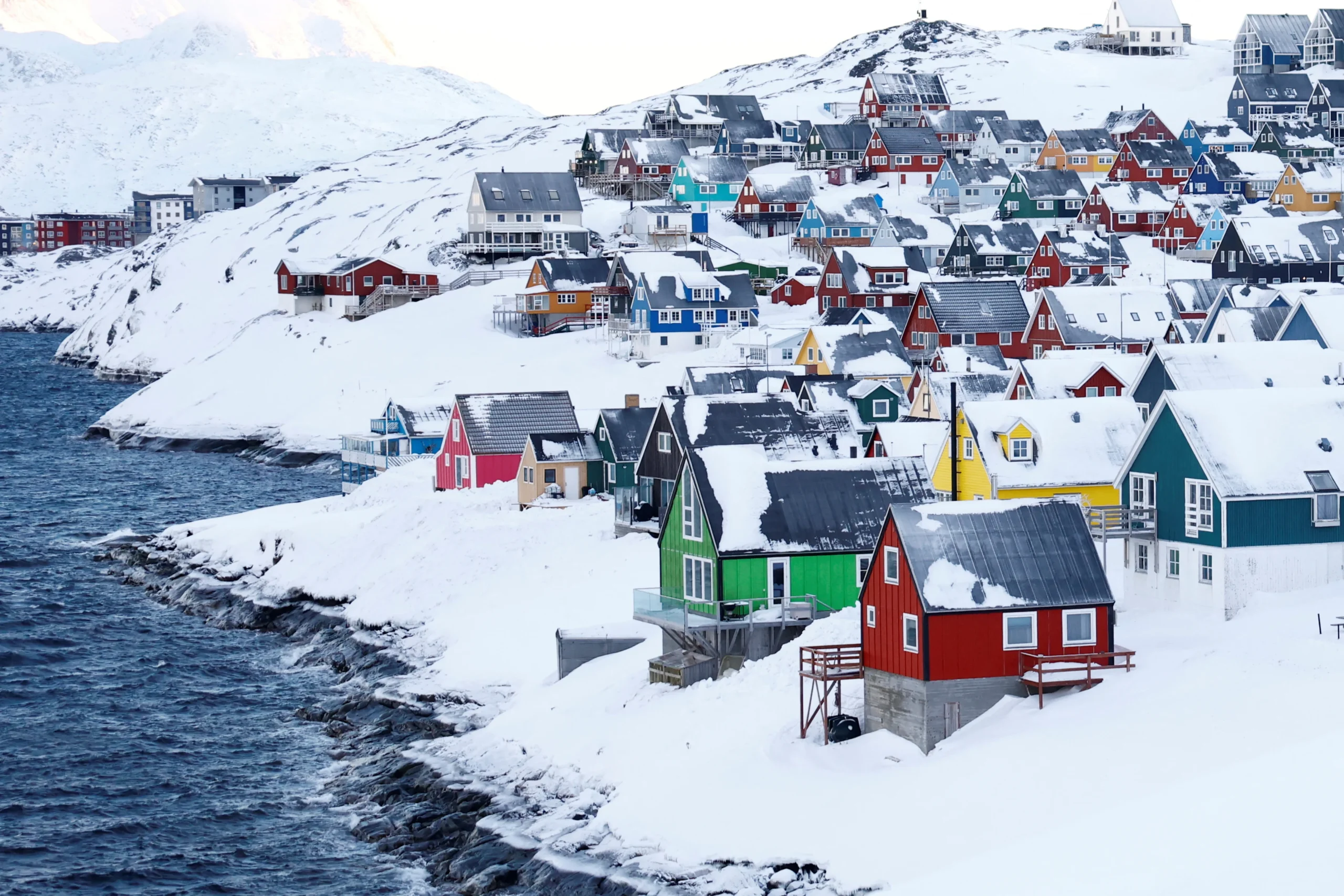
U.S. Vice President JD Vance announced that he would accompany his wife, Usha Vance, on her planned visit to Greenland later this week.
“There is so much excitement around Usha’s visit to Greenland this Friday that I decided I didn’t want her to have all that fun by herself, so I’m going to join her.
I’ll be visiting some of our guardians in the Space Force on the northwest coast of Greenland, and also just checking out what’s going on with the security there,’’ JD Vance said in a video posted on X.
He went on to mention the Pituffik Space Base, a significant U.S. military installation in Greenland.
Originally, Usha’s travel plans included visits to historic sites and participation in a traditional dog-sledding race.
However, the White House announced a change in the itinerary, canceling the dog sled race and replacing it with a meeting with U.S. military officials.
“Speaking for U.S. President Donald Trump, we want to reinvigorate the security of the people of Greenland because we think it’s important for protecting the security of the entire world,’’ JD Vance stated.
Trump has repeatedly mentioned wanting to assert control over Greenland, citing national and international security concerns.
However, Greenland’s politicians and most of its population oppose the idea of it becoming a U.S. territory.
In a related development, the Greenland government denied claims made by Trump that a U.S. delegation, including Usha Vance, had been invited to the island.
The government in Nuuk clarified that no official or private invitation had been extended.
Danish Prime Minister Mette Frederiksen also criticized the visit, emphasizing that Greenland did not welcome such a gesture.
She noted that both Greenland and Denmark were under undue pressure but would stand firm.
Trump’s son, Donald Trump Jr., had previously visited Nuuk earlier this year, further drawing attention to the tense relationship between Greenland and the U.S.
The UN International Organisation for Migration (IOM) says 2024 marks the deadliest on record for migrants in Asia.
It said 2,514 lives were lost on the region’s perilous migration routes.
The latest figure represents a staggering 59 per cent increase from the 1,584 deaths recorded in 2023.
This highlights the worsening dangers faced by people on the move, according to new data from IOM.
“No one should lose their life in pursuit of safety or a better future,” Iori Kato, IOM Regional Director for Asia and the Pacific, said.
“Every life lost on migration routes in Asia, or anywhere else, is a stark reminder of the urgent need for safe and regular migration pathways,” Kato said.
He also emphasised that, “these are preventable tragedies.”
The spike in migrant deaths was linked to two of the region’s most vulnerable populations: the minority Muslim Rohingya fleeing Myanmar and Afghans escaping conflict and instability.
“The increase in deaths across Asia of people fleeing conflict and persecution in the region is of grave concern,” Kato said.
In 2024, at least 1,517 Afghan migrants lost their lives while in transit – up 39 per cent from 2023.
Deaths among Rohingya migrants more than doubled, reaching 889 compared to 436 the previous year.
On August 5, 2024 alone, over 150 people were reportedly killed by artillery fire while attempting to cross the Naf River from Myanmar to Bangladesh.
IOM also highlighted that the risks facing migrants extended beyond conflict-related violence.
Many are vulnerable to perilous conditions en route, including overcrowded and unsafe boats, abuse by smugglers and extreme weather conditions.
Lack of identification of migrants was also a major concern, with over 1,000 of those who died in 2024 unidentified.
Among the documented deaths, 1,086 were men, 205 were women and 217 children.
“A lack of official reporting of data on missing migrants means we know our data do not fully capture the true number of lives lost during migration in Asia.
“And even within the records we have, so few identifying details are known, meaning there are immeasurable effects on families searching for lost relatives,” he said.
Migration in Asia is complex, driven by economic inequality, conflict and environmental factors, worsened by climate change.
However, limited legal pathways have forced many to rely on irregular and highly dangerous routes.
One of the deadliest corridors remains the Bay of Bengal and Andaman Sea, where stateless Rohingya and Bangladeshi migrants embark on treacherous sea journeys in search of refuge.
Rohingya Refugees
Many pay smugglers for passage, only to find themselves trapped on overcrowded boats with insufficient food and water.
They also face violence from crew members and the risk of being turned away at their destination.
Meanwhile, overland migration routes across South and Southeast Asia – such as those from Nepal to India, or from Afghanistan and Pakistan through Iran and Turkey – also pose serious risks.
Migrants frequently endure extreme environmental conditions as well as exploitation by traffickers, and border violence.
Sea crossings to Australia, once a significant migration route, had sharply declined in recent years due to strict border controls, according to IOM.
While official data on boat interceptions remains scarce, the closure of this route had left many stranded in transit countries.
The result is that they are left with little access to healthcare, education or legal protection, increasing their vulnerability to exploitation.
Transcript below of an incredibly powerful and deadly accurate speech in the French Senate two days ago by Mr. Claude Malhuret. This may someday take its rightful place alongside the best of Sir Winston Churchill and President John F Kennedy.
“President, Mr. Prime Minister, Ladies and Gentlemen Ministers, My dear colleagues,
Europe is at a critical turning point in its history. The American shield is crumbling, Ukraine risks being abandoned, and Russia strengthened.
Washington has become the court of Nero, a fiery emperor, submissive courtiers, and a ketamine-fueled jester in charge of purging the civil service.
This is a tragedy for the free world, but it is first and foremost a tragedy for the United States. Trump’s message is that there is no point in being his ally since he will not defend you, he will impose more customs duties on you than on his enemies and will threaten to seize your territories while supporting the dictatorships that invade you.
The king of the deal is showing what the art of the deal is all about. He thinks he will intimidate China by lying down before Putin, but Xi Jinping, faced with such a shipwreck, is probably accelerating preparations for the invasion of Taiwan.
Never in history has a President of the United States capitulated to the enemy, supported an aggressor against an ally, or trampled on the American Constitution, issued so many illegal decrees, dismissed judges who could have prevented him from doing so, dismissed the military general staff in one fell swoop, weakened all checks and balances, and taken control of social media.
This is not an illiberal drift. It is the beginning of the confiscation of democracy. Let us remember that it took only one month, three weeks, and two days to bring down the Weimar Republic and its Constitution.
I have faith in the strength of American democracy, and the country is already protesting. But in one month, Trump has done more harm to America than in four years of his last presidency. We were at war with a dictator, and now we are fighting a dictator backed by a traitor.
Eight days ago, at the very moment that Trump was rubbing Macron’s back in the White House, the United States voted at the UN with Russia and North Korea against the Europeans demanding the withdrawal of Russian troops.
Two days later, in the Oval Office, the military service shirker was giving war hero Zelensky lessons in morality and strategy before dismissing him like a groom, ordering him to submit or resign.
Tonight, he took another step into infamy by stopping the delivery of weapons that had been promised. What to do in the face of this betrayal? The answer is simple: face it.
And first of all, let’s not be mistaken. The defeat of Ukraine would be the defeat of Europe. The Baltic States, Georgia, and Moldova are already on the list. Putin’s goal is to return to Yalta, where half the continent was ceded to Stalin.
The French Senate
The countries of the South are waiting for the outcome of the conflict to decide whether they should continue to respect Europe or whether they are now free to trample on it.
What Putin wants is the end of the order put in place by the United States and its allies 80 years ago, with its first principle being the prohibition of acquiring territory by force.
This idea is at the very source of the UN, where today Americans vote in favor of the aggressor and against the attacked, because the Trumpian vision coincides with that of Putin: a return to spheres of influence, the great powers dictating the fate of small countries.
Mine is Greenland, Panama, and Canada. You are Ukraine, the Baltics and Eastern Europe. He is Taiwan and the China Sea.
At the parties of the oligarchs of the Gulf of Mar-a-Lago, this is called “diplomatic realism.”
So we are alone. But the talk that Putin can not be resisted is false. Contrary to the Kremlin’s propaganda, Russia is in bad shape. In three years, the so-called second largest army in the world has managed to grab only crumbs from a country three times less populated.
Interest rates at 25%, the collapse of foreign exchange and gold reserves, the demographic collapse show that it is on the brink of the abyss. The American helping hand to Putin is the biggest strategic mistake ever made in a war.
The shock is violent, but it has a virtue. Europeans are coming out of denial. They understood in one day in Munich that the survival of Ukraine and the future of Europe are in their hands and that they have three imperatives.
Accelerate military aid to Ukraine to compensate for the American abandonment, so that it holds, and of course to impose its presence and that of Europe in any negotiation.
This will be expensive. It will be necessary to end the taboo of the use of frozen Russian assets. It will be necessary to circumvent Moscow’s accomplices within Europe itself by a coalition of only the willing countries, with, of course, the United Kingdom.
Second, demand that any agreement be accompanied by the return of kidnapped children, prisoners, and absolute security guarantees. After Budapest, Georgia, and Minsk, we know what agreements with Putin are worth. These guarantees require sufficient military force to prevent a new invasion.
Finally, and this is the most urgent, because it is what will take the most time, we must build the neglected European defence, to the benefit of the American umbrella since 1945 and scuttled since the fall of the Berlin Wall.
It is a Herculean task, but it is on its success or failure that the leaders of today’s democratic Europe will be judged in the history books.
Friedrich Merz has just declared that Europe needs its own military alliance. This is to recognize that France has been right for decades in arguing for strategic autonomy.
It remains to be built. It will be necessary to invest massively, to strengthen the European Defence Fund outside the Maastricht debt criteria, to harmonize weapons and munitions systems, to accelerate the entry into the Union of Ukraine, which is today the leading European army, to rethink the place and conditions of nuclear deterrence based on French and British capabilities, to relaunch the anti-missile shield and satellite programs.
The plan announced yesterday by Ursula von der Leyen is a very good starting point. And much more will be needed.
Europe will only become a military power again by becoming an industrial power again. In a word, the Draghi report will have to be implemented. For good.
But the real rearmament of Europe is its moral rearmament.
We must convince public opinion in the face of war weariness and fear, and especially in the face of Putin’s cronies, the extreme right and the extreme left.
They argued again yesterday in the National Assembly, Mr Prime Minister, before you, against European unity, against European defense.
They say they want peace. What neither they nor Trump say is that their peace is capitulation, the peace of defeat, the replacement of de Gaulle Zelensky by a Ukrainian Pétain at the beck and call of Putin.
Peace for the collaborators who have refused any aid to the Ukrainians for three years.
Is this the end of the Atlantic Alliance? The risk is great. But in the last few days, the public humiliation of Zelensky and all the baffling decisions taken in the last month have finally made the Americans react.
Polls are falling. Republican lawmakers are being greeted by hostile crowds in their constituencies. Even Fox News is becoming critical.
The Trumpists are no longer in their majesty. They control the executive, the Parliament, the Supreme Court, and social networks.
But in American history, the freedom fighters have always prevailed. They are beginning to raise their heads.
The fate of Ukraine is being played out in the trenches, but it also depends on those in the United States who want to defend democracy, and here on our ability to unite Europeans, to find the means for their common defense, and to make Europe the power that it once was in history and that it hesitates to become again.
Our parents defeated fascism and communism at great cost.
The task of our generation is to defeat the totalitarianism of the 21st century.
Long live free Ukraine, long live democratic Europe.”
Claude Malhuret speaking to the French Senate Tuesday March 4 2025.
You have just read the transcript of a speech that will live forever in the history books.