
Category: International News

  • As Trump tariff on UK steel kicks in, industry trembles

    As Trump tariff on UK steel kicks in, industry trembles

    U.S. President Donald Trump’s tariffs on UK steel “couldn’t come at a worse time,” the industry has warned as the levy on U.S. imports is introduced.

    The British steel and aluminium industries are braced for the impact of the U.S. president’s tariffs, which came in at midnight in the US, around 0400 GMT.

    The UK government is unlikely to immediately retaliate to the 25 per cent import tax, with officials stressing the need for a “cool-headed approach”, after last-ditch efforts to persuade Trump to spare British industry from his global tariffs appeared to have failed.

    The European Union announced it would be implementing counter tariffs on 28 billion dollars worth of goods starting on April 1.

    Gareth Stace, the director general of trade association UK Steel, branded the Trump administration’s move “hugely disappointing.”

    He added: “President Trump must surely recognise that the UK is an ally, not a foe.

    “Our steel sector is not a threat to the U.S. but a partner to key customers, sharing the same values and objectives in addressing global overcapacity and tackling unfair trade.

    “These tariffs couldn’t come at a worse time for the UK steel industry, as we battle with high energy costs and subdued demand at home, against an oversupplied and increasingly protectionist global landscape.

    “What’s more, the EU is also pushing ahead with trade restrictive action that will amplify the impact of U.S. tariffs.”

    Stace added: “It is essential that the UK Government not only continues efforts to negotiate exemptions with the U.S. but also takes decisive action to bolster our trade defences.

    “We greatly appreciate all the efforts that have been made so far and will continue working closely with our Government to secure the best possible outcome.”

    The aluminium industry body had earlier warned the looming import taxes were already having an effect.

    Nadine Bloxsome, chief executive of the Aluminium Federation, said: “The UK aluminium sector is already seeing the first impacts of these tariffs.

    “The sharp rise in U.S. premiums has created new incentives for scrap exports, raising the risk of significant domestic scrap leakage.

    This not only weakens the UK’s recycling capacity but risks undermining our sustainability objectives and circular economy targets.

    “Additionally, the uncertainty around potential trade diversion is placing considerable pressure on UK producers, especially as semi-finished goods may flood the UK market at lower costs.

    “This could severely destabilise the competitiveness of UK aluminium manufacturers, who are already contending with high energy costs and complex regulatory challenges.”

    William Bain, head of trade policy for the British Chambers of Commerce (BCC), said the decision plunged both countries “into a new age of uncertainty.”

    He said: “BCC research shows that 63 per cent of our manufacturing exporters were concerned about the impact of tariffs before their introduction.

    “But today’s setback does not mean we have reached the end of the road in terms of negotiations. Tariffs can be lifted at any time.

    “Businesses will be looking to the UK Government to continue dialogue, with the U.S., to resolve this situation and restore certainty for firms, which has been badly lacking over recent weeks.”

    He continued: “Against this background, a series of tit-for-tat tariffs could easily spiral into an all-out trade war and would do the UK little benefit.

    “We must keep talks alive and retaliatory tariffs should only be used as a means of last resort.

    “If talks succeed, it would be a win-win, bringing welcome stability and pro-growth economic conditions for both sides.”

    The issue was discussed in a call between UK Prime Minister Keir Starmer and Trump on Monday, and ministers and officials have been in frequent talks with their U.S. counterparts since the measures were first proposed in February.

    The UK prime minister’s official spokesman said the government was “engaging closely with the U.S. and we remain prepared to defend the UK’s national interest where it’s right to do so.”

    He added: “The Government’s committed 2.5 billion pounds (3.2 billion dollars) of investment to rebuild the UK steel industry and support communities now and for generations to come.”

    The government estimates around 5 per cent of UK steel exports and 6 per cent of aluminium exports by volume go to the U.S., although the aluminium industry body said the U.S. market accounted for 10 per cent of exports – valued at 225 million pounds

    Trump has previously threatened to impose tariffs on other countries and then relented, but he remains wedded to the overall idea of making the U.S. richer through taxing imports.

    In a sign of the U.S. leader’s unpredictable approach, on the eve of the tariffs coming into force, he threatened to double the rate for Canadian metal imports from 25 per cent to 50 per cent, before backtracking at the last minute.

    Downing Street said there were “multiple engagements at multiple levels” with the U.S. administration as the Government attempted to spare UK exporters from the tariffs.

  • U.S. cuts $377m lifesaving support for women, girls

    U.S. cuts $377m lifesaving support for women, girls

    The United States has cut 377 million dollars  worth of funding to the UN reproductive and sexual health agency, UNFPA, leading to potentially “devastating impacts”, on women and girls.

    UNFPA stated on Friday  that the cuts would end lifesaving support for women and girls.

    “UNFPA was informed on Wednesday that nearly all of our grants (48 as of now) with USAID and the U.S. State Department have been terminated.

    “This decision will have devastating impacts on women and girls and the health and aid workers who serve them in the world’s worst humanitarian crises.”

    The USAID grants were designated to provide critical maternal healthcare, protection from violence, rape treatment and other lifesaving care in humanitarian settings.

    This included UNFPA’s work to end maternal death, safely deliver babies and address horrific violence faced by women and girls in places like Gaza, Sudan and Ukraine.

    The UN agency partnered with 150 countries to provide access to a wide range of sexual and reproductive health services.

    Its goal is ending unmet needs for family planning, preventable maternal death, gender-based violence and harmful practices, including child marriage and female genital mutilation, by 2030.

    “These termination notices include grants for which we had previously received humanitarian waivers, as they were considered lifesaving interventions for the world’s most vulnerable women and girls,” UNFPA stated.

    The grants funded programmes in countries including Afghanistan, Chad, the Democratic Republic of the Congo (DRC), Haiti, Mali, Sudan, Syria and its neighbouring countries, as well as Ukraine.

    The current cuts follow other U.S. defunding measures against humanitarian aid organisations since late January, leaving millions in jeopardy, including those benefiting from critical services and supplies provided by UN agencies like UNAIDS and UNFPA.

    UNFPA had been defunded several times by previous U.S. administrations under the accusation that it supported coercive abortion or forced sterilisation, claims that had been refuted by other US administrations, independent investigations, and leaders at UNFPA and the UN more broadly.

    “The mandate of UNFPA is in fact the opposite of this allegation – to secure rights and choices for all,” according to the UN agency.

    UNFPA relies entirely on the voluntary donations of governments, intergovernmental organisations, foundations, the private sector and individuals.

  • US Announces 2025 Visa Waiver List, Excludes Nigeria, Other Countries

    US Announces 2025 Visa Waiver List, Excludes Nigeria, Other Countries

    The United States on Tuesday revealed its updated list for the 2025 Visa Waiver Programme (VWP).

     This programme allows citizens from participating nations to visit the U.S. for up to 90 days without needing a visa for tourism or business purposes.

    The United Kingdom, along with several other nations, was not included in the list this year, though it can still qualify under certain conditions.

     Notably, no African country, including Nigeria, Ghana, and South Africa, made the cut.

    The list saw some changes, with Romania being added to the program this year.

    In total, 40 countries are now part of the Visa Waiver Programme, allowing their citizens to travel to the U.S. without a visa.

    To travel without a visa, citizens of these countries must get approval through the Electronic System for Travel Authorization (ESTA) before their trip. This step is mandatory even though the VWP offers visa-free travel.

    The U.S. government has also strengthened security measures, giving priority to countries with solid diplomatic relationships and strong border control standards.

    The full list of 2025 VWP participants includes:

    1. Andorra

    2. Australia

    3. Austria

    4. Belgium

    5. Chile

    6. Czech Republic

    7. Croatia

    8. Denmark

    9. Estonia

    10. Finland

    11. France

    12. Germany

    13. Greece

    14. Hungary

    15. Iceland

    16. Ireland

    17. Italy

    18. Israel

    19. Norway

    20. Poland

    21. Portugal

    22. San Marino

    23. Singapore

    24. Slovakia

    25. Japan

    26. Slovenia

    27. Latvia

    28. South Korea

    29. Liechtenstein

    30. Spain

    31. Lithuania

    32. Sweden

    33. Luxembourg

    34. Switzerland

    35. Malta

    36. Netherlands

    37. New Zealand

    38. Qatar

    39. Romania

    40. Monaco

    Following recent acts of tit-for-tat diplomacy by countries targeted by the United States, it is expected that some of the excluded countries may announce their counter measures in due course.

  • DRC crisis worsens amid M23 violence

    DRC crisis worsens amid M23 violence

    Humanitarian crisis in eastern Democratic Republic of the Congo (DRC) has worsened, with reports of serious human rights violations, including summary executions of children and widespread sexual violence.

    The UN human rights office (OHCHR) on Tuesday confirmed that Rwanda-backed M23 fighters killed three children in Bukavu, South Kivu, which fell to the group on Sunday.

    OHCHR spokesperson, Ravina Shamdasani, stated, “Our office confirmed cases of children being summarily executed by M23 after they entered Bukavu last week. Some children were carrying weapons.”

    She urged Rwanda and M23 to ensure the respect of human rights and international humanitarian law in the region.

    Shamdasani also condemned attacks on hospitals and humanitarian warehouses, along with threats against the judiciary, linked to the M23’s advance in North and South Kivu.

    The crisis has displaced hundreds of thousands of people in eastern DRC, with 10,000 to 15,000 fleeing into Burundi in just a few days, according to UNHCR.

    Most of those arriving in Burundi are Congolese, primarily from Bukavu’s outskirts, where the situation is rapidly worsening.

    These new refugees join over 91,000 others who arrived in Burundi years ago, according to UNHCR spokesperson Matt Saltmarsh.

    “The situation remains extremely volatile, with recent clashes forcing over 150,000 people to flee,” Saltmarsh added.

    “At least 85,000 people are living in makeshift camps for internally displaced people, where there is a severe lack of basic services such as water and healthcare.”

    Eastern DRC, rich in minerals, has faced instability for decades due to armed groups, forcing many to seek refuge in camps or neighbouring countries.

    Fighting escalated in January as M23 fighters seized parts of North Kivu and advanced towards South Kivu and Bukavu, the region’s second-largest city.

    Further troubling developments include the Feb. 14 prison breaks from Kabare and Bukavu central prisons, according to Shamdasani.

    “We’ve received protection requests from victims and witnesses, fearing retaliation from escapees involved in trials for serious human rights violations,” she said.

    Shamdasani expressed concerns for the safety of lawyers, judicial staff, journalists, and human rights defenders threatened by the ongoing violence.

    “Some are trapped in Bukavu and Goma, fearing for their safety due to their work on human rights and denunciations of abuses by Rwanda and M23,” she added.

    In response, UN human rights chief Volker Türk urged Rwanda and M23 to protect all individuals in their control.

    “He condemns the events in South and North Kivu and their devastating impact on civilians.

    “The violence must cease immediately. All parties must adhere to international humanitarian law and resume dialogue within the Luanda and Nairobi processes,” Shamdasani said. 

  • UNRWA chief reaffirms commitment to Palestinian refugees

    UNRWA chief reaffirms commitment to Palestinian refugees

     The head of UN Palestine refugee agency (UNRWA), Philippe Lazzarini, has reaffirmed the body’s commitment to assisting a population whose rights “continue to be violated.”

    In a social media post on Friday, Commissioner-General Lazzarini stated that “people in Gaza have undergone systematic dehumanisation” since the war there began.

    He stressed that “Palestinians do matter, including those in Gaza. Their rights, lives, and futures matter,” emphasising that “human rights cannot be applied selectively.”

    His remarks follow U.S. President Donald Trump’s proposal this week that America should seize control of Gaza and permanently displace Palestinians—an act the UN Secretary-General called “ethnic cleansing.”

    Lazzarini quoted UN chief António Guterres, who reiterated that peace depends on ending occupation and establishing an independent Palestinian state, with Gaza as an integral part.

    The UNRWA chief said his agency’s teams remain committed to providing critical aid to Palestine refugees until empowered Palestinian institutions become a sustainable and viable alternative.

    UNRWA continues to face major obstacles in carrying out its work.

    In January, two Israeli laws took effect, banning UNRWA operations within its borders and prohibiting Israeli authorities from engaging with the agency.

    UNRWA was ordered to leave its premises in East Jerusalem, and visas for international staff were not renewed.

    Despite restrictions, teams are still delivering aid in the West Bank, including East Jerusalem, and in Gaza, where a ceasefire remains in place after 15 months of war.

    Meanwhile, UN Humanitarian Coordinator Tom Fletcher continued his week-long visit to Israel and the Occupied Palestinian Territory.

    On Friday, he visited an UNRWA-run shelter in Deir Al-Balah, Gaza, before travelling to Jerusalem through the Kerem Shalom crossing.

    Fletcher met displaced families who shared their struggles over the past 16 months. Staff managing the shelter also described challenges in sustaining critical humanitarian support.

    The UNRWA site is one of many schools in Gaza repurposed as shelters. Fletcher met children missing their education and stressed the urgency of reopening schools.

    In Jerusalem, Fletcher met with UN aid agency heads and other humanitarian officials to discuss sustaining aid to Gaza and supporting West Bank operations.

  • Tuggar advocates for Africa’s permanent seat at UN security council

    Tuggar advocates for Africa’s permanent seat at UN security council

    Amb. Yusuf Tuggar, Minister of Foreign Affairs, has advocated for Africa’s permanent membership on the UN Security Council, emphasising Nigeria’s suitability to represent the continent in the global body.

    This position was made in a statement by Alkasim Abdulkadir, Special Assistant on Media and Communication Strategy to the minister, on Wednesday in Abuja.

    Tuggar made these remarks during a panel discussion on the theme “Africa’s Momentum” at the ongoing World Economic Forum (WEF) summit, which runs from January 20 to 24, 2025, in Davos, Switzerland.

    Tuggar criticised Africa’s exclusion from the Security Council, noting that nearly 60 per cent of the Council’s resolutions addressed issues affecting the continent, yet Africa had no permanent seat.

    He pointed out that many of the Council’s decisions, such as the deforestation law that banned the purchase of goods from deforested land in Africa, have negative consequences for the continent.

    He also highlighted the failure to hold companies accountable for contributing to deforestation in Africa.

    The discussion, moderated by Bronwen Maddox, Director of Chatham House, also featured prominent speakers including Mohammed Nafti, Foreign Minister of Tunisia; Therese Wagner, Foreign Minister of the Democratic Republic of Congo; and Matia Kasaija, Ugandan Minister of Finance.

    The panel discussed Africa’s role in global governance and the significance of the first 2025 G20 summit, which will take place in South Africa.

    Tuggar further elaborated on Nigeria’s global outlook under President Bola Tinubu’s administration, emphasising Nigeria’s strategic autonomy and nonalignment principles in its foreign relations.

    He also pointed out that the G20 summit in South Africa provided an opportunity to advocate for Nigeria’s inclusion as a member.

    “Nigeria’s involvement in South Africa’s liberation struggle and its ongoing support for South Africa solidifies our ties,” Tuggar noted.

    He highlighted Nigeria’s significant contribution to African development through initiatives like the Technical Aid Corps, which sent volunteer professionals across Africa, the Caribbean, and the Pacific.

    Tuggar also stressed Nigeria’s non-threatening nature, stating that the country enjoyed good relations with its neighbours, which strengthened its global position.

    He argued that Nigeria’s unique role in the African Union’s Peace and Security Council further supported its case for representation on the global stage.

    Tuggar called for a return to commitments made by developed nations during the Rio Summit, particularly regarding the transfer of technology to developing countries.

    He emphasised that Africa, as a continent of 54 nations, should not be seen as a single entity but as a diverse and powerful region.

    Tuggar argued that Nigeria, with its large population and economic strength, was well-positioned to represent Africa on the global stage.

    He further highlighted Nigeria’s track record of supporting both African and global causes, asserting that these factors made the country a suitable candidate for representing the continent in the UN Security Council and other international forums. 

  • Sub-Sahara Africa dominates global terrorism related deaths

    Sub-Sahara Africa dominates global terrorism related deaths

    Despite the best of effort of the leaders to curtail the trend, Sub-Sahara Africa now accounts for nearly 59 per cent of all terrorism-related deaths globally.

    This grim reality was revealed on Tuesday by the United Nations Deputy Secretary-General, Amina Muhammed during a UN Security Council meeting on the maintenance of international peace and security.

    Discussing under the theme, “African-led and development-focused counter-terrorism: strengthening African leadership and implementation of counter-terrorism initiatives.”

    According to Muhammed, for three years, terrorism related deaths have soared past 6000 making up more than half of all global fertilities.

    She said Burkina Faso now leads the world in terrorism deaths with a staggering 68 per cent increase, and with little support to reverse the trend.

    “Africa has tragically remained the epicenter of global terrorism. In all its forms and manifestations, terrorism is the most significant threat to peace, security and sustainable development across the continent today.”

    On her part, the impact of terrorism on women and families is particularly devastating.

    Muhammed noted that terrorists frequently exploit and brutalise women through sexual and gender-based violence, including forced marriages and abductions, causing profound trauma that reverberates through entire communities.

    She said terrorist networks are now pooling resources, finances, fighters and expertise, while sharpening their capabilities of new technologies, including unmanned aerial systems.

    “Countering terrorism must continue to innovate with an approach that holds the respect for human rights and the rule of law at its core and an outcome that addresses the conditions conducive to the spread of terrorism.

    “African member states, with the full backing of the international community must forge cohesive and conducted responses grounded in humanitarian development peace nexus and aligned with the guiding principles of the global counter terrorism strategy.”

    She said the pact for the future, agreed in September 2024 by UN member states gives a renewed momentum to global efforts against terrorism, adding that now is the time to implement promises made in the pact with determined action.

    Muhammed highlighted three priority areas with the first being the need to continually address the drivers of terrorism.

    She said terrorism thrives on fragility and feeds off poverty, inequality, and disillusionment.

    “When financing development regresses, when fragile institutions are matched with weak governance, and when women and youth are excluded from decision making, when public services are scarce or unequal, these conditions create fertile ground for radicalisation and recruitment.

    “Building inclusive, resilient and sustainable societies must be our goal and we have a road map to get there. The 2030 agenda, and in Africa, the 2063 agenda need to be implemented.

    She noted that human rights based approaches to counter terrorism grounded in accountable and inclusive institutions were needed.

    Muhammed further said regional cooperation was the linchpin of any effective counter terrorism strategy, adding that fragmenting efforts would serve perpetrators.

    “Our responses must be united, coherent and urgent, focused on fostering dialog, trust and coordinated action.

    “The African Union and its counterterrorism center have a leading role to play, but we must go further.

    “Above all, we must ensure that regional efforts are in lock step, unified in purpose and aligned with the strategy.

    “This is the only way we believe that we can ensure phasing down the threat of terrorism together.

    “Ultimately, African led and African owned solutions must take the lead in tackling terrorism across the continent,” she said. 

  • WHO Calls on Trump to Reverse Withdrawal Decision

    WHO Calls on Trump to Reverse Withdrawal Decision

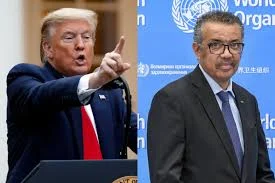
    The World Health Organization (WHO) has urged U.S. President Donald Trump to reconsider his recent decision to withdraw the United States from the global health body. 

    This move follows Trump’s executive order, signed shortly after his inauguration, formally starting the process of ending the country’s membership.  

    Trump justified his decision by citing concerns about the WHO’s handling of the COVID-19 pandemic and the organization’s alleged failure to implement necessary reforms. 

    He also criticized what he described as the unequal financial contributions, claiming the United States pays significantly more compared to China.  

    In a statement, the WHO expressed regret over the decision, noting the United States has been a key member since its founding in 1948. 

    The organization highlighted the decades-long partnership between the U.S. and WHO in tackling global health challenges, including the eradication of smallpox and efforts to eliminate polio.  

    WHO emphasized its role in protecting global health through disease prevention, health system strengthening, and crisis response in vulnerable areas. 

    It also pointed to ongoing reforms aimed at improving accountability and effectiveness.  

    The organization expressed hope for renewed dialogue with the U.S. to maintain their partnership, which it described as vital for global health security and the well-being of millions around the world.

  • Trump pledges a new America, end inflation, curtail immigration

    Trump pledges a new America, end inflation, curtail immigration

    Trump, according to  White House website, has outlined the administration’s priorities as ending inflation, lowering costs, tax cuts for American workers, securing America’s borders, restoring peace through strength, American energy dominance and making American cities safe again.

    Donald Trump promises to end inflation, lower costs, secure America’s border, and restore peace through strength as he was sworn in as the 47th president of America.

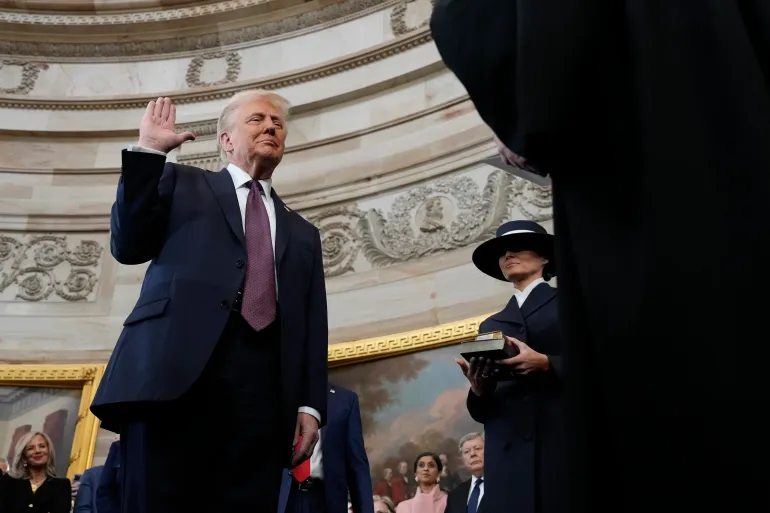
    Trump was sworn in as U.S. president after taking the oath of office in the rotunda of the U.S. Capitol building in Washington on Monday.

    Trump’s swearing-in was moved indoors to the Capitol Rotunda — the first time in 40 years — and the inaugural parade was replaced by an event at a downtown arena because of frigid weather.

    The Republican — at 78, now the oldest person ever to take the presidential oath — was set to kick-start his new term with a blitz of immediate orders on immigration and the U.S. culture wars.

    JD Vance is sworn in as the Vice President

    “I will declare a national emergency at our southern border” with Mexico, Trump said to loud cheers from supporters inside the ornate Rotunda hall, vowing to deport “millions and millions” of illegal immigrants.

    Trump, who pronounced the start of a “golden age” in the U.S. after taking the oath for a historic second term as president, lashed out at what he described as a “broken” society that he would rescue.

    “The golden age of America begins right now. From this day forward our country will flourish and be respected again all over the world”.

    While promising renewal, Trump’s tone was characteristically dark, denouncing what he said had been a “betrayal” of Americans  by a “radical and corrupt establishment.”

    “For many years, a radical and corrupt establishment has extracted power and wealth from our citizens, while the pillars of our society lay broken and seemingly in complete disrepair,” he said.

    “From this moment on, America’s decline is over.”

    Trump took the oath with one hand raised in the air, using a Bible given to him by his mother, and became the 47th president.

    Trump, according to  White House website, has outlined the administration’s priorities as ending inflation, lowering costs, tax cuts for American workers, securing America’s borders, restoring peace through strength, American energy dominance and making American cities safe again.

    During his first administration, Trump passed record-setting tax relief for the middle class, doubled the child tax credit, and eliminated job-killing regulations at a historic rate.

    “The American people saw more money in their pockets and witnessed record-low poverty in his first administration, and President Trump is committed to using his second term to usher in an economic revival by lowering taxes and creating more jobs for American workers.

    “He will champion No Tax on Tips, No Tax on Overtime, and will work tirelessly to make permanent the historic tax cuts he was able to deliver to the American people in his first term.

    “President Trump understands that putting more money in the pockets of the American people is the key to economic prosperity and will stop at nothing to make that a reality for all.”

    It further noted that Trump created the most secure border in U.S. history during his first time and seeks to restore our borders and reclaim national sovereignty.

    Trump supporters wait for entry at Capital One Arena in Washington, DC [Ali Harb/Al Jazeera]

    He has promised to do this by ending catch and release, declaring war on the drug cartels, restoring Remain in Mexico policies and empowering law enforcement and border officials to restore our border to its secure state.

    President Trump will keep America out of unnecessary foreign wars, improve our military readiness and defend our nation from all threats and dangers.

    “He will modernise our military, extract ideology from our Armed Forces, and replace the failed policies of never-ending war and regime change with a bold vision of peace through strength.

    “During President Trump’s first term, our nation became the number one producer of oil and natural gas on earth and achieved American energy independence.

    ““Delivering low energy costs for oil, gas, and electricity to the American people is a priority and he will achieve this by encouraging domestic energy production,” the White House website said.

  • Trump to be sworn in as president of  United States

    Trump to be sworn in as president of  United States

    Today in Washington, Donald Trump will take the oath of office as president of the United States, returning to the White House for a second term four years after his first attempt at reelection failed.

    At noon (1900 GMT), two and a half months after defeating departing Vice President Kamala Harris in the U.S. presidential election, Trump, a Republican, will take over the nation’s top political position from outgoing President Joe Biden.

    Biden had defeated Trump in 2020, but stepped aside as the Democratic candidate mid-campaign in July amid intense concerns about his age and mental fitness.

    Trump, who has long refused to acknowledge his defeat in the 2020 election, ultimately stayed away from Biden’s swearing-in ceremony in January 2021, breaking with tradition.

    Earlier that month, Trump’s insistence that he won and that his “victory” was stolen from him led to the storming of the Capitol in Washington, the seat of the U.S. Congress, by his supporters.

    Biden, on the other hand, is set to attend the ceremony as per tradition.

    In the morning, Trump is scheduled to attend a service at St. John’s Church in Washington.

    After the swearing-in ceremony, the Bidens are then set to receive the Trumps for tea at the White House.

    The inauguration was originally meant to take place outside on the west side of the Capitol as usual, but was relocated indoors as Washington was experiencing stuck in sub-zero temperatures.

    After taking the oath of office, Trump will deliver his inaugural speech as the 47th President of the United States of America.