
Category: Opinion

  • Ugly optics from Turkiye and return of our visiting president

    Ugly optics from Turkiye and return of our visiting president

    By

    UGO ONUOHA

    Nigeria’s president, Alhaji Bola Ahmed Tinubu, enjoys gallivanting. Put together he has been out of the country for more than half of one year in the two years and some months that he had been in office so far. For this period alone counting from December 28, 2025 to today, February 3, 2026, Tinubu would have spent only 11 days in Nigeria out of 34 days, less than one-third. He has set the tone for this year because the Igbo say that “ana esi n’uto ahuru mara uto nsi”. For decency we will just say that this means that the taste of the pudding is in the eating. But in truth, the transliteration of that Igbo sentence would come out as “you can guess the taste of feces from the smell of the fart that preceded it”. Those who keep tabs on presidential travels in the modern era of our country may yet find out that he holds the record as the most travelled Nigerian head of state in the first two years of their being in office.

    Tinubu has spent about 220 days abroad since he acceded to office on May 29, 2023. He just returned to the country on Saturday, several days after the state visit to Turkiye ended. That was not unusual. That explains why his handlers announce his departure dates but never the return dates. It’s the same when he goes to Brazil as an observer during the BRICS [Brazil, Russia, India, China and South Africa] summit. It’s the same when he visits London. It becomes worse whenever he is in Paris, France, his preferred home which coincidentally is the abode of his long time friend and business associate, Gilbert Chargouri [GCON], the Lebanese Nigerian. Some angry Nigerians have dubbed this secretly awarded medal of Grand Commander of the Order of Nigeria as Gilbert Chargouri Order of Nigeria [GCON].

    Whenever President Tinubu travels out of the country, which turns out to be very very often, the only thing that is known is the date for his departure. His return date is never or at best seldom stated in presidential communications. Sometimes the country he would be going to is never named. For instance, on December 28, 2025, one of the president’s spokespersons, Bayo Onanuga, caused a statement to be issued wherein Nigerians were told in a contemptuous, disdainful and derisive manner that Tinubu had departed for Europe as part of his end of year activities. He said that from Europe, the president would go to Abu Dhabi in the United Arab Emirates [UAE] for a programme. That event was scheduled to last for one week. On that trip, the president stayed away from the country for three weeks. The name[s] of the European country[ies] he went to remained a mystery. Though he was said to have been sighted in Paris during that period.

    When he returned from Abu Dhabi,Tinubu managed to spend one week in Nigeria, the very country he swore an oath to govern, and then he hurried out to Turkiye for a state visit. Though the presidency avoided putting a timeframe to the visit, the understanding was that the Turkiye state visit was not meant to last beyond two days. That’s the way it should be. Nobody should expect the president of Turkiye, Recep Tayyip Erdogan, a busy and obviously serious-minded leader of a country to devote or waste one week babysitting the president of another ostensibly unfocused and unserious country whose ruler may desire to even stay longer in a foreign land. For Tinubu, it’s obvious that better anywhere else but in Nigeria.

    In hindsight it should now be obvious even to the not too discerning that this ruler of Nigeria had a game plan for the duration of his presidency – four years, eight years or any number of years in-between. Travel. Travel. And travel. That should explain why he hastily acquired a well-appointed wide body Airbus aircraft as an addition to the presidential fleet. The prior talks that the aircraft in the presidential fleet were too many to start a commercial aviation service were not for him. Tinubu had made up his mind that he would rule Nigeria from the skies, and from across oceans, and from foreign lands. Of course, as should be expected for a jet procured in a hurry and in an untardy manner, there was no appropriation for it by what has turned out to be a supine national assembly [NASS]. Onanuga later explained, obviously reluctantly amidst national outcry, that the multi billion Naira jet was bought with monies from a slush fund otherwise called Service Wide Vote. It has to be said that this Vote is not unique to this regime. Tinubu did not create it. It has been in existence. Such opaque budgetary provisions are not unusual in jurisdictions such as Nigeria’s where kleptomania rules. To accentuate the proclivity to hedonism, an armour-plated and bomb-resistant Cadillac was added to spruce up the comfort and safety of President tinubu.

    However, Tinubu’s state visit to Turkiye last week demonstrated that there is so much that the perks and appurtenances of a high and demanding office can mask. They cannot mask a man suspected of infirmity to become suddenly strong. Even a performance enhancing steroid wears away over time. Comforts and access to the best of medical facilities and technologies and inventions are useful and life-enhancing. But they cannot cure slowdowns and noticeable sluggishness that come with age. It gets worse when there’s a combination of infirmity and old age. To be sure old age could be grace that comes from on high which many actually covet but do not have. It has to be said, however, that for some people old age could be karma designed to serve them cold dinner in the twilight of their lives when they are helpless and most vulnerable. When suspected infirmity combines with old age, living a jet-set lifestyle becomes ill-advised. It certainly will not be good for a man in his mid-70s or actually in his mid-80s.

    In national terms Nigeria is in a dire straits in almost all facets. If Nigeria were to be a human being it would be a key candidate for admission in the ICU [intensive care unit]. Its politics is bastardised. Its economy is comatose. Paranoid. Paralysed. Its sovereignty is challenged by domestic non-state actors and foreign powers with morbid interests. The claims of the unity of the country and its indissolubility are convenient and self-serving slogans in the mouths of the members of the corrupt and looting ruling elite. In Turkiye last week, it was the instability of Nigeria that was in the global spotlight. Tinubu merely approximated it. The world saw Nigeria on display through their ruler. Nigeria told the world that this was the best it had on offer. The irony is that this country is still a mystery to the international community. It presents a contradictory image of itself – a country of young and tech savvy people and, at the same time, a country of a bungling and utterly corrupt ruling class. It’s a mystery. And an enigma.

    There’s no attempt here to diagnose the health status of President Tinubu. I am not a certificated health professional. And I am not his personal physician. But the telltale signs of a stumbling and tumbling man in Turkiye last week who needed to be assisted by his host to stabilise and focus should be concerning, nay troubling for any Nigerian who means well for this country. The signs were writ large prior to the 2023 election after which he was declared the winner. What this means in effect is that this country which is in ICU has had the dubious burden of nursing its nurse for the better part of 10 years. A president should be a nurse for an ailing country.

    The affliction of Nigeria who masqueraded as its president from 2015-2023, Maj. Gen.[rtd] Muhammadu Buhari, became a patient instead of a nurse for the country. He was in and out of hospitals abroad for the duration of his eight years of reign. At a time he was on a hospital bed in London for 103 consecutive days. His appointees formed cabals which ran the country to benefit themselves. The chickens are now coming home to roost. The only achievement of Buhari was ‘non-governance’ which ensured that the country went back by at least 30 years. It will be frightening if  this country is on the cusp of witnessing a déjà vu. Already, people who should be in the know are indicating that Tinubu is not firmly in control of his regime. They claimed that contending cabals have been pulling at opposite ends which accounts for the many missteps by the regime including smuggling a strange name into the list of ambassadors-designate. Indeed, the strangler had been assigned to a duty post before the scheme was uncovered. The burgeoning perception and image of Nigeria as a rolling crime scene is foreboding.

    UGU ONUOHA, Veteran Journalist, Managing Director/Editor-in-Chief, Champion Newspapers Limited writes from Lagos, Nigeria’s Centre of Excellence

  • FUHSO and the Cost of Governing Without Foresight

    FUHSO and the Cost of Governing Without Foresight

    The difficulties confronting the Federal University of Health Sciences, Otukpo (FUHSO) reflect the challenges that arise when institutional ambition outpaces careful planning. Established to contribute meaningfully to Nigeria’s health workforce development, the university is now struggling to deliver one of the most basic requirements of medical education, clinical training. The fact that several cohorts of medical students are unable to progress because a teaching hospital is not yet operational points to gaps in planning, funding execution, and oversight that deserve urgent and thoughtful attention. Addressing this situation will require coordinated action by the relevant ministries and regulatory bodies to prioritise the completion of core clinical infrastructure, strengthen budget implementation, and ensure that future institutional decisions are guided by long-term sustainability rather than short-term expediency.

    What makes the situation particularly concerning is that it was neither sudden nor unforeseeable. Medical education is among the most capital-intensive forms of tertiary training, and the absence of a functional teaching hospital inevitably undermines any programme designed to produce doctors. Yet admissions proceeded, cohorts advanced through pre-clinical studies, and the warning signs were allowed to accumulate. The resulting bottleneck now confronting students underscores the consequences of launching critical institutions without fully aligning timelines, infrastructure, and financing, a pattern that has too often characterised public sector projects in Nigeria.

    Insiders familiar with the situation say the problem began long before the first students were stranded. The old Otukpo General Hospital, redesignated as FUHSO’s teaching hospital, has seen little more than cosmetic attention. Although funds were captured in the federal budget for its upgrade, an official disclosed that roughly ₦1 billion earmarked for the project could not be meaningfully accessed. The explanation points to Nigeria’s chronic budget implementation failures, allocations announced with fanfare but trapped in bureaucratic bottlenecks, released too late or not at all.

    But the funding story, troubling as it is, does not fully explain the depth of FUHSO’s crisis.

    Records and interviews suggest that early leadership decisions compounded the institution’s vulnerability. Instead of pursuing low-cost, temporary arrangements using existing government facilities, abandoned schools, idle public buildings, or shared spaces common in the early life of many public universities, the university’s pioneer management opted to operate from rented hotels and privately owned structures. These choices consumed scarce take-off funds without building any lasting academic or clinical capacity.

    Education analysts describe this as a classic case of misplaced priorities. While administrative comfort was secured, the essentials of a medical university, laboratories, teaching wards, clinical partnerships, were deferred. Allegations of opaque leasing arrangements and potential conflicts of interest have only deepened concerns, particularly in the absence of publicly available breakdowns of how early funds were spent.

    The contrast with other federally funded health institutions is stark. In the same national budgets where FUHSO struggled to secure just over a billion naira for capital development, established teaching hospitals such as those in Kano, Awka, and Lagos received tens of billions of naira each. These hospitals serve as training grounds for medical students across the country, yet FUHSO, a university designed to anchor health education, was left trying to build from scratch with a fraction of the resources.

    Even among federal universities, the disparity is glaring. While long-established institutions routinely receive allocations approaching ₦50 billion annually, newer specialised universities like FUHSO have been confined to single-digit billions, regardless of the capital-intensive nature of medical education. This raises uncomfortable questions about national priorities and whether the decision to establish such institutions was matched by the willingness to fund them properly.

    The human cost of these failures is now unavoidable. Students face indefinite delays, uncertainty about accreditation, and the emotional and financial strain of a medical education placed on pause. For a country already battling an exodus of healthcare workers, the irony is painful: an institution meant to strengthen the health system is instead producing stalled graduates.

    Regulatory bodies have not escaped scrutiny. The National Universities Commission and relevant medical training authorities approved programmes and admissions without ensuring that minimum clinical infrastructure was in place. Their silence as the crisis deepens suggests a regulatory culture more reactive than preventive.

    What is happening at FUHSO is not an isolated mishap. It reflects a broader national pattern in which institutions are created for political symbolism, budgets are announced without execution plans, and accountability is diffused across ministries, councils, and agencies until responsibility belongs to no one.

    As students remain trapped in academic limbo and public funds continue to trickle into administrative overheads rather than concrete outcomes, the question grows louder: who will answer for the gap between promise and reality at FUHSO? Until this question is confronted honestly, Otukpo will remain a cautionary tale, not of what Nigeria lacks, but of what it repeatedly fails to do with what it has.

    Beyond the immediate impact on affected students, the situation at FUHSO carries broader implications for Nigeria’s health system and national development. At a time when the country faces persistent shortages of medical professionals and the steady migration of trained doctors abroad, allowing a specialised health sciences university to drift without its core clinical capacity is a cost Nigeria can ill afford. Resolving this challenge promptly and transparently would not only restore confidence among students and staff, but also signal a renewed commitment to disciplined planning and accountability in public institutions, principles that remain essential to achieving sustainable progress.

  • Trump’s World Cup stress test and prospects of Europe’s boycott

    Trump’s World Cup stress test and prospects of Europe’s boycott

    By

    UGO ONUOHA

    FEDERATION of International Football Associations [FIFA] awarded hosting rights for this year’s football World Cup tournament to three North American countries about eight years ago, precisely on June 13, 2018. That was in keeping with the longstanding tradition of the world’s football governing body. FIFA allows the host nation sufficient time to provide or improve facilities for the global fiesta. Thousands of people including officials, footballers, fans, tourists and others usually converged on the host nation to attend the events. Some persons who may not be football fans and followers use the opportunity of the World Cup for sightseeing and tourism.

    This year’s World Cup football tournament will be different in many respects. It will be the first time that three neighbouring countries – the United States, Canada and Mexico – will be jointly hosting the tournament. The highest combination, to the best of our recollections, was joint hosting between South Korea and Japan in 2002. All the while it had been solo hosting by willing and endowed countries beginning from Uruguay in 1930 to Qatar four years ago. Again, while there were 32 countries battling for supremacy in Qatar in 2022, 48 countries will be contending for the Cup this year in the United States, Canada and Mexico. This has never happened before.

    And because of the expanded format, Africa was allotted nine automatic slots with the potential to be 10 through a play-off, against the five slots allocated to the continent in the 32-country arrangement. Sadly, and in spite of the 100% increase in the slots available to Africa, Nigeria which is arguably a footballing giant on the continent could not pick a slot. It failed in the automatic qualification for one of the nine spots. It qualified to pick the remaining slot through a play-off in Africa and a final meeting with a qualifier from another confederation. Again, Nigeria failed at the Africa huddle, losing to the Democratic Republic of Congo [DRC]. Nigeria, the self-styled giant of Africa will be MIA [missing in action] in successive world cup tournaments, Qatar 2022 and US/Canada/Mexico 2026. How has the mighty fallen?

    This year’s football tournament has been projected to be the best attended, the most spectacular and the most profitable. But it could turn out not to be. In 2018 when the hosting right was awarded to the US and its neighbours, Donald J. Trump was the president of America. In the years while the US prepared to host a potentially spectacular event, Trump was out of power having lost his reelection bid to Joe Biden in 2020. He still denies that he lost that election and also rejected accusations that he inspired the storming of the Capitol [parliament] by his supporters who violently attempted to stop the certification of the election results. Trump was returned to the American presidency in January this year, in time to be the chief host of the American leg of the tournament. And that’s where the problem starts. Before Trump acceded to the White House in 2016, he gave indications during the campaigns that he would be an unconventional president. And he was. However, there were people embedded in American politics and bureaucracy who worked against him and curbed his excesses. He was constrained and was frustrated.

    But Trump 2.0 has been a different ballgame from the very beginning last January 20. He returned prepared and appointed those who shared his weird governing philosophy to strategic positions. He ignored Congress [parliament] and set up DOGE [the so-called department for government efficiency], armed his now estranged friend and billionaire, Elon Musk, with a chainsaw to decimate the bureaucracy. He did in sacking many government workers but failed in the goal to save money. Indeed, the report was that the exercise ended up increasing the cost of the government. Ostensibly by design, Musk’s name was not forwarded to Congress for consideration as a member of Trump’s Cabinet. Apart from Musk, Trump also had the almost 1000-page Agenda 2025, a governing template pre-prepared for Trump by the arch-conservative Heritage Foundation as a governing philosophy. When the document was exposed prior to the 2024 election, Trump had vehemently denied knowledge of the document and any association with the promoters. Americans knew that he was lying but voted for him anyway.

    The challenge now is that Trump’s unconventional or peculiar way of running the United States is spilling over into the organisation of the World Cup. Before now and with lesser mortals, FIFA would never have tolerated the meddling into the management of football and the organisation of its tournaments by politically exposed persons and government officials. Not anymore or so it seems. Trump fired the first salvo by threatening to strip some American cities of hosting rights, and arbitrarily transferring the same to other cities ostensibly controlled by Republicans. By design or coincidence, some of the host cities and states under threat of stripping them of hosting rights are those administered by Democrats as mayors or governors. Trump is Republican. He claims that cities and states run by Democrats were prone to protests and riots without providing evidence.  For the first time since Uruguay hosted the maiden World Cup in 1930, 96 years ago, political affiliation has become a consideration for cities to host world cup matches in a host country.

    However, FIFA’s vice president, Victor Montagliani, quickly shot back telling Trump that football was bigger than any country. He had said that “with all due respect to … world leaders football is bigger than them and football would survive their regime, and their government, and slogans”. But before this face-off, the American state department had announced visa restrictions on about 75 countries including a big footballing nation, Brazil. All the qualifying countries from Africa, nine of them, are under the hammer of these visa restrictions except South Africa. Even that exception falls under what the US state department describes as qualified visa restriction. In effect, all the qualifying countries from Africa are in dire danger of the disruptions of the movements of their teams, associated staff, football federation officials, and supporters into the US for the football fiesta that starts on June 11 in Mexico, about five months away.

    For Africans in particular, football would lose its essence in the absence of the travelling supporters of the national teams. The non-stop singing and drumming and dancing in stadiums will be felt and will take a toll on the motivations of the players during matches. Arguably, Nigeria has the most vocal supporters club for their national team. But Nigeria did not qualify for this World Cup so the national team’s supporters club would not have valid reasons to seek visas into the US this time. But what about South Africa and their vuvuzela which they introduced when they hosted a highly successful World Cup tournament in 2010. You can argue that a vuvuzela can be picked up in any neighbourhood shop in any American host city, but a vuvuzela in the hands and the mouths of its creator, a South African, sounded differently and certainly more menacingly. South Africans have a way of using the vuvuzela to pass coded messages to their players who are doing battle in the field. National team supporters constitute the 12th player in the field of 11 players.

    FIFA promotes football as a tool and force for unity. This slogan will face an acid test in Trump’s America in the World Cup months of June and July. The vicious and violent anti-immigrants policy of President Trump will ensure that. An immigration policy that has no respect for sanctuary cities in some states in America, the churches and the law courts, will certainly pay scant regard to stadiums and fan zones as no-go areas during the World Cup. Overzealous Immigration and Customs Enforcement [ICE] operatives will find stadiums and fan zones and hotels as fertile grounds to meet their monthly targets for the arrest of immigrants for detention and deportation. What this means is that legal migrants and undocumented ones from countries that qualified for the tournament will avoid match venues for their own safety.

    Football enthusiasts from Iran and Haiti are forbidden from travelling to the US. They are fully banned though their national football teams qualified for the tournament. Of the nine qualifiers from Africa so far, only South Africa can be said to be partially off the hook. The rest – Algeria, Cape Verde, Egypt, Ghana, Ivory Coast, Morocco, Senegal and Tunisia – are under one form of the American visa restrictions or the other. If DR Congo which eliminated Nigeria from the race succeeds in the inter-confederations play-off it will fall under the visa restrictions category. FIFA is trapped in America. Its aspiration of inclusivity through football is directly in conflict with Trump’s divisive immigration policy. The rigging by Gianni Infantino, FIFA’s president, of the so-called FIFA Peace Prize specially for Trump to appease him when the Nobel Peace Prize committee overlooked him in the 2025 award, has not helped the situation. The presentation ceremony for the award and the fawning of Infantino over Trump at the event was a spectacle with unrivalled ugly dimension.

    Now Infantino will have to contend with a troubled tournament even before the games start. He may have to preside over a tournament that could fell far short of expectations and projections. He will have to superintendent a World Cup that excludes three quarters of the world, among them football loving countries. And football as we know it is neither the number one sport in America nor even number two. For Infantino this will be a dilemma with implications for the future. He has allowed Trump to use his corrosive brand of politics to trump football. Future host nations of the World Cup would also be inclined to introduce politics to the game. For instance, Saudi Arabia is slated to host the World Cup in 2034. It will be the sole host of the 48-country format unlike this year’s that will be jointly hosted by the US, Canada and Mexico. What will Infantino and FIFA do on the eve of the tournament if the Saudis introduce a visa policy that excludes gay people? What Trump is doing to the world of football could be the beginning of the diminution of football as a global brand and a force for unity not tainted by overt partisan politics of member countries of FIFA and host nations of the tournament.

    There are other implications of the exclusion of three quarters of the world from the 2026 tournament by the US which is one of the host nations. Airline bookings to the match centres are likely to crater; hotel reservations by football fans from countries affected by visa bans and restrictions would be cancelled; restaurants in the host cities may have to review their plans and projections; the same would apply to tour operators; and, companies that sponsor interpreters but which operate in the countries under visa bans or restrictions may have to review their operations. Apart from these, global brands who are the major sponsors of the World Cup would now be wondering whether their investments would be worthwhile given the virtual exclusion of broadcast audiences from emerging markets. These markets are the new frontiers they are working to reach with their messages, products and services. They could be wondering whether football lovers in such countries would still be enthusiastic in following the tournament on television, radio or through other means. It will be a tough call. But it will not be a call for Infantino alone.

    Postscript

    The prospects of a tragic 2026 World Cup became starker at the weekend with the vice president of the DFA, the German football federation, Oke Gottlich, hinting at Germany boycotting the tournament because of Trump’s immigration and imperialist policies. Trump has been talking about seizing Greenland, an autonomous island under the sovereignty of Denmark. Analysts say that if Germany shuns the World Cup, Denmark is likely to follow suit immediately. Indeed, the potential boycott of the tournament will have a domino effect with European nations walking away. No disrespect intended, but nobody goes to the World Cup to watch Haiti play against DR Congo. No global brand will expend millions of Dollars on any World Cup tournament sponsorship in which European football power houses are excluded. That will not happen. No broadcasting network will pay for rights for such a tournament. If Europe boycotts the World Cup, it means that half of the 48 countries will be out of the tournament. And if countries under the current US visa restrictions join Europe, it will be game over, no pun intended. And all these will be down to one man – Donald Trump.

    Ugo Onuoha is a Veteran Journalist and former Managing Director/Editor-in-Chief, Champion Newspapers Limited

  • Altered After Parliament: Nigeria’s Tax Laws and the Crisis of Executive Power

    Altered After Parliament: Nigeria’s Tax Laws and the Crisis of Executive Power

    By

    Dahiru Ali

    Nigeria’s recent tax reform laws, widely seen as a landmark step toward modernizing the country’s revenue system, have become the focus of growing scrutiny following allegations that the laws were altered after parliamentary approval. The House of Representatives Minority caucus has accused relevant actors of introducing unauthorized changes, raising questions not only about procedural integrity but also about the broader balance of power between the executive and legislative branches in Nigeria.

    The controversy came into the public eye in mid-December 2025 when Abdussamad Dasuki, a member of the House, claimed that key provisions of the newly enacted tax laws had been altered in the versions gazetted for public release. The allegations immediately sparked public debate, with some Nigerians calling for a suspension of implementation pending clarification. The concern, critics argue, is that changes made outside the legislative process could have significant legal, economic, and political consequences.

    A day before Dasuki’s public allegations, the leadership of both chambers of the National Assembly had instructed Kamoru Ogunlana, clerk of the Assembly, to coordinate with executive agencies to re-gazette the laws. Some analysts interpreted this directive as a tacit acknowledgment that the original gazetted versions contained errors or deviations from the versions approved by lawmakers.

    The laws in question include the Nigeria Tax Act, 2025, the Nigeria Tax Administration Act, 2025, the Joint Revenue Board of Nigeria (Establishment) Act, 2025, and the Nigeria Revenue Service (Establishment) Act, 2025. Each of these laws represents a key component of the government’s broader fiscal reform agenda, aimed at streamlining tax administration, broadening the tax base, and improving revenue mobilization.

    Yet preliminary findings from a seven-member committee appointed by Minority Leader Kingsley Chinda suggest that substantive alterations may have been introduced in some of the laws after passage. The committee, chaired by Afam Ogene, includes representatives from all six geopolitical zones: Aliyu Garu (Bauchi), Stanley Adedeji (Oyo), Ibe Osonwa (Abia), Marie Ebikake (Bayelsa), Shehu Fagge (Kano), and Gaza Jonathan (Nasarawa). Their mandate is to investigate discrepancies between the National Assembly-certified copies of the laws and the gazetted versions.

    Key Alleged Discrepancies

    According to Ogene, the Nigeria Tax Administration Act, 2025, shows the greatest variation among the four laws. The committee identified multiple areas of concern:

    • Tax compliance thresholds: Section 29(1) of the House-certified version set the tax compliance reporting threshold at ₦50 million for individuals and ₦100 million for companies. In the gazetted version, the threshold for individuals was reportedly reduced to ₦25 million, with company thresholds altered as well. Critics argue that such a change could significantly expand the number of taxpayers subject to reporting requirements.
    • Appeal conditions: Sections 41(8) and 41(9) were allegedly added in the gazetted copy, requiring taxpayers to deposit 20 percent of disputed tax amounts before appealing to the High Court. These provisions were reportedly not part of the version passed by the National Assembly.
    • Expanded enforcement powers: The gazetted law allegedly empowers tax authorities to arrest suspected offenders and sell seized assets without a court order, a provision absent from the original legislative version.
    • Altered definition of federal taxes: Section 3(1)(b) of the House-certified version defined federal taxes to include income tax, petroleum income tax, stamp duties, and value-added tax (VAT). The gazetted copy reportedly removed petroleum income tax and VAT from federal administration, potentially impacting revenue streams and intergovernmental fiscal relations.
    • Dollar-denominated petroleum tax computation: Section 39(3) of the gazetted version mandates that petroleum tax calculations be conducted in US dollars rather than in the currency of the transaction, diverging from the version passed by parliament.
    • Oversight provisions weakened: The National Revenue Service (Establishment) Act, 2025, allegedly had clauses removed that allowed lawmakers to summon officials, demand reports, and ensure accountability. Sections 30(1)(d) and 30(3), which provided for quarterly and annual reports to parliament, were reportedly deleted, raising concerns about the weakening of legislative oversight.

    Implications for Governance and the Rule of Law

    Experts argue that if these discrepancies are confirmed, they could have far-reaching consequences for governance in Nigeria. “The National Assembly is constitutionally empowered to make laws, and any unilateral alterations outside the legislative process undermine both the rule of law and democratic accountability,” said a constitutional law scholar who spoke on condition of anonymity.

    The controversy highlights the perennial tension in Nigeria’s governance system between the executive and legislative branches. While the executive is charged with implementation, the legislature retains the mandate to make and oversee laws. Any interference with this process, intentional or accidental, threatens the checks and balances that underpin democratic governance.

    The controversy has also reignited debate over the role of the presidency in legislative affairs. Analysts suggest that any unilateral alterations to passed laws, whether directly authorized or passively tolerated, signal a worrying disregard for democratic norms and the checks and balances that are meant to safeguard the country’s governance. Such actions, critics argue, risk eroding public confidence not only in the presidency but in the broader institutional framework that underpins Nigeria’s democracy.

    The issue also underscores broader concerns about transparency and procedural rigor in the publication of laws. Legal experts note that discrepancies between parliamentary-certified copies and gazetted versions could lead to confusion among taxpayers, enforcement agencies, and courts, creating uncertainty that may hinder the effective application of the tax reforms.

    Historical Context

    Nigeria has experienced similar controversies in the past, where differences between legislative texts and official publications have sparked public debate and legal challenges. Historically, such incidents have often fueled debates about executive overreach, the reliability of government documentation, and the integrity of legislative processes. Observers note that while these controversies sometimes resolve through clarifications or re-gazetting, the reputational impact on institutions can be long-lasting.

    The current allegations gain additional weight in the context of Nigeria’s ambitious economic reform agenda. Tax reforms are central to the government’s strategy to reduce dependence on oil revenue, expand the tax base, and modernize public finance management. Any procedural irregularities in the laws themselves risk undermining public confidence and investor trust, which are essential for successful implementation.

    Next Steps

    The House Minority committee has requested an extension of time to complete its review. Ogene emphasized that the committee’s work is aimed at ensuring accountability and safeguarding the constitutional role of the legislature. “Given the anomalies, illegalities, and potential procedural lapses, a thorough examination is warranted before the laws are fully implemented,” he said.

    Meanwhile, lawmakers, taxpayers, and policy analysts are closely watching the situation. Questions remain about who authorized the alleged changes, how they were made, and whether corrective action—including possible re-gazetting—will be sufficient to restore confidence in the legislative process.

    The controversy also serves as a reminder of the importance of transparency, meticulous record-keeping, and public oversight in the lawmaking process. As Nigeria continues to pursue economic and fiscal reforms, the integrity of legislative procedures will remain a critical factor in ensuring that reforms are both effective and legitimate.

    Broader Lessons

    At its core, this issue is not just about tax thresholds or procedural discrepancies; it is a reflection of the broader governance challenges that Nigeria faces. The balance of power between the executive and legislature, the clarity of legal texts, and the robustness of oversight mechanisms are all tested when allegations of post-passage alterations emerge.

    As the investigation unfolds, it provides an opportunity for Nigerian institutions to reinforce accountability, clarify procedural standards, and ensure that reforms—especially those with wide-reaching economic and social impact—are implemented with both transparency and legitimacy. For citizens, policymakers, and investors, the outcome of this scrutiny will offer insights into the resilience of Nigeria’s democratic and institutional processes.

    For now, the country watches as the investigation continues, aware that the resolution of this controversy will have implications not only for the implementation of the tax reforms but also for the credibility of Nigeria’s legislative and governance institutions.

  • Brigadier Ademulegun and 60 years of nightmare

    Brigadier Ademulegun and 60 years of nightmare

    By

    UGO ONUOHA

    RITUALS have a way of degrading and over shadowing the substance and raisin d’etre of almost every memorial. That much can be said for January 15 every year in Nigeria. That day was symbolically and whimsically chosen to mark the end of the fratricidal Nigeria – Biafra civil war, 1967- 1970. That bloody war, in which combatants especially on the federal side appeared to have paid scant regard to the internationally prescribed rules of engagement in such strife, cost between one million to three million lives, especially on the side of the self-determination protagonists. The body count and the labelling of the two sides would depend on whose account of the history of the war you are reading.

    The Nigerian civil war did not just happen. There was a build up, and some of the seeds that culminated in the war were sown long before the country gained political independence on October 1,1960. The constitutional conferences that preceded the country’s independence were marked by toxic debates, disagreements that bordered on irreconcilable differences, and widespread suspicions amongst the leaders of the various regions – east, west, and north. It was so bad that the regional leaders could not find accommodation in determining when self government would start in the regions. That explains why self government commenced earlier in the east and the west, and much later and ostensibly reluctantly in the northern region.

    The subsequent attainment of independence in 1960 did not stem the deep-seated, pervasive, and mortal mutual suspicions. At the root of the trust deficit were the differences in religion, the level of exposure to Western education, and the fear of domination of the north by the south, a part of the country that was perceived to be more educated and sophisticated. The south also dominated the public/civil service and the officer corps of the armed forces and other security agencies at the time. That was the reality. The fear of one another was manifest during the horse trading for political alliances in the aftermath of the pre-independence election which failed to hand any of the major political parties – National Council of Nigeria and Cameroon [NCNC], Northern People’s Congress [NPC], and the Action Group [AG] – a clear electoral majority and the mandate to govern.

    The country’s politicians and rulers fumbled and wobbled into the general elections of 1964 which turned out to be violent and bloody especially in the defunct Western region. At that point it became clear to the discerning that the fledgeling and floundering Nigerian republic and its nascent democracy were heading for the rocks. That chapter was fast tracked to its inevitable end through widespread violence, manipulations, curious political trials, imprisonment, and perceived pervasive corruption in governments particularly at the federal level.

    So in January 1966, the army struck and sacked the democratically elected civilian government headed by Sir Abubakar Tafawa Balewa who was the prime minister, and Dr. Nnamdi Azikiwe, who was the president, head of state and commander-in-chief of the armed forces. That bloody military coup which had Major Chukwuma Kaduna Nzeogwu as its putative head stirred the hornets’ nest. When the coup was foiled by the then Col. Chukwuemeka Odumegwu-Ojukwu and a few other military officers, Major-General Johnson Thomas Umunnakwe [JTU] Aguiyi-Ironsi assumed the office of the head of state and supreme commander of the armed forces. The January 1966 coup which victims were perceived to be preponderantly from the north incubated a revenge coup of July 1966 which was yet another bloodbath this time of the eastern military and political leaders. Civilians of eastern extraction living in other parts of the country, particularly in the north were not spared. Some historians described what happened in July 1966 and thereafter as a pogrom and genocide on the Igbo.

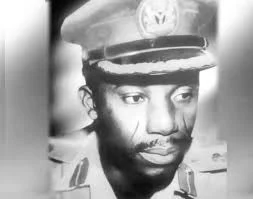
    But our major concern in this season of the ritual of this year’s Armed Forces Celebration and Remembrance Day [AFCRD] was about a particular sad and lingering event during the January 1966 coup. It was the gruesome murder of Brigadier Samuel Ademulegun and his wife, Latifat, who was eight months pregnant, in their Kaduna home. He was the commander of the 1st Brigade of the army and the third highest ranking officer of the Nigerian Armed Forces. When you sign up for the army, you sign either to live or to die. That should not be in contention. You enlist to defend the territorial integrity of your country and to lay down your life for that purpose should the need arise. It will also be your bounden duty to protect and preserve legally constituted governmental authorities. And that was what Brigadier Ademulegun was doing in the  the early hours of January 15, 1966, when a coup plotter, Major Timothy Onwuatuegwu, led his team of mutineers into the bedroom of his commander to shoot him and his pregnant wife. The brigadier was said to have refused to surrender the keys to the armoury to the mutineers.

    So, General Ademulegun [that’s what he should be in today’s nomenclature], an authentic Nigerian patriot, his doting wife who was reportedly shot and killed because she used her body and the baby in her womb in her attempt to shield her husband from harm, died in active service. In service to Nigeria. In the years since Gen. Ademulegun, his wife [a London – trained nurse], and her unborn baby were murdered and their children who witnessed the killing were traumatized, our country has had a national anthem which included this line: “…the labours of our heroes past shall never be in vain…” At a point in our country’s epochal and chequered journey that anthem was discarded for being too colonial. But the extant regime in a sleight of hand, and in connivance with a spineless national assembly restored the old anthem in the dead of the night, in a manner of speaking. That line in that anthem is a blatant lie as it pertains to Gen. Ademulegun and his grieving children who have been crying for 60 years, this year.

    In the room or close by on that fateful day when the Ademulegun couple were killed were three of their six children – Solape, six years, Goke, four, and Kole, 13 in a nearby room. In spite of what happened to their father, Francis Bamidele Ademulegun still joined the military and became a Group Captain (red neck) in the Nigerian Air Force. He died without knowing where his father was interred. The same fate befell Adekunle and Bankole. But their siblings, Gbenga, Solape [now Ademulegun – Agbi], and Goke remain unrelenting in asking questions about what happened to the remains of their officer and gentleman father [N/3] and their Sisi Nurse mother? The Nigerian army owes them an answer. President Bola Ahmed Tinubu owes them an answer or an explanation. He is the Commander-in-Chief of the Armed Forces. Sixty years should be enough time to put a closure to this matter. A national monument in honour of the gallant officer and some kind of compensation for his survivors would not be out of place. The Nigerian Army can, and should treat the remains and memories of one of its pioneering officers better than what has happened in the last 60 years. It’s inconceivable that the Nigerian Army does not know the whereabouts of the remains of Gen. Ademulegun, his wife, and their unborn baby. If that were to be the case, then the Nigerian Army should be an institution of particular concern.

    The Ademulegun children did not just wake up 60 years after to ask questions about what happened to their parents. They have been crying for 60 years. They have campaigned. They have written letters to relevant persons and institutions. They have lobbied. They have petitioned. They have begged. But they have met brick walls. On Thursday, January 15, the family again packaged an event in Lagos to celebrate and pay tribute to the memory of the Ondo state-born army general and his wife who hailed from Lagos. “For 60 years [and counting], we have sought answers to many questions from those in authority. The most saddening being the fact that we do not know where they, our parents, were buried”, Solape Ademulegun – Agbi lamented last week.

    “The years have since gone by. We want to celebrate their gallant and heroic lives. Even when there is still no closure and our hearts still bleed everyday. But right now we believe that President Bola Tinubu can ease our pains. We are appealing to the president to direct the military authorities to show us from their records where exactly… our parents [were] buried. This will go a long way to help us to put this tortuous pain, tears, and grief behind us”. This plea should have been attended to yesterday. But if it is answered today, it could be said to be late but not too late for the grieving surviving children. May the grandchildren of Gen. Ademulegun and Sisi Nurse, authentic Nigerian patriots, not be saddled with searching for where their grandparents were interred. Amen.

  • Benue South and the Politics of Listening: Inside Hon. David Olofu’s Unusual Town Hall

    Benue South and the Politics of Listening: Inside Hon. David Olofu’s Unusual Town Hall

    By

    Dahiru Ali

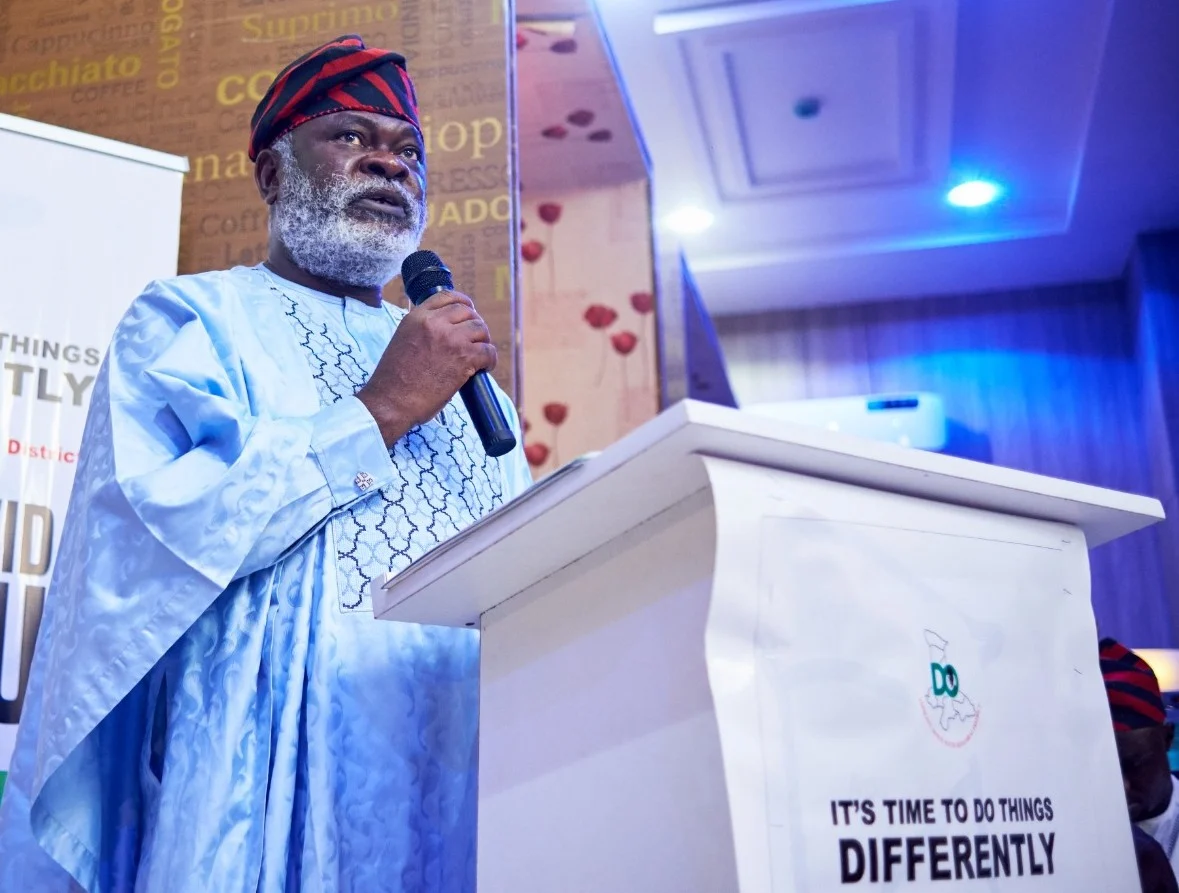
    In a political culture long defined by monologues, Hon. David Olofu’s interactive session held last Friday at the serene Armed Forces Officers’ Mess and Suite, near Lungi Barracks, Abuja felt disarmingly different. It was not a rally. It was not a coronation. It was, quite deliberately, a conversation.

    For many in attendance, that alone marked a departure from the norm. Never before, participants said, had a senatorial aspirant from the district convened such a broad gathering of Idoma elders, former legislators, academics, technocrats, professionals, and youth leaders, not for endorsement, but for interrogation. One participant described the audience as “the crème de la crème of Idoma sons and daughters,” brought together to think, not applaud.

    The meeting carried the mood of a long-delayed beginning, quiet, deliberate, and heavy with expectation. In a country where citizens often encounter power only after decisions have been made, the symbolism of listening first was not lost on anyone in the room.

    A Deliberate Tone

    Proceedings opened with prayers by Pastor Omale, lending solemnity to what would become an unusually reflective political engagement. Dr. Adakole Elaija moderated the session with steady restraint, while respected figures such as Venerable Akp’olofu and Barrister John Ochoga anchored the event with moral and legal weight.

    The welcome address by Prof. David Salifu, former Secretary to the Government of Benue State, set the intellectual tone. Drawing on history, he recalled how the Idoma people began “hearing from the horse’s mouth” as far back as 1865 in Czarist Russia, an evocative metaphor for direct engagement and political awareness. The message was clear: this was not to be politics at a distance.

    Dr. Elaija reinforced that framing, describing Hon. Olofu’s aspiration as rooted in equity, fairness, and justice, values he argued must define any serious effort to reposition Benue South in the national equation.

    Naming the Problem Without Evasion

    When Hon. David Olofu spoke, he avoided flourish. Instead, he offered a blunt diagnosis. Years of moving through communities across Benue South, he said, had revealed a stubborn reality: poverty in its most pervasive form. Poor schools. Weak healthcare. Crumbling infrastructure. Limited opportunity.

    These conditions, he argued, are not isolated failures but symptoms of deeper structural neglect. Benue South’s underdevelopment, in his telling, is less about absence of effort and more about absence of equity. Representation, he insisted, must go beyond presence in Abuja to sustained advocacy that delivers tangible outcomes.

    Equality as a Political Project

    Guided by the principles of People, Power, Prosperity, and Progress, Hon. Olofu outlined a twelve-point legislative and advocacy agenda. At its core is a single, insistent demand: equal treatment of senatorial districts in national policy, budgeting, and resource allocation.

    Although senatorial districts are constitutionally equal, he noted, practice tells a different story. Some districts attract infrastructure, investment, and federal attention; others are left to stagnate. Correcting this imbalance, he said, would be a defining priority of his tenure.

    “There is no fairness, equity, or equality among senatorial districts nationwide,” he stated plainly, promising to press the issue consistently within the National Assembly.

    From Policy to Practical Outcomes

    Beyond advocacy, Hon. Olofu presented a development blueprint that cut across sectors. Education, he said, must be reimagined as social engagement, with a deliberate shift toward science, technology, engineering, and mathematics. Healthcare reform would focus on upgrading Primary Healthcare Centres to strengthen access at the grassroots.

    Agriculture featured prominently, framed not as subsistence but as a pathway to industrialisation and shared prosperity. Mechanised farming, beginning with land clearing, would anchor this shift. Entrepreneurship and SME support, particularly access to capital, were identified as engines for expanding commercial activity across the district.

    The aspirant also placed strong emphasis on ICT, proposing hubs and incubation centres to channel youth creativity into productive enterprise. Infrastructure renewal, local government reforms, and insecurity rounded out the agenda. On security, he called for a review of existing laws and the establishment of a command-and-control coordination system in Otukpo.

    Redefining Representation

    What most distinguished the session, however, was Hon. Olofu’s approach to governance itself. Rejecting the idea of representation as a solo act, he proposed institutionalised citizen participation through the creation of a Benue South People’s Assembly to monitor project implementation, and a Benue South Council to provide advisory input and early warning signals.

    Under these bodies, thematic working groups would help shape legislative priorities, ensuring that governance remains responsive rather than remote. It was an approach many present described as rare in Nigeria’s political space.

    Industry, energy, strategic partnerships, diaspora engagement, and women, youth, and sports development were also highlighted as essential to human capital development and long-term economic revival.

    The audience listens in rapt attention

    The Room Responds

    The floor discussion was candid. Hassan Sale described the agenda as ambitious but urged the aspirant to sharpen priorities and remain focused on district-wide needs rather than narrow community concerns.

    Dr. Odatche, Convener of the Benue Rebirth Movement, commended the interactive format and encouraged sustained focus on agriculture, ICT, sports, and youth development as levers for social change.

    Participants also raised politically charged questions: How many terms does Hon. Olofu intend to serve if elected? What is his position on lobbying for the creation of Apa State? The questions underscored the seriousness with which the audience engaged the process.

    Beyond Party, Toward Purpose

    As the session closed, one sentiment cut across party lines. The Idoma nation, speakers agreed, has an opportunity to make a decisive statement in Zone C, not merely through electoral numbers, but through clarity of purpose and unity of voice.

    In the end, Hon. David Olofu’s interactive session did not promise miracles. What it offered instead was something rarer: the politics of listening, the discipline of inclusion, and the possibility that representation, properly imagined, can still mean something. Whether that promise survives the heat of electoral politics remains to be seen. But for a few hours in Benue South, the conversation itself felt like progress.e South, the conversation itself felt like progress.

  • Hon. David Olofu: When Preparation Meets the Moment

    Hon. David Olofu: When Preparation Meets the Moment

    A technocrat shaped by fiscal discipline, community loyalty, and quiet conviction steps forward to test experience against the demands of electoral leadership in Benue South.

    Shortly after dawn in Abuja, as the city settles into its familiar rhythm of traffic, briefings, and guarded optimism, a quieter political moment begins to take shape. At an understated venue, Hon. David Olofu prepares to meet the media, not to stage a spectacle, but to explain a decision that has been forming over years of public service.

    Further to his declaration in October 2025 to contest the Benue South Senatorial seat in the 2027 General Election, Olofu’s interactive session with journalists this morning marks a defining point in his political journey. It is the moment where preparation meets public intent, where experience built largely away from cameras is brought deliberately into open conversation.

    For those who have followed his path, the step feels less like an announcement than a culmination.

    Olofu’s story begins far from Abuja, in Opaha, Edikwu Ward 2 of Apa Local Government Area, where community life leaves little room for abstraction. Growing up within the Idoma nation, he learned early that leadership is measured by proximity to people and responsiveness to shared challenges. Those formative experiences never loosened their hold on him, even as his career carried him into the inner workings of government.

    That grounding became especially evident in 2015, when he assumed office as Commissioner for Finance and Budget in Benue State. Over the next eight years, he worked in one of the most demanding corners of governance, steering fiscal planning through economic uncertainty and mounting public expectations. Colleagues recall a man methodical under pressure, convinced that budgets were not merely technical exercises but moral documents—expressions of government’s priorities and credibility.

    His steady stewardship soon drew national attention. Between 2019 and 2023, Olofu served as Chairman of the Forum of State Commissioners for Finance in Nigeria, coordinating fiscal conversations among the states and engaging federal institutions on sustainability and reform. His later appointment as Senior Technical Adviser to the Nigeria Governors’ Forum placed him within national policy spaces where decisions quietly shape the direction of states long after political cycles turn.

    Yet, national relevance only sharpened an enduring question: how could this experience be translated into direct representation for the people who shaped him?

    That question came into focus in June 2025, when Olofu resigned from the People’s Democratic Party (PDP) after years of membership. The move was neither abrupt nor confrontational. Instead, he described it as a recalibration, an effort to align platform with principle and representation with conviction. In Apa Local Government Area, the decision ignited renewed political conversations, positioning him as a rallying figure for those seeking leadership defined more by competence than allegiance. His eventual alignment with the African Democratic Congress (ADC) reflected this evolving political direction.

    By October 2025, months of consultations across Benue South matured into resolve. Olofu formally declared his intention to contest the senatorial seat, following engagements that included community meetings, stakeholder dialogues, and symbolic royal blessings in Ugbokpo, Otukpo, Obagaji, and Ohimini. Across these interactions, his message remained consistent: development anchored on infrastructure, improved security, economic inclusion, and deliberate youth empowerment—pursued through informed and effective legislative action.

    Running parallel to this political journey is a quieter, deeply personal commitment to service. Through the Apa Legacy and Sustainability Initiative, Olofu has invested in education, healthcare, and community empowerment. His ₦50 million Education Support Fund has enabled Idoma students to remain in tertiary institutions, while his ₦10 million contribution to maternal and infant healthcare at St. Helen’s Specialist Hospital, Otukpo, addressed urgent local needs. To those close to him, these efforts are not political gestures but reflections of a leadership philosophy that views service as continuous rather than episodic.

    Taken together, Olofu’s profile reveals a leadership style shaped by patience, preparation, and proximity to people. With a background in finance, a record of public accountability, and enduring grassroots ties, he represents a growing class of Nigerian leaders whose credibility is built quietly and sustained deliberately.

    As Benue South looks toward the 2027 elections, Olofu’s transition from state commissioner to national policy adviser and now senatorial aspirant reads less like a leap and more like a progression, anchored in experience, guided by conviction, and sustained by belonging. As he sits before the media in Abuja this morning, he does so not with urgency, but with intent, offering himself for a responsibility he believes he has long been preparing to carry.

    In a political season often defined by haste and high volume, David Olofu’s entrance is measured, an argument that leadership, like trust, is best built before it is demanded.

  • At National Remembrance, Brigadier Ademulegun’s family make a plea

    At National Remembrance, Brigadier Ademulegun’s family make a plea

     By

    Andy Ezeani

    The family of Late Brigadier Samuel Adesujo Ademulegun is making a straight-forward plea to the Nigerian government.

    Brigadier Ademulegun was in the early batch of Nigerian soldiers. Born in 1924 in Owo, Ondo State, he holds the registration number N3 in the Nigerian Army, coming on the heels of Brigadier Wellington Bassey (N1) and General Johnson Aguiyi Ironsi (N2). Trained at Sandhurst Military Academy in the United Kingdom as the early officers of the Nigerian military did, Ademulegun served in various assignments such as Burma and Congo among others.

    As at 1966, six years after the Nigerian independence, Ademulegun was at the First Brigade of the Nigerian Army, Kaduna as the Commanding Officer. He was in the prime of his career in independent] Nigeria and the future looked very promising. Then, it burst.

    Nigeria was a young sovereign country, but her politicians were already deep into divisive politics that had foisted political crisis on the land. On the fateful night of January 15,1966, Ademulegun, having done with the work of the day retired to the comfort of his home in an elite area of Kaduna. His wife, Latifat was eight months pregnant.

    What happened soon could not have been written by any thriller writer. Over a dozen soldiers, led by Major Timothy Onwuatuegwu, a friend of the Ademuleguns and others the Brigadier recognized, shattered the peace of the night and burst into the bedroom of the Commanding Officer. He was in shorts. Unknown to Brigadier Ademulegun, the first coup d’état in Nigeria had commenced. When he found heavily armed soldiers in his bedroom, his first reported comment was a question to the leader of the invading troop; what are you doing here?

    The mission of the troop was clear to them. They needed the keys of the armoury. It was a matter of choice. For the Commanding Officer, the options were dire. In fact, there was no option. He knew he would not comply to the demand.

    His heavily pregnant wife, Latifat, who was also on their bed when the soldier intruded in their privacy, equally knew the leaders of the troop. She obviously underestimated the danger at hand. He inserted herself between her husband and Major Onwuatuegwu and his team. Her attempt must have been to appeal to sentiment. She was heavily pregnant and also knew a number of those soldiers. In fact, some were close enough that they eat at the home of the Ademuleguns when they come on a social visit. In the heat of a coup d’état, such relationship counts for nothing. Unfortunately, Latifat Ademulegun did not live to note that. As he husband made to move, perhaps to draw his service weapon, the Onwuatuegwu team rained bullet on the woman standing between them and her husband. Next, followed the Brigadier. The blood of the couple ran all over their bedroom, a matrimonial enclave that had seemed so peaceful just minutes back.

    The horror of the killing of Brigadier Samuel Ademulegun and his wife, played out before their six-year-old daughter, Solape, who was also in the room. Her younger brother, Adegoke, barely four years, was sleeping in a cot in the bedroom also. Another child of the couple,13-year-old Bankole, who was home on holiday was in an adjoining room when he heard the commotion. When he came out and saw armed soldiers at his parents’ bedroom, he simply ran back.

    Brigadier Samuel Ademulegun and his wife counted among those who lost their lives in the night of January 15,1966, a night of horror that eventually culminated in a national crisis that claimed millions of lives. The Number 3 officer in the Nigerian Army lost his life because he refused to surrender the keys to the armoury. To him, service to country came above his personal safety.

    In the morning after Brigadier Ademulegun and his wife were killed, a military vehicle came over to their residence and took away their bodies. That was the last their children saw of them.

    As for their six children, that was the beginning of a life they could not have imagined. A life of uncertainty and living at the mercy of friends and relations of their parents. By God’s grace the six children later grew to stand on their feet. The first of the children even joined the Airforce and retired as a Group Captain before he died. Two other of them have also departed, leaving behind three.

    January 15,2026 is the 60th anniversary of the killing of Brigadier Samuel Ademulegun, the first Commanding officer of the First Brigade of the Nigerian Army Kaduna. Sixty years down a harrowing life lived with a nightmare that never went away, the family of the late Brigadier is pleading with the Nigerian State, especially the Armed Forces to kindly show them where their parents were buried. A Brigadier and Commanding Officer who died protecting the country could not have been discarded just like that. The Ademuleguns have made several efforts to get an answer to the single question that has agitated their mind for long; Where was Brigadier Samuel Ademulegun and his wife, Latifat buried? As Solape Ademulegun-Agbi, the only daughter of the couple asked, is this too much to ask for?  Before her six-year-old eyes her parents were killed. Over these decades she cannot even go to their burial ground to honour them because neither her nor her siblings know where they were buried. And they did not die in a war.

    Is there no honour in Nigeria for a senior military officer who gave his life for the country? While the remaining children of Brigadier Samuel Ademulegun and his wife still live, all they say they are asking of Nigeria is to help them bring a closure of sorts to this nightmare.

    • Andy Ezeani, Veteran Journalist, was Editor of Daily Champion Newspaper

  • The buffoonery of so-called ‘Don-roe Doctrine’

    The buffoonery of so-called ‘Don-roe Doctrine’

    By

    UGO ONUOHA

    Donald Trump’s reckless distortion of the Monroe Doctrine to justify the invasion of Venezuela exposes not grand strategy, but hypocrisy, imperial nostalgia, and the accelerating decline of American moral authority.

    A dangerous mix of crude oil lust, militarism, and authoritarian impulse now masquerades as U.S. foreign policy.

    JAMES Monroe was the fifth president of the United States of America. He served for eight years between 1817 – 1825. To an extent, even up till now, and in spite of the deep divisions within American society, his presidency is often regarded as the “Era of Good Feelings”. This was down to what was called the relative peace and unity during that time. Monroe did not earn his place in history and in the pantheon of great American presidents by his delivery of grand or, as we are wont to say here in Nigeria, legacy projects. No. But he secured his place in the hearts and minds of successive generations of Americans through his bold and grand vision for his country and the Western Hemisphere [the Americas in particular].

    That grand vision of more than 200 years ago [1823] was encapsulated in what became known as the Monroe Doctrine which became the cornerstone of US foreign policy for decades, and even up till the present day. In essence, the Monroe Doctrine was an American policy which warned European powers against further colonization or intervention in the Americas in the immediate aftermath of decolonisation. It aimed to establish the Americas as a US sphere of influence. As a corollary, the US committed to non-interference in European affairs. The aim was to keep the New World separate from Old World politics and to prevent monarchies in Europe from reclaiming colonies after countries in Latin America gained their independence. Subsequently, the Doctrine was used to justify the assertion of American dominance in the region and interventions in Latin America and indeed elsewhere.

    The key principles of the Monroe Doctrine included that the American continents were closed to any future European colonization; any European attempt to control, meddle or interfere with countries in the Western Hemisphere would be seen as a hostile act against the US; and, the US would steer clear of European political affairs and wars.

    The Monroe Doctrine, as should be expected, has been used and abused in the hegemonic disposition of the US in the over 200 years of its formulation. It has been used to pressure presidents of countries in Latin America and in other places who were perceived as not promoting and protecting US interests; it has been deployed for regime change in the region; it has been canvassed to justify the assassinations of leaders of other countries, and the installation of friendly regimes; it has formed the basis for occupying some Latin American countries; the Doctrine has formed the basis for the invasion and the abduction of regional leaders who were subsequently put on trial in American courts of law.

    It was the Monroe Doctrine which, as he’s wont to do, President Donald Trump, is attempting to bastardise by branding it as ‘Don-roe [after his own first name, Donald] Doctrine’, that he used for the invasion and kidnapping of the President of Venezuela, Nicolas Maduro. And then bundling him and his wife to the US to face charges on Trump’s so-called ‘narco-terrorism’ crime. To justify his modern day gangsterism, Trump claimed that Venezuela under Maduro, had been “increasingly hosting foreign adversaries in our region and acquiring menacing offensive weapons that could threaten US interests”. He said Maduro’s actions were in “gross violation of the core principles of American foreign policy dating back more than two centuries”. We will recall that the alleged possession of weapons of mass destruction [WMD] was the reason that the US adduced for the invasion and destruction of Iraq. It was a ruse.

    All were pretexts. Being profound and high-minded were not the forte of Donald Trump. He is banal. He is shallow. He lacks basic human decency. He is not capable of deep thought. He could be regarded as clever. He could pass as being smart. But that will only be in the class of crooks. In any case, he is a convicted felon. Trump is probably the only known practiced liar who is incapable of sustaining a lie. And that could be because 10 out of every nine words out of his mouth are likely to be lies. The reasons he adduced for abducting Maduro have all crumbled. He crumbled them himself along with his regime’s band of bare-faced liars. And racists.

    Let’s make an attempt to deconstruct Trump and his rationales for going into Venezuela and abducting its president. But before that it must be acknowledged that Maduro did not cover himself in glory in the years he was in power. There are receipts that he brazenly stole Venezuela’s presidential election of last year. But if stolen election is sufficient grounds for a foreign power to oust the president of another country, some people who are sitting pretty in the presidencies of some African and third world countries would have long been sacked and jailed. Some of such presidents are consumed by working out how their henchmen will rig elections, cause violence in their opponents strongholds, compromise election managers, use security agencies to intimidate opposition figures, deploy anti-graft agents to harass and besmirch rivals, and ‘snatch, grab and run’ away with results on election day, and finally cause a ‘technical glitch’ on the portal for the transmission of election results, than in governing and doing good for a majority of their people.

    Trump accused Maduro of being at the head of a drug cartel called Cartel de los Soles [or Cartel of the Suns], and so undeserving of continuing to be the president of neighbouring Venezuela. That could not be sustained because on December 1, 2025, the same Trump had pardoned a former president of another neighbouring country Honduras, Juan Orlando Hernandez, who was arrested under President Joe Biden by US law enforcement agents, arraigned in a US court, convicted, and sentenced to prison for importing 400 tons of cocaine into America. Hernandez, who served as president from 2014 to 2022, was convicted for turning Honduras into a “narco-state” and accepting bribes from drug traffickers. He was to be in prison for 45 years. The hypocrisy should be staggering. Indeed, at the arraignment of Maduro and his wife in New York last week, the frequently bandied name of the drug cartel that Maduro allegedly headed for the drug business was not mentioned in the charge sheet. Pretext number one crushed. The president of El Salvador, Nayib Bukele, is notorious for his alleged links to the MS-13 criminal group but he visits the White House at the instance of Trump and is treated to a red carpet reception. He was in the Oval Office last year. There have been credible allegations that Bukele’s regime made deals with the gang, offering them power and financial incentives in exchange for reducing violence and supporting his ruling party, Nuevas Ideas, during elections. He is Trump’s friend.

    Then Trump said that Maduro was a dictator which is true. But that also cannot be a justification for kidnapping another country’s president. Trump himself is a wannabe dictator. He had said so severally himself. His circle of friends comprises strongmen whom he admires and dotes on, including the president of Russia, Vladimir Putin, the leader of North Korea, Kim Jong Un, the president of Turkiye, Recep Tayyip Erdogan, and the president of China who is also the General Secretary of the Chinese Communist Party and the Chairman of the Central Military Commission, Xi Jinping. So if Trump admires dictators, he should be in love with Maduro. Another reason out the window. Trump said one of the things he liked about Xi was that he seized power for life. Maduro rigged elections to cling on to power also for life. He is not different from Xi who fiddled with the constitution of China to remain in office for life. But for Trump, it’s different strokes for different folks.

    The other reason for Trump kidnapping Maduro was that he was not a legitimately elected president of his country. He rigged an election. If that be the case, the expectation should be that with Maduro’s ouster the opposition candidate who was said to have won that election would have been installed. But no. Maduro’s vice president who was his running mate in the discredited election was instead sworn in as the president of Venezuela. Trump is working with her and has already extracted a gift of 50 million barrels of crude oil. Trump has said America would sell the crude at the ruling market rate, and that he would personally control the use of the proceeds of the sale.

    Meanwhile, it has been proven that Venezuela sits atop over 300 billion barrels of crude oil, reported to be the largest crude oil reserve in the world. Trump said that Maduro had to be removed because the oil belonged to America. He said US oil giants including ExxonMobil, Chevron, Conoco Philips and others were in the know about the plot. And that they would move in to take over the oil fields. The oil companies have since disclaimed the story. When finally Trump held a meeting with the oil executives last week, they gave him a condition for the transaction – that the American government, read taxpayers, should fork out a minimum of $100 billion to subsidize their potential return and investment and revamping of Venezuela’s degraded upstream and downstream oil sectors. ExxonMobil chief said that his company had a bitter experience in Venezuela about 40 years ago, and so would hedge its bet on the country this time around. In other words, the oil executives were saying that for them to return to Venezuela, the poor people of the US should fund the venture of the rich oil companies. Of course, as usual Trump had lied that he consulted with the American oil majors before and after his invasion of Venezuela.

    Furthermore, Trump said that Venezuela was not a democracy. But there has been no talk of restoring democracy since the removal of Maduro. President Trump merely said he would run the country for an indeterminate period. He has not mentioned conducting any elections. Instead the rumps of the Maduro regime continue to hold on to power. He has dismissed the winner of the latest Nobel Peace Prize, a Venezuelan opposition figure, saying that she did not possess leadership capacity. But Trump added that she could be considered for some sort of role in governing that country if she gave him the Nobel Peace Prize when she visits Washington soon. Trump coveted and vigorously campaigned for the Prize before it was awarded to Maria Corina Machado, a politician and activist who was recognised for her efforts to achieve peaceful transition from dictatorship to democracy in Venezuela. The world football governing body, [FIFA] has since manufactured its own peace laureate and awarded it to Trump in an elaborate ceremony ostensibly to pacify him. America, Canada, and Mexico are jointly hosting this year’s football world cup.

    So why did Trump invade Venezuela and kidnap Maduro. There are three possibilities. Trump has been enamoured by the phrase: take their oil. He had been quoted as saying that a grave mistake that America made when it invaded Iraq in 2003 was in not seizing that country’s oil fields and assets. And he is now insistent on seizing Venezuela’s oil. This is in spite of the fact that America is an oil producer with sizable crude deposits. Secondly, Trump is mortally afraid that Venezuela was becoming a staging post for the encirclement of the US by hostel and rival powers such as Russia and China. And in addition, Venezuela’s adoption of transactions for its crude oil sales in currencies other than the Dollar posed an immediate danger to the American currency. It did not matter to Trump that on this issue the horse has since bolted from the stable. Russia and BRICS nations have already made tremendous advances in de-Dollarisation of global trade. BRICS and partner countries now make up more than half of the world’s gross domestic product [GDP]. And they are perfecting payments for trades amongst themselves without using the USD. The American century is almost over. Trump is only helping to accelerate the decline.

    However, the most important reason for Trump’s adventures could be his love for the use of the American military might in an unrestrained and unconstrained manner. Last week he bombed ISIS in Syria. Previously, he had bombed Iran, Nigeria and other places for incoherent reasons especially in the case of Nigeria. His flexing of military might has not been limited to foreign lands. He also has attempted to use the American military inside the US in spite of the act being forbidden by the US constitution. He federalised the American National Guard for domestic law enforcement in some cities controlled by the opposition Democrat Party. It was even suggested that he planned to use the military to intimidate voters during the midterm elections in November which he feared his Republican Party would lose. And in the 2028 election. But the US supreme court has stopped him by declaring that he is constitutionally forbidden from federalising the National Guard. Democracies die when megalomaniacs and buffoons accede to power. That’s the fate that awaits the US with Trump in the presidency. The sun is setting on America as a city on the hill and a force for global good.

  • Contemptous rulers and docile people

    Contemptous rulers and docile people

    By

    UGO ONUOHA

    LATE last year, precisely on December 28, a presidential spokesman, Bayo Onanuga, wrote across his social media platforms that Nigeria’s president, Alhaji Bola Ahmed Tinubu, had departed to Europe as part of his end-of-year pleasure and winding down activities. The statement was not explicit that he would be on vacation. He hates the word ‘vacation’ because it might require him to transfer power to vice president Kashim Shettima, who is an orphan in the administration. The statement was as vague as they come, including the announcement that Tinubu would travel from ‘Europe’ to Abu Dhabi in the United Arab Emirates [UAE] in January to attend the annual Abu Dhabi Sustainability Week [ADSW 2026] Summit.

    Onanuga’s statement was careful to emphasize that Tinubu’s planned attendance of ADSW 2026 was to honour an invitation that was apparently graciously extended to him by the president of UAE, His Highness Sheikh Mohamed bin Zayed Al Nahyan.

    But there are issues surrounding the processes leading to the nebulous year-end activities and the detour from ‘Europe’ to UAE for a one-week stay. But the issues are not new, and they are not out of tune with the proclivities of Tinubu from his years as governor of Lagos State between 1999-2007.

    The statement announcing Tinubu’s itinerary, which will be a blatant abuse of the use of that word ‘itinerary’, was deliberately vague, dismissive, and designed to demonstrate how much the presidency, the president himself, and his enablers hold Nigerians in utter contempt.

    As president, Alhaji Bola Ahmed Tinubu, is this country’s number one public figure. The statement said that he was departing for ‘Europe’ on December 28. The last time we checked, Europe was not a country, even if anyone is minded to stretch the concept of the European Union [EU].

    If Tinubu planned in the course of his usual junckets abroad to visit more than one country on the continent of Europe, decency and accountability required that Nigerians whom he is supposed to be serving should be apprised of his movements. But no, not for Tinubu, and certainly not for his collaborators. He treats a majority of Nigerians as though they do not exist and do not matter.

    An elderly man in a blue suit walks alone down an empty, rundown city street, head slightly bowed, with shuttered buildings and scattered debris stretching into the distance under a gray, overcast sky.
    Alone in the silence of an empty street, power fades and only the weight of the journey remains.

    To this presidency, Nigerians are veritable ‘mumus’ who do not know the difference between a continent and the countries therein. And even if they know the difference, they have been so pauperised and castrated by the rulers’ policies and programmes to ask questions and to demand answers.

    Tinubu’s indifference to, and contempt for, Nigerians has been evident for close to one generation. He was not different while he was the governor of Lagos State. He could pretend for all he cares, but he’s not a democrat. Contrary opinion counts for nothing in his politics. The receipts are in the public domain.

    His braggadacio, not withstanding, Tinubu exhibits the traits of an insecure person. Here’s a man who craves adulation and public office but despises accountability to the people. Not many Nigerians imagined that after the years of the locusts that marked the presidency of the former head of state, the late Muhammadu Buhari, that Nigerians would yet be saddled with another man who regards the presidency as a trophy, and not a call to service that imposes a duty of care on the occupant. One of the Obamas [either Barack or Mitchell] once said that the presidency of the United States does not change its occupant. It reveals the person. That profound assertion was prior to the emergence of Donald Trump as America’s president. Trump 2.0 is unravelling.

    The presidency of Nigeria revealed the person of Buhari – as incompetent, low on energy, clueless, sectarian, myopic, divisive, and a man with little or no redeeming feature. Buhari came, he saw, and he was overwhelmed and conquered. Some of us were surprised only by the magnitude of his spectacular failure.

    Tinubu was an open book ever before he ascended to the presidency. There was not much waiting to be revealed about him. He said that becoming Nigeria’s president was his lifelong ambition. Ahead of the 2023 presidential election, he commanded his henchmen and supporters to “grab, snatch, and run” with ballot boxes and ostensibly the result sheets. His supporters dutifully went beyond the brief. They disrupted balloting in places suspected to be the stronghold of opposition political parties. On election day, they attacked and bloodied voters whom they feared would vote for candidates other than Tinubu. State security agencies played their own part in an alleged industrial scale electoral heist.

    Earlier, during the stomping, Tinubu had declared that it was his turn to be coronated as president in his fraud- tainted and entitlement-laddened claim of “emi lo kan”.

    Like Buhari, but from a different prism, the Nigerian presidency is also unmasking Tinubu – that he’s at best a pseudo-democrat if not a dictator, he’s  unprepared for the job in spite of claims to the contrary, he may not really be in the best of health, he prefers to operate as a sole administrator or an emperor, he’s epicurean, he listens only to himself, he detests accountability, he delights in adulation and praise-singing, faces of citizens contorted by pains do not move him to sympathy and empathy, that he can only work with people from a section of his Yoruba nation, among other parochial considerations.

    The other concerning aspects of his current end of year trip to ‘Europe’ has to do the Abu Dhabi leg this January. For the Abu Dhabi Sustainability Week Summit, the presidency would rather treat it like the mystery of Tinubu’s travel to ‘Europe’ where nothing definite was disclosed. Not the country or countries he was travelling to; not the specific purposes of the visit beyond the claim of end-of-year activities; not how long he would be in ‘Europe’, or any other things for that matter.

    Except for the cruise and the opportunity to ‘flex’ as we are wont to say on Nigerian streets, no serious president of any serious country, especially a country like ours which is in the lower rungs of the global development index should ever elect to waste one whole week in a foreign land for this kind of summit. In any case, we are not persuaded that the president is currently equipped with the necessary alertness, mental capacity, and requisite attention span to absorb the technical details and jargon of such a summit. We have seen the president at events at home and abroad, and his struggles to remain alert and follow conversations have been, to put it mildly, very embarrassing.

    Furthermore, it was difficult to imagine that Nigeria’s president departed for ‘Europe’ hours after the US president, Donald Trump, ordered the American military to bomb alleged terrorists enclave in parts of Sokoto state in the north west region of our country. Tinubu behaves in a troubling manner. His behaviour can be likened to the case of “onye ulo ya na-agba oku ona achu oke,” or a home owner who is busy chasing rats while his home was being consumed by an inferno.

    In a little over two years of this regime, one issue has dogged its leadership – persistent allegations of forgery. Somehow, a sentence on forgery and sundry shenanigans is deemed incomplete until the name of the president of Africa’s most populous country or the ruling APC is featured in it.

    If any name is controversial, some people would be minded to use the name of the president to illustrate the unsavoury subject. If a certificate is suspected to be from the ‘Oluwole’ area of Lagos, instinctively, some Nigerians would allow their minds to wander to the same suspect. Why not, given that Tinubu and his team created their own bishops ahead of the 2023 election. By the way, ‘Oluwole’ is a byword for anything and everything fraudulent in our country.

    When unknown persons suspected to be from the bureaucracy, the presidency and the national assembly [NASS] forged the 2024 budget with the insertion of strange items worth billions of Naira, it was difficult to exculpate the lead figure and the usual suspect. The same thing is currently playing out with the alleged forgery of the new and controversial tax laws, which came into effect on January 1.

    The abduction of Maduro

    It was bound to happen – the abduction of the president of Venezuela, Nicholas Maduro, by the president of the United States, Donald Trump. It did happen last weekend. The pretext was drug trafficking by Maduro, but the quest was to seize the over 300 billion barrels of crude oil in the belly of Venezuela.

    Trump framed the exercise as a ‘capture’, but it was not. It was a case of the abduction or kidnapping of another country’s head of state. Trump violated the US constitution and ignored international laws. He has said that he would run Venezuela for some time. This is curious coming from a man who bankrupted casinos as a private businessman. What Trump has succeeded in doing is turning the world’s order upside down. And made it less safe. The sovereignty of nations is now a myth and the United Nations a caricature. Might is now right. It will be a matter of time before China seized Taiwan, and Putin escalated his hunger for an imperial Russia to straddle Europe.

    UGO ONUOHA, A Veteran Journalist, was the Managing Director/Editor-in-Chief, Champion Newspapers Limited